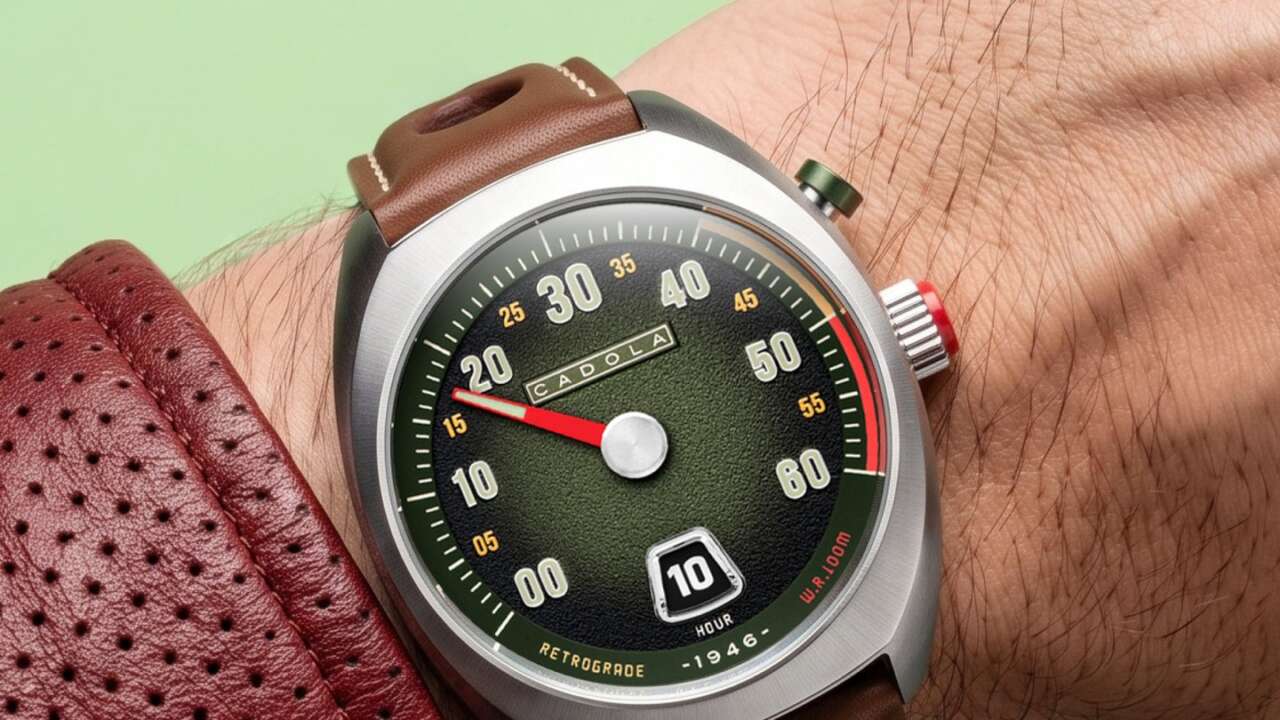
Most watches tell the time with two hands doing slow circles. The Cadola Ascend Jump Hour throws both jobs out and splits them: the hour lives in a window at 6 o’clock and changes in a blink, while a single red hand sweeps the minutes around a gauge track and snaps back to zero at the top of every hour.
It’s a display borrowed from a vintage race car’s dashboard, built into a 40 mm cushion case for $320, and the power underneath is quartz. That’s exactly why the price lands where it does.
Price: $256.00 $320.00 (save $64.00, 20% off)
Where to buy: Cadola
How to read it
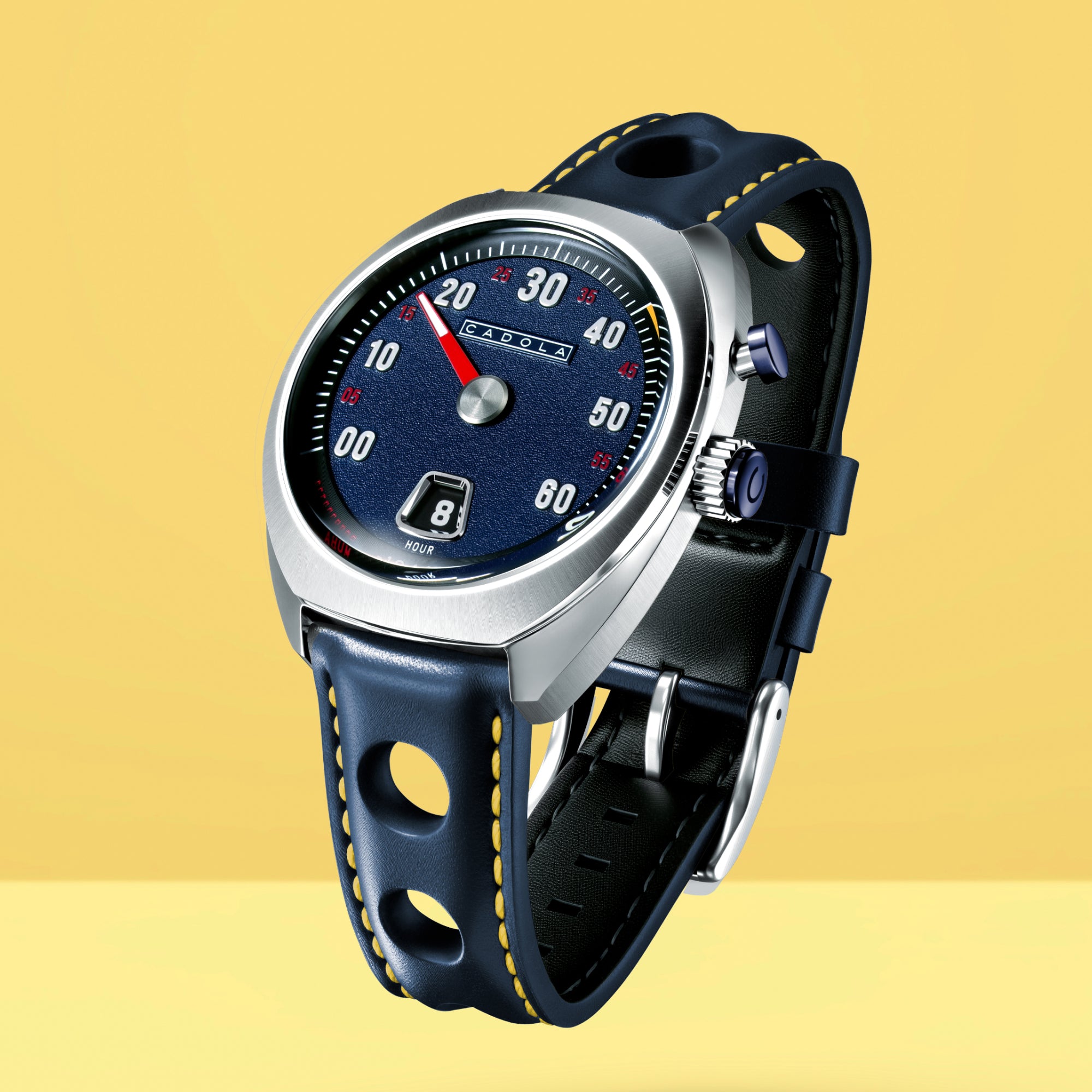
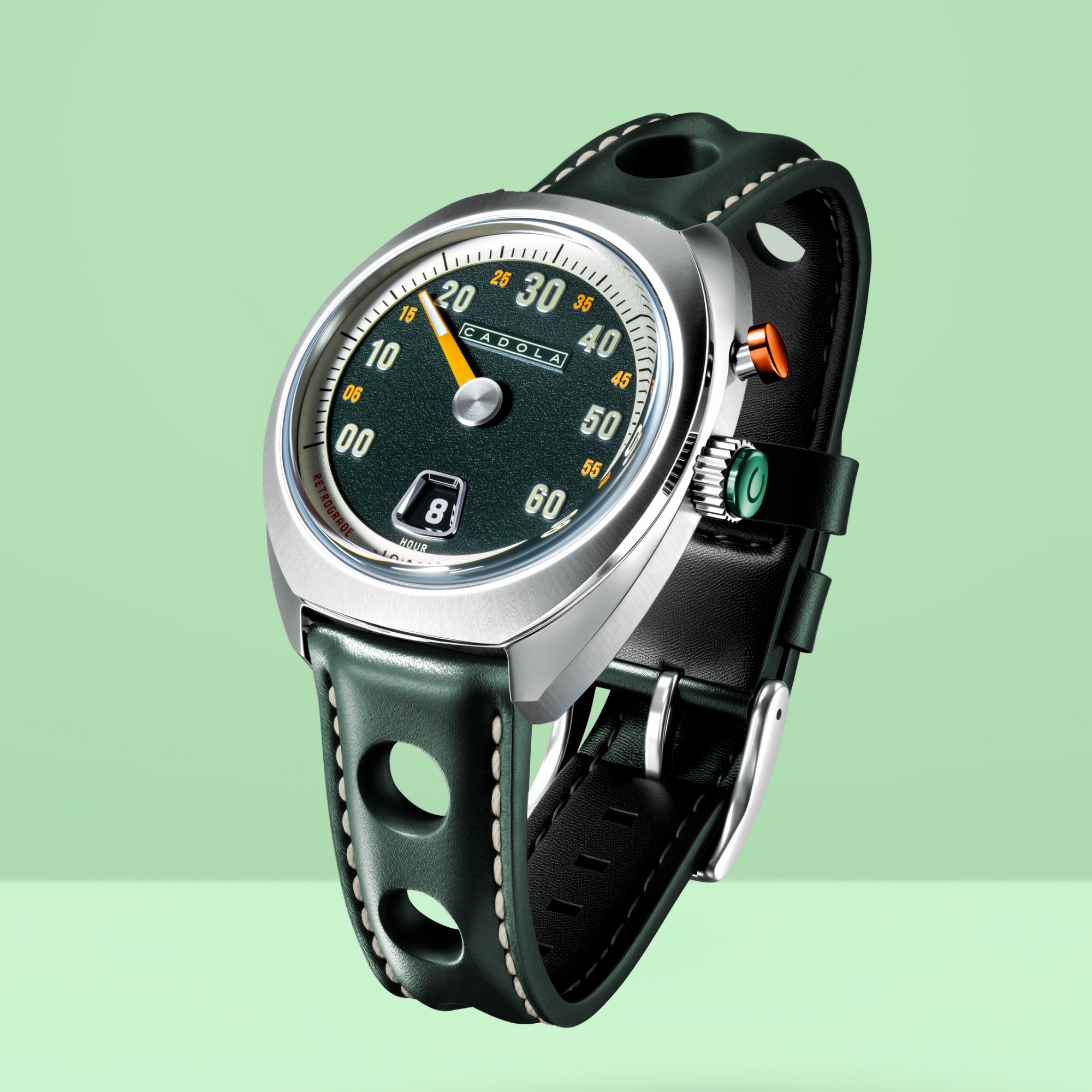
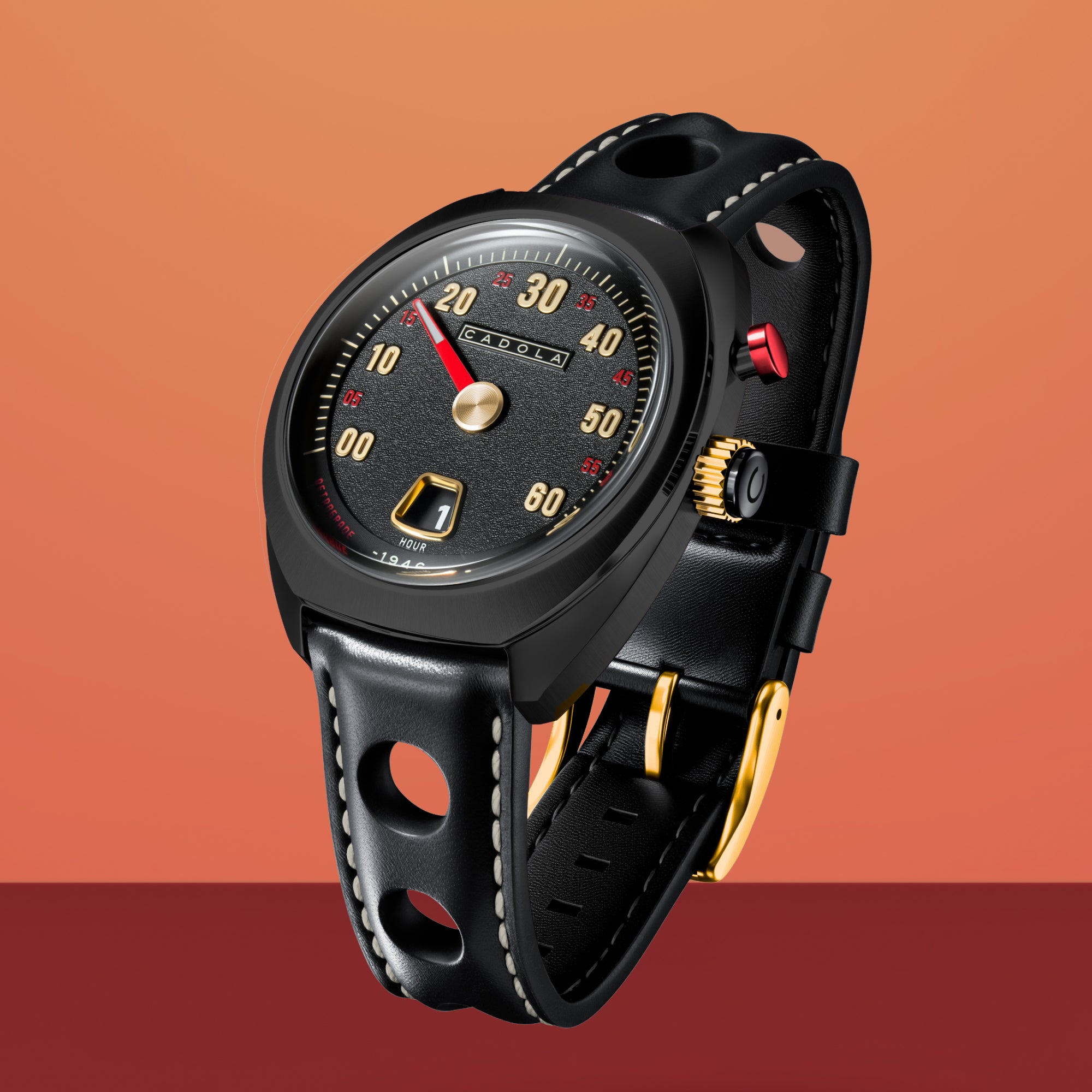
Reading it takes a second once the layout clicks. The framed window above 6 o’clock shows the hour as a digit, labeled HOUR, and the hand does the rest, pointing at big applied numerals that run from 00 at the lower left, over the top through 30, and down to 60 at the lower right. The numerals sit cream-colored against the dark dial, with the fives between them printed smaller in orange, speedometer style.
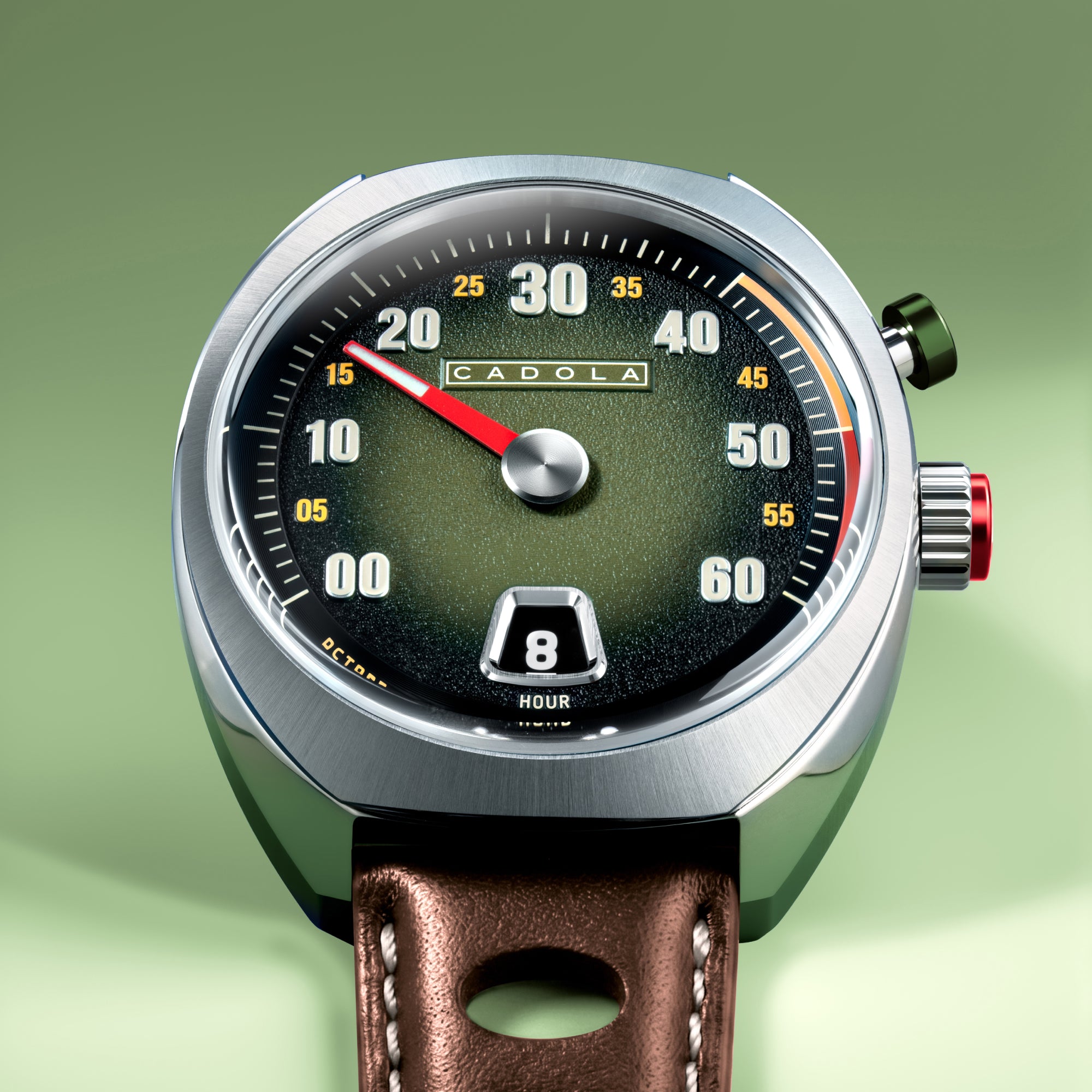
At the top of the hour both events fire at once. The digit in the window jumps to the next hour, and the hand, having just reached 60, flies back to 00 and starts the climb again.
Spreading 60 minutes across a 270-degree arc is what makes the layout work. Each five-minute step gets a big applied numeral with room around it, so a glance lands the minute within a step or two instead of squinting at a crowded chapter ring.
There’s no seconds hand and no date window competing for space. The dial gives its whole surface to one scale, one window, and one hand, which is why the gauge comparison isn’t a stretch: it works like the single-purpose instrument it imitates, down to the red zone in the last stretch of the track.
A gearbox instead of a gear train
Window displays have been tempting watchmakers for well over a century now. Jump-hour pocket watches appeared in the 1800s, the format had a second life in 1970s wristwatches, and retrograde hands have decorated high-end dials for just as long, because both tricks ask a movement to do something abrupt on a schedule, sixty times a day in the retrograde hand’s case.
Doing it mechanically is where the money goes. A mechanical movement has to store energy and release it in a snap to throw a hand backward or flip a disc in an instant, and the springs, cams, and careful assembly that pull it off are why jump hours usually live in watches costing thousands. That energy bill is the entire reason the complication stayed a rich-watch habit for so long.
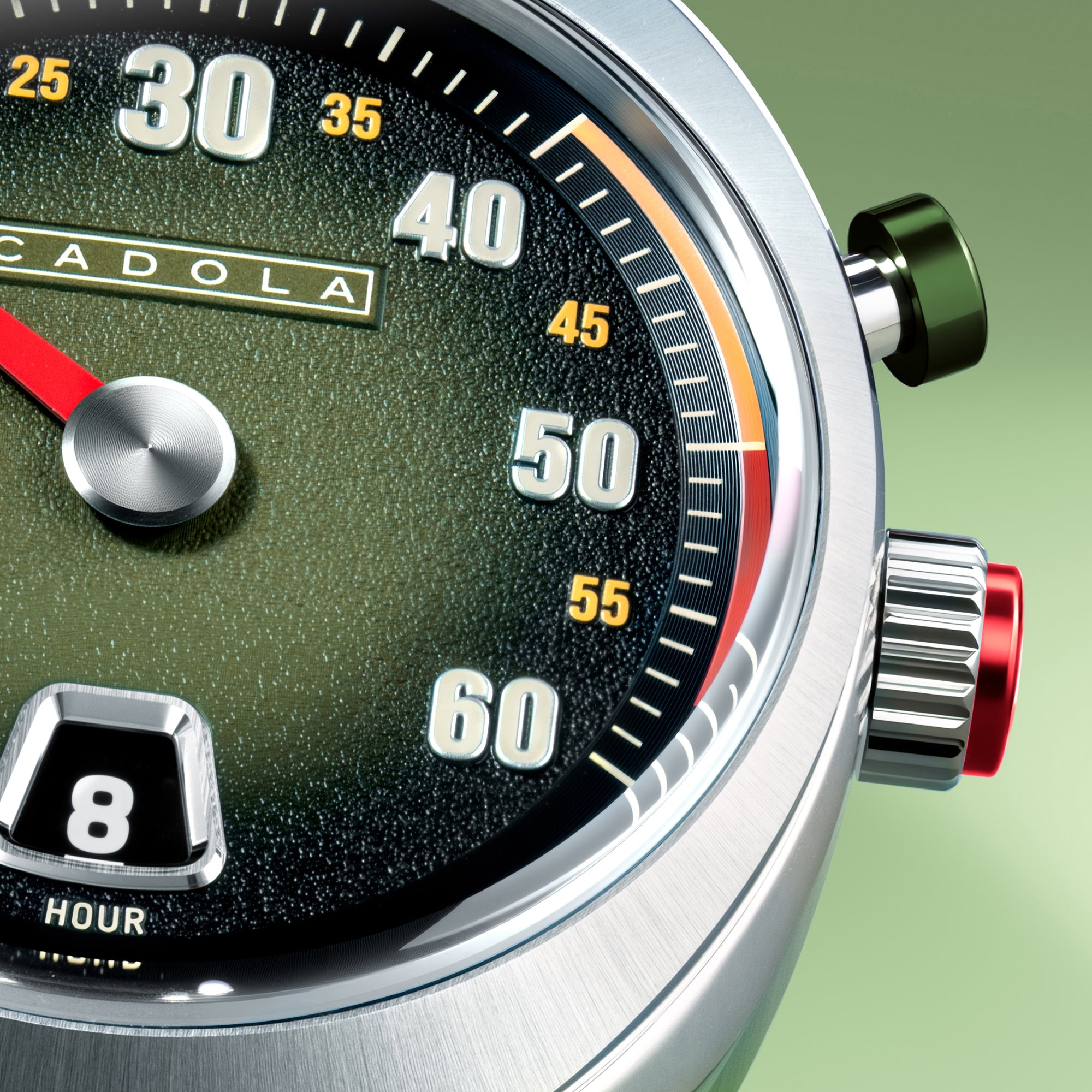
Cadola skips the springs. The Ascend runs what the brand calls a modified gearbox movement, quartz underneath, with the gearing arranged to drive the jumping disc and the flyback hand with battery power doing the heavy lifting. The motion on the dial is the same performance a mechanical piece puts on. The machinery behind the dial is far simpler, and it never needs a service to keep the trick sharp, season after season.
The trade sits in the open. What quartz gives up is the mechanical ritual, the stored energy and snap of a spring at work, and collectors who buy jump hours for that ritual won’t find it here.
What it keeps is the timing: quartz accuracy, and a battery swap every couple of years instead of a watchmaker’s bench.
Built like a gauge cluster
The case is stainless steel in a cushion shape, 40 mm across, with an anti-reflective coated mineral crystal over the dial. Cadola prints W.R. 100M at the edge of the dial, a 100-meter water resistance rating, and the strap is 20 mm of genuine leather cut in a perforated rally style.
Forty millimeters in a cushion case with short lugs keeps the footprint compact, and the perforated strap carries the racing reference around the wrist.
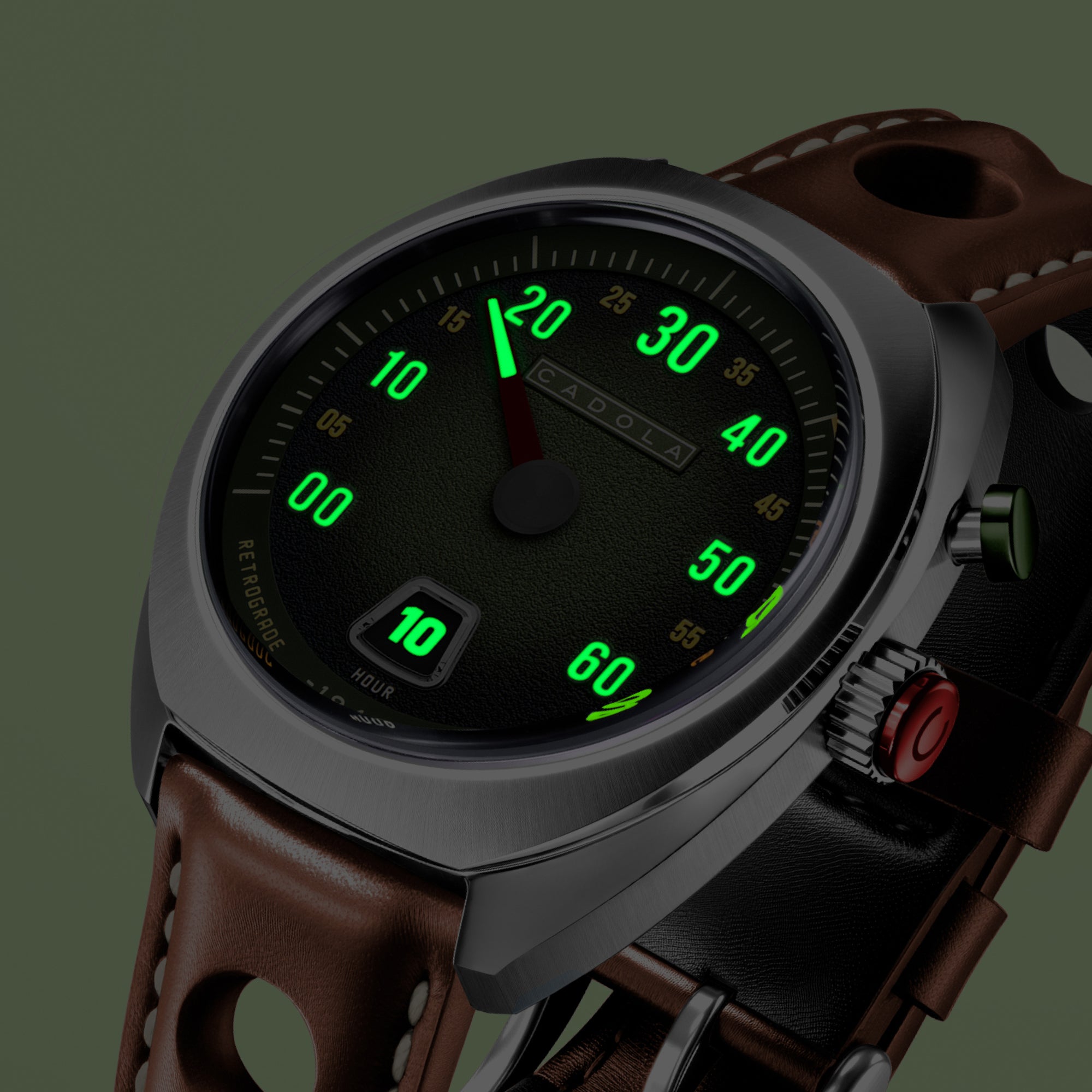
Details carry the cockpit theme further. A pusher sits at 2 o’clock, the crown at 3 wears a colored cap, red on the Verdant Vision pictured here, and Cadola’s lume shot shows the minute numerals, the tip of the hand, and the hour digit itself glowing after dark.
Nothing here is decoration. The whole watch is the display.
Five dials, two prices
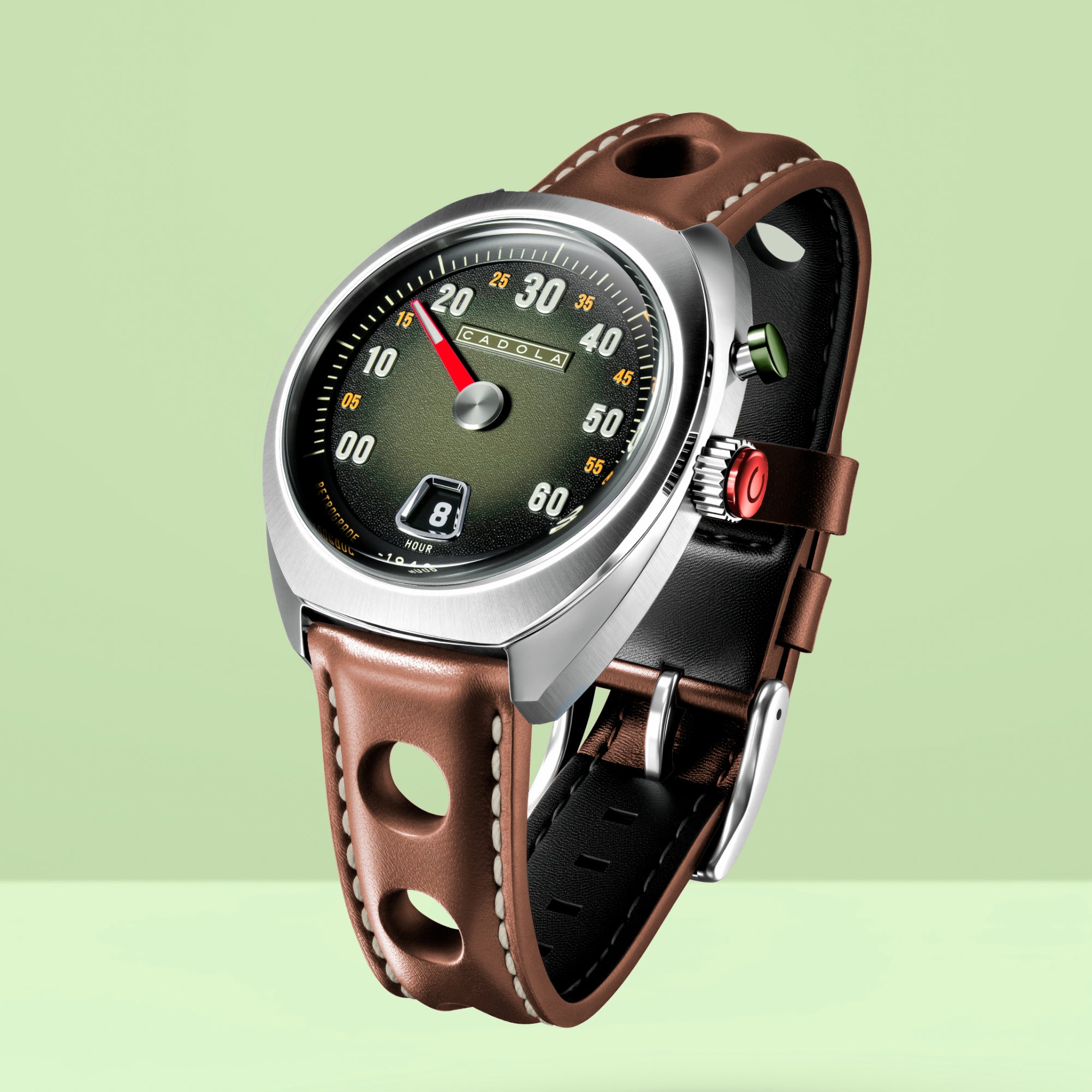
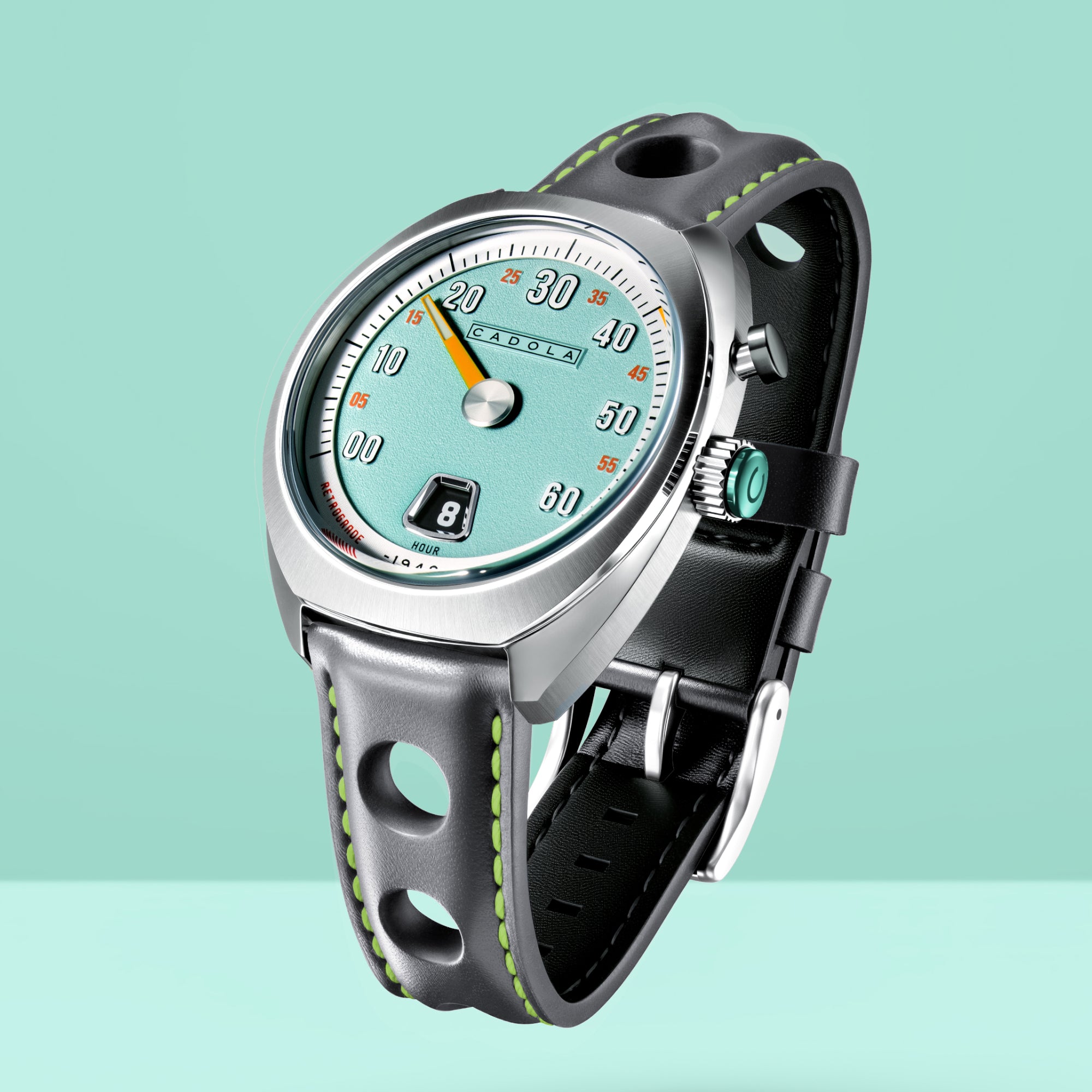
Five variants share the case and the movement. Verdant Vision pairs the deep green dial with a brown strap, Teal Touch goes light turquoise with grey leather and an orange hand, Indigo Intrigue runs dark blue on blue, Green Glamour wears a brighter green with a green strap, and Ink Intensity blacks out the case, adds gold-tone crown and buckle hardware and a red pusher, and sits at the top of the range.
Four of the five list at $320, with Ink Intensity at $350, and Cadola’s site is currently taking a further 20 percent off in the cart, which drops those figures to $256 and $280. All five are in stock, orders ship within three business days, shipping is free worldwide, the warranty runs two years, and returns get 30 days.
Price: $256.00 $320.00 (save $64.00, 20% off)
Where to buy: Cadola
Buy the Ascend if the display is the point: it’s a jump hour and a retrograde minute hand running their routine every hour, in a watch priced like a routine quartz. Skip it if the machinery is the point, because the gearbox under the dial was chosen to make the show affordable, and a mechanical jump hour is a different purchase.