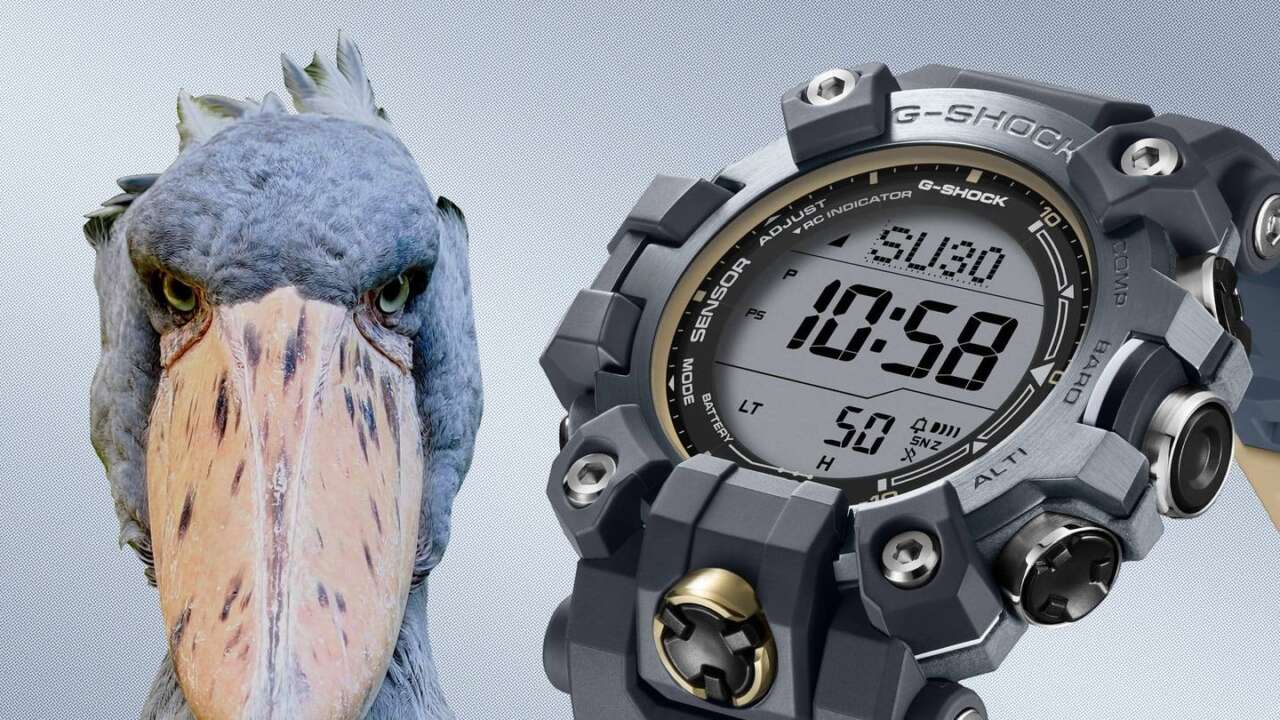
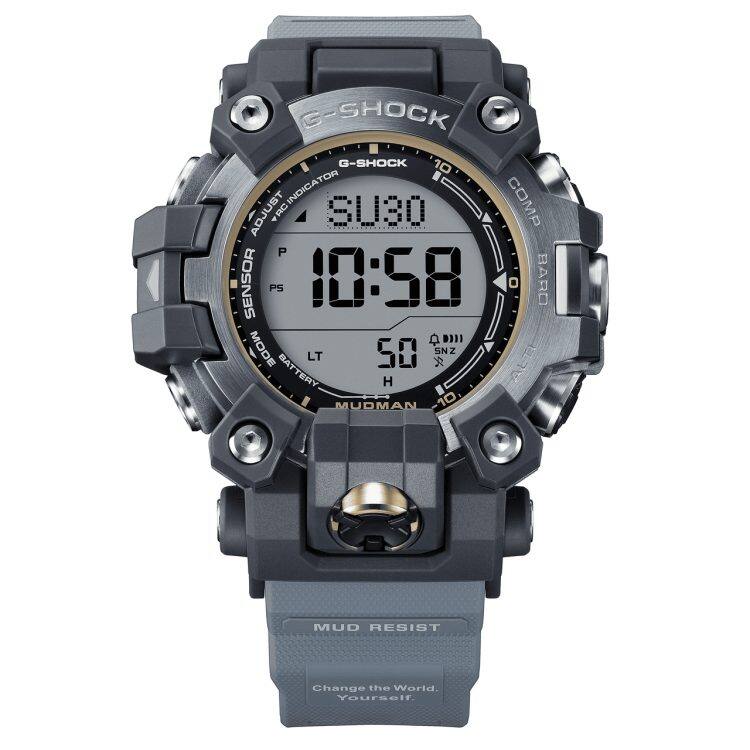
Casio’s Love The Sea And The Earth line has its 2026 watch, and this year’s animal is the shoebill. Built with Earthwatch Japan, the GW-9503KJ-2JR is a Mudman colored after the tall wetland bird, on pre-order at Casio Japan now ahead of its November release, at $410. Part of every sale funds Earthwatch’s field research.
Price: $410
Where to buy: Casio Japan
On Amazon: standard Mudman GW-9500, $309
This is a running series, not a one-off. Casio has built collaboration watches with environmental groups since the 1990s, and the Earthwatch Mudman has become the annual entry, with last year’s model themed on the hippopotamus. Shoebill is a stronger subject. It’s a stork that stands over four feet tall, with a clog-shaped bill, a stare that made it internet famous, and a Vulnerable listing on the IUCN Red List.
Blue-gray feathers, a gold beak
Casio took the palette straight off the bird. Blue-gray shoebill plumage sets the main color, and the metal bezel gets an ion-plated finish meant to catch light the way the feathers do. Gold on the dial ring and the front buttons, plus the light beige strap keeper, comes from the color of that oversized bill. Against the standard Mudman’s black resin, the metal bezel also changes the watch’s weight and feel. This one lists at 88 grams, where the resin-bezel GW-9500 runs about 67.
Shoebills live in the wetlands of east and central Africa and hunts by standing still for long stretches, waiting for lungfish to move. Japanese fans call it the bird that doesn’t move. Casio put that bird’s face next to the watch in its own campaign shots, and the pairing sells the design better than any spec can. The plumage and the case really are the same gray-blue.
Earthwatch marks, inside and out
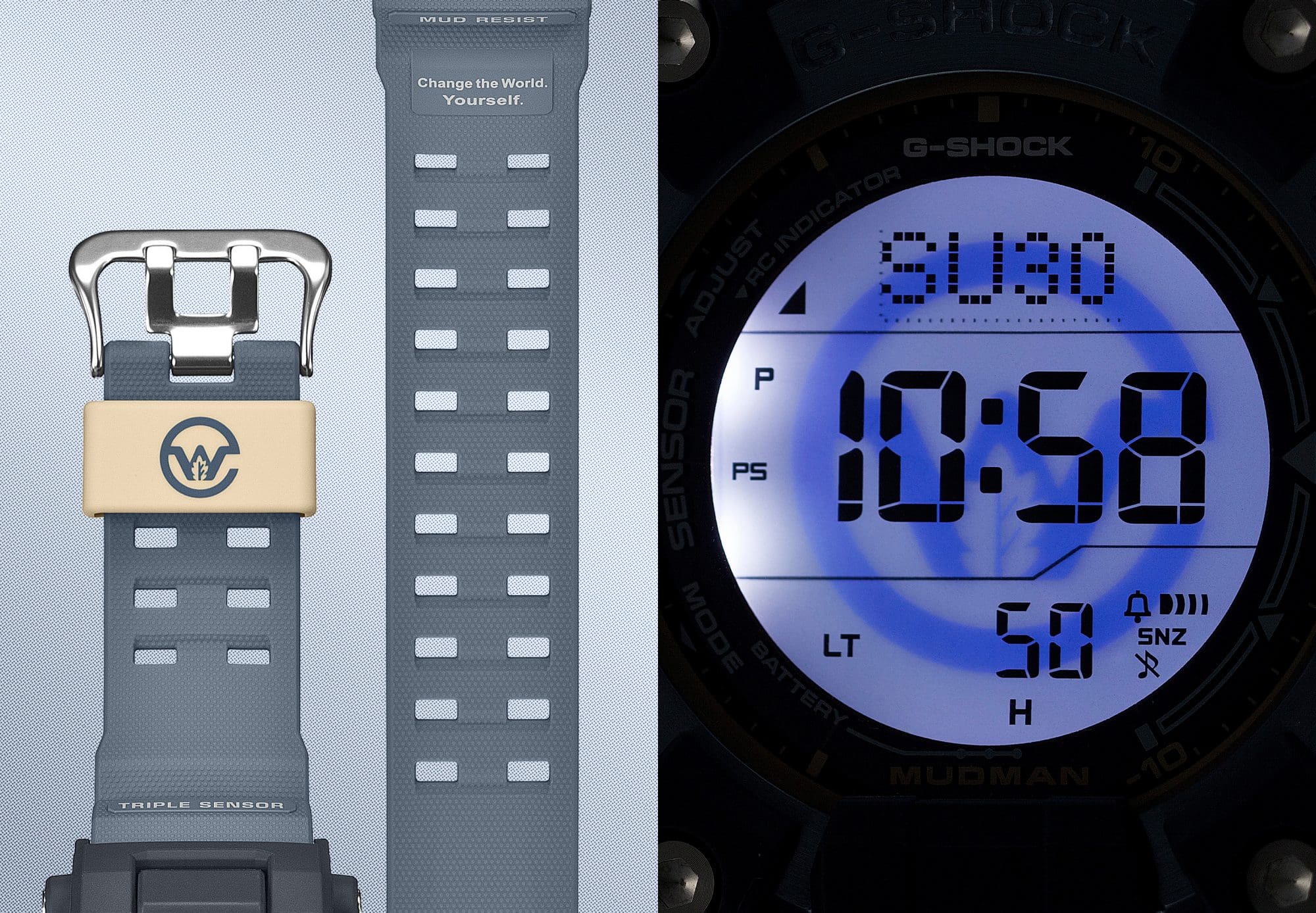
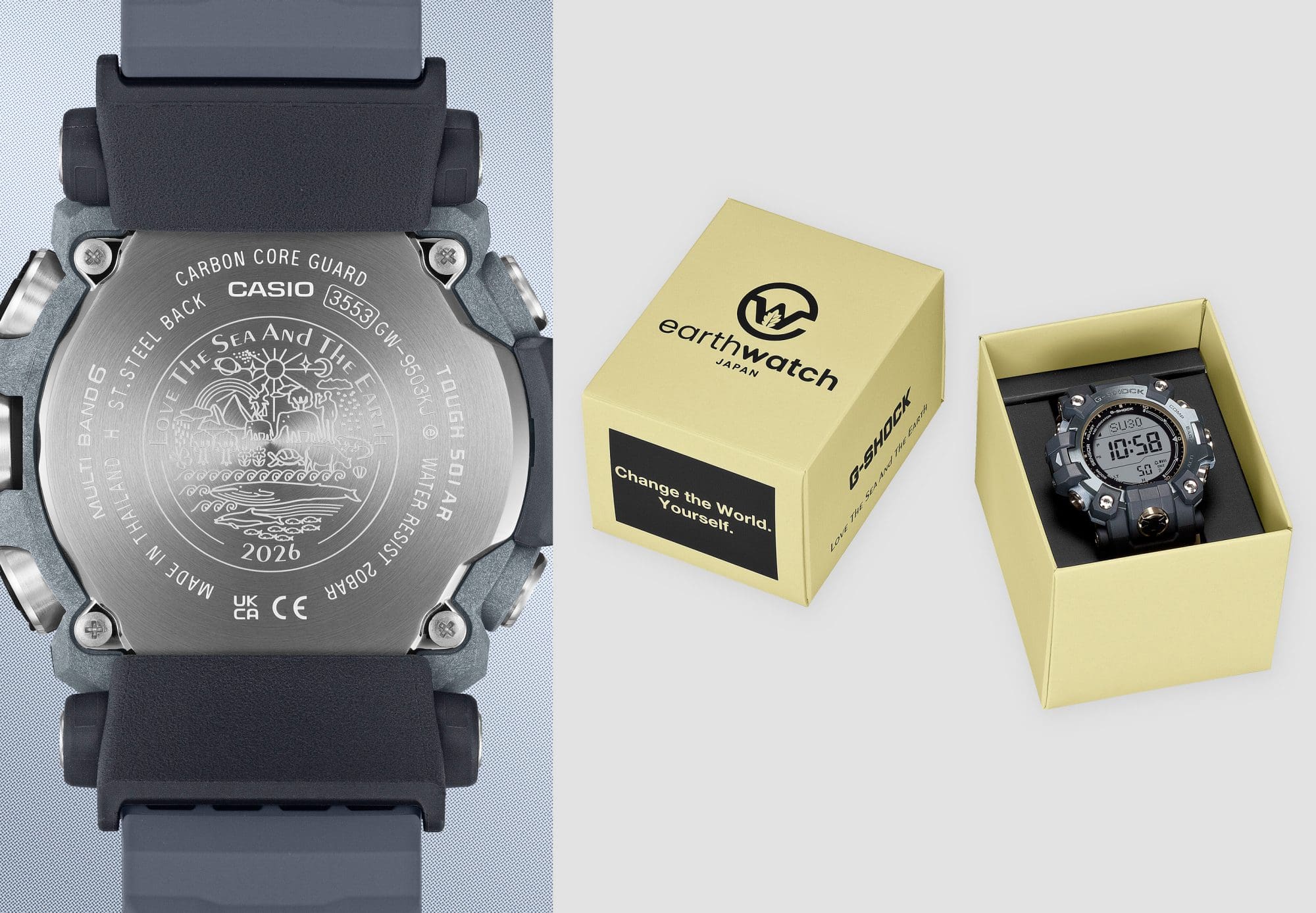
Earthwatch Japan’s logo sits on the strap keeper, and the band carries the printed message “Change the World. Yourself.” Press the LED backlight and the Earthwatch logo lights up inside the display. Its case back is engraved with the Love The Sea And The Earth symbol, and the watch ships in a special box made from recycled paper. Biomass plastic forms the main resin parts of the case, bezel and band, using renewable organic feedstock in place of part of the usual petroleum resin.
Earthwatch is the real thing behind the branding. Founded in Boston in 1971, it funds field research by pairing scientists with paying volunteers. Casio’s page for the watch credits it with more than 100 vetted research projects a year, 200 collaborating researchers and over 4,000 volunteers mobilized. A cut of this watch’s price goes into that work, which is the point of the line.
Under the colors it’s the full Mudman
Nothing about the tool watch changes for the collaboration. Its Carbon Core Guard case is shock resistant and mud resistant, with sealed buttons built to keep grit out, and water resistance is 200 meters. Triple Sensor covers compass bearing, altitude and barometric pressure, and temperature, each on a direct side button instead of a menu dive. A duplex LCD stacks sensor readouts over the time display, so a compass heading doesn’t clear the clock.
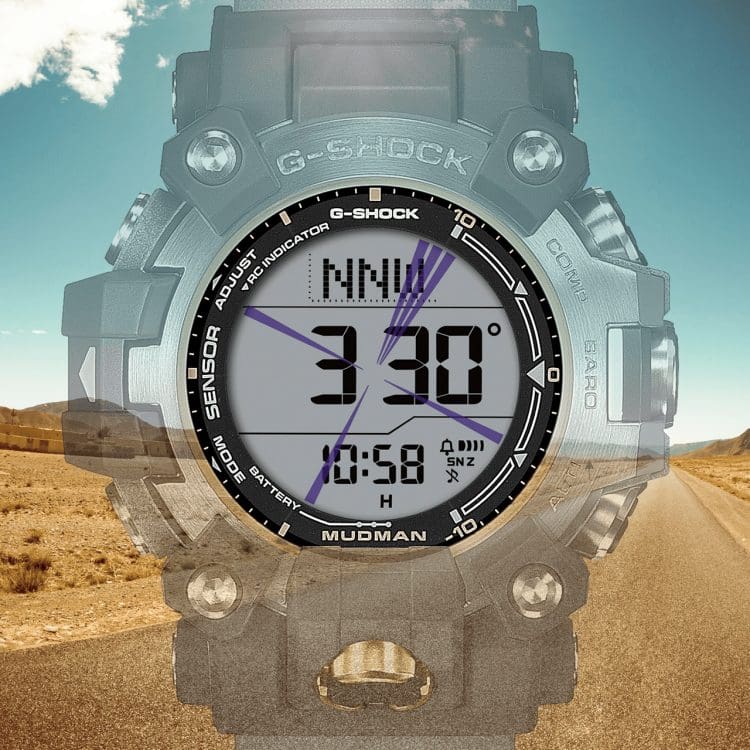
Tough Solar runs the watch on light, good for about six months of normal use on a full charge and roughly 26 months in power-saving storage. Multiband 6 pulls the time from radio towers, so the watch sets itself. At 56.7 by 52.7 by 14.8 millimeters, with mineral glass, and the band fits wrists from 145 to 215 millimeters. This is a big outdoor watch that happens to wear a bird’s colors, not a fashion piece with a sensor list pasted on.
Amazon sells the standard Mudman instead
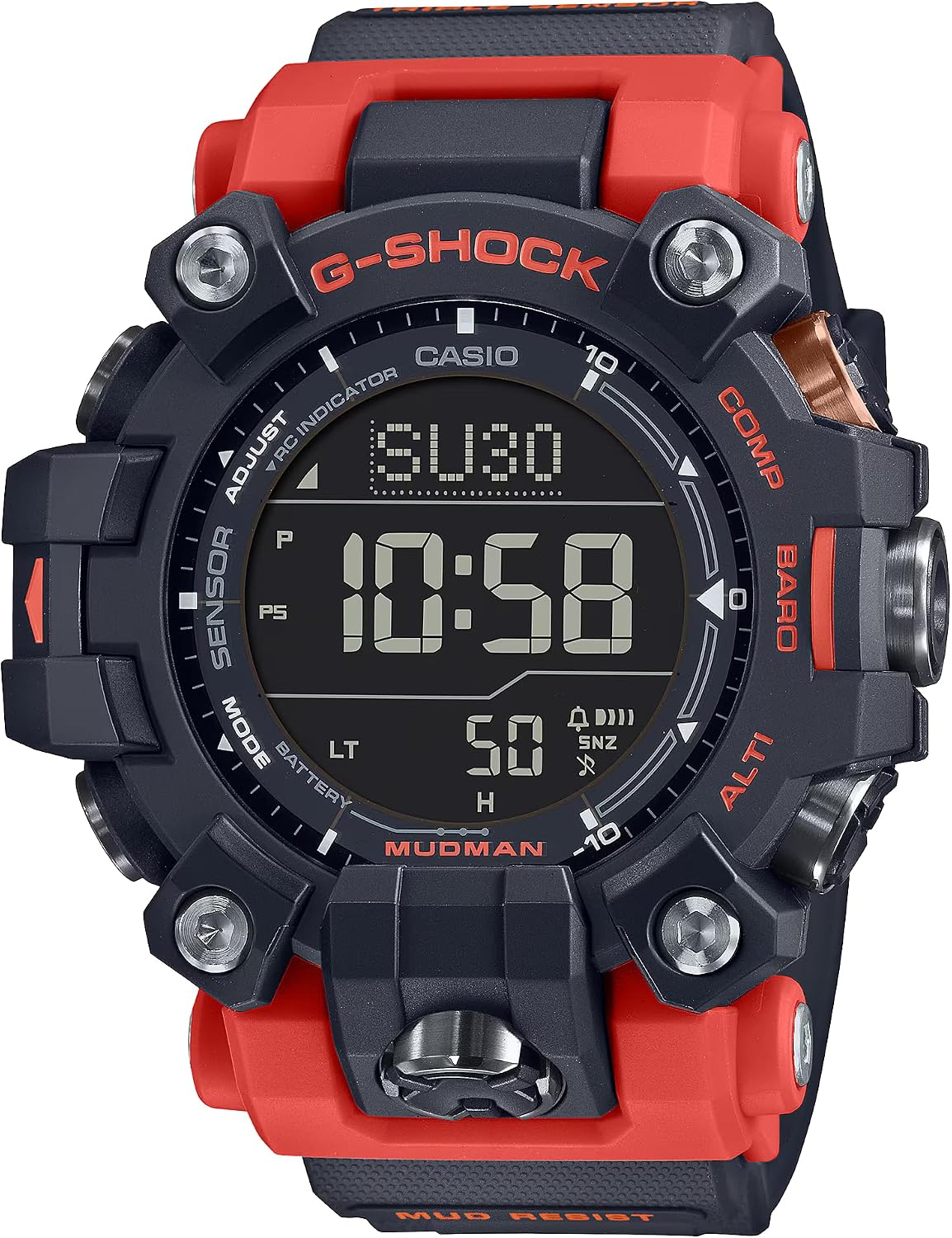
This shoebill edition is a Japan release, and Amazon has no listing for it. Underneath it, the standard GW-9500 Mudman sells there now in regular production colors, with the same sensors, solar charging and radio sync for $101 less than the Japan price.
Price: $309
Where to buy: Amazon
Japan gets it this month, and the premium is the finish
Pre-orders are open at Casio Japan, with the release set for November and retailer listings pointing to mid-month. There’s no US release on Casio’s schedule, so American buyers are looking at importers once Japanese stock lands, at whatever markup the market sets. That has been the pattern for the Earthwatch Mudmans, and the hippo from last year followed it.
At $410 in Japan, the shoebill costs about a third more than the standard Mudman, and the sensors, case and movement are identical. What the premium buys is the ion-plated metal bezel, the shoebill palette, the engraved case back and a donation into Earthwatch’s research fund. If you collect the Love The Sea And The Earth series, this is the strongest design the line has produced. If you just need a Mudman, buy the standard one and let someone else pay for the bird.
Price: $410
Where to buy: Casio Japan
On Amazon: standard Mudman GW-9500, $309