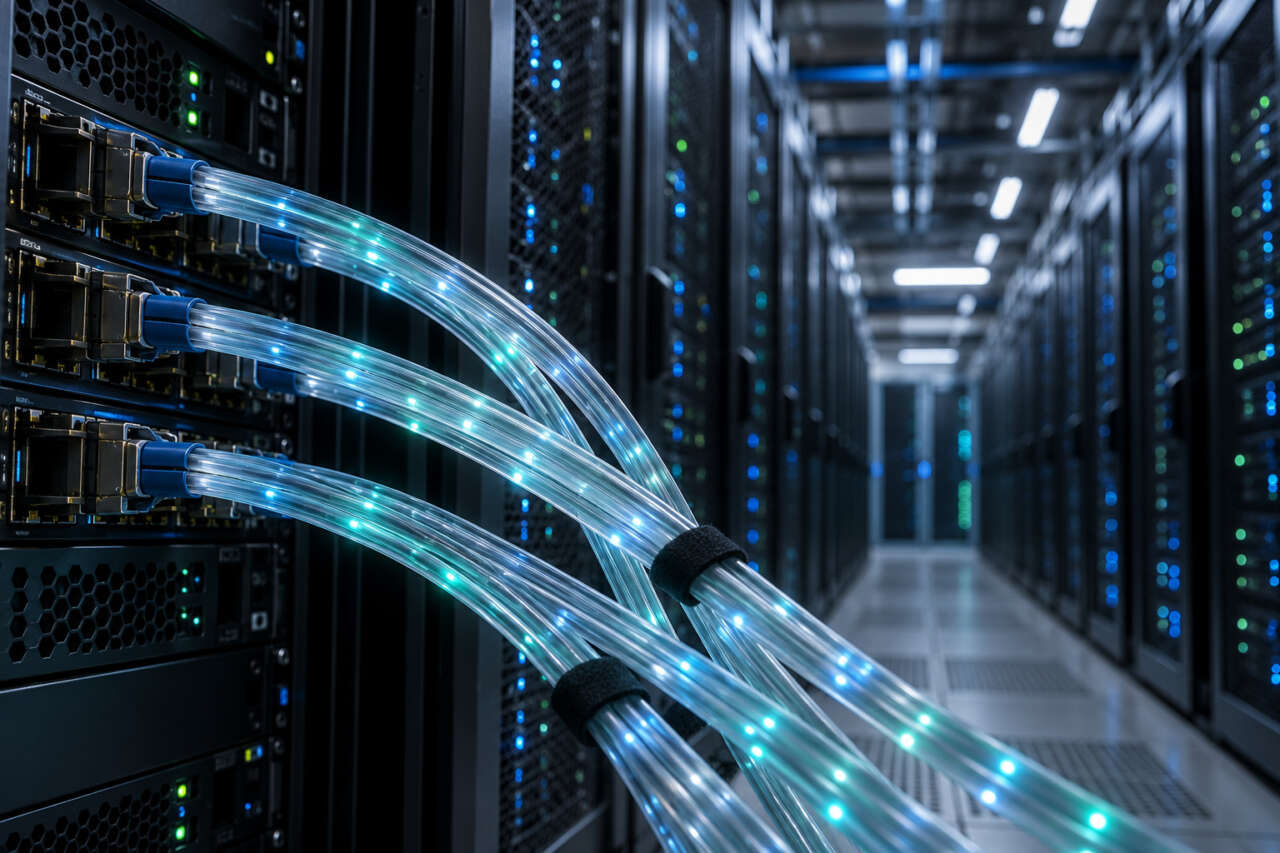
Powerful AI computers can spend time waiting for data from one another. When a job is spread across many machines, those machines need to keep exchanging information. Faster chips make that communication problem more important: the connections have to keep up.
NVIDIA and Cisco announced plans on October 12 for a new connection module designed to move more data between AI computers. Called USFP, it’s a small, removable piece of networking hardware for the equipment inside data centers.
The idea is straightforward. Give the computers a wider road to send data down, so their connections can handle more traffic as the system grows.
What changes inside the data center
An optical module connects networking equipment to fiber-optic cables, which carry information using light. Operators plug these modules into switches, the devices that direct traffic between machines.
USFP packs more capacity into roughly the same front-panel space as an existing type of module. Cisco puts the initial design at 6.4 terabits per second, four times the capacity of today’s 1.6-terabit pluggable modules. A future version would double that to 12.8 terabits per second.
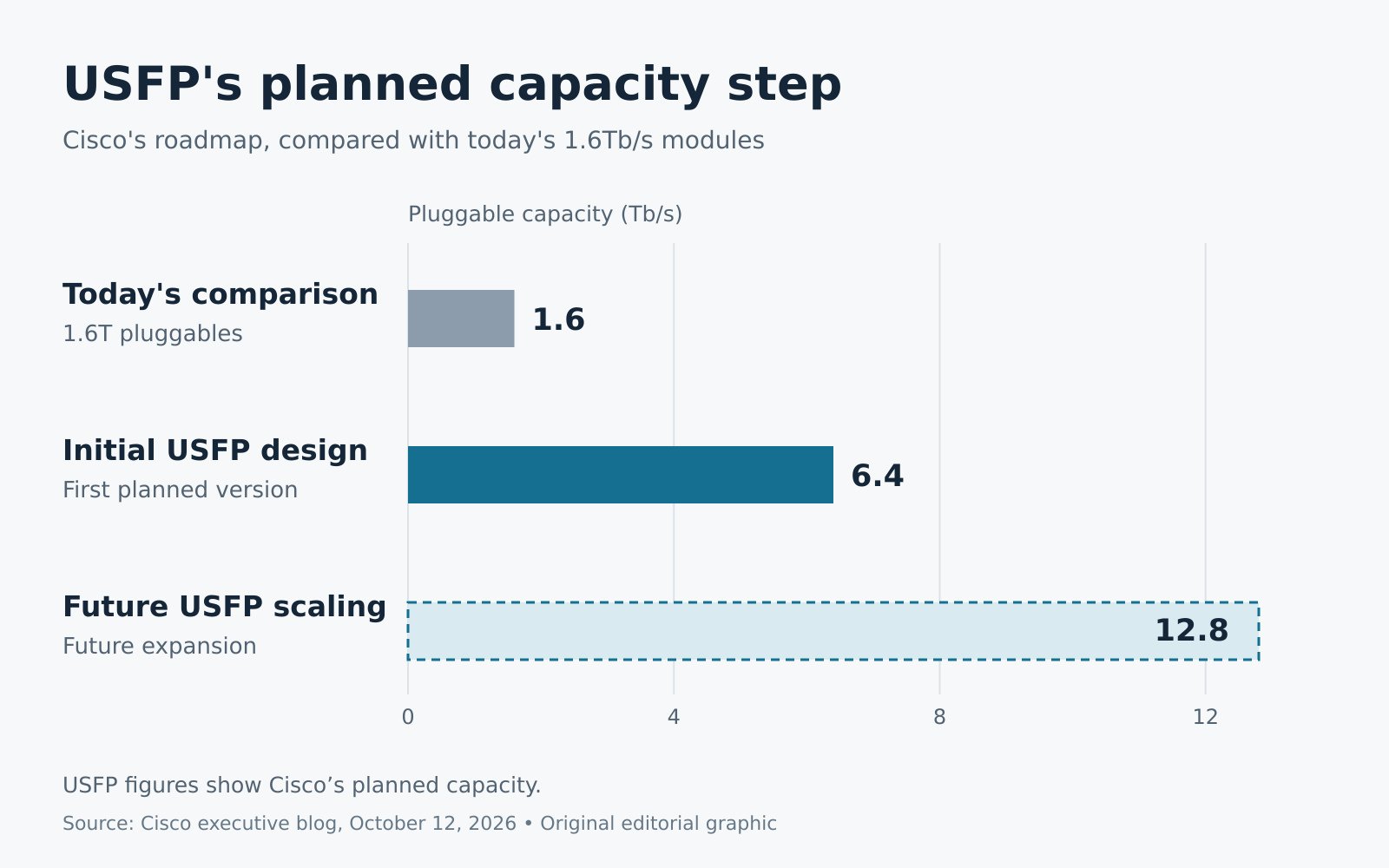
That gives a switch room to handle more connections to powerful computers before the network needs another layer of switches. Each extra layer brings more hardware, cables, power use and another step for data to travel through.
Why a removable module matters
Data centers need equipment they can service as well as expand. USFP keeps the plug-in approach, allowing individual modules to be replaced in the field. The goal is to deliver higher-capacity connections using a maintenance model operators already know.
NVIDIA and Cisco are working with connector makers TE Connectivity and Amphenol on the hardware. They also plan an open industry specification so other suppliers can build around the same design.
For anyone following the AI hardware boom, this explains why the equipment connecting the computers deserves attention alongside the chips. Adding computing power is only part of building a larger AI system. Getting data to the right machine quickly enough is another essential part, and that’s the problem USFP is designed to address.
Availability: TBD. Pricing: TBD.