I stopped wearing a smartwatch because my smart ring handled the health and sleep tracking I wanted. That freed up my wrist for a nice analog watch again. There wasn't much reason to wear another device that gave me so much of the same information.
Blood pressure was the gap. That's why the Huawei Watch D3 has my attention, and why I'm willing to put a smartwatch back on my wrist.
Price: £399.99 (UK)
Offer: Free HUAWEI Scale 3 until November 3; Worry-Free Care Package also listed as a free gift. Terms apply.
Where to buy: HUAWEI UK | Philippines offer
Previous model: Watch D2 on Amazon UK
I'm over 50, I feel pretty good, and I'd like to keep it that way. I haven't been to the doctor in decades, either. Feeling good doesn't confirm that everything's fine, and a watch won't replace getting checked.
But I value having information that helps me understand my daily health. I don't work out, so I'm approaching this from a different direction than someone shopping for a training watch.
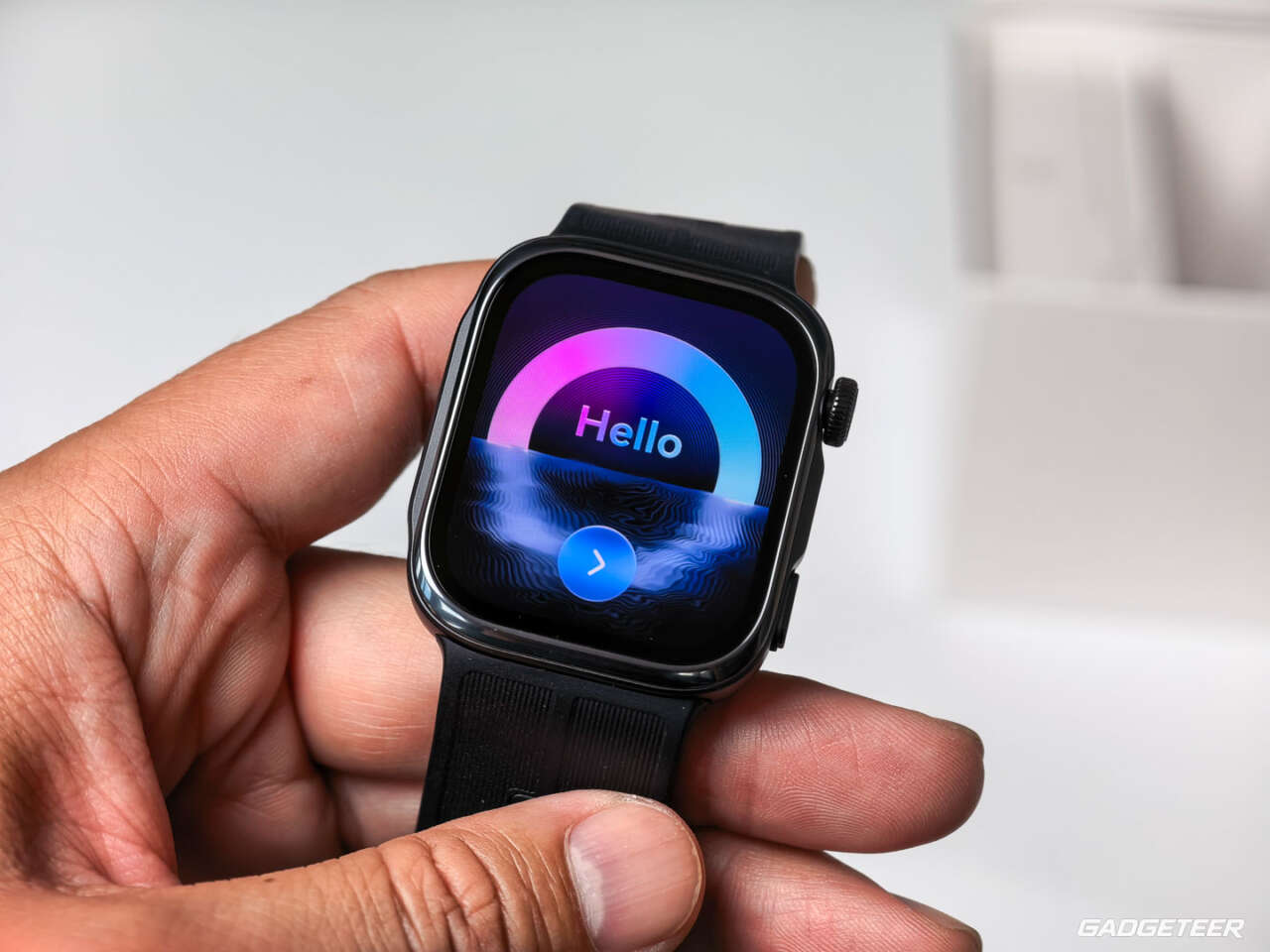
Our review unit has arrived, and I've now unboxed it. My starting question is whether adding blood pressure makes the whole package useful enough to displace my analog watch. The answer will depend on the measurements, the effort involved, and how comfortable it is to live with.


The strap is part of the instrument
The D3's strap does more than hold the screen on your wrist. An inflatable airbag forms a small cuff, supplied with air by a miniature pump inside the watch.
A pressure sensor detects tiny pressure changes associated with your pulse while the cuff applies pressure around your wrist. The watch's algorithms use those signals to calculate systolic and diastolic blood pressure.


Those are the two numbers in a blood pressure reading. Systolic is the pressure when your heart contracts; diastolic is the pressure between beats. They're expressed in millimeters of mercury, usually written as mmHg.
This is called the oscillometric method. It's the underlying approach used by many automatic cuff monitors in clinics and at home, miniaturized for the wrist.
A clinician using a manual cuff and stethoscope listens for sounds instead. The D3 isn't listening through a tiny stethoscope, and its blood pressure measurement isn't simply an interpretation of the optical heart-rate sensor.
Miniaturizing that system doesn't make wrist and upper-arm measurements interchangeable. The American Heart Association recommends a validated automatic upper-arm cuff for home monitoring.
Fit and position are particularly important when measuring at the wrist, and individual conditions can affect the results. This is information to discuss with a healthcare professional, not a basis for diagnosing myself or changing medication.
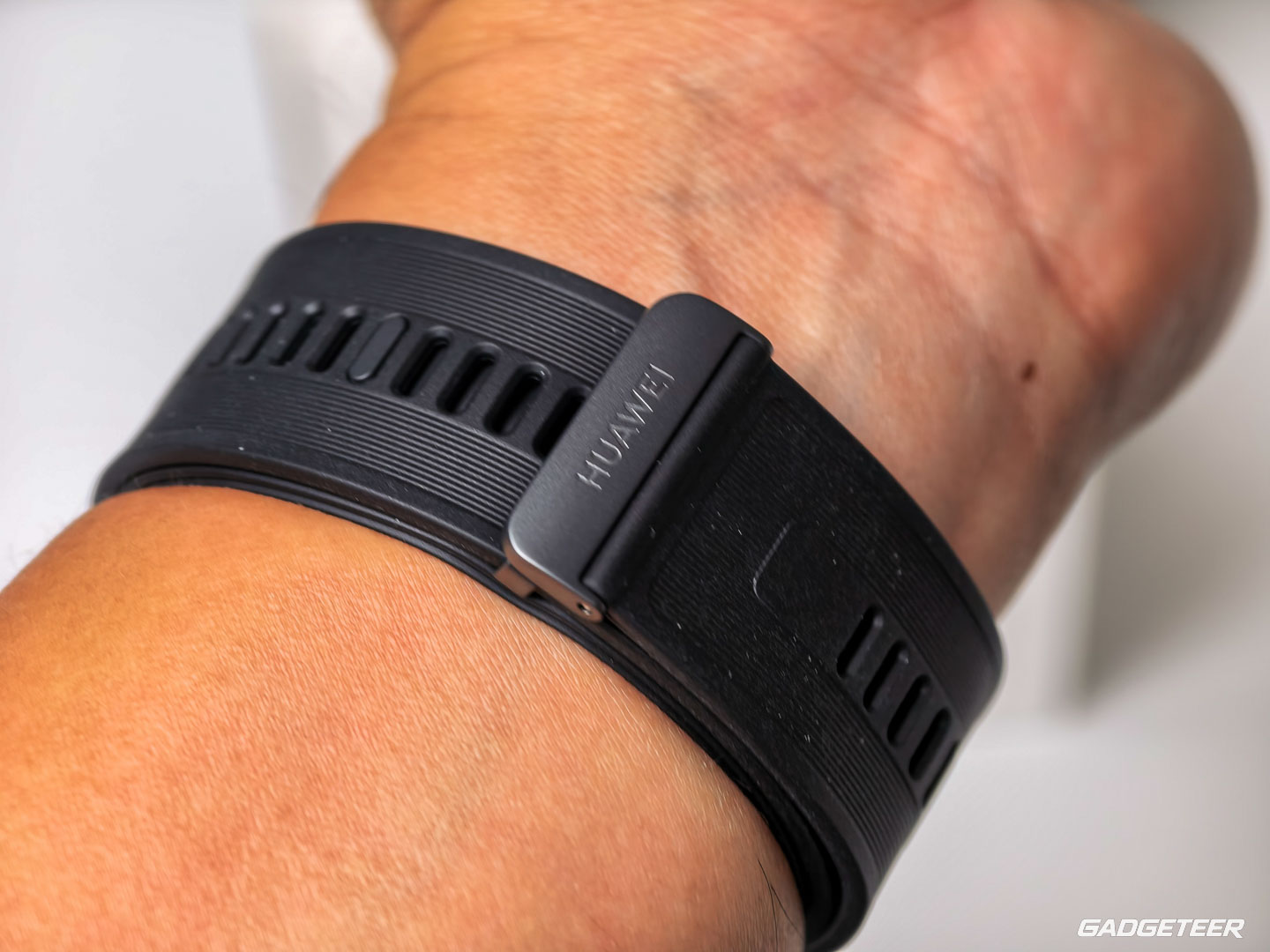
The airbag explains why strap selection is part of setup. Huawei specifies an M strap for wrists measuring 13 to 16 centimeters and an L strap for 16.1 to 21 centimeters.
An ordinary replacement watchband can’t perform the cuff’s job. Adjusting the fit was easy: the inflatable airbag sits separately inside the outer strap, and I could slide the folding clasp along the strap to change the size.
Inflation feels familiar, like the squeeze of an arm cuff at a doctor’s office, only around my wrist.
One potential drawback is breathability. The airbag sits against your wrist, so if you sweat a lot, it could feel warm and clammy underneath. I’ll need more time wearing it to see how comfortable it stays.
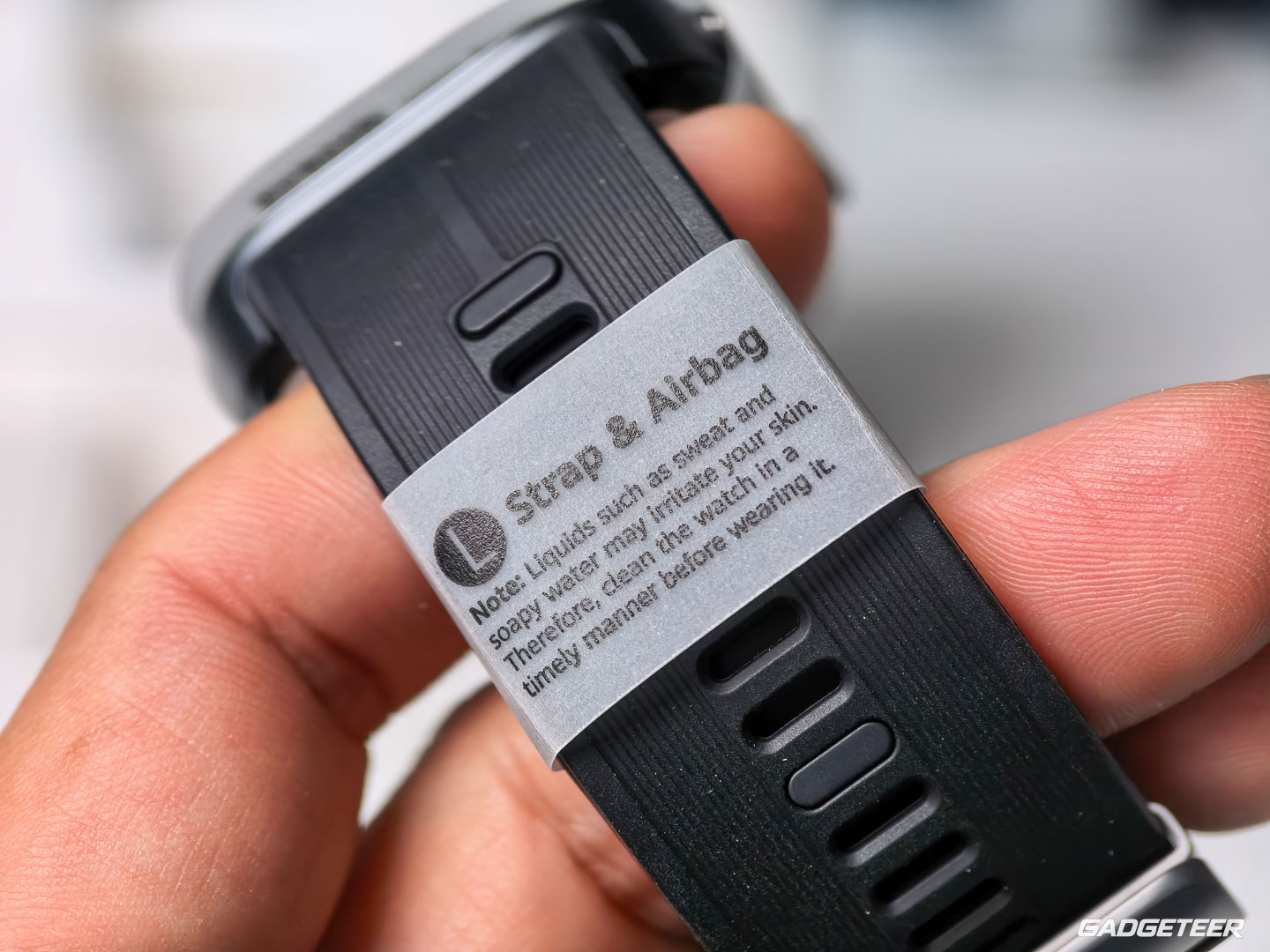
I normally wear a watch on my left wrist, which Huawei also shows in its demonstration. During an awake measurement, the watch needs to be level with my heart, with my elbow supported and my wrist relaxed.
It shouldn't press against my chest. Crossing my arm is a way to achieve that position, rather than an instruction to place the watch directly over my heart.


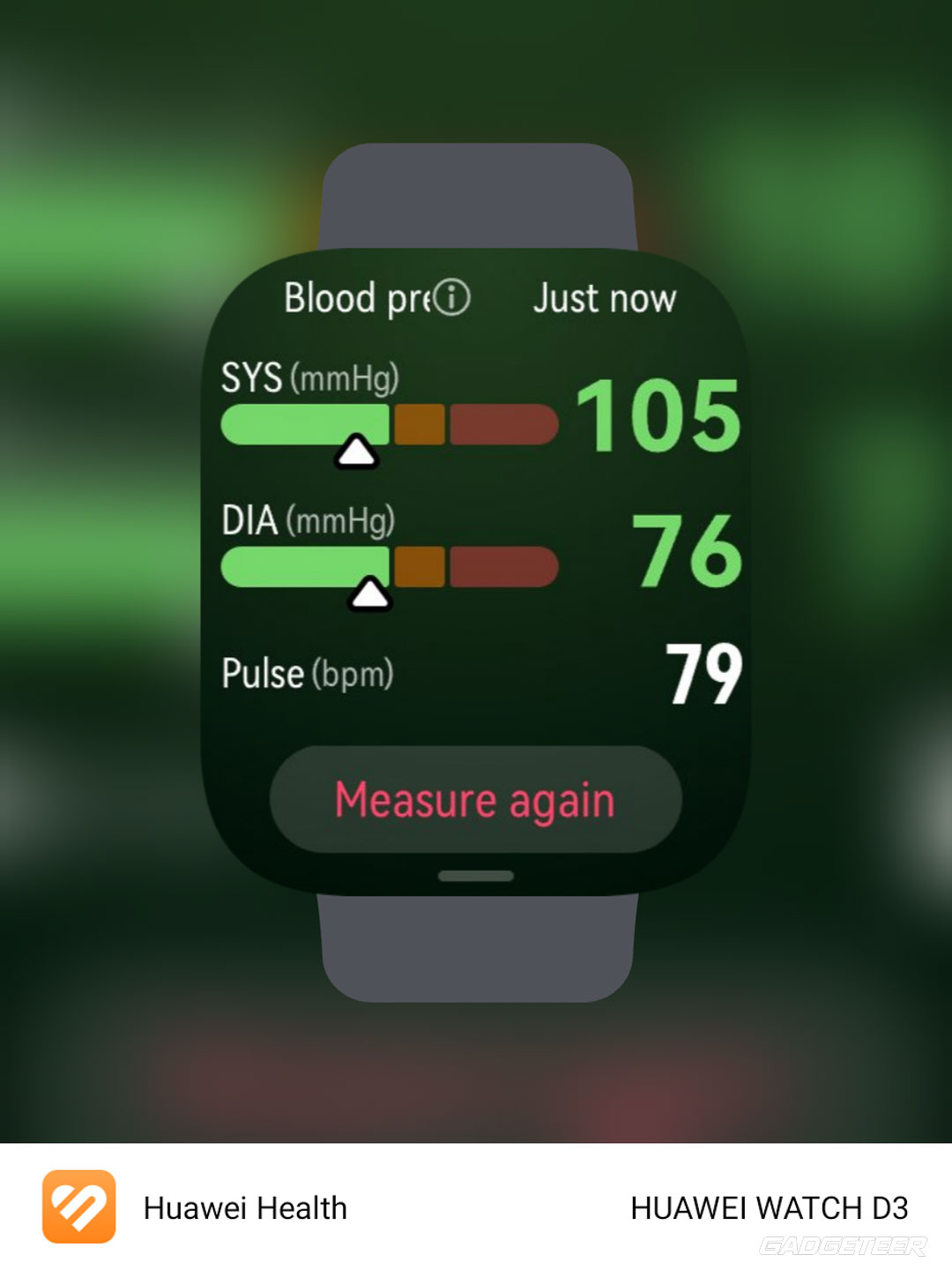
My first reading came back at 105/76 mmHg, with a pulse of 79 beats per minute. That blood pressure falls within the American Heart Association’s normal adult range: below 120 systolic and below 80 diastolic.
It’s a reassuring starting point, but one reading doesn’t establish my usual blood pressure or prove the D3’s accuracy. I’ll be looking at repeated readings and comparing them with a validated upper-arm monitor.
What changes from the D2
The D2 already combined an inflatable cuff with individual readings and 24-hour ambulatory blood pressure monitoring, or ABPM. That core capability isn't new to the D3. ABPM takes readings at intervals across the day and night; it doesn't deliver an uninterrupted blood pressure number every second.
Huawei cites a minimum of 70% successful readings, including at least 20 daytime and seven nighttime measurements, for a 24-hour ABPM record. I'll check those counts in the report, not just whether a graph appears. The readings are for reference, not a basis for self-diagnosis or treatment.
For overnight monitoring, I don't have to wake up and cross my wrist over my chest. After an ABPM plan is started, Huawei's default nighttime schedule inflates the cuff every 30 minutes without a reminder, and its instructions say the daytime measurement posture isn't required while asleep. The nighttime period and frequency can be adjusted.
During the day, the default is a reminder followed by a manual measurement; an optional auto-start begins after an eight-second countdown, but I still need the proper position. An effective plan ends after its 24-hour cycle, rather than running indefinitely.


I'll check how many nighttime readings succeed and whether inflation disturbs my sleep. Huawei's public guide doesn't explain compensation for every sleeping arm position, so automatic operation alone won't tell us how well it performs.


The physical changes could make the D3 easier to keep on. Its screen grows from 1.82 to 1.92 inches, while the body thickness falls from 13.3 to 11.3 millimeters. Huawei measures the D3 thickness at the thinnest point, excluding the sensor area.
The strap narrows from 26.5 to 25.5 millimeters. Huawei's comparison also puts peak brightness at 3,000 nits against the D2's 1,500, and overall weight at about 75 grams against 82.5 grams, with actual weight depending on the strap. The separate 40-gram specification is for the D3 body without its strap.
Those numbers give me specific things to look for: how easily I can read the display, whether the cuff gets in the way, and whether I want to sleep with it on. They don't tell me how it will feel.


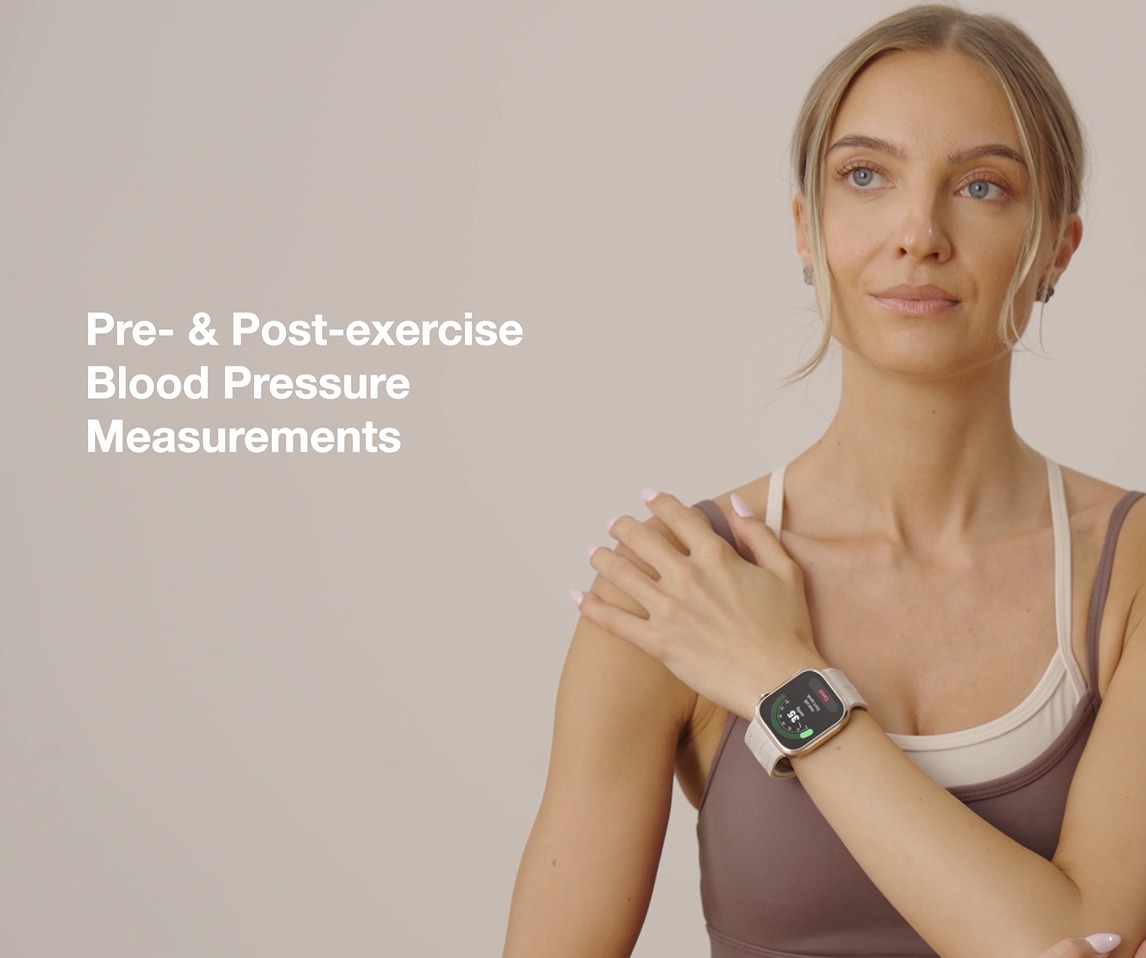
A more distinct addition is the dedicated pre- and post-exercise blood pressure feature. It supports indoor and outdoor walking, running, and cycling. You take a reading before the activity, then start another within two minutes of finishing. It compares the readings and offers guidance about exercise intensity. It isn't taking a cuff reading while you're running.
The D3 also expands the advertised workout selection from more than 80 modes to more than 100, with some modes dependent on software updates.
Faster charging is another practical change: Huawei quotes about 75 minutes for the D3 versus about 120 minutes in its D2 comparison. Both generations carry a typical-use rating of up to six days, dropping to about one day with ABPM enabled under Huawei's stated test conditions. A larger battery doesn't automatically mean more days between charges.
For a D2 owner, the upgrade case rests on those physical changes and the added exercise-related measurements. Someone satisfied with the D2's existing blood pressure features may have less reason to replace it. The Watch D2 on Amazon UK could also be worth considering if the price and available features make sense.
Choosing between the D3, GT 7, and Watch 6
The D3 is the one I'd investigate when blood pressure is a central reason for buying a watch. The GT 7 has a stronger outdoor-training emphasis, with features such as cycling climb planning, skiing metrics, maps, and long battery life.
The 46-millimeter GT 7 is rated for up to 12 days of typical use, while the smaller 41-millimeter model is rated for seven. Those are manufacturer estimates under different workloads, not results from our own comparison.

The Watch 6 takes another route: broader smartwatch functionality, including eSIM connectivity where supported, alongside its X-TAP health checks. Its pressure-sensitive X-TAP control shouldn't be confused with the D3's inflatable blood pressure cuff. Phone compatibility, carrier support, and regional services need checking before buying.
I also have the Watch 6 here, and my review is coming.


Exercise features overlap across the range, but the words “AI-powered” don't establish that the watches deliver the same analysis. The useful comparison is what happens after a workout: which measurements each watch records, how specific its suggestions are, and whether those suggestions change with the data. That's part of our review plan, alongside checking which features actually appear on our review unit.
There's also a clear limitation for swimmers. Huawei's D3 usage instructions say to remove it before swimming, snorkeling, or diving. That makes a watch explicitly designed for your water sport a better starting point, even if a promotional comparison graphic includes a conflicting snorkeling label.
My version of a workout is a long sprint through the airport from one gate to the next, or racing to the next press conference at CES. That's a lot closer to my routine than an elaborate training session.
I'll start with a walk to try the D3's before-and-after blood pressure measurements, then see how useful that information is for the kind of activity I actually do.
Daily health, price, and the testing ahead
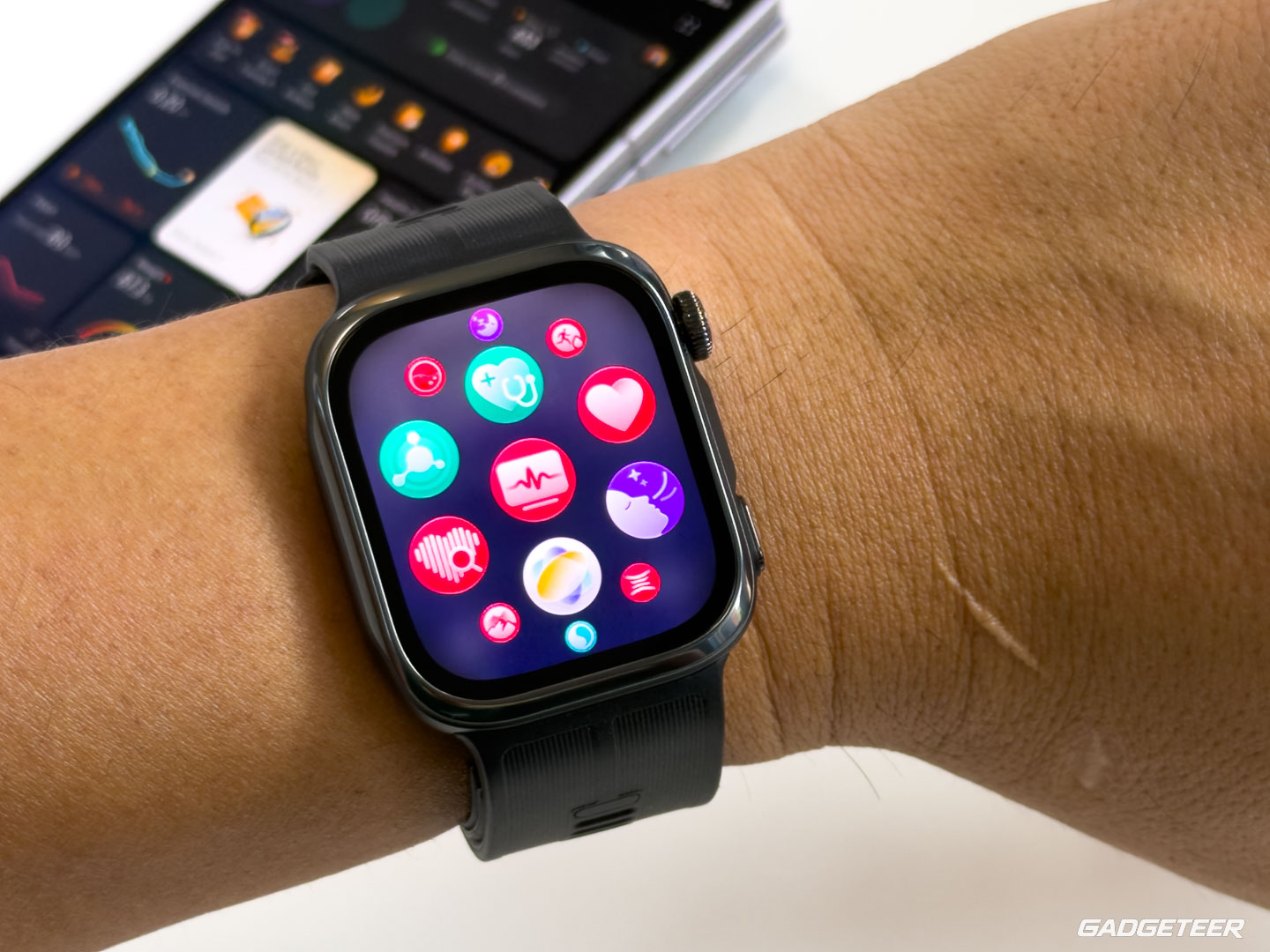
The appeal is seeing blood pressure alongside sleep, heart rate, activity, and other health information in Huawei Health. The UK model advertises 11 Health Glance items.
Huawei also describes PPG-based A-fib alerts and an ECG report after holding the side electrode for 30 seconds, but those features are limited to supported markets and aren't a diagnosis. Some combined health insights require an over-the-air update.
Health Community could make this useful beyond my own wrist. Huawei says it can show family members' blood pressure, Health Glance, heart rate, steps, and sleep, with alerts in one place.
That feature requires an update and the latest Huawei Health app, and the available health items vary by country. I'll check what actually works on our unit.


The Philippines' Minimally Disruptive ABPM Study is one example. It uses at least four manual daytime measurements and three automatic nighttime measurements, with minimum wearing-time requirements.
That's a separate research feature, not a reason to describe every D3 ABPM plan as seven readings a day. Its diabetes and coronary-heart-disease risk studies also shouldn't be mistaken for direct glucose measurement or a diagnosis.
Testing starts with fit, setup, and a first measurement. After that, I want to record successful and failed readings, the time and stillness each one requires, and how the experience compares with a validated upper-arm monitor using each device's instructions. A personal comparison can expose practical differences; it won't establish clinical accuracy.
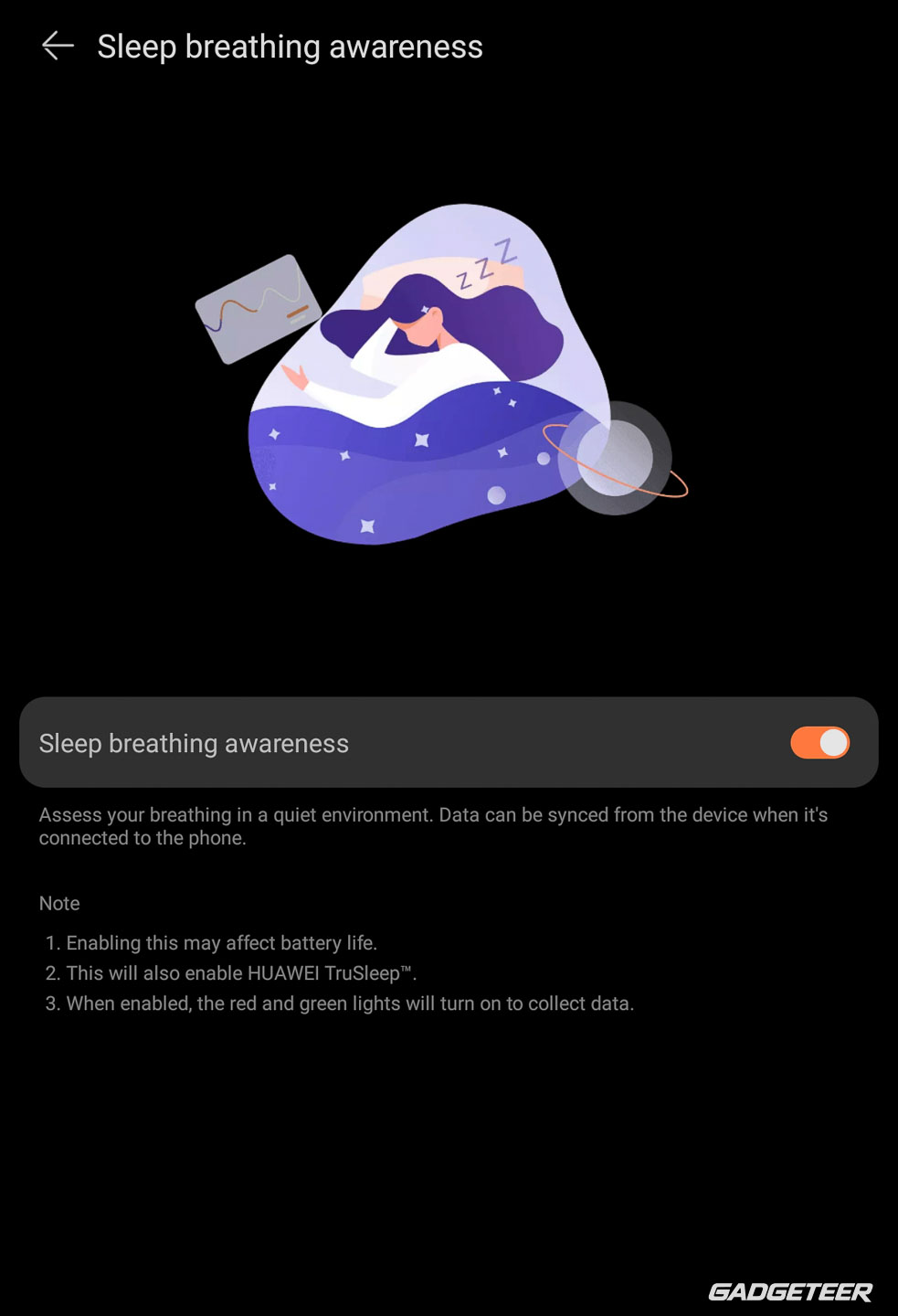
Overnight use will show whether cuff inflation disturbs my sleep and how much battery an ABPM day consumes. I'll also look at how clearly the app presents trends, whether reports are easy to share, and what the exercise analysis adds beyond a collection of numbers.
Price: £399.99 (UK)
Offer: Free HUAWEI Scale 3 until November 3; Worry-Free Care Package also listed as a free gift. Terms apply.
Where to buy: HUAWEI UK | Philippines offer
Previous model: Watch D2 on Amazon UK
I can see this becoming a contender for The Gadgeteer's Best of 2026 if it delivers on that daily usefulness. That's where my enthusiasm is right now, with testing still ahead. For me, it has to add enough useful information to earn the wrist space my analog watch already has.