

Buying a Steam Deck in 2026 requires a different calculation than it did a few years ago. The handheld PC market has moved quickly, newer devices offer substantially more processing power, and Valve raised Steam Deck OLED prices in May without changing the hardware.
Price: From $589.99
Where to Buy: Amazon
The OLED Deck has not become worse; the market around it has become less forgiving. The question is whether the things it does particularly well are still worth paying for today.
The OLED hardware is aging, but it still gets plenty right
The Steam Deck OLED uses a 6nm AMD APU with four Zen 2 CPU cores and eight RDNA 2 compute units, paired with 16GB of LPDDR5 memory. Its 7.4-inch, 1280 x 800 HDR OLED display runs at up to 90Hz and reaches up to 1,000 nits of peak HDR brightness. It also includes a 50Wh battery, Wi-Fi 6E, a microSD card slot, and a weight of approximately 640 grams. Valve estimates battery life at three to 12 hours, depending on the workload.
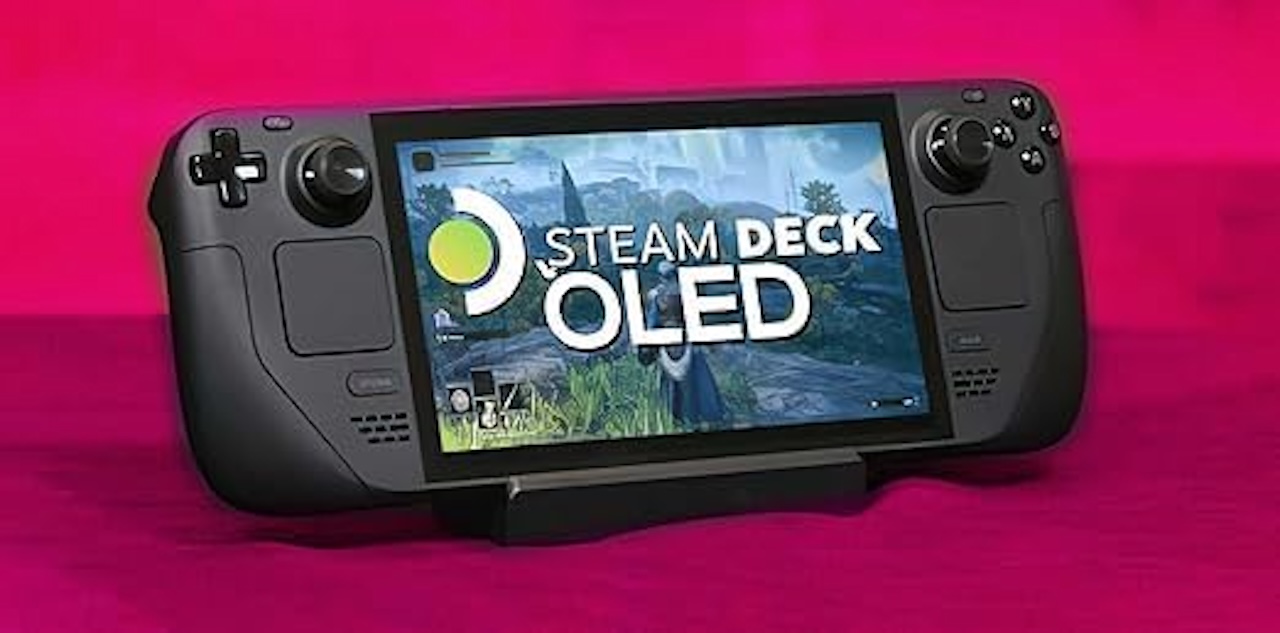 Those specifications remain usable, but the processor is no longer cutting-edge. Newer handheld PCs have moved considerably further in CPU and GPU performance, which matters most for players focused on demanding new AAA releases.
The Deck can still run an enormous selection of games, but buyers should now check performance for the specific newer titles they want to play rather than assuming they will get the experience they expect.
SteamOS is still one of the Deck’s strongest arguments
Benchmark charts explain why newer handhelds are faster, but not why the Deck is often easier to live with. SteamOS is designed around handheld gaming, presenting your Steam library, controller configuration, performance controls, downloads, and games through an interface built for a gamepad rather than a traditional desktop.
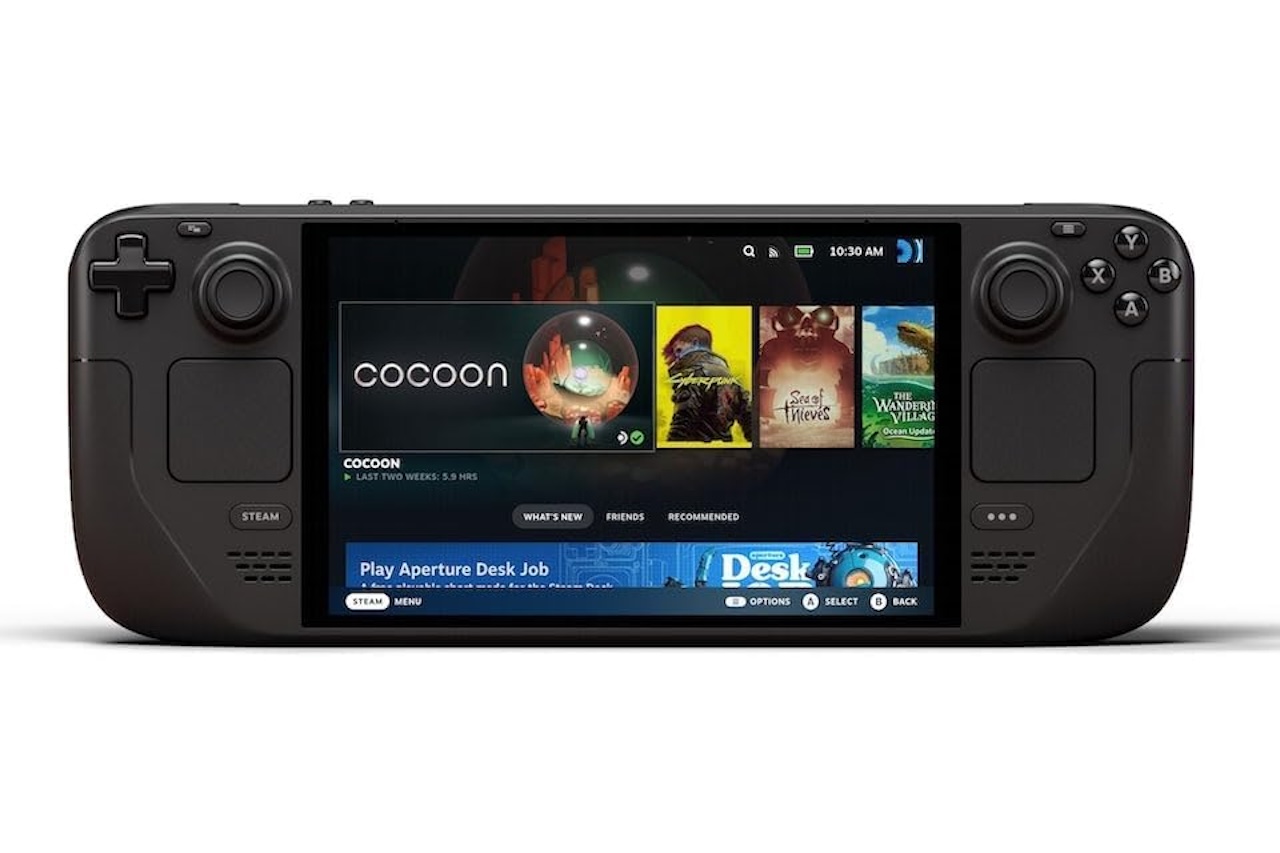 Compatibility has also grown considerably. By early September 2026, about 30,000 Steam games were classified as either Verified or Playable for Steam Deck. Those labels still need context: “Verified” does not guarantee a particular frame rate, while “Playable” can involve compromises such as using the on-screen keyboard or dealing with small text.
Some games remain incompatible because of anti-cheat systems or other software requirements. Even with those limitations, the scale of the supported library helps explain why the Deck can feel more mature than its aging hardware suggests.
The trackpads remain genuinely useful
Valve also gives the Deck control options that are not universal among competing handhelds. Alongside conventional gamepad controls, gyro aiming, and four assignable rear buttons, it has two 32.5mm haptic trackpads.
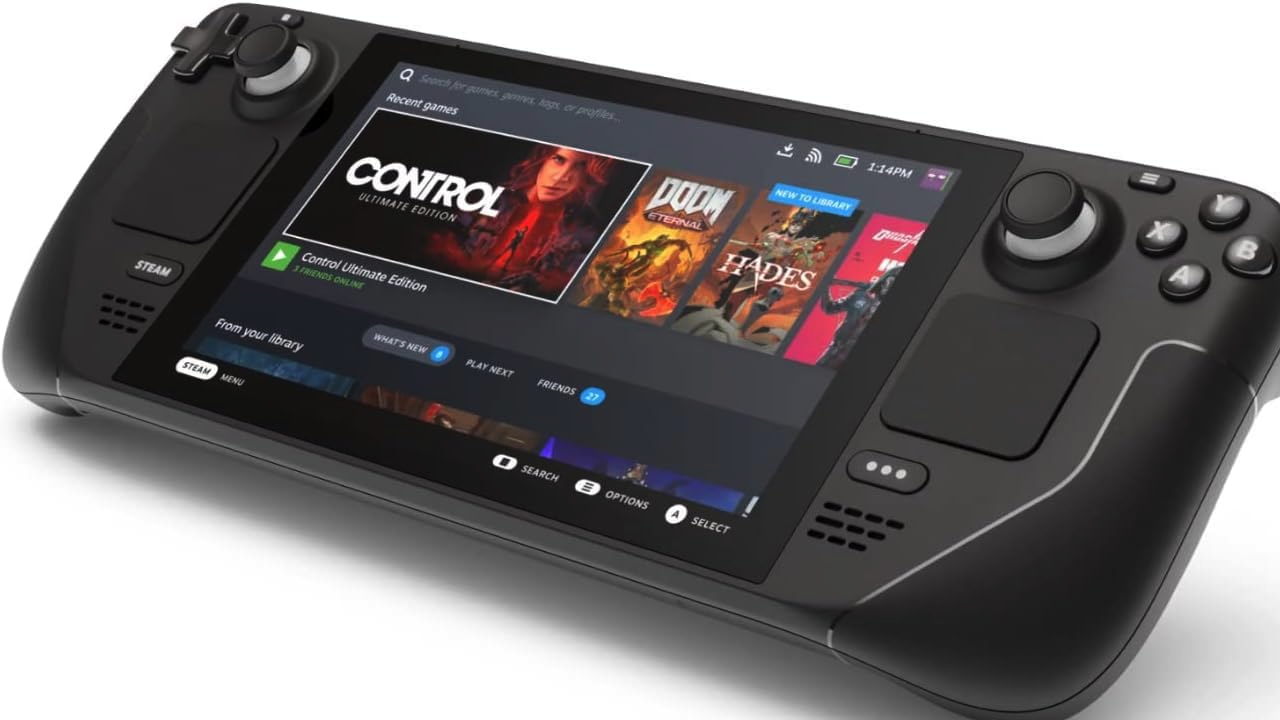 For controller-focused games, the trackpads may not matter much. But for strategy games, management titles, older PC releases, desktop navigation, and games originally designed around mouse input, they provide useful flexibility.
That is particularly valuable for a Steam library that may include decades of PC games built around very different control schemes. The Deck remains one of the few handheld PCs that can make those games reasonably practical away from a desk.
Pricing changes the equation
Valve’s price increase is where the Steam Deck OLED stops being an easy recommendation. Valve raised the U.S. price of the 512GB Steam Deck OLED to $789 and the 1TB model to $949 in May, citing rising memory and storage costs alongside broader logistical challenges.
Valve did not make a hardware change alongside the price increase. Buyers paying those prices now have more reason to compare the Deck with newer handheld PCs that offer newer processors, different displays, Windows compatibility, larger batteries, or other hardware advantages.
That does not automatically make a competing handheld the better purchase. It does mean the Steam Deck increasingly has to justify itself through SteamOS, its controls, compatibility, and overall ease of use rather than specifications or price.
 Waiting for Steam Deck 2 is not a predictable strategy
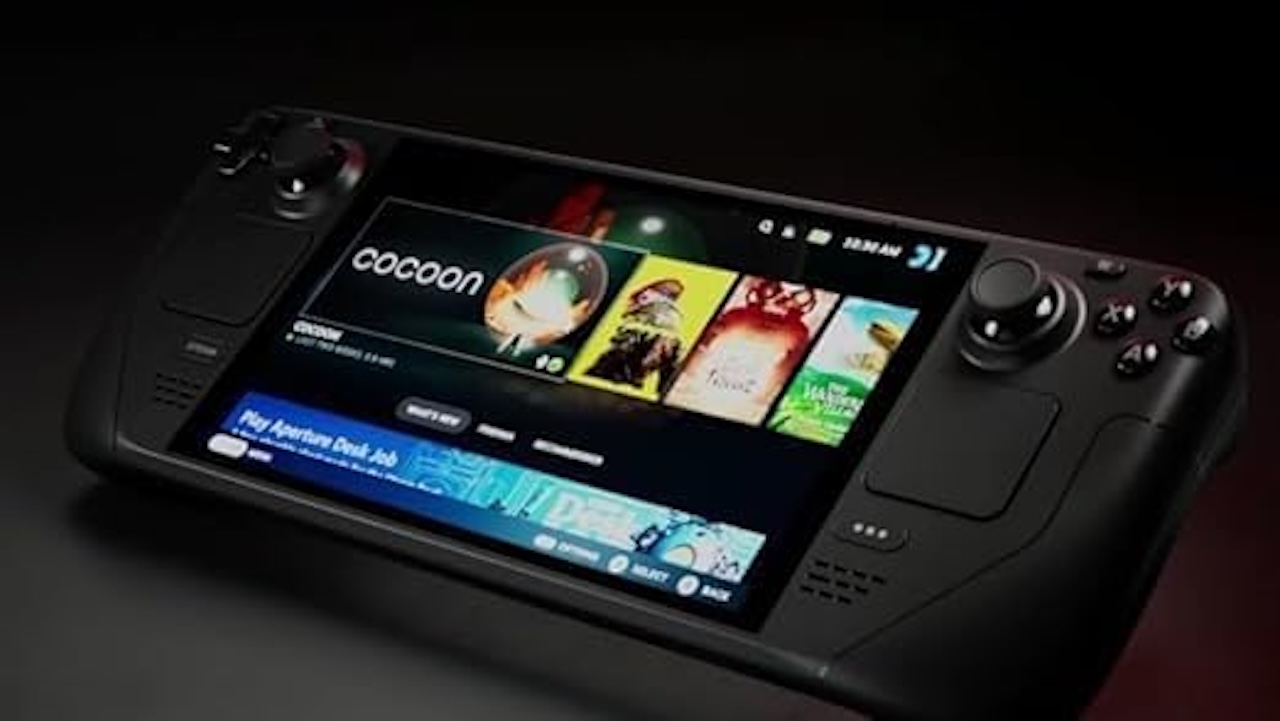
Waiting for a Steam Deck successor is understandable, but Valve has not announced a release date and has said it will not launch one for only a modest performance gain. The company wants a meaningful leap in speed without compromising the efficiency and battery life that make a handheld practical.
A next-generation Deck could be significantly faster, but there is no reliable timetable. If you want a handheld now, compare the current Steam Deck with available alternatives, not an unannounced device.
A software-and-controls purchase
In 2026, the Deck is a software-and-controls purchase, not a performance bargain. The Steam Deck OLED still makes sense for players with substantial Steam libraries who value SteamOS, Valve’s versatile controls, and a polished, console-like handheld experience over maximum performance.
Consider alternatives if you prioritize demanding new AAA games, need Windows-specific software or unsupported multiplayer titles, or want the strongest hardware near the Deck’s new price range.
Its 90Hz HDR OLED display, trackpads, mature software, and broad compatible library remain meaningful advantages. The issue is value: Valve now charges substantially more for essentially unchanged performance.
Price: From $589.99
Where to Buy: Amazon
The Steam Deck is no longer the obvious budget entry point to handheld PC gaming. In 2026, it earns its place through SteamOS, its unusually flexible control system, and a mature ecosystem that makes PC gaming feel closer to picking up a console and playing.
