
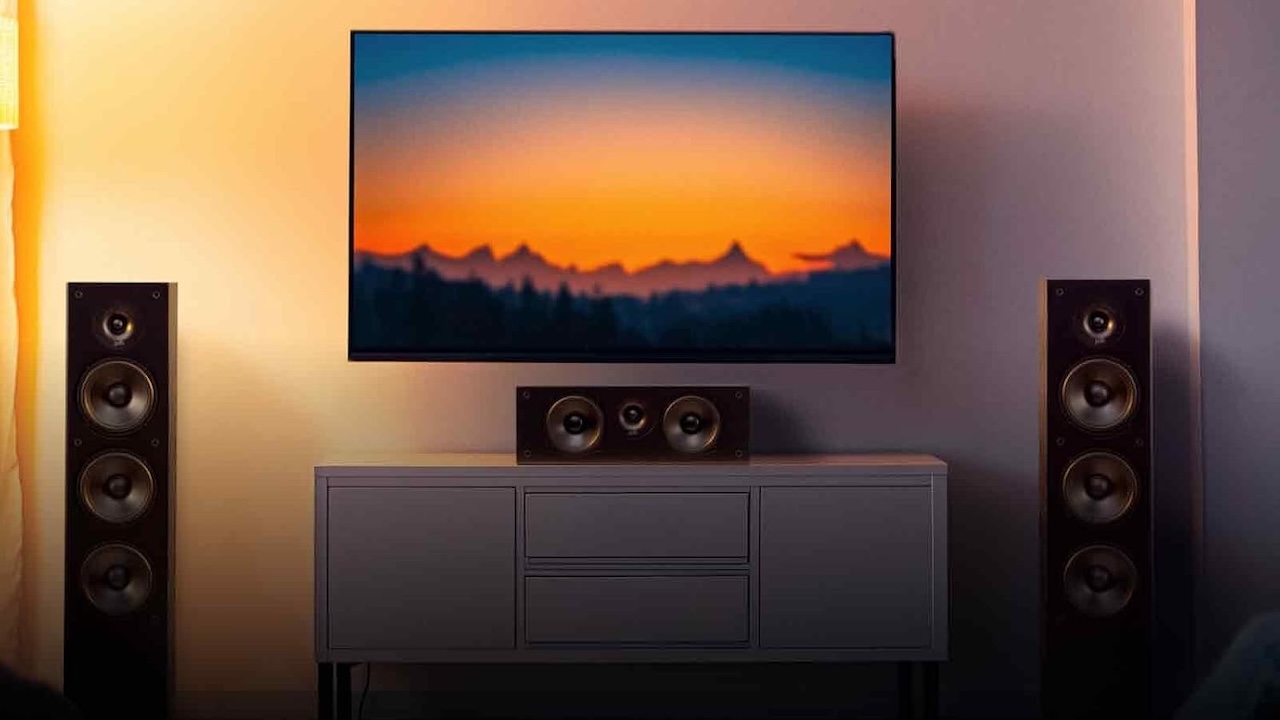
Moving from a soundbar or bookshelf speakers to tower speakers sounds simple until you start shopping. Amazon listings include floorstanding models ranging from affordable starters to large three-way designs, but a bigger cabinet does not automatically mean a better fit for your room.
Most traditional tower speakers are passive. They need an AV receiver or stereo amplifier, speaker wire, and enough room to work properly. Some listings are priced for a single speaker while others include a pair, which makes quantity just as important as the headline price.
These four options solve different versions of the same problem. The Polk Audio T50 is the accessible starting point, the Klipsch R-600F emphasizes sensitivity for home theater, the ELAC Debut 3.0 DF63 steps into a more ambitious three-way design, and the Fluance Signature HFF gives buyers two genuinely large towers in one package.
1. Polk Audio T50: The Accessible Starting Point
A component system adds up quickly: beyond speakers, you may need a receiver, wire, a center channel, and eventually a subwoofer.
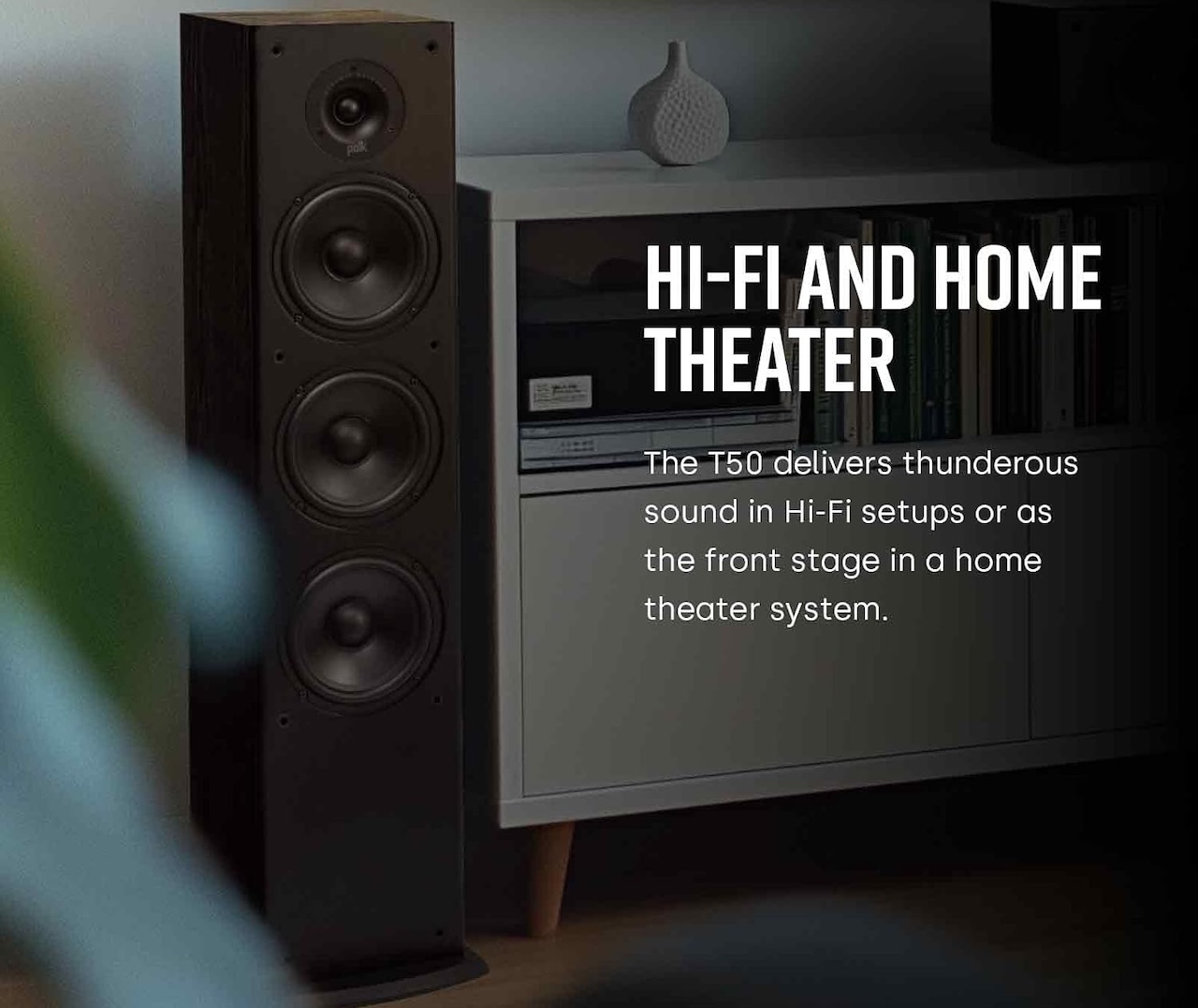
The Polk Audio T50 is an approachable starting point. At $249 each, remember that it is sold individually, so a stereo setup requires two.
Each tower has a 1-inch Terylene tweeter, two 6.5-inch woofers, and two 8-inch passive radiators. Polk rates it at 89 dB sensitivity, 25 to 200 watts per channel, and 35 Hz to 40 kHz.
Price: $249
Where to Buy: Amazon
That 35 Hz claim does not make the T50 a subwoofer replacement; passive radiators are not powered subs, and low-frequency output depends on the room.
Its real advantage is expandability: start with a stereo pair, then add a center channel, surrounds, and a powered subwoofer later.
Best fit: First-time component-audio buyers who want floorstanding speakers without spending heavily before the rest of the system is in place.
2. Klipsch R-600F: For Home Theater Buyers Who Want High Sensitivity
Home theater puts added demands on an AV receiver, making speaker sensitivity especially relevant.
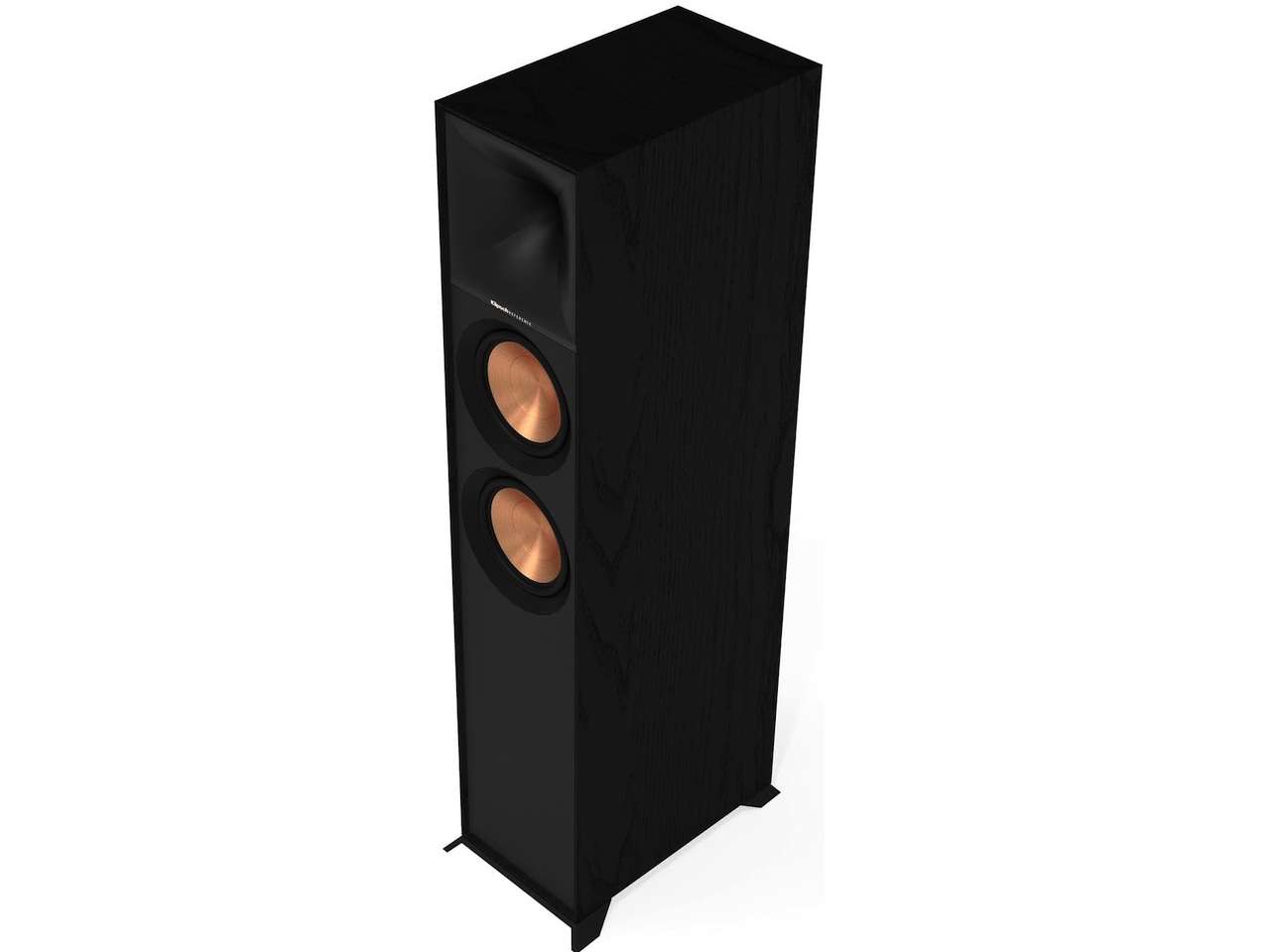
Klipsch rates the R-600F at 96 dB in-room sensitivity. Its design pairs a 1-inch aluminum LTS tweeter in a 90 x 90-degree Tractrix horn with dual 6.5-inch spun-copper TCP woofers. Published specs include a 38 Hz to 21 kHz response, 8-ohm compatibility, and 100 watts continuous or 400 watts peak power handling.
Price: $379.99
Where to Buy: Amazon
Higher sensitivity generally means a speaker can reach a given volume with less amplifier power, though it is not a guarantee of better sound.
The roughly 40-inch, 41-pound cabinet uses a rear-firing port, so leave room behind it rather than pushing it tightly against a wall. Also check whether a listing is for one speaker or a pair before comparing prices.
Best fit: Home theater buyers with medium or larger rooms who want a sensitive tower that should work comfortably with a conventional AV receiver.
3. ELAC Debut 3.0 DF63: The Step-Up Three-Way Choice
The ELAC Debut 3.0 DF63 is a step-up, three-way tower for buyers who want more than basic entry-level design without moving into high-end pricing.
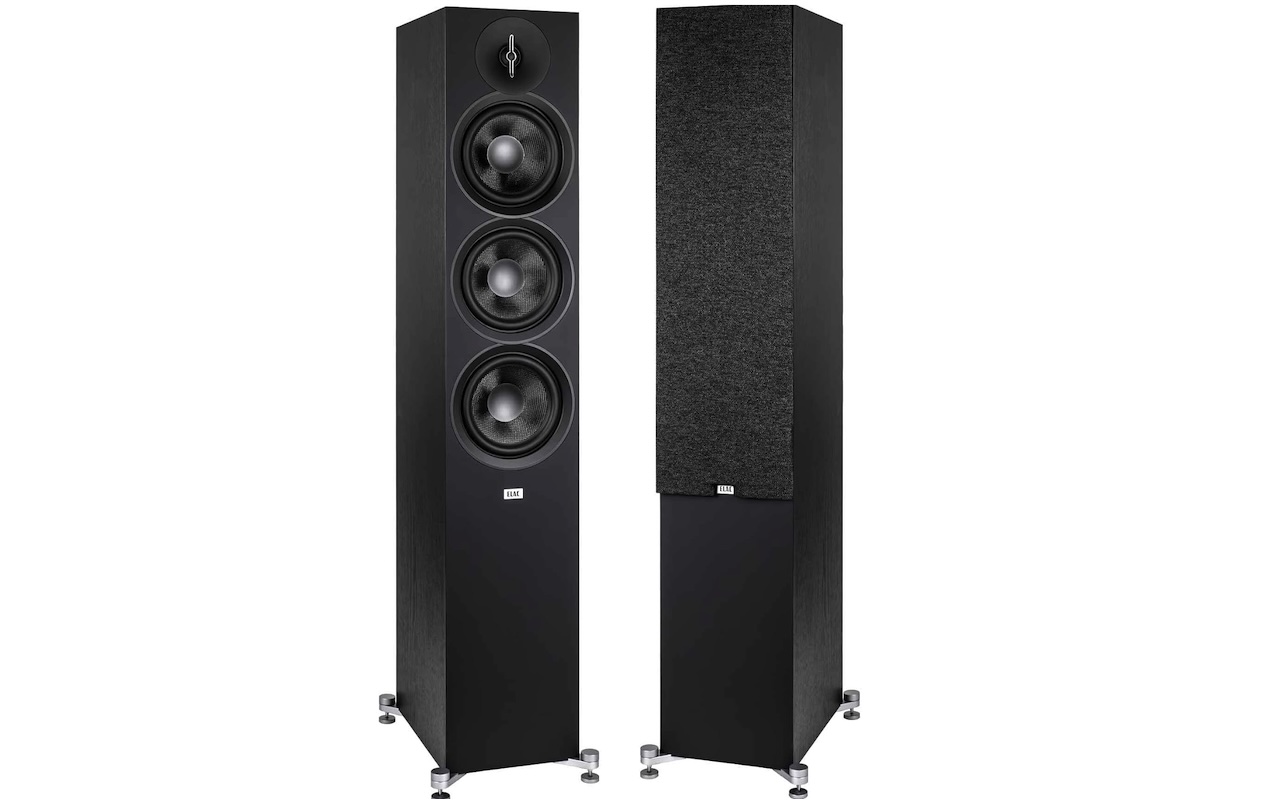
It uses a 1-inch aluminum dome tweeter, 6.5-inch aramid-fiber midrange, and dual 6.5-inch aramid-fiber woofers. ELAC rates it at 87.5 dB sensitivity with 30 to 180 watts per channel.
Price: $649.99
Where to Buy: Amazon
Its dedicated midrange lets separate drivers handle bass, midrange, and treble, though overall performance still depends on crossover design, placement, and room acoustics.
ELAC lists bass extension to 31 Hz at -6 dB and 46 Hz at -3 dB, so the lower number should not be interpreted as full-output bass response.
The DF63 has a 6-ohm nominal impedance and can dip to roughly 3.4 ohms in independent measurements. It can work with an AV receiver, but suitable amplification becomes more important at higher volumes or in a multichannel system.
Best fit: Buyers stepping into a more serious music or home theater system who want a true three-way tower and already have suitable amplification.
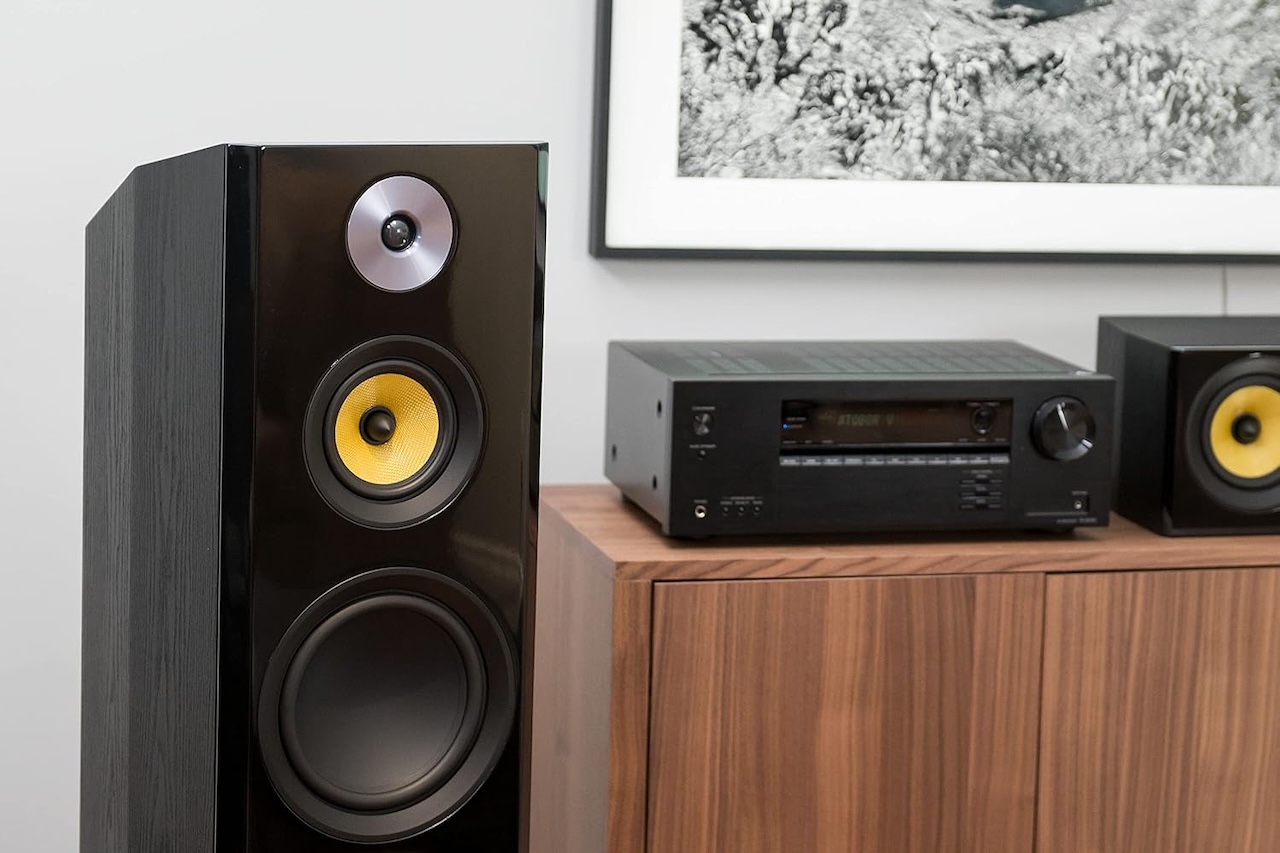
4. Fluance Signature HFF: When You Actually Want Big Speakers
The Fluance Signature HFF is for buyers who want genuinely large towers with more driver area for the low end.
Each speaker has a three-way, four-driver layout: a 1-inch silk-dome tweeter, 5-inch woven-glass-fiber midrange, and dual 8-inch polypropylene woofers. Fluance rates them at 89 dB sensitivity, 8-ohm compatible, 90 to 200 watts, and 35 Hz to 20 kHz.
Price: From $564
Where to Buy: Amazon
Unlike the other models here, the HFF package includes a stereo pair. Each tower is also substantial at 47.3 inches high, 15.4 inches deep, and more than 62 pounds, so measure your space before ordering.
The dual 8-inch woofers give the HFF more driver area than the smaller towers in this roundup, but the 35 Hz rating does not eliminate the need for a subwoofer. They may provide enough bass for music, while home theater systems will still benefit from a powered subwoofer.
Best fit: Buyers with a medium or large room who want a substantial stereo pair and prefer putting more of the low-frequency workload into the main speakers.
Which Tower Speaker Should You Buy?
The Polk Audio T50 is the sensible entry point because it leaves more of the budget available for the receiver and other pieces a component system requires. Just remember that its price is for one speaker.
The Klipsch R-600F makes the stronger case for home theater thanks to its high published sensitivity. The ELAC Debut 3.0 DF63 is the more ambitious step-up choice, with a true three-way design and dedicated midrange, but it deserves careful amplifier matching.
The Fluance Signature HFF is the easiest option to understand if you simply want large towers. The package includes the pair, each cabinet uses dual 8-inch woofers, and the size makes them better suited to buyers who already know they have enough placement space.
Before ordering, confirm whether the displayed price is for one speaker or a pair, verify the seller and exact model number, and make sure your receiver is suitable for the speaker’s impedance and power requirements.
The best tower speaker is not necessarily the tallest cabinet or the one with the lowest advertised bass number. It is the model whose size, quantity, amplification needs, and intended use fit the system you are actually building.
Auto Amazon Links: No products found.
