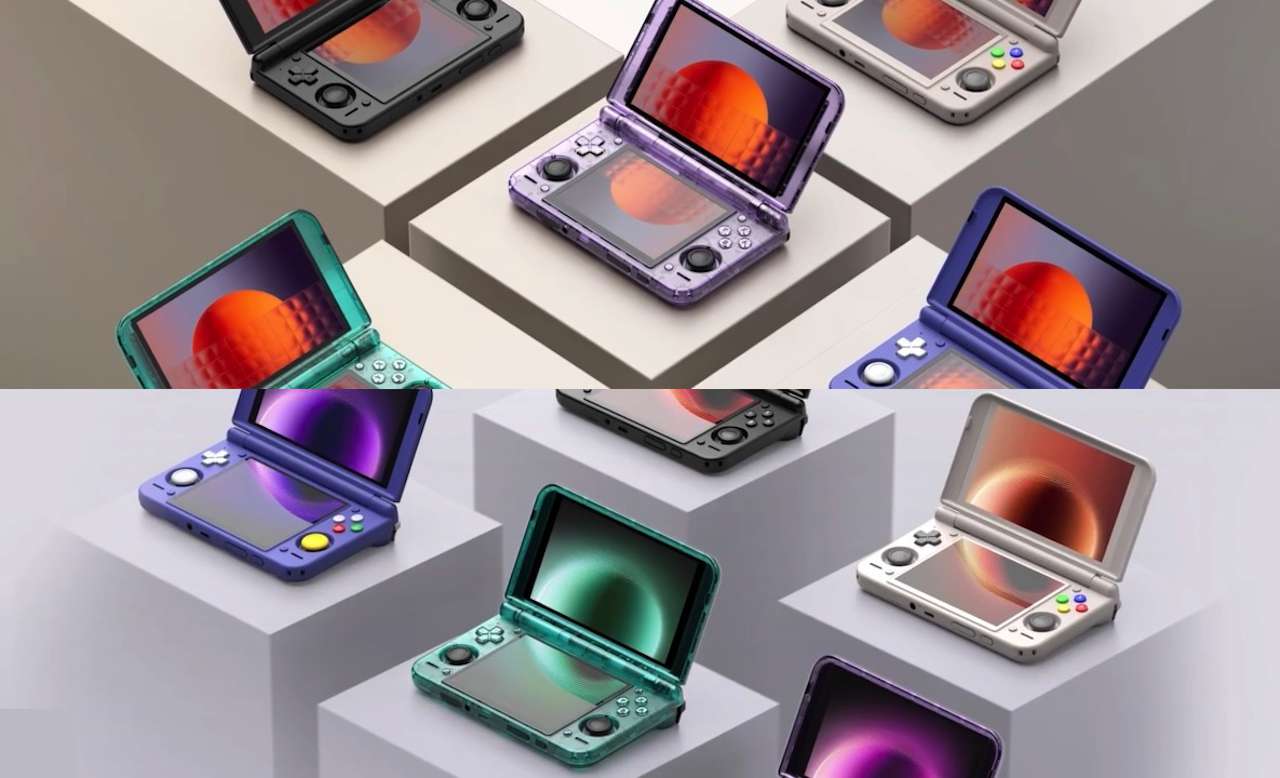
Nintendo DS and 3DS games create an awkward problem for modern retro handhelds. On a conventional widescreen device, players usually need to squeeze two displays onto one panel, enlarge one screen while shrinking the other, or assign a button to switch between them.
Retroid has already tried addressing that problem with its $69 Dual Screen Add-on, which attaches a second display to compatible handhelds. The new Retroid Pocket Duo and Pocket Duo Lite take a more natural approach by building two screens directly into a clamshell handheld. They are not simply different configurations of the same machine, either: the Duo and Duo Lite share the concept but differ substantially in their displays, processors, software, and controls.
The Pocket Duo gets two 120Hz OLED displays
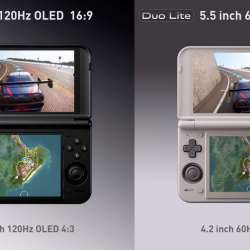
The standard Pocket Duo combines a 5.5-inch, 16:9, 120Hz OLED upper display with a 4.5-inch, 4:3, 120Hz OLED lower display. That layout could be a practical design choice for mixed-aspect-ratio games, leaving more room for widescreen content on top while providing a squarer lower panel for older titles and secondary-screen duties.
For DS and 3DS emulation, the practical advantage is straightforward. Two physical displays allow games designed around two screens to remain two-screen experiences instead of forcing an emulator to rearrange everything onto one panel.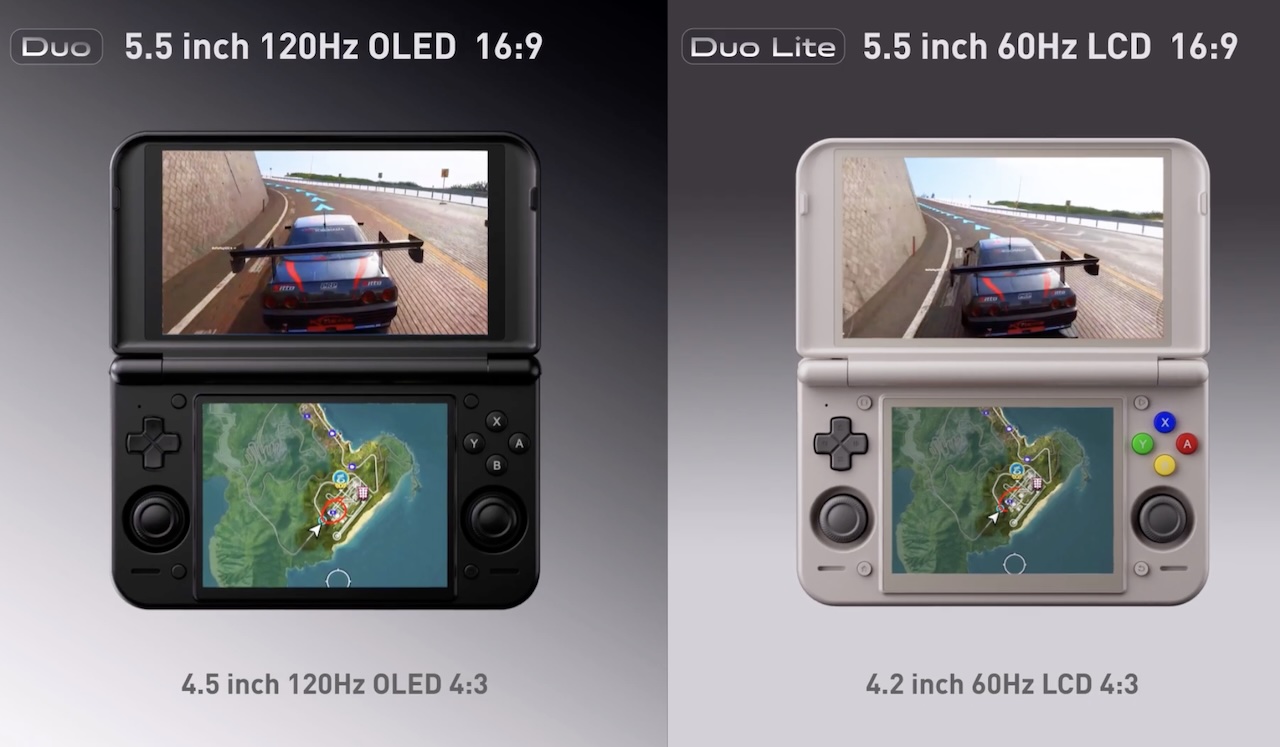
Retroid’s specifications and trailer cannot establish display quality, touch accuracy, hinge durability, software behavior, or long-session comfort. Those questions will require hands-on testing.
Duo Lite keeps the concept, cuts the hardware
The Pocket Duo Lite retains a 5.5-inch, 16:9, 60Hz LCD upper display and pairs it with a smaller 4:3, 60Hz LCD below. More important than the exact dimensions is the change in panel technology: the Lite trades the Duo’s 120Hz OLED screens for 60Hz LCDs while retaining the central advantage of two separate displays.
Retroid positions the Lite as its entry-level dual-screen handheld, which makes the intended role of the cheaper model clear. That is manufacturer positioning rather than an independent judgment of its performance.
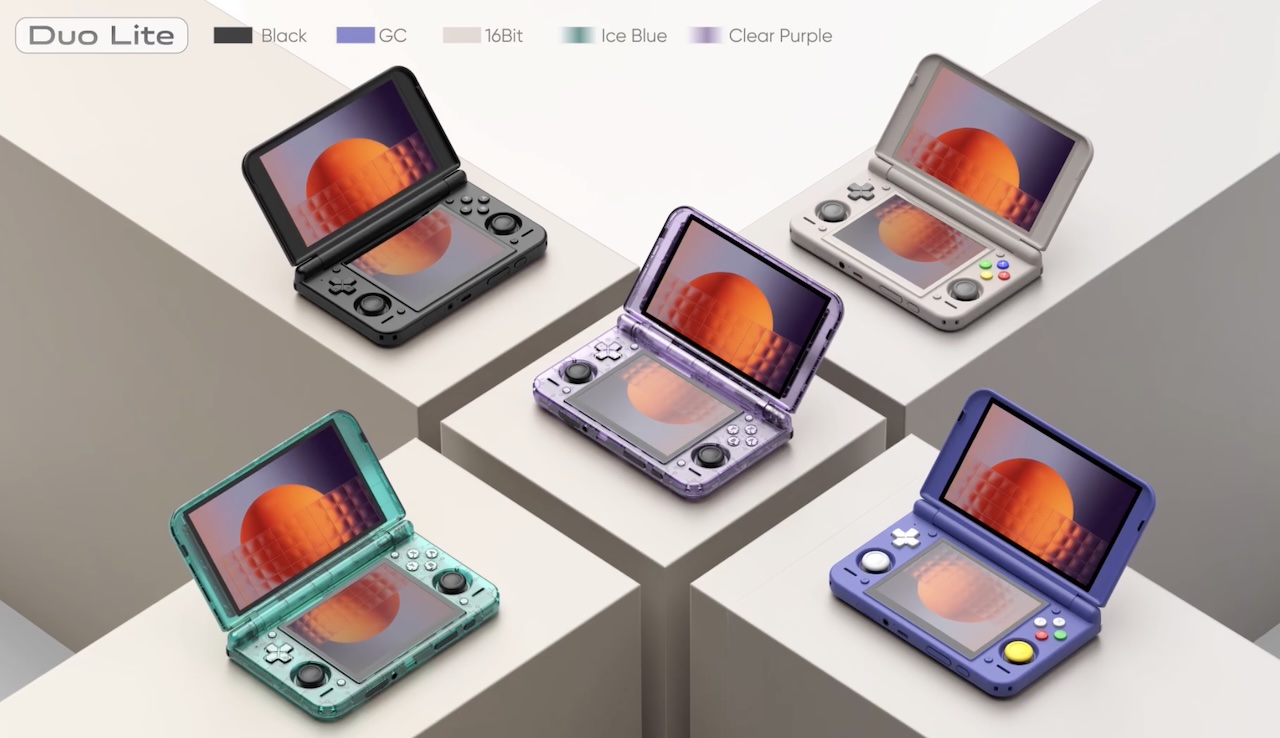
For many older games, a 60Hz display may be sufficient. If the LCD panels enable a meaningful price reduction, giving up OLED contrast and the higher refresh rate could be a sensible tradeoff.
The processor gap matters more
The biggest difference is performance. The Pocket Duo uses Qualcomm’s Dragonwing Q-7790 with Adreno 722 graphics, an eight-core CPU clocked up to 2.8GHz, and LPDDR5X support. The Duo Lite uses the older QCS6125, pairing an eight-core Kryo 260 CPU at up to 2GHz with Adreno 610 graphics.
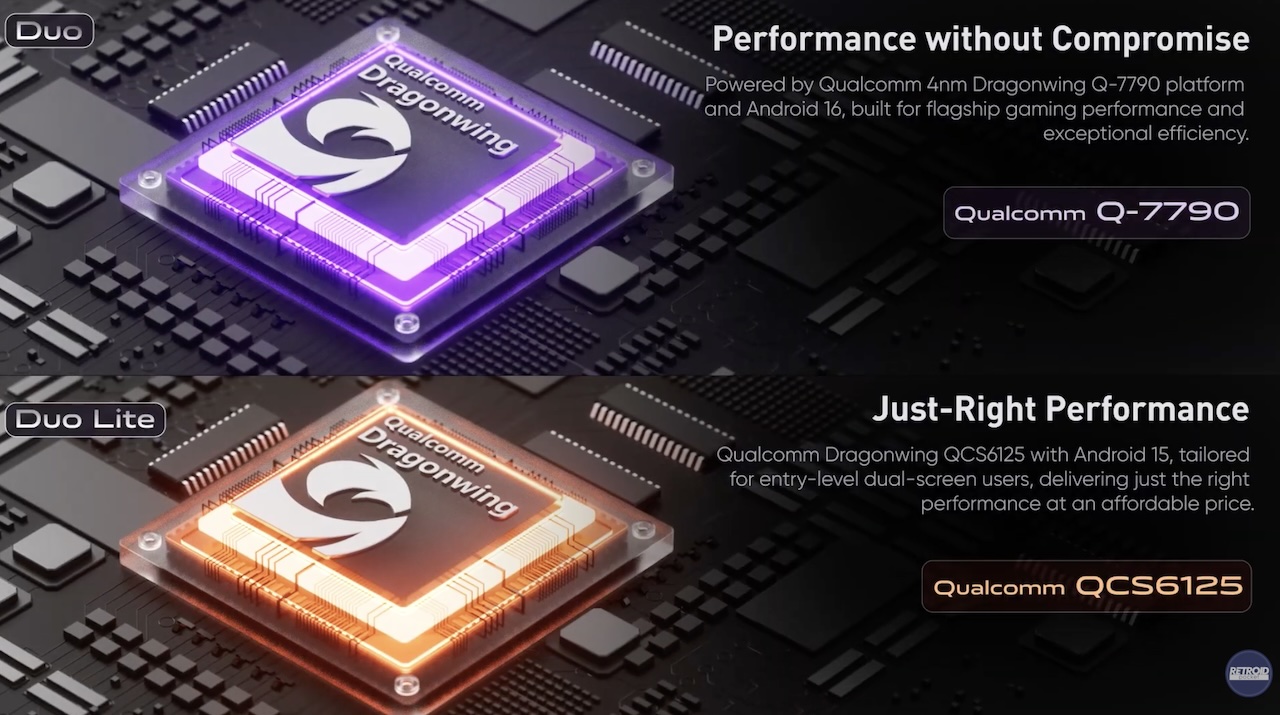 On paper, the Duo has a substantial performance advantage. That suggests more headroom for demanding emulators, but it does not guarantee performance in 3DS, PS2, Wii U, or Switch games; independent testing will have the final word.
Android versions reinforce the split
Another difference could get lost among the hardware specifications. The Pocket Duo runs Android 16, while the Pocket Duo Lite runs Android 15. A newer Android version does not automatically make the Duo faster, nor does Android 15 make the Lite unsuitable for emulation.
The difference does reinforce that Retroid is treating these as distinct platforms rather than merely swapping the screens and processor. Long-term software support will ultimately matter more than the version number, so Retroid’s update policy will be worth watching once these handhelds reach buyers.
 Both get cooling and 6,000mAh batteries
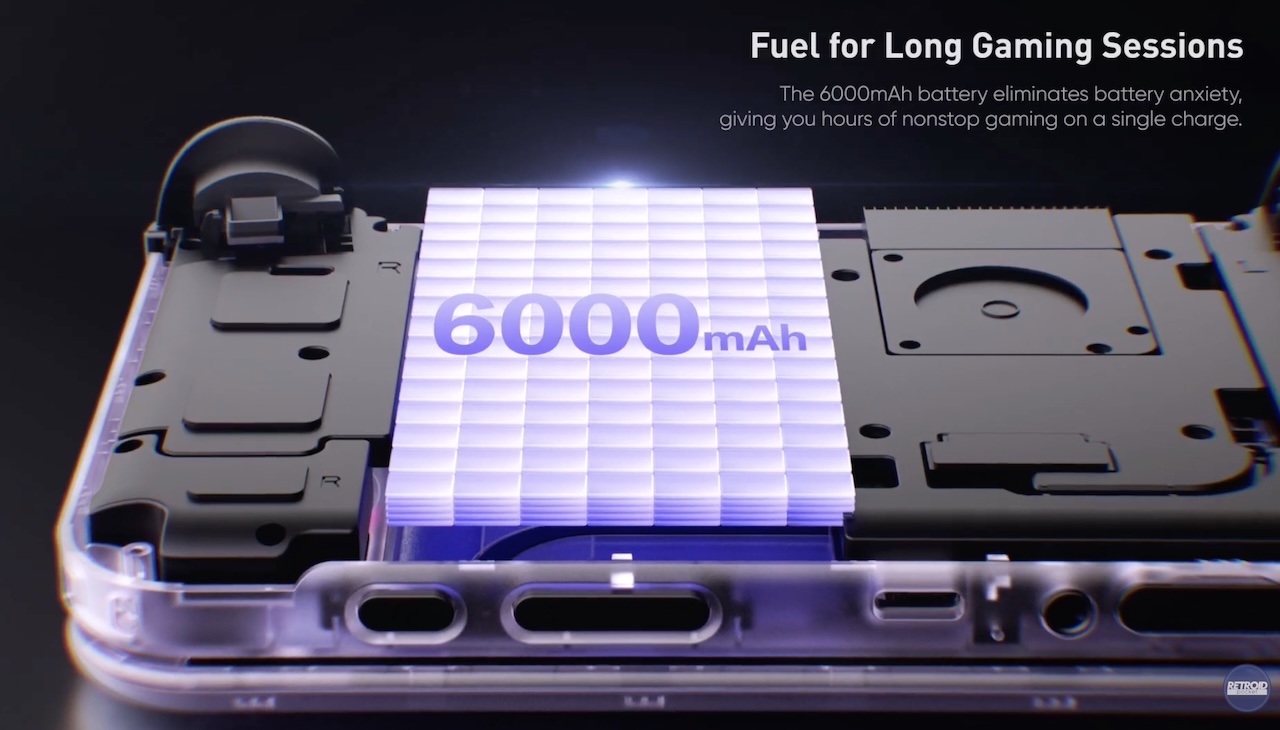
Retroid has not stripped every higher-end feature from the Lite. Both handhelds have active cooling and a 6,000mAh battery, giving the cheaper model the same stated battery capacity as its more powerful sibling.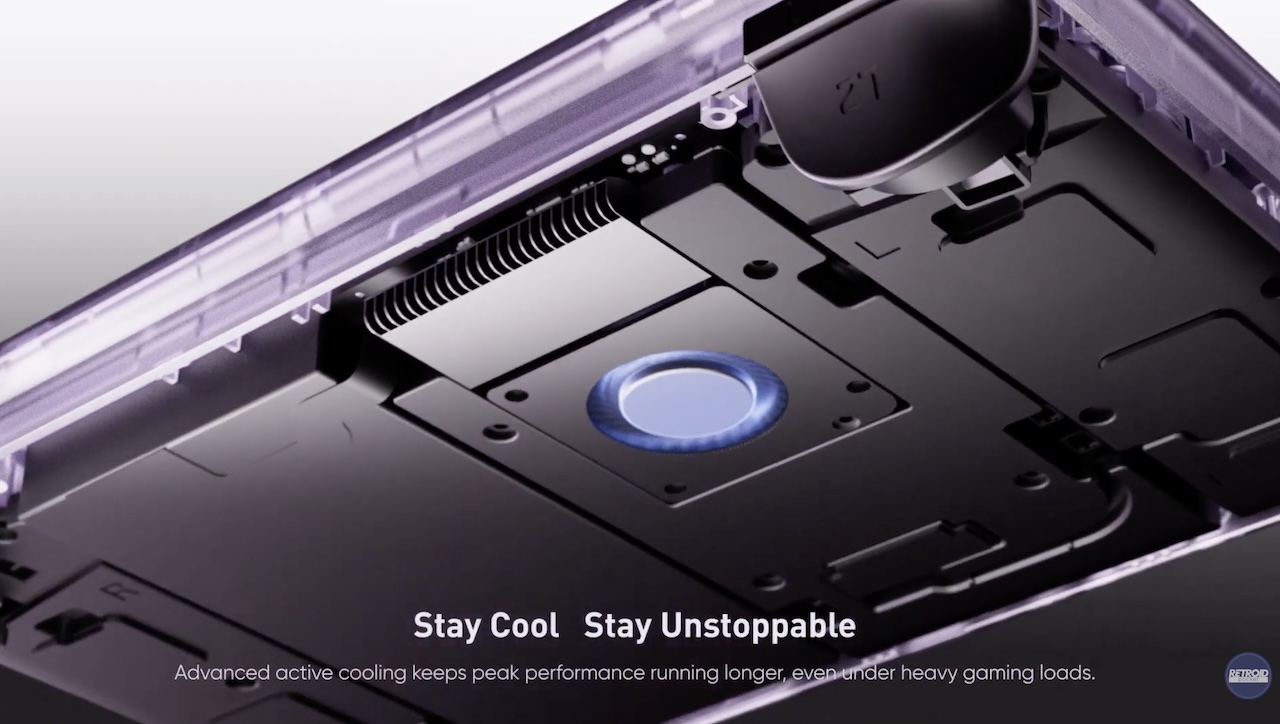
That 6,000mAh figure should not be confused with actual battery life. Two displays, processor load, brightness, refresh rate, wireless connectivity, cooling behavior, and emulator workload will all affect endurance.
The Duo’s OLED panels and 120Hz refresh rates will create different power demands from the Lite’s 60Hz LCDs, while their processors have very different performance characteristics. Actual runtime will need to be measured.
The controls show another split
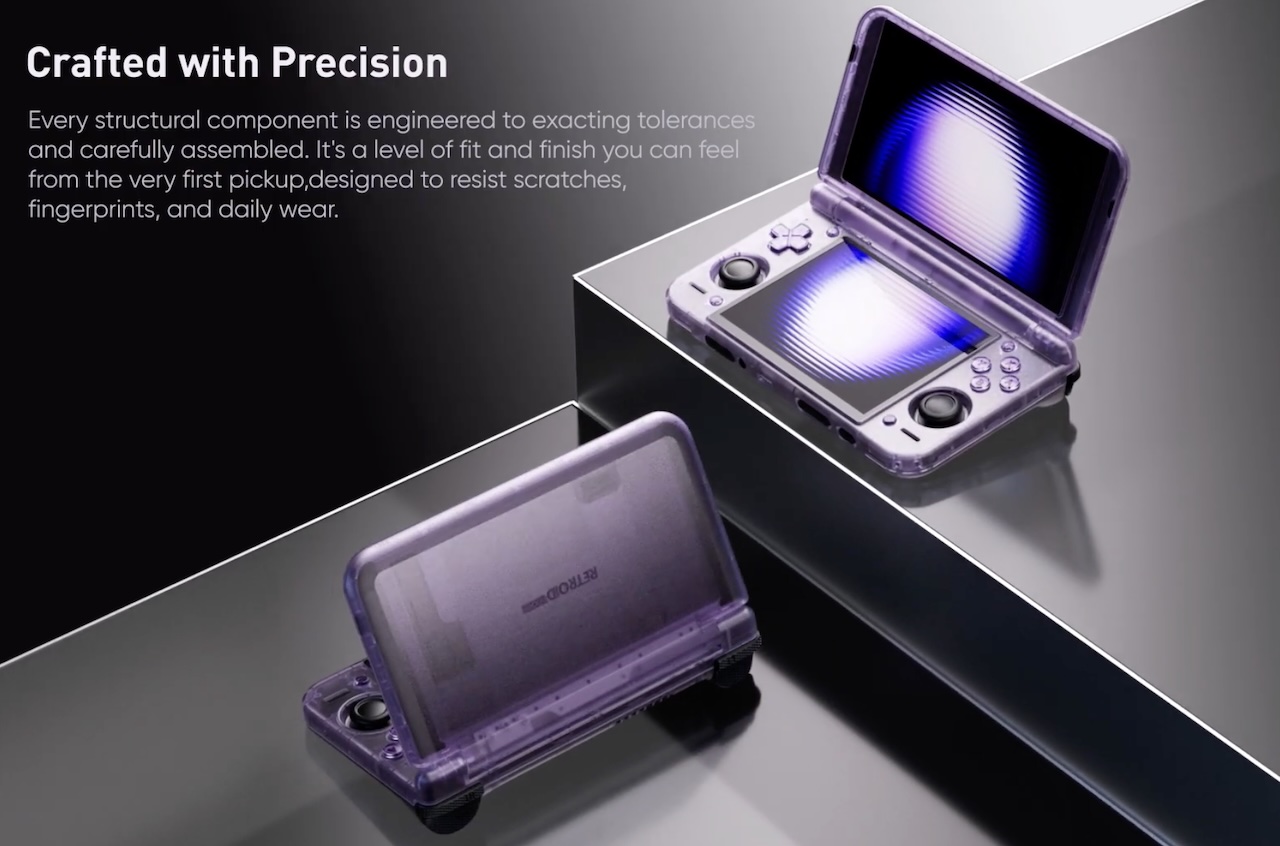
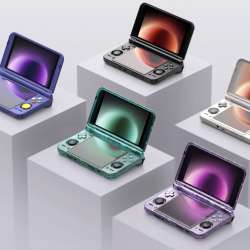
Retroid also differentiates the models around their shoulder controls. The standard Pocket Duo uses stacked triggers, while the Duo Lite moves to a flatter in-line arrangement. The hinge is shown opening through multiple positions up to 180 degrees, and both handhelds are being shown in five color schemes.
Those features are visible in Retroid’s promotional material, but comfort and durability remain unproven. A dual-screen clamshell puts considerable hardware above the player’s hands, so weight distribution, hinge resistance, grip shape, and trigger placement could matter as much as processor performance during longer sessions.
 A cleaner approach than an add-on
Retroid’s Dual Screen Add-on gives compatible Pocket handhelds a second display, but it is still another accessory to carry and manage.
The Duo family builds the second screen, hinge, controls, battery, and processor into one clamshell, a cleaner fit for games designed around two displays.
Software may matter as much as hardware. Screen assignment, touch input, sleep and resume, emulator setup, and transitions between single- and dual-screen games will determine whether that second display feels essential or merely looks good on a spec sheet.
Which model makes sense?
Retroid has revealed enough to distinguish the Pocket Duo from the Duo Lite, but price, RAM, storage, and release timing remain unknown. Those details matter most for the Lite, whose appeal will depend on how much it undercuts the standard model.

The Pocket Duo is the better fit for buyers who want a capable all-around Android handheld. Its Q-7790 chip, Adreno 722 graphics, dual 120Hz OLED displays, Android 16, and stacked triggers give it significantly more headroom.
The Duo Lite has a more focused role. Its QCS6125 chip, 60Hz LCDs, and Android 15 make it the entry-level option, but an aggressive price could make it compelling for players focused on dual-screen retro games.
If the price gap is small, the standard Duo’s newer hardware and OLED displays will be hard to pass up. Either way, the main draw is a handheld designed around games that originally used two screens.