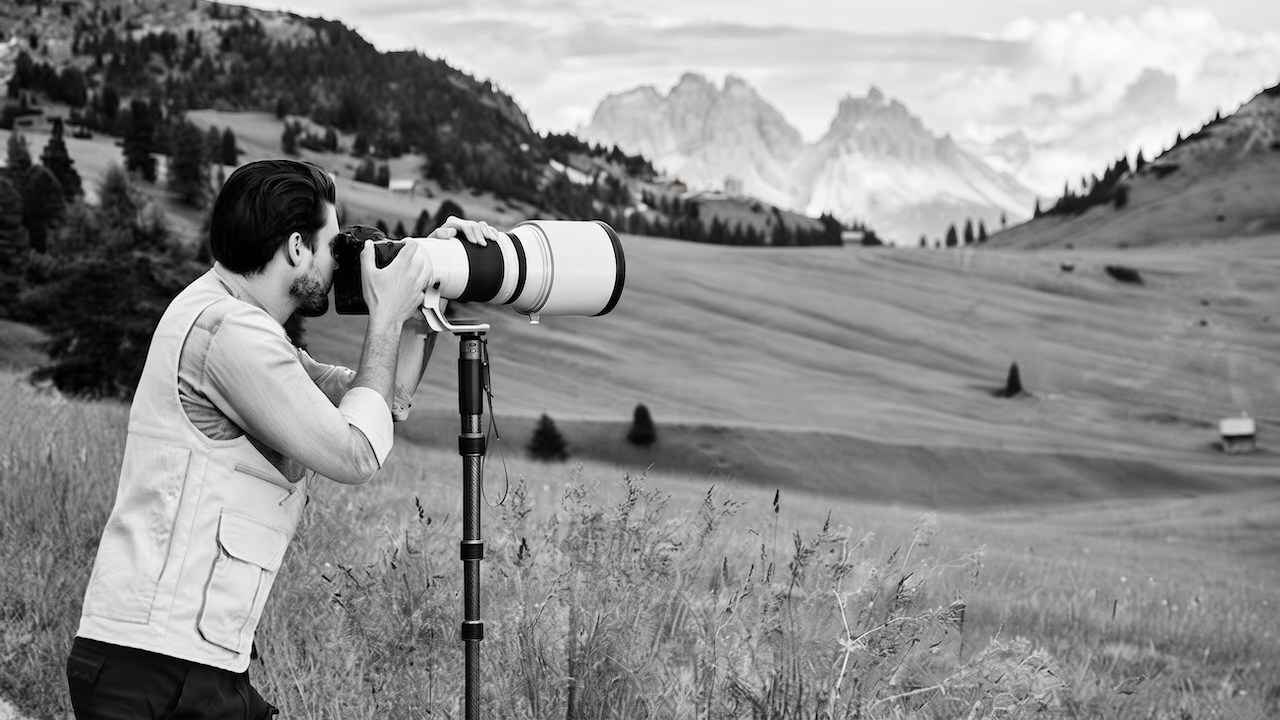
Tripods are excellent when your camera needs to stay still, but they’re not always practical when your subject refuses to cooperate. Wildlife moves, athletes change direction, wedding photographers work around guests, and travelers rarely want to deploy three legs every time they see a photograph worth taking.
A monopod offers a useful compromise. It transfers much of the weight of your camera and lens to the ground while reducing some of the movement that can contribute to soft handheld photographs. You can still reposition quickly, follow moving subjects, and work where spreading tripod legs would be inconvenient.
There’s an important limitation. A monopod cannot guarantee sharper photographs or freeze a moving subject. You still need an appropriate shutter speed and good technique. What it can provide is additional stability and support without sacrificing much mobility.
Here are five best monopods worth considering for different kinds of photographers.
1. Manfrotto Element MII Monopod: Best Everyday Choice
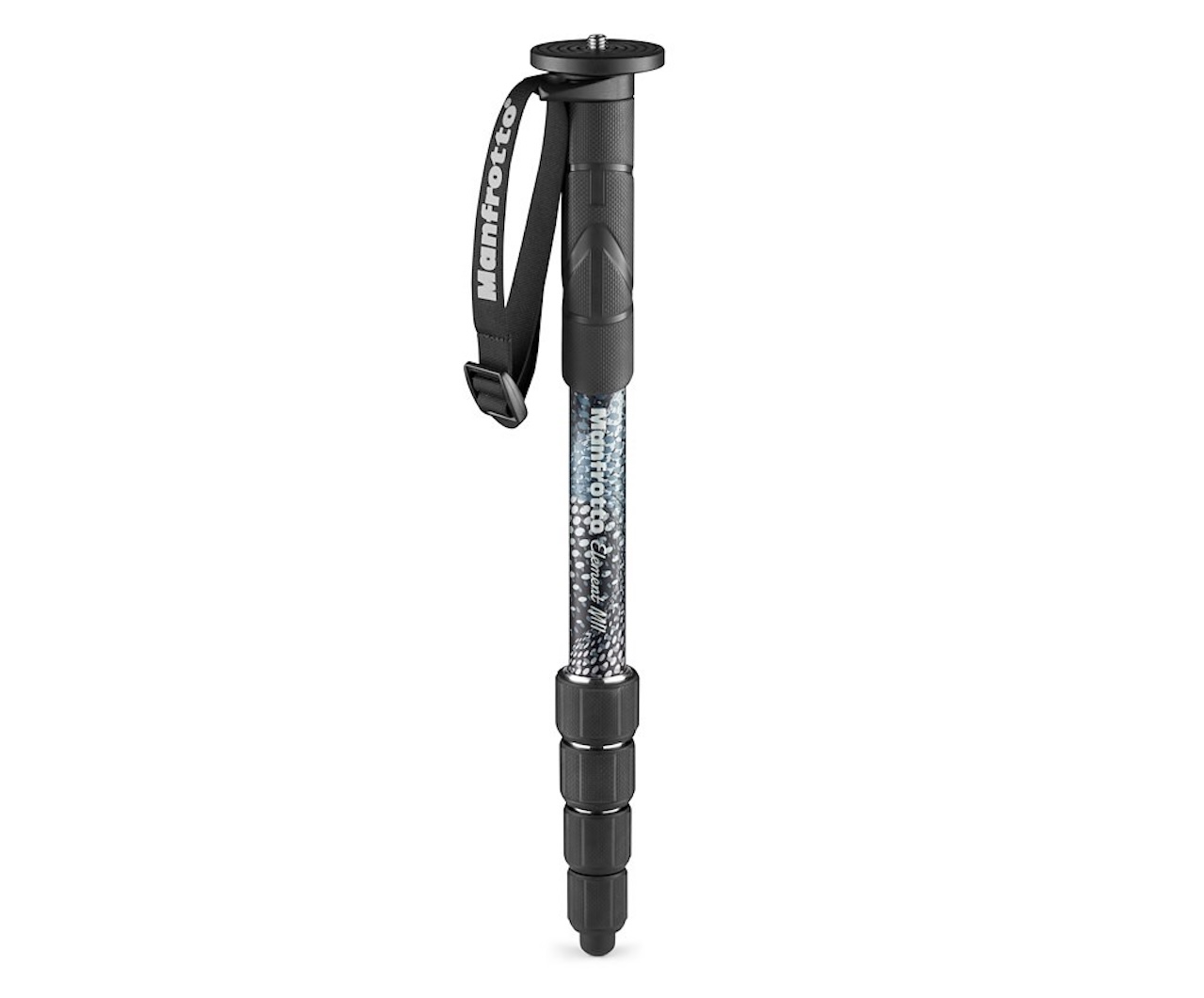
Support equipment doesn’t help when it’s too bulky to leave the house. That’s where the Manfrotto Element MII makes a strong case.
This five-section aluminum monopod weighs about 0.5 kg and collapses to 43 cm while extending to 159 cm. Manfrotto specifies a 16 kg safety payload, and the monopod includes twist locks and a reversible 1/4-inch and 3/8-inch mounting screw.
Price: $49.95
Where to Buy: Amazon
The combination of low weight and compact dimensions is what matters. At roughly 500 grams, the Element MII is relatively easy to strap to a backpack or carry alongside the rest of your camera gear. Once deployed, it can take much of the load of a camera and telephoto lens off your arms.
That becomes particularly useful when you’re waiting for wildlife, following athletes, or covering an event for several hours. Less effort spent holding the equipment can make it easier to maintain your composition and be ready when something happens.
Manfrotto’s 16 kg safety payload shouldn’t be interpreted as a recommendation to build a 16 kg camera rig. Real-world suitability also depends on the head, mounting hardware, camera setup, technique, and shooting conditions.
Buyer fit: The Element MII is the easy recommendation for travel, events, occasional wildlife, and photographers who want useful support without adding much weight.
2. Benro SupaDupa MSD46C: Best for Long Lenses
A lightweight monopod is useful until you’re working with a substantial telephoto lens and discover that your support doesn’t extend high enough or takes too long to adjust.
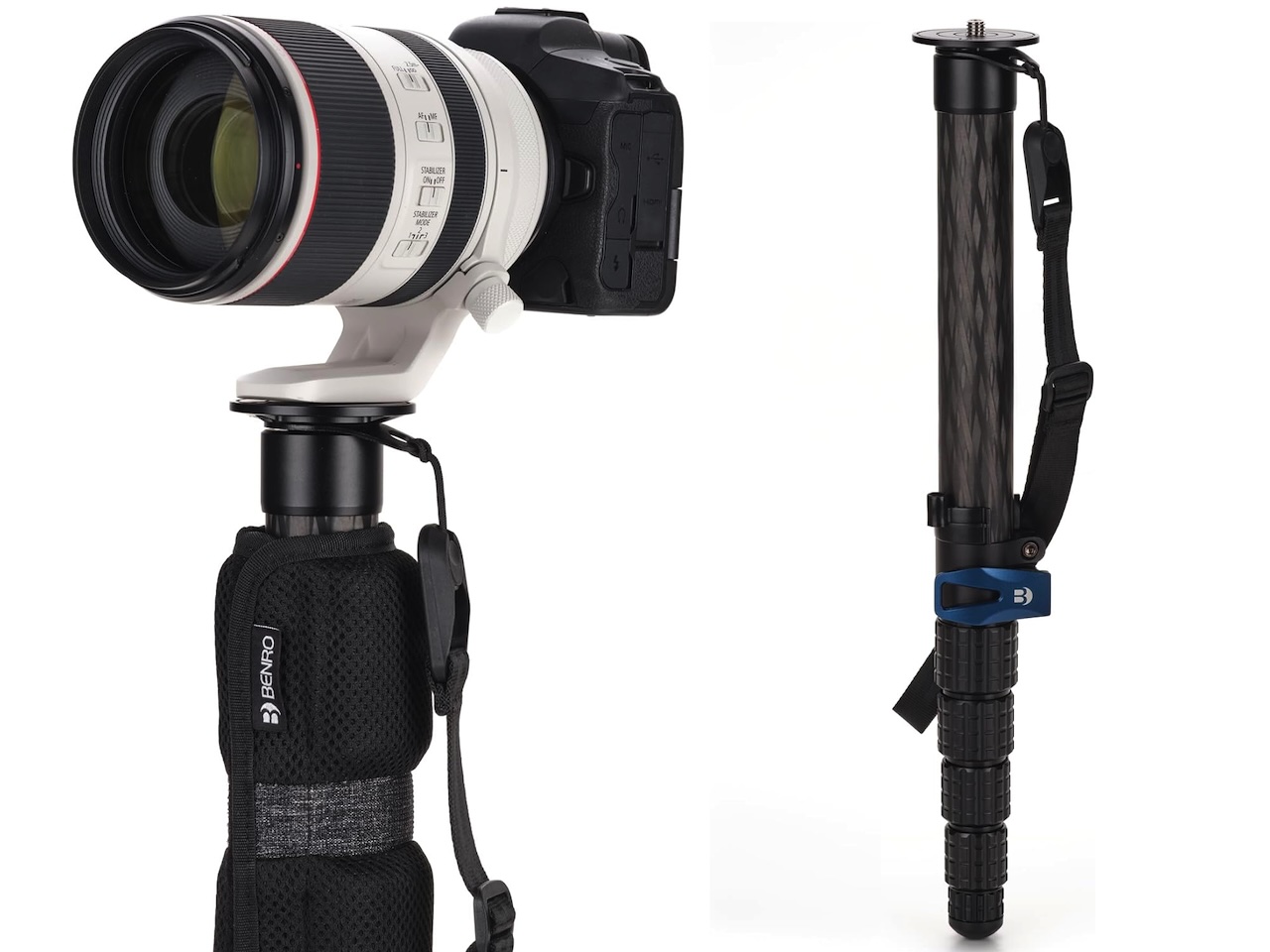
The carbon-fiber Benro SupaDupa MSD46C uses six sections, extends to approximately 183 cm, and collapses to about 45.5 cm. Benro lists its weight at approximately 0.59 kg and maximum payload at 40 kg.
Price: $169.95
Where to Buy: Amazon
The huge payload number makes for an impressive specification, but height, folded length, and adjustment controls are more likely to influence everyday use. Benro combines twist locks with a fast-action flip lock intended to make small height changes quicker.
The monopod also incorporates a rotating foot designed to make pivoting easier while the foot remains planted, and a spiked foot can replace the standard one when conditions require it.
Those features make sense for sports and wildlife photography. You’re often following subjects, changing angles, and adjusting shooting height rather than planting the camera in one position for several minutes.
Buyer fit: Choose the SupaDupa MSD46C if long lenses are a regular part of your photography and you want generous height, carbon-fiber construction, and a relatively compact folded package.
3. Gitzo GM4552L: Best Premium Monopod
Professional telephoto equipment creates a different support problem. You may carry a large lens and camera for hours, but adding a heavy tripod defeats part of the reason you’re trying to remain mobile.
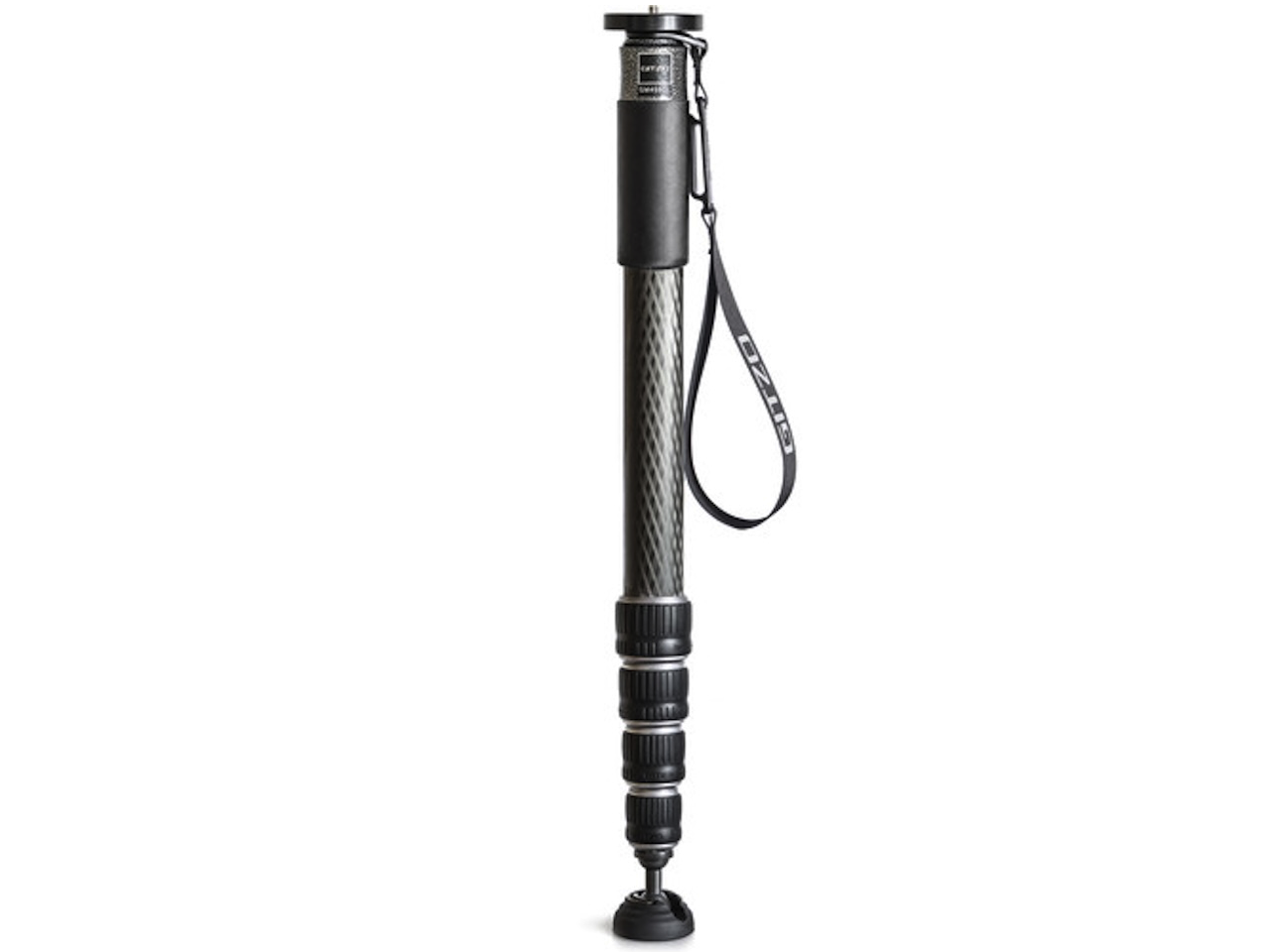
The Gitzo GM4552L is designed for demanding setups. This five-section Series 4 monopod uses Gitzo’s Carbon eXact tubing, reaches approximately 190 cm, collapses to around 56 cm, and weighs about 0.73 kg. Gitzo specifies a 30 kg safety payload.
Price: $379.95
Where to Buy: B&H
The useful story isn’t simply the payload. It’s the combination of substantial height, carbon construction, and relatively low weight. That 190 cm maximum height can also help when shooting above barriers or crowds, although safely controlling the camera becomes increasingly important as you raise it.
At the bottom is a rubber foot with a pivoting ball joint, allowing some angular movement while maintaining contact with the ground. That can be useful when tracking a moving subject because the monopod doesn’t have to behave like a completely rigid vertical post.
The obvious tradeoff is price. Most photographers don’t need a premium Series 4 carbon monopod or anything approaching its rated capacity.
Buyer fit: The GM4552L makes the most sense for serious wildlife and sports photographers using expensive long lenses who prioritize premium construction, height, and low weight over price.
4. SIRUI P-325FS: Best for Photo and Video
Still photographers generally want support without losing mobility. Video shooters have another problem because camera movement itself needs to look controlled.
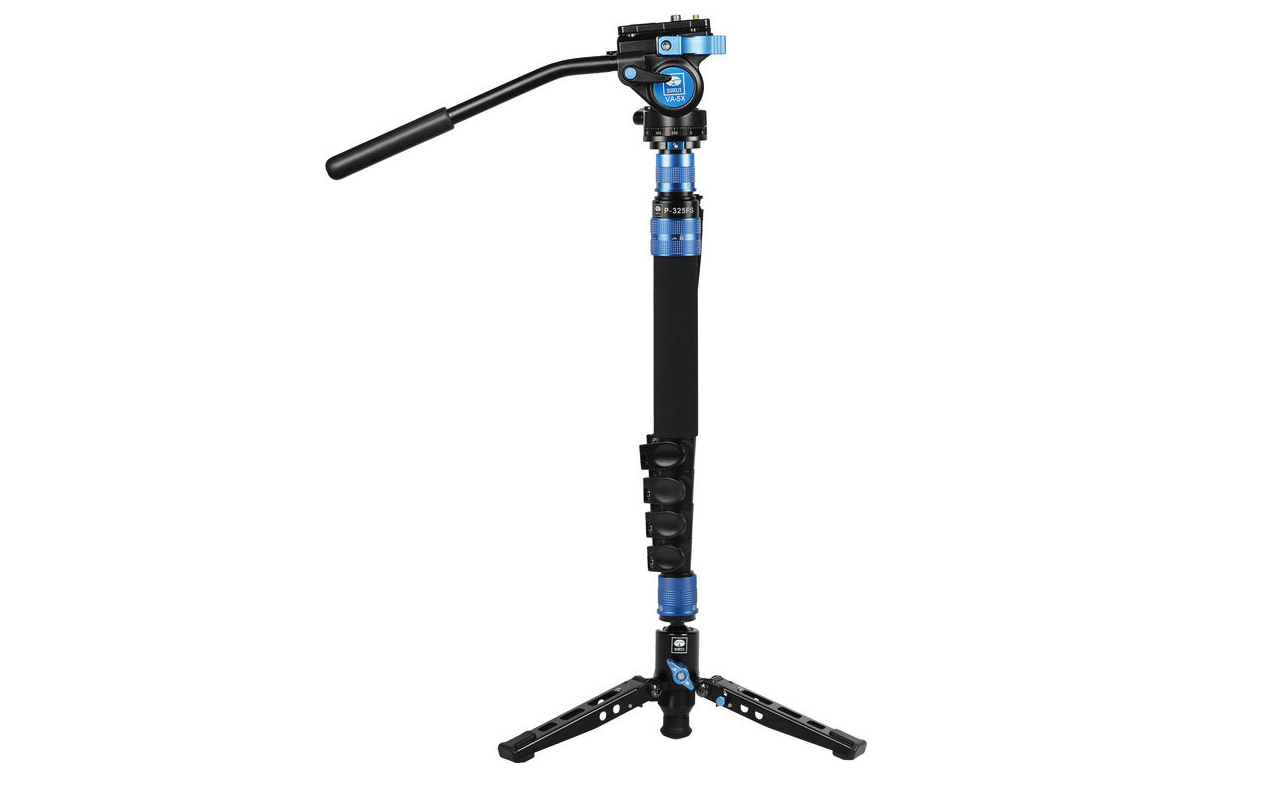
The SIRUI P-325FS addresses both jobs with a carbon-fiber monopod and removable three-foot base. SIRUI specifies a maximum height of around 170 cm with the base, a weight of approximately 1.17 kg, and a 10 kg maximum load.
The base allows the monopod to pivot and pan while remaining supported at ground level. That can be useful for video because it provides a more controlled way to follow a subject than balancing a conventional monopod on a single fixed foot. The base can also be detached and used as a low support.
Price: $89
Where to Buy: B&H
There is an important caveat. Three small feet don’t transform a monopod into a conventional tripod. Stability depends on the load, surface, center of gravity, and environment, so expensive camera equipment shouldn’t be assumed safe to leave unattended simply because the monopod can stand upright.
Buyer fit: The P-325FS is the most interesting choice here for hybrid shooters who regularly move between still photography and video and will benefit from its pivoting three-foot base.
5. iFootage Cobra 3 Strike: Best for Fast Setup
Traditional monopods are simple, but repeatedly changing their height can become tedious. Unlock the sections, adjust them, lock everything again, and repeat when your shooting position changes.
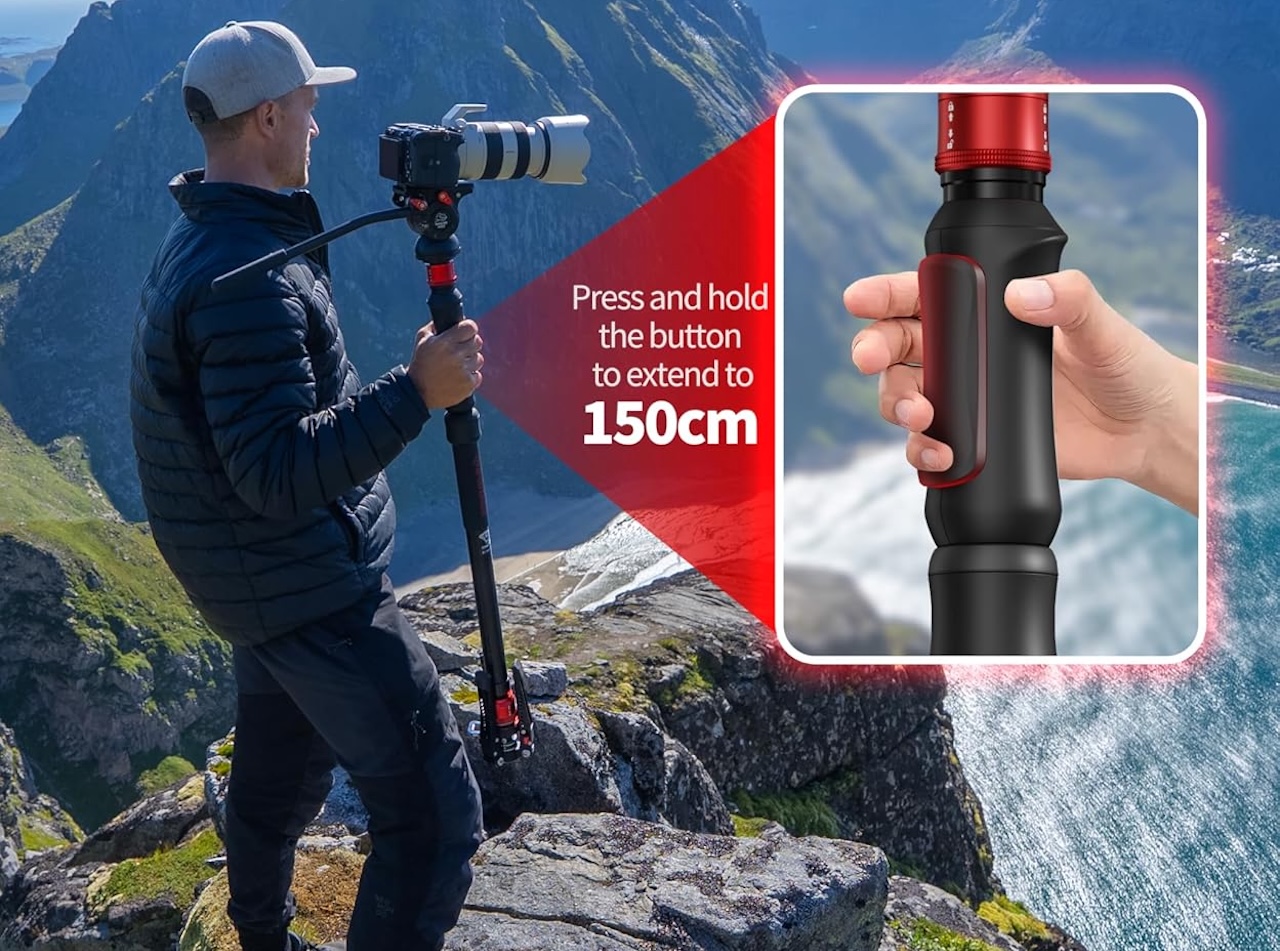
The iFootage Cobra 3 Strike is designed to reduce that friction. Its standout feature is a one-touch adjustment system that lets you release the leg, move it to the desired height, and lock it again without individually operating several conventional leg locks. The system also uses iFootage’s quick-release hardware for attaching compatible equipment.
Price: $269
Where to Buy: Amazon
Published specifications put the Strike monopod at approximately 138 cm maximum height by itself, around 71.5 cm folded, and roughly 1 kg in weight, with a stated 5 kg payload. Configurations using the company’s Base-P increase the working height.
Those figures reveal the tradeoff. This isn’t the lightest or most compact monopod here, and its specified payload is lower than the Benro and Gitzo. Its reason for being is speed.
For wedding, event, documentary, and video shooters who constantly change position and camera height, faster adjustments could matter more than carrying the lightest possible support.
Buyer fit: Choose the Cobra 3 Strike if rapid adjustment is your priority and you’re willing to carry a larger monopod to get it.
Which monopod should you buy?
The Manfrotto Element MII is the easy pick for photographers who want a light monopod they’ll actually carry. The Benro SupaDupa MSD46C suits frequent telephoto work, while the Gitzo GM4552L is for shooters who value premium carbon construction and extra height.
The SIRUI P-325FS is the standout for hybrid photo and video work, thanks to its pivoting three-foot base. The iFootage Cobra 3 Strike is best for shooters who value rapid height adjustments over a compact packed size.
No monopod can fix poor technique, freeze subject motion, or guarantee tack-sharp images. But it can take the weight of a camera and lens off your arms, add ground contact, and help you hold framing more steadily, without sacrificing mobility.