A lot of fixed-blade knives look impressive online but become harder to justify once you consider what you’re actually buying. Some lean heavily on tactical styling, while others use complicated designs or unfamiliar materials without offering much history or identity to go with them.
KA-BAR USMC Knife
Price: $107.41
Where to Buy: Amazon
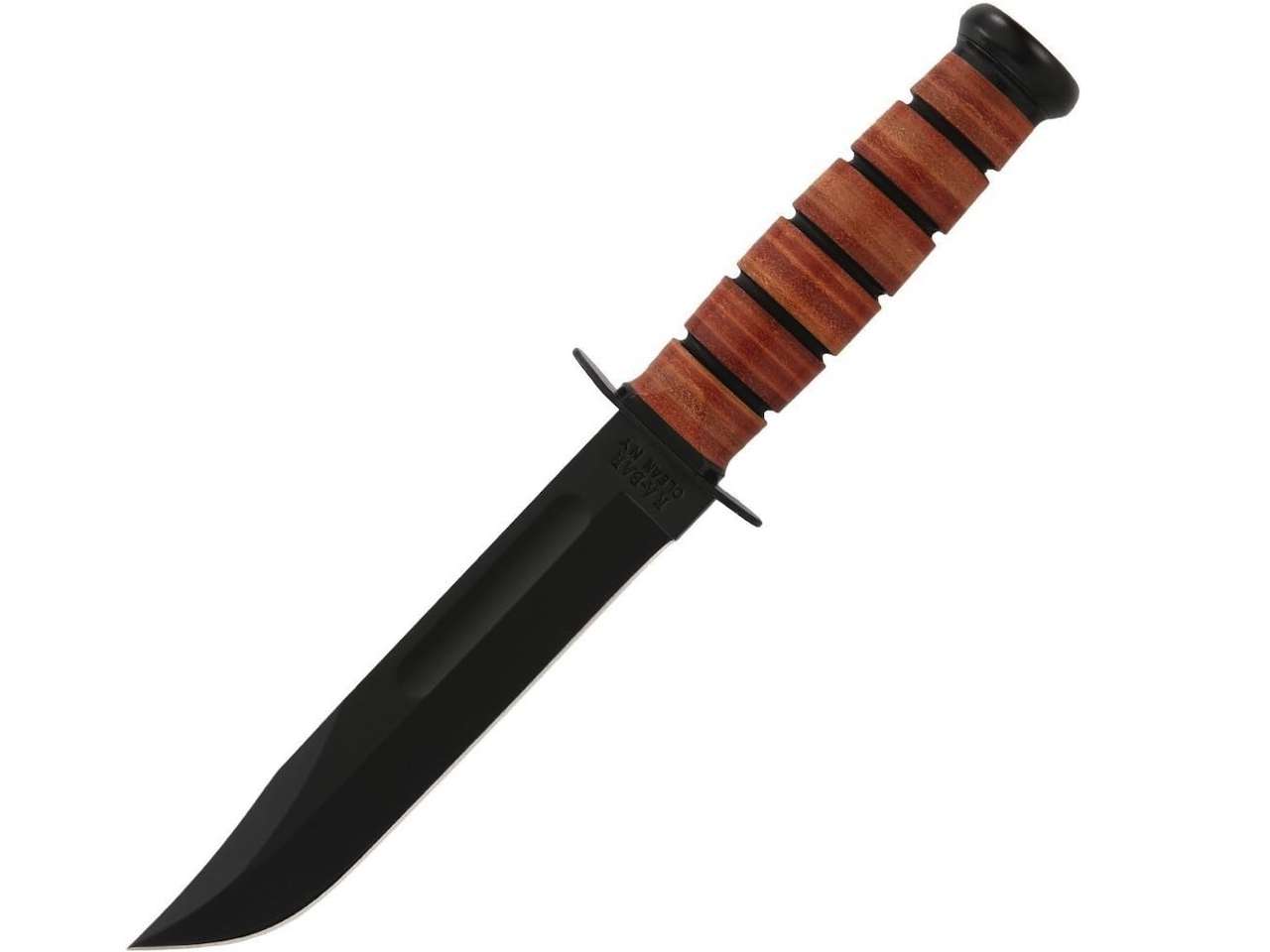
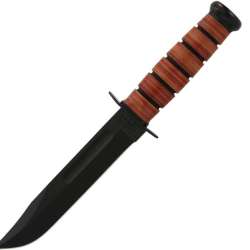
The KA-BAR USMC Fighting/Utility Knife, commonly sold as model 1217, takes a different approach. Its design lineage reaches back to World War II, while the current version retains the stacked-leather handle, 7-inch blade, and unmistakable profile associated with the classic KA-BAR.
For collectors and outdoor users who appreciate traditional equipment, that combination gives the KA-BAR an appeal that newer designs can struggle to replicate.
This is one knife where provenance adds real value
The design lineage traces to the 1219C2 Fighting/Utility Knife adopted by the U.S. Marine Corps in late 1942. Several manufacturers produced knives to the military pattern during World War II, but KA-BAR says its name became so closely associated with the design that “Kabar” became a common name for the pattern regardless of manufacturer.
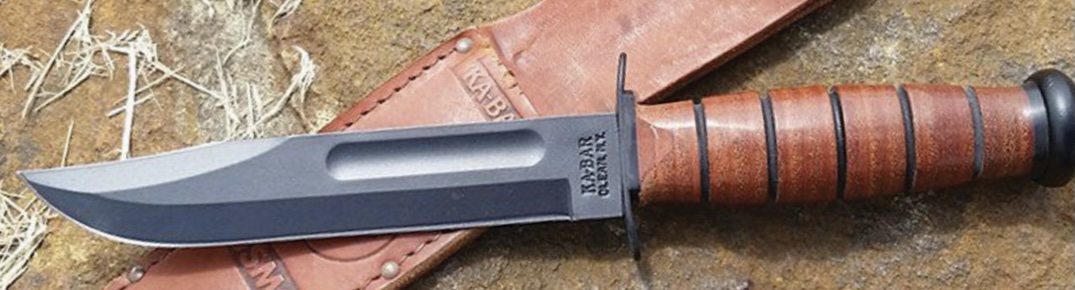
Today’s 1217 isn’t identical in every detail to those wartime knives. KA-BAR says its current specifications reflect the evolution of the design and materials over the years. There was also a significant production gap: the standard USMC knife returned to production in Olean, New York, in 1975 for the first time since World War II.
That makes today’s 1217 a modern production version of a historically significant design rather than simply a contemporary knife styled to look old.
1095 Cro-Van keeps the steel practical
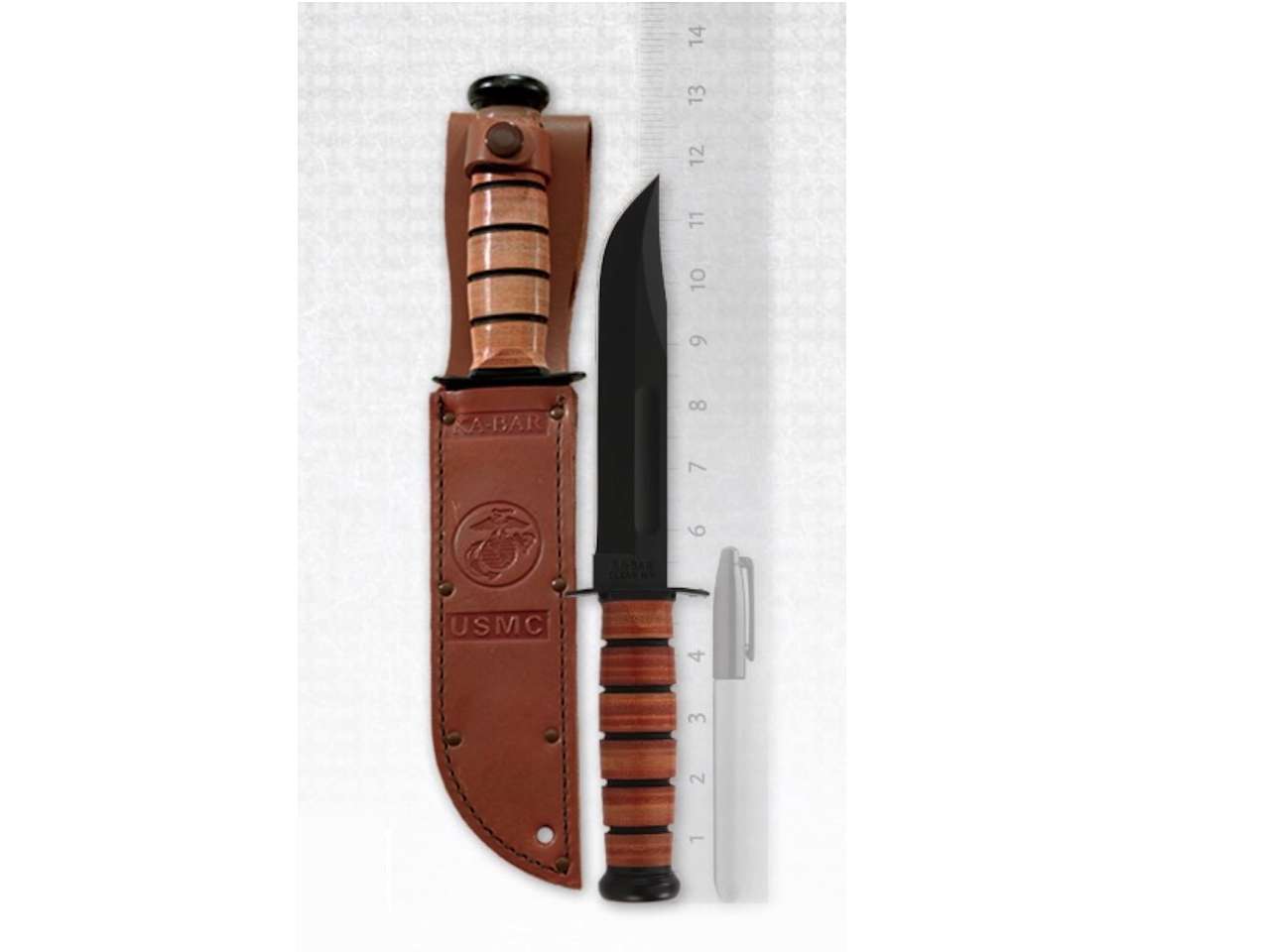
The current KA-BAR uses a 7-inch high-carbon Cro-Van steel blade and measures 11.875 inches overall. KA-BAR specifies differential heat treatment and a baked-on black epoxy powder coating.
KA-BAR specifically highlights easy sharpening as a benefit of its differentially heat-treated Cro-Van steel. For buyers who value straightforward maintenance, that can be more appealing than prioritizing maximum edge retention at the expense of easier sharpening.
KA-BAR says the epoxy coating helps protect its blades from corrosion, although that shouldn’t be interpreted as making a high-carbon steel knife maintenance-free. Actual edge retention and wear will depend on use and care rather than specifications alone.
The stacked-leather handle gives it character
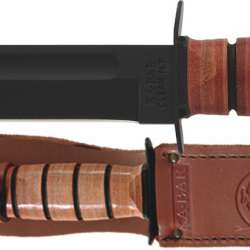
One of the KA-BAR’s defining features is its oval handle made from stacked leather washers, complete with traction grooves, a downward-bent guard, and pinned metal pommel.
The construction deserves clarification because it differs from the full-width exposed tang found on many contemporary fixed blades. KA-BAR describes its classic oval-handled knives as having a full-length, narrow tang. The leather washers slide over that tang before the metal pommel is fitted and cross-pinned.
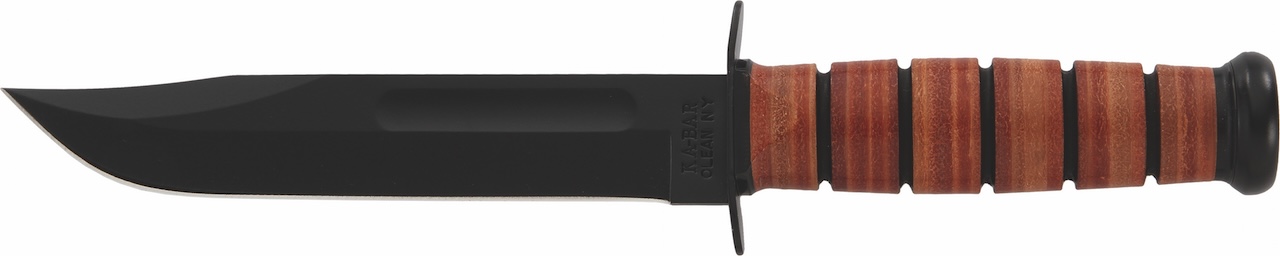
For the buyer, those leather washers aren’t just decoration. They’re part of the traditional construction that gives the 1217 its distinctive character. Buyers prioritizing modern synthetic materials may prefer one of KA-BAR’s polymer-handled alternatives, while the stacked leather is part of the attraction for someone specifically seeking the classic configuration.
It’s a full-size fixed blade at about 10.4 ounces
With a 7-inch blade and 11.875-inch overall length, there’s no mistaking the 1217 for a compact knife. KA-BAR lists its approximate weight at 0.65 pound, or 10.4 ounces, for the knife alone.
Those measurements matter because this isn’t intended to compete with a small folding knife for pocket convenience. Its dimensions make more sense for camping, outdoor utility, collections, or buyers specifically looking for a traditional full-size fixed blade.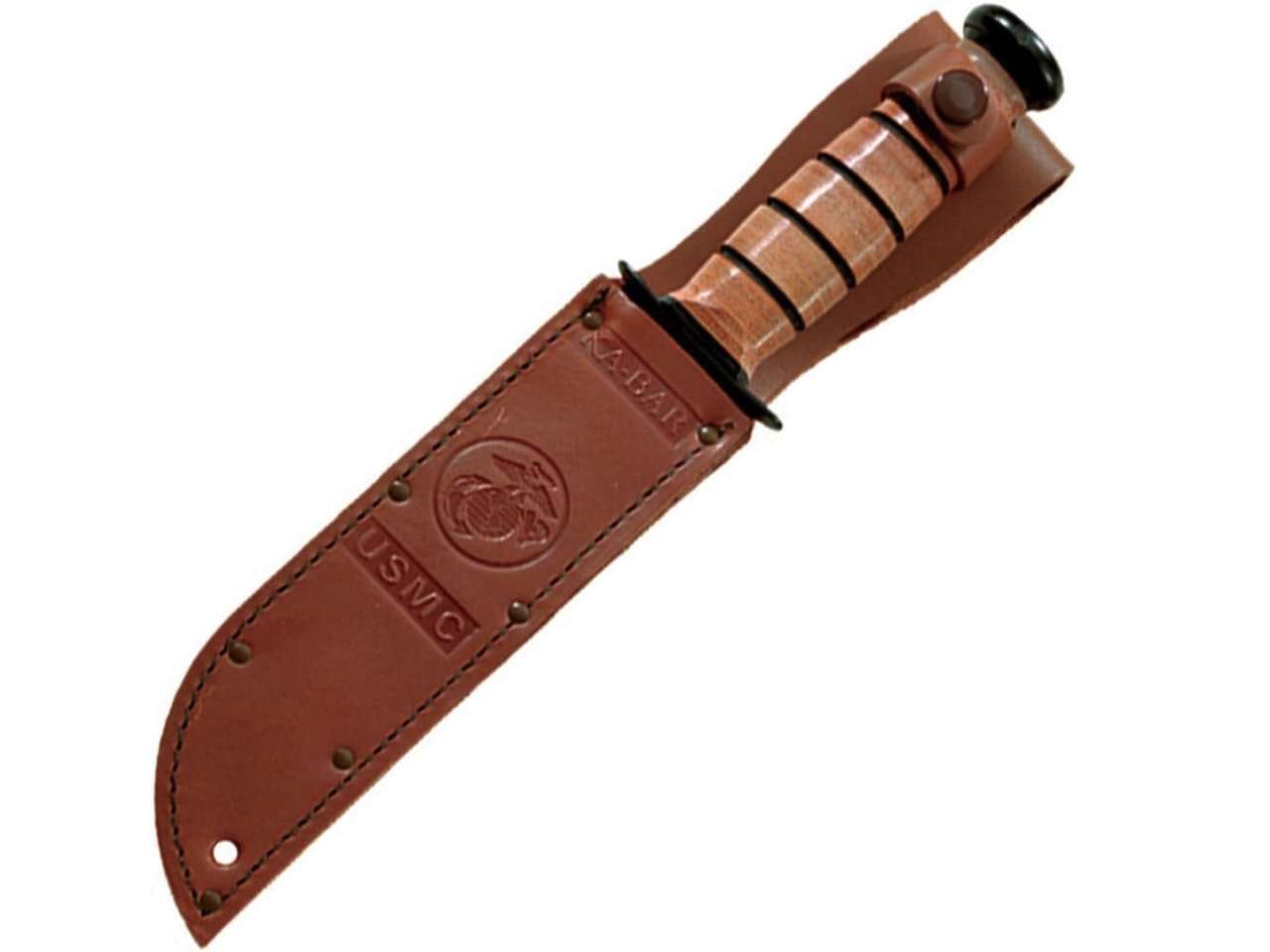
For simple everyday cutting jobs, a smaller knife may be easier to carry and store. Local laws also matter because rules covering fixed-blade possession, transport, and public carry vary by jurisdiction.
Check which sheath you’re getting
The standard KA-BAR 1217 product listing includes a leather sheath. Hard-plastic/MOLLE-compatible sheath configurations appear in KA-BAR catalog listings for related variants, so buyers should still verify the exact model and retailer package.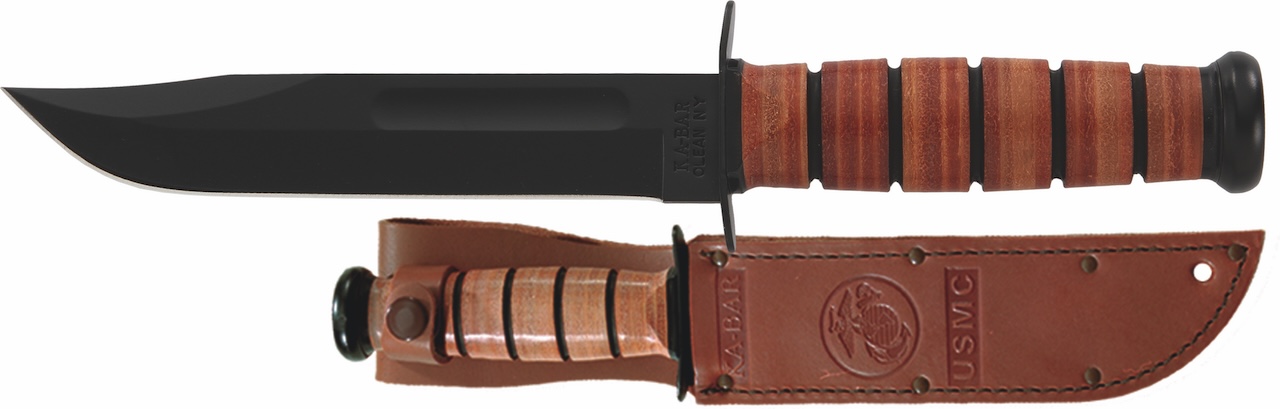
For someone buying the KA-BAR partly for its heritage, a traditional leather sheath naturally complements the stacked-leather handle and historical appearance.
Claims versus what the specifications establish
A knife with this much military history inevitably accumulates performance claims that go beyond what specifications can prove.
What KA-BAR establishes is more useful: high-carbon Cro-Van steel, differential heat treatment, baked-on epoxy coating, stacked-leather construction, a full-length narrow tang, pinned pommel, 7-inch blade, and 11.875-inch overall length.
KA-BAR also uses CATRA testing for sharpness and edge retention, Rockwell testing for hardness, goniometer measurements for edge angles, and field testing during product development. Those processes provide useful evidence of the company’s quality-control approach without guaranteeing how an individual knife will perform for every owner.
Who should buy the KA-BAR USMC?
The KA-BAR USMC Fighting/Utility Knife makes the strongest case for a collector interested in American military-knife history, an outdoor user who appreciates traditional carbon-steel fixed blades, or someone who simply wants one of the most recognizable American knife designs.
It’s less compelling if your priorities are minimal maintenance, compact everyday carry, or modern synthetic construction.
KA-BAR USMC Knife
Price: $107.41
Where to Buy: Amazon
What makes the 1217 persuasive isn’t having the newest steel or most elaborate design. Its straightforward construction, traditional materials, recognizable profile, and more than 80 years of design history all reinforce the same idea: this is a fixed blade with an identity that was earned rather than invented for a product listing.