If you’re shopping for a gaming monitor in 2026 and you have a decent budget, two names keep coming up for very different reasons. The ASUS ROG Strix XG259QNSR-W Ace is a 24.5-inch speed machine built to push competitive gaming to its absolute limit. The Philips Evnia 32M2N6901A is a 31.5-inch QD-OLED panel built to make every frame look like a painting. Choosing between them isn’t really about which one is better. It’s about who you are as a g
Price: TBD | $649.99
Where to Buy: ASUS | Philips
These two monitors don’t compete on the same terms, which is actually what makes comparing them useful. Understanding exactly where they diverge tells you more about what gaming monitor technology can do in 2026 than any benchmark chart.
The Case for 420Hz: ROG Strix XG259QNSR-W Ace
The number that defines this monitor is 420Hz. That’s the overclocked refresh rate on a 24.5-inch Fast IPS panel, paired with a 0.3ms minimum response time. For competitive players in titles like Valorant, Counter-Strike 2, or Apex Legends, those numbers translate to a tangible advantage: smoother motion, crisper target tracking, and fewer moments where what you see doesn’t match what’s actually on the server.
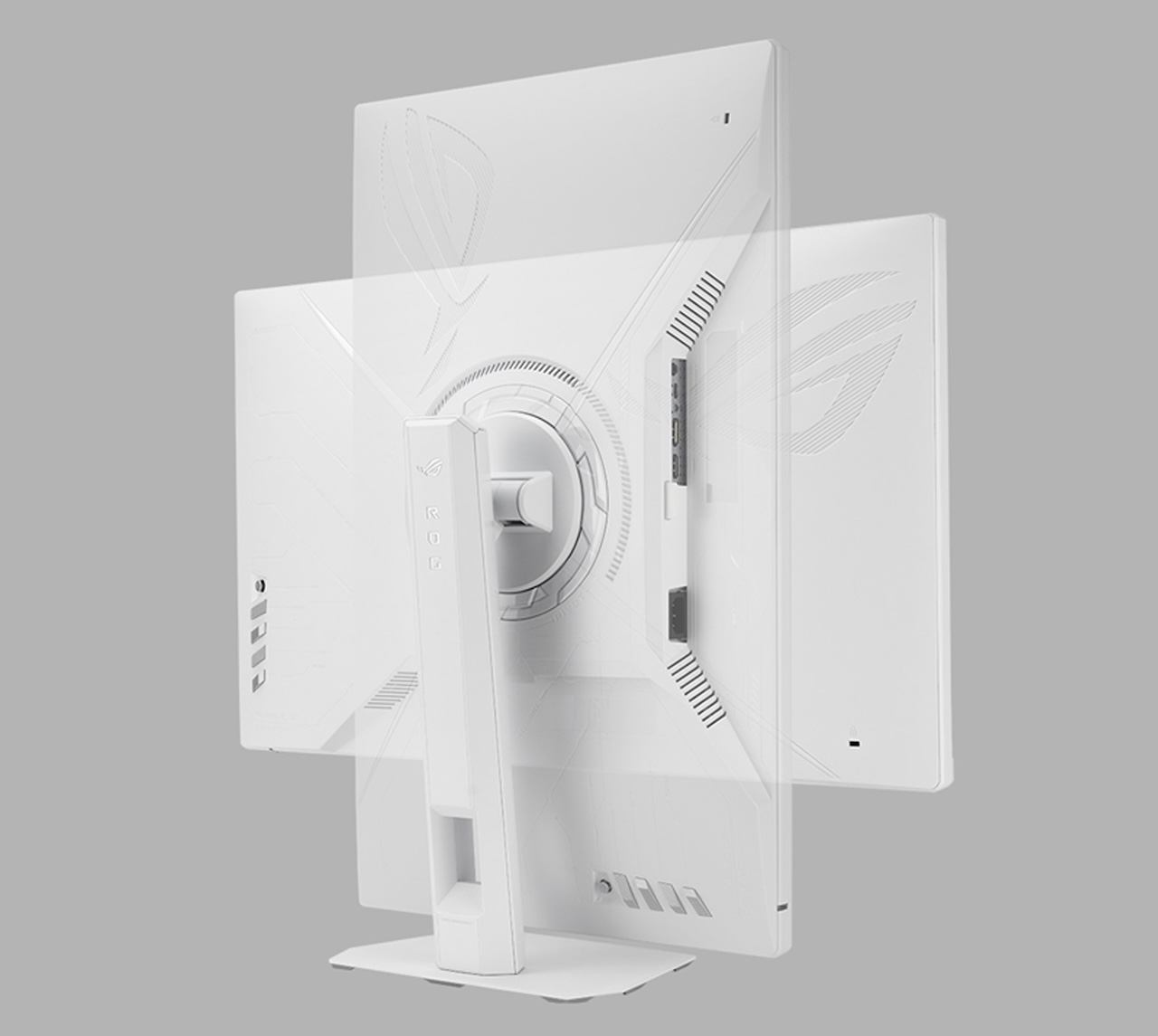
ASUS layers several technologies on top of that raw speed. ELMB Sync keeps motion blur and screen tear eliminated even as your frame rate fluctuates, while Variable Overdrive 2.0 adjusts the overdrive level in real time to prevent ghosting at any FPS. The AI-powered Dynamic Crosshair and Dynamic Shadow Boost features round out a package designed to give competitive players every possible edge.
The panel covers DCI-P3 at 90% and sRGB at 115%, which is solid for an esports-class IPS display. Colors are vivid without being overdone, but that’s not the reason to buy this monitor. You buy the ROG Strix Ace because you want to win, and at 420Hz, the screen is never the reason you missed the shot.
The Case for 4K OLED: Philips Evnia 32M2N6901A
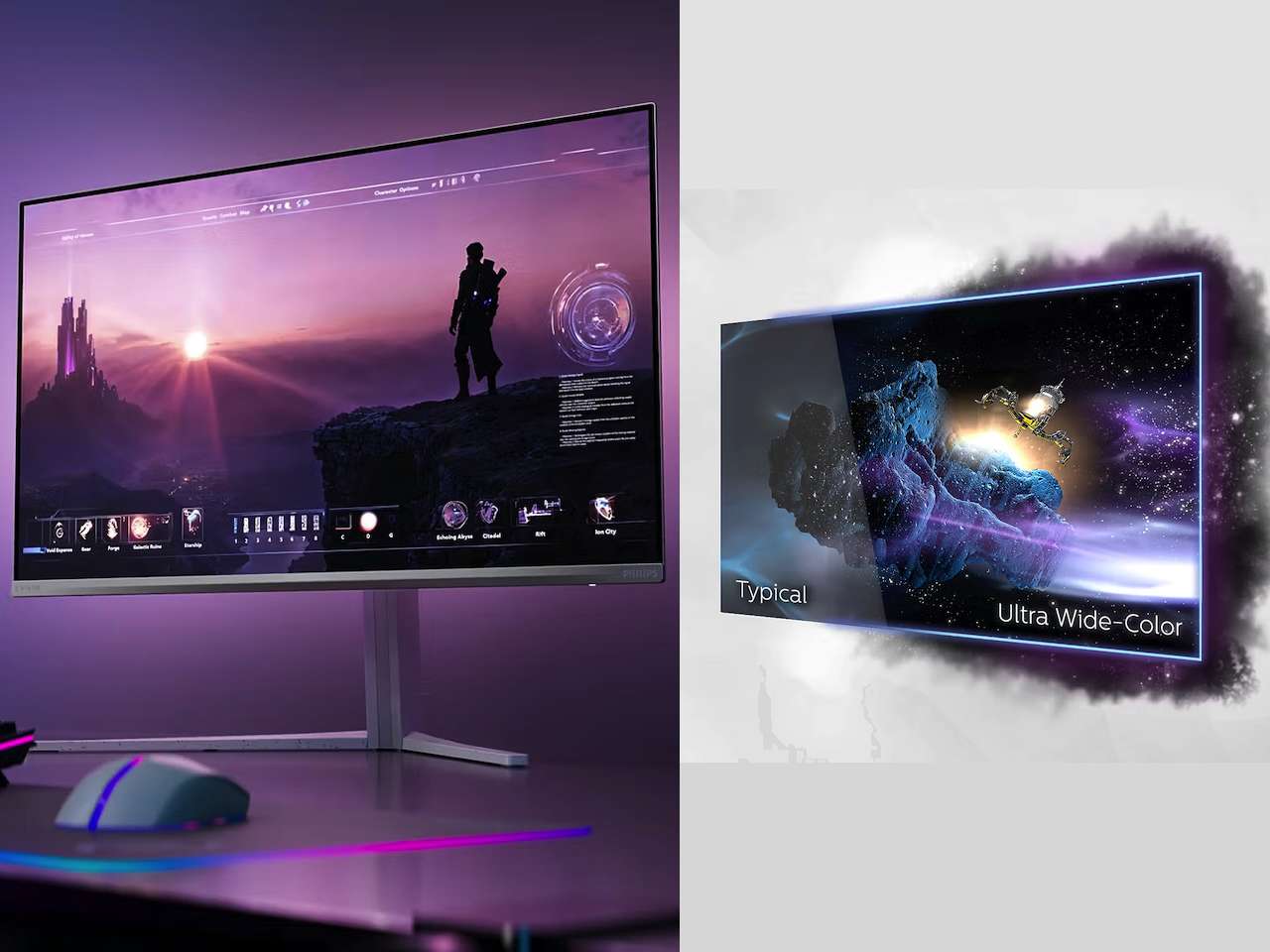
The Philips Evnia 32M2N6901A starts from a completely different premise. Its 31.5-inch QD-OLED panel runs at 4K UHD (3840 x 2160) with a 165Hz refresh rate and a 0.03ms GtG response time. That response time is faster than a typical IPS panel by a wide margin and faster than the ROG Ace’s minimum spec, which means the Philips doesn’t ask you to give up speed to get beautiful visuals.
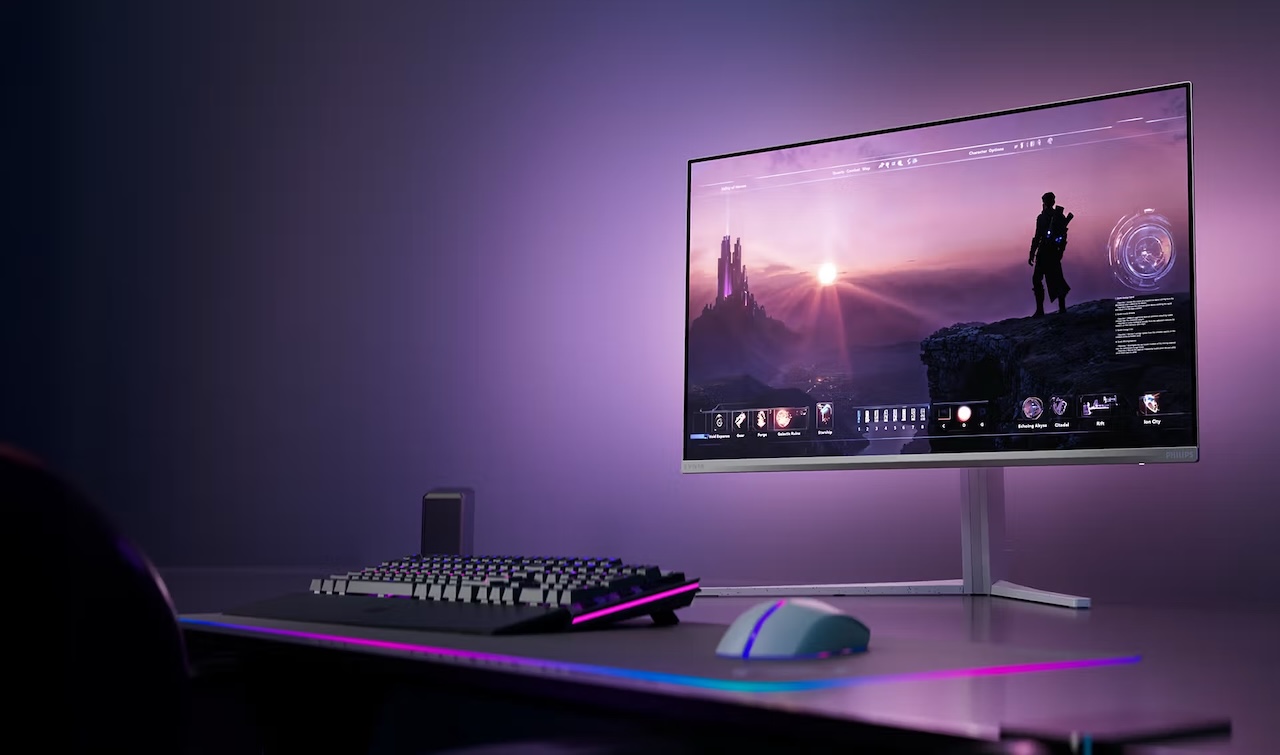
QD-OLED brings true 10-bit color, 99% DCI-P3 coverage, and a static contrast ratio of 1,500,000:1. DisplayHDR True Black 400 certification means HDR here actually works the way it’s supposed to: highlights that glow, blacks that disappear completely, and a visual depth that flat-panel IPS displays can’t replicate. For open-world RPGs, cinematic action games, or anything where visual immersion is the point, this panel makes games look the way their developers intended.
Where They Actually Differ
The clearest split is resolution versus pure refresh rate. At 1080p and 420Hz, the ROG Ace is designed to run at frame counts that modern mid-range GPUs can realistically hit in competitive titles. At 4K and 165Hz, the Philips demands more from your GPU but rewards that hardware with visuals that 1080p simply can’t produce.
Size and desk presence are also a real consideration. The ROG Ace’s 24.5-inch footprint is deliberately compact, keeping the game tight and readable in the center of your field of view, the way top esports players prefer. The Philips at 31.5 inches fills more of your peripheral vision, which works for immersive gaming but can feel overwhelming on a smaller desk.
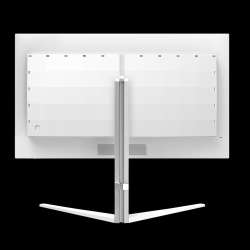
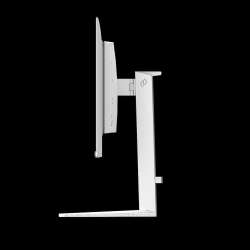
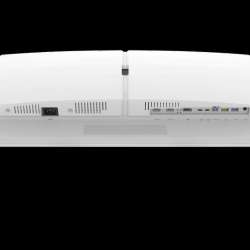
The Philips also brings practical extras the ROG Ace doesn’t: USB-C with up to 90W power delivery, built-in dual 5W stereo speakers, and AI Ambiglow bias lighting that syncs to on-screen content. These aren’t the reason to choose it over the ROG Ace, but they do make it a more capable all-in-one desktop display for gamers who also need a productivity monitor.
Who Should Buy the ROG Strix XG259QNSR-W Ace
This monitor is for one type of gamer: the competitive player who measures their setup in kills, ranks, and reaction times. If you play FPS games daily, participate in ranked matches, or care about keeping your frame rate at or above your refresh rate, 420Hz is a meaningful upgrade over a 240Hz panel and a significant one over anything below that.
The ergonomic stand with tilt, swivel, pivot, and height adjustment means the physical setup can be dialed in precisely, and the compact display keeps everything in the center of your sightline at arm’s length. It’s a monitor built for focus, and every spec on the sheet reflects that intent.
Who Should Buy the Philips Evnia 32M2N6901A
The Philips is the right call for gamers who spend most of their time in story-driven games, open-world titles, or any genre where what the game looks like matters as much as how it plays. QD-OLED’s color volume and contrast depth are things you notice on the first boot and don’t stop noticing. If you’ve been playing on a standard IPS or VA panel, the jump is significant.
It’s also a strong choice for dual-purpose setups where the monitor doubles as a productivity display. The 4K resolution means text, spreadsheets, and browser windows are genuinely sharp at 31.5 inches, and the USB-C port means a single cable can power a laptop, carry video, and connect peripherals at the same time.
At $649.99 with availability from late August 2026, the Philips offers QD-OLED at a competitive price for the category. For a 31.5-inch 4K panel with DisplayHDR True Black 400 and true 10-bit color, that positions it well against pricier alternatives without asking you to compromise on the spec sheet.
The Bottom Line
These are two excellent monitors that don’t belong in the same recommendation. The ROG Strix XG259QNSR-W Ace is for the competitive gamer who wants every frame, every millisecond, and every technical advantage that a Fast IPS panel at 420Hz can deliver. The Philips Evnia 32M2N6901A is for the gamer who wants their games to look stunning on a 4K QD-OLED panel that’s still fast enough to handle everything outside of elite-level FPS play.
Price: TBD | $649.99
Where to Buy: ASUS | Philips
If you play both types of games and can only buy one, the Philips wins on versatility. Its 0.03ms response time and 165Hz refresh rate are fast enough for casual competitive play, and its 4K QD-OLED visuals will serve you better across every other genre. The ROG Ace is the better pick only if competitive play is your primary focus and 420Hz is the number you’re building your entire setup around.