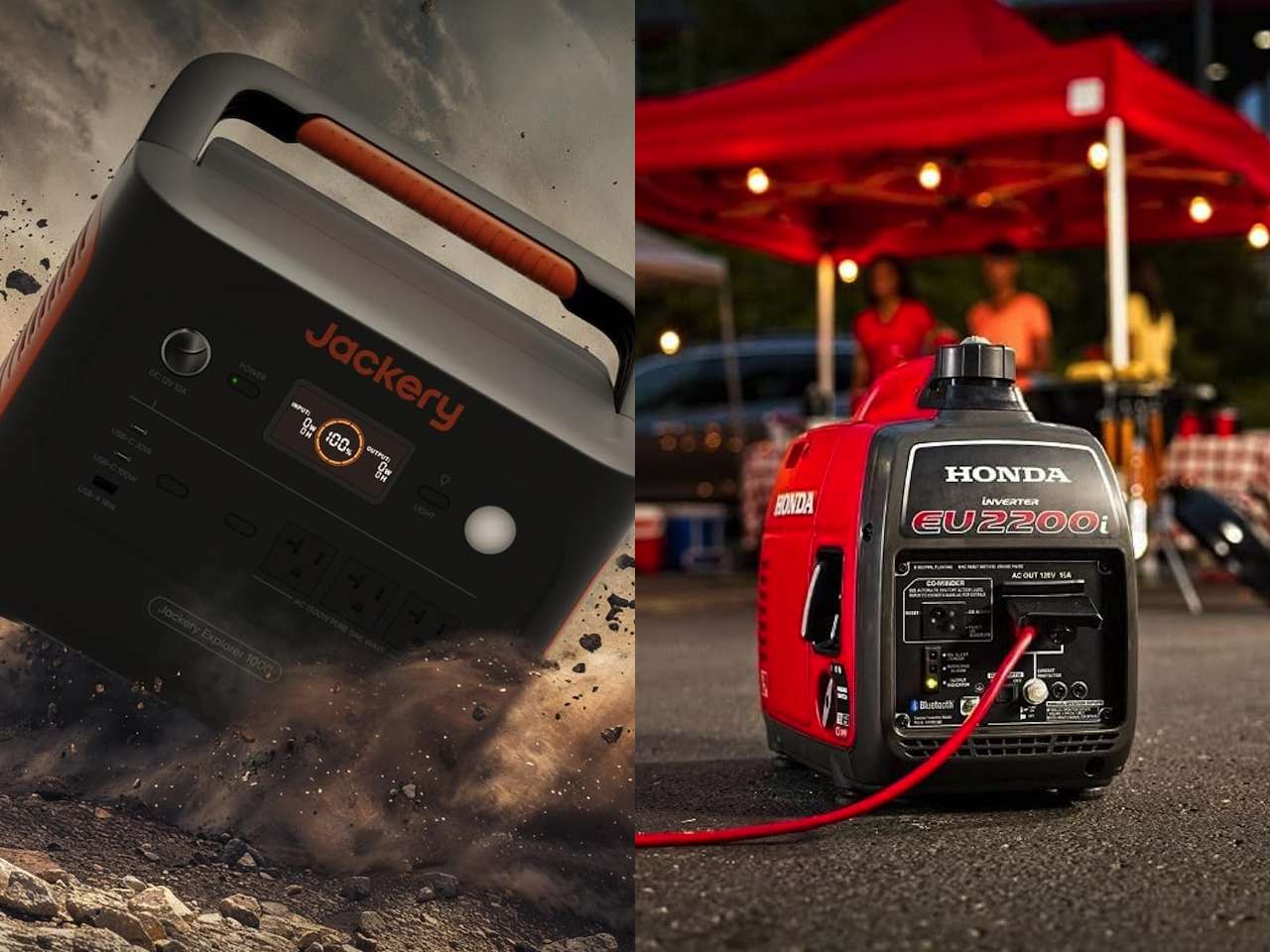
It’s 2 a.m. during a blackout. The real difference between a portable power station and a gas generator isn’t how much they can power. It’s how much you have to hear. A carry-on-sized battery keeps a full-size fridge cold, a CPAP running, and a router online through the night in total silence. A gas generator does the same work for half the price and twice the weight, and you’ll hear it from three houses down. Both keep the fridge cold. Only one lets you sleep.
Portable power stations and gas generators look like they do the same thing. They both make electricity when the grid goes down. But they suit completely different people, budgets, and tolerances for noise, and picking the wrong one means either overspending or running out of power at the worst possible moment.
This is a Right Tool/Wrong Tool guide to when the battery wins, when the gas engine still makes sense, and what to actually buy right now.
When the Battery Wins
A portable power station is a giant lithium battery with an inverter, USB ports, and AC outlets bolted onto it. That’s the whole thing. No moving parts, no fuel, no fumes, no noise. You charge it from a wall outlet or a solar panel, and it sits quietly until you need it.
What it does better
Silence. You can run a power station inside a tent, on an apartment balcony, or next to a sleeping baby. The fan makes a soft whir. A generator drowns out conversation from 50 feet away.
Zero maintenance. No oil changes, no spark plugs, no carburetor cleaning. If a battery sits in your closet for a year and you pull it out during a storm, it will work. Gas that sits for six months turns to varnish and clogs everything.
Indoor safe. Carbon monoxide from a generator running in a garage kills people every hurricane season. A battery produces nothing. You can charge your phone and run a space heater in the same closed room without dying.
Light enough to grab. The Jackery Explorer 300 weighs 7.5 pounds. You can toss it in a backpack. A 2000-watt inverter generator weighs 50 pounds and takes up the whole trunk.
The tradeoff you need to know: A power station runs down. The Jackery Explorer 1000 v2 (1,070Wh) will run a 60W fridge for about 14 hours. The same fridge on a tank of gas runs for days. Once that battery is empty, it takes hours to recharge from solar or a wall outlet. When gas power runs out, you pour more in and the generator is back in thirty seconds.
Right for: Apartment dwellers, van lifers, desk workers who want a UPS anyway, campers who don’t need a week of power, anyone who values silence or indoor safety.
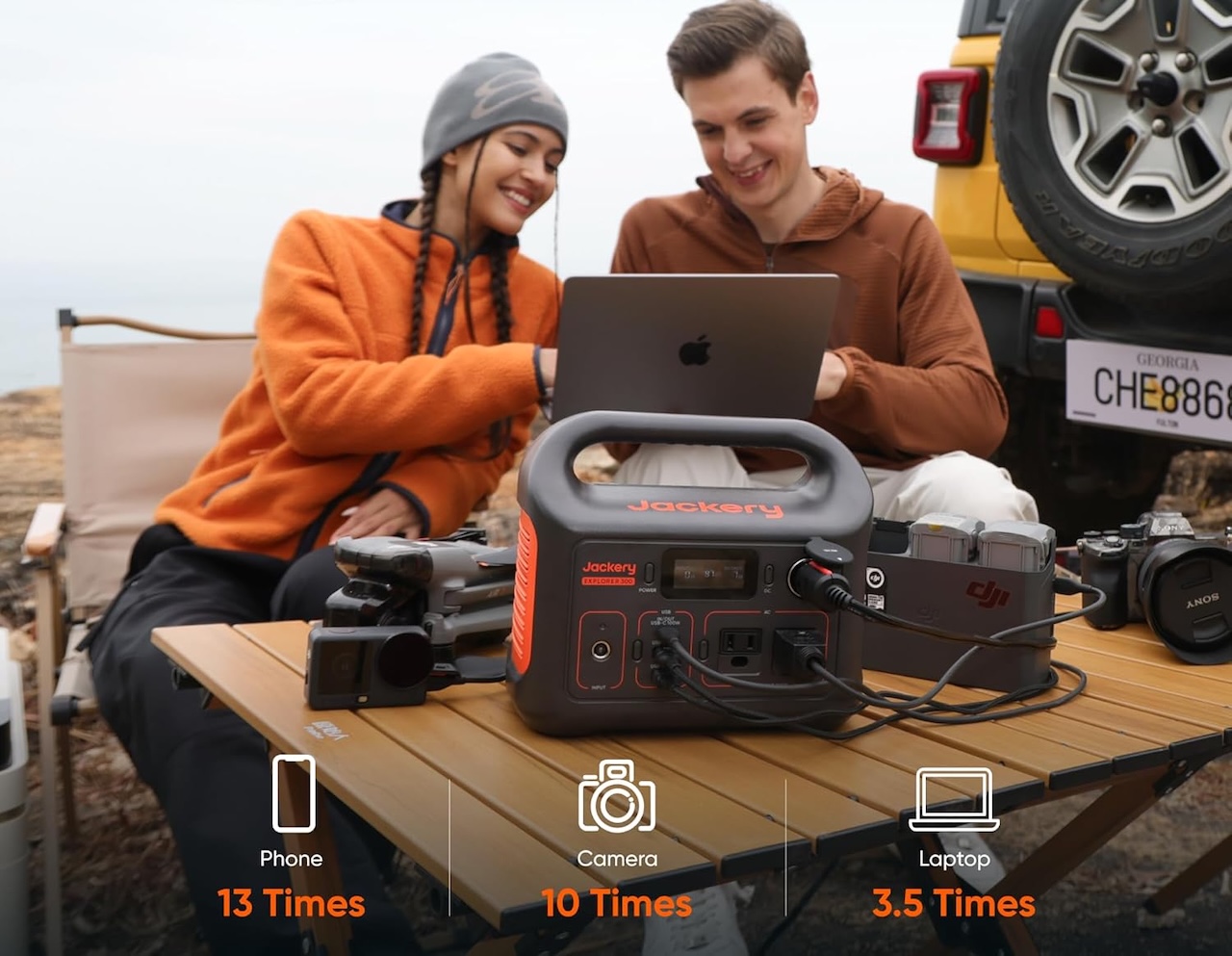
🛒 Jackery Explorer 300 | $279
293Wh LiFePO4 | 300W output (500W surge) | 7.5 lbs | 2 AC + USB-C PD
Where to Buy: Amazon
When the Gas Engine Still Wins
A four-stroke inverter generator burns gasoline to spin an alternator. It’s loud, smelly, heavy, and irritating. It’s also the only thing that keeps a house running for three days straight without thinking.
What it does better
Infinite runtime (sort of). A five-gallon gas can keeps a 2200-watt inverter generator running for the better part of a day at half load, and refueling takes seconds. With a battery, you’re scrambling for a solar panel or a wall outlet before lunch.
Raw power per dollar. A budget 2000-watt inverter generator costs about $400-500 and has the surge headroom to restart a full-size refrigerator or run a sump pump. A power station that can match that surge costs considerably more, and its runtime is still capped by battery size. For big, surging loads like pumps and compressors, gas delivers more power per dollar.
Cold weather. Lithium batteries lose capacity in freezing temperatures. A gas generator starts on the first pull at 20 degrees. A power station at the same temperature loses 20-30 percent of its rated capacity before you plug anything in.
Longer lifespan. A Honda EU2200i runs about $1,199, while a comparable EcoFlow Delta 2 (1,800W, 1,024Wh) now sells for around $400-500, so the battery is actually the cheaper unit to buy. Where the generator pulls ahead is longevity: a well-maintained Honda engine can still start in 15 years, while the Delta 2’s LiFePO4 battery is rated for roughly 3,000 charge cycles (about 8 to 10 years of regular use) before its capacity noticeably drops. For infrequent, long-haul backup, engine technology tends to outlast chemistry.
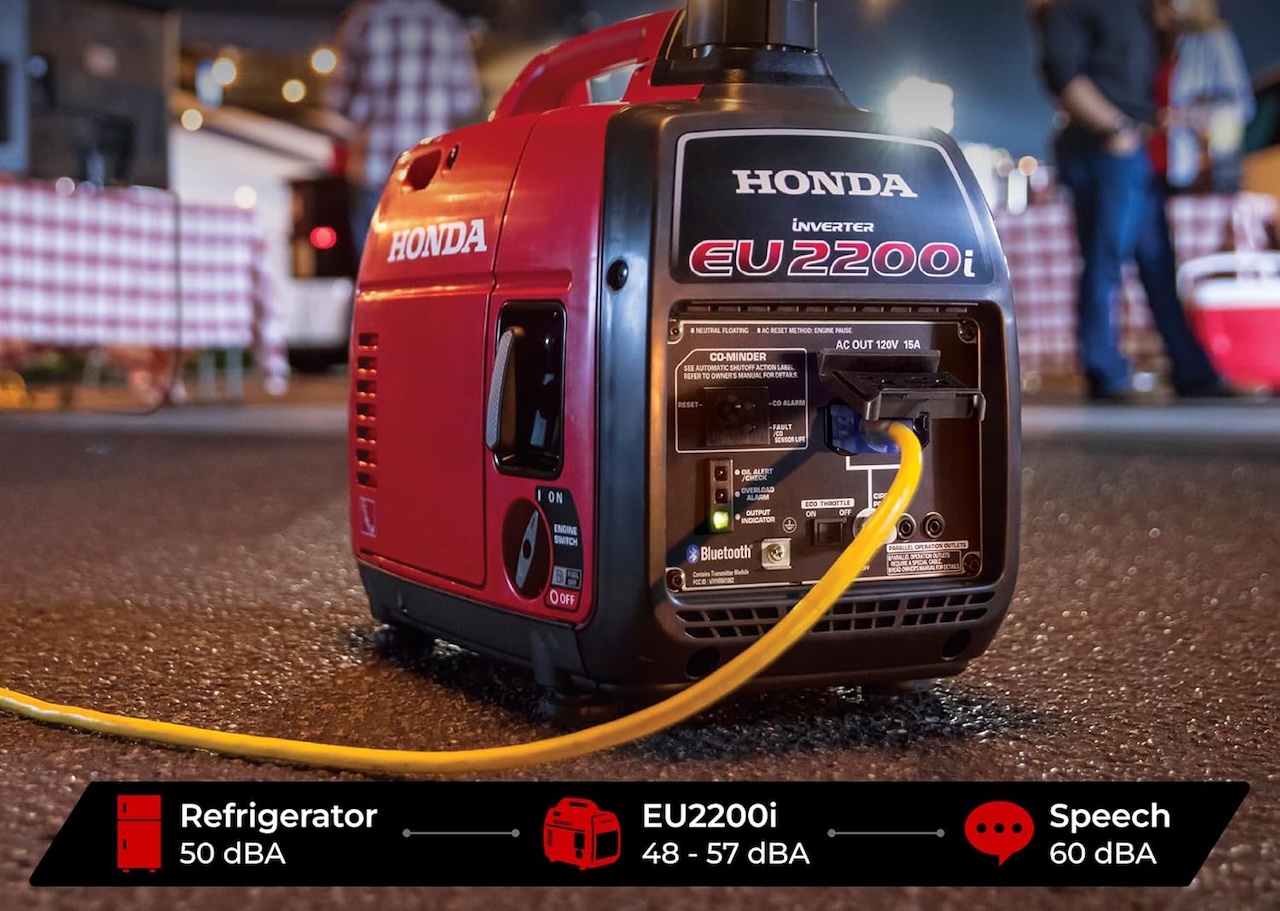
The tradeoff you need to know: It’s loud. The Honda EU2200i is one of the quietest inverter generators on the market at 48-57 dBA, and it still sounds like a loud conversation from 20 feet. A cheap open-frame generator hits 70+ dBA, well past the 60 dBA-at-50-feet limit most campgrounds and national parks enforce, and during posted quiet hours, generators usually have to be switched off entirely. You also have to store gas, rotate it every 3-6 months, winterize the carburetor, and change oil every 100 hours. This is a relationship, not a purchase.
Right for: Homeowners who lose power for 2+ days at a time, job site crews who need reliable power every shift, off-grid cabin owners, anyone running a well pump or furnace, people with garage or shed space.
What You Should Actually Buy
The Battery Pick: Jackery Explorer 1000 v2 ($799)
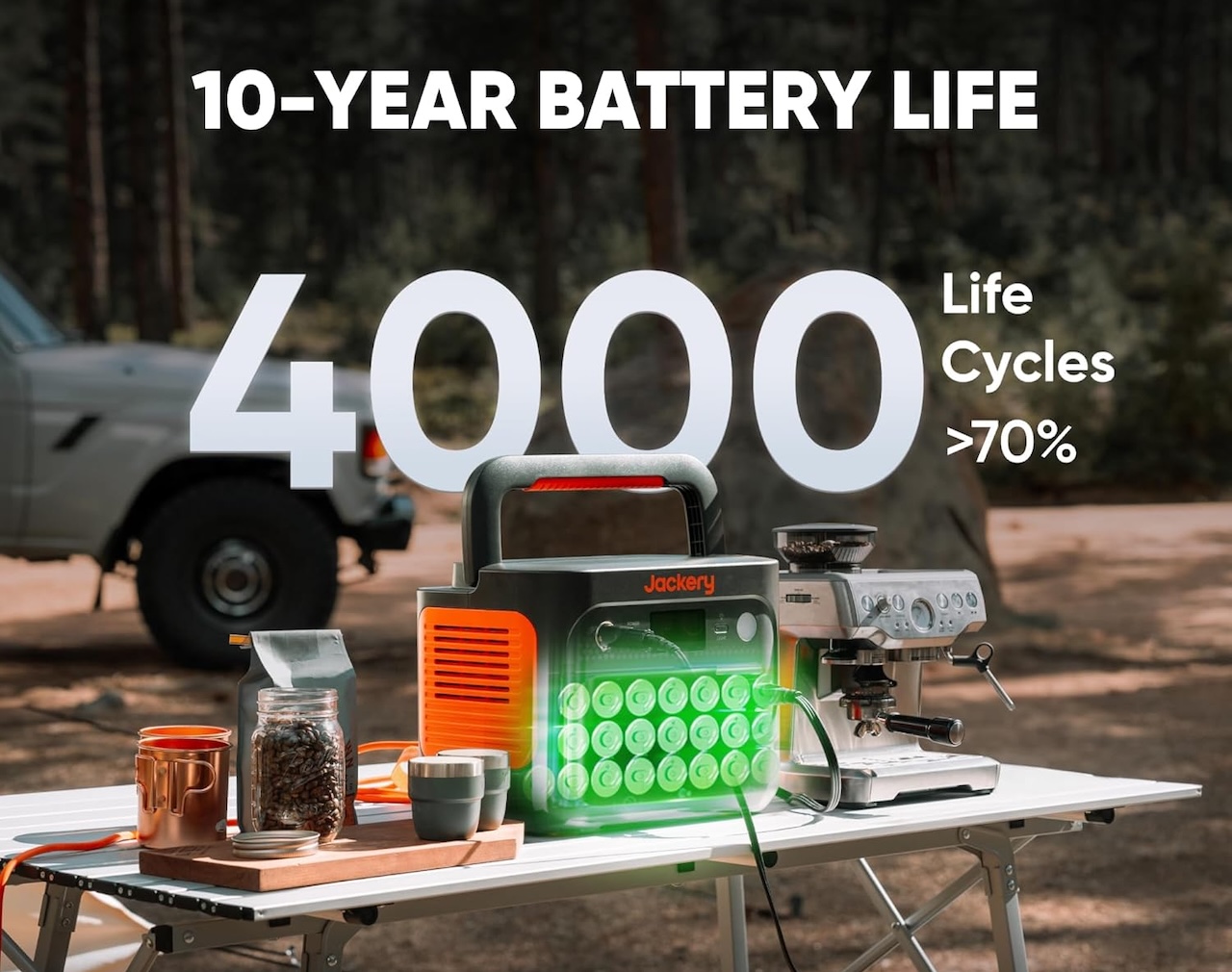 🛒 Jackery Explorer 1000 v2 | $799
1,070Wh LiFePO4 | 1500W output (3000W surge) | 23.8 lbs | 4,000+ cycles
Where to Buy: Amazon
The sweet spot in the portable power station market. 1,070Wh capacity, 1500W continuous output, charges from a 200W solar panel in about 7 hours. It runs a CPAP for two nights, a 12V fridge for 14 hours, or a router and modem for two days of work-from-home. Light enough for one person to carry at 24 pounds. The v2 model adds LiFePO4 chemistry for 4,000+ charge cycles instead of the usual 500. That’s ten years of daily use.
The Gas Pick: Honda EU2200i ($1,199)
 🛒 Honda EU2200i |$1,199
2200W max / 1800W rated | 48-57 dBA | 8.1 hrs @ 1/4 load | 47.4 lbs dry
Where to Buy: Amazon
The Toyota Camry of portable generators. It has been one of the quietest, most reliable inverter generators for a decade. 2200W peak, 1800W continuous, 48-57 dBA (quieter than most conversations). One tank runs 8.1 hours at quarter load. Gets noisy at full load but that’s still quieter than any competition at idle. Weighs 47 pounds dry: heavy enough to stay put, light enough to carry by the handle. Every mechanic knows how to work on it. Parts are everywhere.
The Short Answer
For one-day outages, camping, or anything involving a tent or a bedroom, buy the Jackery. For multi-day outages, well pumps, job sites, or anywhere you need to run power tools, buy the Honda. If you can afford both, buy both: the battery handles your daily electronics in silence and the generator handles the heavy lifting when the storm is serious.