The Rolex Cosmograph Daytona still bends every watch conversation toward itself, sixty-plus years on. Rolex built it in 1963 as a timing tool for endurance racing drivers, and the racing brief still shows in every line of the current watch.
Here’s the shape of this guide: lineup first, movement second, buying route last. The one tradeoff hasn’t changed since 1963, though. The focus that makes the Daytona so legible at speed also makes it a pure chronograph, with no date window and no extra complication competing for space on the dial.
Why the Daytona still owns the conversation
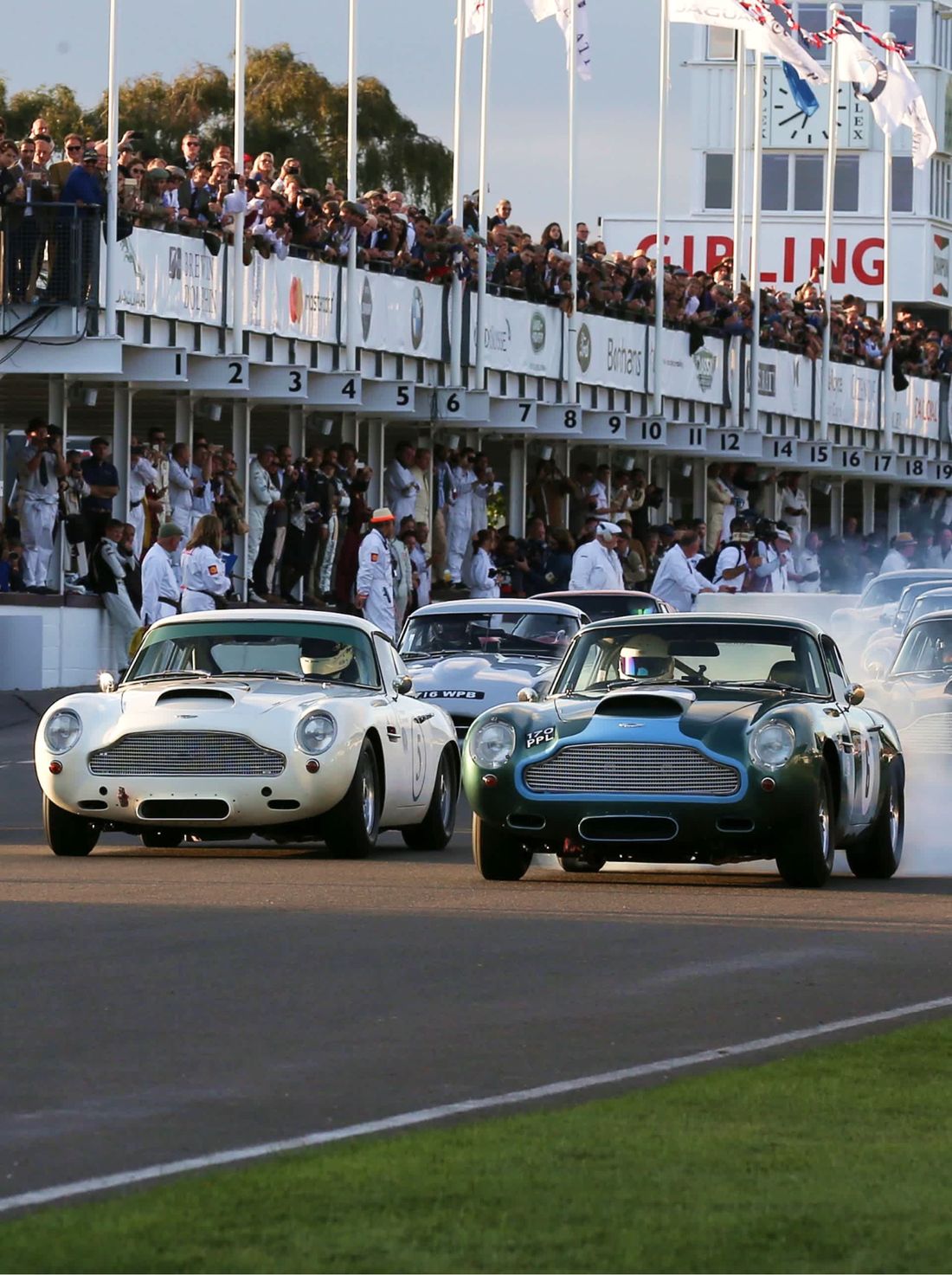
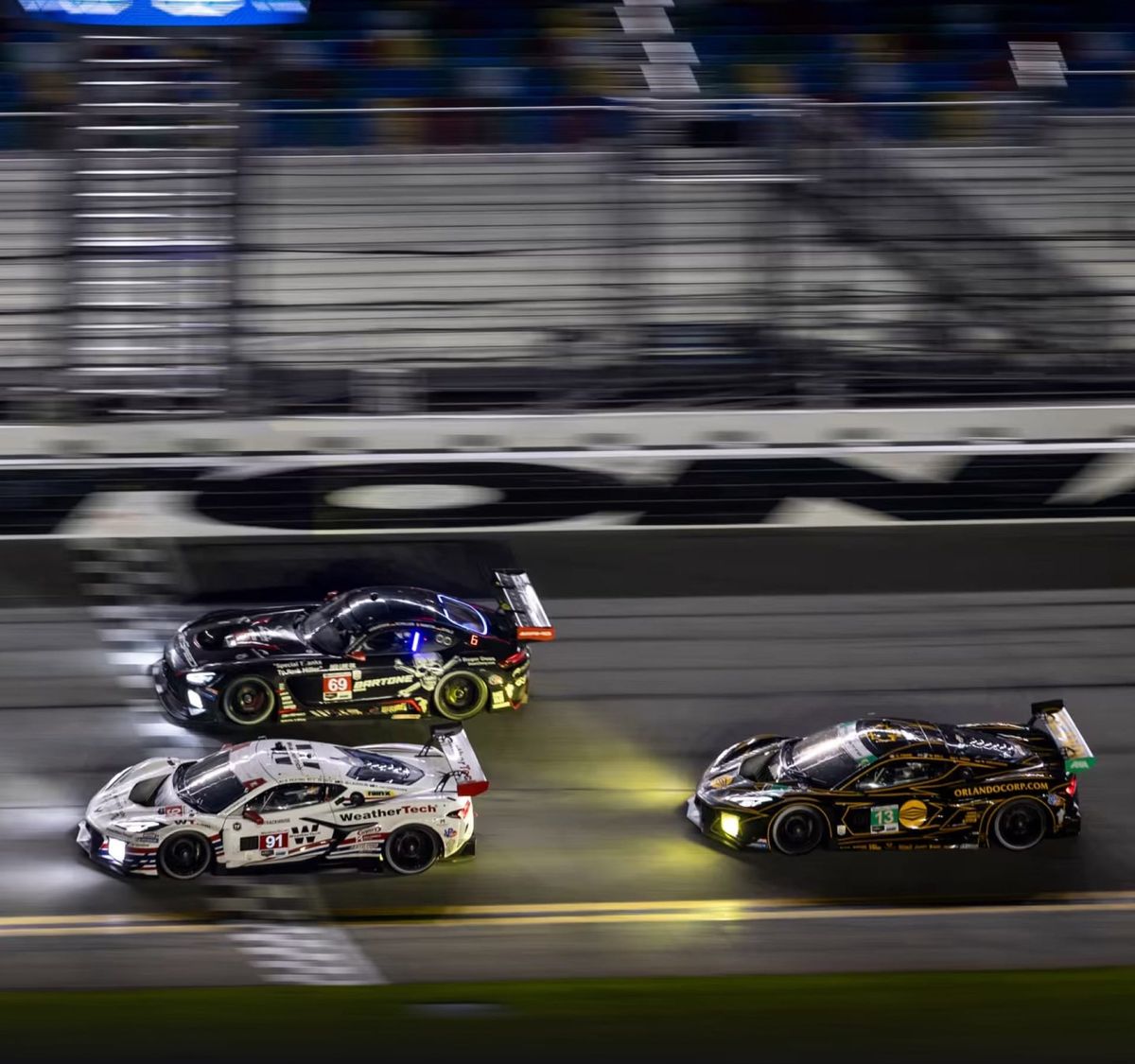
Rolex titles the 24-hour endurance race at Daytona, and the watch has carried the circuit’s name since its first year, because endurance racing shaped the tool itself, right down to a bezel that turns elapsed time into average speed. That scale tops out at 400 units per hour, though nobody’s street car needs it, and that’s never been the point.
Collectors chase the vintage references and modern owners wear the current ones, though the through line is simpler than the mythology around this watch. It’s a 40 mm chronograph that has looked like itself for six decades. The recognition is instant at ten paces.
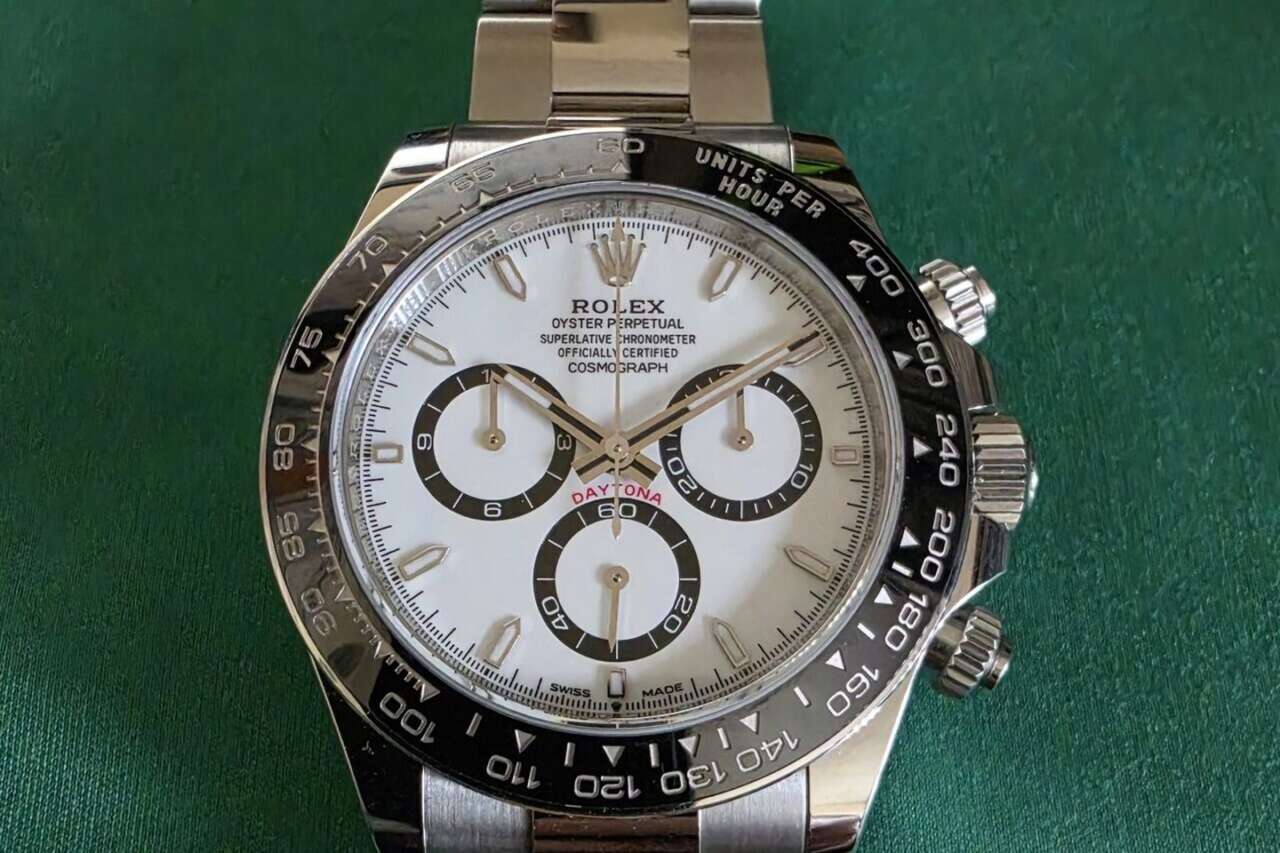
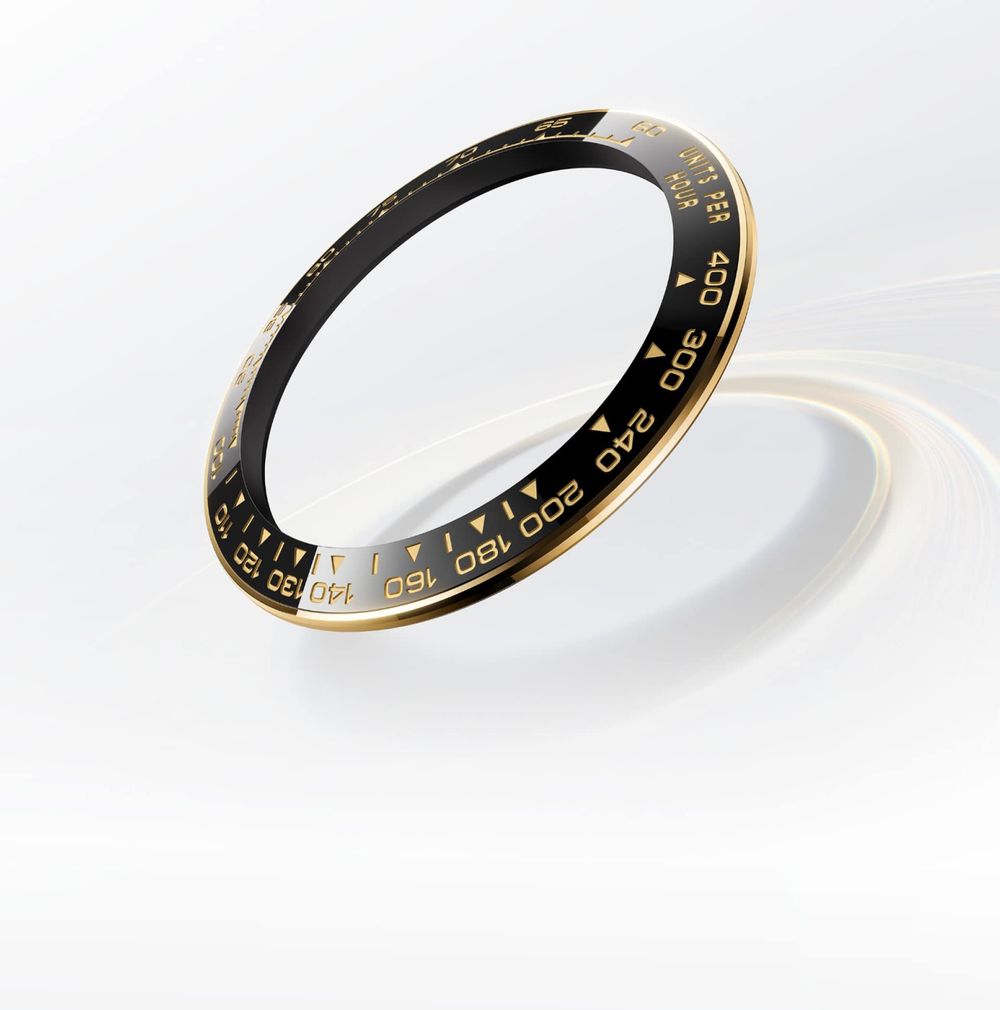
The monobloc Cerachrom bezel is a single piece of high-tech ceramic that holds the crystal in place and helps seal the case, and Rolex says it’s corrosion resistant and virtually scratchproof. The color can’t fade under UV rays, and the numerals get a thin layer of platinum laid down through a PVD process. The black version echoes the 1965 model with its black Plexiglas insert, so the modern steel watch feels like a direct descendant rather than a redesign.
The current Daytona lineup, pick by pick
Start with the reference most buyers actually chase, the 126500LN in Oystersteel, which rolex.com lists at $16,900. You get the 40 mm case, a white dial with snailed counters, the black Cerachrom bezel and the Oyster bracelet.
Rolex Cosmograph Daytona 126500LN
40 mm Oystersteel case · White dial with snailed counters · Black monobloc Cerachrom bezel · Calibre 4131 with about 72 hours of reserve · Oyster bracelet
Price: $16,900
Where to buy: More details at Rolex
The 126503 mixes Oystersteel and yellow gold in what Rolex calls yellow Rolesor, and rolex.com lists it at $24,550, with the movement, case and bezel carrying over from the steel watch unchanged. Gold center links and a gold bezel surround move it a full step dressier, though. Steel first. Everything else in the range is a variation on that theme.
Gold on Oysterflex is the connoisseur’s configuration, and the yellow gold 126518LN lists at $42,700. The dial runs intense black with champagne-color counters, framed by the black Cerachrom bezel, and flexible metal blades hide inside black elastomer, so the bracelet wears soft and holds its shape like metal.
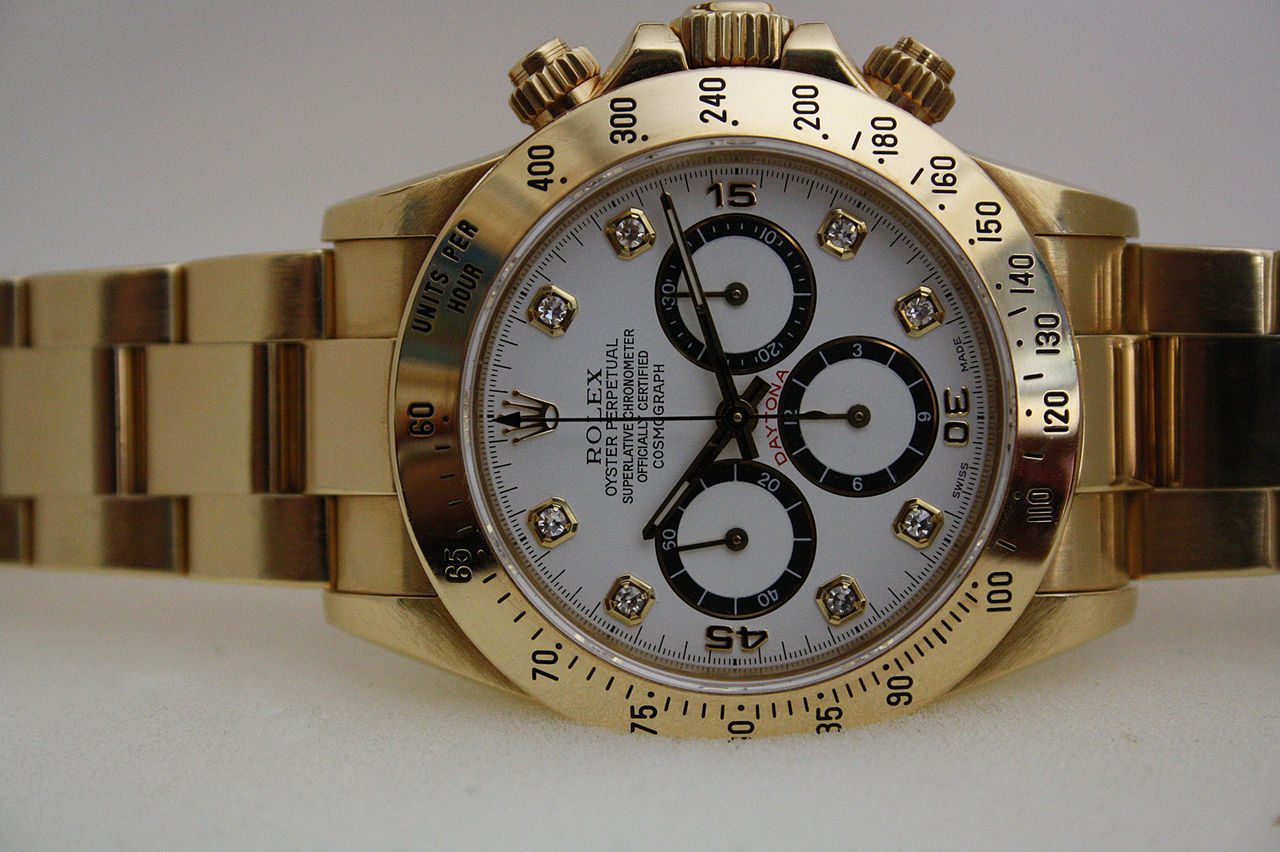
Platinum closes the range at $84,600, and Rolex saves its ice-blue dial and chestnut brown Cerachrom bezel for the 126506 alone. Certain platinum versions carry a transparent case back, so this is the Daytona that lets you watch calibre 4131 work. The counters stay snailed or spray-coated depending on the reference.
Rolex Cosmograph Daytona 126506
40 mm case in 950 platinum · Ice-blue dial · Chestnut brown Cerachrom bezel · Transparent case back on this version
Price: $84,600
Where to buy: More details at Rolex
Every dial in the range uses 18 kt gold applique hour markers and hands with a Chromalight display, Rolex’s highly legible luminescent material. Drivers were the original brief, so legibility wins every call inside that dial, and the layout never asks you to hunt for the time.
Buy the steel watch if you want the Daytona in its original spirit. Buy the platinum if you want the one that even Daytona owners stop to look at.
The 40 mm Oyster case is waterproof to 100 meters, and the crown and chronograph pushers screw down against the case to keep it sealed. Oystersteel comes from the 904L steel family that aerospace and chemical plants rely on for corrosion resistance. The Oyster bracelet’s broad, flat three-piece links have been in the collection since the late 1930s, and they remain the most universal bracelet Rolex makes.
Calibre 4131 does the quiet work
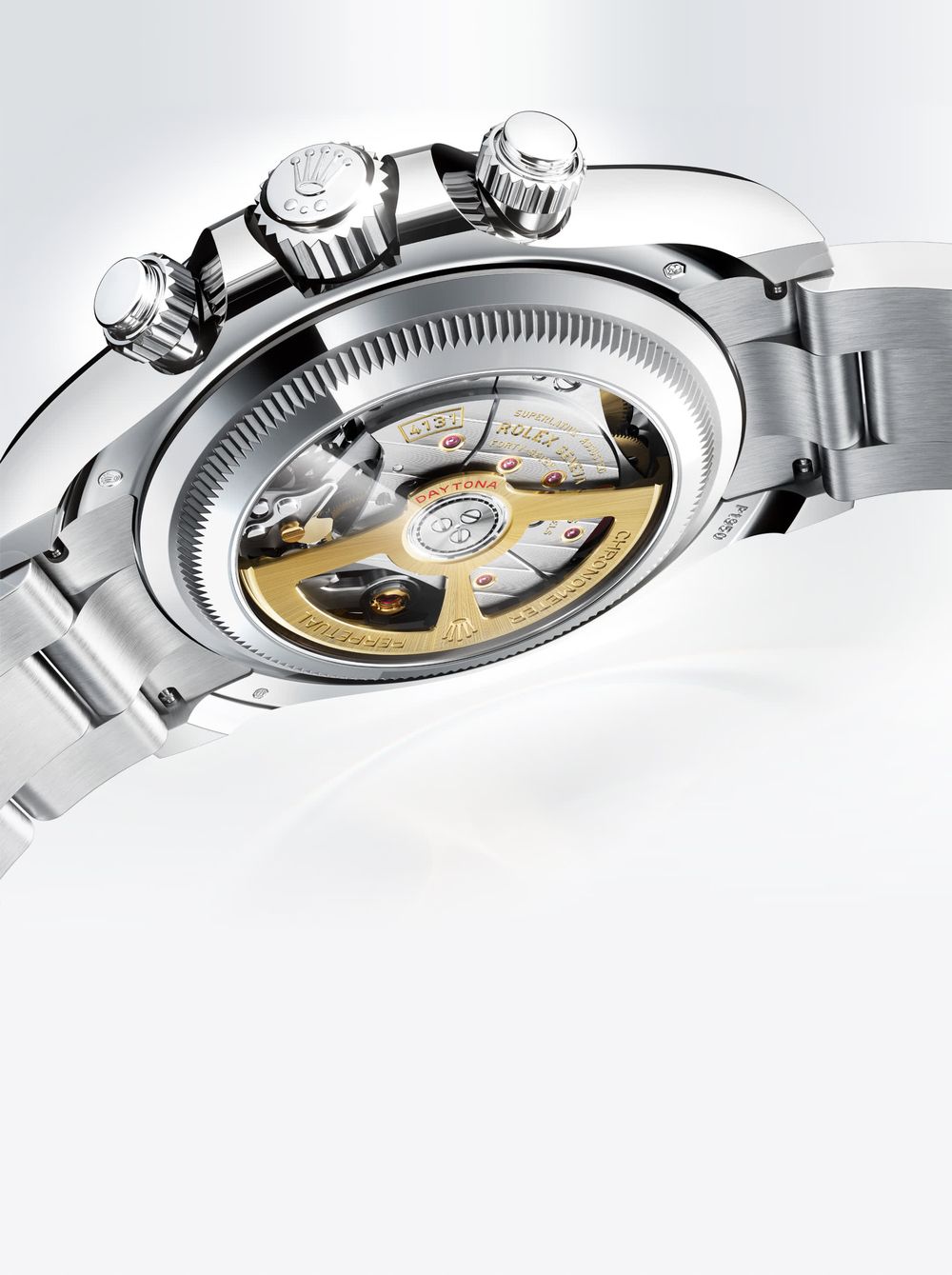
Every current Daytona runs calibre 4131, a chronograph movement Rolex developed and manufactures in house, released in 2023 for this model alone. It measures intervals of time through the chronograph function. It displays the hours, minutes and seconds, all of it read through the three counters set into the dial.
Seventy-two hours is three full days of reserve, so a weekend off the wrist stops being a reset ritual. Set the watch down on Friday night and it’s still running on Monday morning, with the chronograph ready whenever the day asks for a timed run.
The efficiency comes from the patented Chronergy escapement, made of nickel-phosphorus so it resists strong magnetic fields, and a blue Parachrom hairspring with a Rolex overcoil keeps the rate steady in any position. The bridges carry Rolex Côtes de Genève, a finish with a polished groove cut between each band.
Each Daytona carries the Superlative Chronometer certification, which Rolex says ensures excellent performance on the wrist, and Rolex strengthened the criteria again in 2026, so the seal covers the finished watch rather than a bare movement. None of that engineering shows on the dial. It shows in the timekeeping, which is where a chronograph earns its keep.
How buying a Daytona actually works
Rolex sells new watches one way only, through its Official Rolex Jewelers, and rolex.com is blunt about it. Those jewelers warrant the watch’s authenticity and back it with an international five-year guarantee across a network covering more than 100 countries. Rolex.com lists every jeweler in the network, so the store you walk into can be checked against the brand’s own directory before you hand over a dollar.
Availability is the hard part, and Rolex explains that plainly too: each watch is assembled by hand and production capacity stays limited, so demand can outpace it and certain models run scarce. Jewelers receive regular deliveries and manage allocation and sales themselves.
Ask the jeweler to complete the guarantee card in full at purchase, because Rolex ties guarantee service to that card. Five years of coverage rides on that one formality.
That means there’s no Rolex-run queue to join and no delivery date the brand will promise you, so pick your reference first, register that exact reference with a jeweler, and stay reachable. Bring a reference number, not a wish. Jewelers allocate by reference, so a specific ask gets a specific answer, and a vague one gets a shrug.
Start with the steel 126500LN at $16,900 and register it with your nearest Official Rolex Jeweler through rolex.com. If the wait outlasts your patience, the two-tone 126503 at $24,550 is the same Daytona with a warmer face, and skipping the chase entirely is the right call for anyone who needs a watch this month.