A UPS earns its keep in the ugliest ten seconds of a workday, when the lights dip, the monitor blacks out mid-save, and the router goes dark right along with it. An unsaved file turns into real damage fast.
The fix isn’t exotic, and it isn’t one box for every room, so size the battery to the load that has to stay alive, then match the waveform to the gear. A modem, a desktop, a gaming rig, and a rack each fail differently when the power drops.
Four picks cover the four jobs that come up most. No filler, no duplicates. Oversizing wastes money, desk space, and battery you paid for.
Start with the load you can’t lose
Sizing starts with watts, not with the VA number printed biggest on the box, because the watt rating is the ceiling your gear actually draws against on a bad day. Add up the draw of everything that has to stay on, then leave headroom for the spike when a drive spins up or a GPU wakes, since a unit loafing at half load runs longer than one that’s redlined.
Waveform is the second call, and it’s a simple one. Modems and routers don’t care, but a modern gaming supply with Active PFC can care a great deal. Standby units switch over in a few milliseconds when the power fails, while line interactive units correct the voltage as they go, and both shapes show up in the picks below.
Runtime claims need the same skepticism, since every maker rates minutes at half and full load, and neither number describes a workstation pulling a real working load. Treat the printed minutes as time to save and shut down cleanly, because that’s the job.
Desk and Wi-Fi keeper: APC Back-UPS BE600M1
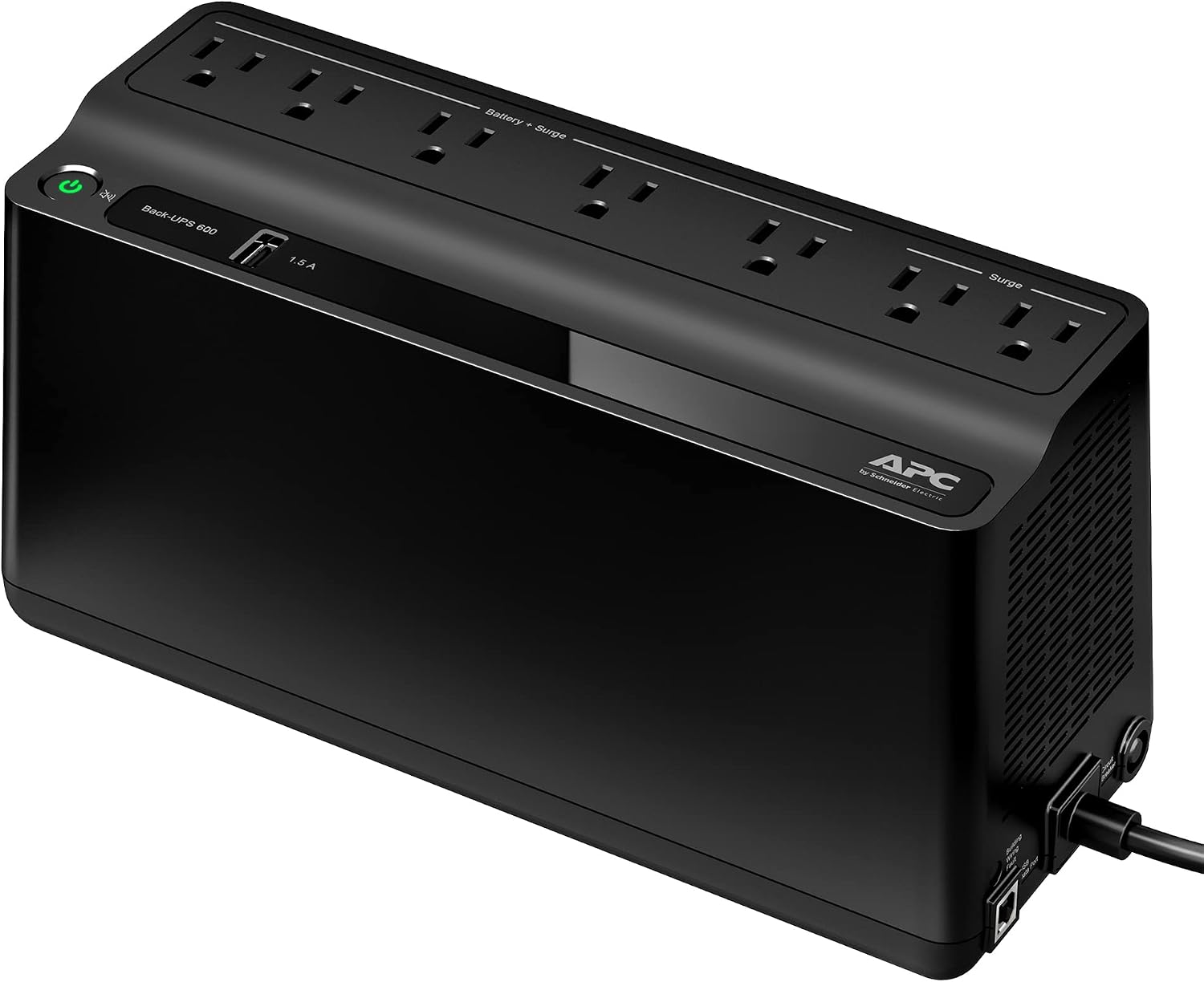
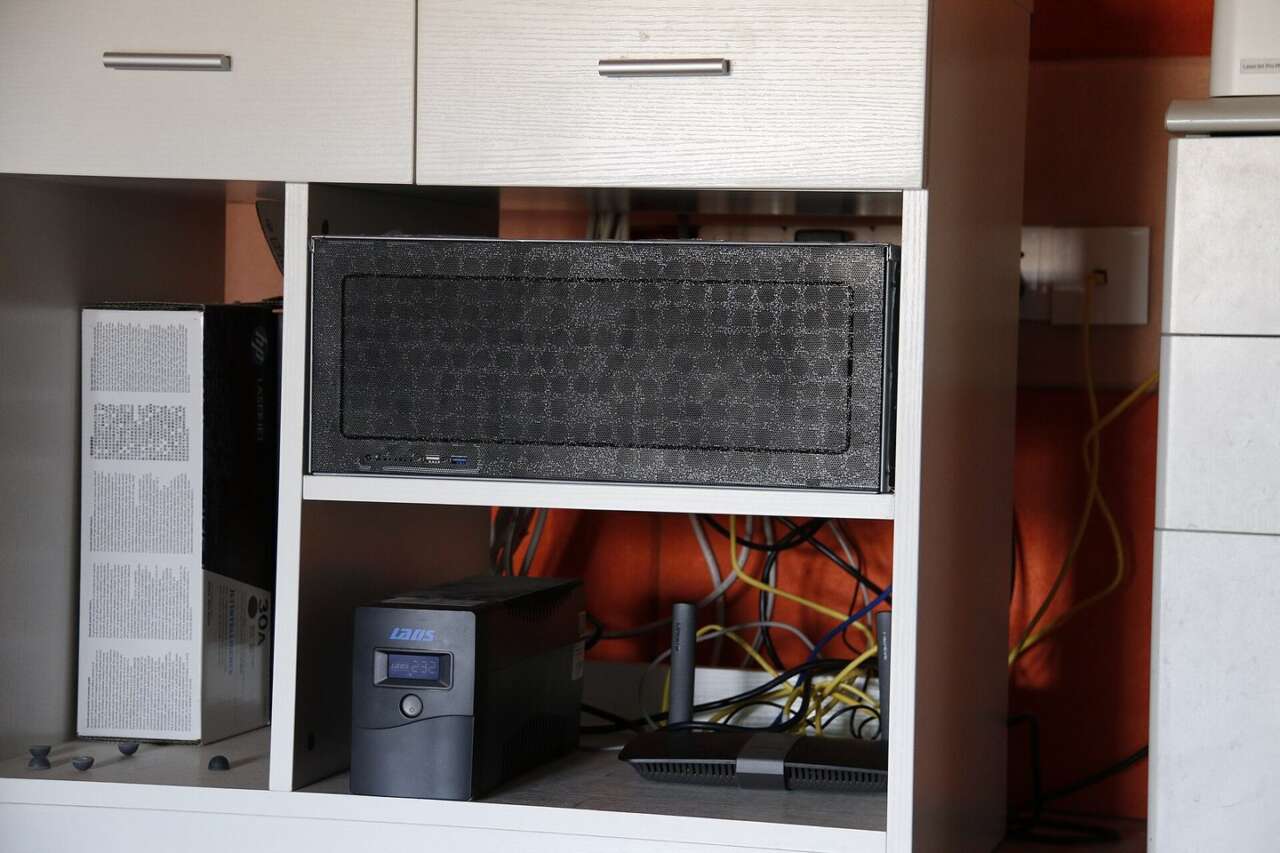
The BE600M1 is a 600 VA, 330 W standby unit with seven outlets, five on battery and two surge only, plus a USB charging port for a phone on the nightstand or the desk. APC rates it to run a modem and router drawing 10 W for 4.3 hours, which is exactly the job this pick exists to do. The connection stays alive long after a laptop battery would’ve given up and gone dark an hour into the outage.
The waveform’s a stepped approximation to a sinewave, and that’s fine here. Routers and modems don’t carry power supplies that care.
Setup is quick, on a wall or a shelf, and the battery connects by hand in the back. The surge rating’s 490 J, sized for network gear.
APC Back-UPS BE600M1
600 VA / 330 W, 7 outlets, keeps a router and modem up for hours
Price: $83.99
Where to buy: Buy on Amazon
Home office: CyberPower CP1350AVRLCD3
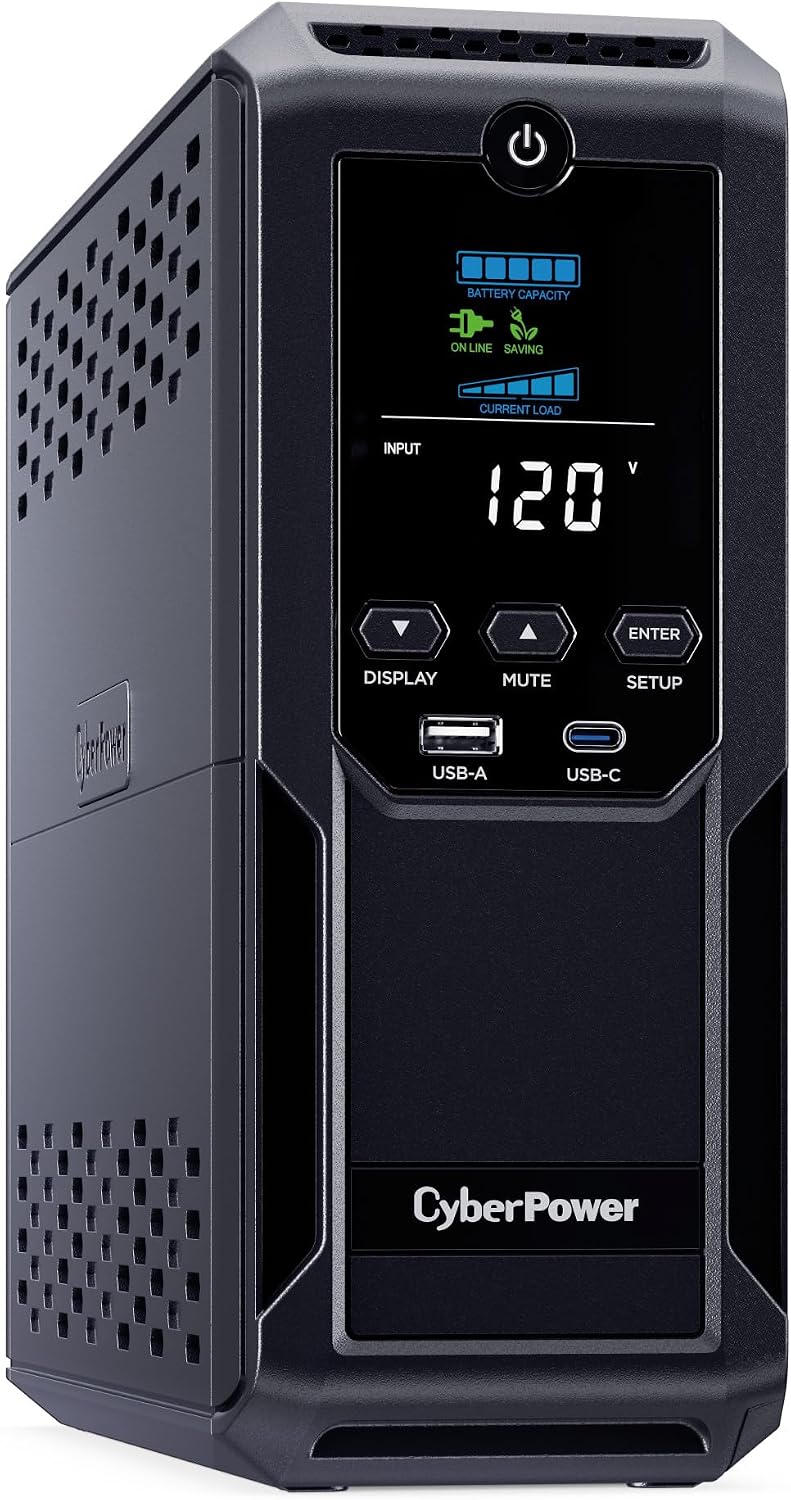
A home office adds a desktop, a monitor or two, and a NAS that really shouldn’t lose power mid-write, and the CP1350AVRLCD3 is built for exactly that pile. It’s a 1350 VA, 815 W line interactive unit with AVR, so it corrects small sags and spikes without touching the battery at all, and its twelve outlets split six and six between battery backup and surge only.
CyberPower rates it at 14 minutes at half load and 4 minutes at full load. The LCD shows the real number as the load changes.
That AVR is the quiet reason it fits a home office, where the lights dim when the AC kicks on and the battery would otherwise cycle itself tired. It’ll ride out the small stuff on the transformer and save the battery for a real outage. The AVR just handles them, and two USB ports, one Type-A and one Type-C, keep a phone charging while you close.
CyberPower CP1350AVRLCD3
1350 VA / 815 W line interactive power with AVR, a multifunction LCD that shows real runtime and load, and 12 outlets for a full desk, plus two USB charge ports for phones and tablets across the whole desk setup
Price: $195.95
Where to buy: Buy on Amazon
Gaming rig: CyberPower CP1500PFCLCD
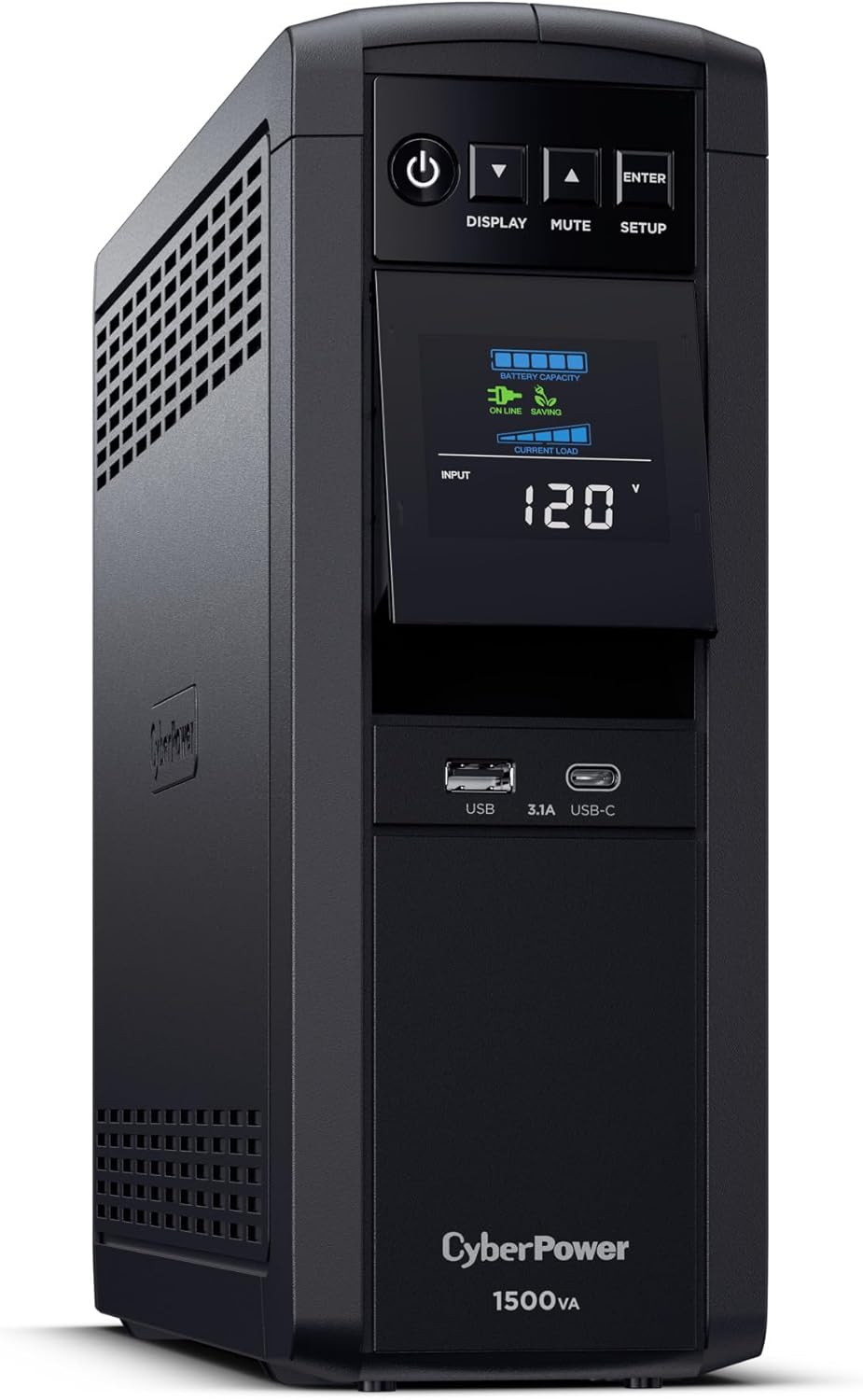
Gaming power supplies are the picky eaters of the UPS world, and a simulated sinewave unit can trip an Active PFC supply right when it switches to battery. The CP1500PFCLCD answers that with a true sine wave output at 1500 VA and 1000 W, sized for a high-draw rig and its monitor. It’s the one pick here where the waveform isn’t a footnote. The failure mode is a hard reboot mid-match.
Runtime’s 10 minutes at half load and 2.5 at full load for a rig that’s actually working. Exit the match, save, and shut down inside that window, and plan the sequence the day you plug it in, not during the outage.
The color LCD tilts up for under-desk viewing and shows load, battery level, and runtime at a glance, even from across a dark room full of gear. Six outlets carry battery backup, and six carry surge alone. The panel’s the part you’ll actually use weekly.
PowerPanel Business is a free download that handles the graceful shutdown for you when you’re away from the desk. The software closes the gap between a save file and a corrupted one.
CyberPower CP1500PFCLCD
1500 VA / 1000 W pure sine wave output built for Active PFC gaming power supplies, with a tilting color LCD, AVR, and 12 outlets for the rig, monitor, and consoles, plus two USB charge ports
Price: $239.95
Where to buy: Buy on Amazon
Rack: APC Smart-UPS SMT1500RM2UC
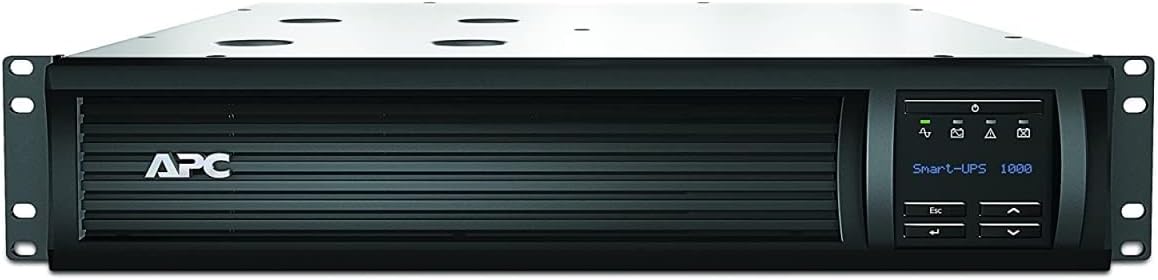
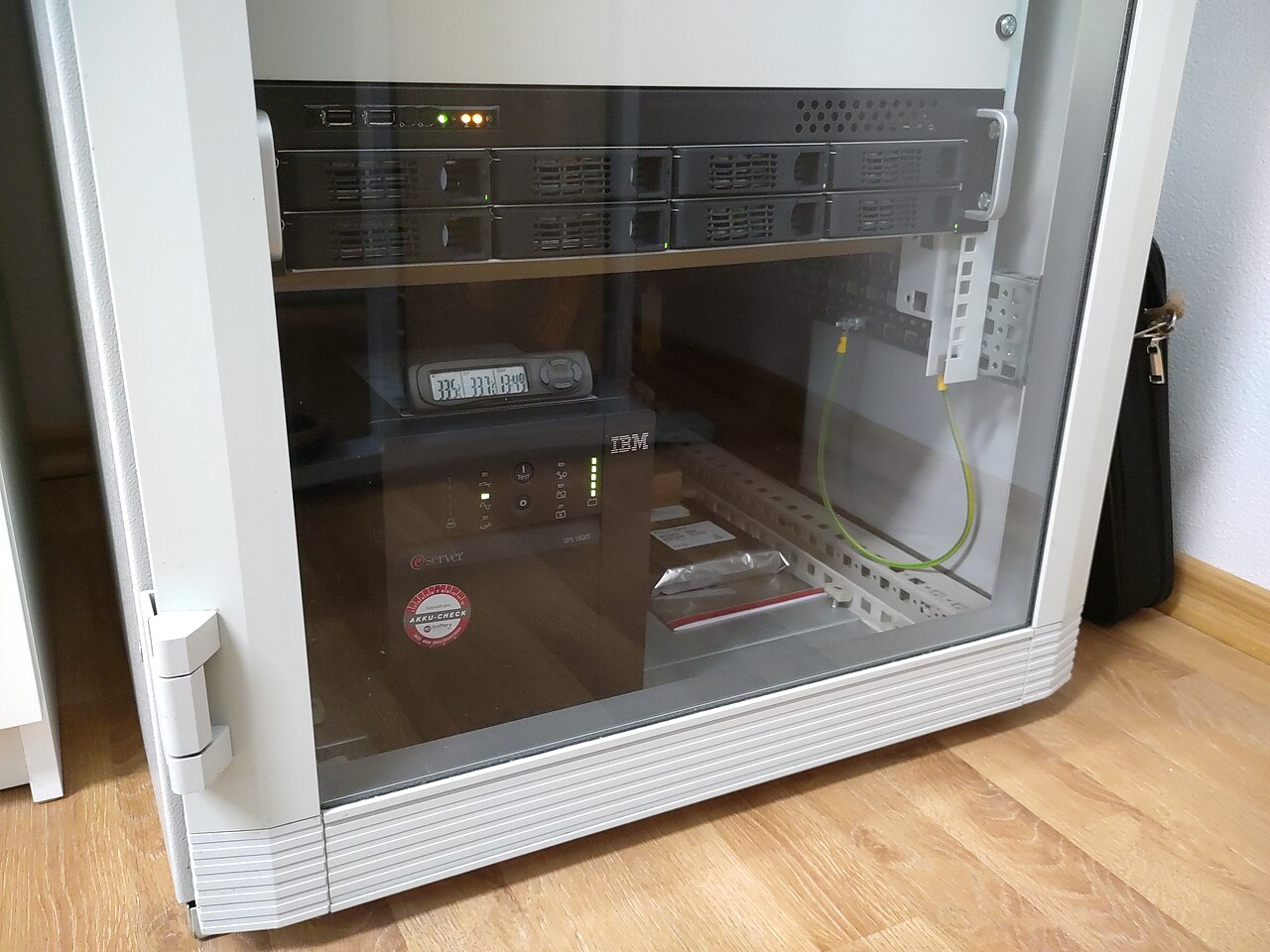
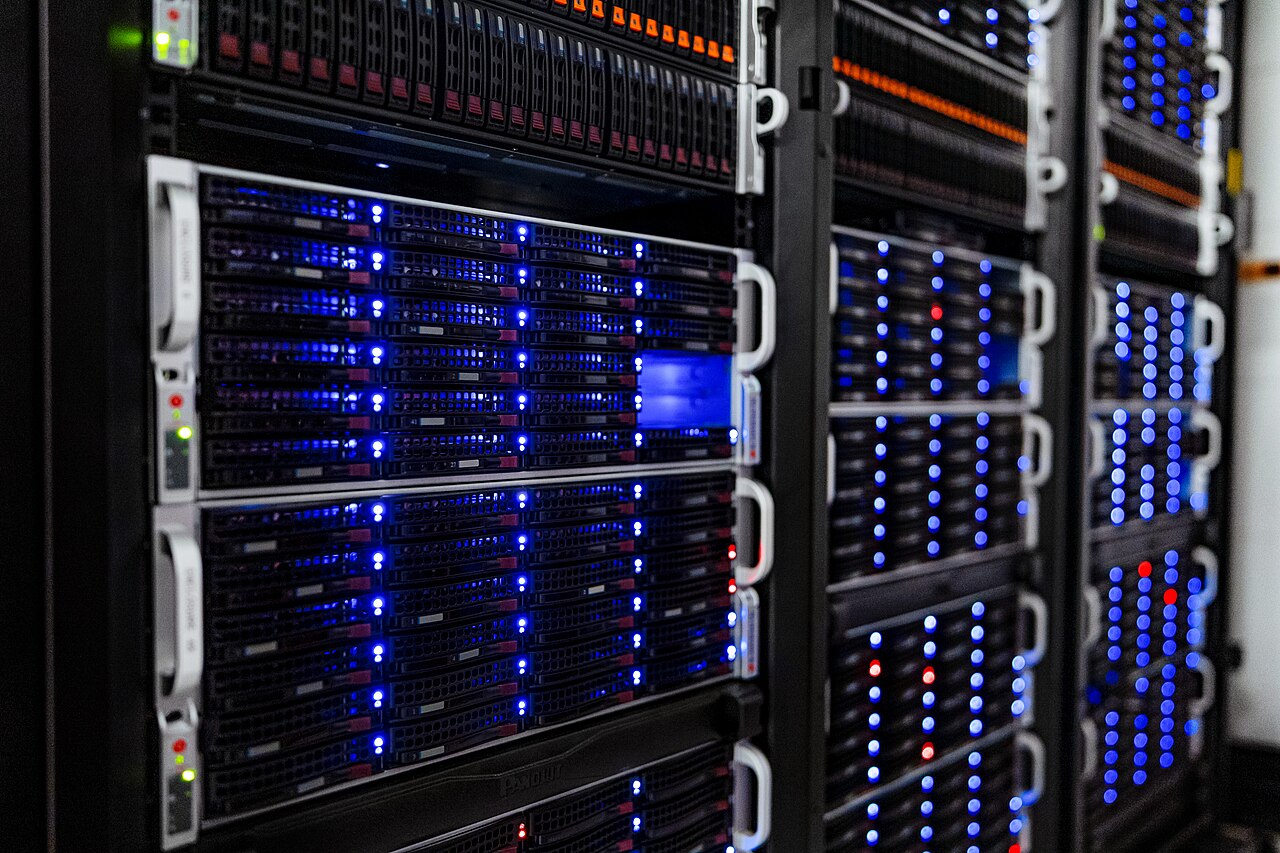
A rack changes the buying rules, because the UPS has to mount in 2U, report its health, and shut servers down in an orderly way when an outage runs long enough to outlast the battery’s first estimate. The SMT1500RM2UC does all three, with 1440 VA and 1000 W behind six outlets, a sine wave output, and AVR for the brownouts that never quite become blackouts in an older building.
SmartConnect handles remote monitoring out of the box, and the SmartSlot takes an optional network card when you want managed shutdown across machines on the network. Recharge runs about 3 hours, which is fast for this class. The front panel LCD covers the same ground in person, so a walk past the rack tells you the battery’s health without a login.
Six outlets sounds lean, but rack loads consolidate through PDUs, and you’re buying management depth instead. Depth is the product here. The LCD reports load and battery health at the rack, without a laptop balanced on a rail.
APC Smart-UPS SMT1500RM2UC
1440 VA / 1000 W sine wave output in a 2U rackmount chassis with SmartConnect monitoring, a SmartSlot, and an LCD
Price: $699
Where to buy: Buy on Amazon
Pick by the room the gear lives in
Buy the BE600M1 when the internet connection is the thing that can’t drop, and buy the CP1350AVRLCD3 when a desktop and a NAS join that list. Each load gets one answer. Move to the CP1500PFCLCD when the rig’s power supply demands a true sine wave, and step up to the SMT1500RM2UC when the gear lives in a rack and somebody has to answer for its uptime when the building goes dark.
Each one’s a shutdown plan, not a generator, so size for the load you’ll actually protect and the battery will do the rest. Test the transfer once with the gear running, and you’ll know the plan works before it counts, so buy for the room, not the spec sheet, starting with the smallest one that fits.