A cordless drill earns its keep three ways: boring clean holes, driving fasteners without chewing them up, and fitting into the space the job actually leaves. The seven drills below split those jobs between them.
At one end of the bench sits a hammer drill rated at 2,100 in-lbs of torque. At the other end, an assembly driver weighs 1.2 lb with its battery on and tops out at 71 in-lbs.
Both are the right tool, for different work.
Torque numbers need a warning before anything else, because brands rate them differently and the biggest figure on a box says nothing about control at the low end, where most screws actually get driven. A brake torque rating and a working output rating can describe similar tools with wildly different numbers. Read every rating below as the maker’s own figure for that tool, not as a score shared across brands.
So each pick is matched to a job instead: the fasteners it has to drive, the holes it has to bore, and the space it has to fit into. Kit contents get named in full, because a bare tool and a kit are different purchases wearing the same name.
Best for heavy driving and big holes in framing lumber
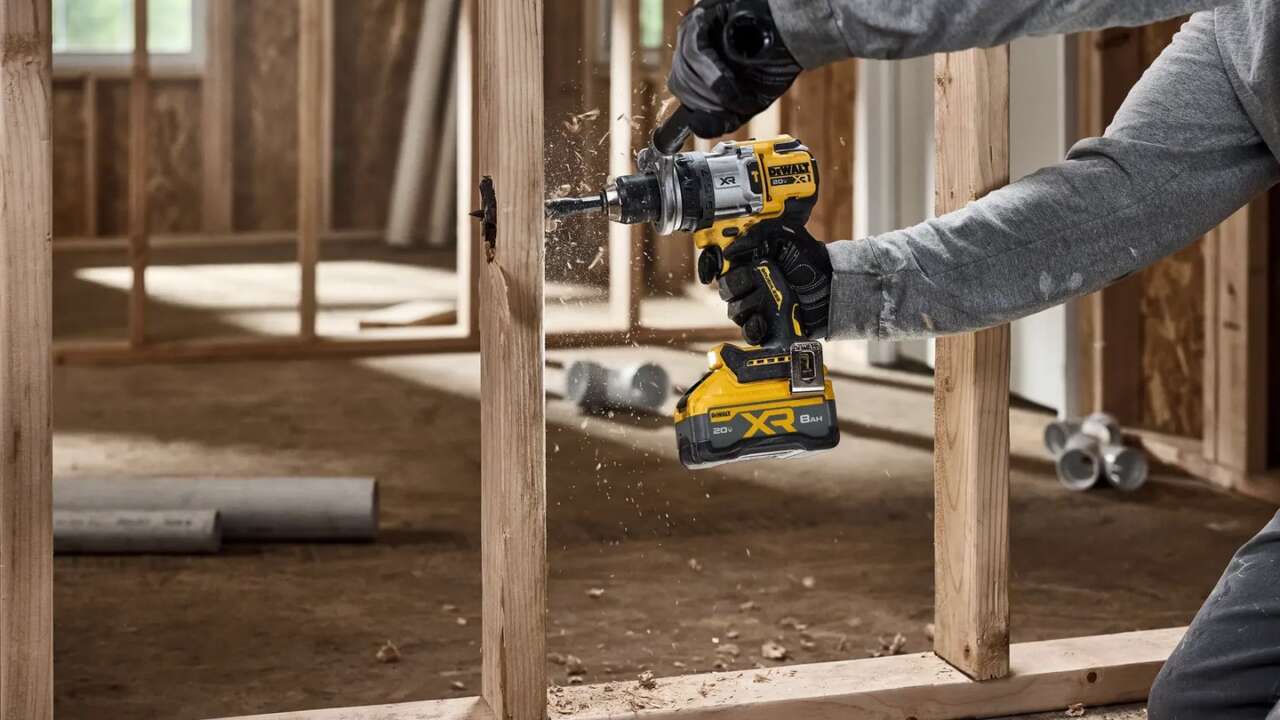
DeWalt rates the DCD1007 at 2,100 in-lbs of max torque, the highest figure in its 20V MAX hammer drill line, delivered through a three-speed all-metal transmission and a 1/2-in chuck. The WW1 kit pairs the drill with an 8Ah XR POWERPACK battery, a DCB118 charger, a side handle, a belt hook and a bag.
That output cuts both ways. It pulls augers and hole saws through framing lumber that stall lighter drills, and it makes this the wrong tool to hand someone hanging curtain rods, because the kit is heavy and the power arrives fast. DeWalt’s ANTI-ROTATION system watches for a bind-up and shuts the tool down when a bit grabs, which is the failure that twists wrists on big holes.
Buy it for remodels, decks and shop work where the holes get big and the screws get long. The drill also sells on its own as the DCD1007B bare tool, and anyone already holding 20V MAX batteries should start there. The side handle in the kit isn’t decoration; on holes this size it’s the second grip the work demands.
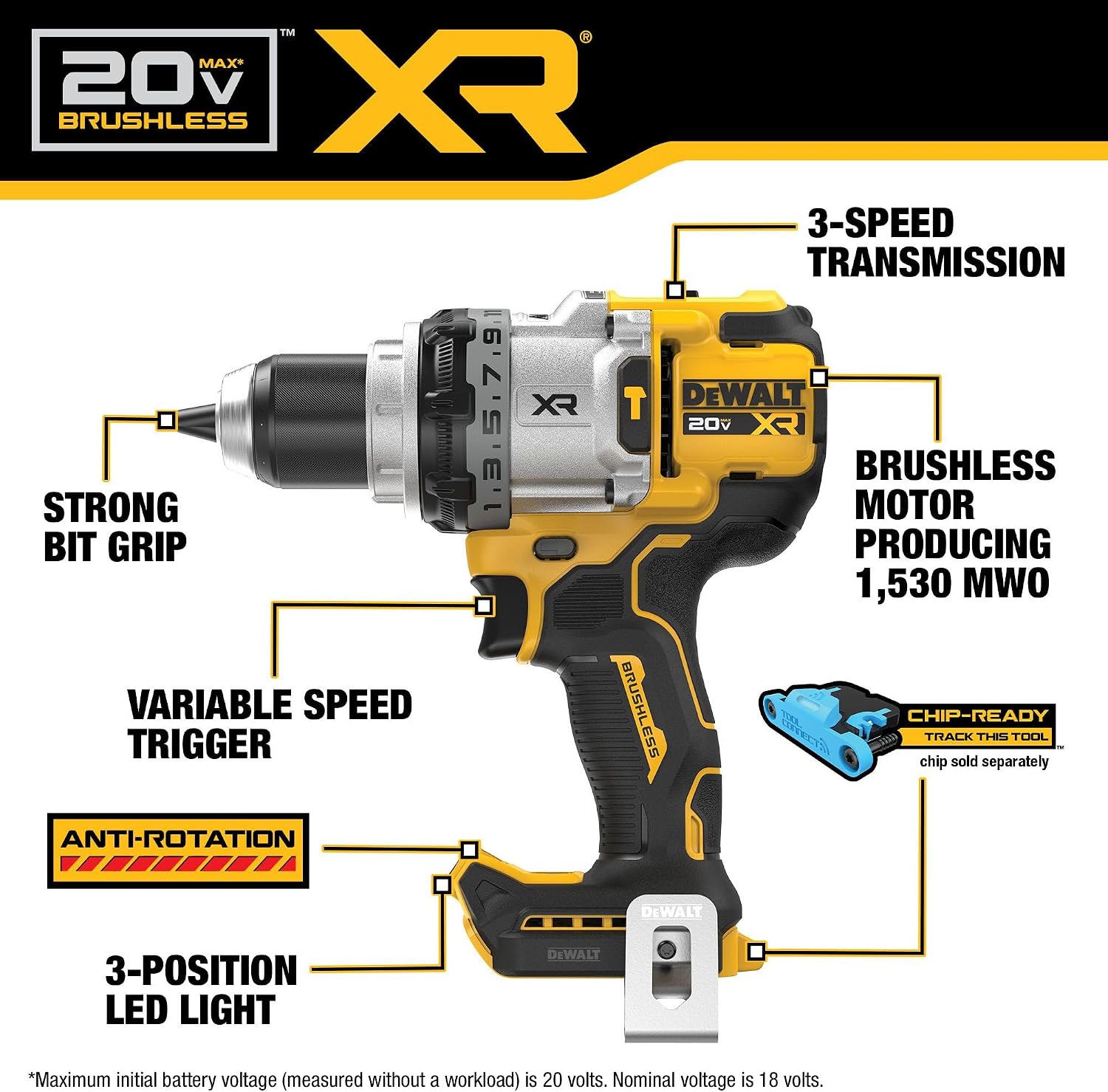
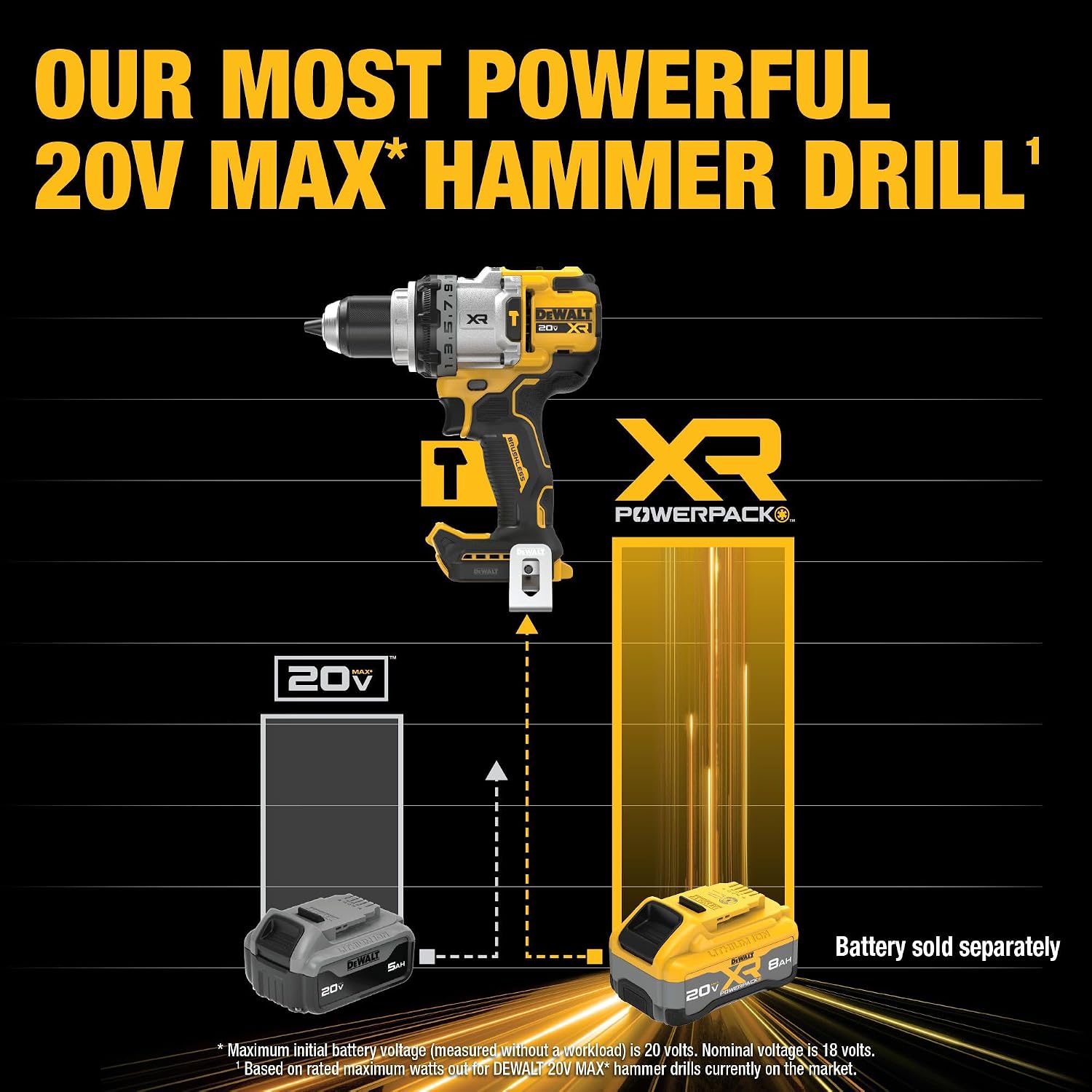
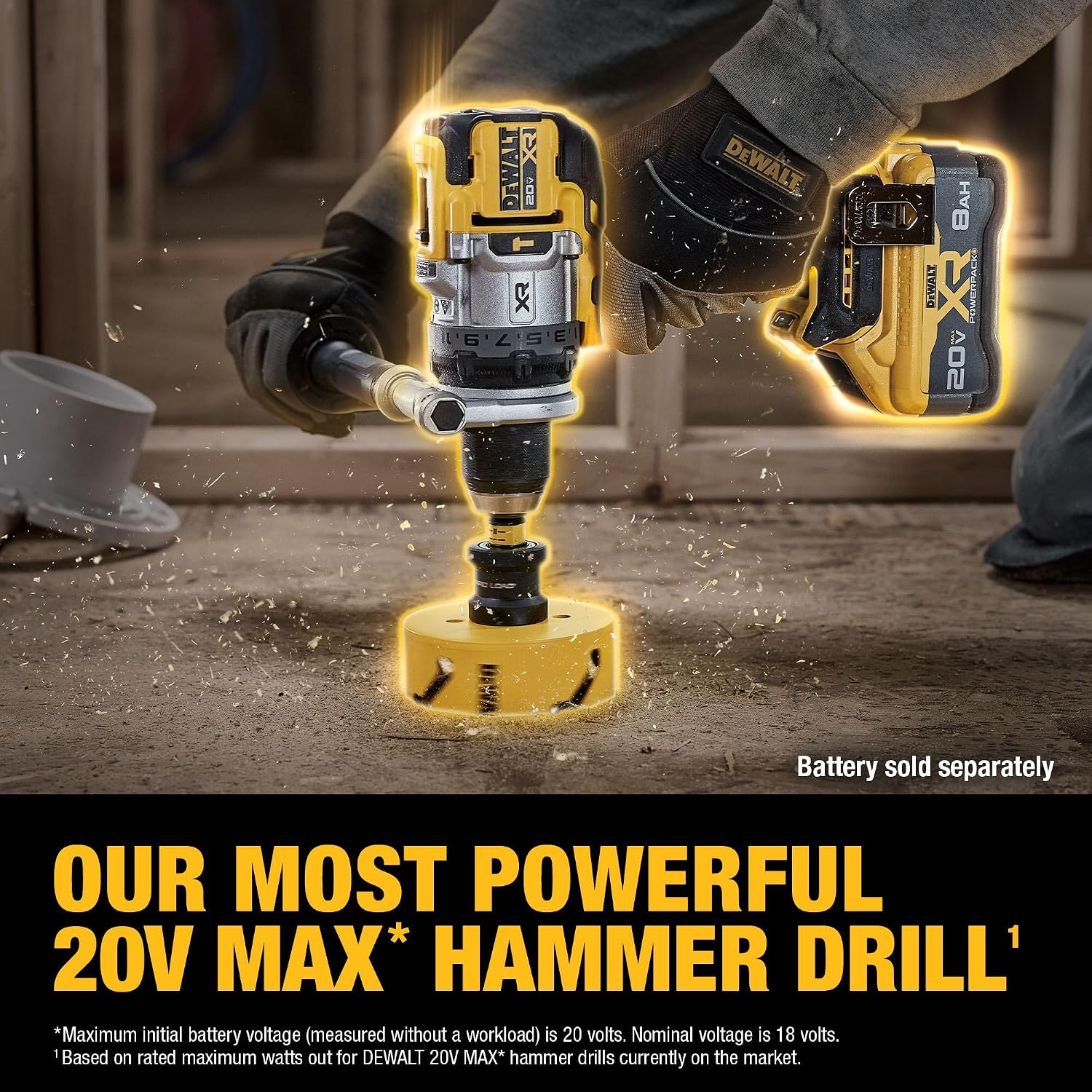
DeWalt DCD1007B 20V MAX XR 1/2-in Hammer Drill (bare tool)
2,100 in-lbs max torque · 3-speed all-metal transmission · ANTI-ROTATION bind-up shutoff
Price: $249.00 $146.98 (save $102.02, 41% off)
Where to buy: Buy on Amazon
Best all-rounder when the job list includes masonry
Bosch’s GSB18V-65 puts 575 in-lbs of torque, a top speed of 2,100 RPM and a 27,000 BPM hammer rate into a head that measures 6.9 in long, and the tool weighs 2.47 lb before a battery goes on. The B12 kit adds one 2.0Ah battery, a charger and a bag, which is the configuration most buyers should price first. It drills 1/2-in holes in steel and masonry and 1-3/8-in holes in wood, per Bosch’s ratings.
Two controls separate it from the pack at this size. KickBack Control shuts the tool down when a bit binds, and it can be switched off for work where the sensor would get in the way. The Rapid Mode Selector moves between hammering, drilling and driving without touching the clutch, so a run of shelf brackets into brick never turns into a settings exercise between holes. Dual LED worklights at the handle base aim at the bit.
For one drill that has to do a bit of everything, this is the pick. Amazon carries the same drill as the bare GSB18V-65N, the route to take when Bosch 18V batteries already live in the shop.
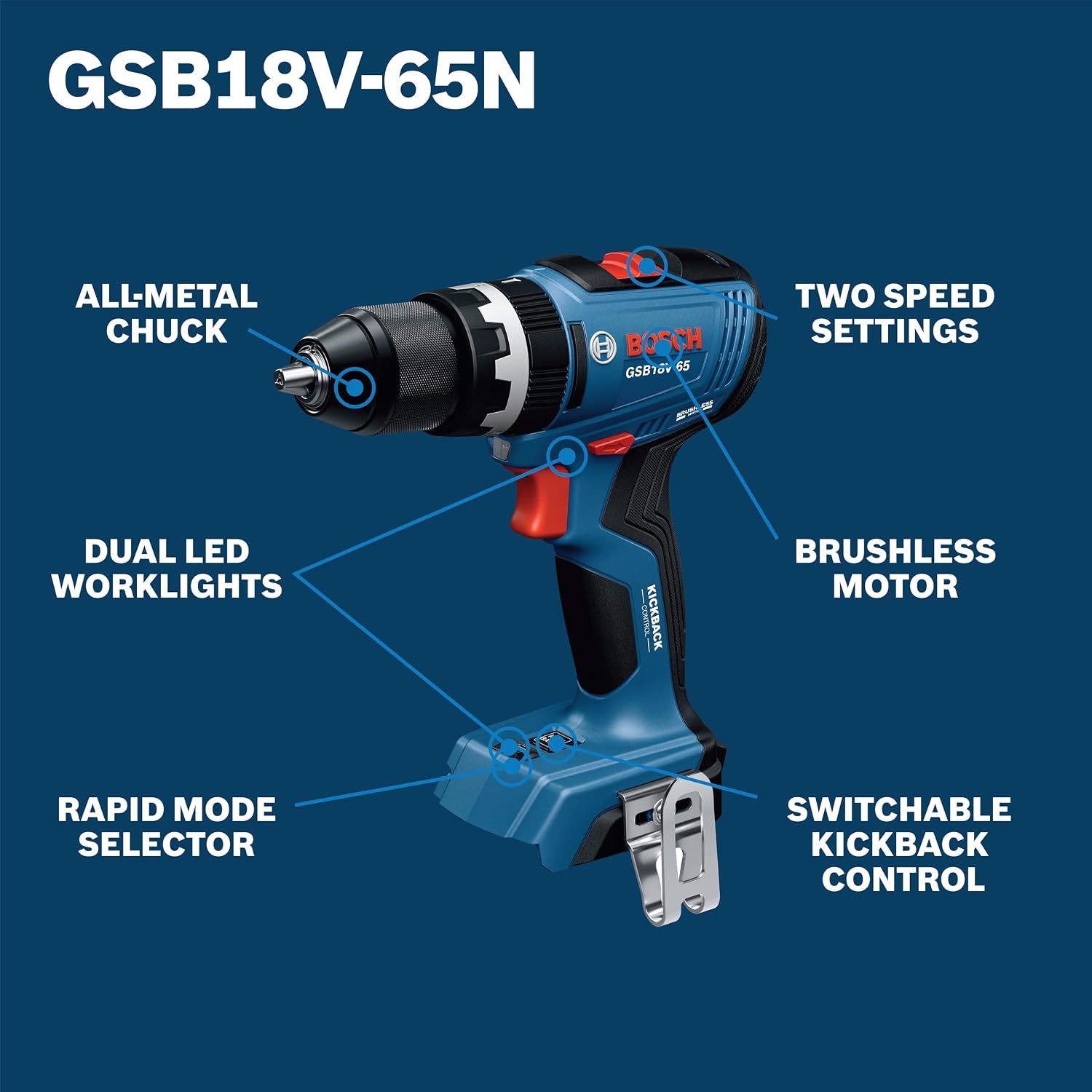
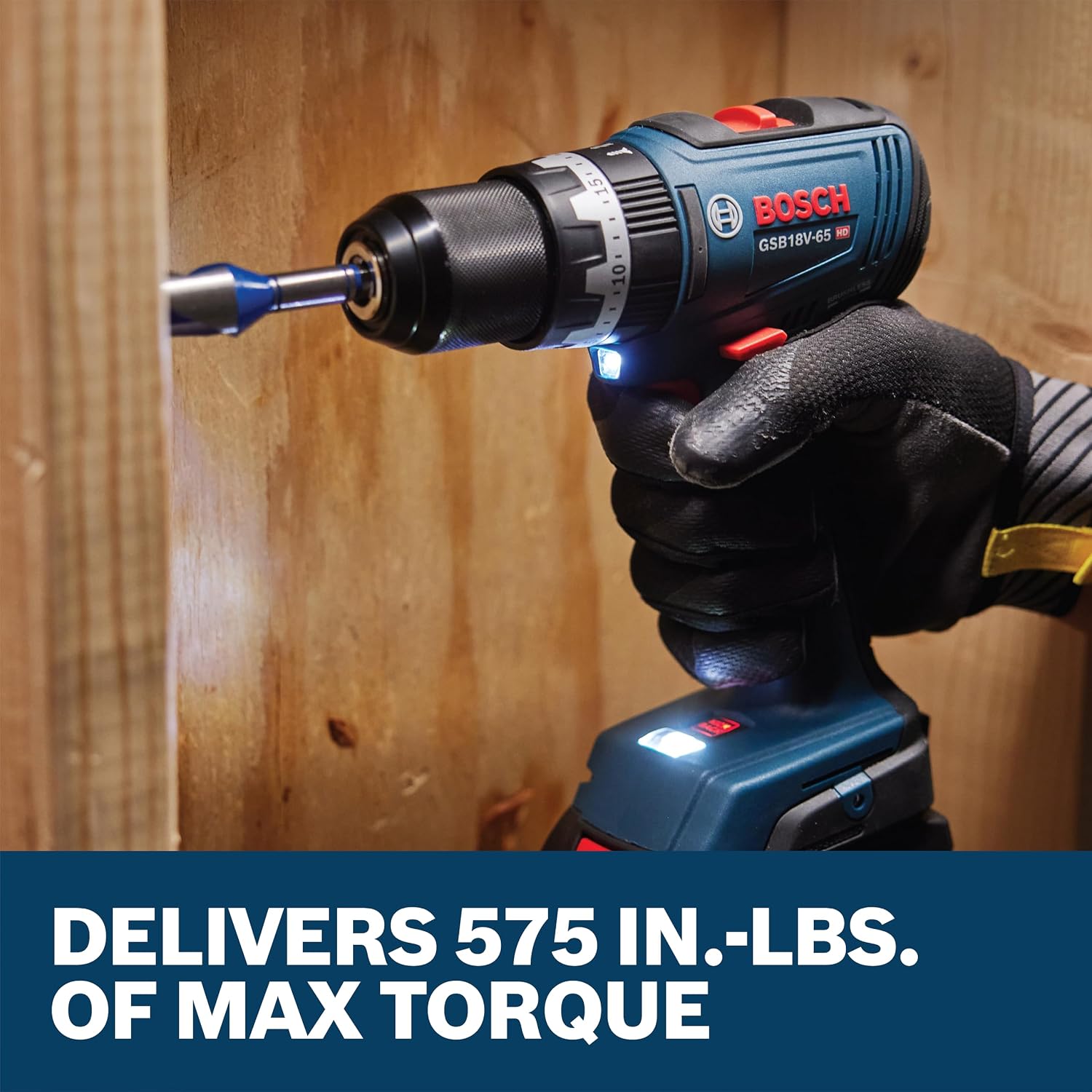

Bosch GSB18V-65N 18V 1/2-in Hammer Drill/Driver (bare tool)
575 in-lbs max torque · 0-550 / 0-2,100 RPM · switchable KickBack Control and dual LED worklights
Price: $139.90
Where to buy: Buy on Amazon
Best first drill for a house that is still being unpacked
The BLD782D1 is the cheapest complete drill in this guide. For $59.99 the box holds the brushless drill, a 2.0Ah PowerConnect battery, a charger, a double-ended bit and a belt clip, so nothing else needs ordering before the first curtain rod goes up. The same battery also runs the rest of the 20V MAX PowerConnect line, so the second tool costs less when it comes.
Its spec sheet holds up better than the price suggests. A brushless motor delivers 486 in-lbs of torque through a 1/2-in metal keyless chuck, speeds run 0 to 450 and 0 to 1,900 RPM, and ten clutch positions plus a drill setting keep flat-pack screws from pulling through particleboard. A built-in LED, a charge indicator on the battery and a magnetic bit holder cover the small stuff that gets annoying by the third bookshelf.
It won’t bore joists all day, and it doesn’t pretend to. For a first house, it’s plenty.
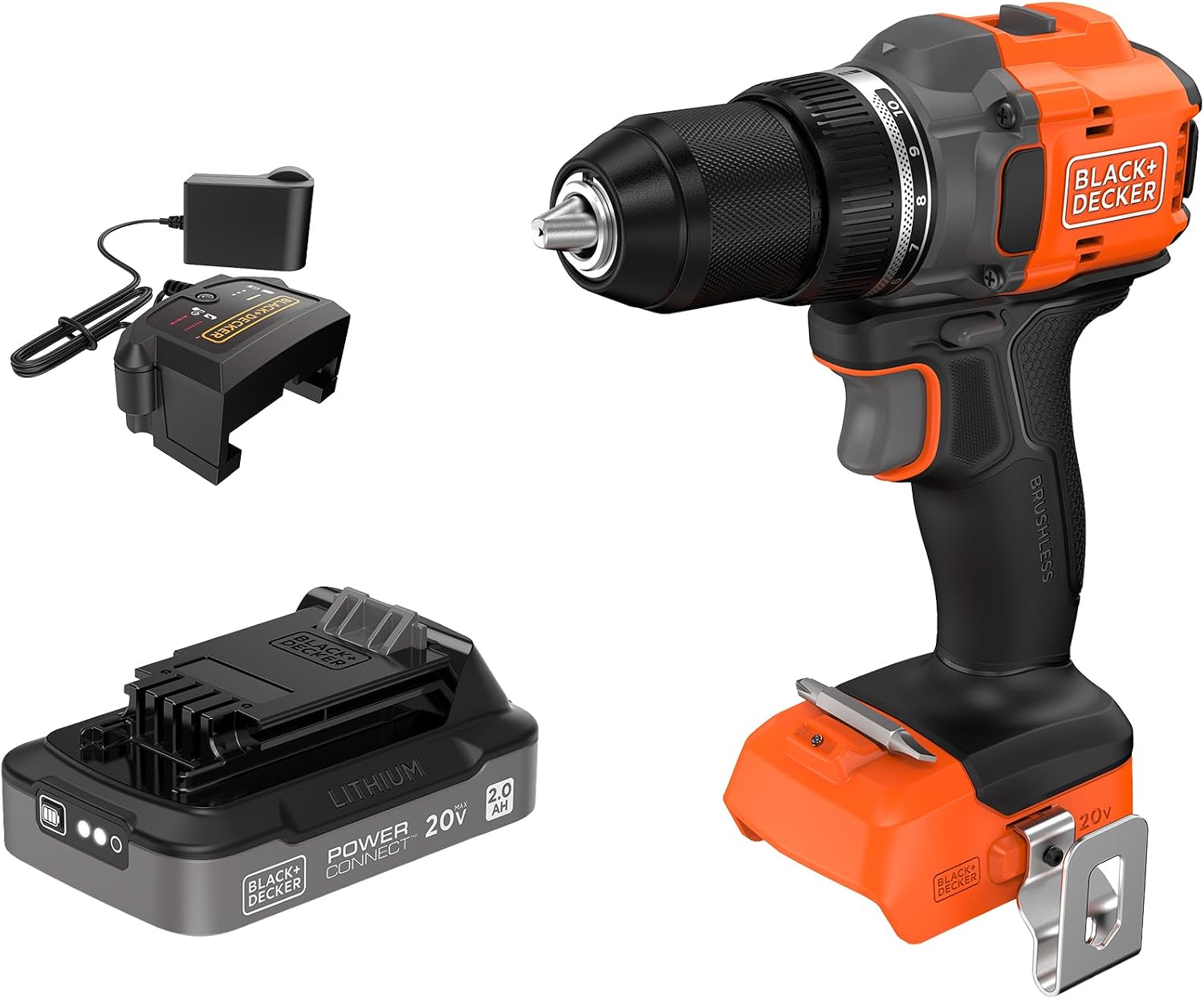
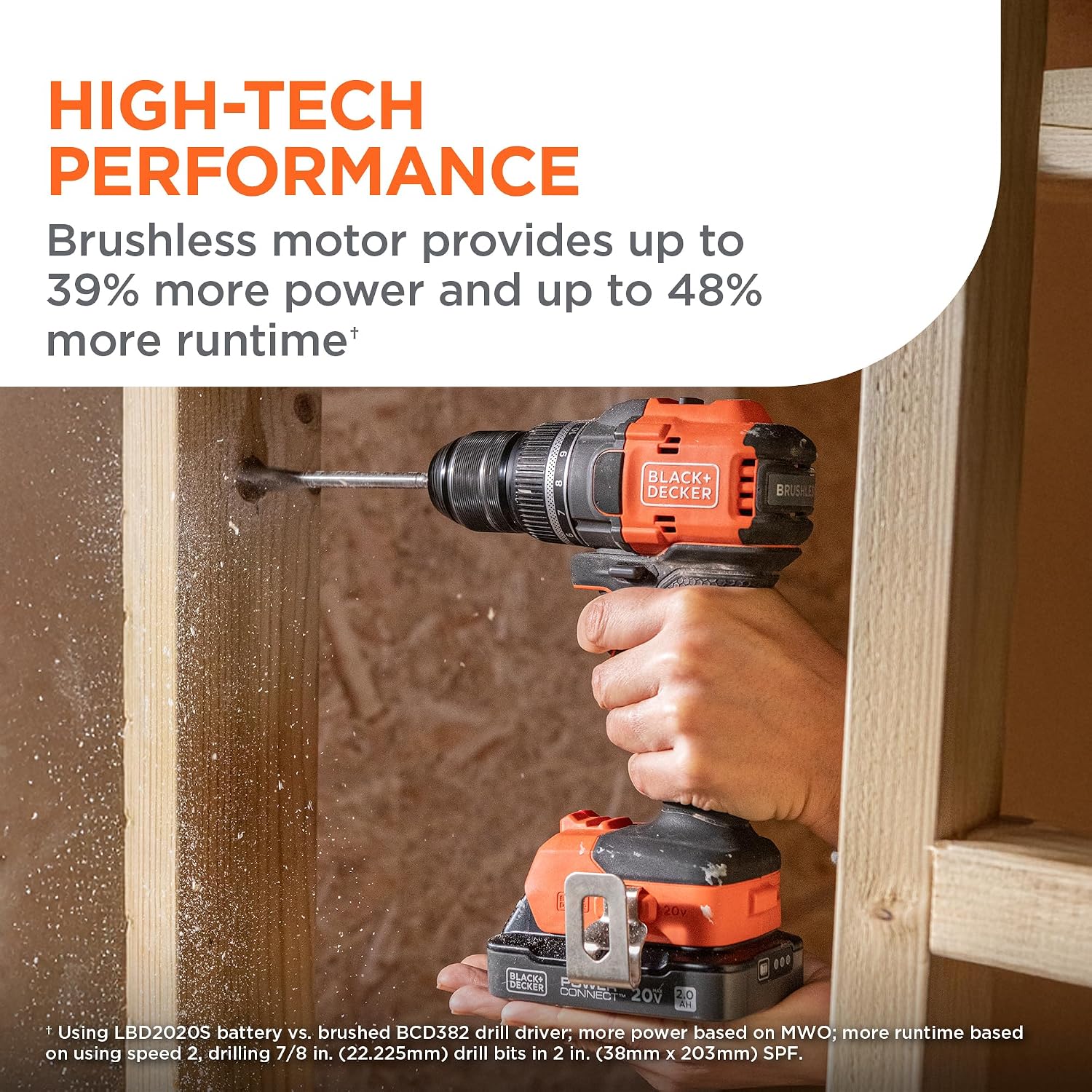
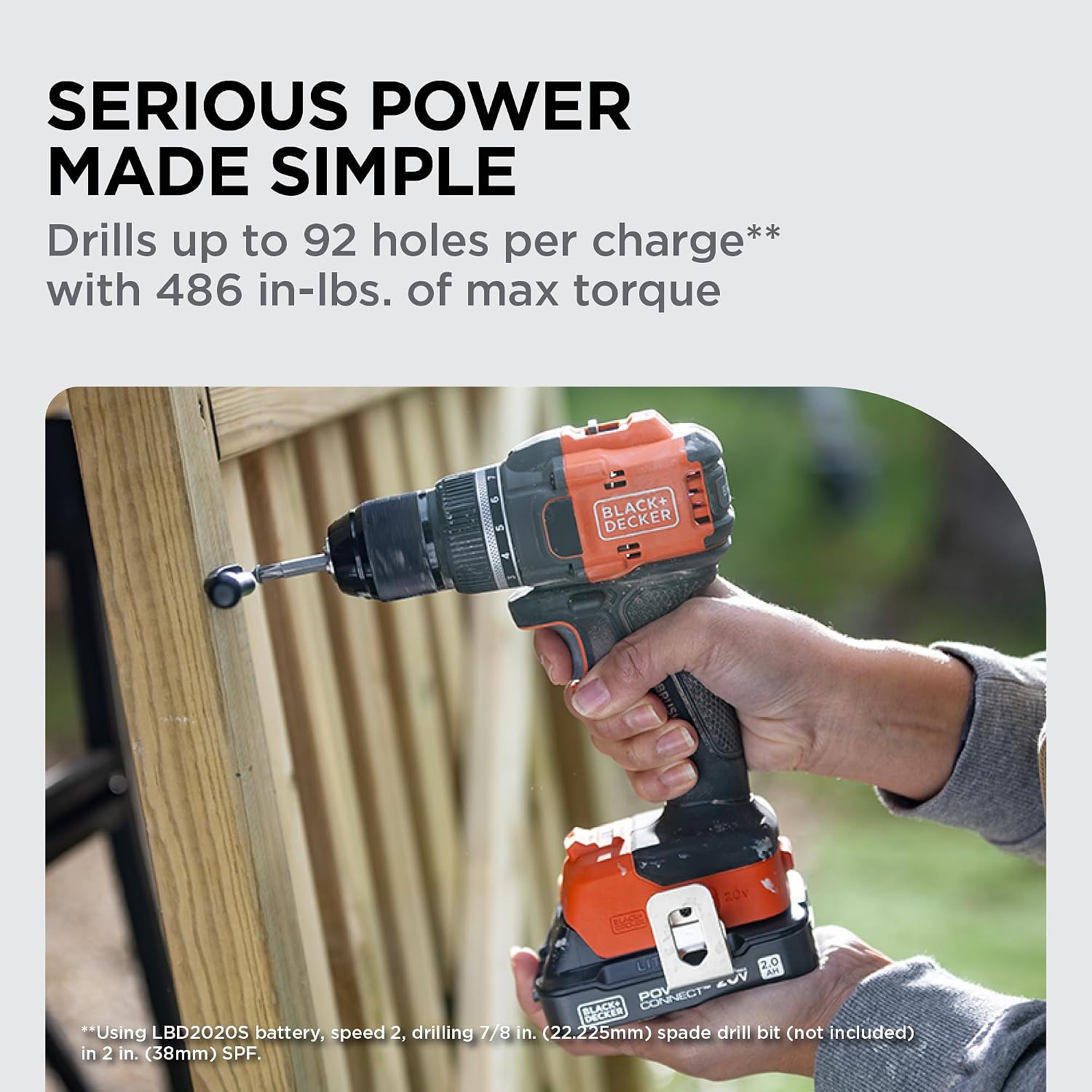
Black+Decker BLD782D1 20V MAX PowerConnect Brushless Drill/Driver Kit
486 in-lbs max torque · brushless motor · 2.0Ah battery and charger included
Price: $79.99 $59.99 (save $20.00, 25% off)
Where to buy: Buy on Amazon
Best way into a battery platform that covers the whole house
Ryobi’s PCL206K2 kit pairs a 515 in-lb drill/driver with two 1.5Ah ONE+ batteries and a charger, and the batteries are the story here. Every ONE+ 18V tool in Ryobi’s line runs on the same packs, from impact drivers and circular saws to inflators and lights. A first drill that unlocks a platform this wide is a different purchase from a drill that stands alone.
The drill itself keeps the spec sheet plain. A brushed motor turns a two-speed gearbox running 0 to 450 and 0 to 1,750 RPM, a 24-position clutch meters out driving force, and a 1/2-in keyless ratcheting chuck handles the bit box most households already own. The kit sells through Home Depot, where Ryobi’s line lives.
Amazon’s route in is a renewed PCL206B bare tool at $56.99, a sensible buy for anyone already holding ONE+ batteries and a charger. Starting from zero, the two-battery kit is the buy, because the spare pack and the platform behind it carry the value. That math only improves as the platform grows.
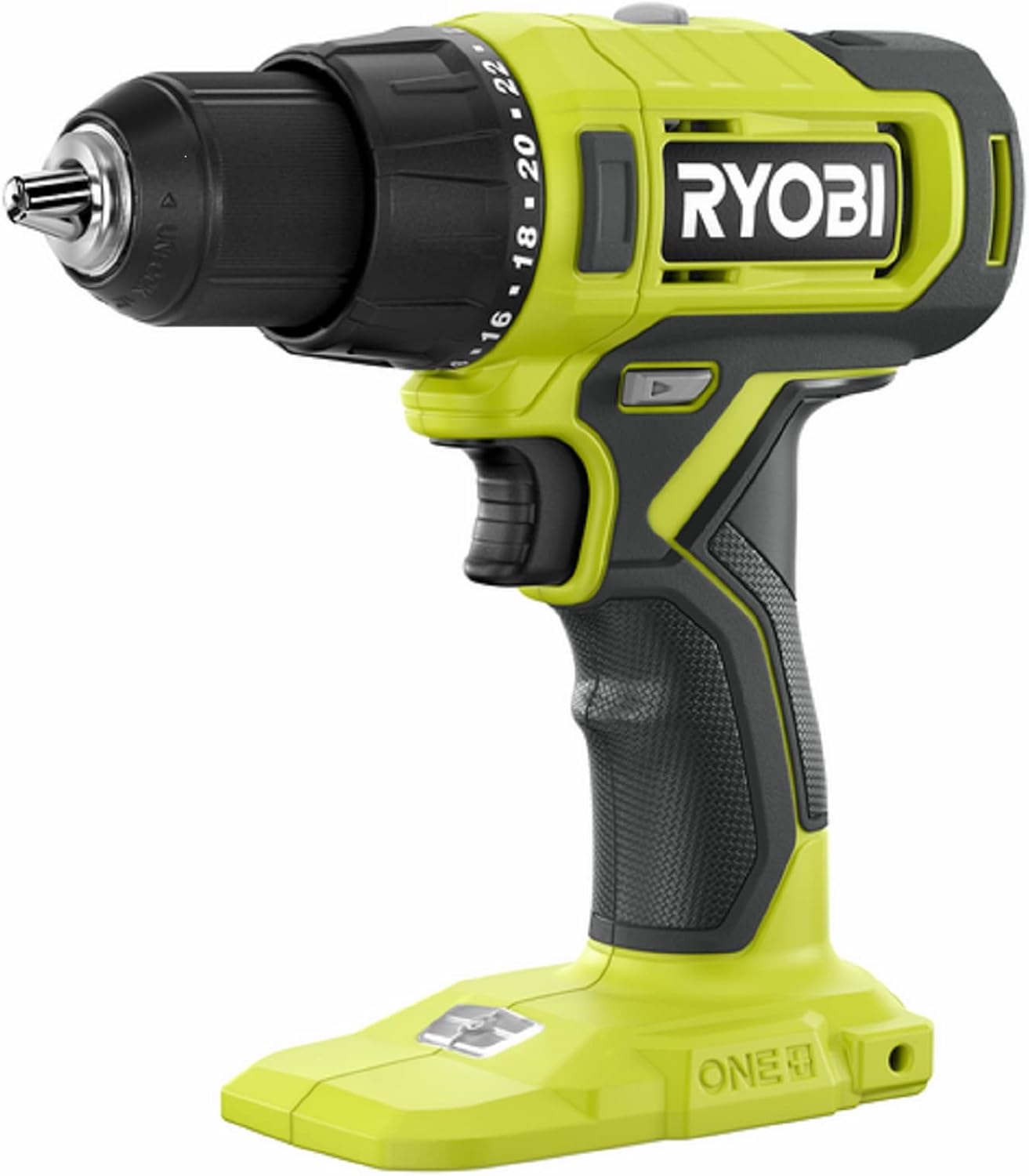
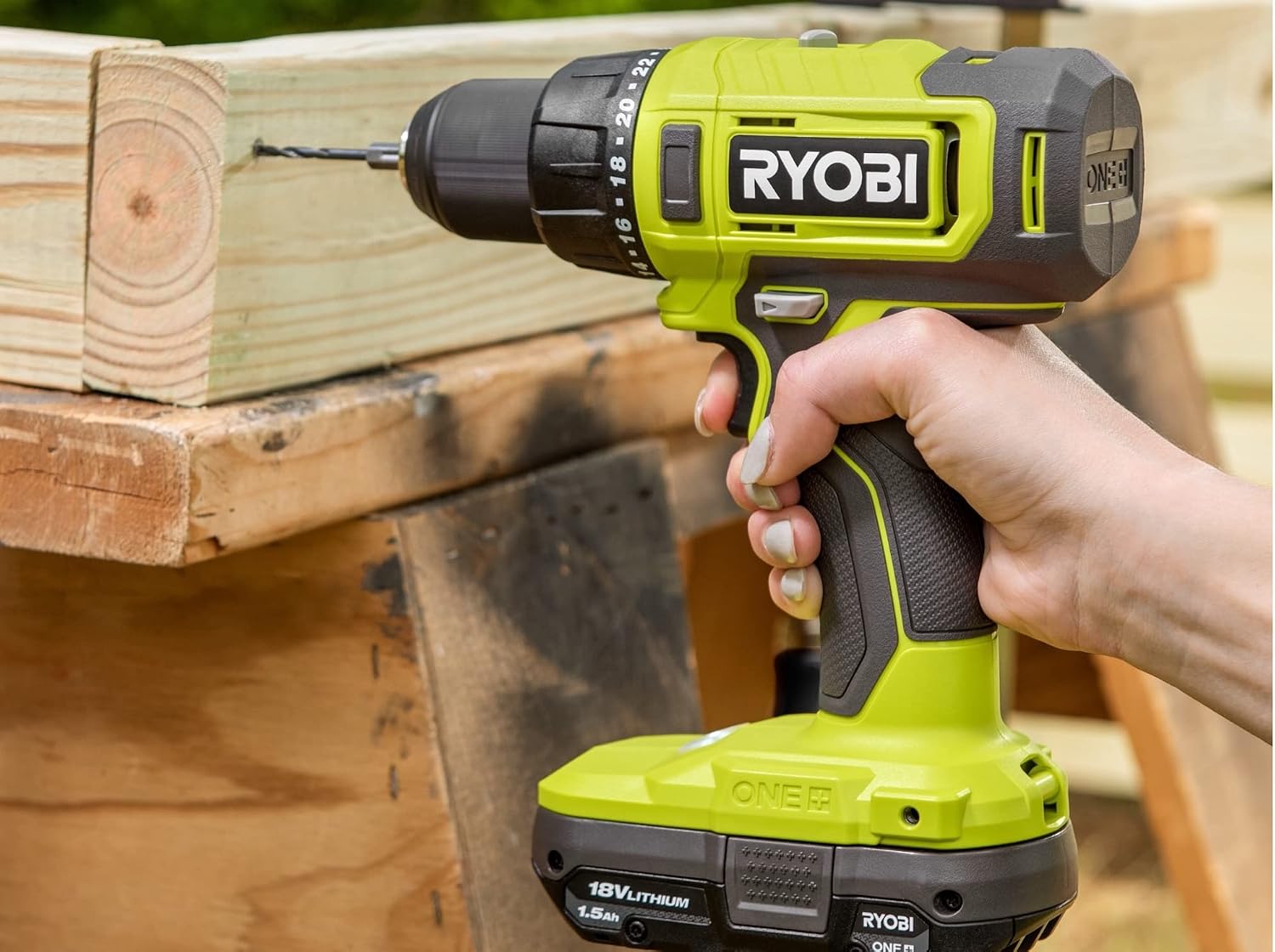
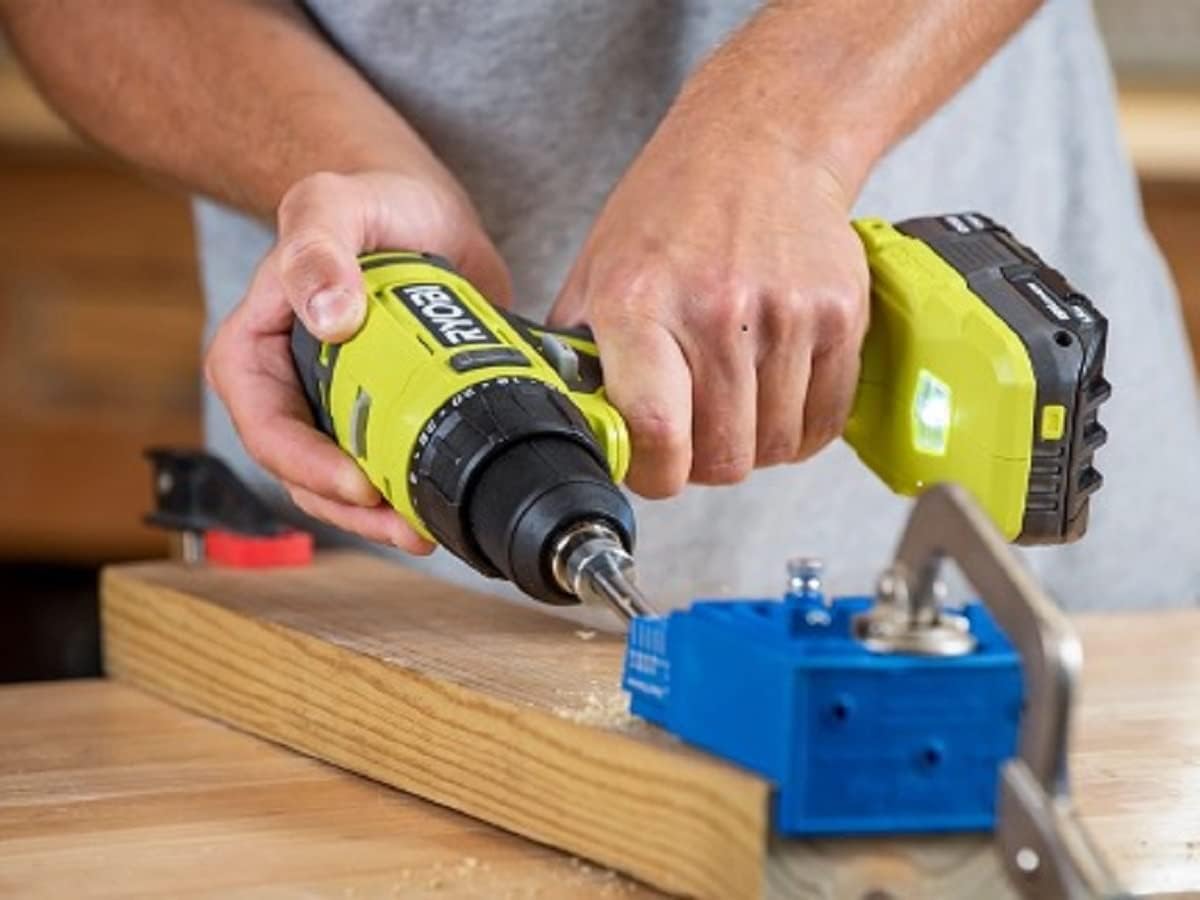
Ryobi PCL206B 18V ONE+ 1/2-in Drill/Driver (Renewed, bare tool)
515 in-lbs max torque · 24-position clutch
Price: $56.99
Where to buy: Buy on Amazon
Best for assembly work where one overdriven screw ruins the piece
The DF012DSE works the opposite end of the torque scale. Makita’s 7.2V driver-drill makes 71 in-lbs at most, weighs 1.2 lb with its battery, and runs straight like a screwdriver or folded into a pistol grip, at 10-3/4 in and 8-5/8 in long.
Its 21 clutch settings span 32 to 50 in-lbs of fastening torque, and the auto-stop clutch cuts the motor the moment the clutch disengages, so a hinge screw stops at its setting instead of sinking through veneer.
Two speeds, 200 and 650 RPM, a 1/4-in hex chuck and a work light on its own switch suit it to cabinet hardware, electronics and appliance panels. The kit carries two 1.5Ah batteries, a charger, a double-ended Phillips bit and a case, and the light blinks when a battery runs low.
Nothing here bores studs. At $241.77 the kit isn’t cheap, and the money buys control rather than power. For torque-specific assembly work, nothing else in this guide comes close.
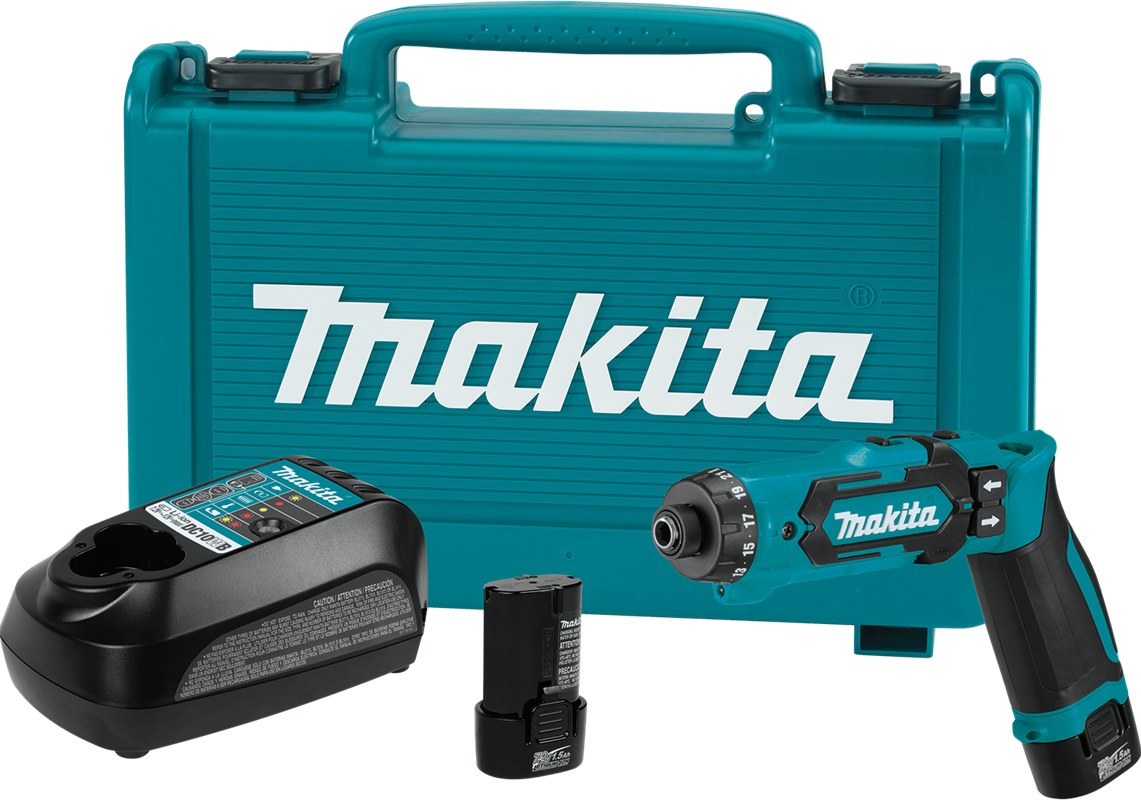
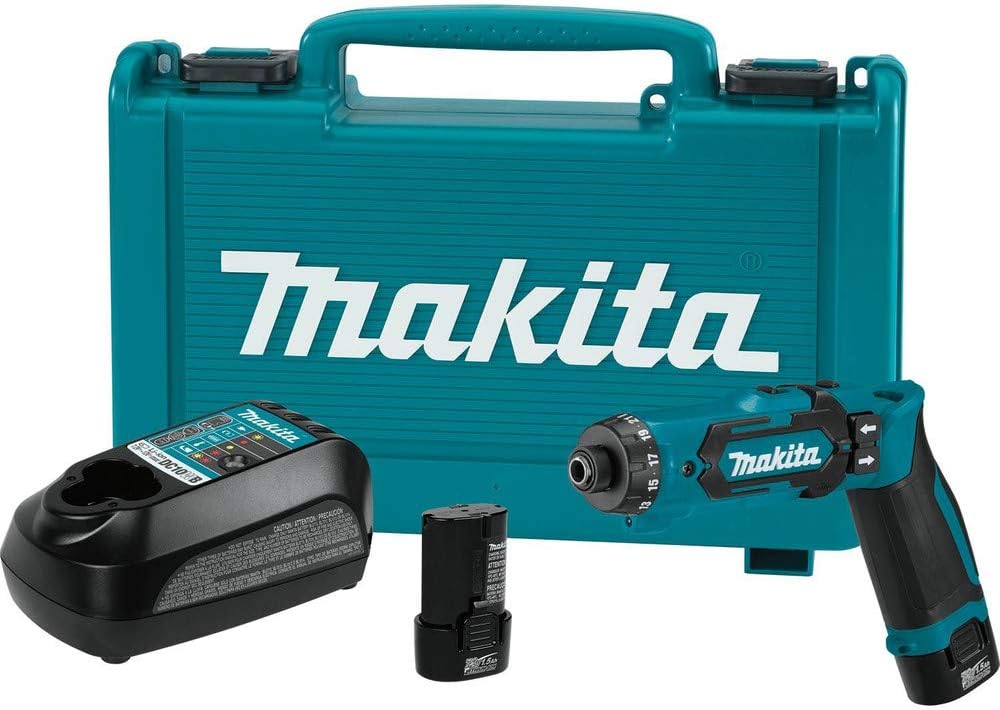
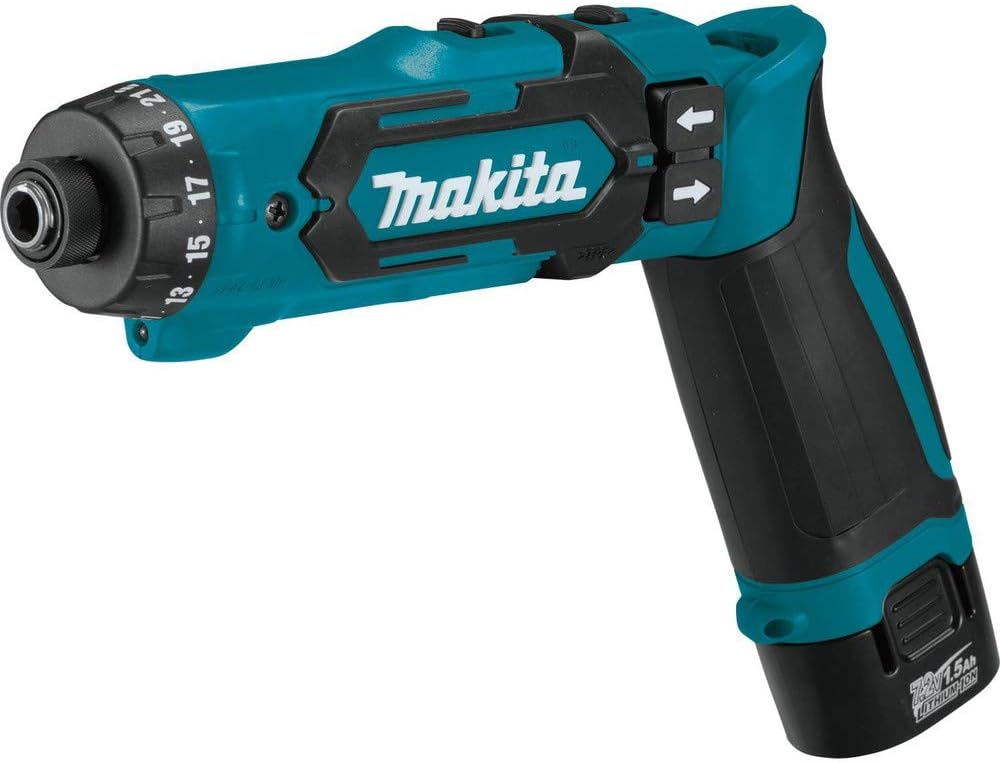
Makita DF012DSE 7.2V Cordless Driver-Drill Kit
71 in-lbs max torque · 21 clutch settings with auto-stop clutch · runs straight or as a pistol grip · two 1.5Ah batteries, charger and case included
Price: $241.77
Where to buy: Buy on Amazon
Best for drilling inside cabinets, between studs and in other tight boxes
A right-angle drill exists for the holes a straight drill can’t reach, and Milwaukee’s 2415-20 keeps its head to 3-3/4 in so it fits between studs and inside cabinet boxes. The M12 tool drives a 3/8-in single-sleeve ratcheting chuck with 100 in-lbs of torque, at speeds running to 800 RPM on a variable-speed trigger.
An electronic clutch offers 11 settings plus a drill mode, with an LED indicator showing the setting as it changes. An extended paddle switch runs the tool from almost any grip, which suits work where one hand holds the tool and the other holds the workpiece, the cabinet door or the flashlight. A built-in LED and an onboard fuel gauge round out the tool, and it sells bare, so the price assumes M12 batteries already sit on the shelf.
At $89.60 it’s a specialist, priced like one. Electricians, plumbers and cabinet installers who already run M12 tools shouldn’t hesitate.
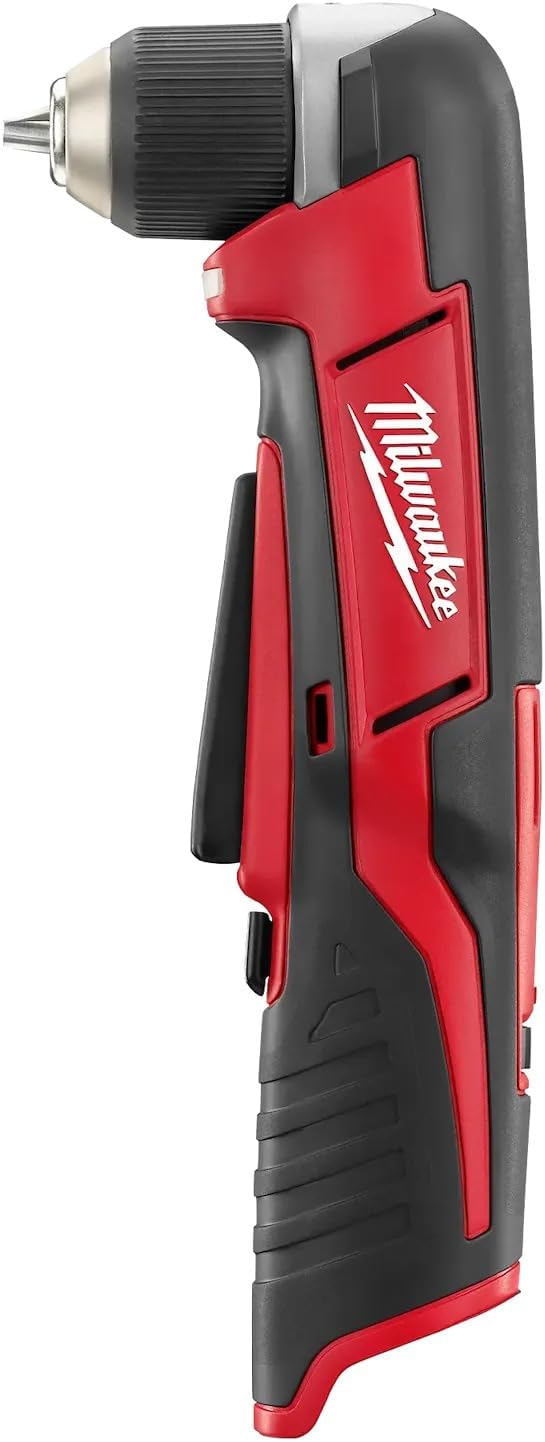
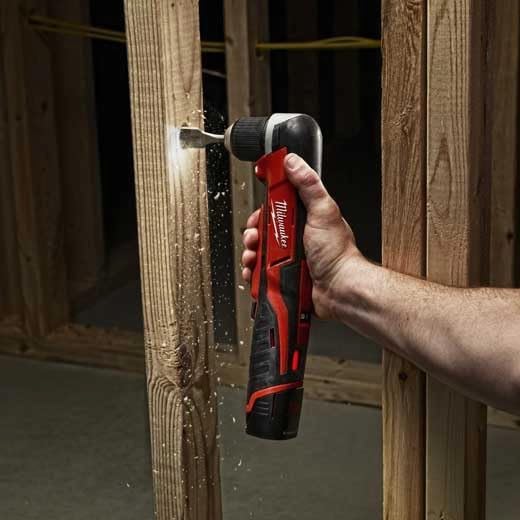
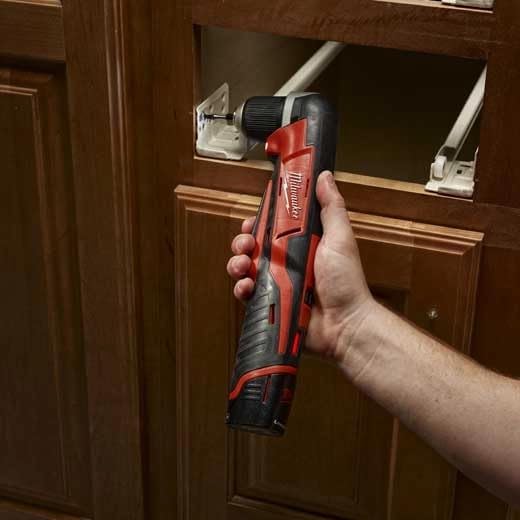
Milwaukee 2415-20 M12 3/8-in Right Angle Drill/Driver (bare tool)
100 in-lbs torque · 3-3/4-in head · electronic clutch with 11 settings plus drill mode
Price: $89.60
Where to buy: Buy on Amazon
Best for installers who would rather swap heads than tools
The Flexiclick system builds five tools around one 12V Max body. The body itself carries a magnetic 1/4-in bit holder behind a 4.5 in head. The kit’s four attachments click on in front of it: a locking bit holder, a 3/8-in keyless chuck, an offset adapter for screws hard against a wall, and a right-angle adapter for corners.
An EC brushless motor makes 300 in-lbs of torque across speeds of 0 to 460 and 0 to 1,750 RPM, the clutch runs 20 positions plus a drill setting, and the tool weighs 1.2 lb before its battery goes on. Two 2.0Ah batteries, a charger and a carrying bag come in the kit, so the system arrives ready for a full day of cabinet and closet work.
At $179 against a $239 list price, it undercuts buying a separate right-angle tool for the corner work. For installers, it’s the cleverest drill in this guide.
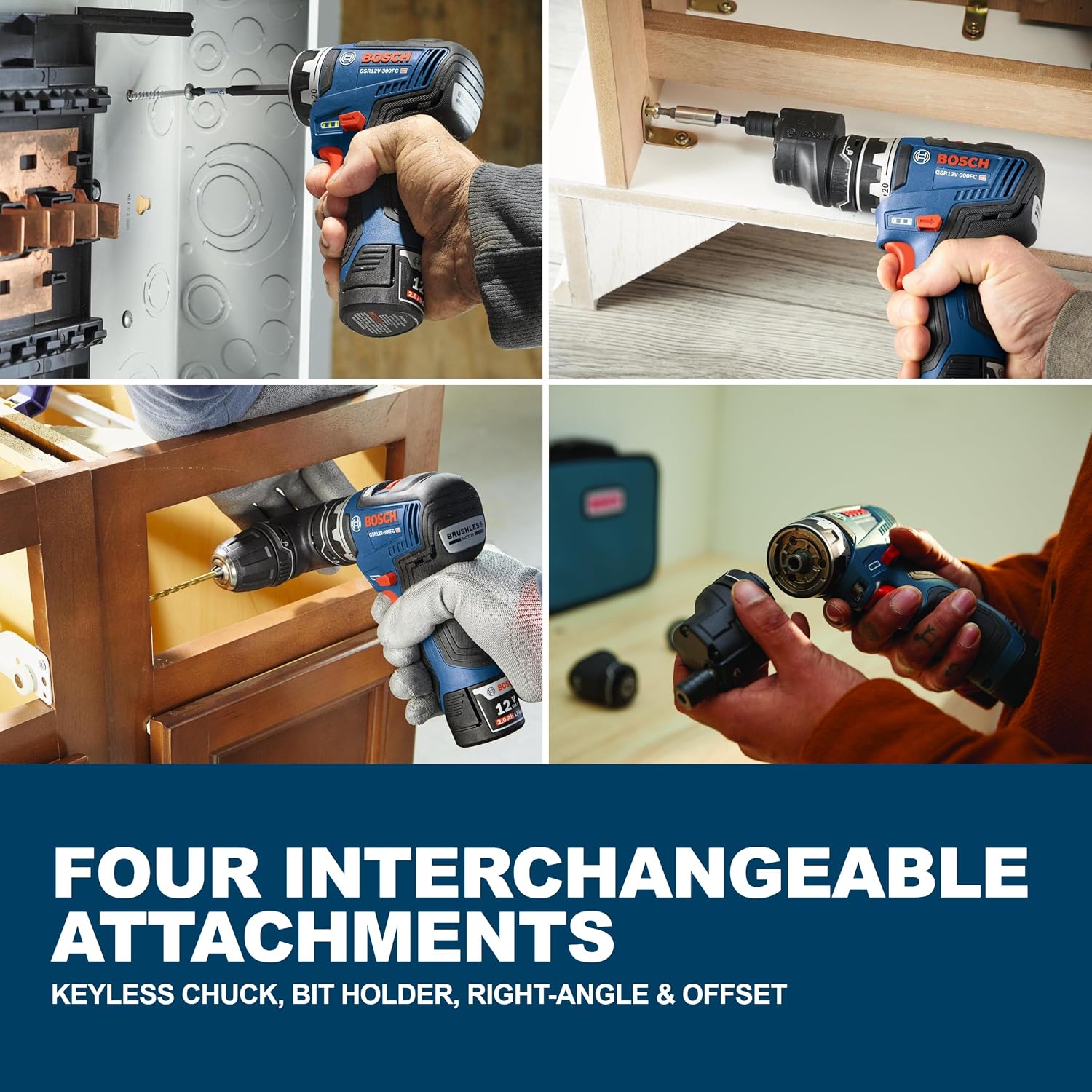
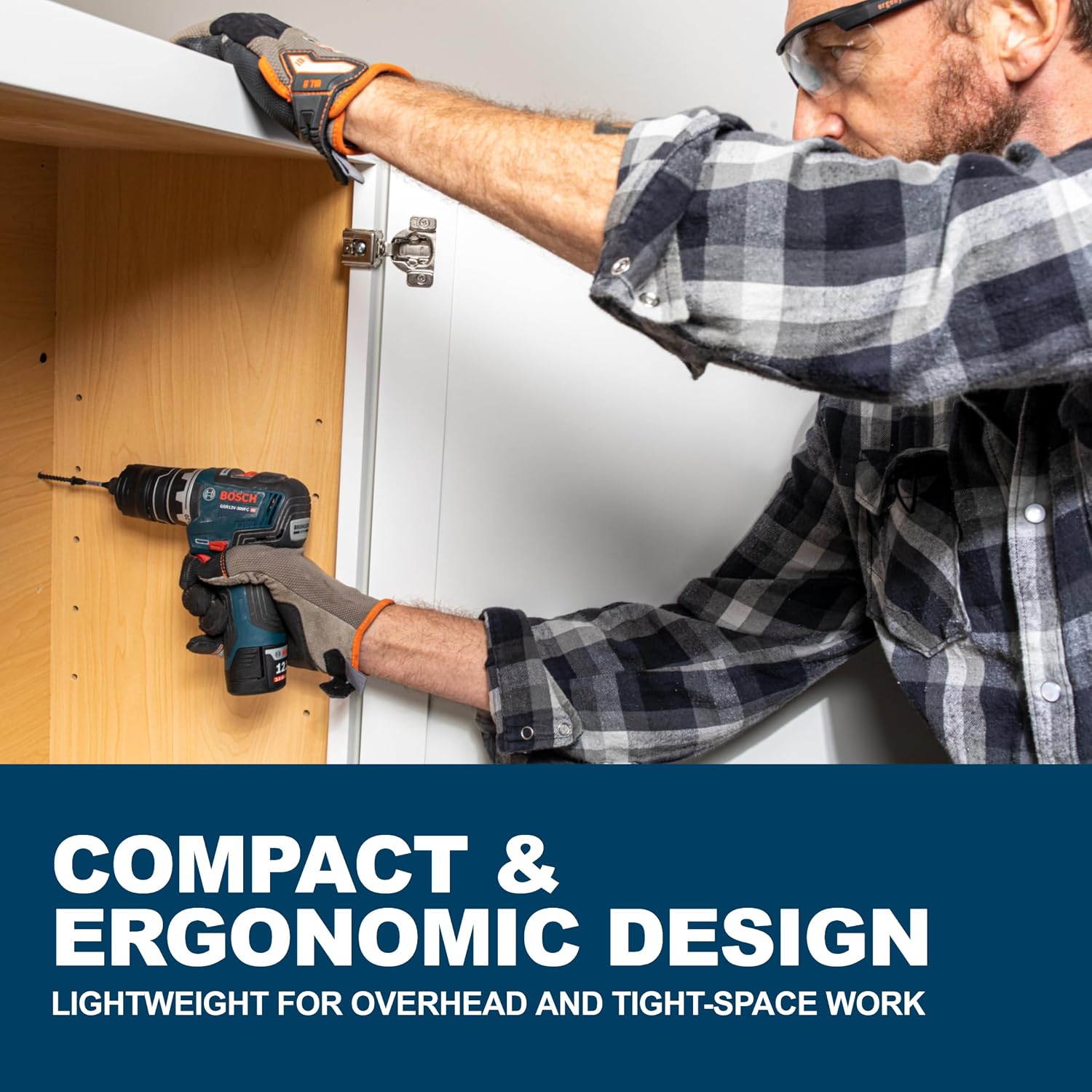
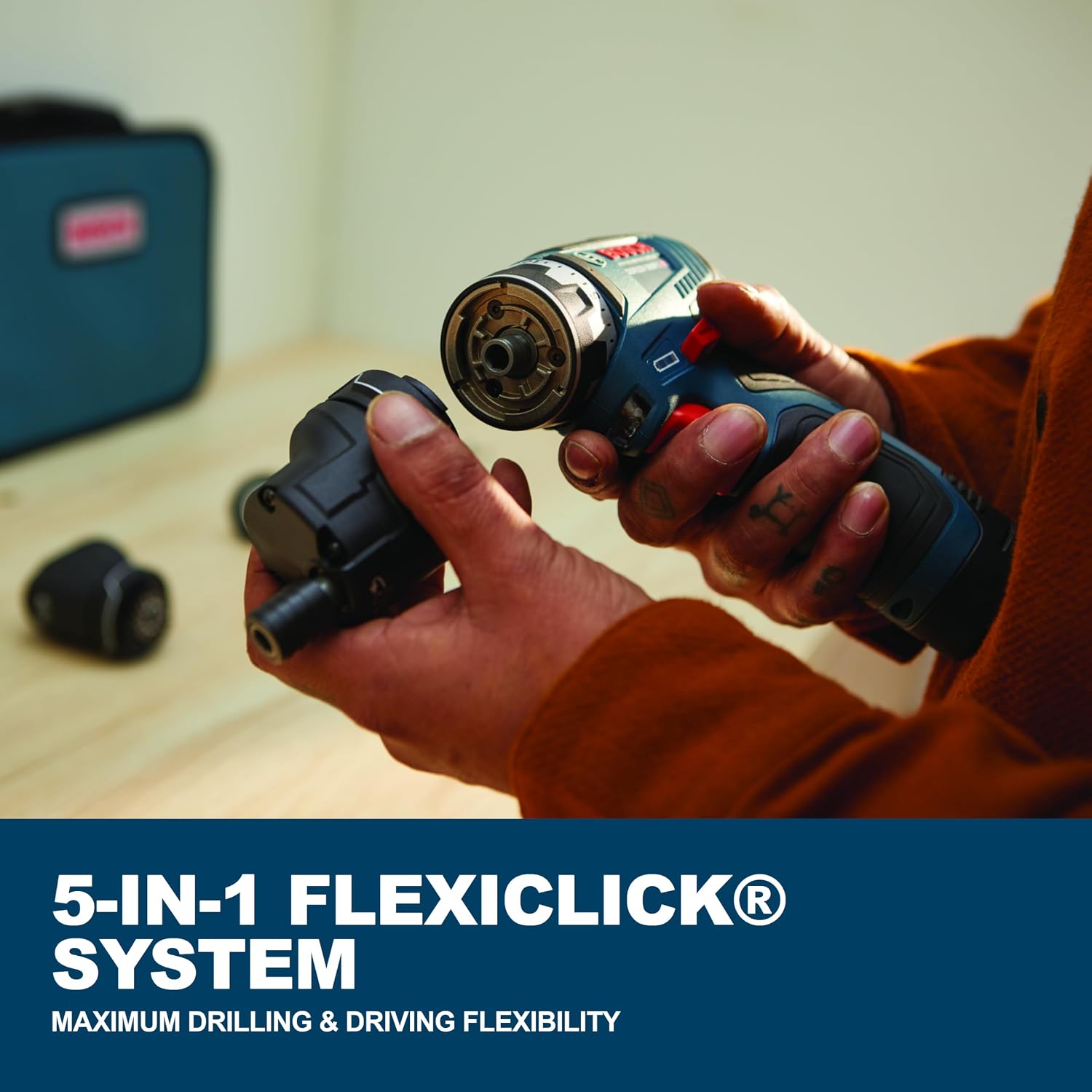
Bosch GSR12V-300FCB22 12V Max Flexiclick 5-in-1 Drill/Driver Kit
300 in-lbs max torque · four attachments plus a built-in bit holder · two 2.0Ah batteries and a carrying bag included
Price: $239.00 $179.00 (save $60.00, 25% off)
Where to buy: Buy on Amazon
Pick the platform before the drill
Every drill above is a battery commitment wearing a tool costume: the second and third tools on a platform cost a fraction of starting over, because the batteries and the charger are already paid for. A household expecting to add an impact driver, a saw or yard tools within a few years should choose the platform first and the drill second.
Two specs deserve the last word. Chuck size decides which bits fit, since 1/2-in chucks take the big hole saws and auger bits while 3/8-in and 1/4-in hex tools trade that capacity for size. A hammer mode only earns its keep when masonry anchors are genuinely on the list; everyone else is paying for weight they’ll never use.