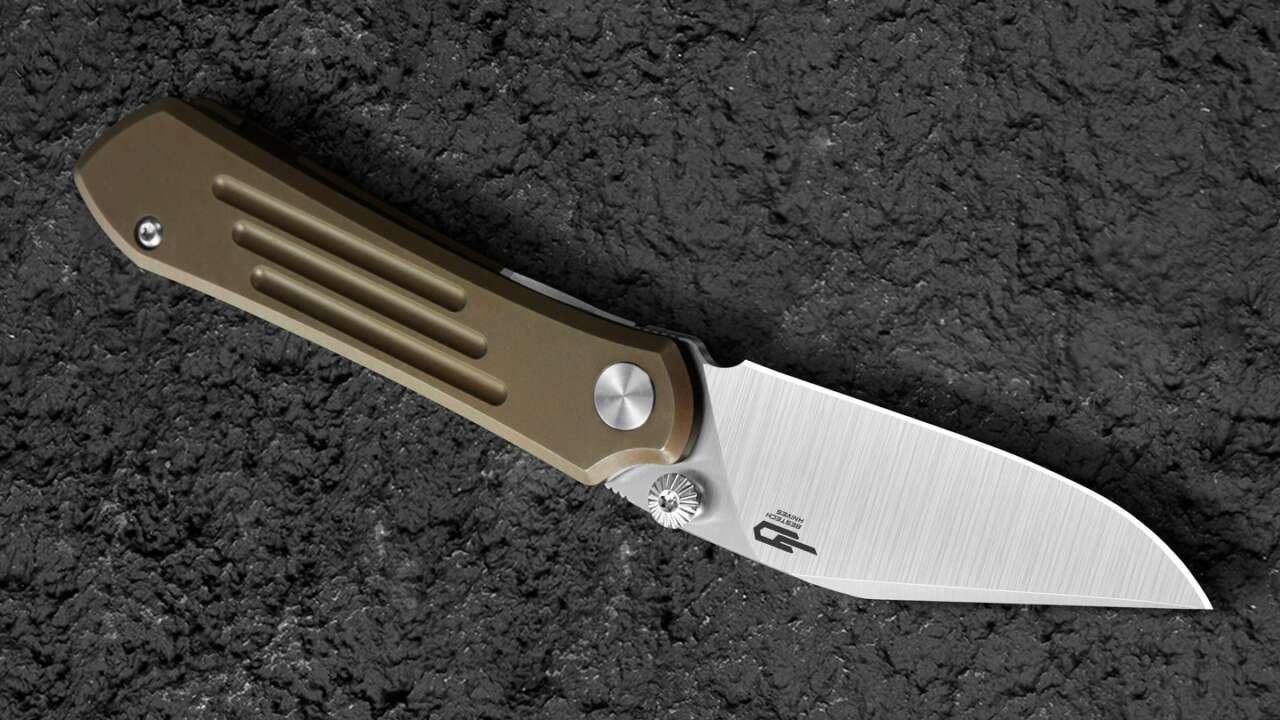
Bestech’s Icarus BT2302F runs a 2.65-inch M390 blade inside a bronze stonewashed titanium frame, and the finished knife weighs 66 grams. There’s no sale propping it up, either, because $221 is simply the full price.
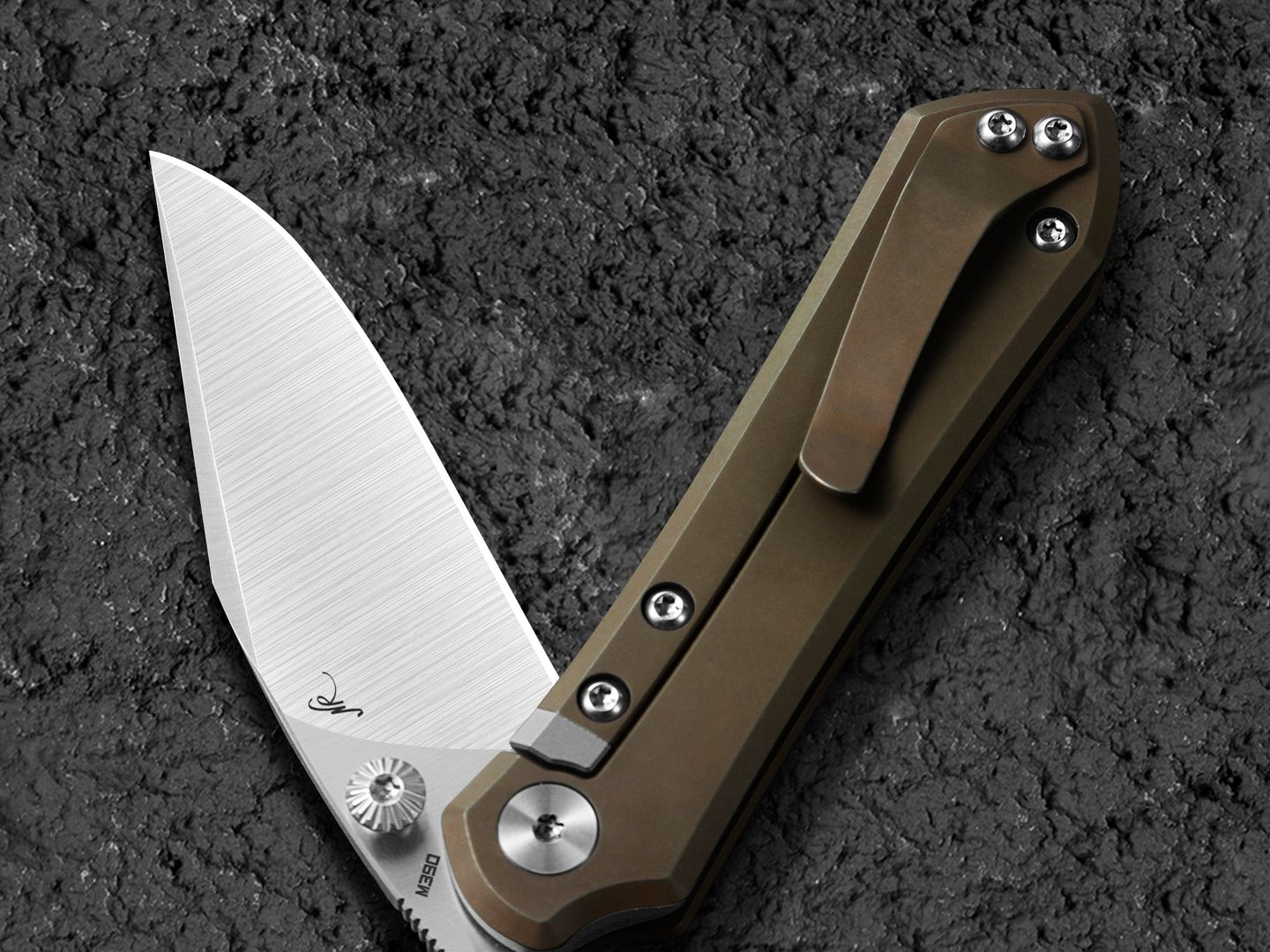
Nick Rogers designed the Icarus, and the priorities show in the numbers Bestech publishes: 6.21 inches open, 3.57 inches closed, and a blade just 0.11 inches thick. That’s gentleman-folder territory, the kind of knife that rides in a fifth pocket and gets forgotten until it’s needed. The result looks more like a small tool from a machinist’s bench than a tactical folder, and nothing about the spec sheet chases size.
A pivot, a thumb stud, a clip and a handful of screws are the whole visible parts list.
Bestech Icarus BT2302F
2.65″ M390 satin blade · Bronze stonewashed titanium handle · 66 g
Price: $221.00
Where to buy: Buy on Amazon
Built to disappear in a pocket
At 66 grams, the Icarus is light enough that the clip carries it all day without any sag in light fabric. The frame is titanium from the show side to the clip, and Bestech finishes both in the same bronze stonewash, so the knife looks like one piece of metal rather than a handle with separate parts bolted on. It disappears until it’s needed.
The trade cuts both ways on a knife this small. The same short frame that vanishes in a pocket gives a bigger hand less to grip, and a 2.65-inch blade runs out of edge fast on cardboard, rope or anything that fights back. Small knives ask for this trade every time.
The closed ends are rounded, so the knife slides into a pocket without catching on the way in. Bestech doesn’t publish a carry position or a left-hand option on the page, and the photos show the clip on one side only, mounted high enough that very little handle shows above the pocket line. The clip’s bronze finish keeps it quiet against the frame.
M390 does the heavy lifting
The blade is M390 with a satin finish, hardened to 59-61 HRC on Bestech’s spec sheet. At 2.65 inches and 0.11 inches thick, it’s ground for slicing rather than prying, and the edge profile in Bestech’s photos runs a long, shallow belly into the tip. The steel is the budget here.
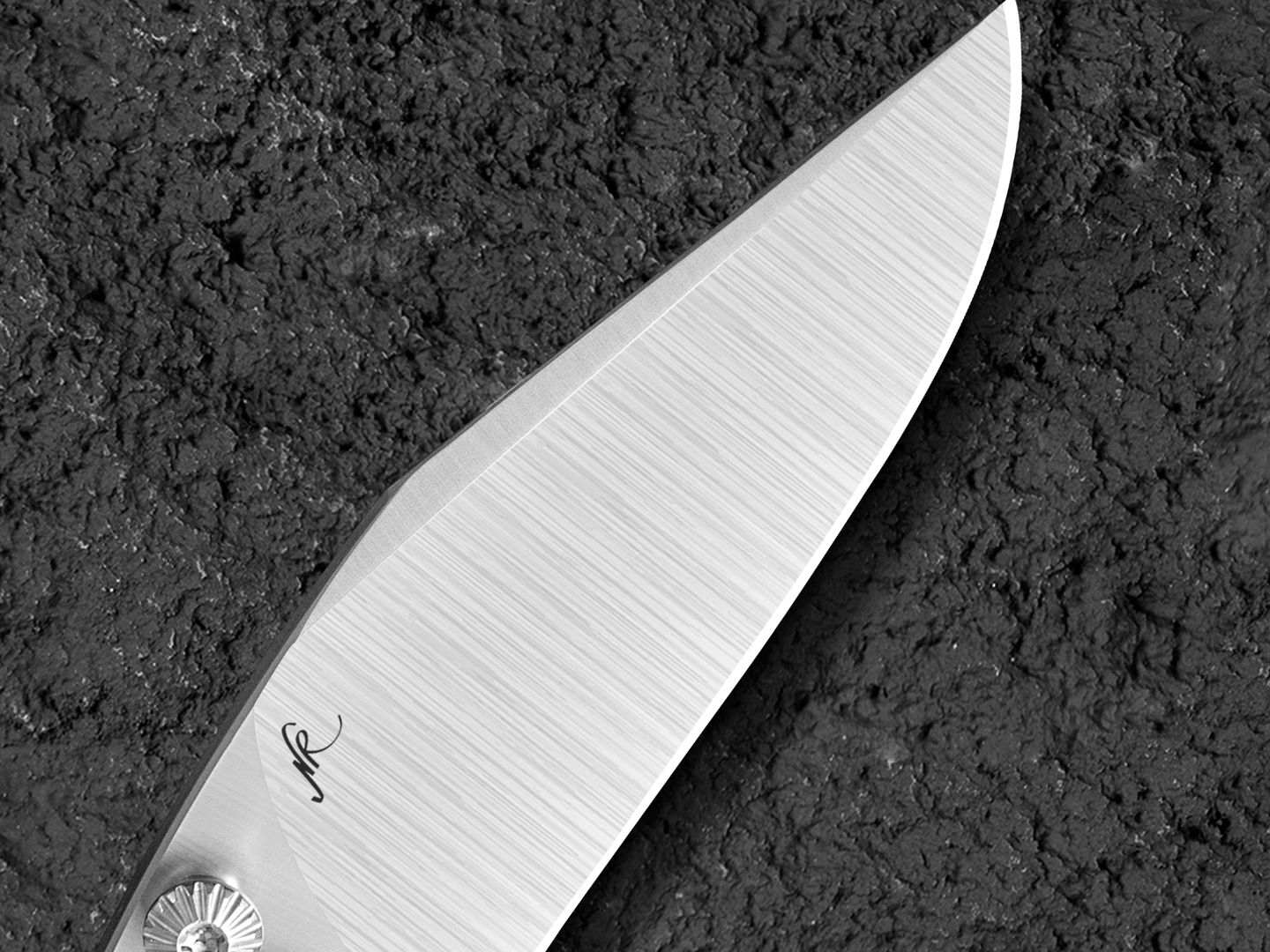
Titanium thumb studs open it, satin-finished to match the blade, and the pivot runs on ceramic bearings. Bestech’s spec sheet lists no flipper tab, so the studs are the opening method.
A 0.11-inch spine keeps the edge thin behind the edge, and a thin edge is what a small knife needs most on food, cord and packaging. The shallow belly does the slicing work and the tip stays fine enough for detail cuts, though the same thin stock caps the abuse the blade should take, and prying paint cans sits outside this knife’s job description.
One finish, carried through every part
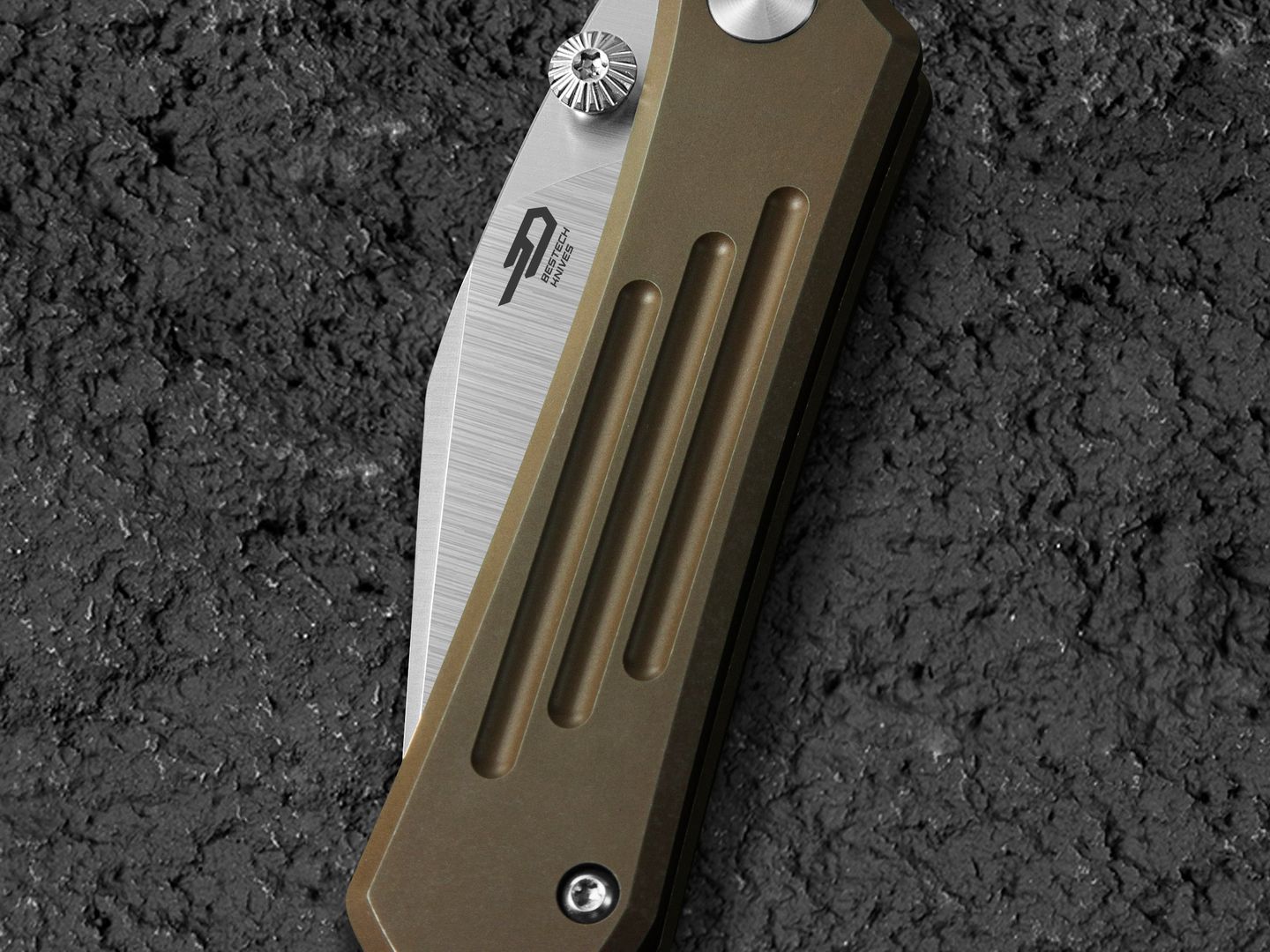
The handle is a single titanium slab per side with three long grooves milled into the show side, and the bronze stonewash gives the metal a worn, matte warmth. The pocket clip is titanium too, finished in the same stonewashed bronze as the frame. Nothing on the knife is a different color.
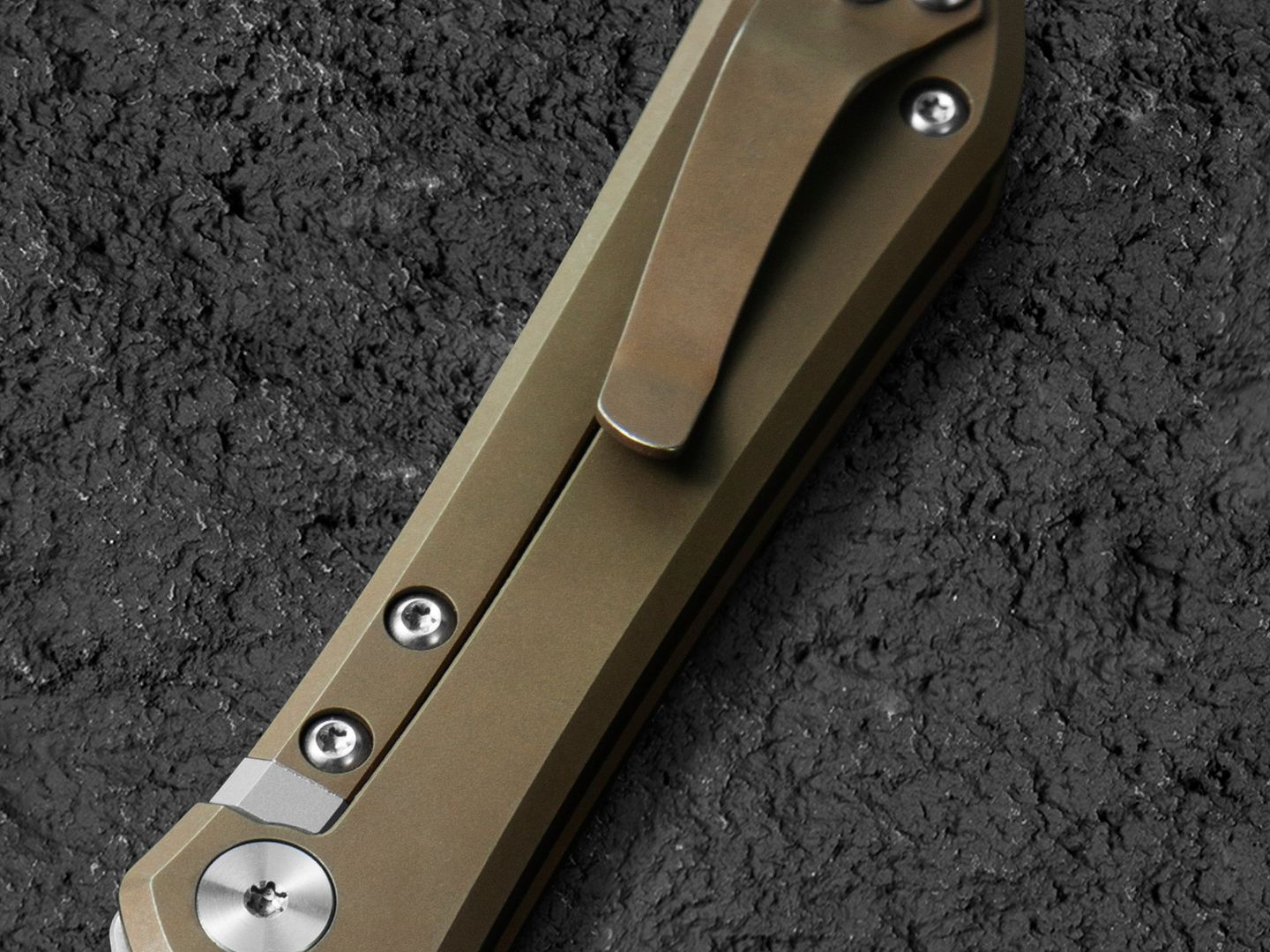
Bronze is one of six Icarus variants Bestech lists, the others run darker, blacker or blue, and this F variant keeps the blade satin and lets the handle carry the color.
The three grooves in the show side give fingers a place to index when the knife comes out, and the stonewashed bronze hides the small scuffs a pocket adds.
Full price, the same at both stores
At $221, the Icarus sits where M390 and titanium start, and Amazon and Bestech’s store charge the same figure.
Knives at this size usually trade steel for price, dropping to a budget alloy to stay under a number. The Icarus spends the money the other way, on M390 and titanium, and then charges the full $221 without a launch discount or a struck-through anchor price. Judge it as a materials buy, not a bargain.
Bestech Icarus BT2302F
Ceramic ball bearing pivot · Titanium thumb stud in satin · Clip finished to match the frame · Designed by Nick Rogers
Price: $221.00
Where to buy: Buy at Bestech
Buy the Icarus at $221 if you want premium steel and titanium in a knife that disappears into a pocket and stays forgotten until it’s useful. Skip it if your days run on cardboard and rope, where a bigger blade at the same money does the job better and a longer edge finishes the cut.