The Garrick S8 shows hours, minutes and small seconds. Nothing else stands between the owner and the movement, because Garrick took the dial away and skeletonised the new manual-wind calibre so the finishing carries the whole watch.
It’s a deliberate exposure.
The open front gives a buyer the full architecture of the calibre at a glance, though it also doubles the bench time behind each watch. The wait stretches into years rather than months, and the cap sits at five watches a year.
Garrick builds at its workshop in Norfolk, where dials, hands and a growing share of movement parts come from its own benches.
The S8 is built to order one commission at a time, and orders taken now carry delivery in 2029, which tells you how thin the production line runs.
Garrick S8 in 904L steel
39mm case, 8mm thick · Skeletonised manual-wind S8 calibre, roughly 60 hours of power reserve, hand-bevelled bridges throughout · Built to order in Norfolk, England · Owner-specified movement finish
Price: $78,800 at Garrick
Where to buy: Buy at Garrick
What fills the space where the dial sat
The S8 case measures 39mm across and 8mm thick in 904L steel, and Garrick maximised the dial opening so the skeletonised ratchet wheel, the wheels beneath it and the bridges stay in view from the front.
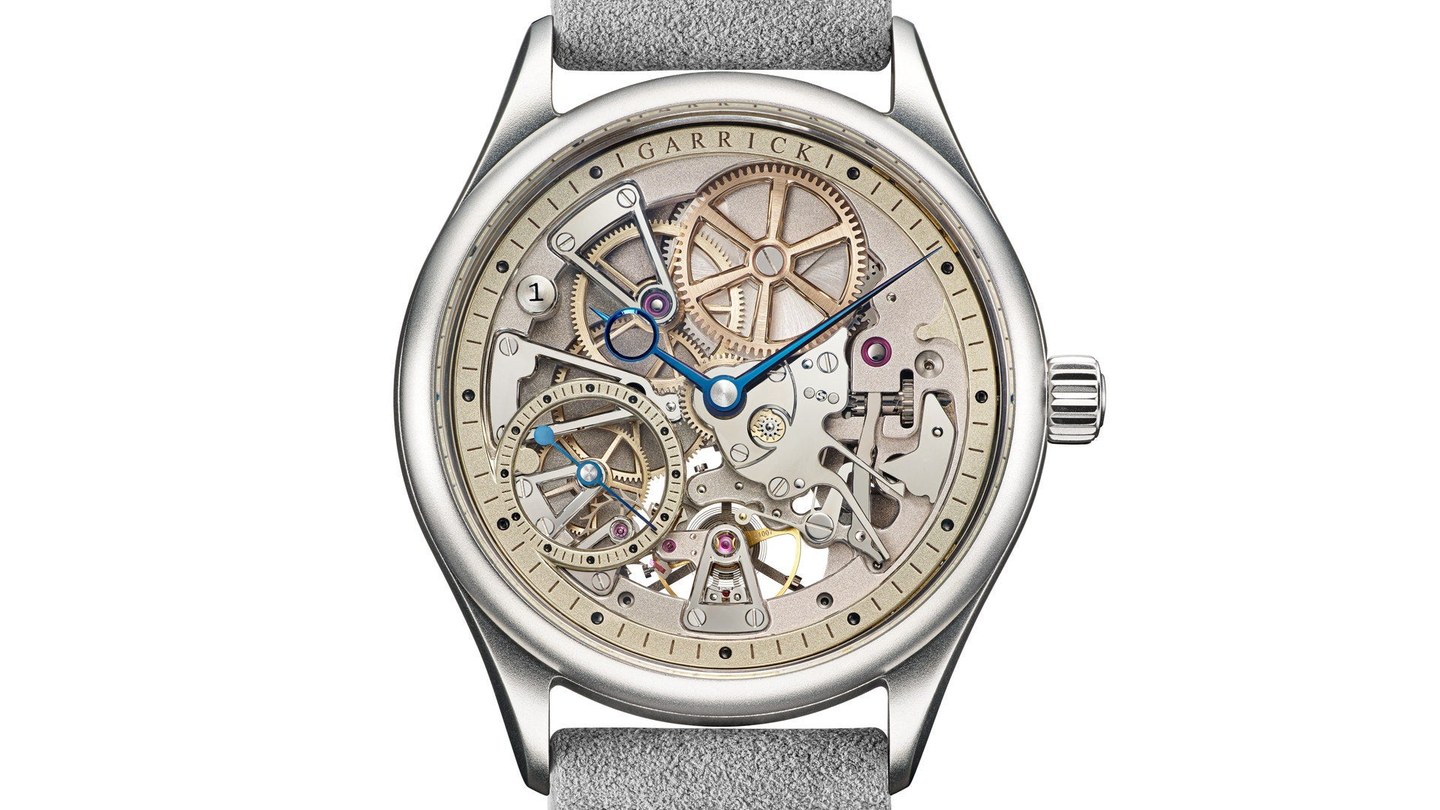
It wears small and reads big.
The chapter ring carries the hour markers in frosted German silver, engraved and ink-filled. A seconds register sits low on the face, and the balance stays on show below it.
A full wind returns roughly 60 hours of power reserve, and no rotor crosses the caseback to block the rear view, so the movement stays visible from both sides of the case.
Blued hands keep the time legible against the pale movement.
The brief came from the S3 watches at 42mm, and buyers kept asking for the same spirit in a smaller case, so the S8 keeps a skeletonised wheel high on the face and shrinks the frame around it.
The case comes polished or frosted, and precious metal replaces the steel on request, with each build agreed in detail before the bench work starts on that watch at the Norfolk workshop.
Eight weeks of edges on one bench
One watchmaker finishes and assembles each S8 from start to finish over roughly eight weeks, about twice the bench time Garrick spends on an S3 Deadbeat Seconds. The same hands plate the parts and make the hands for that watch, so one person’s standards run from the first file stroke to the finished piece.

Skeletonising adds work, not less.
Every bevel on the wheels and bridges gets cut by hand to a narrow angle and polished, the internal corners stay sharp where a spinning machine tool would leave a curve, and black polishing flattens chosen details to a mirror.
The rest of the movement wears a frosted finish, a fine matte texture that sets the polished edges apart. Light does the rest.
Each opening in a bridge leaves a fresh edge behind it, and every one of those fresh edges joins the finishing queue before assembly can start, because an unfinished edge shows on an open face.
The bevels stay shallow and narrow on purpose, because a deep bevel throws back so much light that finer work around it gets harder to read, and Garrick wanted the whole face readable at once from across a room.
The mainplate gets the same treatment as the smallest bridge, with every bevel cut by hand rather than machined first and polished afterwards at the bench.
Garrick planned about four weeks at the bench and landed past eight, and the gap sits almost entirely in the finishing passes.
The ring and the serial disc get filled by hand
German silver stains when ink touches it and its frosted surface pulls ink away from the engraving, so each chapter ring gets filled by hand with a needle under a microscope, one marker at a time.

It’s slow work by design.
On steel, Garrick would spin a finished ring on a lathe to clear the excess ink, and German silver blocks that shortcut completely, because the ink stains the metal for good on contact.
The serial number sits on its own disc near 11 o’clock, turned on a lathe, engraved, filled and hand-bevelled before fitting, and the first two prototypes came off the benches of Stuart Smith and Alex Downing at the Norfolk workshop.
Five watches a year, maximum.
Your choices and a blank caseback
The movement arrives in silver or dark grey rhodium or in yellow or pink gold, with contrasting wheels and balance specified by the owner. The hands come polished or heat-blued or heat-purpled, and bespoke changes to finishing and colour cost nothing extra.
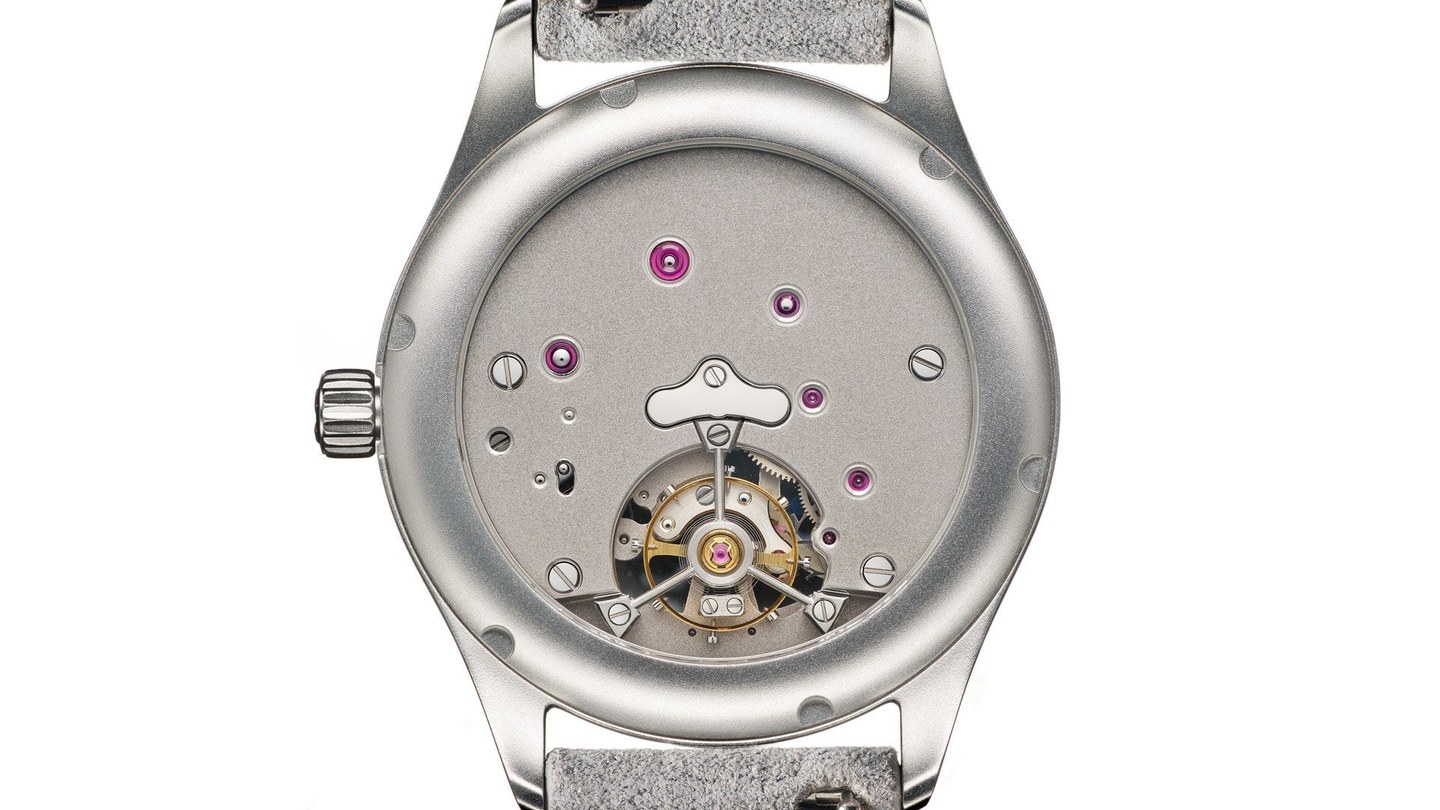
The caseback stays blank until you decide.
Neither the movement nor the case carries engraving from the workshop, and the owner picks what the back says, so two S8s can leave Norfolk carrying completely different backs and inscriptions.
Garrick caps the run at five because the bench hours for a sixth watch don’t exist inside a year.
Co-founder David Brailsford describes the S8 as a window onto everything the workshop’s watchmakers have learned over the years, built so people can see the skill directly rather than take the brand’s word for it.
Garrick S8 in precious metal
Gold or platinum case · Movement in rhodium or yellow gold
Price: $96,680 at Garrick
Where to buy: Buy at Garrick
Buy the S8 at $78,800 in steel if you want hand finishing you can inspect from the front of the watch. Skip it if a 2029 delivery slot and a five-watch yearly cap sound like a queue you’d rather not join.