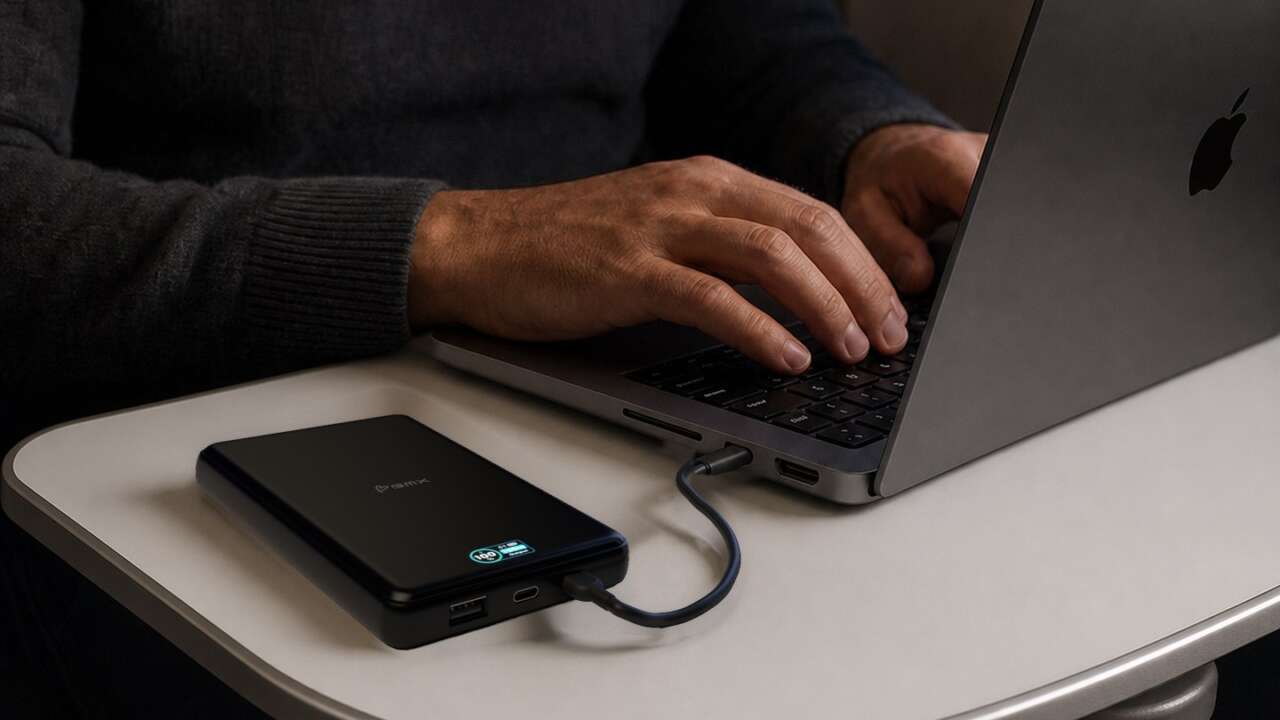
The SolidSafe 20K from Better Mobile Xperience (BMX) is a 100W laptop power bank built on semi-solid-state cells instead of conventional lithium-ion. The cells carry significantly less liquid electrolyte, and that liquid is the part that burns.
BMX sells the 20K at $109.99, with two smaller siblings under it: the 65W SolidSafe 15K at $79.99 and the 30W SolidSafe 10K at $59.99. All three run the same SolidSafe cell chemistry inside three very different bags.
BMX SolidSafe 20K Semi-Solid-State Laptop Power Bank
100W USB-C output · 20,000mAh / 74Wh · color LCD
Price: $109.99
Where to buy: Buy at BMX
The conventional route costs less for the same watts.
Baseus Blade Laptop Power Bank 100W 20,000mAh
100W USB-C output · conventional lithium-ion cells
Price: $89.99 $62.99 (save $27.00, 30% off)
Where to buy: Buy on Amazon
What semi-solid-state changes inside the cell
A conventional lithium-ion cell stores its energy in a flammable liquid electrolyte, and BMX’s own explanation starts there: heat or an internal defect causes a short circuit, and the liquid fuels the thermal runaway that follows inside the pack.
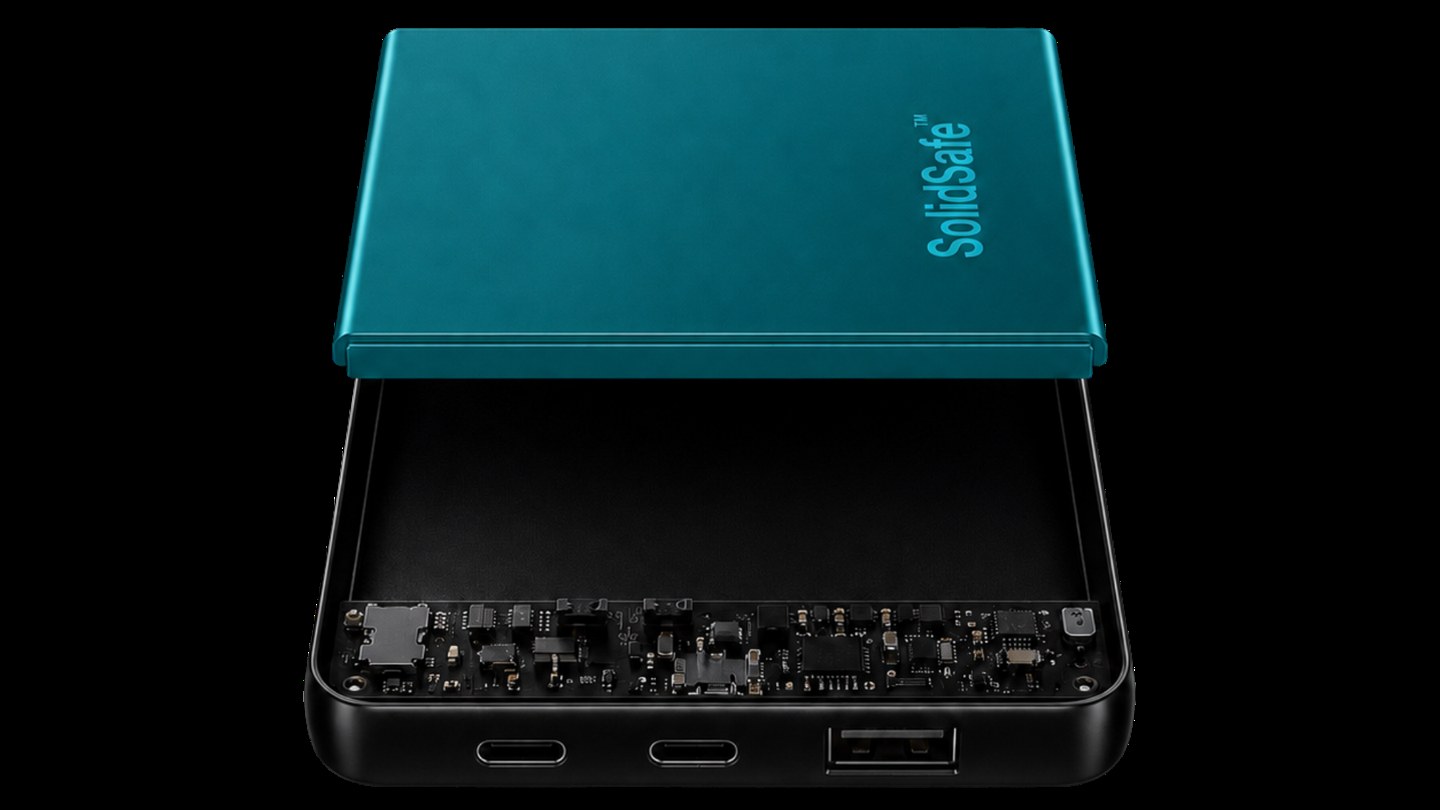
SolidSafe cells keep the same job and change the fuel load, using significantly less liquid electrolyte, so a short circuit inside the cell has far less liquid to catch and spread.
The risk drops. It doesn’t vanish.
This isn’t BMX’s first run at the chemistry: GADGETEER reviewed an earlier SolidSafe battery in 2025. BMX pitches the same point to employers who hand laptops to people who travel, since the battery in the bag is the company’s risk too.
The pitch comes straight from his own routine. “I work remotely and travel constantly, so my laptop runs on whatever is in my bag. I wanted 100 watts I could feel good about carrying,” said Barry Miller, co-founder of BMX.
100W for the laptop, with watts left over for the phone
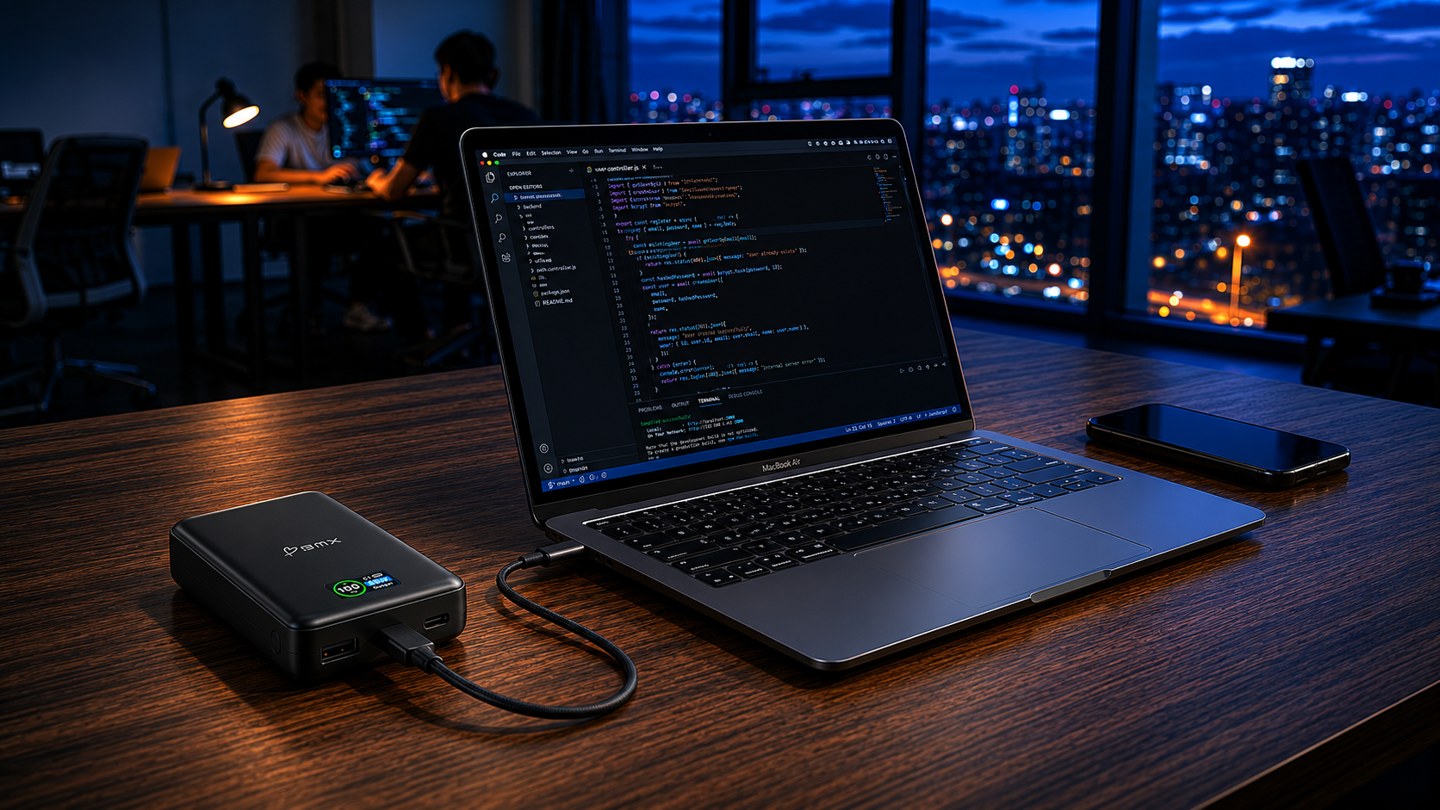
The main USB-C port delivers up to 100W, BMX’s rating for full-speed charging of a 14-inch MacBook Pro, and the second USB-C port carries up to 65W.
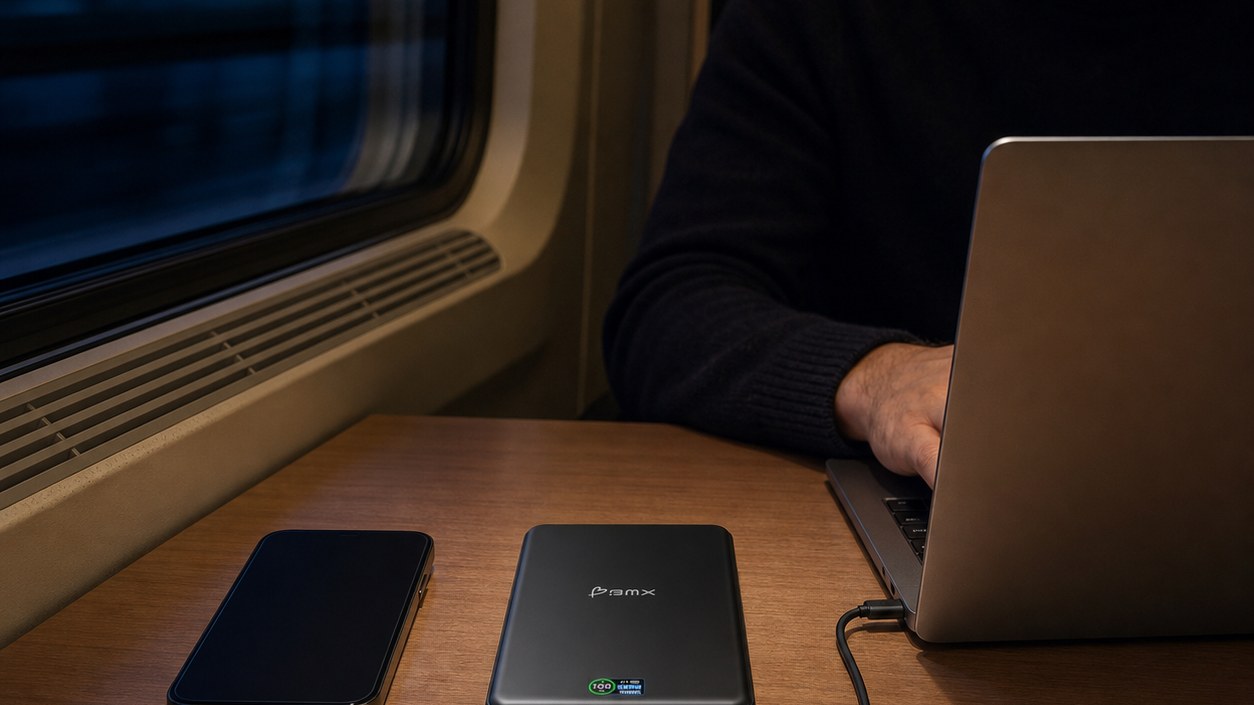
Plug in all three ports at once and the split changes to 65W for the laptop, 7.5W for the second USB-C and 7.5W from the USB-A port, which tops out at 22.5W alone. The Pro slows down once a phone joins it.
BMX’s testing puts the 74Wh pack at about three iPhone 17 charges, or one full charge for a 13.6-inch M3 MacBook Air with power left over.
A color LCD shows the battery percentage and the wattage on each port, so the split above is something you watch rather than estimate.
No guessing at the airport.
18mm thick, 375g, and shaped for the laptop sleeve
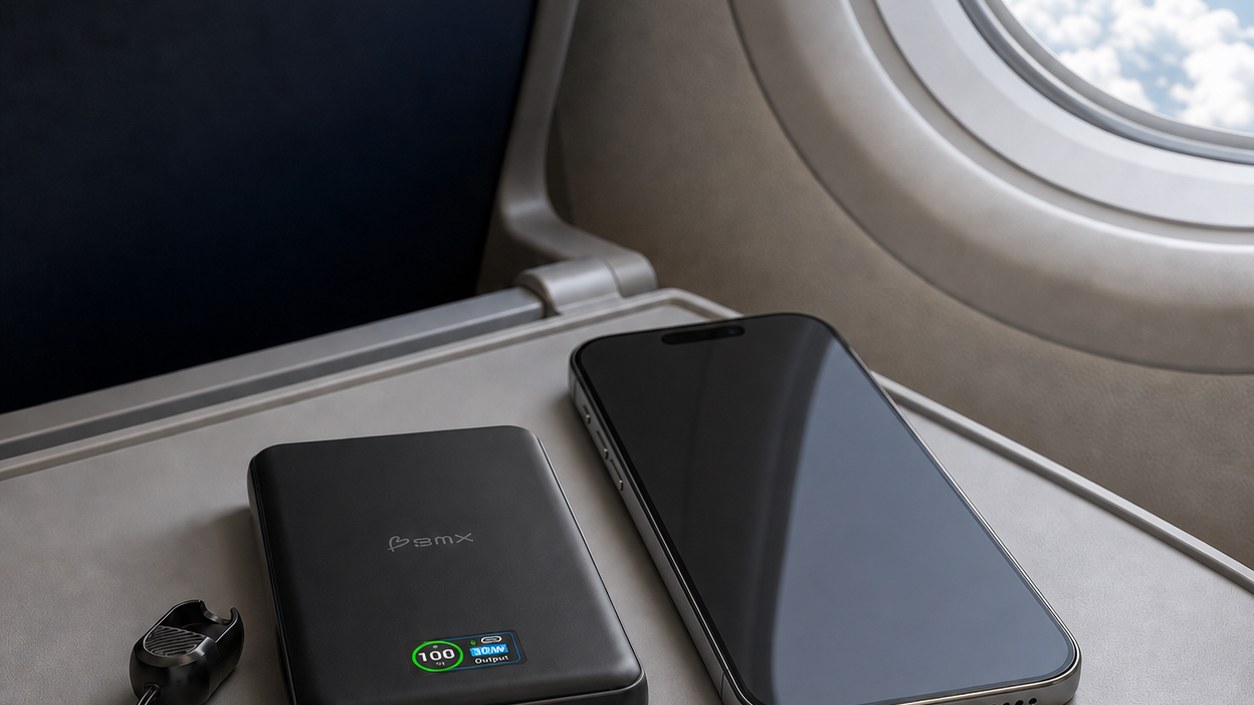
The 20K measures 147.4 x 90.3 x 18mm and weighs 375g, dimensions that put it in the same flat slab class as the laptop it charges rather than the brick class of older high-capacity banks.
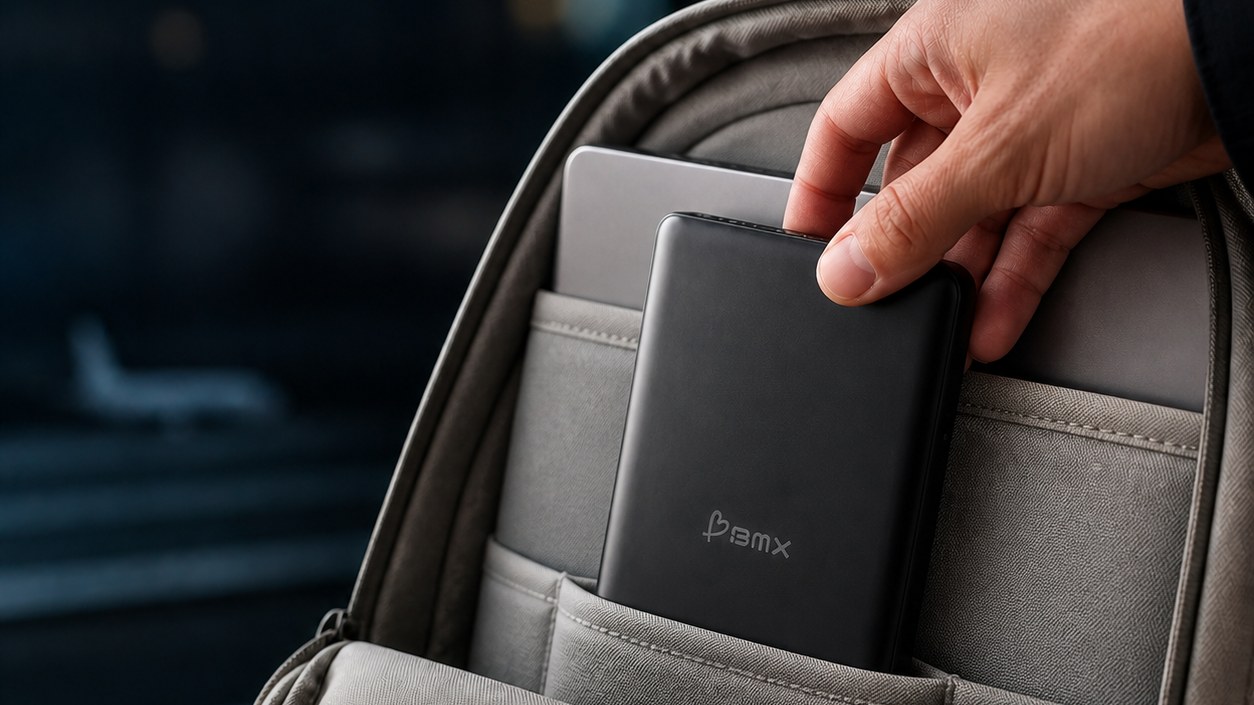
At 74Wh it also sits under the 100Wh carry-on limit for spare batteries, so the pack rides in the cabin bag without a special approval conversation at the gate.
It disappears into the bag.
The box carries the power bank, a user guide and a separate 1m braided USB-C cable rated for 140W, though the bank itself tops out at 100W and recharges at up to 65W through the main port.
A wall charger isn’t included.
The flat profile slides into the same sleeve pocket as the laptop, which the thicker 15K can’t claim at 24.8mm.
The 15K gives up capacity to shrink the footprint
The SolidSafe 15K keeps the same cells and the same screen in a 106.7 x 70 x 24.8mm body that weighs 274g, with a USB-C1 port rated at up to 65W for MacBook Air-class laptops.
BMX’s testing gives it about two iPhone 17 charges or 74% of a 13-inch MacBook Air charge, and its three ports share 45W, 7.5W and 7.5W when everything is plugged in at once. The 55.5Wh pack stays under the same 100Wh carry-on limit as the 20K.
The cable is attached this time: a USB-C lanyard cable rides on the body for charging and carrying, and the second USB-C port carries up to 30W with USB-A at up to 22.5W for older cables.
Smaller bag, same idea.
BMX SolidSafe 15K Semi-Solid-State Laptop Power Bank
65W USB-C output · 15,000mAh / 55.5Wh · attached USB-C lanyard cable · color LCD with per-port wattage
Price: $79.99
Where to buy: Buy at BMX
It recharges at up to 45W through the main port, and a wall charger isn’t in its box either.
The 10K is the everyday carry of the three
The SolidSafe 10K drops laptop ambitions entirely: 30W from its USB-C port, 22.5W from USB-A, and two devices at once with the power shared between them.
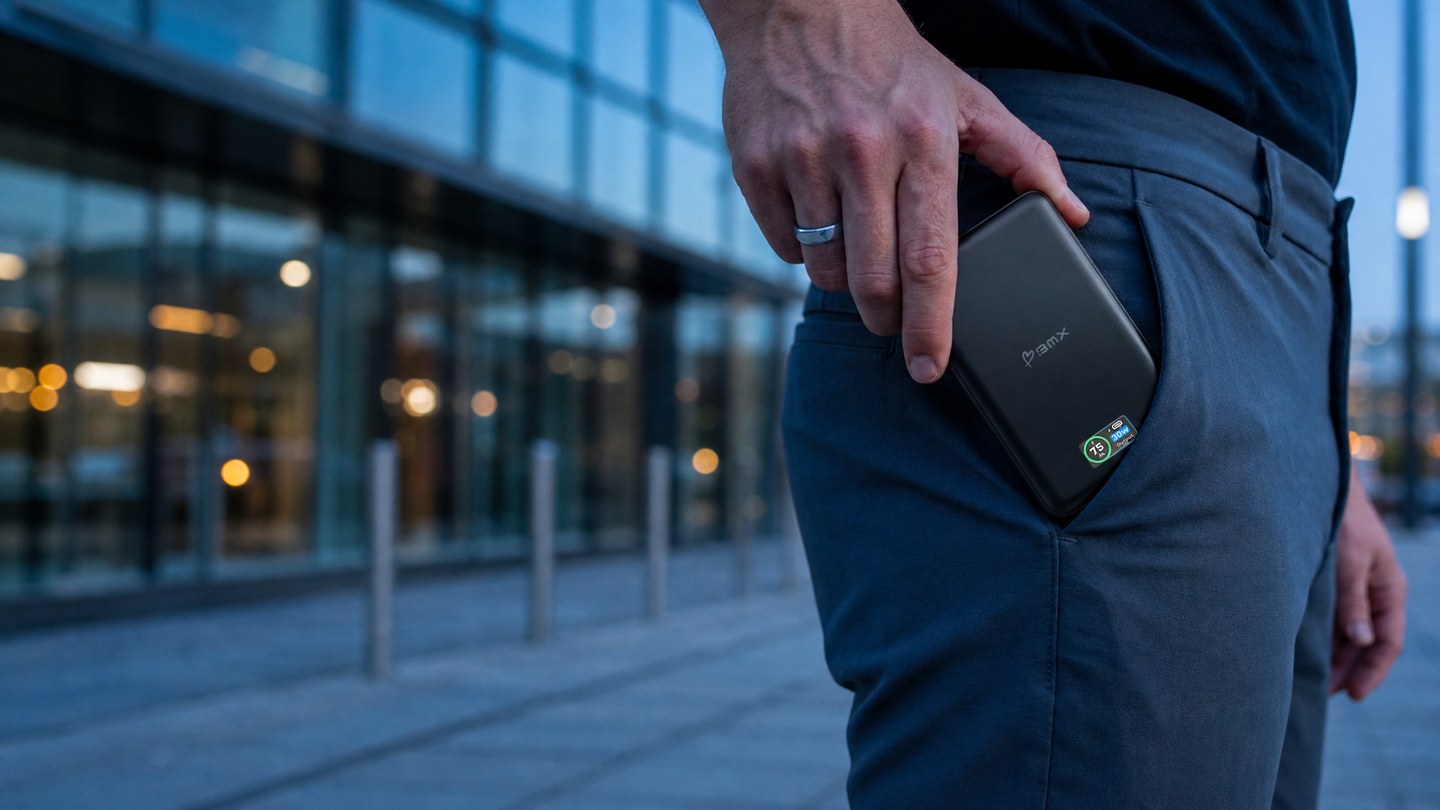
Its aluminum body measures 104.7 x 70 x 17.8mm and weighs 201g, the built-in USB-C lanyard cable stays attached, and BMX’s testing measured 1.5 iPhone 17 charges from the pack.
This one’s a pocket tool.
BMX SolidSafe 10K Semi-Solid-State Power Bank
30W USB-C output · 10,000mAh / 37Wh · aluminum body · built-in USB-C lanyard cable
Price: $59.99
Where to buy: Buy at BMX
It recharges at up to 27W, and there’s no wall charger in the box.
| Model | Capacity | Top output | Weight | Price |
|---|---|---|---|---|
| SolidSafe 20K | 20,000mAh / 74Wh | 100W | 375g | $109.99 |
| SolidSafe 15K | 15,000mAh / 55.5Wh | 65W | 274g | $79.99 |
| SolidSafe 10K | 10,000mAh / 37Wh | 30W | 201g | $59.99 |
What each one costs and which one fits your bag
The trade is plain: a conventional lithium-ion bank with the same 100W output and the same 20,000mAh capacity sells for $62.99 as the Baseus Blade, while SolidSafe’s safer cells put the 20K at $109.99. You pay for the chemistry.
You can buy all three at heybmx.com and on Amazon, and BMX has announced a Black Friday sale taking 25% off all three from November 19 to 30 at its own store.
Buy the SolidSafe 20K at $109.99 if your laptop works out of a bag and the battery riding beside it should be the one with far less to burn. Take the 15K at $79.99 if a MacBook Air is the biggest load you carry, and the 10K at $59.99 for phone duty.
BMX SolidSafe 20K Semi-Solid-State Laptop Power Bank
100W USB-C output · 20,000mAh / 74Wh · color LCD
Price: $109.99
Where to buy: Buy at BMX
Skip all three if the fire-risk math doesn’t move you, because the Baseus Blade does the same charging job for less.