Grow is a concept headset from Why Design, a studio in Shenzhen, and the first thing missing is the obvious one. There are no buttons. No volume rocker on the cup, no power switch on the band, nothing to click. The studio posted the project to its Behance gallery on October 20, 2025, as renders only, and the renders show a frame that handles every job itself, in two finishes.
The functions went into the surface instead. Noise cancellation, volume, Bluetooth and the rest spread across four areas of the fully curved frame. It’s a control scheme with nothing sticking out of it.
Four zones spread across one curved surface
The surface comes from parametric design, and the same process that shaped the frame placed the functions on it. Each zone sits on the curve where a hand lands on its own: a cup’s outer web, a stretch of band. A touch on the right patch of lattice does what a button used to do, and nothing protrudes anywhere.
Volume and noise cancellation get adjusted mid-wear, without taking a pair off.

Pairing sits on the surface too, under the Bluetooth zone. The frame is one continuous form, which is what makes the layout possible. Split it into panels and the zones would need seams, wires and switches again, and the controls would stop being the structure.
A joint built to fit different heads
Headphones usually hang their cups from fixed joints and let a sliding band handle the sizing. Grow’s connection is modular, designed to adapt to different head sizes rather than one average fit. The joint is part of the grown frame, not a hinge bolted onto it, and it replaces the connection method on-ear headphones have used for decades. The sizing problem moves with it, off the band and into the joint itself.
Most pairs solve fit at the band, with a sliding stem on each side and a ratchet. The renders show Grow’s joint flowing straight out of the lattice. No separate housing interrupts it.
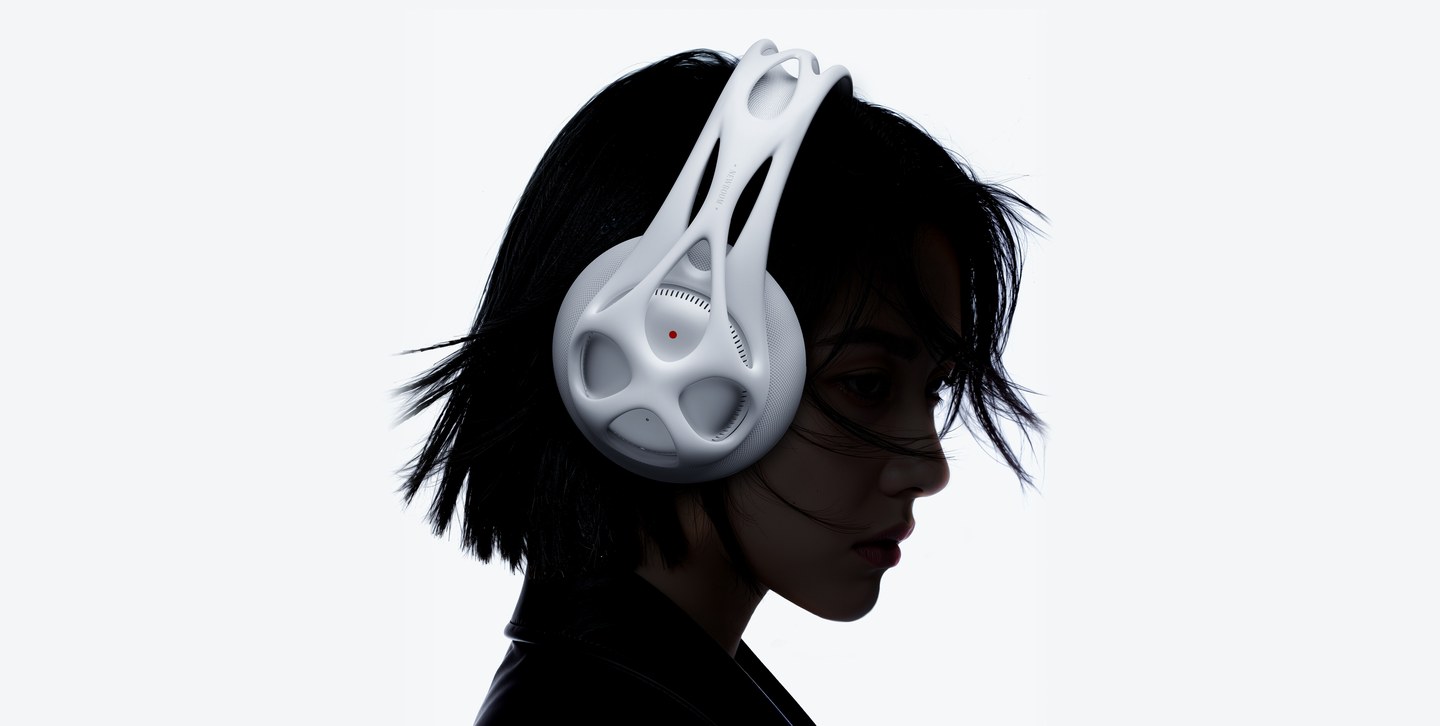
On a head, the lattice sits clear of the ear. The openings stay clear of it.
The frame follows the stress lines
Generative software grew the shape. The process sets the loads a headphone frame carries, then keeps material on the paths that take the stress and removes it everywhere else. Thousands of variations get tested against those loads, and the forms that hold up with the least material survive. The studio’s own sketch sequence shows the path: a plain ring first, then the ring sprouting the grown web.
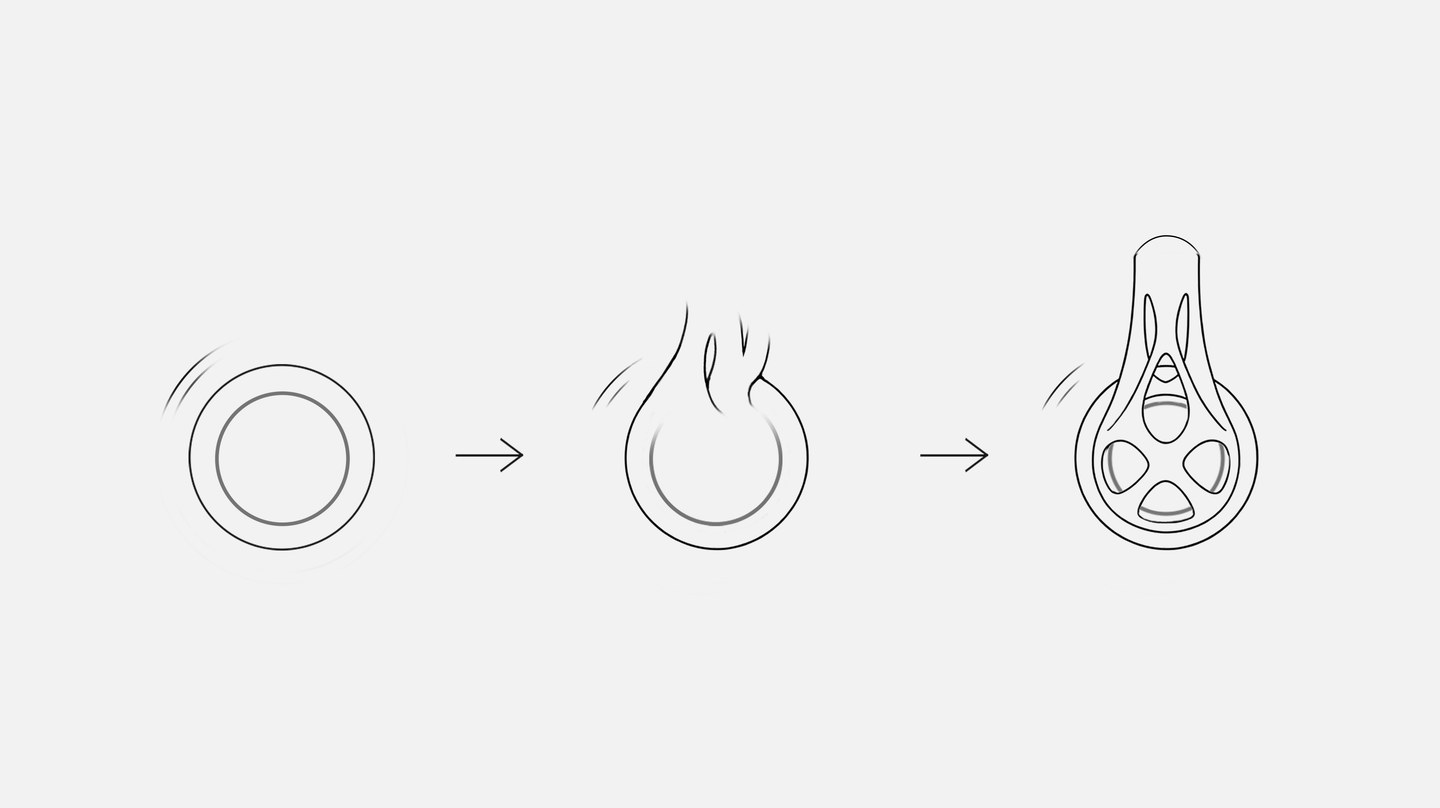
The result thickens where a headphone works hardest: dense around the earcup mounts and the band joints, open across the spans that carry nothing. Bone remodels along the same logic.
Every void in that lattice is weight the wearer doesn’t carry. Headphones sit on a head for hours at a time, and the spans the software emptied are the grams that never reach the neck. The deep mesh cushion does the contact work the frame avoids.
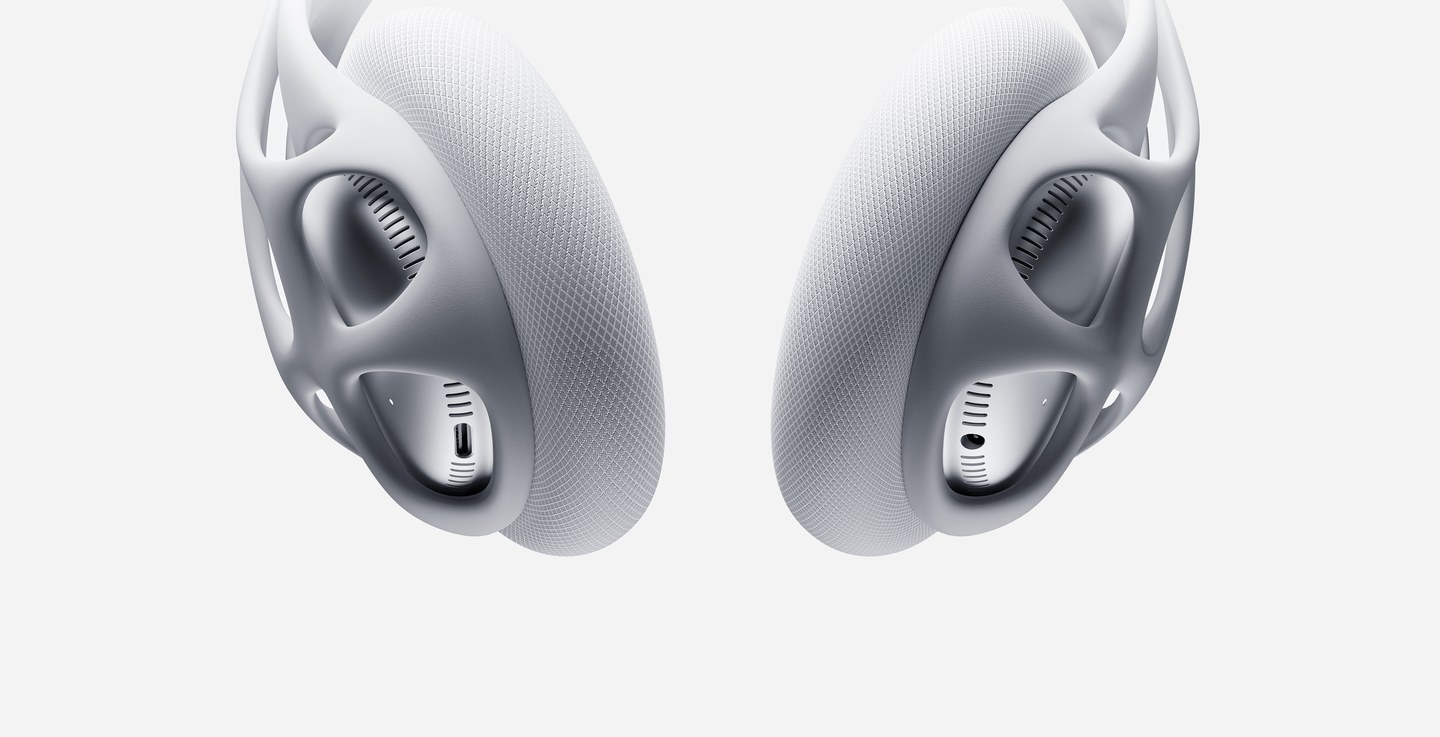
In the cups, the openings show what sits behind the lattice. Each shell is polished metal, visible through the voids, and the frame wraps it like a cage rather than a cover. A normal cup hides its shell under a solid cap. This one puts the shell on display and lets the lattice carry the outline, right down to the vents ringed inside the openings and the port tucked low behind the frame.
Details the renders give away
From above, the band carries a line embossed into the lattice: Design Creates New Life. A small red dot marks the right cup.
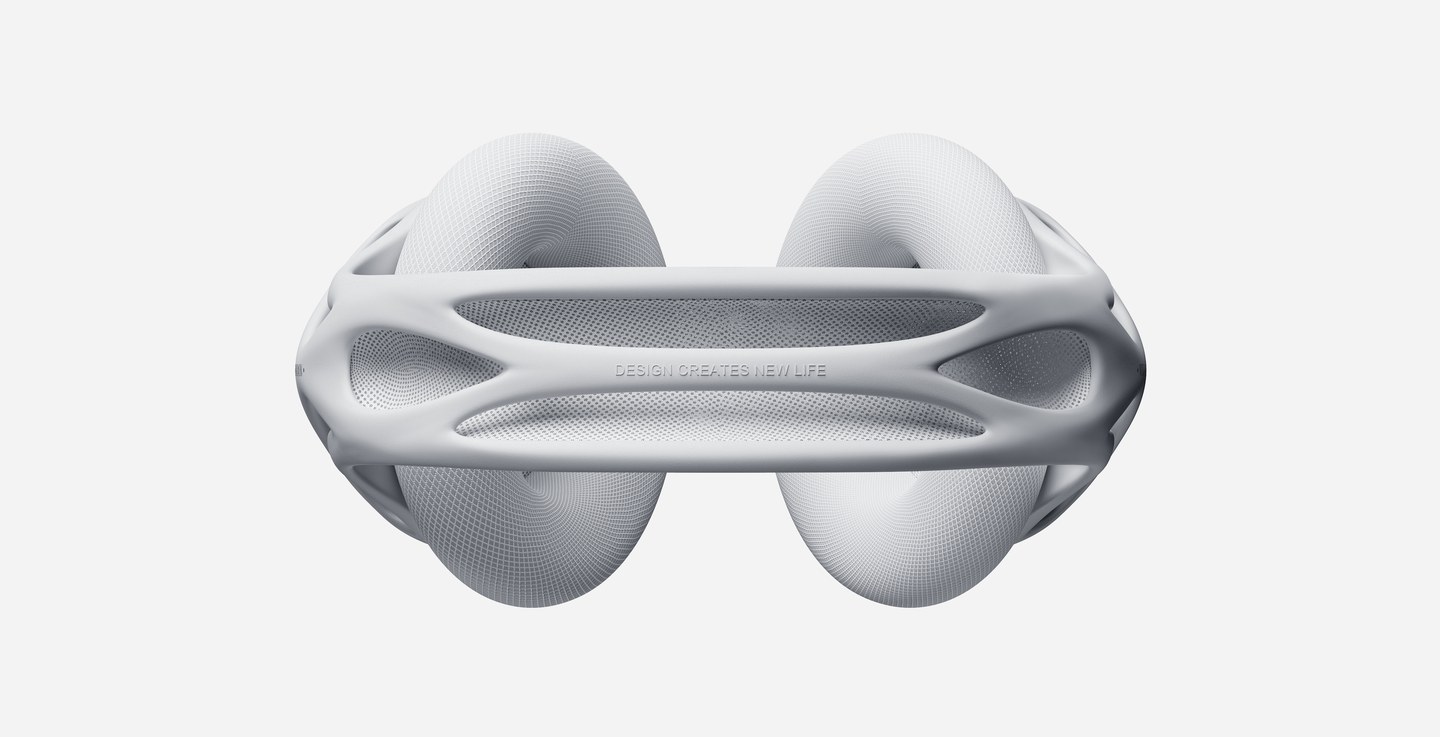
The cushions inside the cups wear a tight diamond-woven mesh. A padded mesh strip runs along the inside of the band where it meets the head. The render set runs two finishes, a pale white and a charcoal, and every frame carries a small tagline along the bottom edge: for the past, for the present, for the future.
There’s no logo panel anywhere on it, and no brand block on the cups. The embossed line across the band is the only lettering on the whole object. The cups carry no badge and the shells carry no printed spec sheet. What lettering exists sits embossed into the structure itself, where it can’t peel or fade.
A concept, and only a concept
None of this is on sale. Grow exists as a render set and a design study: no price, no release date, no store page, and no unit to test. The controls, the fit and the frame shape are the whole release. The open question is whether anyone builds it, because a lattice this open needs a manufacturing route, printed or cast, plus a driver package that fits inside those shells, and the gallery answers neither.
Studios publish concepts like this to put a marker down. Why Design’s is easy to read.
If the idea travels, the button is the part that disappears first, and the frame that replaces it is already the part every headphone has to carry. The gallery went up on October 20, 2025. Nothing has followed it yet. No prototype, no partner, no product page has surfaced since.
Grow Headphones by Why Design
Generative lattice frame over metal earcup shells, diamond-woven mesh cushions · Buttonless surface with noise cancellation, volume and Bluetooth spread across four zones · Modular joint adapts to different head sizes · Two finishes in the render set, pale white and charcoal · Concept renders only, posted to Behance on October 20, 2025
Where to buy: More details at Behance