Google’s first finder tag goes on sale today, November 11, at the Google Store, three months after its Made by Google debut in August. The pitch is simple: an oval tracker for the keys, wallet, and luggage Android owners keep losing, running on the Find Hub network their phones already use.
It comes as a single tag or a four-pack. Third-party tags from Motorola and Pebblebee have ridden Find Hub for a while now, and some of them are very good, but a Google-built tag sets the reference design for the whole network. Every future Android tracker gets measured against this pebble.
Google Pixel Tag
Stainless steel shell, IP67 water and dust resistance, and a replaceable CR2032 battery rated past a year
Price: $29.99 for a single tag, $99.99 for a four-pack
Where to buy: Buy at Google Store
Thin enough to forget it is there
Size is the design.
The tag measures 1.1 inches wide, 1.8 inches long, and 0.2 inches thick, and it weighs 0.4 ounces with the battery in. Two stacked credit cards are thicker. Slipped into a wallet, the bulge you feel is the card next to it.
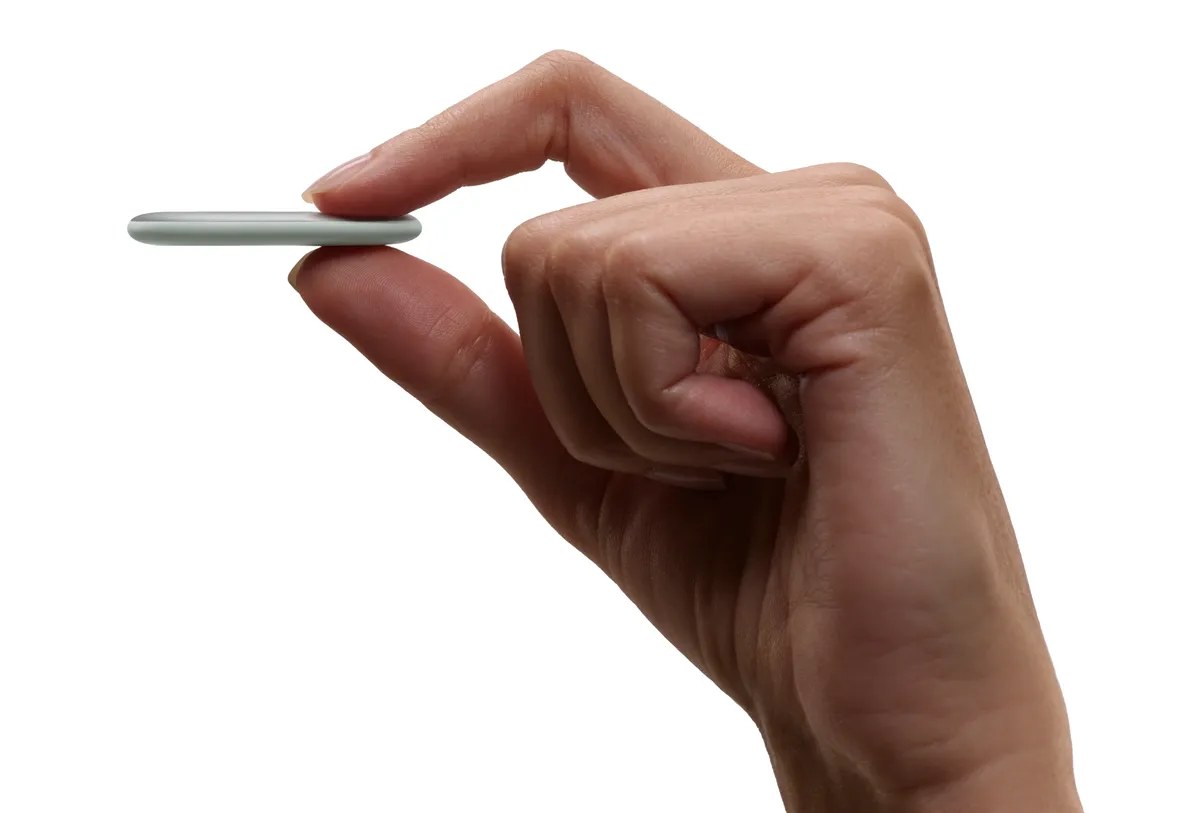
A loop at the top takes a key ring, and the flat back sits flush inside a luggage tag sleeve. The shell pairs stainless steel with polycarbonate and shrugs off the flexing a wallet takes every time its owner sits down, and the packaging skips plastic entirely. Google backs it with a one-year warranty.
Fog is the only color.
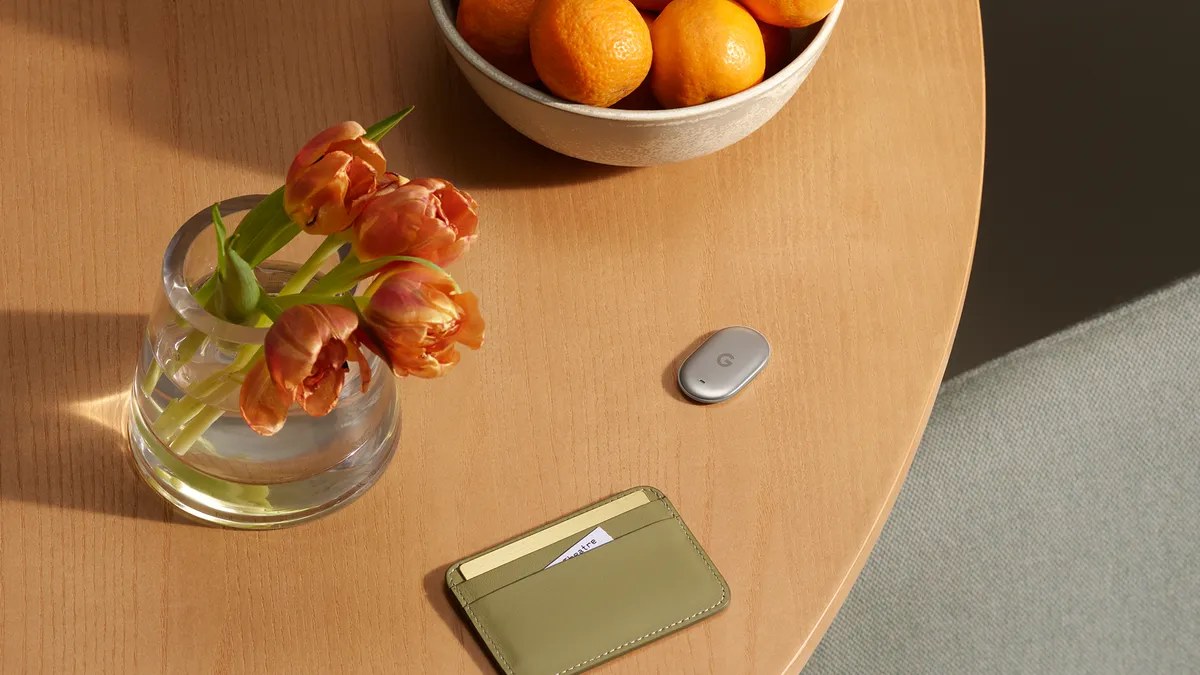
That pale silver green disappears against most wallet linings and luggage straps, which suits a thing designed to be forgotten until the day it saves you.
Finding works near, far, and under the couch
Open Find Hub and the tag sits on a map. Far from home, a network of more than a billion Android devices pings its location as phones pass by, and the location data stays encrypted end to end. Nobody at Google can see where your keys are. Neither can the stranger whose phone relayed the ping.
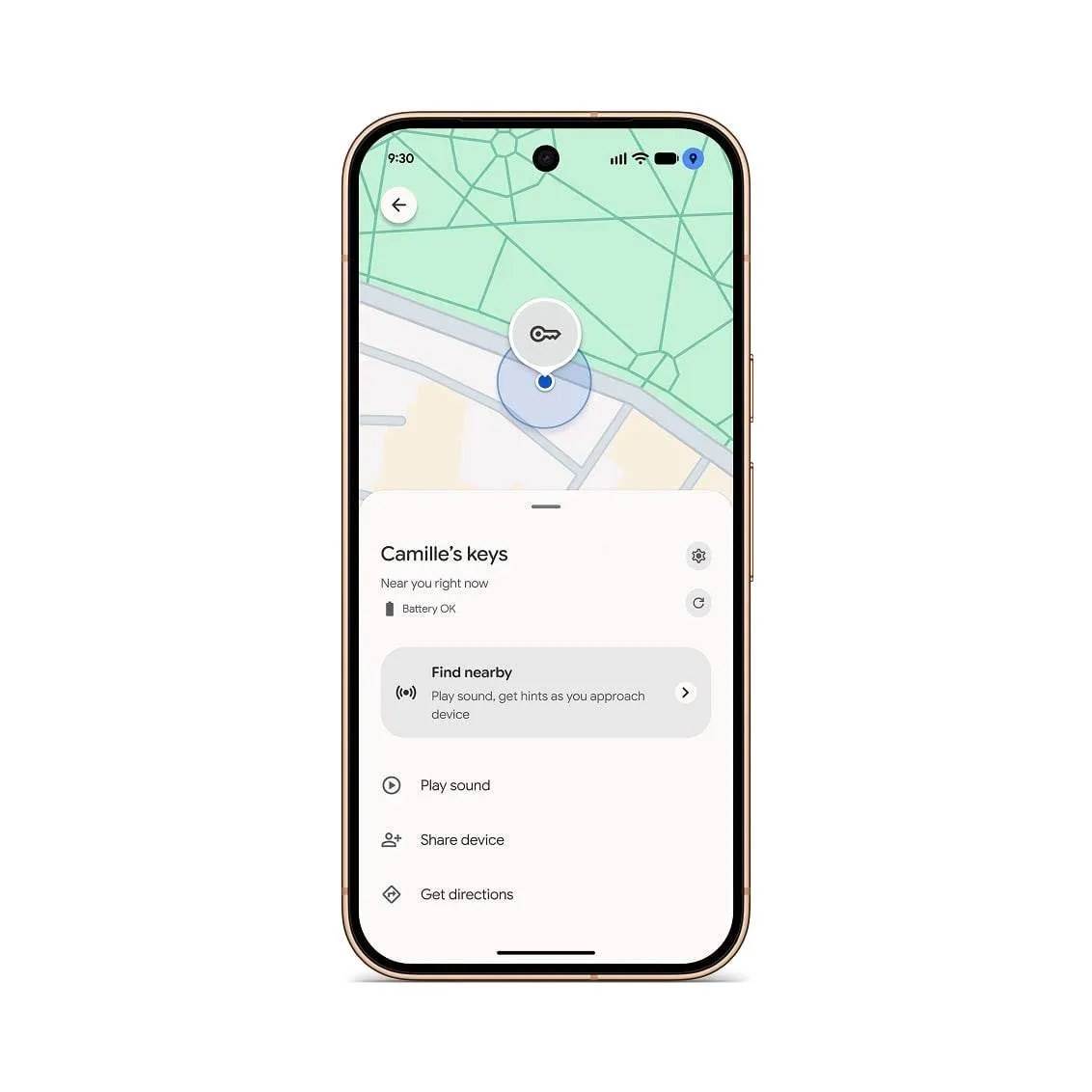
Airports are the stress test, and this is where the network proves itself. A tag sewn into a checked bag reports in every time the bag rolls past an Android phone on the carousel belt, in the hold, on the truck. In a terminal full of phones, that is close to continuous. Lose the bag entirely and the map still keeps the last crowd-sourced fix, which is usually the building it never left.
Close in, Ultra Wideband and Bluetooth Channel Sounding take over with meter-by-meter guidance, arrows and distance cues walking you to the exact cushion. A built-in speaker rings the tag when eyes fail. Pixel Buds owners can skip the screen and ask Gemini to ring it instead.
Pixel Watch wearers get the same map on the wrist. Left Behind alerts flag the wallet still sitting on the cafe table before the door closes behind you. Android phones keep watch the other way, too: an unknown tag traveling with you triggers an alert, with steps to ring it and hunt it down.
Setup is a battery tab and one tap
Pull the battery tab. Hold the tag near an Android phone. A Fast Pair prompt pops up, you name the item, pick a category or type a custom label, and you are done. Setup genuinely takes under a minute.
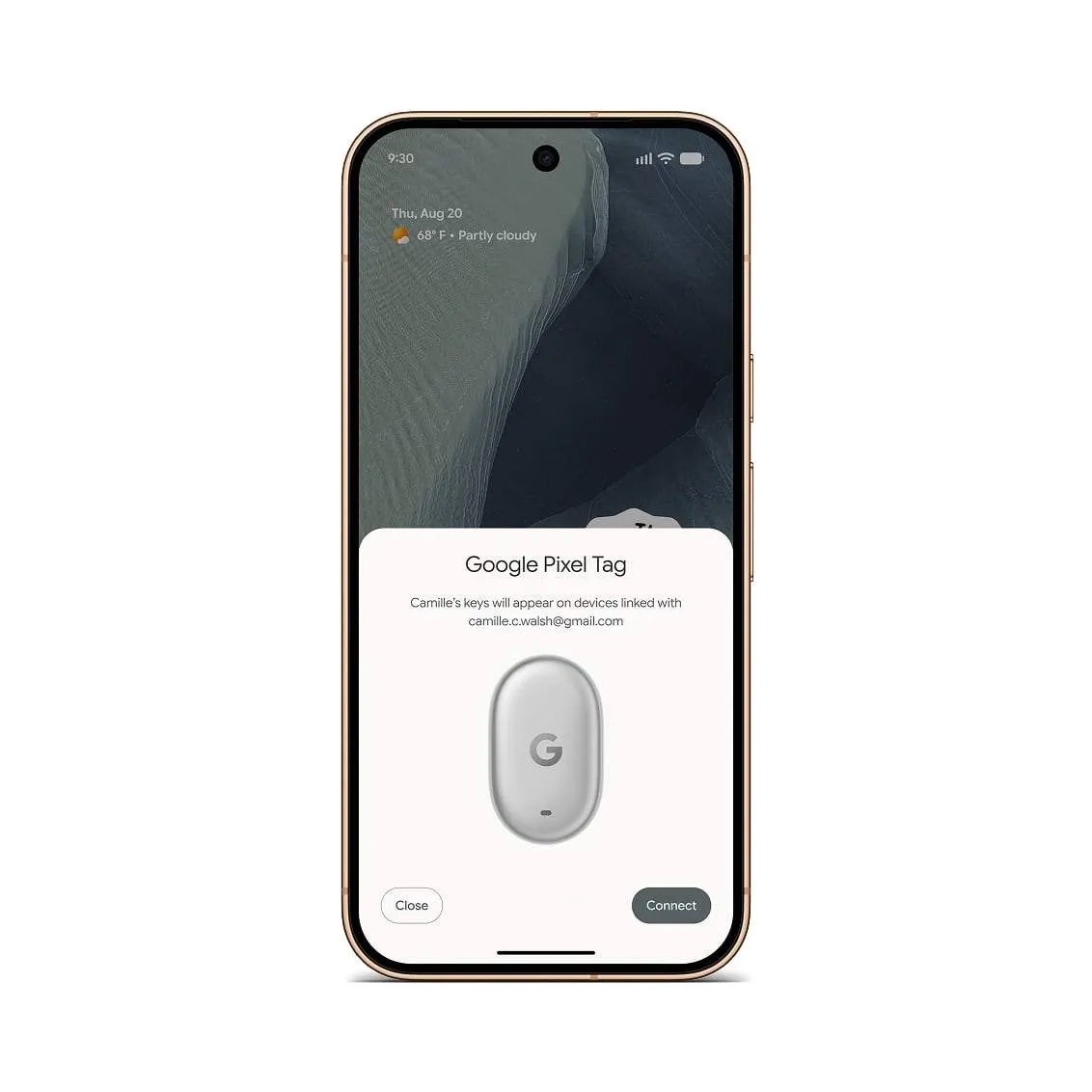
Sharing runs to up to 10 people, so a household can all hunt for the same set of spare keys, and the family car can carry a tag every driver can find. Compatibility starts at Android 9, which covers nearly every Android handset still in a pocket. One real limit: an iPhone household gets nothing here. This is an Android network, full stop.
The button on the tag runs the trick in reverse. Press it and your phone rings, even on silent. Every lost-phone panic in a loud house just got shorter.
Pixel Tag specs
| Dimensions | 1.1 × 1.8 × 0.2 in |
|---|---|
| Weight | 0.4 oz with battery |
| Battery | CR2032 coin cell, user-replaceable, rated over one year |
| Water resistance | IP67 |
| Finding tech | Ultra Wideband and Bluetooth Channel Sounding |
| Works with | Android phones running Android 9 and later |
| Color | Fog |
| Warranty | 1 year |
Google Pixel Tag
Stainless steel shell, IP67 water and dust resistance, and a replaceable CR2032 battery rated past a year
Price: $29.99 for a single tag, $99.99 for a four-pack
Where to buy: Buy at Google Store
Android owners have waited years for a first-party answer to the AirTag, and capable third-party tags filled the gap in the meantime. A steel tag from Google itself, wallet-thin and priced in line with the pack, makes that wait look worth it. The four-pack is the one to buy: keys, wallet, luggage, and a spare for the bag you lend out. Android’s finding network finally has its reference design, and it costs less than the keys it guards.