Amadeo was 29 when a rare bleed in his spinal cord paralyzed him.
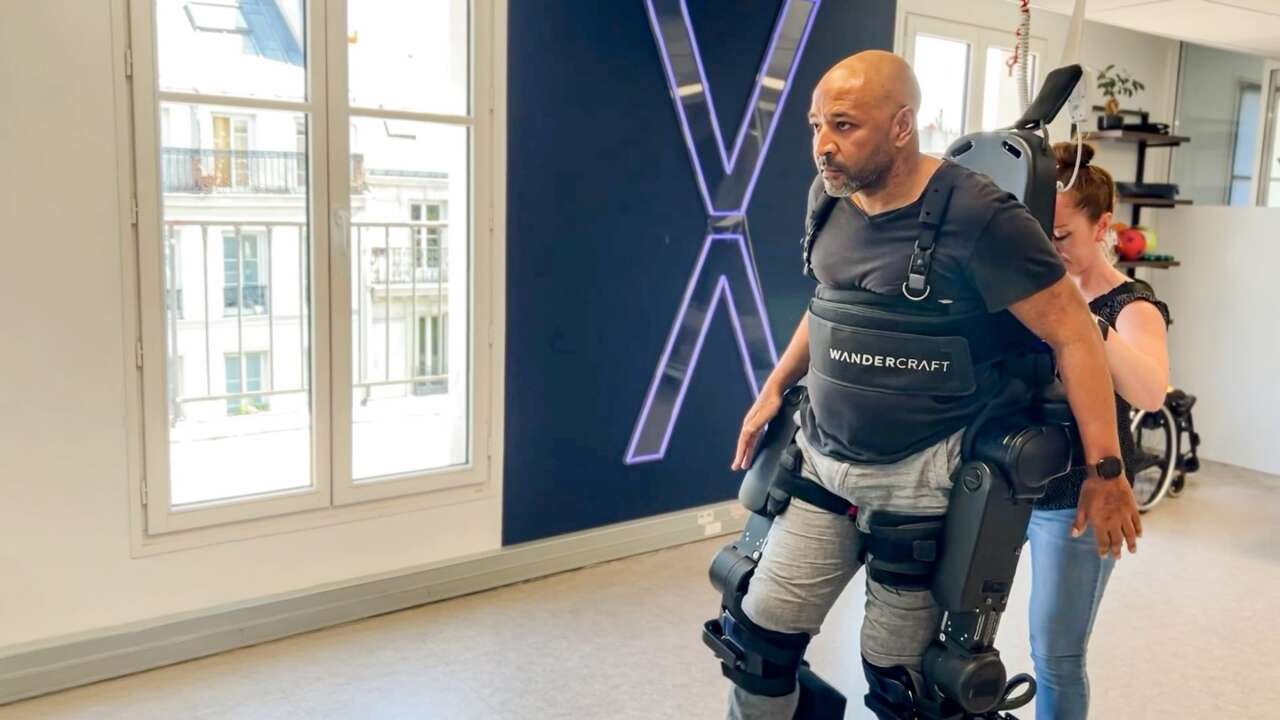
Two years later, CBS News cameras caught him doing the thing the injury took away: walking across a Manhattan clinic floor, upright and at his full height, inside a robotic exoskeleton that balances itself.
He trains at Walk in New York. Amadeo told the segment the sessions ease his spasticity, and that standing tall again is the part that stays with him.
A clinic built around one machine
Walk in New York sits at 345 Park Avenue South. It’s a physical therapy practice led by Dr. Josh Breighner, built in partnership with Wandercraft, and it starts every patient with a free virtual screening. The practice treats spinal cord injury, stroke, traumatic brain injury, multiple sclerosis, cerebral palsy and Parkinson’s disease, and it accepts many major insurance plans.
Every walking session runs on the same device: the Atalante X. Twelve motors drive its joints, including an articulated ankle, and the machine moves in every direction rather than just straight ahead. Patients get in while seated. Assistance can be dialed up or down joint by joint, even set differently on the left and right sides, and the software tracks gait metrics session over session. One battery swap carries it through a full clinic day.
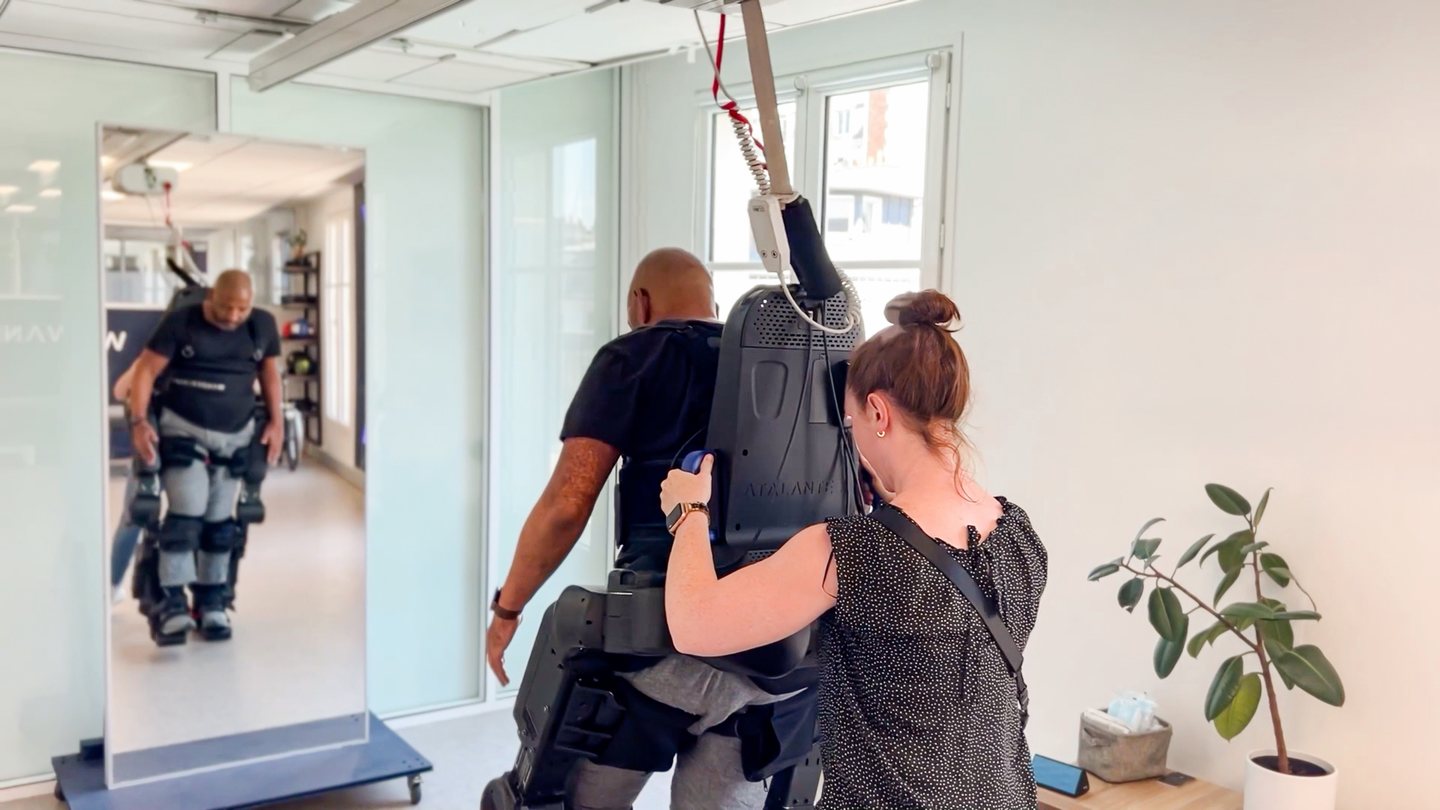
The FDA cleared the Atalante X for stroke rehabilitation in December 2022. Clearance for spinal cord injury followed in February 2024, and a November 2025 expansion took the spinal cord range to C4 through L5 and added multiple sclerosis. US patients qualify from age 18, as long as they can tolerate standing. Wandercraft says the machine now works in more than 150 rehabilitation and research centers worldwide.
Wandercraft started in Paris in 2012. Nicolas Simon, Jean-Louis Constanza and Matthieu Masselin founded the company, and Masselin still runs it as CEO.
No crutches, no walker, nothing to hold
Most medical exoskeletons lean on the person wearing them. Crutches or a walker carry the balance, which shuts out anyone whose trunk or arms can’t do that work. Wandercraft’s machines balance themselves instead, so a patient without trunk control can still stand and walk while a clinician runs the therapy. Hands stay free for actual life: reaching, carrying, turning. Twelve motors and a lot of stabilization math handle the part crutches used to.
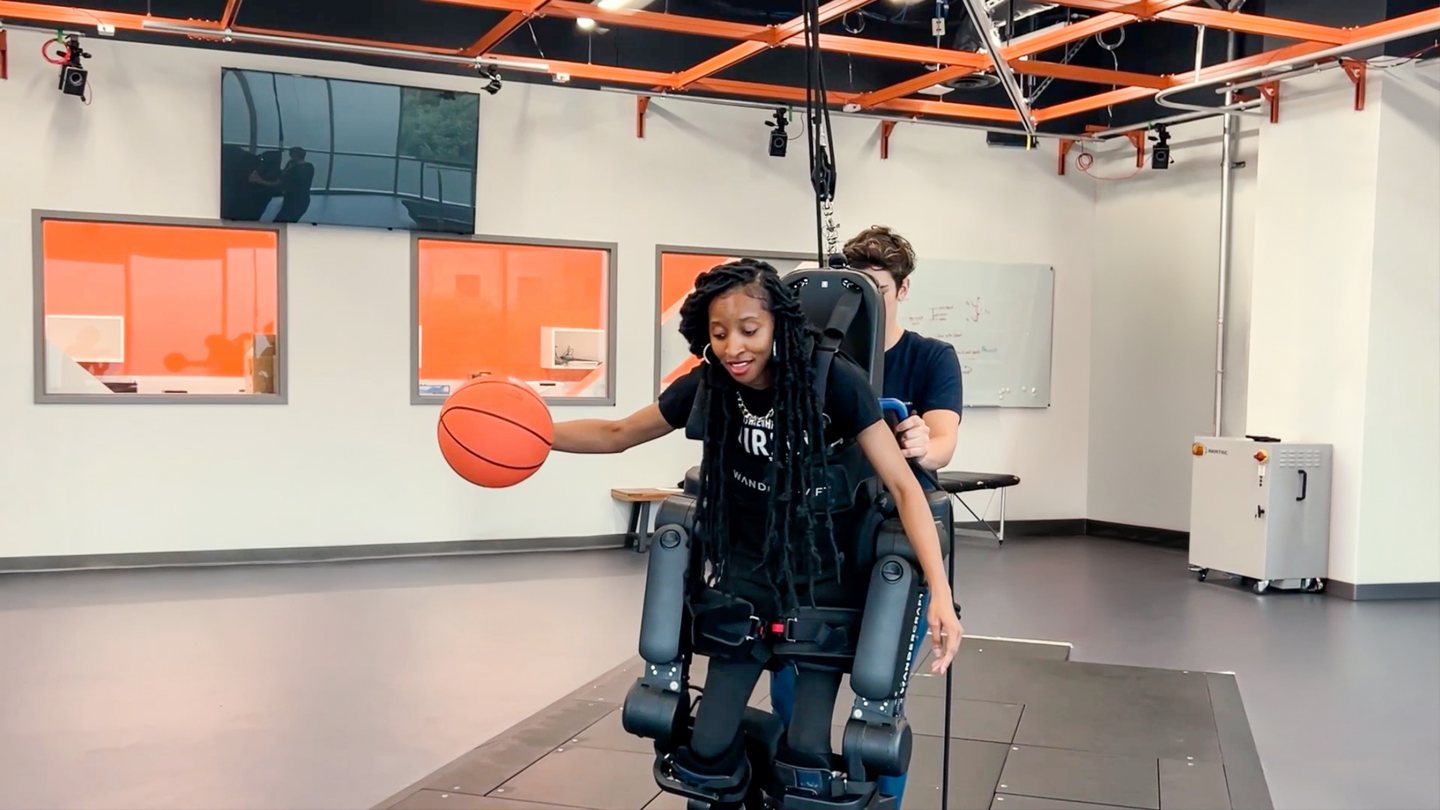
Other builders attack the same problem from different angles. Duke’s XoMotion, which Gadgeteer covered this week, is a rehabilitation exoskeleton designed to handle rough ground. Both machines exist because walking is the therapy, not just the goal. The Wandercraft bet is narrower and stranger: stay on flat clinic floors, and pour everything into balance.
The field is still young enough that its own clinicians say so on camera. Dr. Gerard Francisco, who chairs physical medicine and rehabilitation at UT Health Houston, told CBS that doctors are still working out where exoskeletons fit best in a patient’s recovery. The machines walk. The playbook is catching up.
Eve takes the same idea home
In August, the FDA cleared Eve, Wandercraft’s personal exoskeleton, under clearance K260381. Wandercraft calls it the world’s first self-balancing personal exoskeleton, and one detail sets it apart from everything cleared before it: eligibility doesn’t depend on the level of the spinal cord injury. C4 or L5, the door’s open, provided the user can work the handheld controller and stand. Eve reached the US market on September 17, by prescription only.
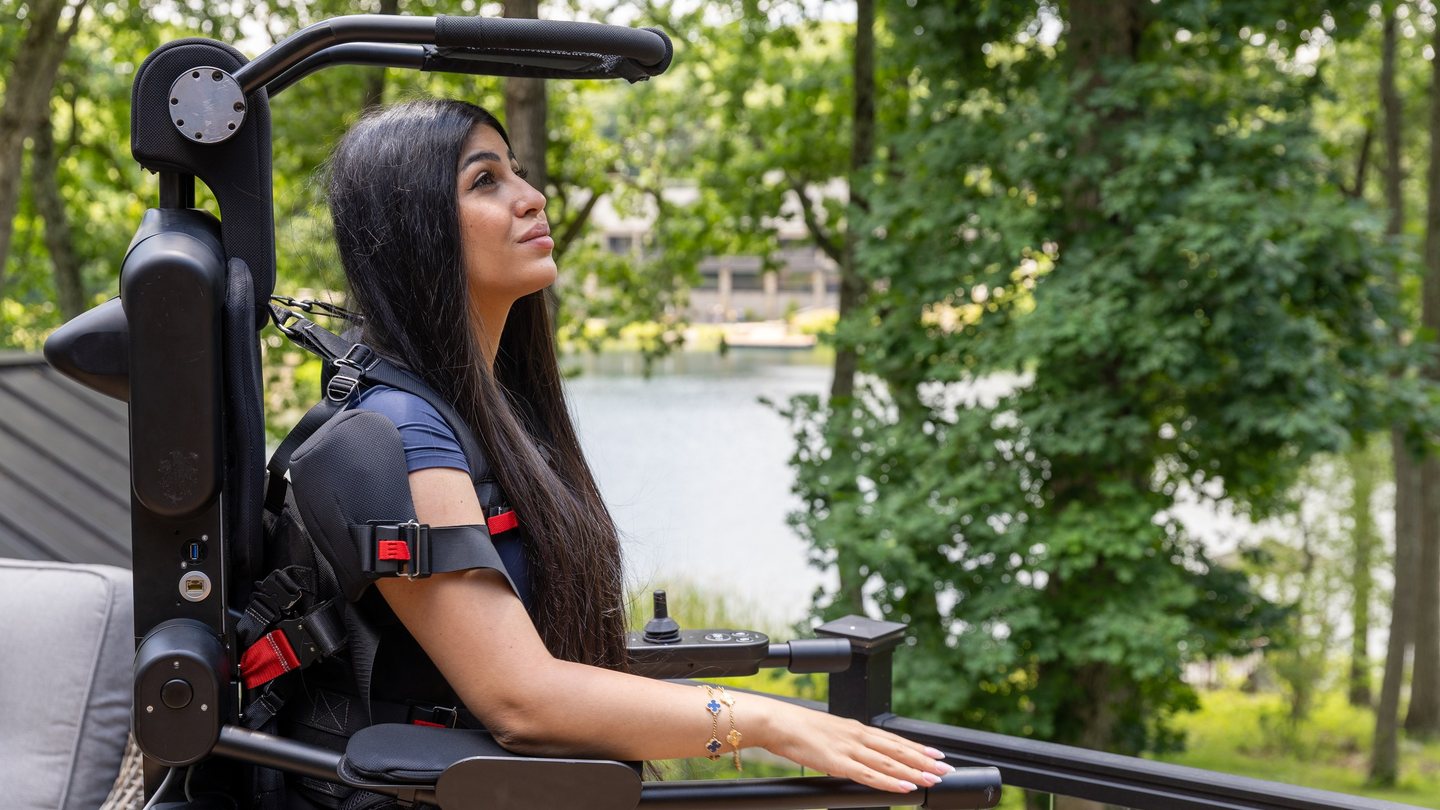
Home use comes with structure. A licensed practitioner prescribes Eve after an individual assessment, and nobody takes one home untrained: the user and a companion complete five training sessions of about two hours each and certify together.
That companion then stays within arm’s reach on every walk. The battery runs four hours, the fit tops out at 220 pounds and 6 feet 4 inches, and Wandercraft is blunt about the limits. Eve complements a wheelchair rather than replacing it, and it stays on level ground: no stairs, no slopes, no street crossings.
The clearance rested on a three-site clinical study run with Kessler Foundation in New Jersey, the James J. Peters VA Medical Center in the Bronx, and the Walk in New York center itself.
That last part is the business model showing. Wandercraft designed the Manhattan clinic as the hub where Eve users get evaluated, fitted, trained and supported, so the place in the CBS segment isn’t just a clinic. It’s the front door for the home device.
Medicare opened a door in 2024
None of this reaches many homes without a payer. Medicare has run a reimbursement pathway for personal exoskeletons since 2024, through its durable medical equipment program under billing code K1007. When Eve cleared in August, Wandercraft said it expected the device to become eligible within 60 to 90 days, with private payers to follow. That window is closing right about now, which makes the next announcement the one that decides how many people actually get one.
For now, the walking is happening in clinics like the one on Park Avenue. It starts with something small: a man who hadn’t stood at his own height in two years, standing there again, talking to people eye to eye.