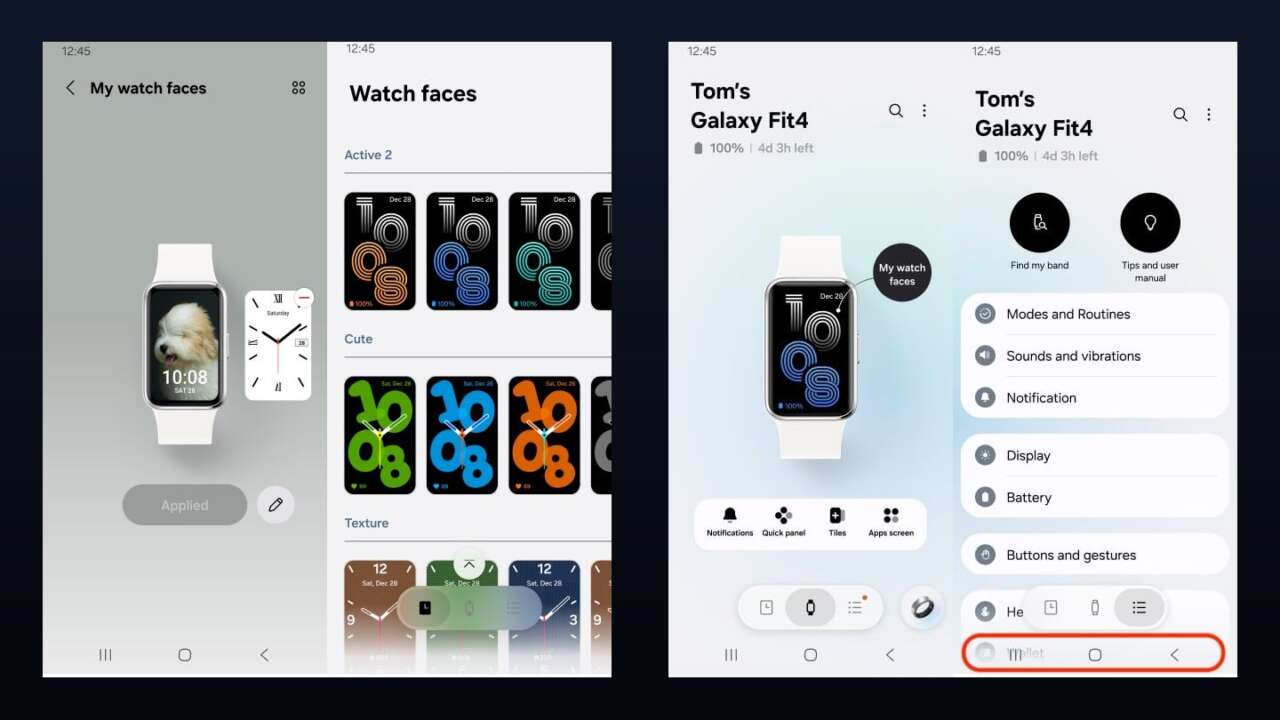
Samsung hasn’t announced the Galaxy Fit 4, but Samsung has already published its app. Its Galaxy Fit4 Manager plugin sits in the Galaxy Store now, and its own screenshots show a Wallet section in the settings menu, a speaker the Fit line has never had, and a battery estimate of four days against the Fit 3’s thirteen. Companion apps don’t go live by accident. This launch is close.
Price: $55
Where to buy: Amazon (Galaxy Fit 3, current model)
App listings are the softest form of leak, because the screenshots come from the maker’s own store page rather than a supply-chain photo. Everything below traces to those screenshots and to the Fit 4’s FCC filing, and the two don’t fully agree. That disagreement is the story as much as the Wallet menu is.
A Wallet menu on a band that never had NFC
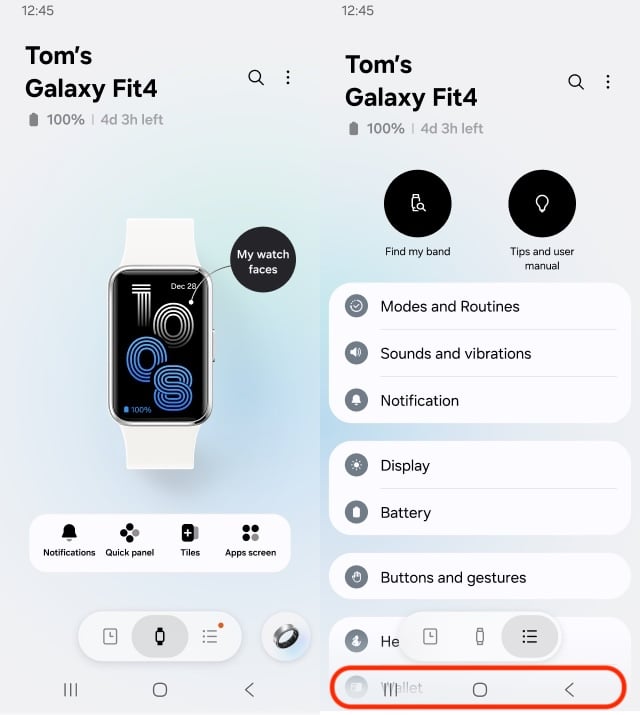
No Galaxy Fit has carried an NFC chip. The Fit 3 tracks workouts, sleep and heart rate, and paying for anything means pulling out a phone. A Wallet section in the Fit 4’s settings points at Samsung Wallet syncing payment cards to the wrist, which would make this the first Fit that taps to pay. That menu sits at the very bottom of the settings list, partly tucked behind the navigation bar in Samsung’s screenshot, circled in the image below.
Timing sharpens the point. Google’s new Fitbit Edge deletes NFC entirely, a cut Google justified by how few Charge owners paid from their wrists. Charge 6 kept payments. Edge drops them. If Samsung is adding tap-to-pay to a band in the same price class at the moment Google walks away from it, the budget end of the tracker market splits in two, and Samsung owns the paying half.
The FCC filing says Bluetooth only
Certification paperwork cuts the other way. Samsung’s FCC filing for the Fit 4 lists Bluetooth 5.4 and mentions no NFC radio at all. Filings can lag final hardware, and a Wallet menu can also end up holding passes, tickets and membership cards rather than payment cards. Both readings are live. Until Samsung announces the band, payments sit in the unconfirmed column, and any piece that prints them as settled is guessing. What’s settled is narrower: Samsung built a Wallet section into the Fit 4’s software and published the screenshot itself.
A speaker arrives, and the battery estimate shrinks
Sounds and vibrations get their own menu, and the app confirms a speaker and a vibration motor inside the band. A speaker on a tracker this size means call audio from the wrist when the band is paired to a phone, plus audible alerts from Find My Band when the tracker slides between couch cushions. A vibration motor handles alarms and notification buzz, another first for a line that has always been silent and still. The Fit 3 has neither. It also means power draw the Fit line has never carried, and the same screenshot shows the cost: “100%, 4d 3h left” at the top of the settings page. Samsung claimed up to 13 days for the Fit 3. App-listing figures can be placeholders, so the four-day number is a signal, not a spec, but the direction fits the hardware. Speakers and haptics eat batteries.
Faces, Modes and the same silhouette
Photo watch faces are in, pulled from the phone’s Gallery app, alongside a deep bench of first-party faces and downloadable Tiles. Modes and Routines integration lets the band follow the phone’s routines, quieting down at bedtime or lighting up for a workout without manual setup. Its side button’s shortcuts are customizable. Earlier looks at the hardware show a design largely unchanged from the Fit 3: the same rectangular AMOLED band, which keeps the upgrade story entirely about features rather than looks.
The Fit 3 is the one on sale today
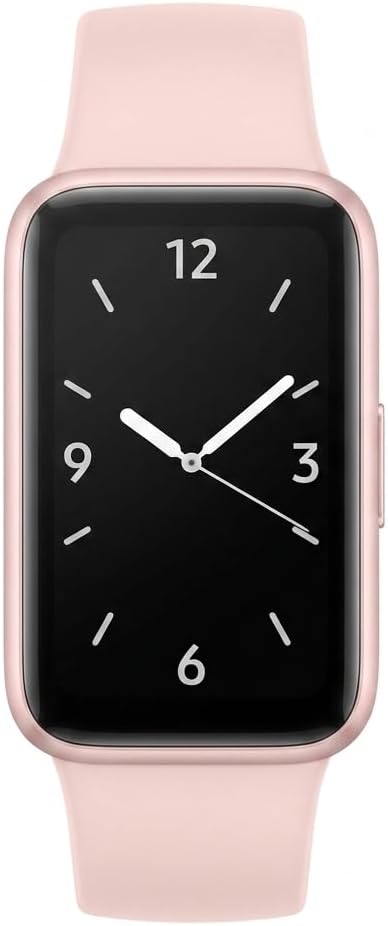
Nothing about the Fit 4 has a price or a date yet, and Samsung hasn’t confirmed the band exists. Today’s model is the Fit 3, down to $55 on Amazon from its $59.99 launch price, with the 1.6-inch AMOLED screen and the long battery life the new model looks ready to trade away. Anyone who needs a tracker this month buys that one. Anyone who can wait should, because an app already sitting in the Galaxy Store says the announcement is days away, and Samsung’s own screenshots either turn into a spec sheet or get quietly replaced.
For reference, the Fit 3’s spec sheet runs a 1.6-inch AMOLED screen, 100-plus exercise modes, sleep tracking with coaching, 5ATM and IP68 water resistance, and an 18.5-gram case. It’s a lot of band for $55, which is what makes the Fit 4’s feature jump a real one: payments, a speaker and phone-call audio are smartwatch tricks, and Samsung is pushing them down into its cheapest wearable line. The announcement will settle the three open numbers: whether NFC is really inside, the real battery figure with the speaker in play, and the price. If payments land anywhere near the Fit 3’s launch price, Google’s Edge is the band with the explaining to do.
Price: $55
Where to buy: Amazon (Galaxy Fit 3, current model)