Audi’s parts operation runs on sequencing. The right part has to reach the right workstation in the right order, all day, and across the operation that adds up to around one million picks a day.
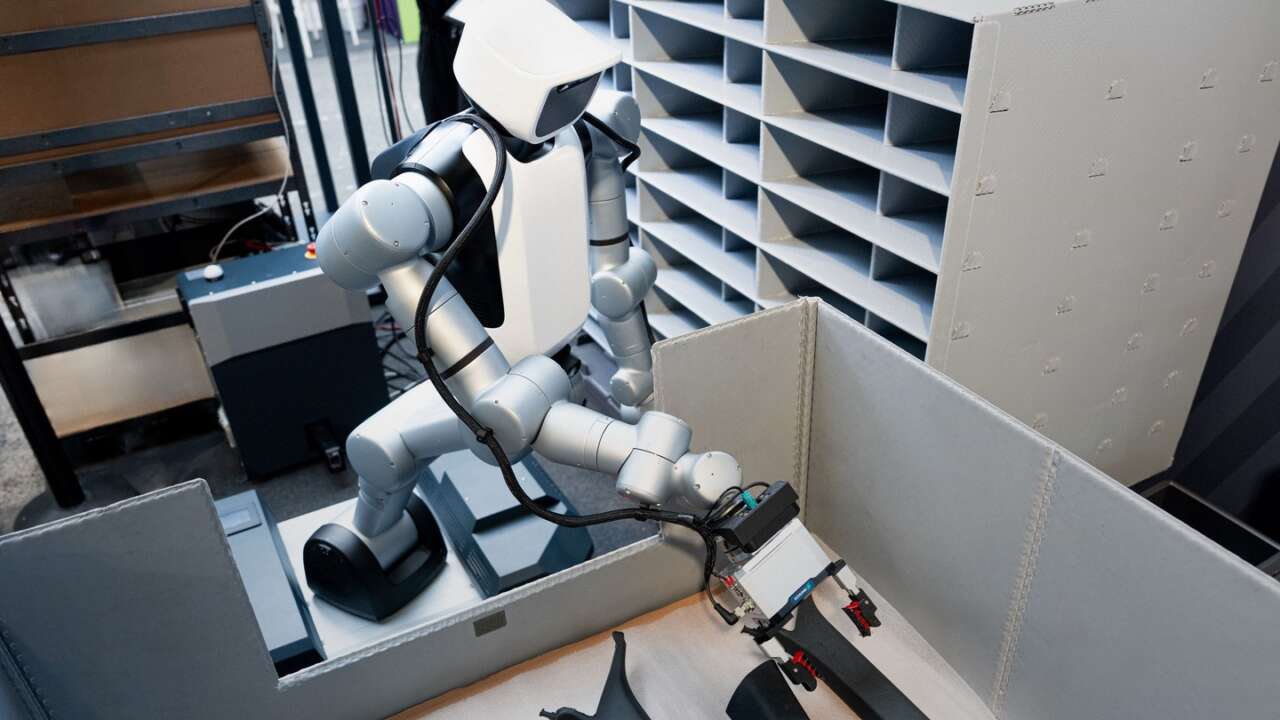
In the Production Lab at Audi’s Ingolstadt plant, some of those picks are now made by humanoid robots. They pull parts from material containers and set them in the correct sequence for the final assembly of Audi premium vehicles. Audi is running the test with Agile Robots, Dassault Systèmes, and NVIDIA. The four companies announced the proof of concept on October 21 at NVIDIA GTC Berlin.
A robot built to fit the factory as it stands
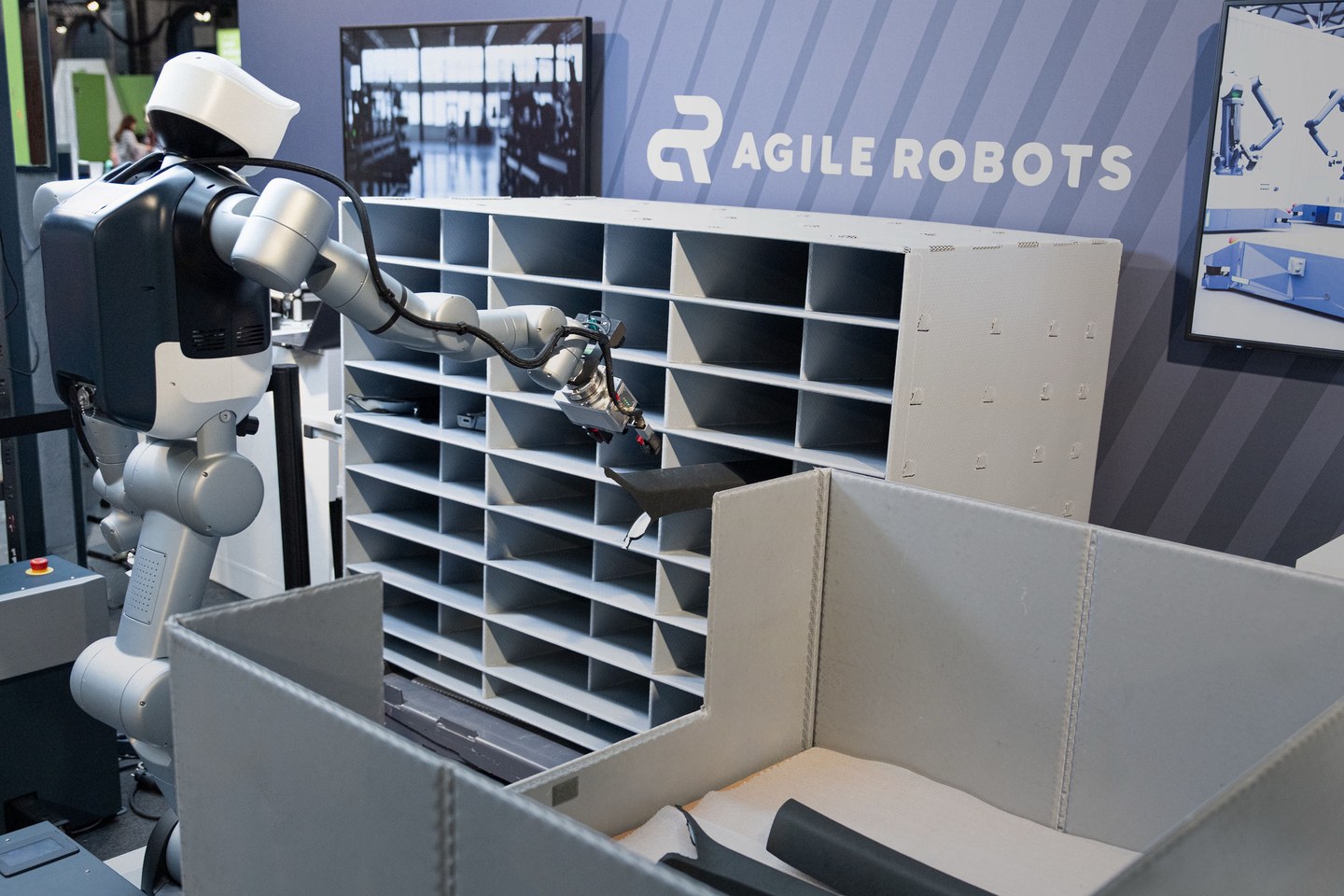
Agile Robots builds the machines. The company is based in Munich, founded in 2018, with more than 3,500 employees and over 650 patents. It counts more than 20,000 robotic solutions deployed with customers worldwide. Its mobile humanoid is a new design. The lower body is a wheeled base. The upper body follows human proportions, with two arms and grippers built for handling parts. It works at human height.
The human shape lets it roll into the plant Audi already has and work the stations Audi already runs, with no new line built around it. The test fleet is small on purpose. Audi wants results from a few robots under real conditions before it talks about more.
The job that fixed robots couldn’t take
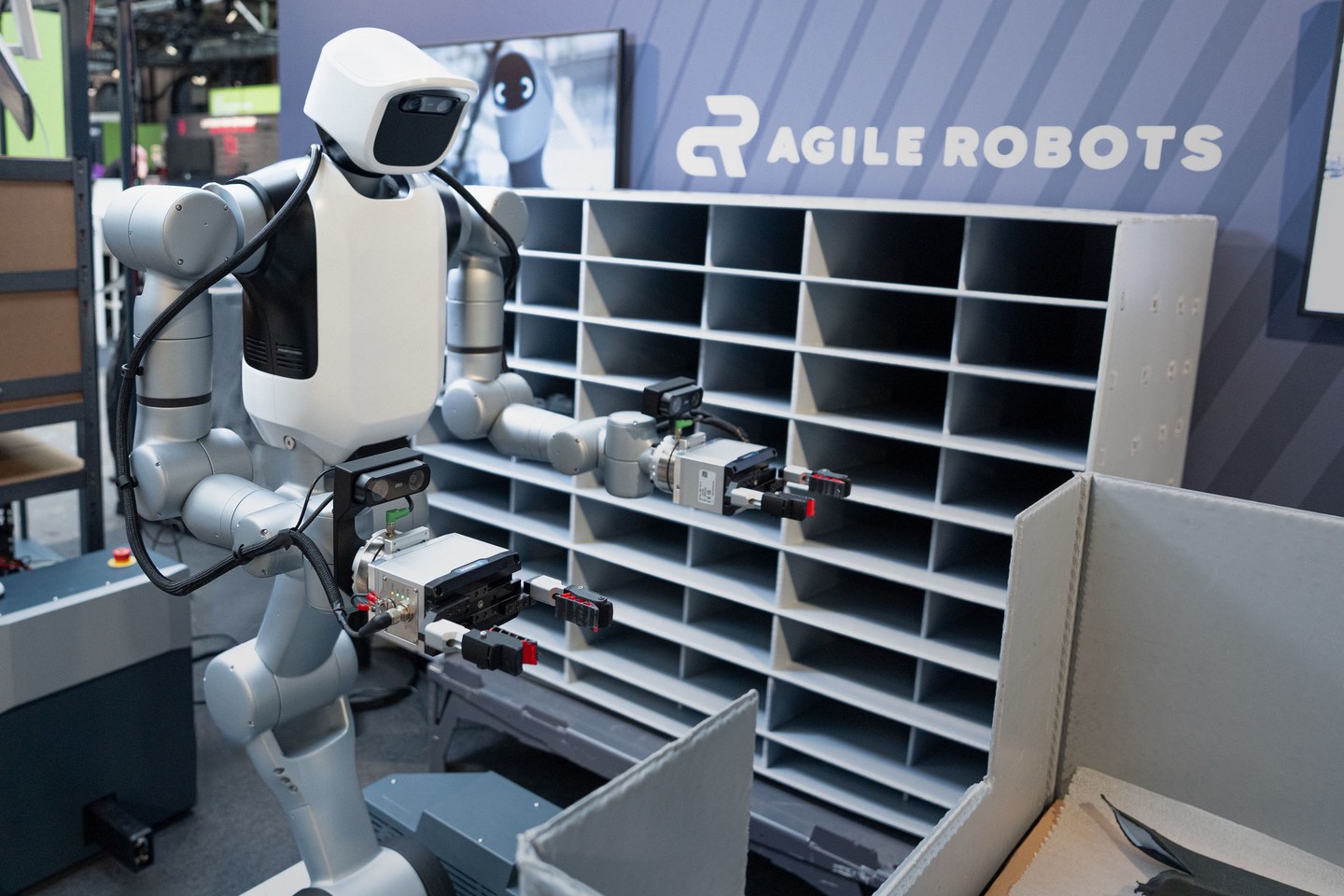
Sequencing looks simple from outside. It’s not. Parts arrive in mixed containers, unsorted, in different shapes and different packaging. Some are large. Some flex. A fixed robot arm handles a part that shows up the same way every time. It struggles with a bin where nothing sits in the same place twice.
The humanoids attack the problem with two arms and a camera-driven brain. AI image recognition studies the parts inside a container and works out how to grasp each one without damaging it. Two arms together can lift and place the large and flexible parts that defeat a single gripper. The training mixes real photos of parts with images generated inside a simulation, so the robot has seen a bin’s worth of variation before it touches the real thing.
The factory gets a twin before the robots get a shift
Before the robots work a real sequence, the partners build the job in simulation. Dassault Systèmes is creating a virtual twin of the logistics environment in its DELMIA software, on the 3DEXPERIENCE platform, using NVIDIA Omniverse libraries. Engineers test feasibility, cycle times, ergonomics, and safety inside the twin. Dassault’s LEO, an AI virtual companion, is meant to cut that engineering work from months to days. NVIDIA’s Isaac GR00T foundation model trains the robots themselves.
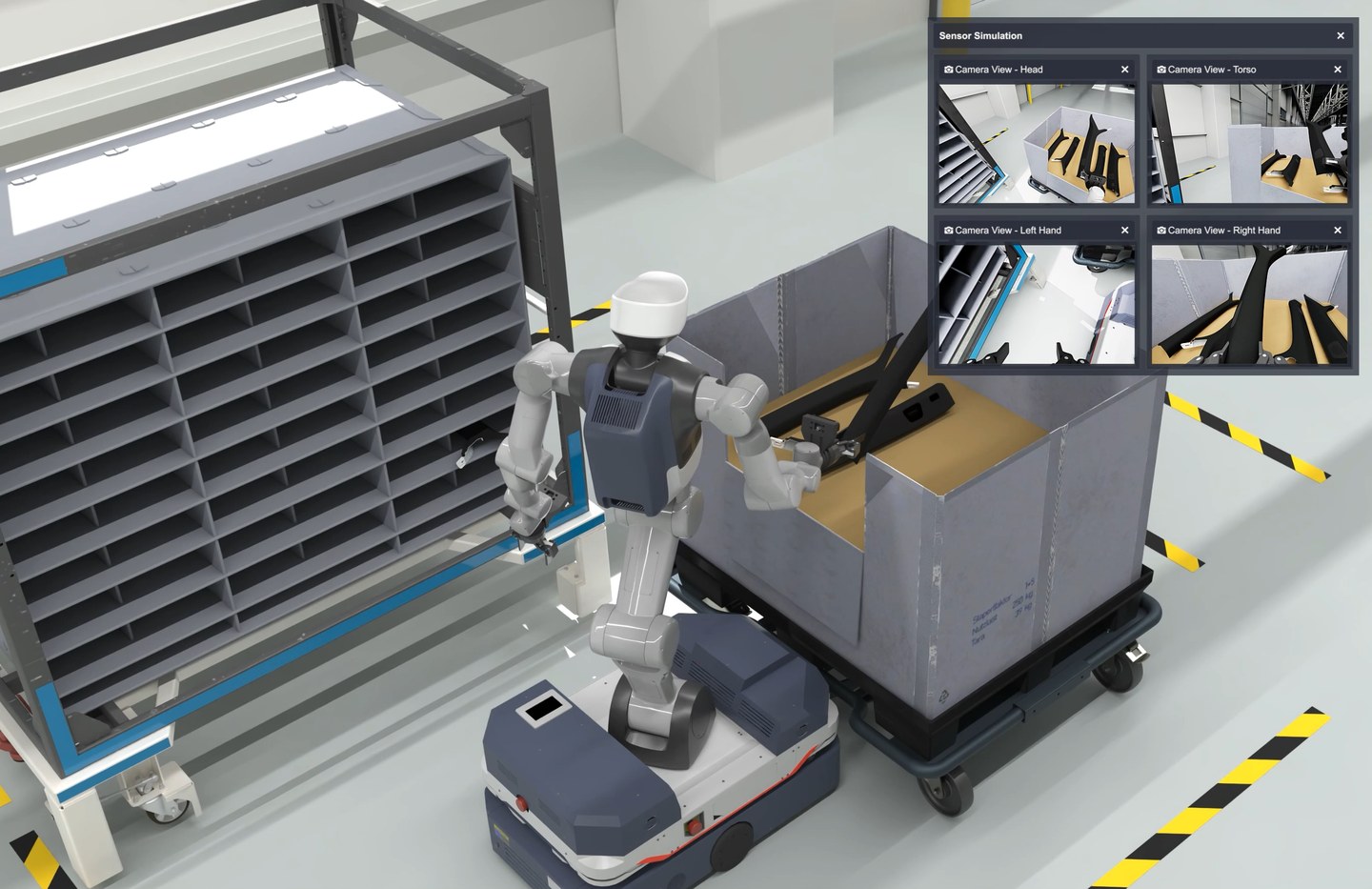
Philippe Laufer of Dassault Systèmes puts the breakthrough there, not in the hardware. The win, in his account, is engineering and validating the robot’s mission before the robot ever enters the plant physically. NVIDIA’s Deepu Talla says the same from the robot side. Humanoid robots move automation past fixed, repetitive tasks into the complex, variable work at the center of manufacturing, and they do it with minimal changes to the operations already running.
What Audi isn’t claiming yet
There’s no rollout date. Audi says plainly that it can’t give a timeframe for humanoids working production routines. There are no pick rates and no error figures. It doesn’t even carry a public model name.
Gerd Walker, Audi’s board member for production and logistics, framed the test in those terms. Picking within the sequencing process, he said, has remained one of the toughest automation challenges in automotive logistics for decades. The partners will decide the project’s future from this evaluation, not from a launch calendar.
Audi has looked at this idea before, in a different operation. Its China joint venture, Audi FAW NEV Company, explored UBTECH humanoid robots back in December 2024. The Ingolstadt test is a separate project with a different robot, aimed at a specific job Audi can measure pick by pick.
The frame Audi puts around it is its thinking factory: AI and robotics working alongside employees, with machines taking the complex, repetitive sequencing load so people move to higher-value work. That is the stated goal. The test running now decides whether the machines can carry it.
A small fleet of human-shaped machines is learning one of the factory’s hardest jobs inside a lab in Ingolstadt, inside a simulation before that. If the evaluation holds up, humanoid robots move from the lab onto the sequencing line as regular equipment. Audi isn’t promising that day yet. Whether they make that move depends on this evaluation.