Pilot watches share a recognizable look, but large cases and aviation-inspired markings do not always make a watch easier to read or more useful day to day. Some models favor cockpit-inspired details over legibility; others add scales and complications that most owners are unlikely to use. The challenge is finding a watch that balances historical character with practical everyday features.
These seven watches take different approaches to aviation design. Traditional pilot watches emphasize legibility and uncomplicated layouts, while more technical models add chronographs, slide-rule bezels, and GMT functions. Together, they range from military-inspired simplicity to instrument-style complications and a chronograph with a spaceflight connection.
1. Hamilton Khaki Aviation Pilot Pioneer Mechanical
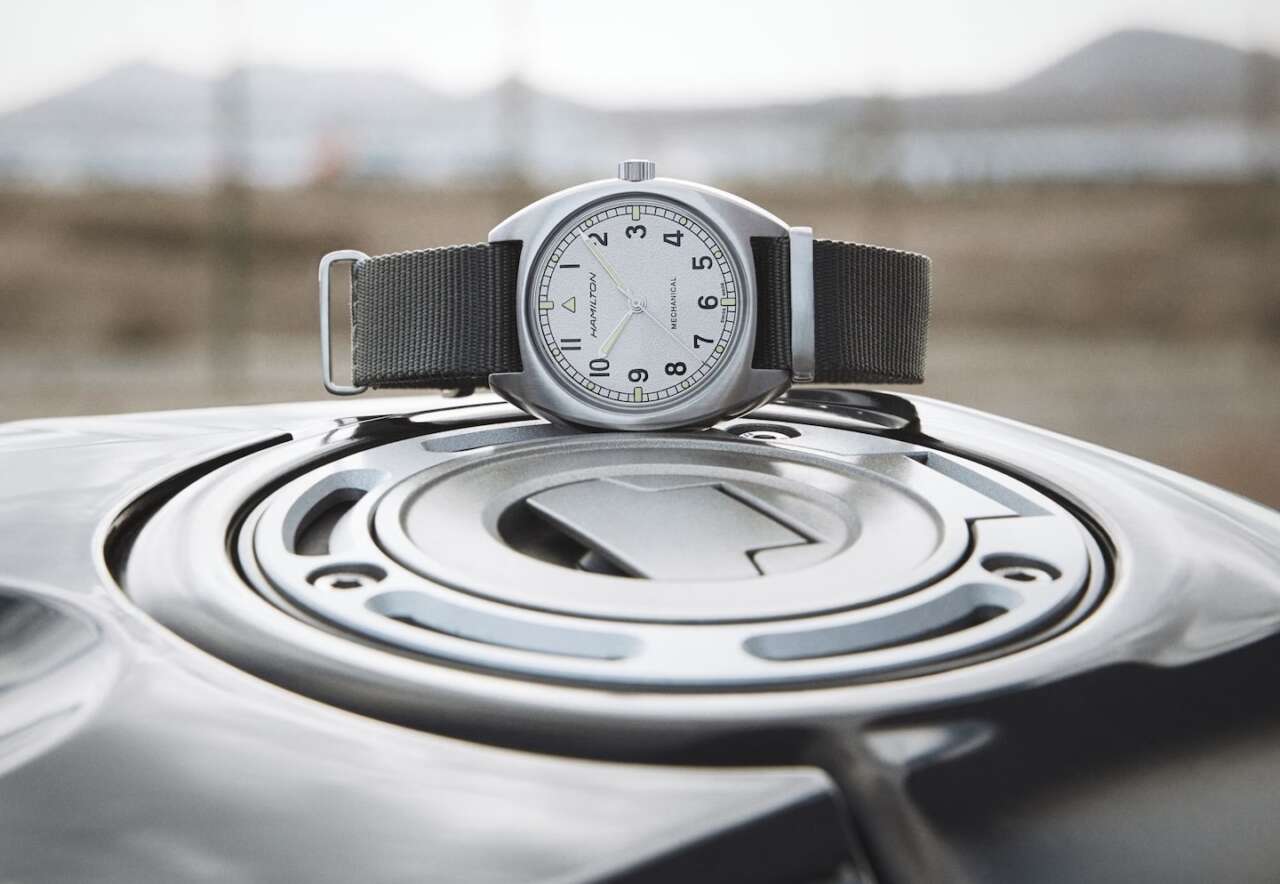
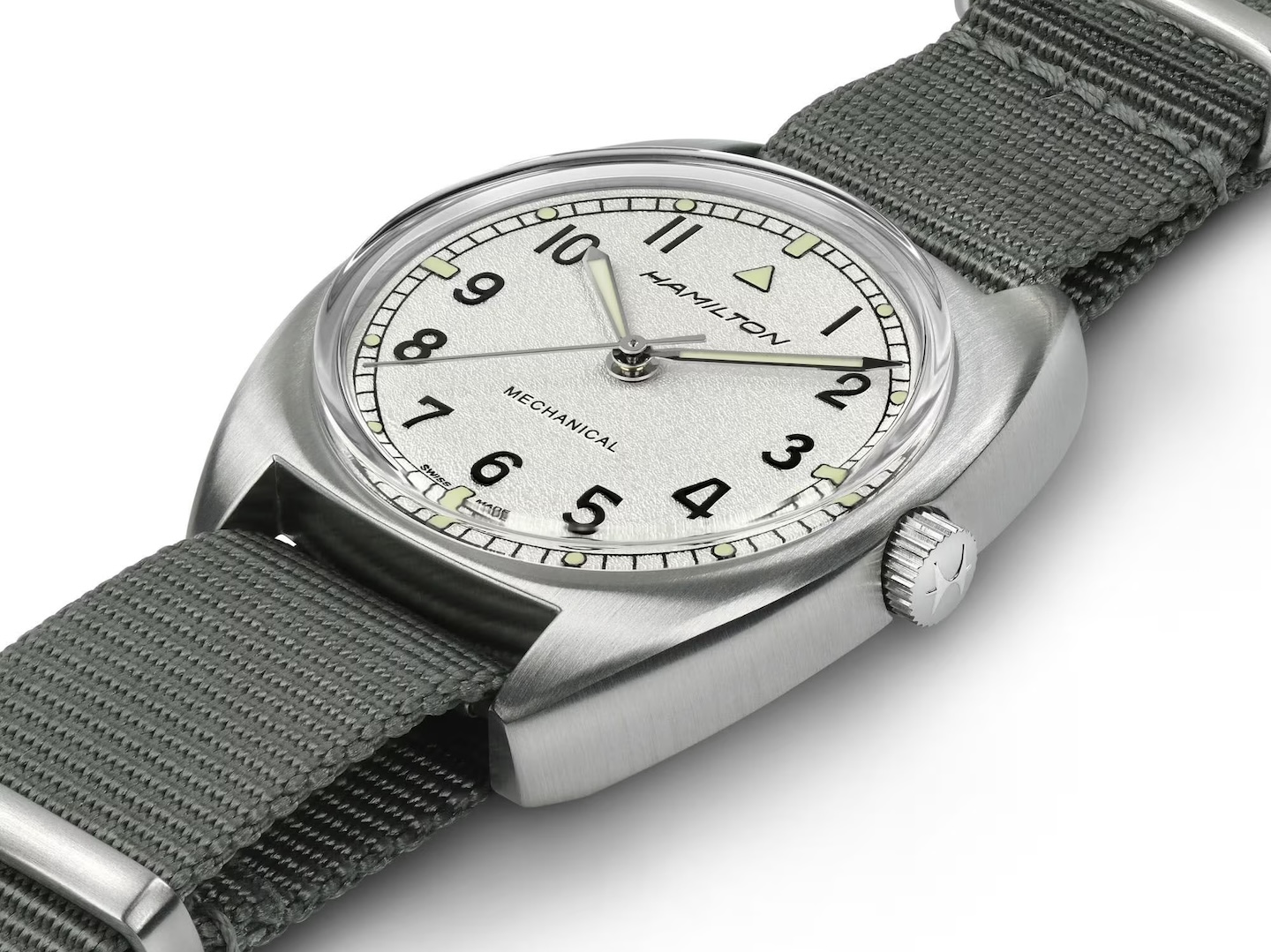
The Hamilton Khaki Aviation Pilot Pioneer Mechanical is a reissue of a 1970s Royal Air Force watch. Its compact case and straightforward dial reflect an era when military timepieces prioritized legibility over additional complications.
The asymmetrical stainless steel case measures 36 × 33mm, making it considerably smaller than many contemporary pilot watches. Large Arabic numerals, luminous hands, and a railroad-style minute track keep the display focused on timekeeping. The unusual case shape also gives the watch a recognizable appearance without relying on oversized proportions.
Price: $975
Where to Buy: Hamilton
Hamilton equips the watch with its manually wound H-50 movement, which provides approximately 80 hours of power reserve. Manual winding requires more attention than an automatic or quartz movement, but the extended reserve allows the watch to continue running for several days between winding sessions.
Mineral crystal and 100-meter water resistance round out the specifications. Its compact proportions suit buyers who find many modern aviation watches too large.
2. Laco Augsburg 42
German observation watches, commonly called B-Uhren, established one of the most recognizable pilot-watch designs. Their large numerals, triangular markers, and high-contrast dials were developed around the need to read the time quickly.
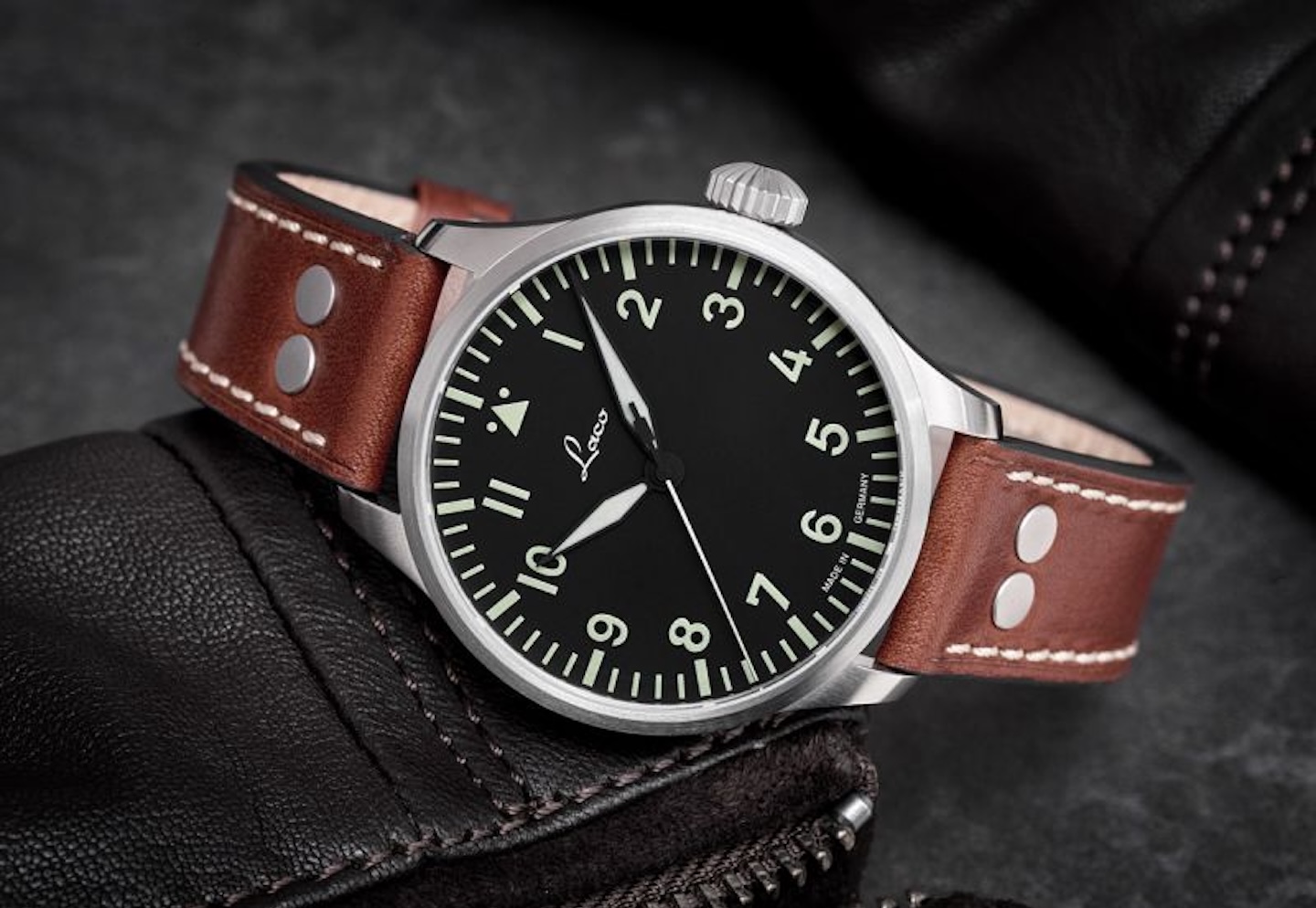
The Laco Augsburg 42 carries that design into a contemporary automatic watch. Its 42mm stainless steel case surrounds a traditional Type A dial with prominent Arabic numerals, luminous hands, and a triangular marker at 12 o’clock.
Price: $460
Where to Buy: Laco
The uncomplicated layout keeps the emphasis on timekeeping rather than decorative complications. Its appearance remains closely connected to historical German pilot watches without requiring the oversized cases used by some original observation instruments.
Laco equips the current Augsburg 42 with its Laco 2S automatic movement, based on the Miyota 82S0. The watch also includes sapphire crystal, a display case back, and a brown leather strap with rivets.
Its approximately 50mm lug-to-lug measurement is worth considering for buyers with smaller wrists. The substantial case dimensions are part of the traditional pilot-watch appearance, but they may not suit everyone.
3. Citizen Promaster Skyhawk A-T
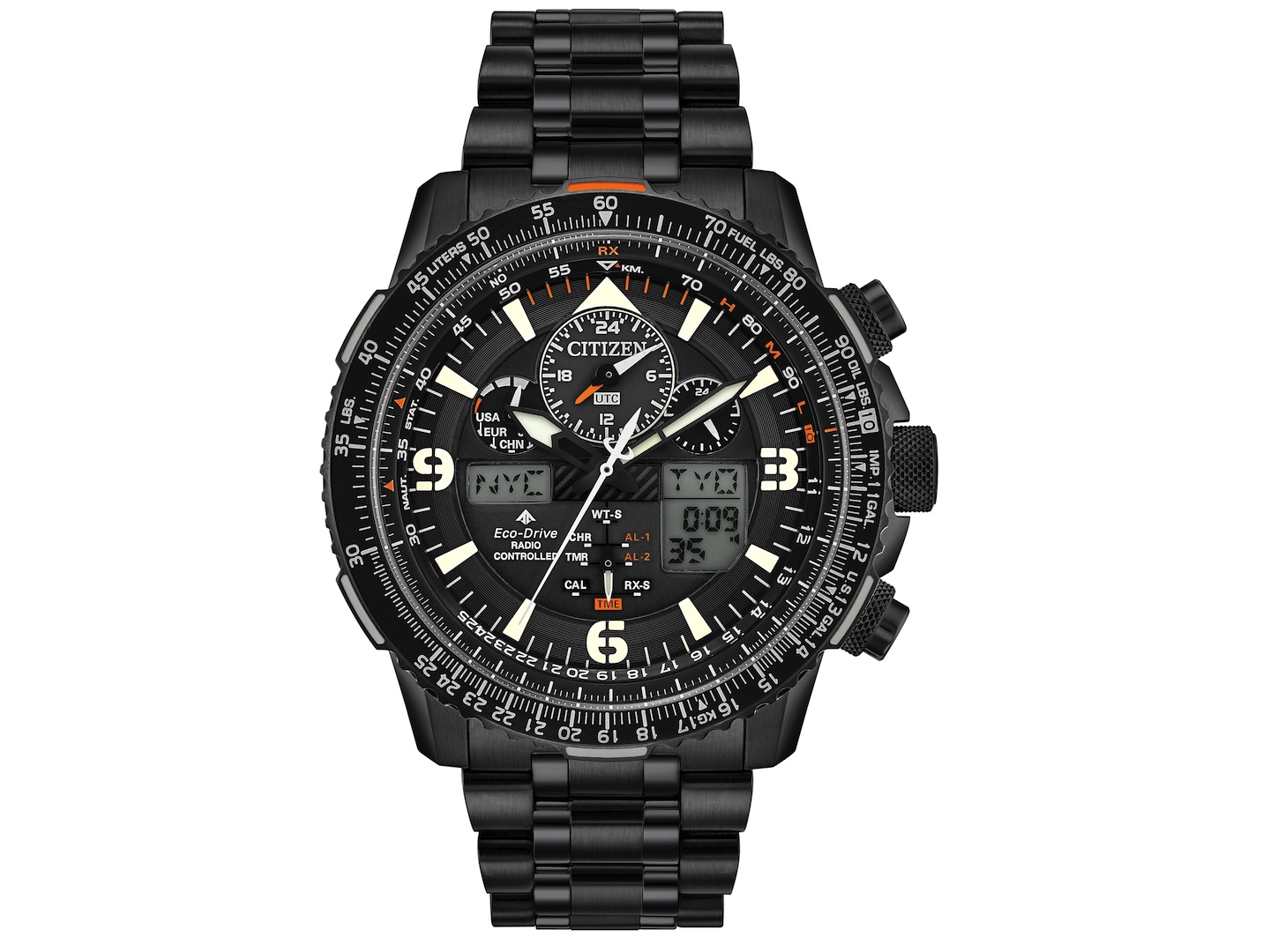
The Citizen Promaster Skyhawk A-T approaches aviation design through technical functionality rather than historical simplicity. Its analog-digital display combines conventional hands with multiple electronic functions, giving it an instrument-style appearance.
The JY8075-51E has a 45mm black ion-plated stainless steel case, a black dial, and a rotating pilot’s slide-rule bezel. Its functions include radio-controlled time synchronization, dual-time and UTC displays, a perpetual calendar, two alarms, a chronograph, and a countdown timer. A digital backlight and power-reserve indicator round out the instrument-style display.
Price: $636
Where to Buy: Citizen
The slide-rule bezel is particularly relevant to aviation watches because similar scales have historically been used for calculations involving speed, distance, time, and fuel consumption. Although modern aircraft use electronic systems for these tasks, the bezel remains a functional feature.
Citizen’s Eco-Drive technology converts light into electrical energy, reducing the need for conventional battery replacement. The watch also supports radio-controlled time synchronization in compatible reception areas.
The trade-off is complexity. Its crowded dial requires familiarity with the various displays, while the substantial case may not appeal to buyers who prefer smaller watches.
4. Longines Spirit Zulu Time 39mm
The Longines Spirit Zulu Time focuses on a practical requirement associated with aviation and international travel: keeping track of more than one time zone.
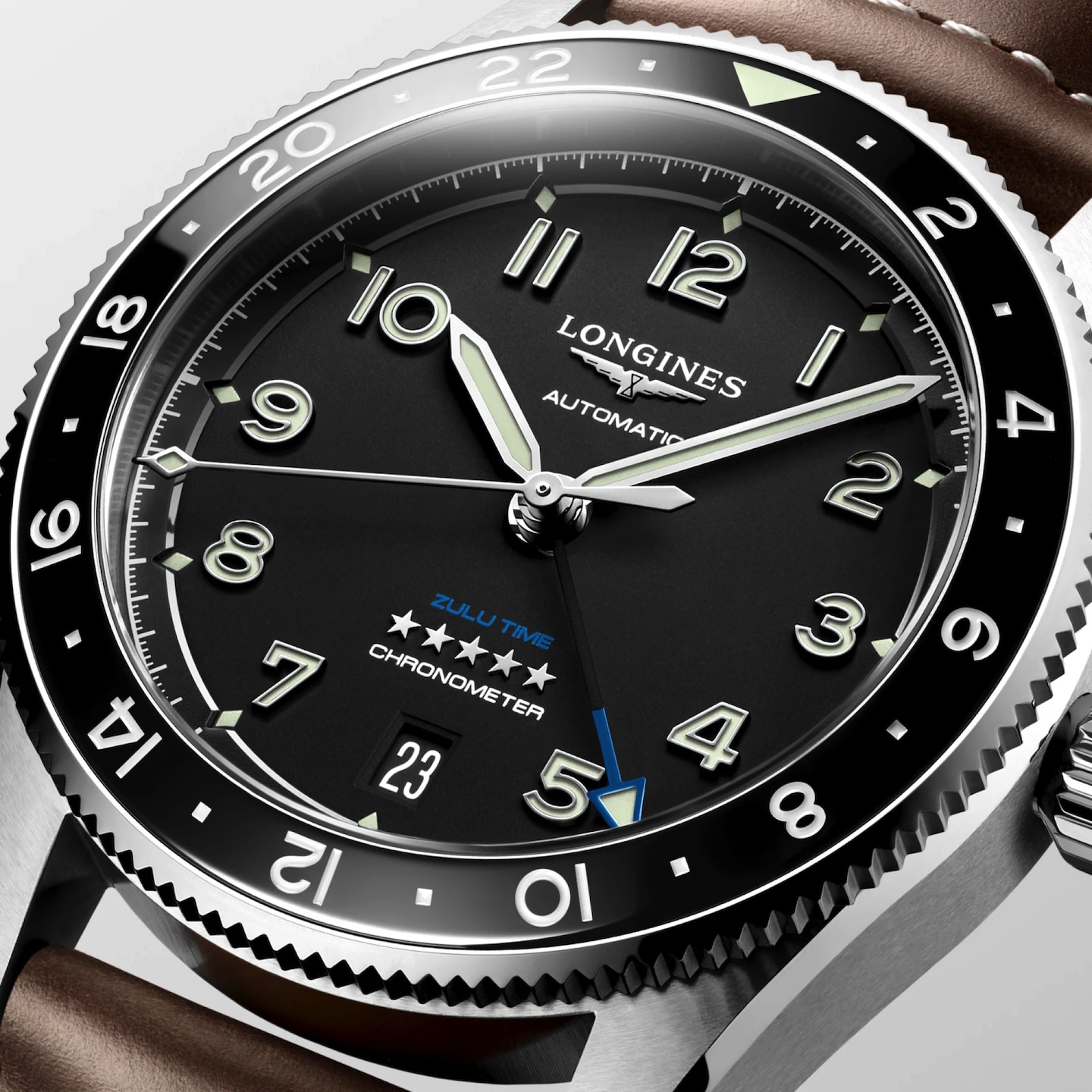
Its 39mm stainless steel case pairs with a bidirectional rotating bezel featuring a 24-hour ceramic insert. An additional GMT hand allows the wearer to monitor a second time zone, while the rotating bezel provides flexibility when tracking another location.
Price: $5,000
Where to Buy: Longines
The dial uses prominent Arabic numerals and luminous markers, maintaining the appearance of a traditional pilot watch without introducing unnecessary complications.
Inside is the automatic Longines L844 movement, which provides up to 72 hours of power reserve. The movement features a silicon balance spring and COSC chronometer certification.
Sapphire crystal and 100-meter water resistance add practical durability, while the relatively compact case makes the watch suitable for buyers who prefer smaller mechanical watches.
The GMT complication is particularly useful for frequent travelers who want to follow local time and a reference time simultaneously. Unlike a decorative aviation-inspired feature, it serves a purpose that remains relevant outside the cockpit.
5. IWC Pilot’s Watch Mark XX
The IWC Pilot’s Watch Mark XX takes a restrained approach to aviation design. Rather than relying on complicated scales or an oversized case, it emphasizes clear time markings and straightforward mechanical functionality.
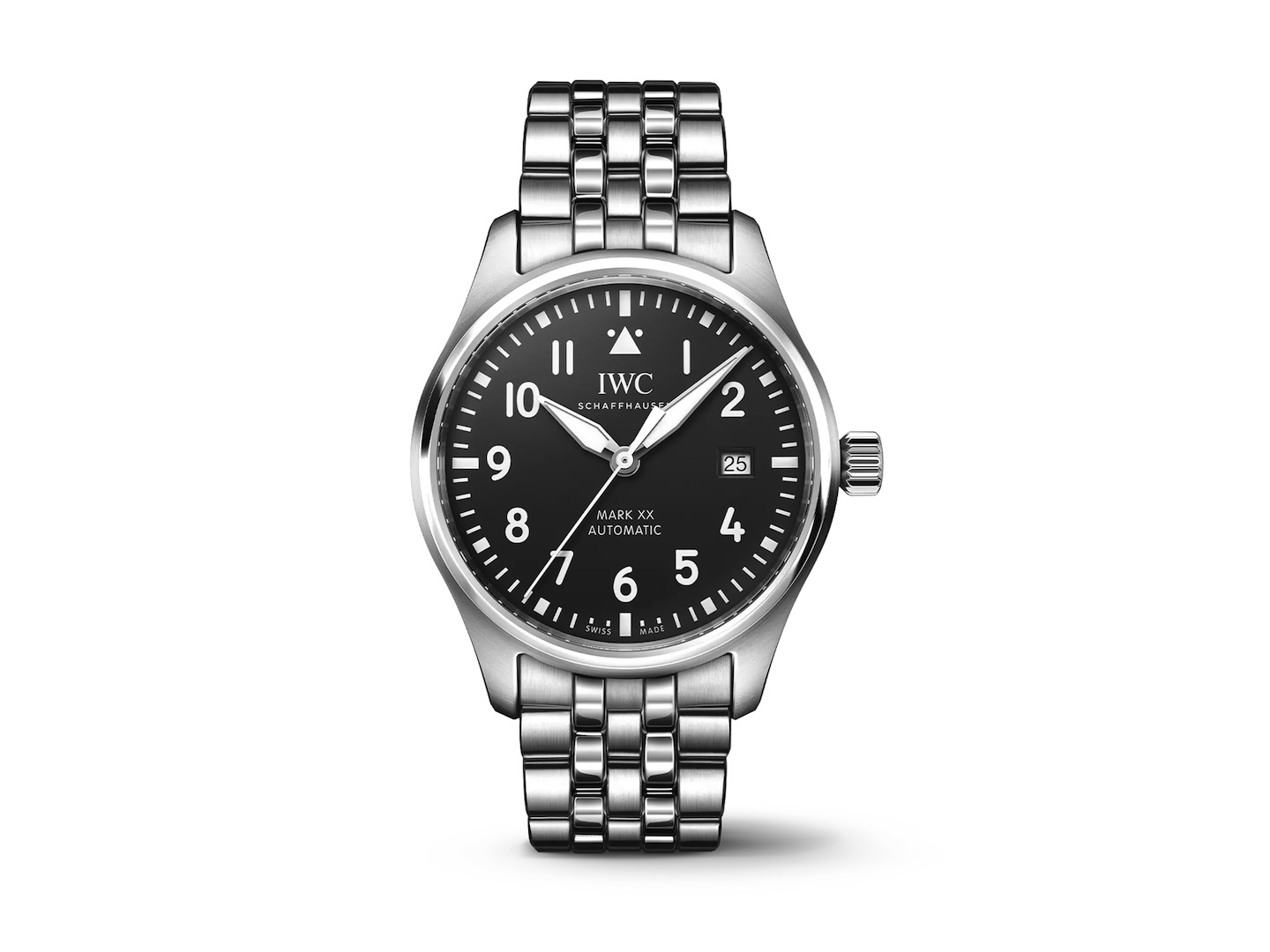
Its 40mm stainless steel case surrounds a dial with prominent Arabic numerals, luminous hands, and a triangular marker at 12 o’clock. These elements reflect the practical design priorities associated with historical military pilot watches.
Price: $5,250
Where to Buy: IWC
The Mark XX belongs to a collection whose heritage includes the Mark 11, developed by IWC for British Royal Air Force pilots and navigators in 1948.
Inside is IWC’s automatic caliber 32111, providing a 120-hour power reserve. The five-day reserve is useful for owners who alternate between watches, since the movement can continue running through several days without being worn.
The watch also includes sapphire crystal, a screw-down crown, a date display, and 100-meter water resistance. IWC secures the front crystal against displacement caused by sudden changes in air pressure.
These specifications make the Mark XX suitable for regular wear, although its luxury pricing places it well above more affordable aviation-inspired alternatives.
6. Bulova Lunar Pilot Chronograph
The Bulova Lunar Pilot connects aviation-inspired watch design with space exploration. Its historical background comes from a Bulova chronograph that was worn on the Moon during Apollo 15 in 1971.
The modern Lunar Pilot draws inspiration from that timepiece, combining a substantial stainless steel case with a chronograph layout and prominent timing scales.
The 43.5mm version includes sapphire crystal, luminous hands and markers, and a tachymeter scale. Its chronograph provides a 60-minute counter and a 1/20-second measurement function.

Price: $895
Where to Buy: Bulova
Bulova uses a battery-powered, high-precision quartz movement operating at 262kHz rather than a mechanical chronograph, eliminating the need for manual winding.
The watch’s substantial dimensions are worth considering, particularly for buyers who prefer compact cases. Its 50-meter water resistance also makes it more suitable for everyday activities than specialized water sports.
Although its historical connection is to spaceflight rather than conventional aircraft, the Lunar Pilot shares the functional chronograph design associated with aviation instruments.
7. Breitling Navitimer B01 Chronograph 43
The Breitling Navitimer has been associated with civilian aviation since its introduction in 1952. Its defining feature is a circular slide-rule bezel developed for calculations involving speed, distance, time, and fuel consumption.
The Navitimer B01 Chronograph 43 retains that distinctive arrangement, combining multiple calculation scales with chronograph subdials and a 43mm stainless steel case.
Its dial is more complicated than those of traditional military observation watches, but the additional markings reflect the model’s historical function. The slide-rule bezel remains operational rather than serving only as a decorative reference to aviation history.

Price: $10,700
Where to Buy: Breitling
Breitling equips the watch with its automatic Manufacture Caliber 01, providing approximately 70 hours of power reserve. The chronograph measures elapsed time, while the rotating bezel allows users to perform calculations using its printed scales.
Modern aircraft rely on electronic navigation systems, so most owners are unlikely to use the slide rule for actual flight planning. Nevertheless, the feature remains part of what distinguishes the Navitimer from simpler pilot watches.
The watch’s 30-meter water resistance is modest compared with many everyday sports watches, while its size and dial complexity may not appeal to buyers seeking simplicity.
Which aviation watch should you buy?
Choosing an aviation watch depends on how much functionality you want and which design traditions appeal to you. The Hamilton Pilot Pioneer and Laco Augsburg focus on historical simplicity, while the Citizen Skyhawk A-T offers a more technical interpretation with multiple electronic functions.
The Longines Spirit Zulu Time provides practical GMT functionality for international travel, while the IWC Mark XX emphasizes traditional styling and an extended mechanical power reserve. The Bulova Lunar Pilot brings aerospace history into the category, and the Breitling Navitimer retains the distinctive slide-rule design associated with civilian aviation.
Buyers should also consider the differences between movement types, case dimensions, and maintenance requirements. A mechanical chronograph may appeal to collectors, but a solar-powered quartz watch can be more convenient for someone who wants multiple functions with relatively little routine attention.
The best aviator-style watch is one that preserves the practical thinking behind aviation design without making everyday ownership unnecessarily complicated. Readability, comfortable proportions, and useful functions matter more than simply choosing the watch with the most cockpit-inspired details.