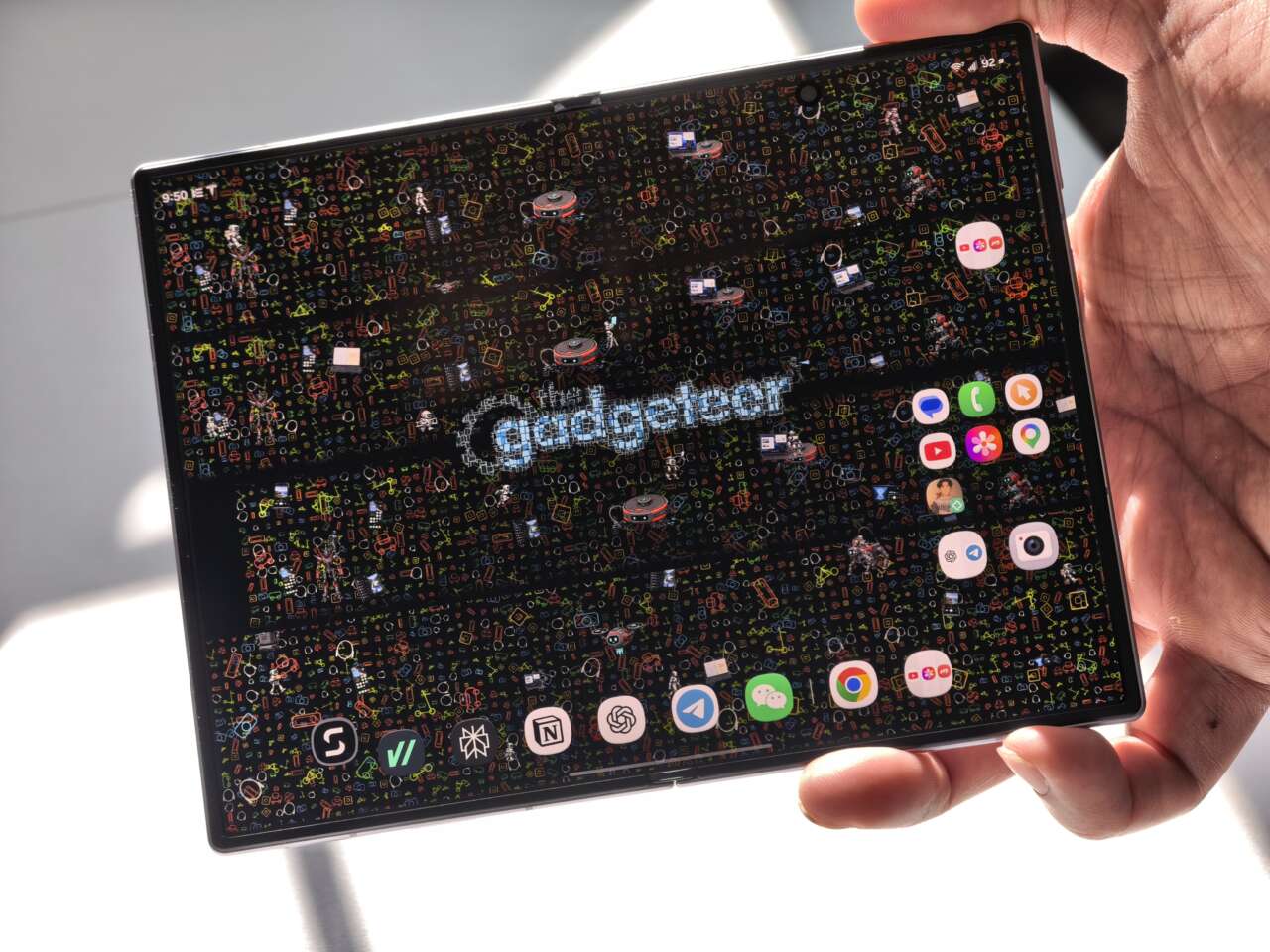
I use the Galaxy Z Fold8, and its design is still the one I prefer. Motorola’s leaked wide foldable has my attention because it takes the short, wide idea further. But the edges in those drawings bring back a design choice I’m not a big fan of, and the smaller body comes with some substantial trade-offs.
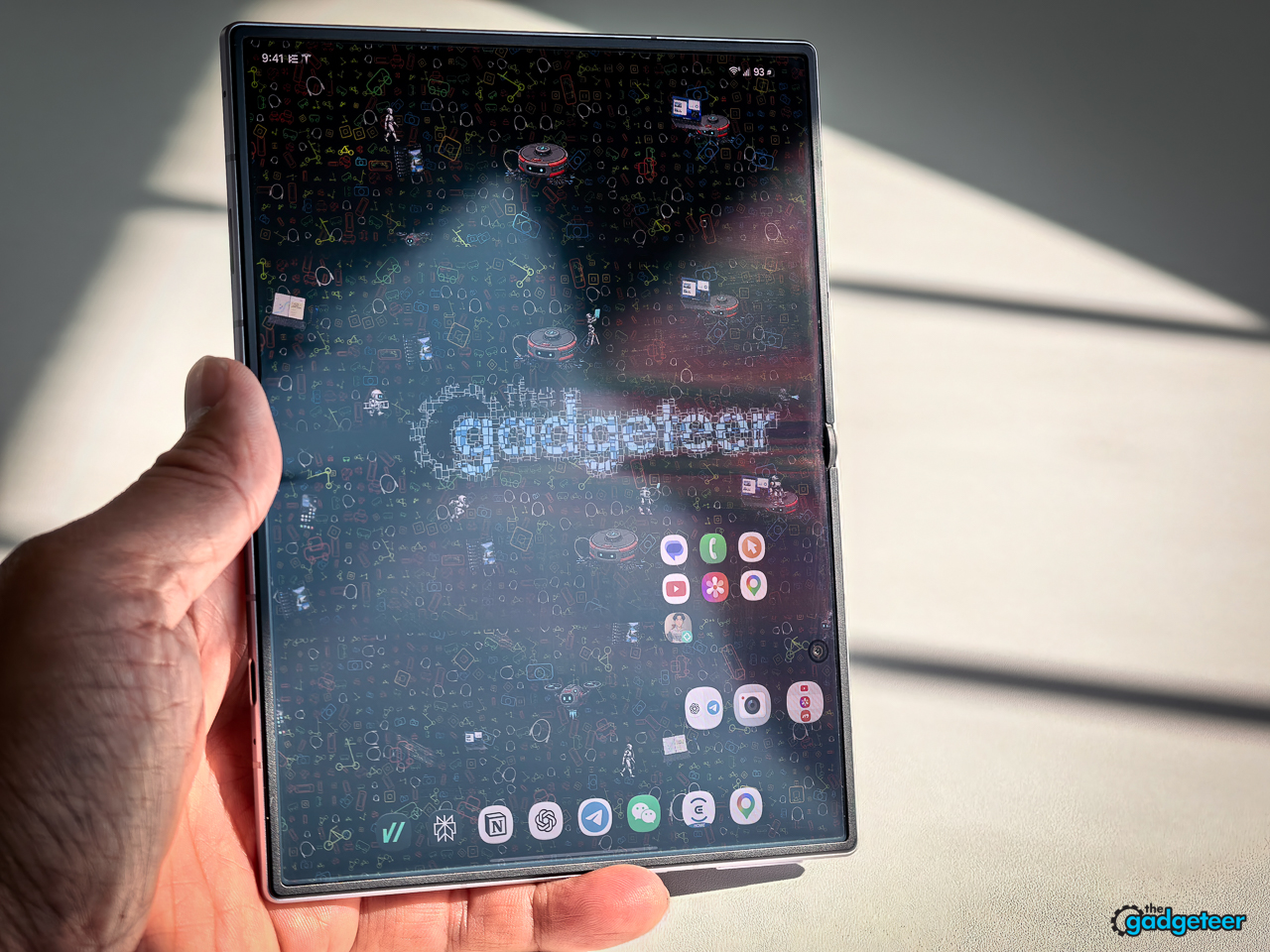
We’ve already covered what the Motorola Razr Flex leaks say. My question is what this phone would offer someone who’s happy with the standard Fold8. These are the five things I’m watching.
Motorola’s retail name and specifications remain unconfirmed. Android Headlines’ original specification report calls it “razr flex” internally, with “Parker” as its codename. This is a separate device from Motorola’s existing Razr Fold. The comparison below uses Samsung’s standard Fold8, not the Fold8 Ultra, and is based on leaks rather than hands-on time with Motorola’s phone.
1. I still prefer the Fold8’s symmetrical design
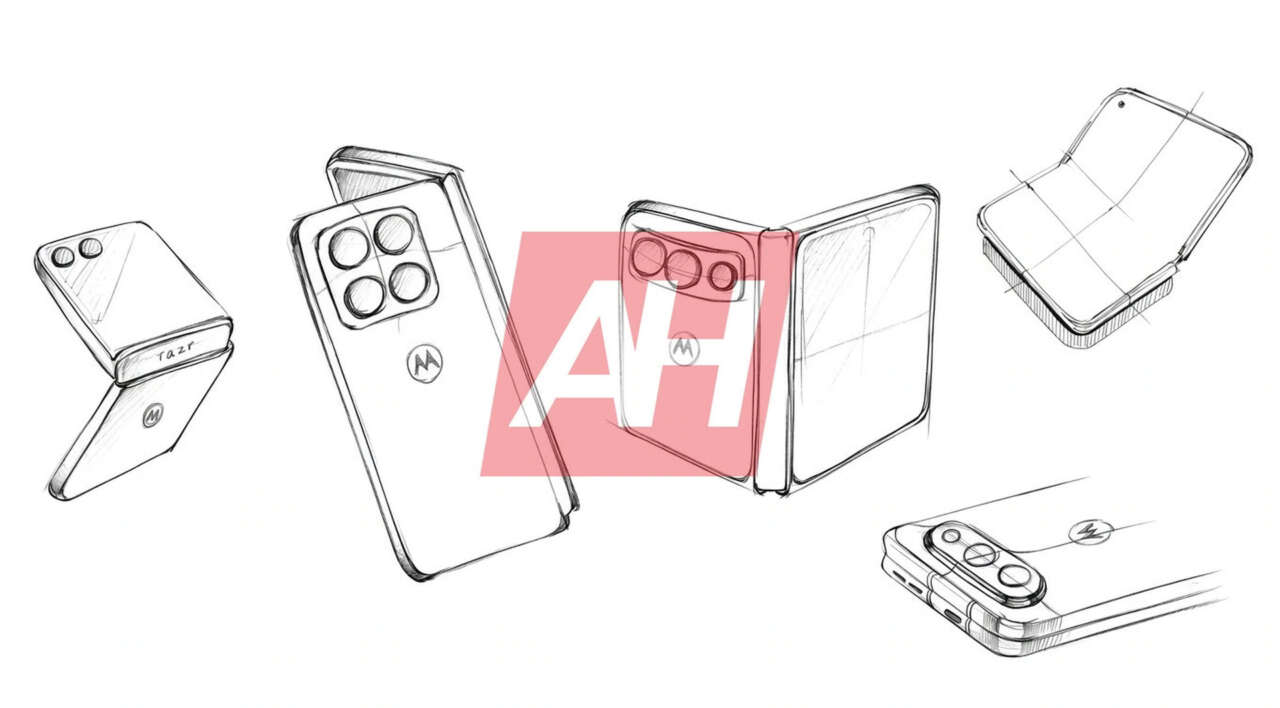
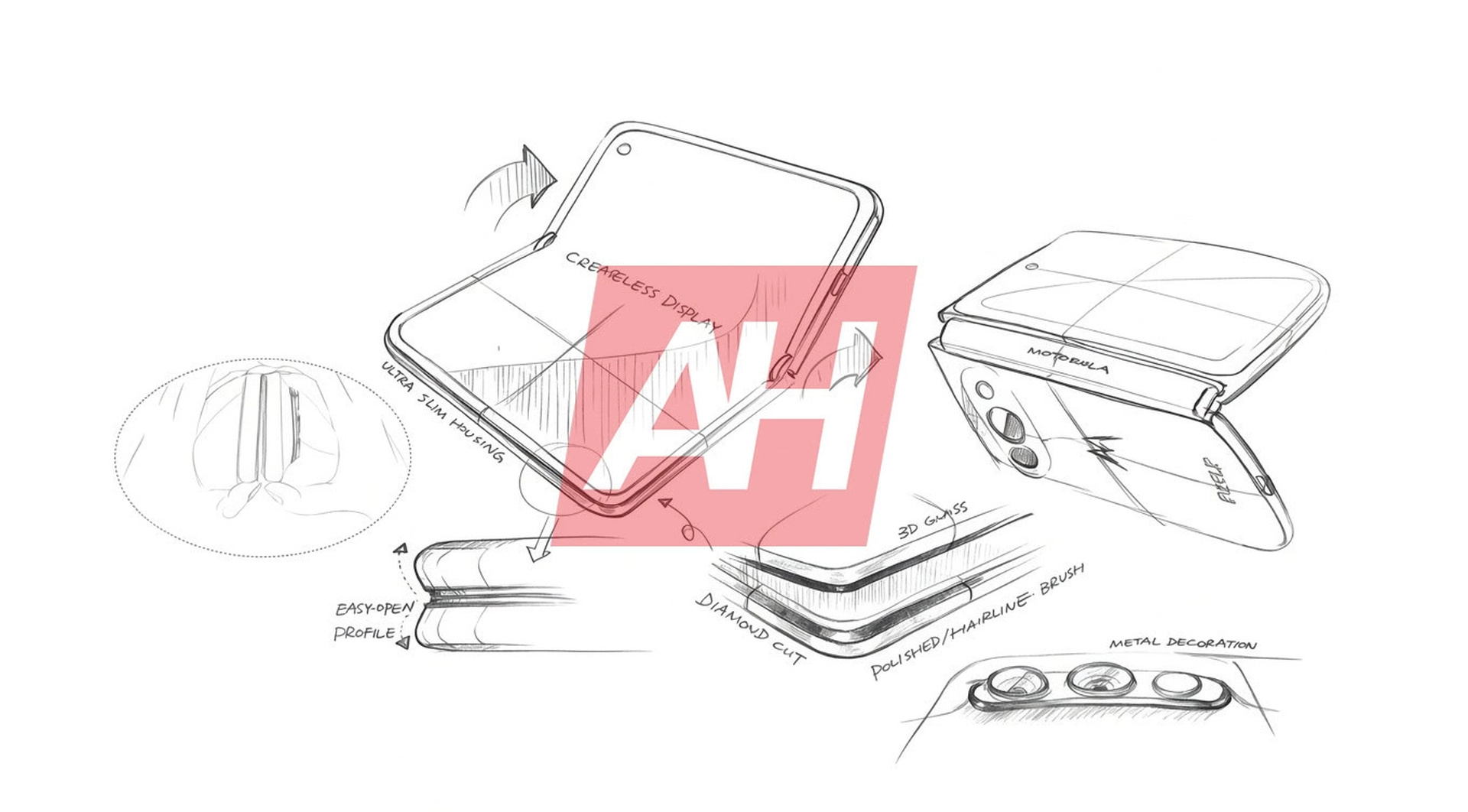
The way Motorola’s edges are drawn reminds me of Xiaomi’s wide foldable and Apple’s iPhone Duo. I’m not a big fan of that look. To my eye, the Galaxy Z Fold8 still has the most symmetrical design, and that’s the one I prefer.
That’s my reaction to the appearance. Whether Motorola’s shape feels better to open or hold is a different question. The detailed sketch shows a shaped opening edge and a horizontal camera bar, but a drawing can’t tell me how either feels in the hand.
Android Headlines received these original sketches from an anonymous source. The opening image compares Motorola’s proposed wide design with other folding styles; the drawing below takes a closer look at the frame. Labels such as “creaseless display” are unverified design claims. These are leaked sketches, not photographs of tested production hardware.
2. A smaller footprint asks me to accept more thickness and weight
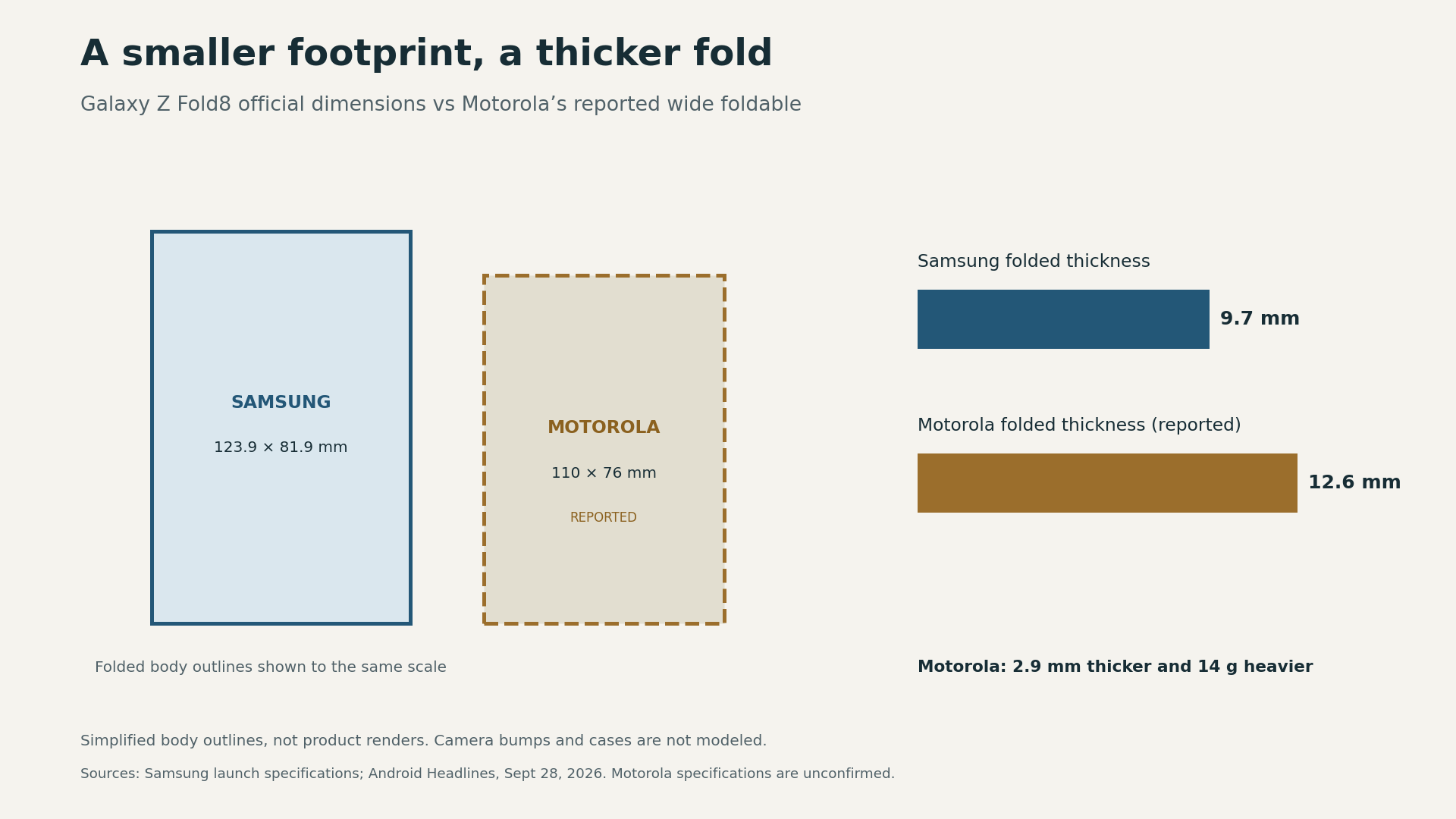
Motorola’s reported folded dimensions are 110 × 76 × 12.6mm. Samsung’s official Fold8 specifications put mine at 123.9 × 81.9 × 9.7mm. Motorola would be 13.9mm shorter and 5.9mm narrower, but 2.9mm thicker.
I can see the appeal of taking up less pocket height. In my Galaxy Z Fold8 review, I explained how much I value Samsung’s shorter shape and secure pocket feel. Motorola could take that advantage further, although its extra depth could matter in a snug pocket.
Weight gives me more pause. The reported 215g is 14g heavier than the Fold8’s 201g. Keeping the Fold8 light is part of what I like about it. I’d need to hold Motorola’s phone before deciding whether its smaller outline makes that added thickness and weight worthwhile.
This diagram shows the folded bodies at the same scale: Samsung in blue, Motorola in gold. These are simplified outlines, not product renders; camera bumps and cases aren’t included.
Galaxy Z Fold8 vs Motorola’s reported wide foldable
Samsung’s specifications are official; Motorola’s column is based on the leak.
| What to compare | Samsung Galaxy Z Fold8 | Motorola wide foldable, reported |
|---|---|---|
| Product type and status | Wide book-style foldable; released in the US | Smaller wide book-style foldable; specifications and retail name unannounced |
| Folded body, H × W × D | 123.9 × 81.9 × 9.7mm | 110 × 76 × 12.6mm |
| Unfolded body, H × W × D | 123.9 × 161.4 × 4.5mm | 110 × 149 × 5.8mm |
| Weight | 201g | 215g |
| Inner / cover display | 7.6-inch / 5.5-inch OLED; up to 120Hz on both | 6.92-inch / 4.97-inch OLED; up to 165Hz inside, cover refresh unconfirmed |
| Rear cameras | 50MP main + 50MP ultrawide; no telephoto | 50MP main + 50MP ultrawide; no telephoto reported |
| Battery capacity | 4,800mAh typical | 5,000mAh reported |
| Charging | 45W wired; 20W wireless | USB-PD wired, power unknown; 25W Qi2 wireless reported |
| Use-case advantage on paper | More screen space for reading, video and side-by-side apps; thinner and lighter body | Shorter and narrower closed body for people prioritizing hand fit and pocket height |
| Value case on paper | More display space in a thinner, lighter body | Smaller footprint; price needed before judging value |
| Availability | Available in the US since August 7, 2026 | Mid-December launch target reported; price and availability unconfirmed |
3. I want to know what I’d give up on both screens
The Fold8’s 5.5-inch cover display is already useful to me for typing and quick tasks. Then its 7.6-inch inner display gives me more room when I want it. That balance is a big part of why I like using this phone.
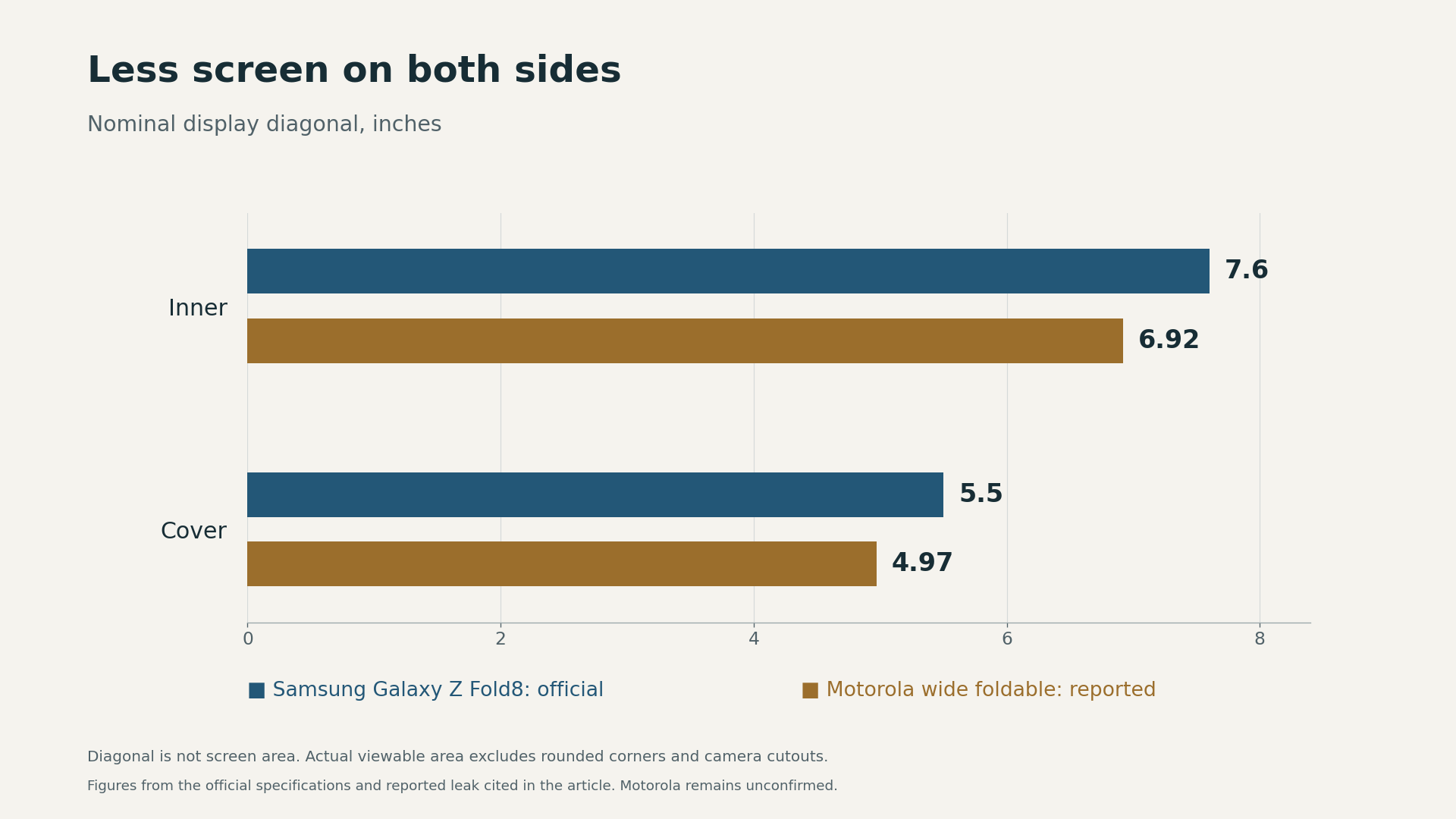
Motorola’s reported 4.97-inch cover screen and 6.92-inch inner screen would reduce both. A narrower closed body might be easier to grip, but I’d want to see whether the keyboard still feels comfortable and whether opening it gives me enough extra room for reading or two apps.
The chart compares diagonal measurements, not screen area. It shows the size difference without pretending that numbers alone can settle which display I’d rather use.
The reported 165Hz inner display is another detail worth watching against Samsung’s 120Hz ceiling. It could make supported content look smoother, but I’d put usable space and app behavior ahead of the refresh-rate number.
4. The camera bar doesn’t yet give me a reason to switch
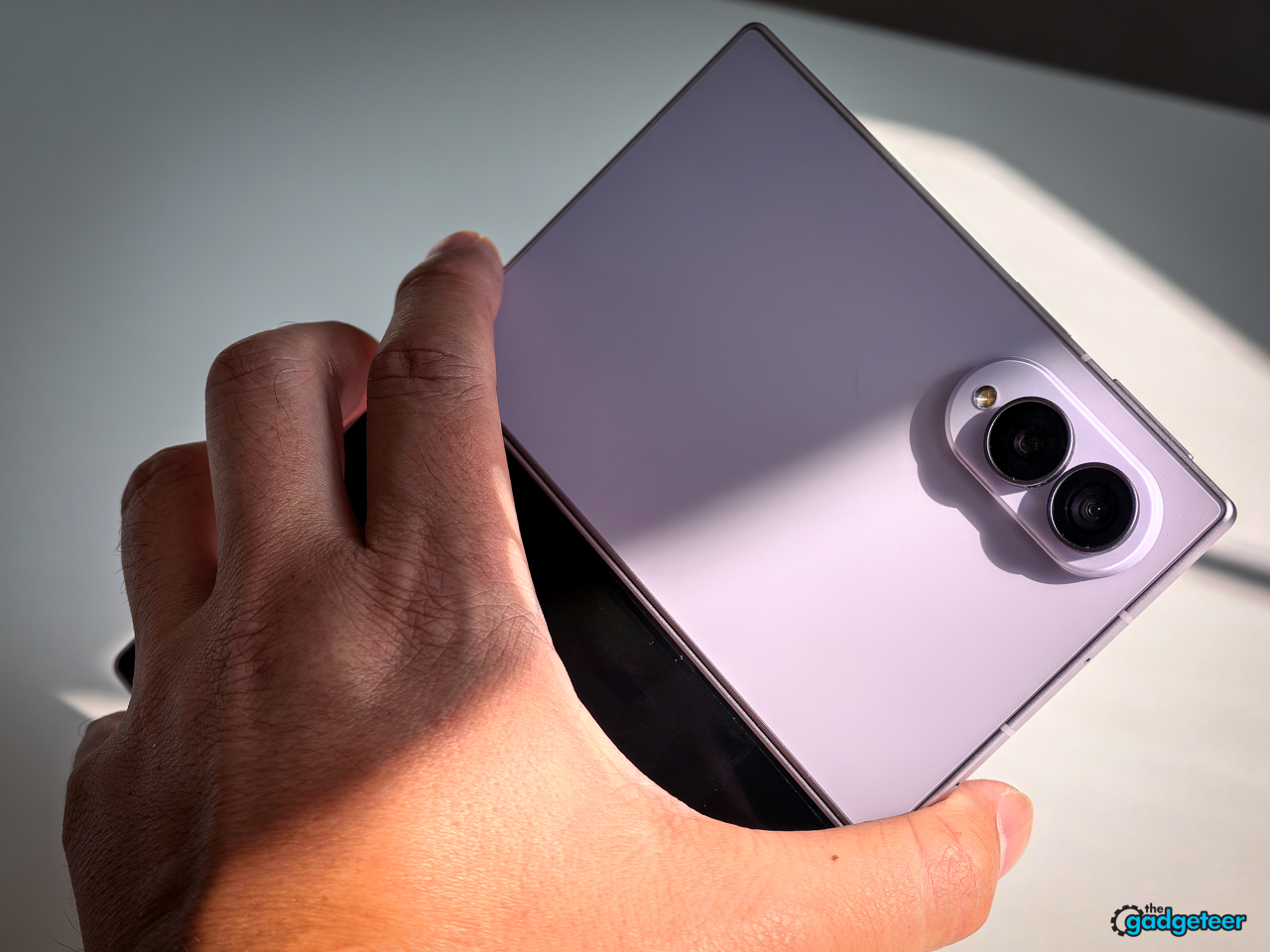
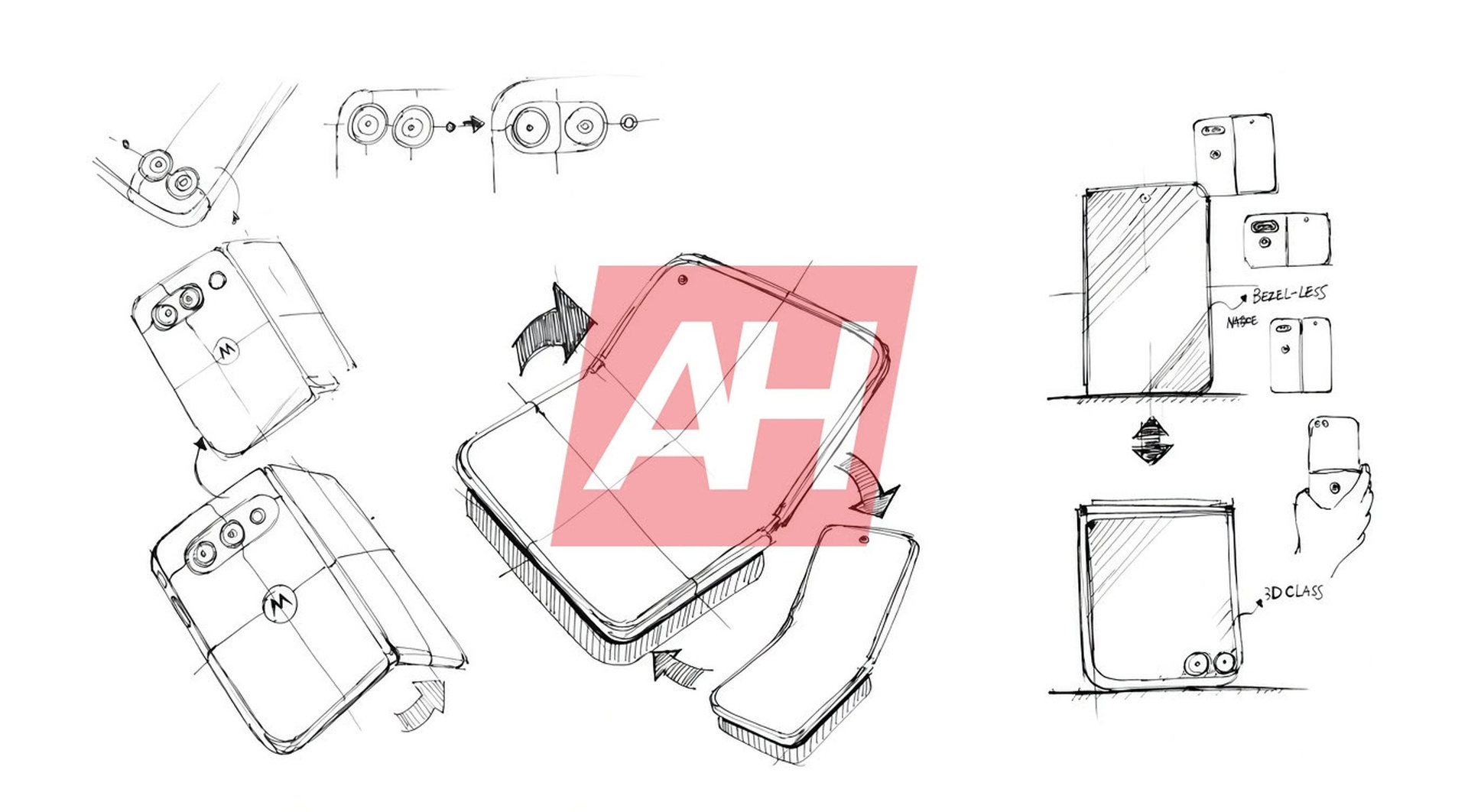
Motorola’s drawings make the camera bar a prominent part of the design. The leaked specifications are more familiar: a 50MP main camera and a 50MP ultrawide, the same headline arrangement as the Fold8. Neither has a dedicated telephoto camera in this comparison.
That doesn’t tell me they’ll take similar photos. Sensors, lenses and processing matter, and Motorola’s image quality is still unknown. Its reported 32MP selfie cameras also need more than a megapixel advantage to establish a better result.
The third sketch explores the camera bar and several folding views. It gives me another angle on the proposed shape, but no evidence of camera performance or how the weight is distributed.
5. Qi2 and price could make the practical case
The charging details are where Motorola might address something I miss on the Fold8. Samsung supports 45W wired and 20W wireless charging, but lacks built-in Qi2 magnets. The Motorola leak mentions 25W Qi2 wireless charging. I’d want confirmation of built-in magnets before counting that as an advantage for mounts or battery packs; the report doesn’t settle it.
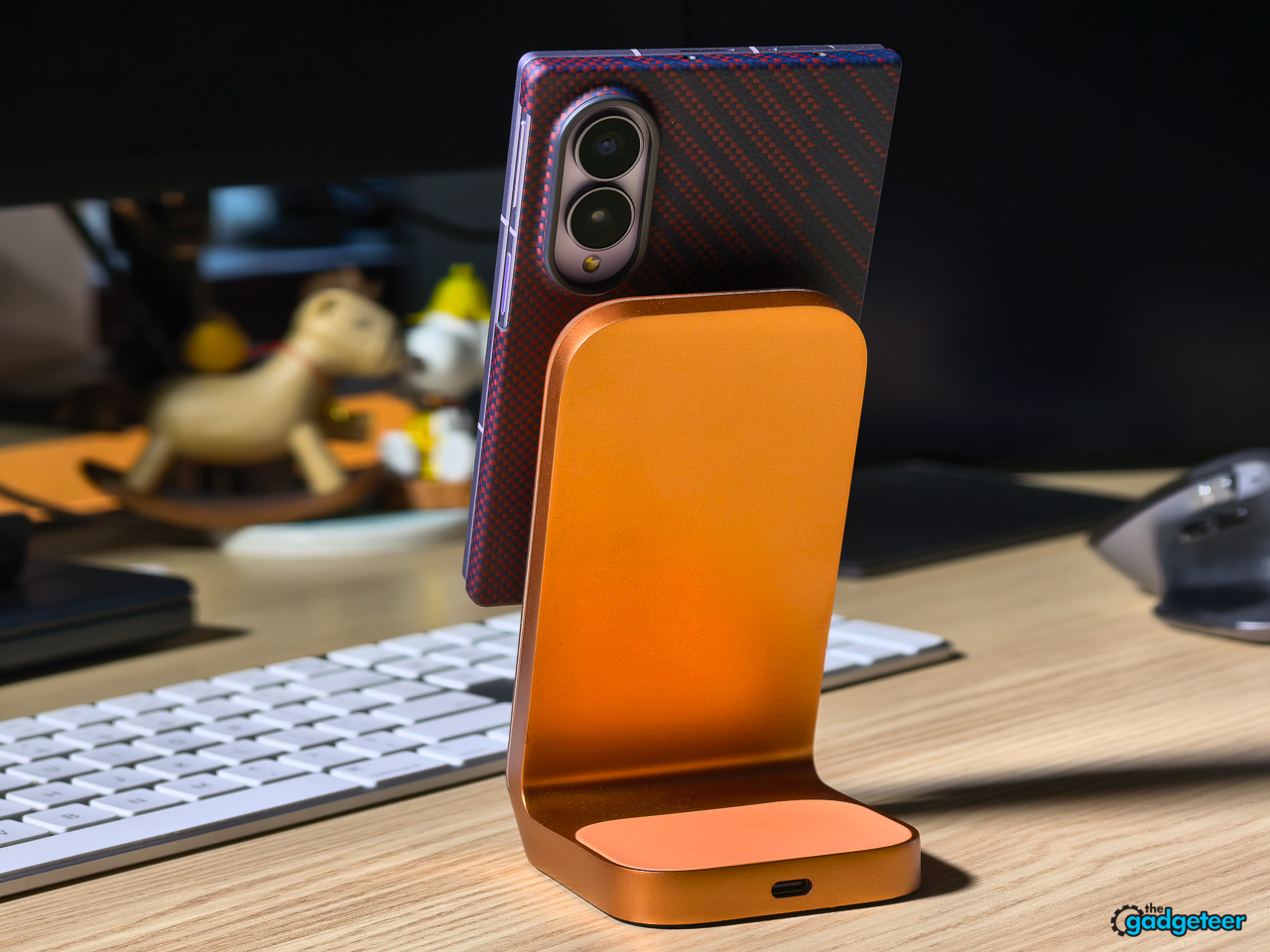
Motorola’s reported 5,000mAh battery is 200mAh larger than Samsung’s 4,800mAh battery. That sounds promising in a smaller body, but it doesn’t establish longer battery life. The processor is also unresolved: Android Headlines names Snapdragon 8 Gen 5 in its prose and Snapdragon 8 Elite Gen 5 in its table. I wouldn’t make a performance or efficiency comparison on that evidence.
Then there’s the price, which Motorola hasn’t announced. A mid-December launch is a reported target, not a confirmed date. Those details will determine whether this smaller design is a compelling alternative or simply a different set of compromises.
For now, I still prefer the Fold8’s symmetry, and its light body and useful screens are a combination I already enjoy. Motorola gives me a smaller shape to consider. What I want to find out is whether the smaller shape improves everyday use enough to justify the thicker, heavier body.