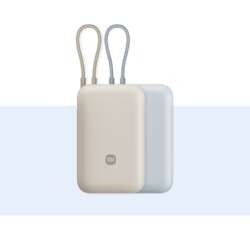
Power banks solve one travel problem but often create another: you still need to remember the charging cable. Xiaomi’s Power Bank 10000 (Integrated Cable) 2027 tackles that annoyance with a built-in USB-C cable. It also offers something less common in a basic portable charger: a way to inspect the power bank’s battery information and charging records on a computer.
Price: TBD
Where to Buy: Xiaomi
The product’s certification model is P15. It combines a 10,000mAh-class battery, up to 22.5W charging from a single output, three charging outputs, and expanded battery-safety features. The appeal is not raw speed. It is convenience plus more visibility into the battery’s condition.
The integrated cable removes one thing from your bag
The built-in USB-C cable works for both output and input. You can use it to charge a phone, then plug that same cable into a USB-C charger when the power bank needs recharging.
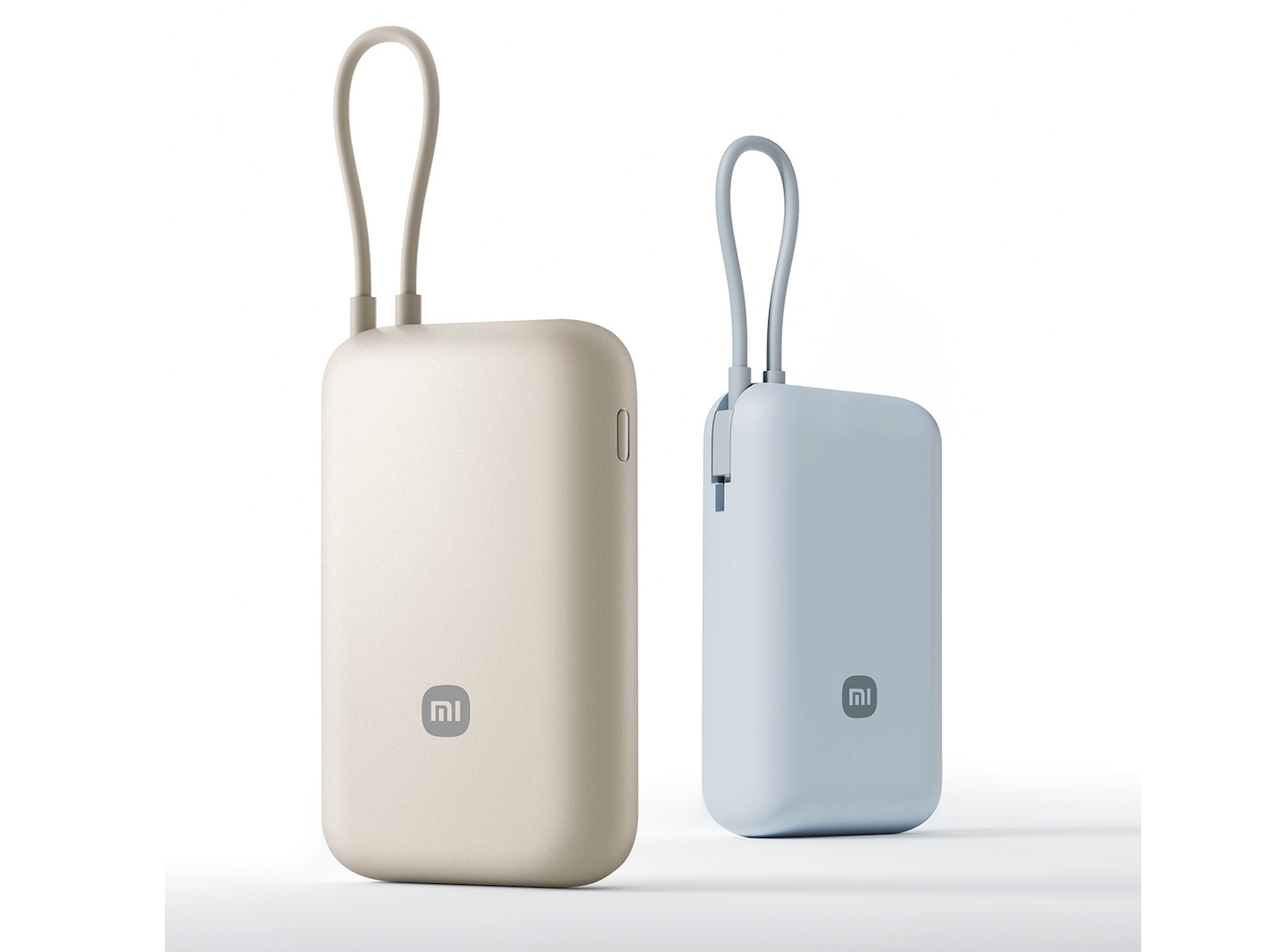 There is also a separate USB-C port that works for input and output, plus a USB-A port for older cables and accessories. Together, they give you three possible outputs without requiring a separate USB-C cable for your phone.
Xiaomi lists support for a broad range of devices, including USB-C Android phones, recent iPhones, tablets, Nintendo Switch systems, earbuds, and smart bands. Compatibility and charging speed will depend on the device.
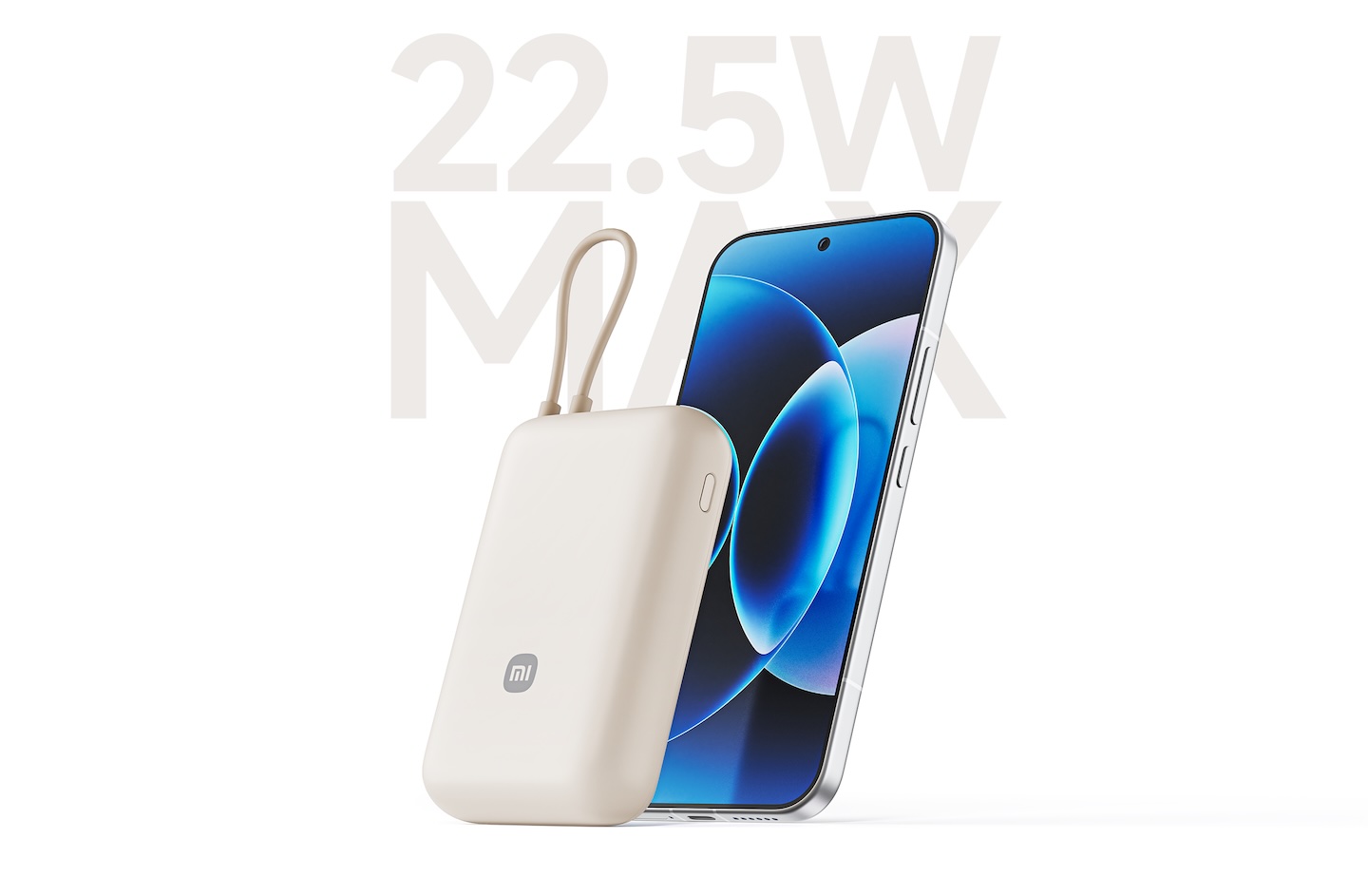
22.5W applies to one output at a time
The integrated cable, USB-C port, and USB-A port can each deliver up to 22.5W when used individually. That does not mean the power bank can deliver 22.5W through all three at once.
 When two or more devices are connected, Xiaomi says the theoretical combined output is 15W. If the devices demand more power than the power bank can provide, some may not charge simultaneously. Three-device charging is therefore useful for convenience, not for fast-charging several power-hungry devices at once.
10,000mAh is not the delivered capacity
The power bank’s two internal cells provide an equivalent capacity of 10,000mAh at 3.7V, or 37Wh. Xiaomi separately lists a rated output capacity of 5,500mAh at 5V/3A.
 Those numbers describe capacity at different voltages, so they aren’t directly comparable without converting both to watt-hours. The power bank also loses some energy while converting the cells’ voltage into USB output. That is why dividing 10,000mAh by your phone battery’s mAh rating will not give you a reliable number of recharges.
Under its laboratory conditions, Xiaomi says the power bank can recharge an iPhone 17 Pro Max, Pixel 10 Pro XL, or Galaxy S26+ about 1.4 times. Those are manufacturer test results, not Gadgeteer measurements; your results may vary.
Battery monitoring takes a few steps
The most unusual feature is Xiaomi’s smart battery management system. It lets you view battery information and health data, monitor charging data, and review abnormal charging records by connecting the power bank to a computer.
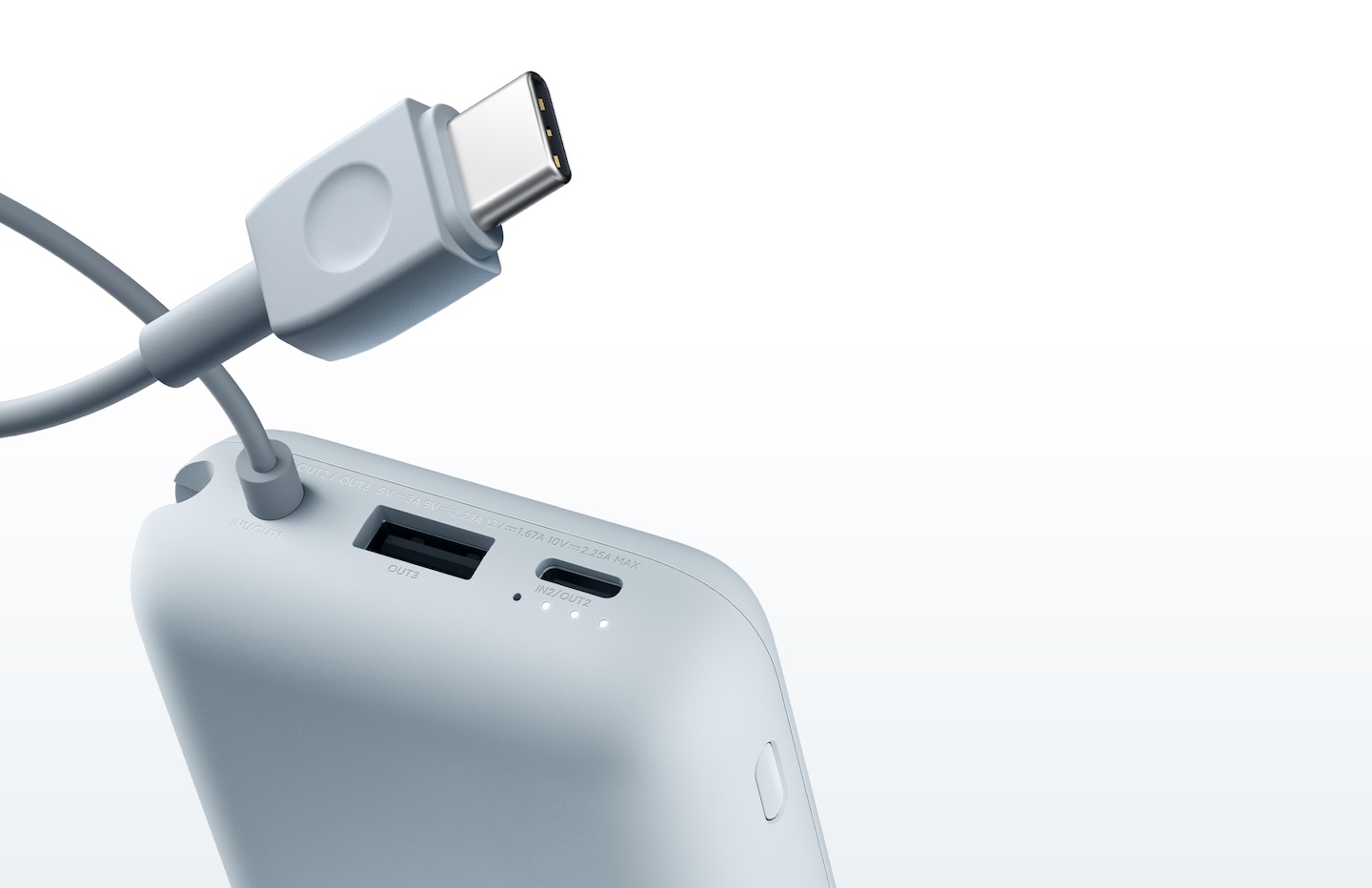 Only the separate USB-C port, not the integrated cable, supports the data connection. To enter data mode, press the power button eight times in succession. Then connect that port to a computer with a data-capable cable, open Chrome, and follow the instructions on Xiaomi’s power-bank management page.
That is less convenient than checking an app on your phone, but it gives owners more information than the indicator lights found on many portable batteries.
Xiaomi puts more emphasis on safety
Xiaomi advertises 16 safety features and smart protections. Its list covers conditions including overvoltage, overcurrent, excessive temperature, short circuits, port misuse, and battery compression.
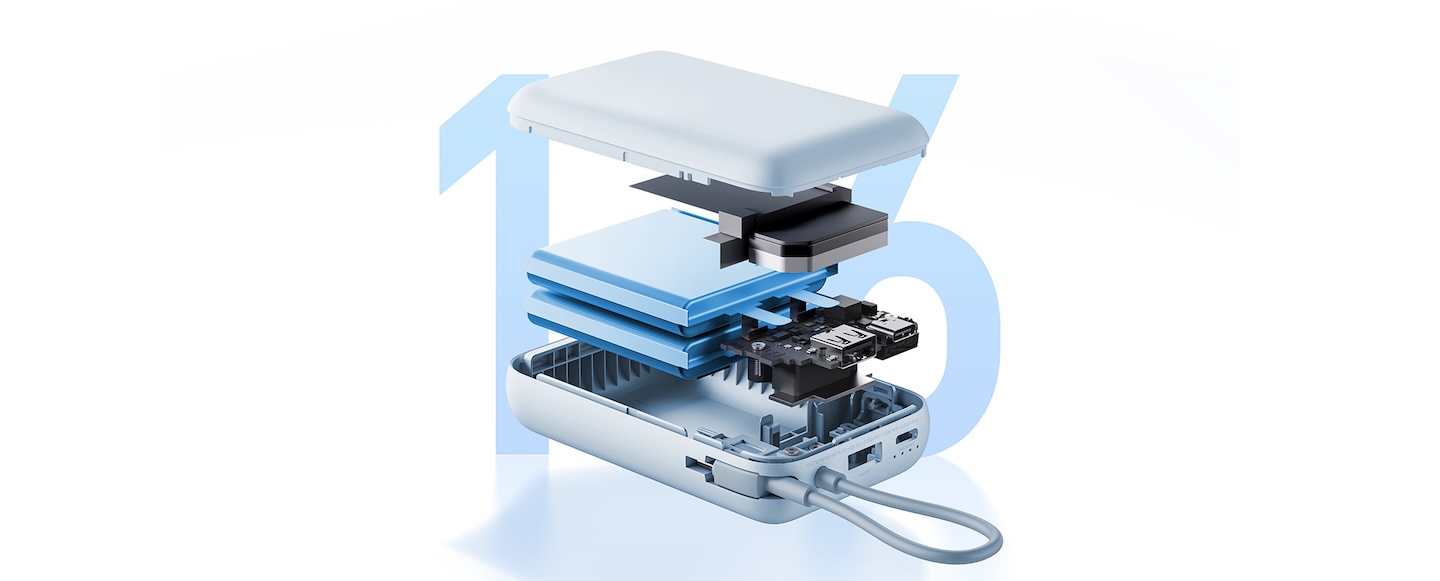 The company also publishes results from nail-penetration, compression, overcharge, high-temperature, and battery-ageing tests. Xiaomi says qualified independent third-party laboratories conducted those tests under standardized conditions.
Those results are more specific than a general safety claim, but they do not mean the power bank is immune to damage, defects, misuse, or ageing. They describe how tested cells or units performed under particular laboratory conditions.
Compact enough for everyday carry
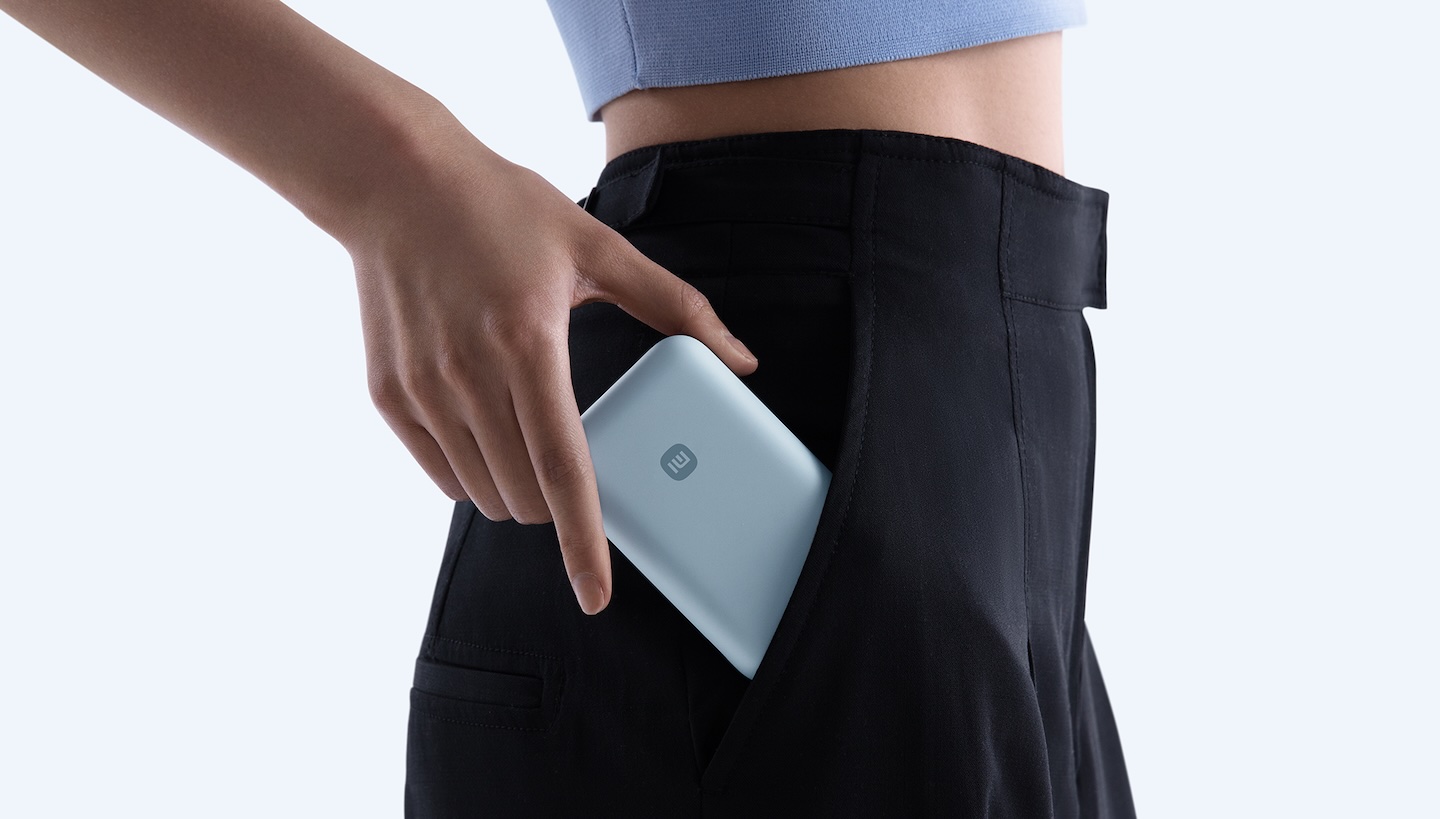
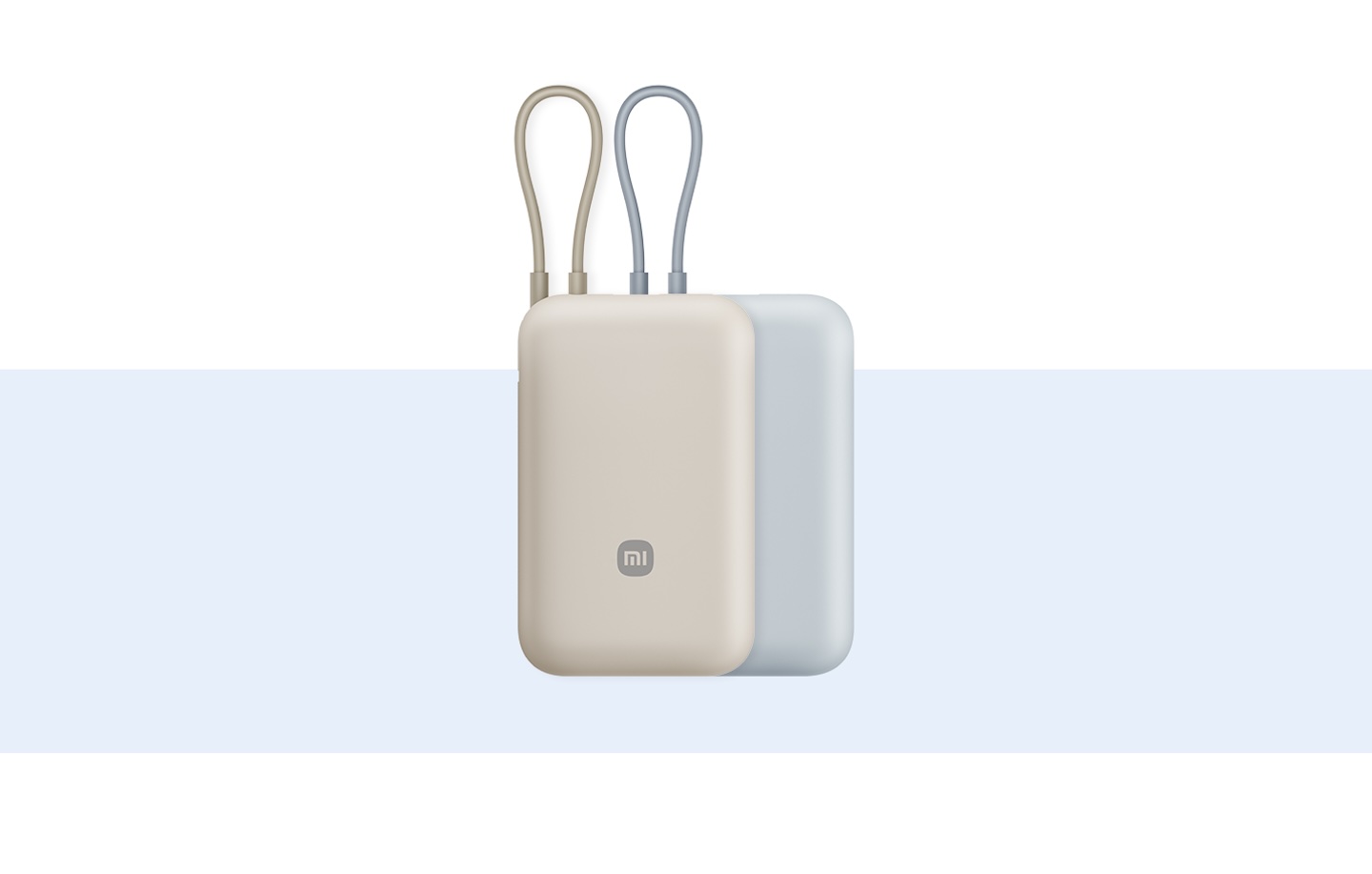
The P15 measures 105.2 × 65.2 × 26.9mm, excluding the integrated cable, and weighs approximately 231.5 grams. It comes in Light Coffee and Grey Blue, with a PC+ABS housing.
For accessories such as earbuds and smart bands, pressing the power button twice enables a low-current charging mode.
 Its 37Wh energy rating is below the commonly referenced 100Wh airline threshold. Xiaomi says to carry the power bank in cabin baggage, not checked baggage, and not to use it during the flight. Check your airline’s specific rules before traveling.
Who is it for?
The Xiaomi Power Bank 10000 (Integrated Cable) 2027 makes the strongest case for someone who values convenience and battery information more than outright charging speed. The built-in cable removes one accessory from your bag, while the USB-C and USB-A ports add flexibility. Computer-based battery monitoring offers another reason to consider it, provided you do not mind the setup steps.
Its limits are equally clear: 22.5W is the maximum for a single output, and charging multiple devices drops to a shared 15W ceiling. It is not a laptop-focused power bank or the best fit for fast-charging several devices simultaneously.

Price: TBD
Where to Buy: Xiaomi
For everyday phone charging, commuting, and travel, though, the combination of a built-in cable, three outputs, and inspectable battery data makes this model more than a cosmetic refresh.