Qualcomm covered my trip to Maui for Snapdragon Summit.
Qualcomm put smart glasses inside its AI-agent plan during the Summit’s day-two Personal AI keynote. Ziad Asghar described a wearable that can sense what’s around you, understand your intent and respond while you’re still in the moment. Google then said its coming Gemini eyewear from Gentle Monster and Warby Parker will run on Snapdragon AR1. Qualcomm also showed a local visual AI interaction that it said worked in airplane mode.
The key idea running through the Summit is an AI agent, not just a device waiting for a question. An agent can use context to move a task forward, and the important boundary is what it may do without asking first. Qualcomm has now described what acting could look like on glasses, including music and a restaurant reservation. Those are keynote demonstrations and scenarios, not my independent test of a finished retail product.
Liquid AI’s memory demo ran on separate Snapdragon hardware, not these glasses. The day-two master feature explains how Qualcomm wants that context to travel between devices; the question here is what a pair of glasses can actually see, hear and do.
That is the lens for Asghar’s tour of hardware, smaller AI models and partners. Qualcomm isn’t announcing one pair of glasses for everyone. It is providing the foundation for several kinds of eyewear, while partners decide what to build and how much authority to give the agent.
Why Qualcomm wants more AI in the frame
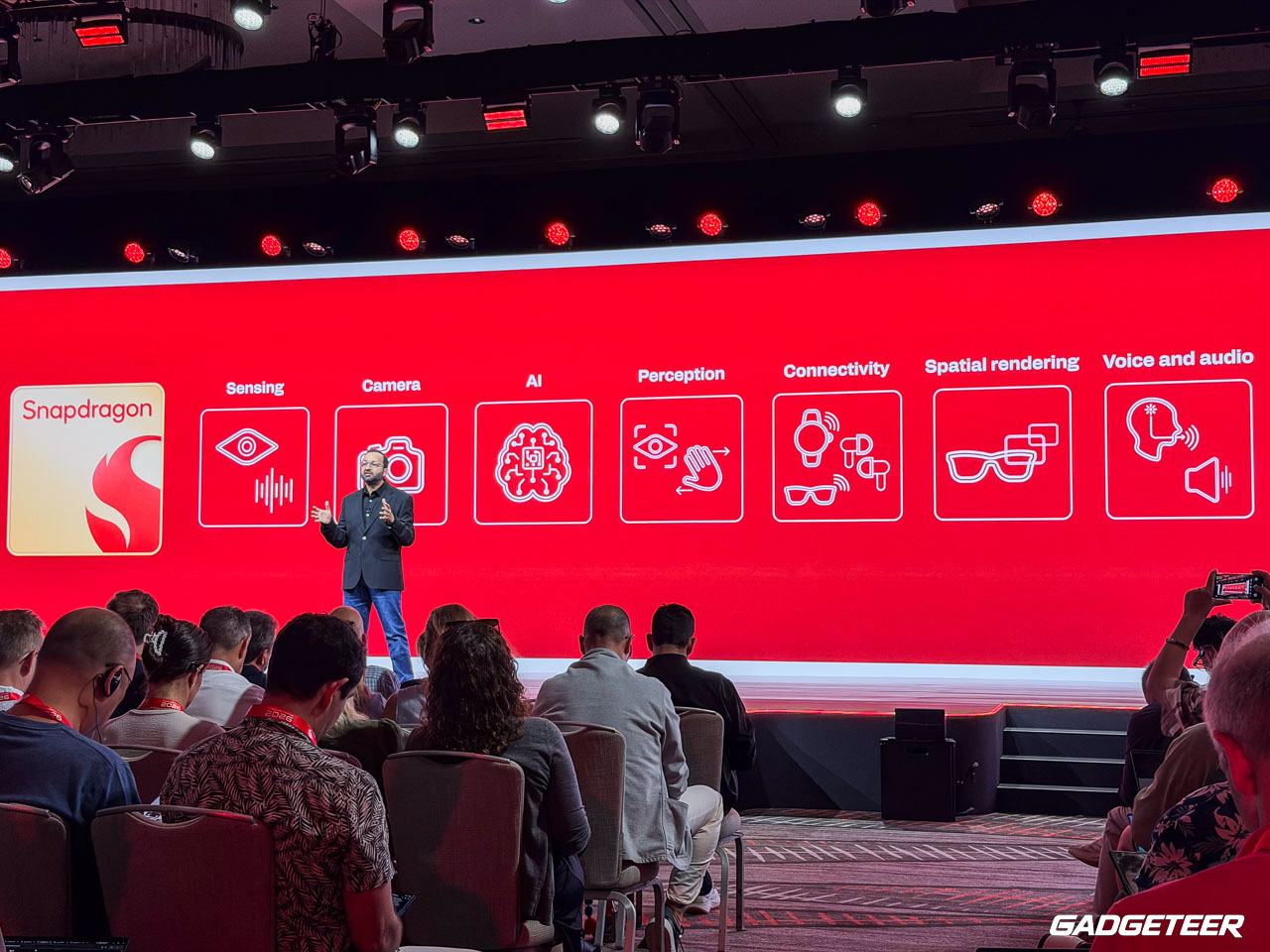
Asghar began with a familiar shift: keyboards and mice helped make PCs useful, and touch changed phones. His argument was that an AI agent you wear needs a more natural way to receive context and intent. The phone remains a hub, but glasses can bring the agent closer to what you’re looking at and respond through sound or a display.
He walked through the pieces Qualcomm believes are needed. A low-power sensing system can keep track of relevant context without waking every part of the device for every small event. A camera and image processor supply visual information. Qualcomm’s AI processors handle work at different levels of demand, while microphones and audio let the wearer ask a question and hear the answer. Asghar also discussed micro-power Wi-Fi, cloud connections and spatial rendering as parts of a broader wearable platform. That was a platform tour, not a specification sheet for every pair of glasses that will use Snapdragon.
The most useful point in that tour was local processing. Qualcomm described a visual AI demonstration in which the AI model ran on the glasses in airplane mode. With no phone in hand and no screen to work through, the wearer could ask about something in their surroundings and receive a spoken response. The keynote presented that as a way to make information easier to access in the moment, including for someone with impaired vision. It was a demonstration of a capability, not a test of a finished retail product.
Local AI could reduce the delay of sending a question away and waiting for an answer. It could also mean some information stays on the device. But “on-device” during one demo doesn’t tell us which requests a finished product will process locally, what it may save, or when it will call an online service. I want those choices to be clear when the glasses reach customers.
Smaller models are part of the plan
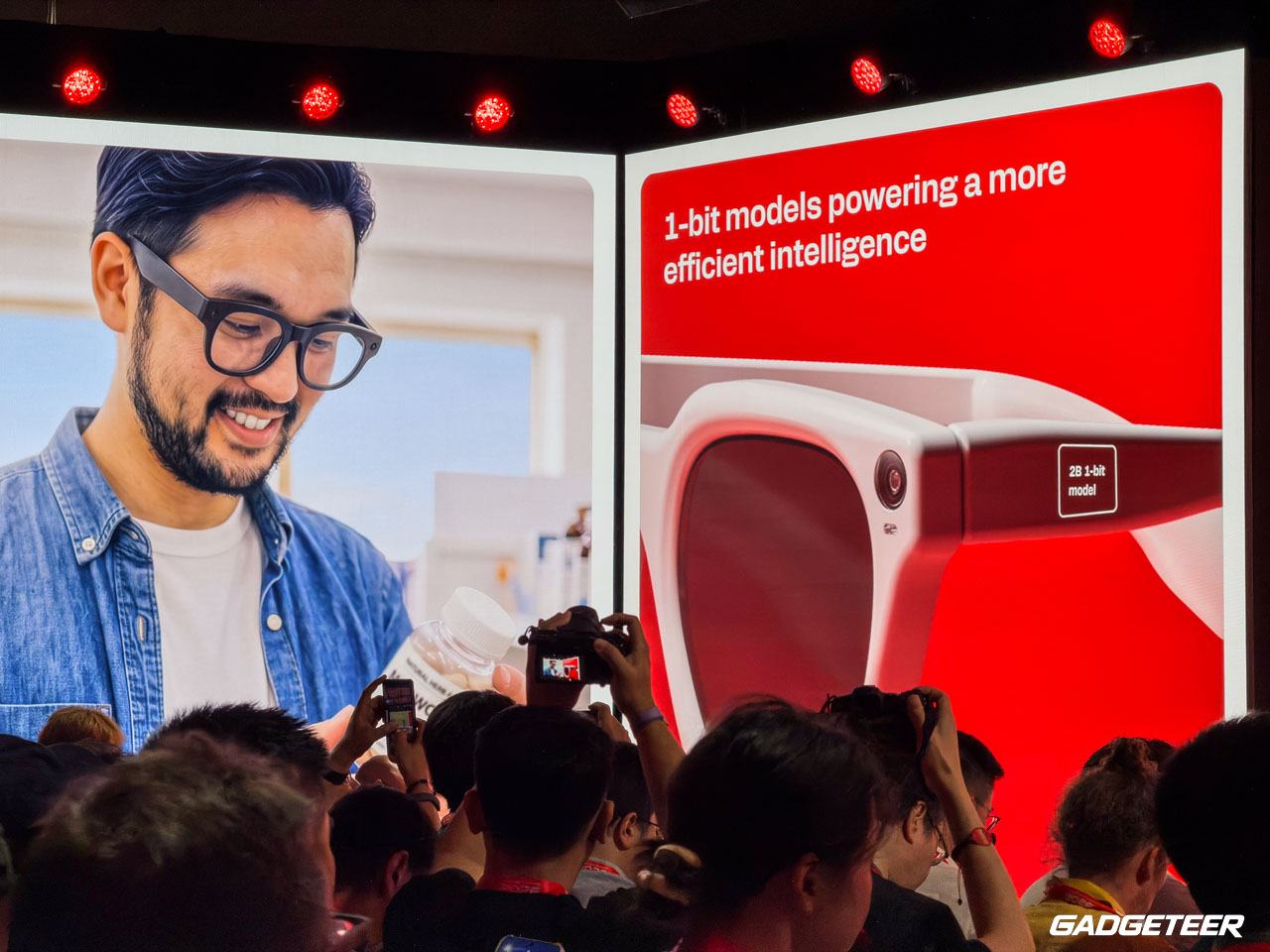
Asghar pointed to PrismML’s smaller 1-bit AI models as a way to fit more useful processing into glasses with tight memory and battery limits. That’s a platform possibility, not a promise that every Snapdragon frame will use the same model.
That still leaves a lot of work for the company making the glasses. It has to balance the camera, microphones, battery, heat and fit with whatever AI experience it wants to provide. Qualcomm spoke about real-time translation and visual AI as possibilities enabled by the platform. The keynote didn’t establish that every partner’s glasses will offer those functions or use PrismML’s model.
From answering to acting
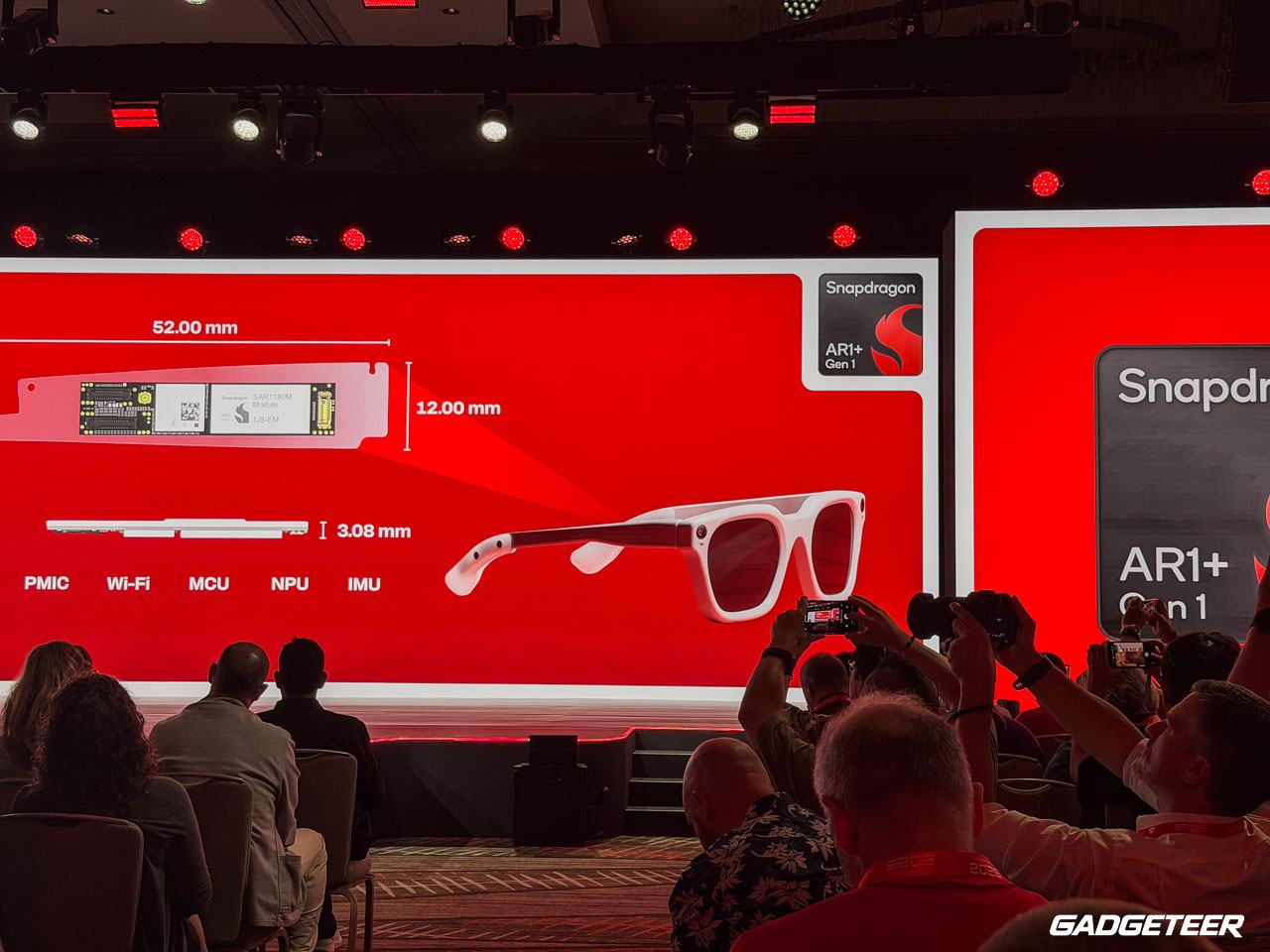
Qualcomm’s software presentation finally put a real task behind the AI-agent pitch. It revisited Snapdragon START, a program meant to help brands build personal AI devices, starting with smart glasses. Qualcomm described a small hardware module based on Snapdragon AR1+ and a software stack that links the glasses, a companion phone app and cloud services. That structure lets a brand choose which pieces of an experience run in the frame and which need a phone or online service.
The onstage scenarios went beyond asking a question. You could ask the glasses to play a favorite artist and have music start through SoundCloud. Or you could say you’re hungry and have the agent use Yelp to find and book a restaurant. The useful distinction is the second step: an AI agent has to connect the request to an app and carry out an action. Qualcomm said attendees could try these experiences on glasses at the Summit, but I haven’t tested the full flow myself.
Qualcomm also said START lets brands choose among AI models while giving those models a shared memory, so a change in model doesn’t force the wearer to explain the same request again. The company promised visibility into what the system remembers and shares. Those are design goals from the keynote, not a privacy setting I’ve inspected on a retail pair. I want to see whether deleting a memory or limiting an app’s access is as straightforward as asking the agent to play music.
That makes permission the question I keep coming back to. Starting a song is one thing. Booking a table on my behalf is another. I’d want to know what the agent chose, whether it understood the time and location, and where I get a chance to confirm before it commits. An AI agent can save effort only if it makes those decisions visible enough to trust.
A glasses maker brings a different reality check
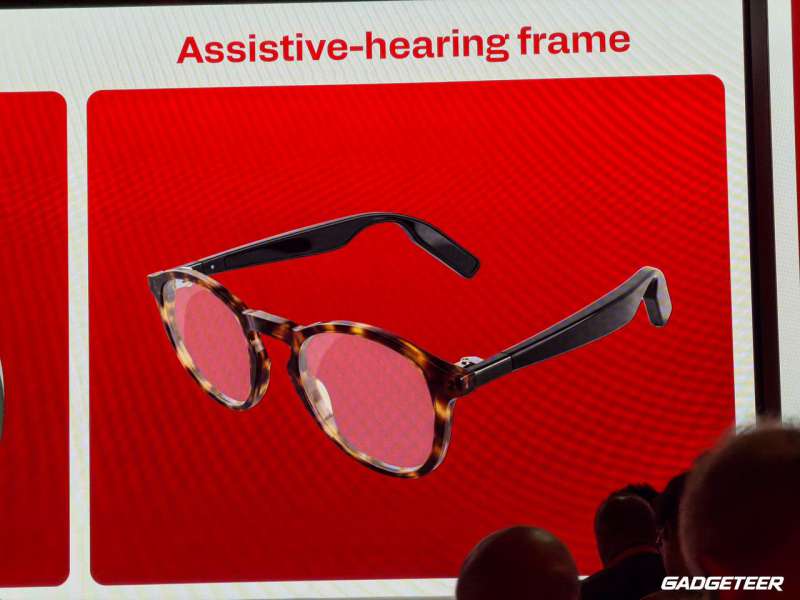
Inspecs gave the platform a reality check. Its founder Robin Totterman showed safety eyewear for hands-free workplace use, a camera-free everyday frame, and a prescription concept with hearing help built in. Each has a different reason to be worn; none can be judged by a chip announcement alone. Fit, safety marking and hearing performance need their own evidence. The Inspecs feature examines those designs and the unanswered questions.
Google’s Gemini glasses are one answer
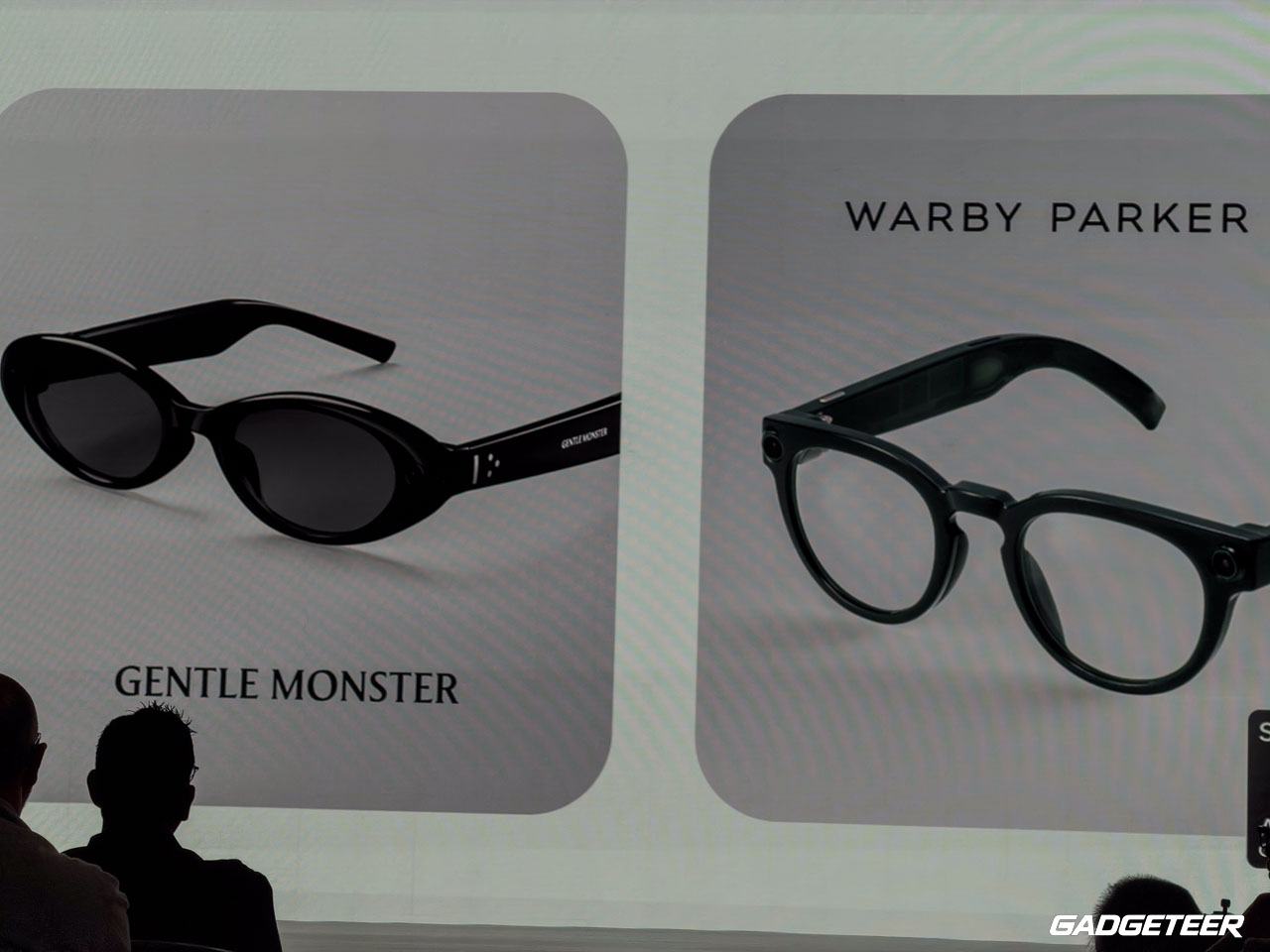
Google’s portion of the keynote showed a different side of the same plan. Google XR executive Shahram Izadi described intelligent eyewear that puts Gemini’s help in the wearer’s ear. The examples included translating a conversation, giving turn-by-turn directions and answering questions about the surroundings. Google also talked about listening to music, taking photos, making calls and accessing phone apps without pulling out the phone.
Google said it is working with Qualcomm and eyewear partners Gentle Monster and Warby Parker to release these glasses later this year, and Izadi identified Snapdragon AR1 as their platform. Izadi did not give a final price or a full product-by-product specification during this part of the keynote. Those details will be important. Voice help is only convenient if the glasses hear well in real places, answer quickly and let you know when the camera or microphone is active.
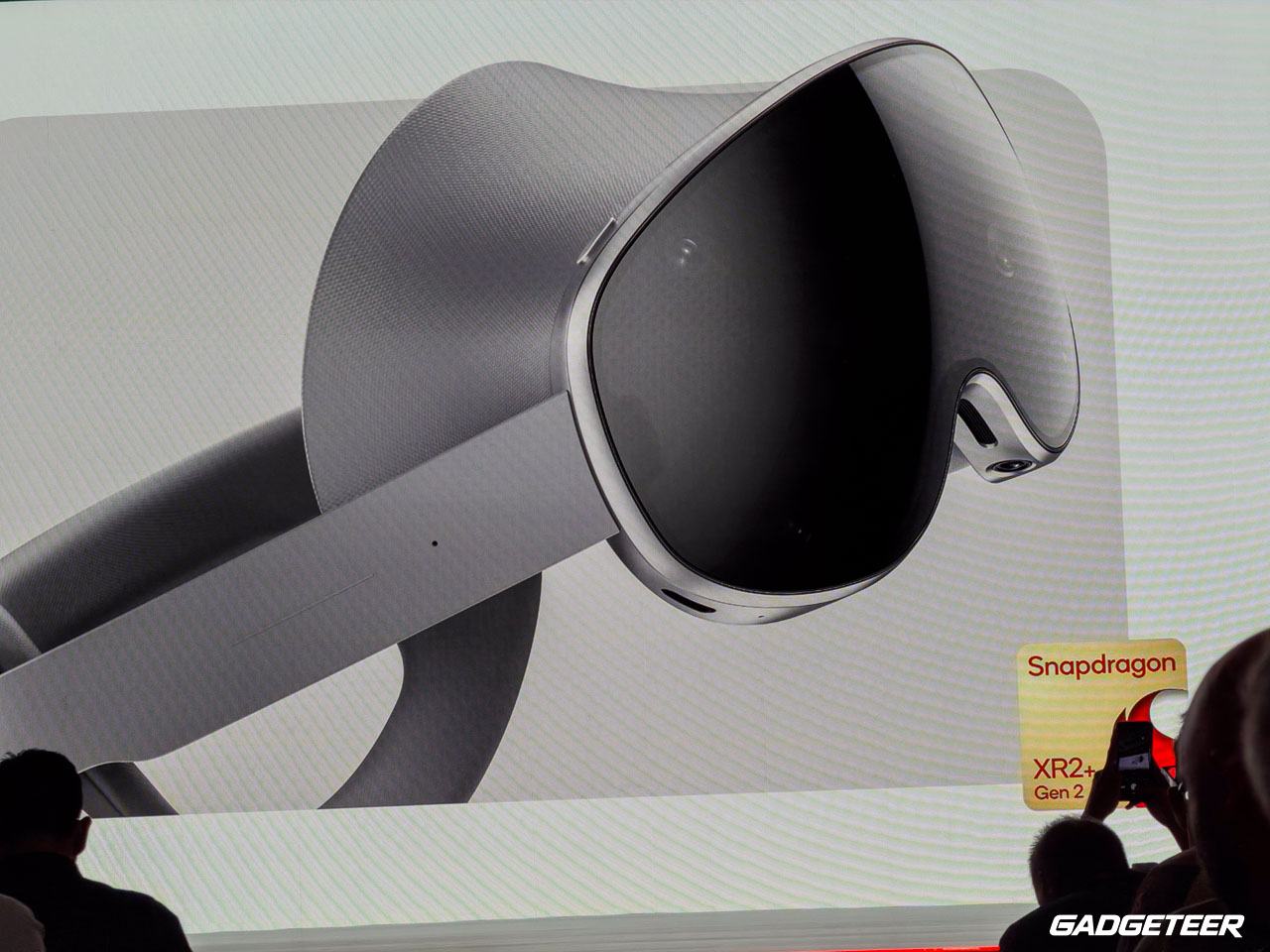
Google also revisited XREAL Aura, which serves a different job. Aura is wired Android XR eyewear using Snapdragon Reality Elite with a separate computing puck. Izadi described a portable spatial workspace or private cinema, including the ability to bring a connected laptop or handheld game system into view as a spatial window. That’s a display-centered experience. It shouldn’t be folded into the same category as the lighter audio-first Gemini glasses simply because both involve Qualcomm and Android XR.
One request beyond the glasses
A later eyewear-partner presentation pushed the agent idea across more devices. The company described an operating system that would take one spoken request on glasses, use apps to find and book a restaurant, show details on a phone and have directions waiting in a car. It also promised personal memory that only the wearer could access. Those were stage scenarios and privacy claims, not features I’ve verified on a shipping pair. The practical question is whether the handoffs and permission prompts remain clear when the plan changes midway through.
One platform, several bets
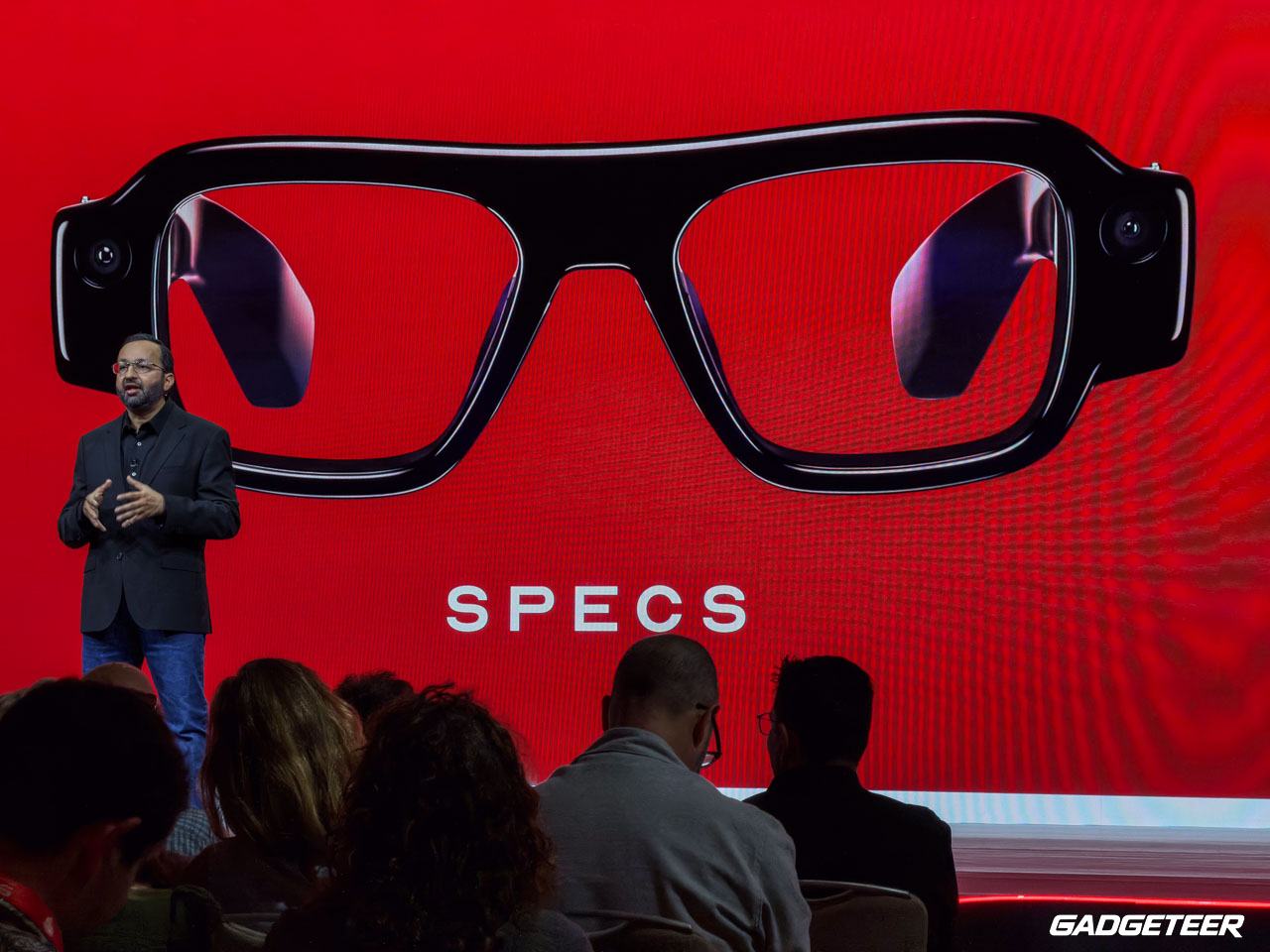
Asghar pointed to Qualcomm’s work with Meta and to Snap’s newly announced Specs as other examples of where Snapdragon technology reaches eyewear. Specs bring digital content into the physical world through augmented reality. Google’s upcoming intelligent eyewear concentrates on help you can hear while staying heads-up. XREAL Aura takes the display and workspace route. The keynote did not say these partners all use the same chip, the same AI model or the same approach to cloud processing.
I remember wearing Google Glass
I wore a tangerine Google Glass Explorer Edition back in 2013. In my original account of using its camera, I liked being able to capture a moment without digging for my phone. I also learned how much the camera picked up every time I nodded or turned my head. Low light was difficult, battery life was limited, and I was already thinking about how people around me felt when a camera sat on my face.
So is this smart glasses’ second big chance, or their third? I wore Google Glass, and even I’ve lost count. Let’s call it third time’s the charm, then make the glasses earn it. That’s why the day-two keynote feels like a real shift in ambition, but not yet a verdict. Glass put a camera and small computer near my eyes. Qualcomm is now talking about an AI agent that can interpret context, carry intent across devices and eventually move a task forward. Better chips and smaller models make that idea more plausible. They don’t answer the old questions about comfort, battery and trust for the person wearing the glasses or the person standing nearby.
For me, the important question after this keynote is what the AI agent can actually do without interrupting you, and where it stops to ask before taking action. Qualcomm showed that local visual AI is possible on its platform, and Google gave its voice-first glasses a clearer path toward release. Now the finished devices have to show how those ideas hold up away from the stage: in noise, in poor light and over a full day of use.