
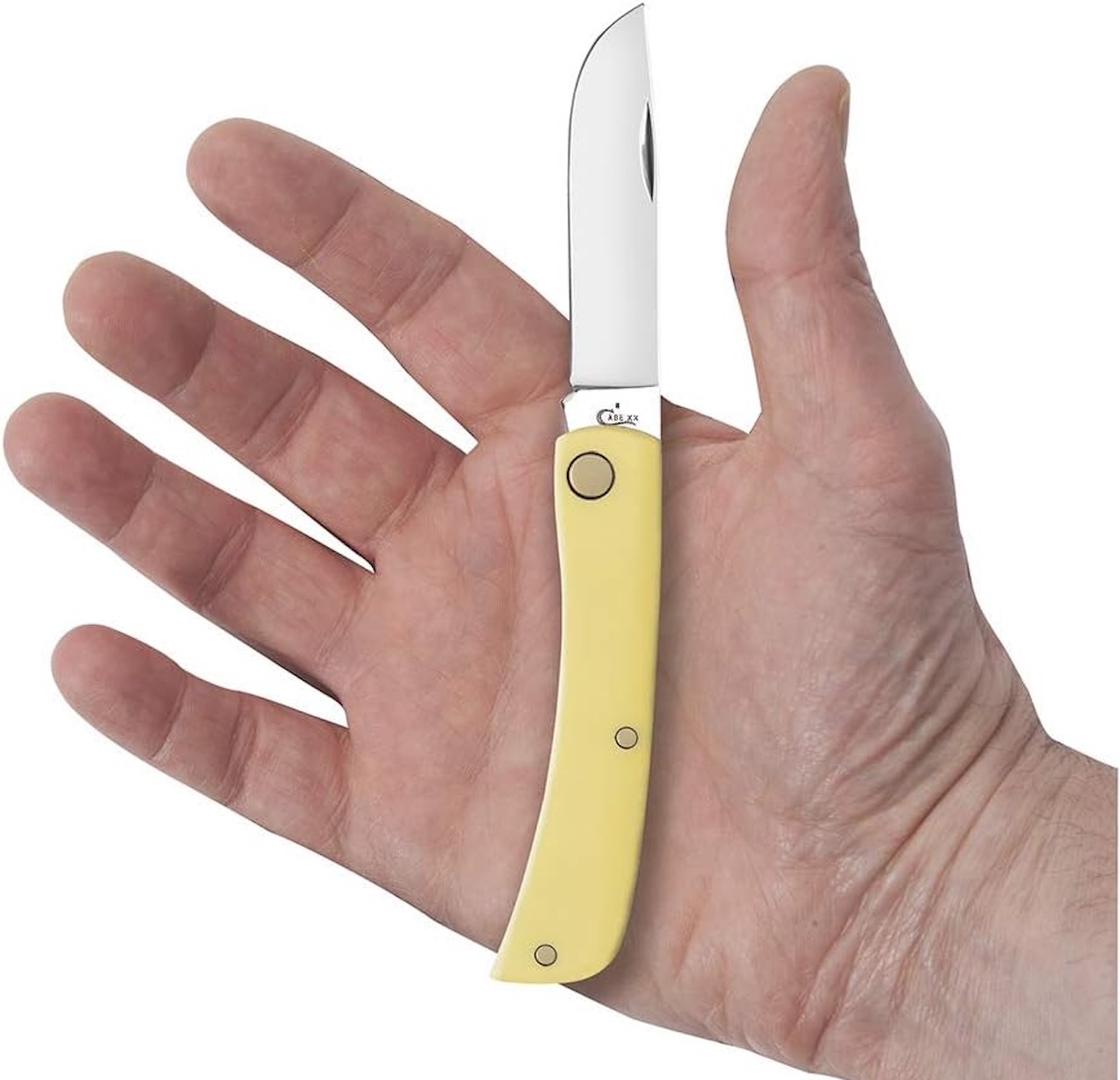
If most of your pocket-knife jobs involve opening delivery boxes, cutting tape, trimming cord, or handling other small chores, a feature-packed modern folder can feel like more knife than the job requires. You may be paying for elaborate opening systems, pocket clips, premium handle materials, and increasingly complicated mechanisms just to make a few simple cuts during the day.
Price: From $35.98
Where to Buy: Amazon
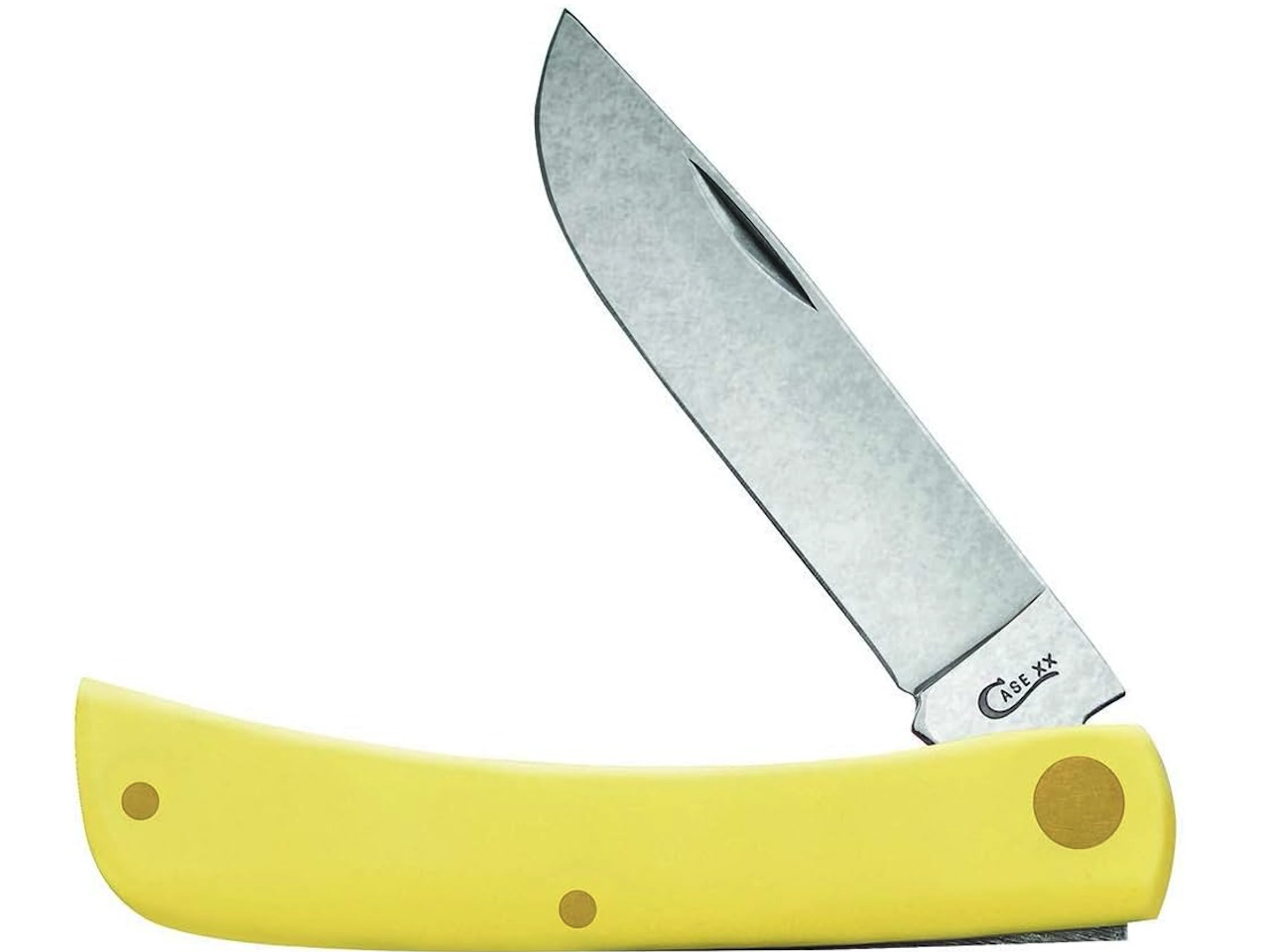
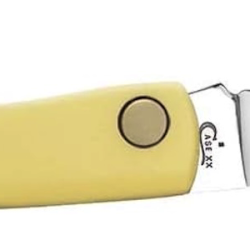
The Case Sod Buster Jr. takes the opposite approach. The yellow synthetic version is a traditional single-blade pocket knife with a nail nick, a carbon-steel blade, and no pocket clip. Case lists it at 3.63 inches closed and just 2.1 ounces.
That simplicity is the appeal. The Sod Buster Jr. is not trying to compete with modern EDC folders feature for feature. It is aimed at someone who needs a basic cutting tool and would rather carry less complexity.
One blade instead of an EDC feature checklist
The Sod Buster Jr. does not try to turn its handle into a collection of mechanisms. You get a single Skinner blade measuring about 2.8 inches, according to Case’s current specifications.
At 2.1 ounces, it is relatively light for a traditional pocket knife of this size. Its 3.63-inch closed length also keeps the overall package compact for everyday pocket carry.
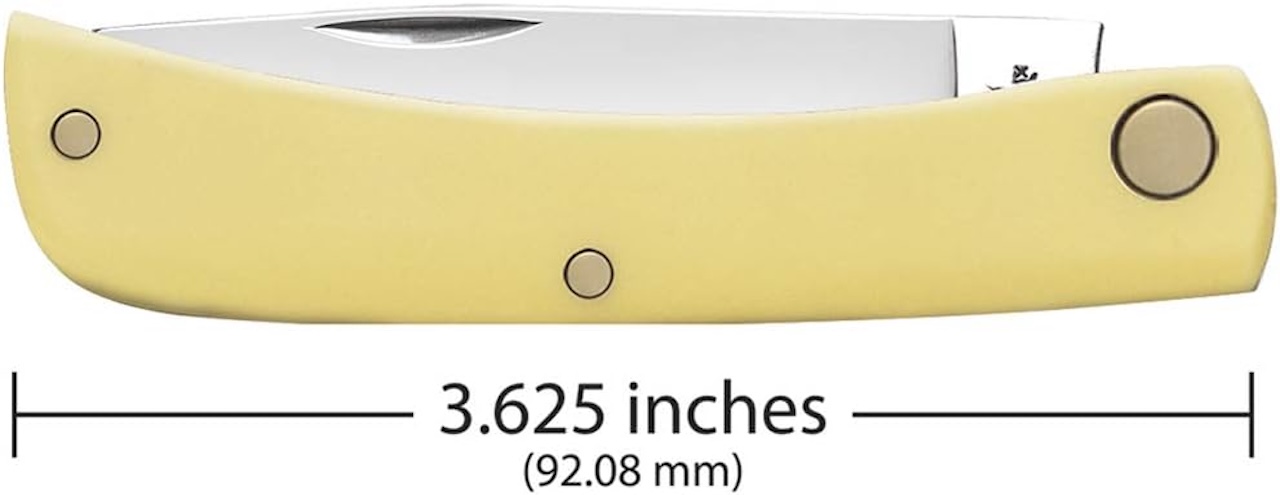 There are tradeoffs. There is no thumb stud or flipper for quick one-handed deployment, and no pocket clip to keep the knife at the edge of your pocket. Instead, the blade opens with a traditional nail nick.
If your idea of EDC revolves around rapid deployment and modern locking mechanisms, the Sod Buster Jr. will feel deliberately old-fashioned. But if you primarily need a small cutting tool and do not care about one-handed opening, its simpler approach makes a lot of sense.
Carbon steel requires more attention
Case currently specifies a mirror-polished carbon-steel blade for this version of the Sod Buster Jr. Older examples may use Case’s previous Chrome Vanadium, or CV, terminology, so shoppers comparing old and current listings may encounter both descriptions.
The important practical difference is maintenance. Case says its carbon steel is less resistant to rust, pitting, and discoloration than stainless steel, and it recommends keeping a thin film of oil on the blade to help protect the finish.
 Case also promotes its carbon steel for edge holding and ease of resharpening. Those are manufacturer claims rather than conclusions from our own testing. We have not independently tested this particular knife’s edge retention, sharpening characteristics, corrosion resistance, or cutting performance.
For buyers, the decision is straightforward. Stainless steel is the easier choice if you want a blade you can mostly ignore between uses. If routine cleaning and oiling do not bother you, the carbon steel becomes part of the traditional ownership experience.
Yellow synthetic keeps things practical
The bright yellow handle may be the most recognizable part of this version.
Case specifies a smooth synthetic handle rather than bone, wood, Micarta, carbon fiber, or metal. It is not presented as an exotic or premium material. Instead, it fits the Sod Buster Jr.’s straightforward working-knife character. The bright color should also make the knife easier to spot than a dark-handled folder when it is sitting among other gear.
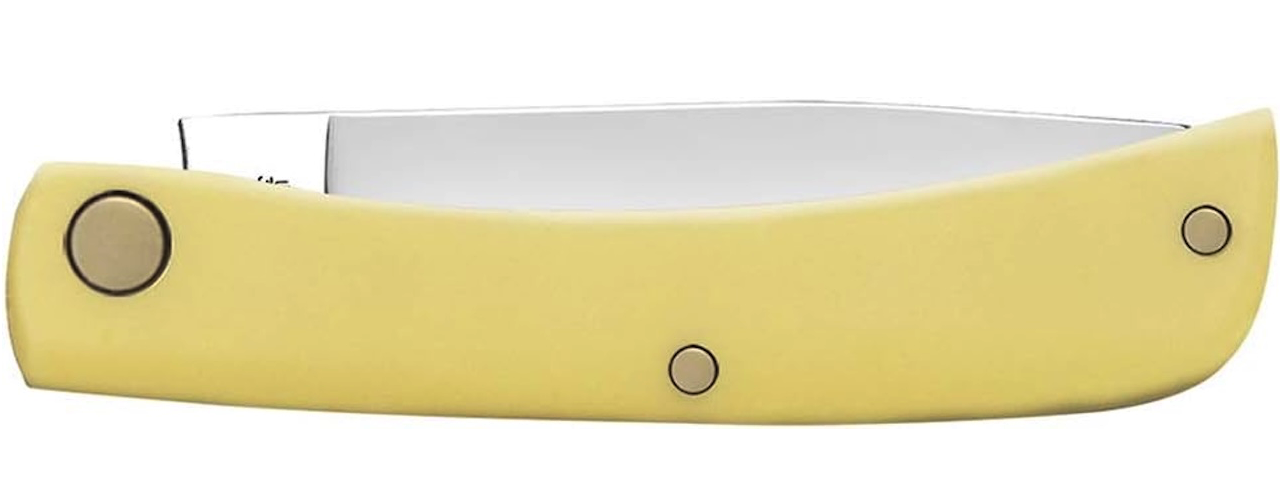 Specifications cannot tell us how the smooth synthetic handle will feel during extended cutting, however. Dimensions and material names alone do not establish grip comfort or ergonomics, so hands-on testing would be needed before making those claims.
Traditional construction brings tradeoffs
Anyone coming from a modern EDC folder should pay attention to how differently the Sod Buster Jr. approaches everyday carry.
There is no pocket clip, and the blade opens with a nail nick rather than a flipper or thumb stud. That means carrying it loose in a pocket or using another storage solution, rather than clipping it to a pocket seam like many contemporary EDC folders.
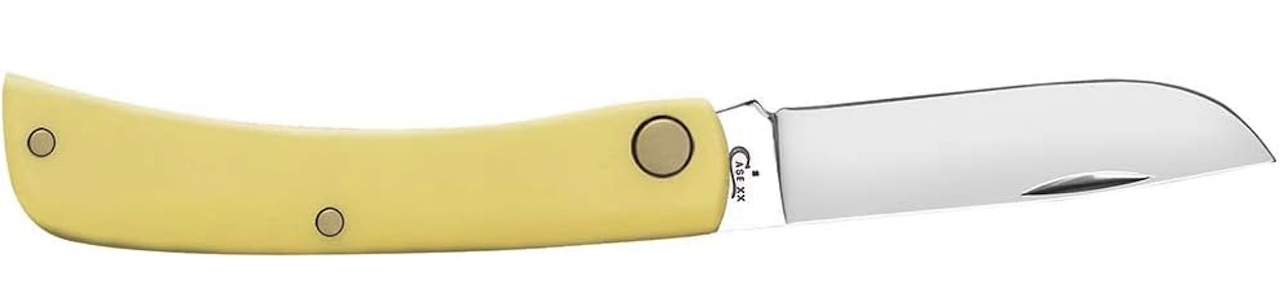 The design prioritizes simplicity over quick access. For occasional tasks such as opening a package, cutting twine, or sharpening a pencil, that may not matter. Someone accustomed to pulling a clipped folder from a pocket and opening it one-handed will notice the difference immediately.
Those are not necessarily shortcomings. They are simply the consequences of choosing a traditional pocket-knife design. The real question is whether that approach matches how you actually carry and use a knife.
The Sod Buster Jr. or full-size Sod Buster?
Case also offers the larger Sod Buster pattern. Case’s pattern guide lists the full-size Sod Buster at 4.625 inches closed and 3.4 ounces, compared with 3.625 inches and 2.1 ounces for the Junior.
The practical distinction is clear. The larger Sod Buster gives you a substantially bigger knife, while the Junior saves about an inch of closed length and roughly 1.3 ounces.
For light everyday cutting, the Junior’s smaller size fits the design especially well. The full-size version is worth considering if you specifically want more knife in hand.
 Who is the Case Sod Buster Jr. for?
The Case Sod Buster Jr. makes the most sense for someone who wants a traditional pocket knife without turning everyday cutting into a checklist of EDC features.
You give up one-handed opening and pocket-clip carry, while the carbon-steel blade asks for more attention than many stainless alternatives.
In return, you get a 2.8-inch carbon-steel blade, a compact 3.63-inch closed length, a 2.1-ounce weight, and a highly recognizable yellow synthetic handle. Case says the knife is made at its Bradford, Pennsylvania, factory from domestic and imported materials.
Price: From $35.98
Where to Buy: Amazon
Buyers who prioritize rapid deployment, pocket-clip carry, or low-maintenance stainless steel should look toward a more modern folder. But if most of your knife use involves opening boxes, cutting tape, trimming cord, and handling other small chores, the Sod Buster Jr. makes a straightforward argument for carrying only as much knife as you actually need.
