
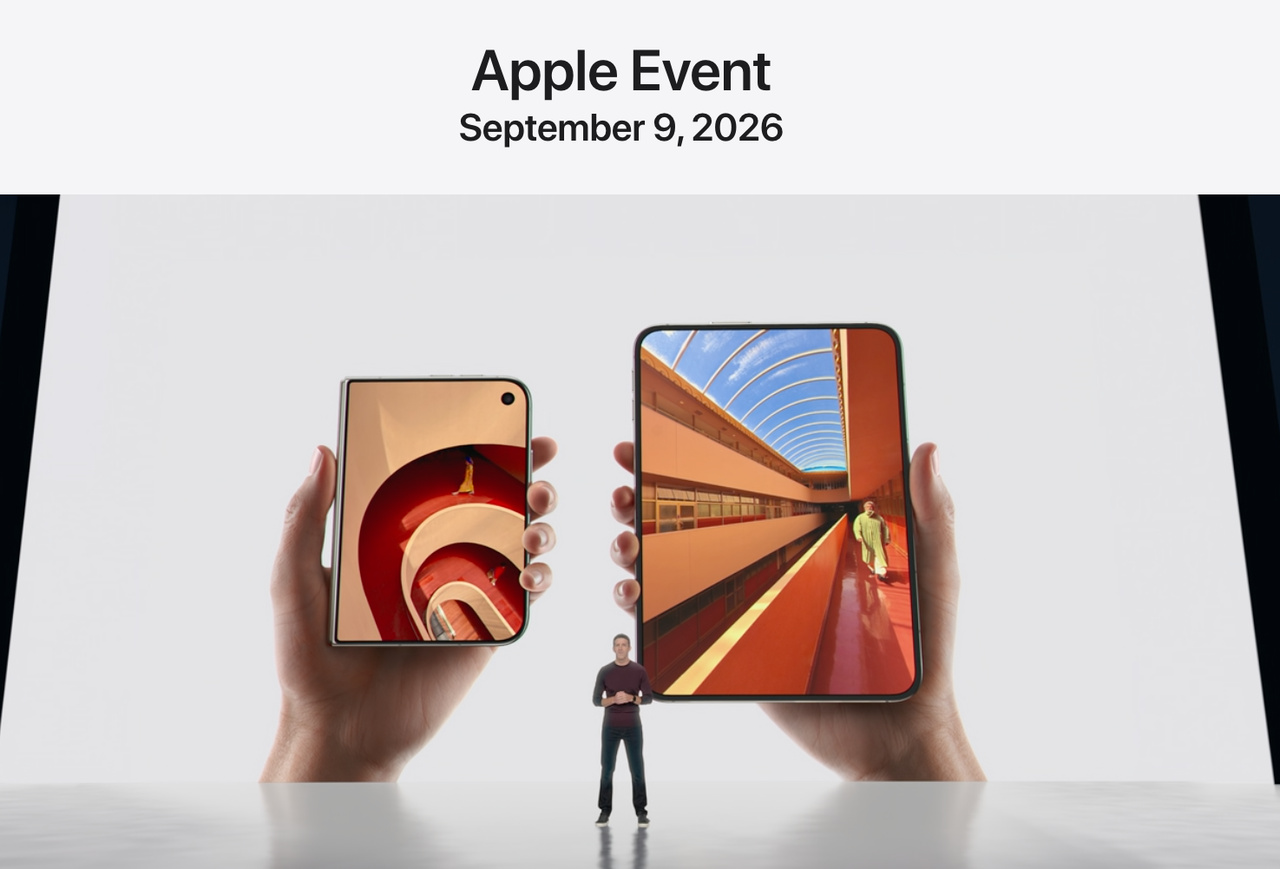
Apple has introduced iPhone Duo, its first foldable iPhone. Roughly the size of a passport when closed, it opens into what Apple calls its largest iPhone display yet, with a design inspired by the versatility of iPad.
The name may take some getting used to. The appeal is easier to understand: a bigger space for apps, photos, and films in a device that still fits in a pocket.


A passport-sized phone with an iPad influence
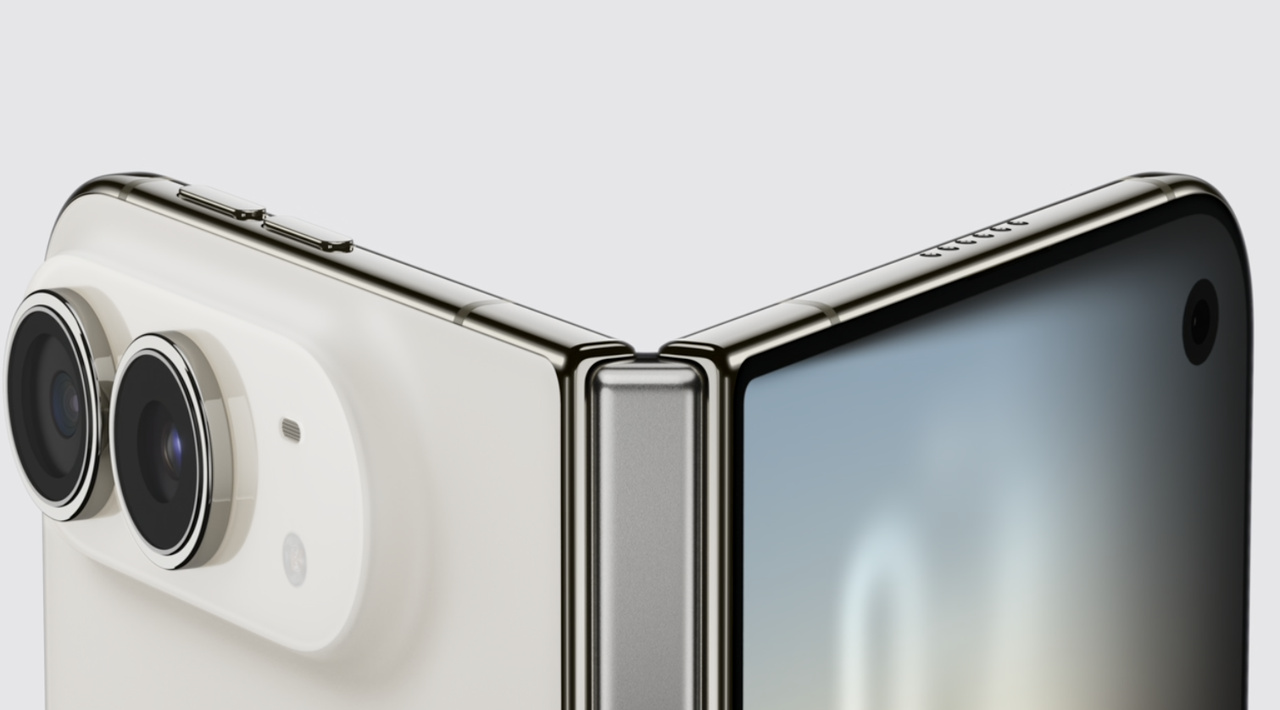
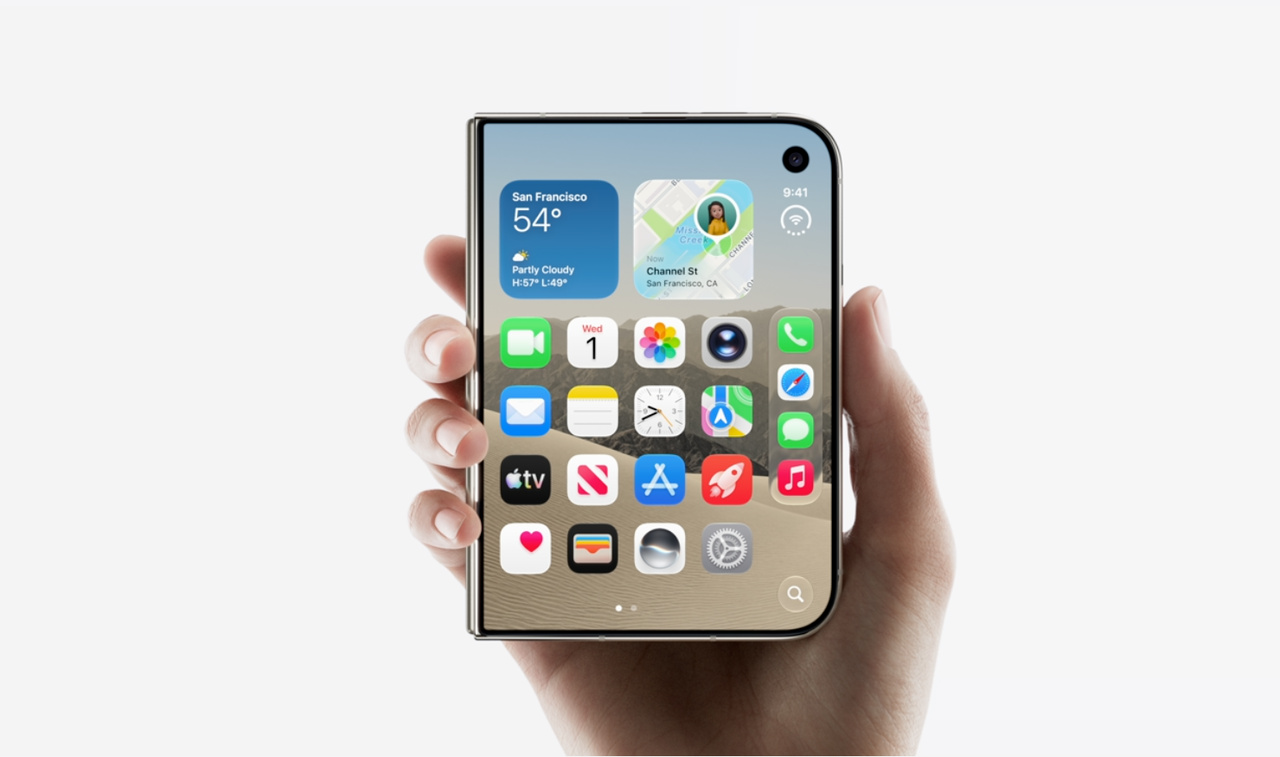
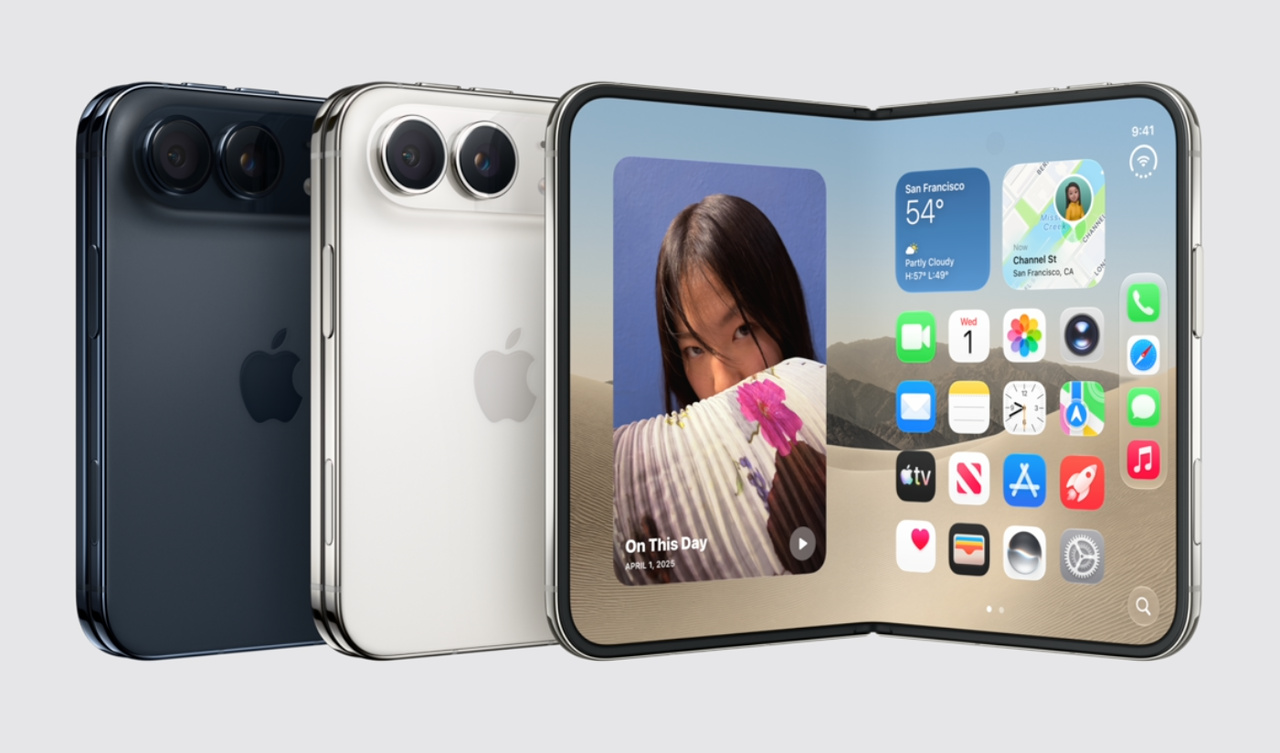
Duo has an asymmetric shape with two rounded corners. When opened, its two sides form a continuous frame around an inner display with a narrow, uniform border. Apple says the screen is designed for use in both portrait and landscape.
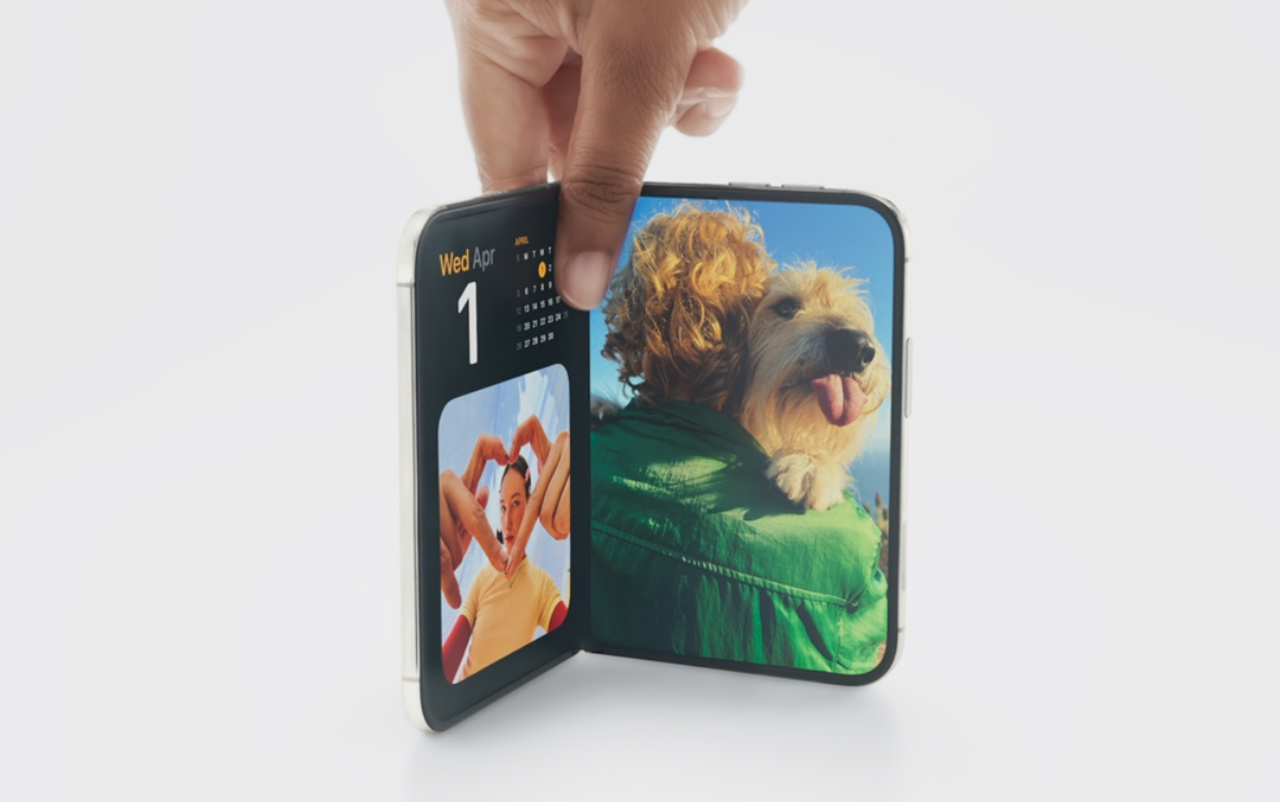
That matters because screen size alone tells only part of the story. The shape determines how much of a movie fills the display, how wide a page feels, and how comfortably an app can arrange its controls. More screen is useful only when the content makes good use of it.
Apple takes aim at the square foldable screen
Apple used the reveal to criticize competing foldables, arguing that square inner screens compromise vertical content and leave large black bars around films. That is Apple’s sales pitch, and the tradeoff deserves a closer look.
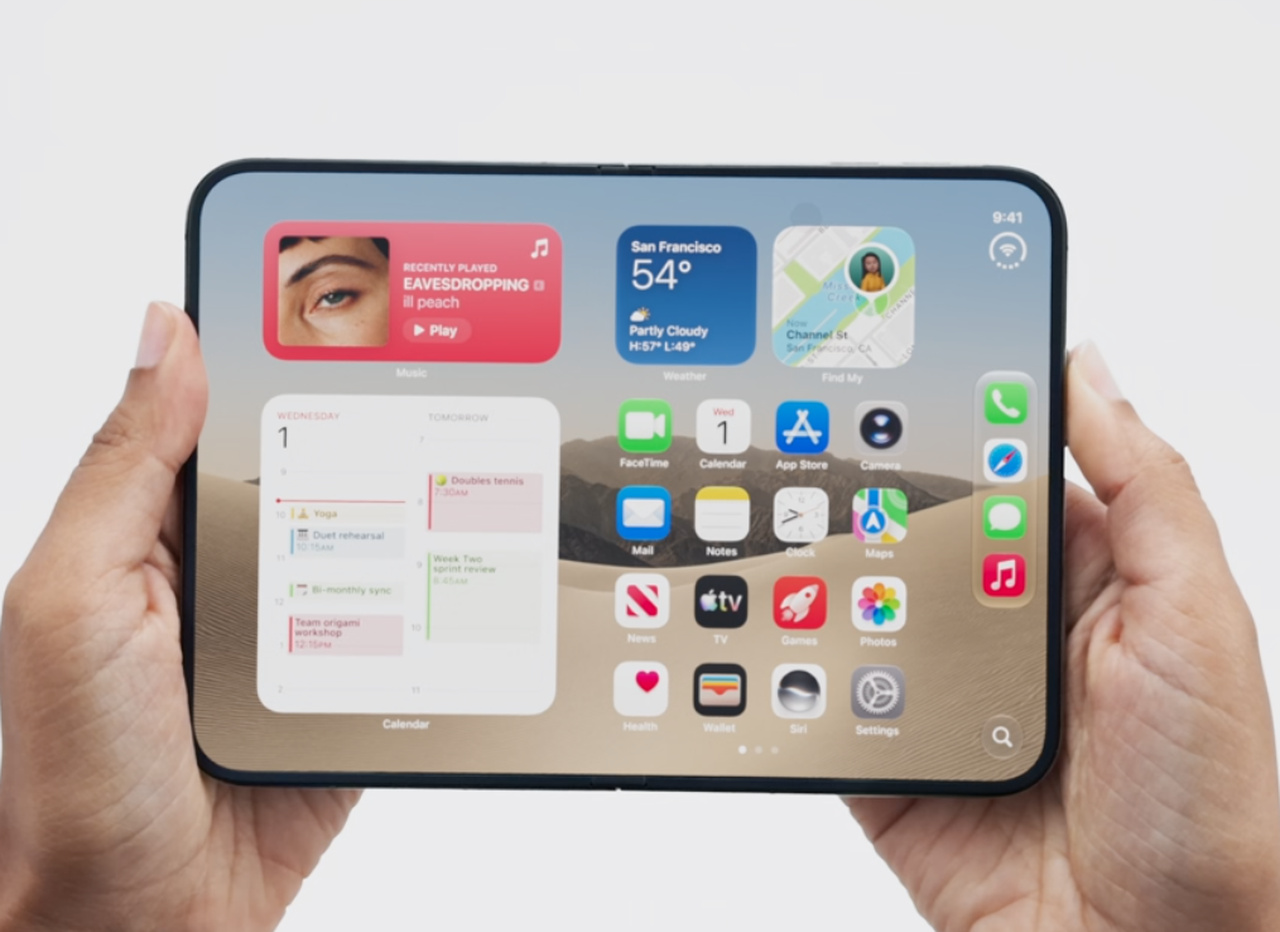
A wider screen can give a landscape video more room, but no single shape perfectly fits films, portrait photos, and scrolling feeds. Rotating the device and adapting the app layout are part of the experience, too. Duo’s promise rests on how well its display and software work together across those everyday tasks.
Two screens with the same proportions
Duo opens into a 7.6-inch Super Retina XDR display. Apple says it provides 50% more screen area than iPhone 18 Pro Max and 80% more than iPhone 18 Pro.


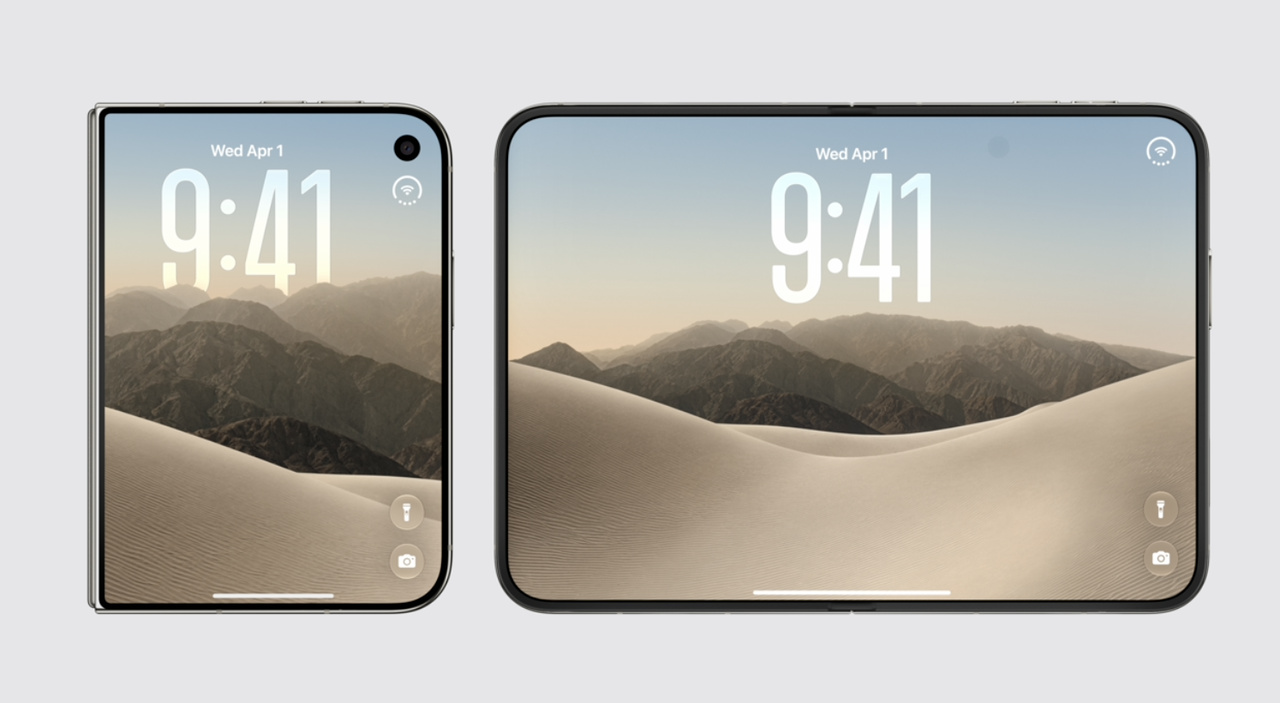
The outer display measures 5.4 inches, yet Apple says it offers 90% of the screen area of iPhone 18 Pro. That comparison helps explain why diagonal measurements alone can be misleading when screens have different proportions.
Both Duo displays use the same aspect ratio. Apple says that consistency helps content move smoothly between the outside and inside screens as the phone opens.
It is a practical design choice. An app can expand into a larger version of the same shape, rather than shifting between screens with very different proportions. That alone does not guarantee every app will behave well, but it gives Apple a consistent foundation for the transition.
The FaceTime camera sits behind the display, which Apple describes as hidden until needed. That keeps the camera from visually interrupting the screen, although image quality will be something to judge in use.
A matte display designed to make the crease less visible
Apple is addressing two familiar distractions on a folding screen: reflections and the visible crease. Duo uses a custom nanotexture finish that Apple says reduces glare and creates a matte appearance that makes the fold less noticeable.

That is a claim about visibility, not the elimination of the crease. A less reflective surface could help when reading under overhead lighting or viewing content near a window, but how the fold looks at different angles will need to be judged on the device.
The cover layer is a custom polymer with an Apple-designed scratch-resistant coating. Apple says the polymer has up to 40% higher stiffness than other materials used in the industry. That figure describes the material’s stiffness; it does not mean the complete display is 40% more resistant to scratches or damage.
Apple creates the surface using maskless laser lithography, writing its microscopic pattern pixel by pixel. The manufacturing detail matters mainly for the result Apple is pursuing: a screen that feels less plasticky and reflects less of the room around it.
Layers that move as the phone folds
Under the surface, Duo uses a multilayer display structure with high-strength glass above and below the OLED panel. Apple says the layers can slide relative to each other during folding, comparing the movement to pages in a book. A titanium plate forms the bottom layer.
Allowing that movement is intended to keep folding from distorting the panel over time. It explains how Apple is managing repeated bending, though it does not by itself establish the screen’s lifespan.
The hinge contains more than 100 precision components, with carbon-fiber support plates providing a stiff platform beneath the display. Those supports complement the surface treatment: the finish addresses how the crease looks, while the structure helps hold the screen flat when open.
A titanium frame and a hinge that supports the display
Apple says Duo is its thinnest iPhone when unfolded. That qualification matters: open thickness describes how it feels as a small tablet, while the closed device is what goes into a pocket.
The frame uses machined, polished titanium. Apple packages key components into the raised camera plateau to leave room for the battery system, making the camera area part of the phone’s internal layout as well as its appearance.
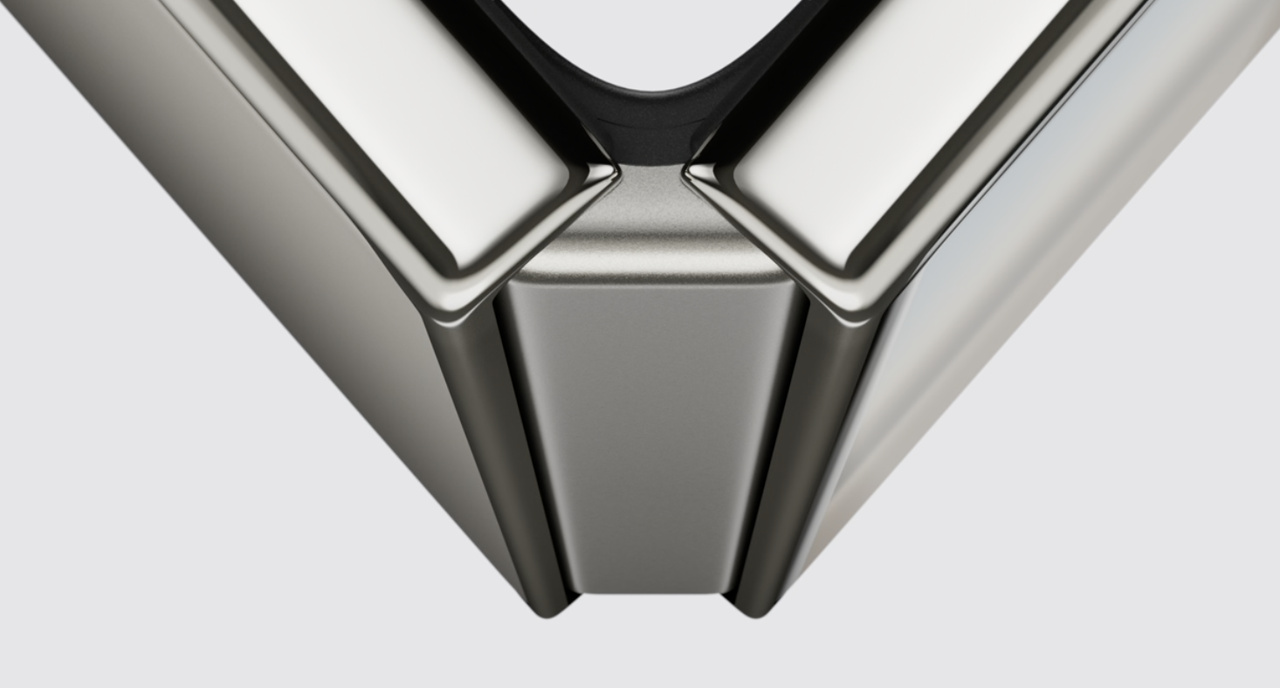
Its hinge supports the center of the display and holds it flat when open, according to Apple. A variable torque mechanism controls resistance as the phone opens and closes, while an integrated magnet array keeps it shut.
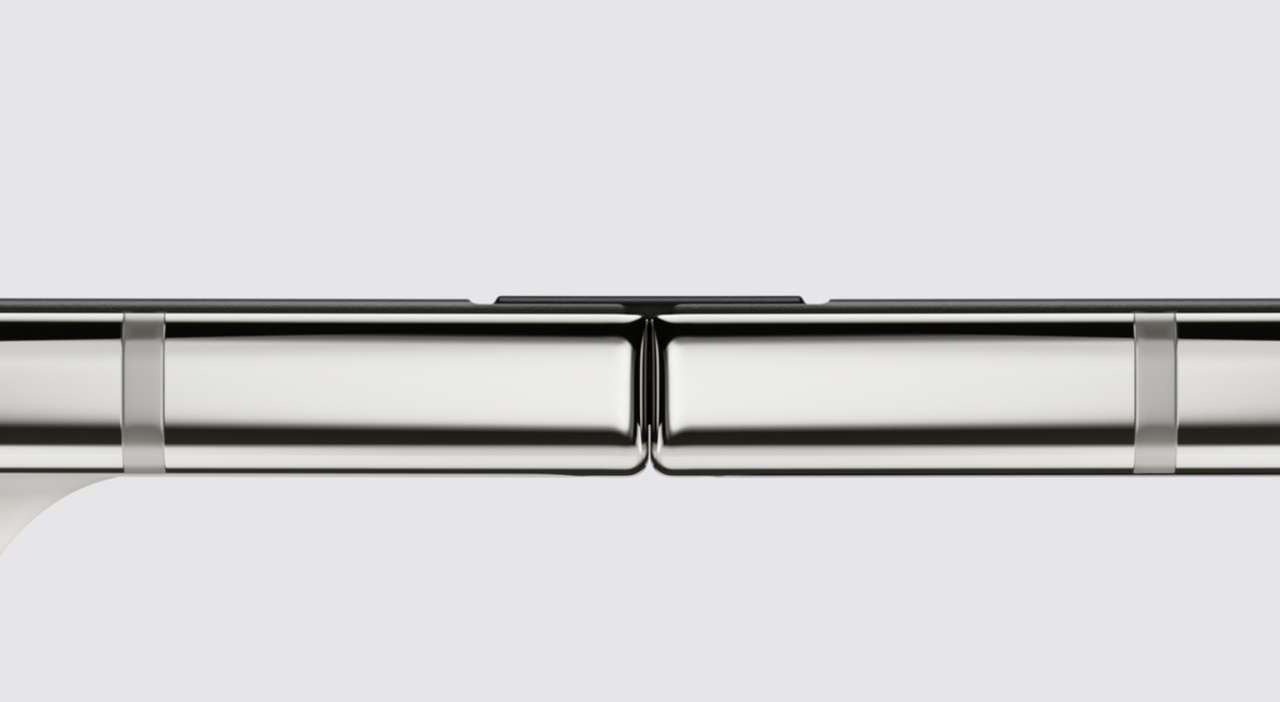
These are sensible areas to focus on. A hinge is something an owner handles many times a day, and its resistance, stability, and long-term wear matter more than how smoothly it moves in a launch film. Apple’s description explains the mechanism; it does not establish years of durability.
A20 Pro and cooling for longer workloads
Duo runs on A20 Pro, with a display engine that can drive both screens simultaneously for transitions between them. Apple says it also blends the different pixel layout over the under-display camera into the surrounding image, aiming for a more consistent-looking screen.


That is an important part of hiding a camera behind a display. Removing the visible camera opening is only useful if the area above it does not become a different kind of distraction.
Apple pairs its chip package with a direct thermal connection and a vapor chamber. The company claims up to 35% higher sustained performance than iPhone 17 Pro, alongside support for demanding on-device AI and gaming on the larger display.
Cooling matters here because performance after several minutes can be more useful than a brief peak. For a device intended to run two apps together or play games on a tablet-like screen, managing heat is part of delivering the experience Apple is selling.
C2 targets weak-signal frustrations
Duo includes Apple’s C2 cellular modem. Apple says its integrated hardware and software use AI algorithms to improve cellular reliability, including reconnecting faster in areas with poor coverage.
Apple also claims uploads up to 50% faster than C1X, with 15% less energy consumption, and adds support for 5G mmWave in the U.S. Faster uploads could help when sending large photos or videos, while lower modem power use matters whenever the phone spends time on cellular data.

Actual results will depend on the network, signal, and location. For anyone whose commute or workplace regularly drops a connection, the reliability claim may be more relevant than peak speed.
Two batteries, and no physical SIM slot
Duo is eSIM-only worldwide. Apple says removing the physical SIM hardware helped free internal space for battery capacity.
That is a real ownership consideration for travelers or anyone who relies on a physical SIM. Carrier and travel-plan compatibility becomes part of choosing the phone.
There is a battery in each half, with custom silicon and software managing charging, discharging, and balancing so they operate as one system. The split arrangement uses space on both sides of the hinge without giving the owner two separate batteries to manage.
Apple rates Duo for up to 31 hours of video playback on the inner display or 44 hours on the outer display. Under its new usage model, with time split equally between both screens, Apple claims up to 24 hours per charge.

Those figures measure different kinds of use and should not be treated as interchangeable. The gap between the two video playback ratings also makes the practical tradeoff clear: using the larger screen more often comes with a battery cost.
Fast charging reaches up to 50% in around 20 minutes, according to Apple. A five-minute charge is rated to provide up to five hours of video playback on the outer screen. That gives the quick top-up claim a specific use case rather than implying five hours of any activity.
iOS 27 gives the bigger screen a job
The stronger argument for Duo is what Apple is doing with iOS 27. Essential controls move to the side to free up vertical space and keep them near the thumb. The Home Screen dock is vertical, and a compact status bar fits into a corner.


When Duo opens, content expands while controls remain in a consistent position along the side. The system also responds to folding, rotation, and flipping the phone over, switching to the appropriate display.
There is more room within apps, too. Apple showed layouts that put an inbox beside a message. Two Home Screen pages can also appear together.
Split View could save a lot of app switching
Duo lets you move an app to one side and open a second beside it. It also supports two windows of the same app, including Safari. That gives comparison shopping a straightforward use case: keep two product pages visible while checking prices or specifications, instead of flipping between tabs and remembering what the other page said.
Apps can switch sides, and tapping the divider lets you pair them so you can return to that combination later. Saved pairs could make a regular task, such as reading reference material while writing notes, easier to pick up again.
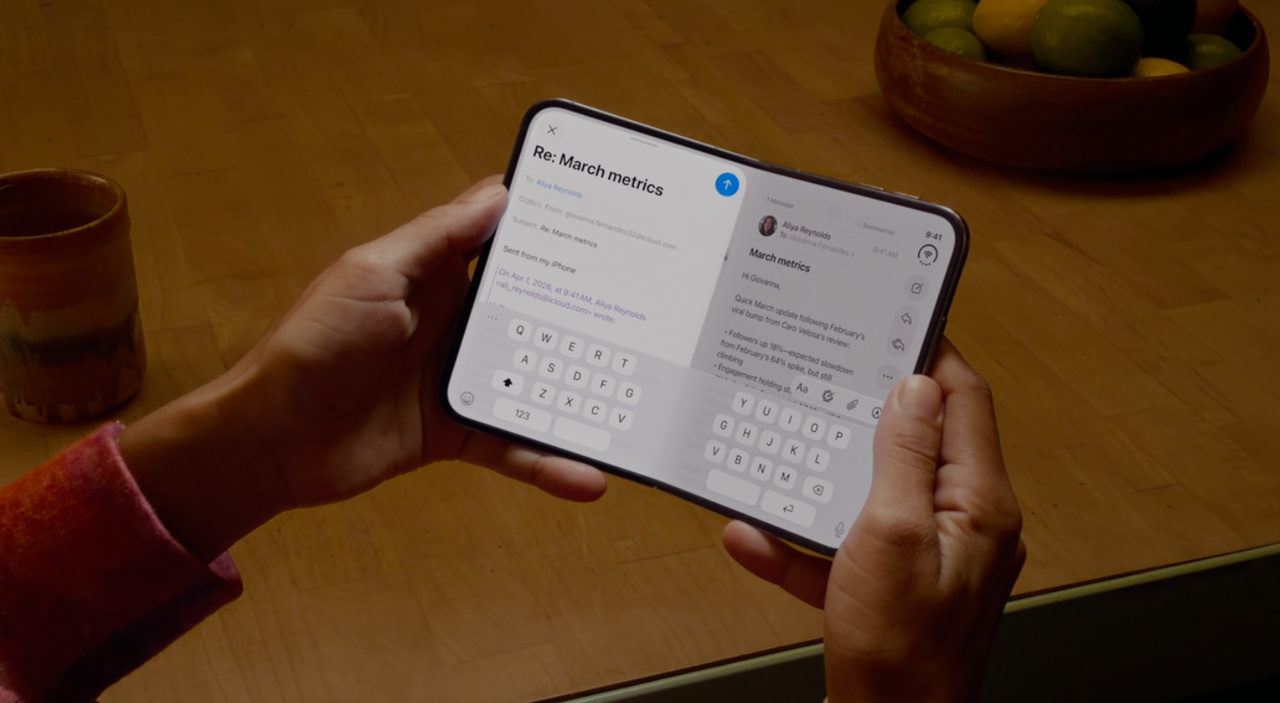
In portrait, a video can be pinned at the top with another app below. That could suit following a tutorial while taking notes, giving the video a dedicated part of the screen while keeping the second app usable.
These are the kinds of changes that give the bigger display a purpose. The benefit is less interruption between steps, particularly for people who already do much of their work on a phone.
The hinge doubles as a stand
Duo can sit on a table for hands-free viewing on its outer display. Apple also showed a position with the viewing area above and playback controls below, letting the phone support itself without a separate stand.

Sensors in each half let iOS respond to the folding angle. When the phone is partially folded, the software moves content away from the bend, where it could be harder to see.
That detail addresses an everyday annoyance with a folding screen. Keeping text or controls away from the crease can make a propped-up phone more useful, especially when the screen is no longer one flat surface.
StandBy works without a charging cable
Duo can enter StandBy when set down, even when it is not charging. That makes its clock, widgets, music controls, and notification view useful in more places than a bedside charging setup.
Apple also showed a bedside clock that wakes the user with a gentle glow timed to the alarm. It is a modest feature beside the folding display, but the ability to prop the phone up and leave useful information visible gives the design another everyday purpose.
App layouts will matter as much as screen size
Apple highlighted updates being developed for Zoom, Slack, Detail, and Netflix. Zoom’s layout brings shared content and meeting participants into view together, while Slack uses the larger display to show more of a workspace.


Those are useful examples because the extra room serves a specific task. During a call, seeing the presentation and the people discussing it together can be more helpful than simply making either one larger.
Apple says Detail uses its Core AI framework to run models on the device for content creation. Netflix is adapting its experience across both screens, including clips on the outside and a larger viewing experience when opened.
These examples suggest how developers can use Duo’s shape. They do not establish that every app will make equally good use of it, so the apps an owner uses daily will be a major part of the phone’s value.
Pencil support makes this more useful than a bigger viewing screen
Apple says support for Apple Pencil (USB-C) will arrive later this year and work on either display. It demonstrated the idea around taking notes, sketching, and marking up documents.
For someone reviewing a document on the go, that could make Duo more useful than simply enlarging the text. Open the phone for a larger page, add handwritten comments, then close it when finished. Support on the outside screen also means a quick note would not require unfolding the phone.
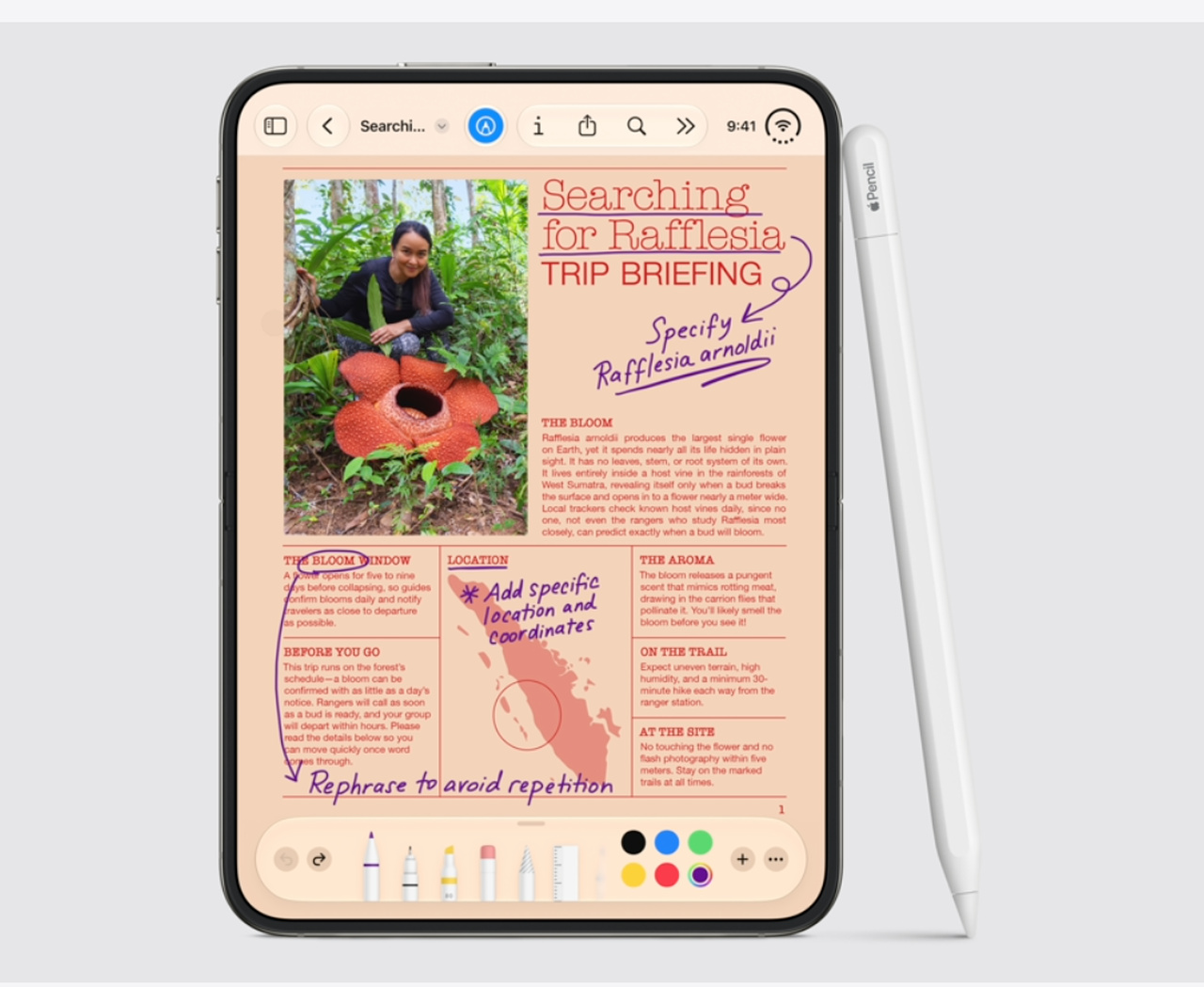
The timing matters for buyers: Apple is promising this capability later in the year. It is part of Duo’s appeal, but it should not be the reason to expect a complete pocket notebook experience on day one.
Touch ID works around the folding design
Duo uses Touch ID in the side button, with support for enrolling multiple fingers. Apple’s reasoning is practical: the same button can authenticate the user whether the device is open or closed, even as the grip changes.
Apple Watch unlocking is also supported. Together, those options address a small but frequent part of using a foldable: getting into the phone comfortably without having to hold it in one particular position.
Durability is about more than the hinge
Duo comes in Star White and Night Sky. Its Grade 5 titanium structure includes support ribs for stiffness and reinforced antenna breaks, areas where the frame would otherwise be interrupted. Apple says the reinforcing inserts use ceramic fibers three times stronger than Grade 5 titanium, a claim about that material rather than the strength of the entire phone.
Apple also lists Ceramic Shield 2 on the front and an IP68 dust and water resistance rating. Those protections are useful, but they do not establish how the folding display will age after months of opening, closing, and everyday handling.
Speakers at the top and bottom support spatial audio in portrait and landscape. For a device built around watching and working on a larger screen, sound that works in both orientations is a welcome practical detail.
The Fusion camera brings 48-megapixel photos
Apple showed 48-megapixel photos from Duo’s Fusion main camera and highlighted zero shutter lag with a shot of a person jumping. The practical aim is to capture a fleeting moment when the shutter is pressed, especially with moving subjects.
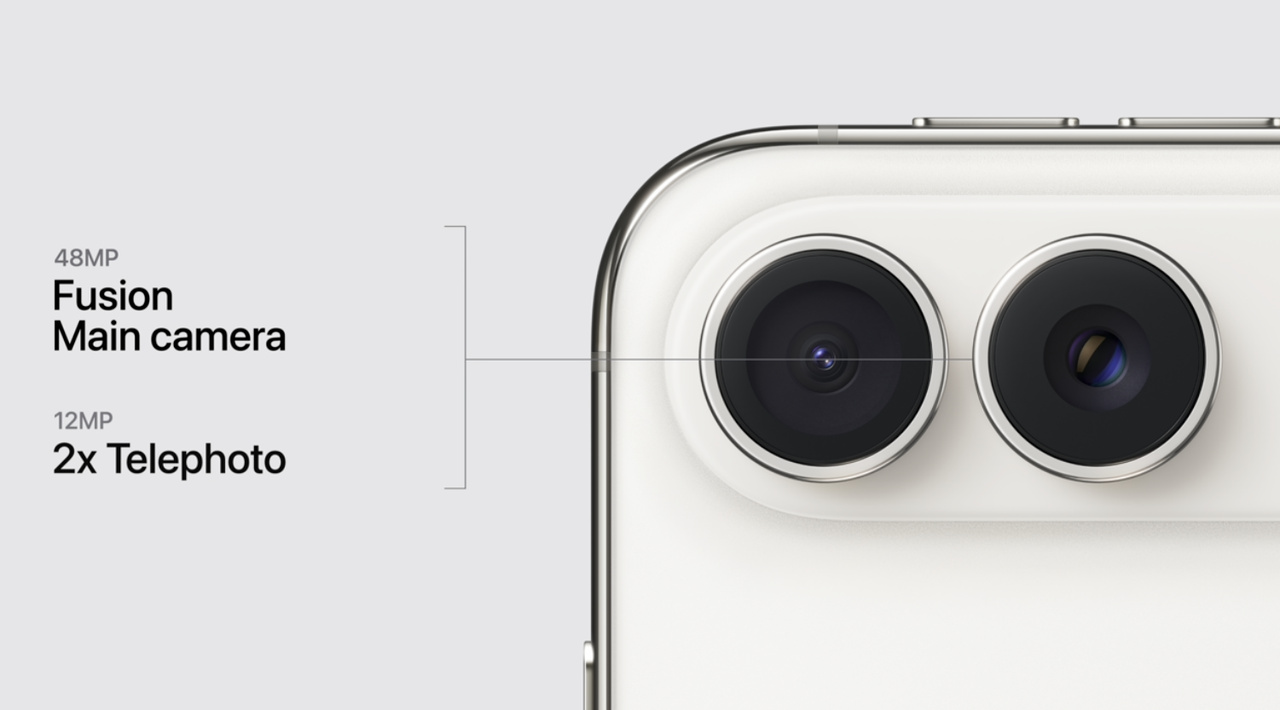
The camera also offers a 2x option that Apple describes as “optical quality.” That wording should not be mistaken for confirmation of a separate telephoto lens. It gives the photographer a tighter view, but image quality at that setting still needs to be assessed beyond Apple’s selected examples.
The main camera includes sensor-shift optical image stabilization, and Apple points to its large sensor and fast aperture as advantages in low light. Stabilization can help control camera movement, although it cannot make a moving subject hold still.
Duo also has a 48-megapixel Fusion Ultra Wide that Apple says is the same camera used in iPhone 18 Pro. That provides a wider view for scenes that do not fit comfortably into the main camera’s framing.
Updated Photographic Styles add texture and grain controls, including a film texture. These give users another way to shape the look of a photo, rather than representing an increase in the camera’s captured detail.
Two front-camera roles
The Center Stage front camera supports photos and videos in either orientation, including a landscape selfie without rotating the phone. That can make framing a group more convenient while holding the closed device.

A separate FaceTime camera sits beneath the inner display for video calls on the larger screen. Duo can be held open or propped on a surface, giving hands-free calls a straightforward setup.
Dual Capture in FaceTime shares front and rear camera feeds simultaneously, so the other person can see both you and what you are showing them. That could help when walking someone through a room or sharing a view without repeatedly switching cameras.
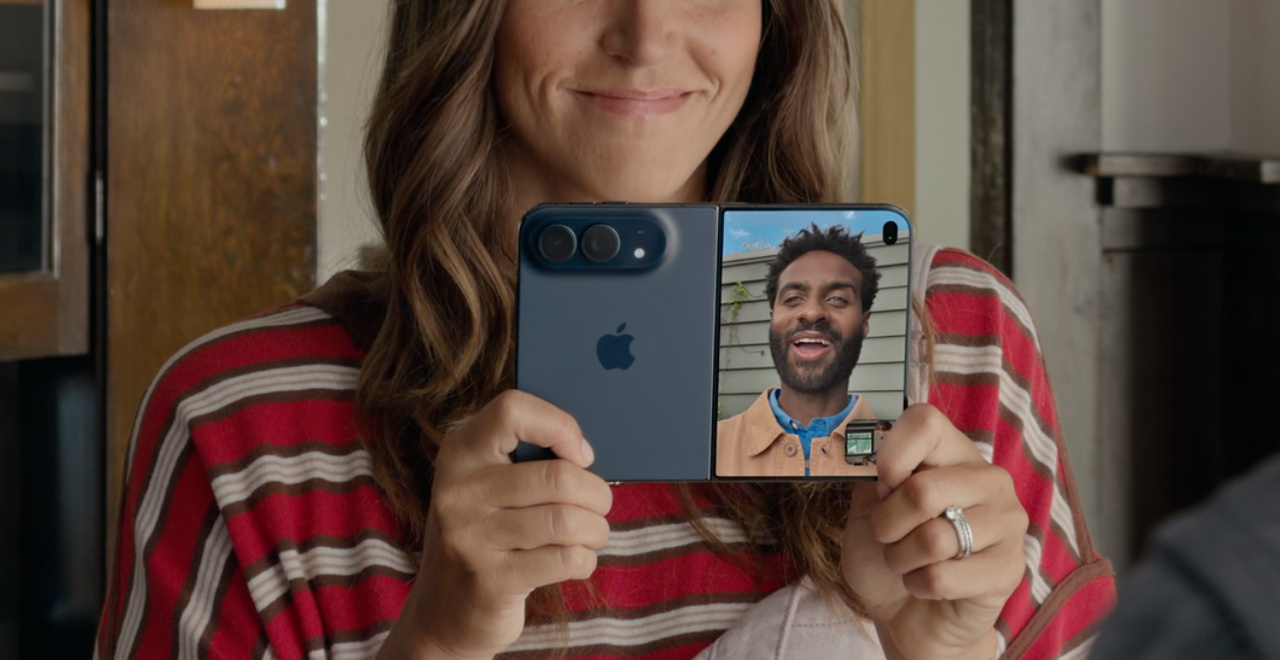
Duo FaceTime also lets someone beside you join through the outer display. It is a more specific use of two screens than simply choosing which one to look at: both can serve people in the same call.
Folding gives the camera its own support
The main camera supports 4K video at 120 frames per second for slow-motion footage. Apple also showed 4K Dolby Vision HDR time-lapse capture with Duo standing on its own.
That is a useful connection between the camera and the hinge. Setting the phone down can make a fixed shot easier to arrange without carrying a separate support. The surface and angle still matter, but the folding design gives the camera a practical advantage beyond the larger preview.
Smart Take puts the photographer in the picture
Apple’s Smart Take feature uses A20 Pro and on-device models to follow a scene and take a photo when everyone is posed and ready. Combined with the phone’s ability to stand on its own, it is intended to make group shots easier without racing a shutter timer.


That could be one of Duo’s more useful camera tricks for families or solo travelers. The person setting up the photo can join it, and Apple also showed full-body, wide-angle selfies. How reliably it chooses the right moment will matter more than the novelty of automatic capture.
Apple also showed animations designed to draw a child’s attention toward the camera. It is a small, relatable use for the outside display, especially when getting someone to look at the lens is the hardest part of the photo.
Price, storage, and accessories
iPhone Duo starts at $1,999, with storage capacities ranging from 256GB to 2TB. Preorders begin October 16, and the phone will be available October 23.
Apple also announced a Duo Folio with an integrated kickstand that folds away, plus a two-piece case that wraps around each half of the phone.
Who iPhone Duo is for
Duo’s clearest audience is the iPhone owner who wants more space for reading, photos, and two apps at once. Its appeal comes from opening a larger workspace when needed and closing it for the rest of the day.
There is no previous Duo to upgrade from, so the decision is about changing the kind of phone you carry. A conventional iPhone remains the straightforward option for someone who rarely feels limited by its screen.


At $1,999, Duo needs to do more than look interesting when opened. The strongest case is for someone who will regularly use the larger workspace, saved app pairs, document markup when Pencil support arrives, and flexible camera positions.
For an owner happy with a conventional iPhone, this is an expensive change of format rather than an automatic upgrade. Apple’s battery figures also show that the larger display has a cost in power use, while Pencil support is still scheduled for later in the year.
Apple has given its first foldable a clear software purpose. Side-by-side apps and layouts that use the extra width are the strongest reasons to care. Whether those benefits justify the price depends on how often they replace the small frustrations of working on a regular phone.