Apple has introduced iPhone 18 Pro and iPhone 18 Pro Max, framing the update around intelligence, performance, battery life, and cameras. Those are familiar launch-day words, but Apple is making a broader argument: a faster chip, more serious thermal design, stronger battery life, and a new camera system should make the phone feel materially different in daily use.
That still has to survive the ordinary tests of ownership. The best keynote slide cannot show whether the phone stays cool during a long video shoot, whether the battery holds up on a travel day, or whether the new AI is useful when no one has rehearsed the question.
What is new
Apple has focused this update on the things people notice after the launch video ends: speed, heat, battery life, cameras, and AI.
The Pro models get a new CPU core, a new GPU core, and a second Neural Engine. The Neural Engine is the part of the chip built to handle AI work on the phone.
For eSIM-only models, iPhone 18 Pro is rated for up to 36 hours of video playback, while Pro Max reaches up to 45 hours. The smaller Pro is also rated to match last year’s Pro Max for all-day battery life.
Under Apple’s new usage model, the estimates are up to 24 hours per charge for Pro and 30 hours for Pro Max. Wired charging is rated to reach 50% in about 15 minutes.
These are manufacturer test figures, not independent results. Actual endurance will depend on how you use the phone, but battery life is one of the update’s most promising practical improvements.
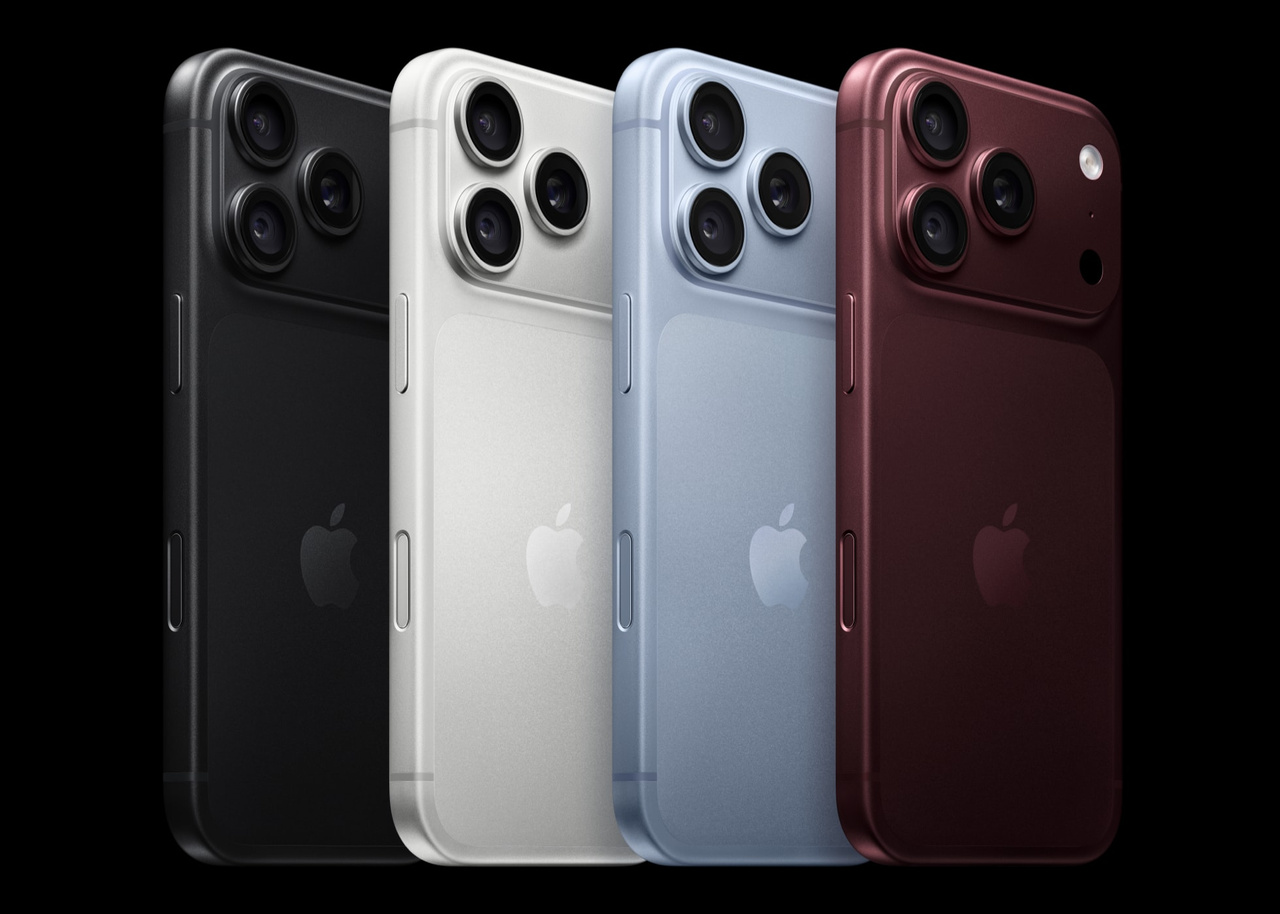
The design update is quieter. iPhone 18 Pro uses color-matched aluminum and back glass for a more unified look. The colors are deep black, silver, glacier, and burgundy.
A20 Pro: the part worth watching is heat
A20 Pro brings 2nm technology, a six-core CPU, a seven-core GPU, a 32-core Neural Engine, and more memory bandwidth. Useful, certainly, but the core-count parade is the sort of thing readers forget before they reach the next paragraph.
Why this matters: Revised chip packaging places the silicon closer to a larger vapor chamber, with three times the surface area of the iPhone 17 Pro’s. The design is intended to keep demanding games, long video shoots, camera processing, and on-device AI tasks running at full speed longer instead of becoming warm little reminders that physics is undefeated.
Apple’s testing puts sustained performance up to 40% ahead of iPhone 17 Pro. Alongside the vapor chamber, new graphite and a new copper material help move heat away from the display. A20 Pro efficiency and a redesigned battery also contribute to the higher endurance ratings.
Sustained performance matters during a long recording session or demanding game, when heat can force a phone to slow down. Independent testing will show how well the cooling holds up under that kind of load.
The bigger pitch
Apple wants iPhone to act as an intelligent personal hub. That means AI should use context from your calendar, messages, routines, and other apps to help you get things done.
The pitch has real appeal. Your phone is already the device in your pocket all day, and it already knows more about your daily life than most people would admit at dinner.
The system is designed to handle intelligence on the device whenever possible, with Private Cloud Compute handling tasks that need a larger cloud model.
That is the privacy promise. The practical question is whether the system can be helpful without becoming creepy, slow, or confidently wrong.
This is also where the new chip matters. A personal assistant that takes too long to respond will feel less like help and more like a progress bar with opinions.
Executive remarks
“We’ve made advancements to the areas our users care about most: camera, performance, battery, and intelligence,” said Greg Joswiak, Apple’s senior vice president of Worldwide Marketing.
The hardware changes connect: camera processing needs computing power, sustained performance needs cooling, and both affect battery life. The 48MP Fusion main camera adds variable aperture and new manual controls, giving photographers more ways to shape a shot before editing.
Siri is part of the story, not a separate iPhone feature
Apple used the 18 Pro demo to show Siri AI searching Mail and Messages, reading what is on screen, using the camera for context, and acting in third-party apps.
It also showed a new Siri app that syncs conversations across Apple devices. That could be useful for people who start a task on one Apple device and pick it up on another.
Siri AI’s announced compatibility spans more than 300,000 apps. The useful measure is how well it handles actions in the apps you rely on.
Apple Intelligence is scheduled to arrive in 16 supported languages with this month’s OS releases. Siri AI begins in English, with French, Japanese, Korean, Portuguese, and Spanish support planned for October.
This is not an iPhone 18 Pro exclusive. Apple introduced Siri AI at WWDC for supported iPhone, iPad, Mac, Apple Watch, and Vision Pro devices. The 18 Pro may run Apple’s newest on-device model, but the demo does not make the core Siri experience unique to this phone.
The real test is simple. Does Siri get the right answer, protect private data, and work when the phone is not on a keynote stage? A smooth demo is the easy part.
Android users have seen parts of this before
Google made Gemini Live camera and screen sharing available on Android in 2025. Gemini can also connect to services such as Gmail, Calendar, Docs, Drive, Messages, Phone, and WhatsApp, depending on the phone, country, language, and account settings.
So Apple is not entering an empty field. Android users have already seen assistants look at a screen, use a camera for context, and reach into connected apps.
Siri AI is not the same product. Apple is leaning hard on private processing and the fact that its devices, apps, and services live under one roof.
That can be an advantage if the pieces work together. It can also become a tidy-looking walled garden if the useful actions stop at Apple’s front door.
Apple has to show more than a late and shiny take on features Android users already know. The winner will be the assistant that works when the phone is not on a keynote stage.
The camera change that actually matters
iPhone 18 Pro gets a new 48MP Fusion main camera with variable aperture. The opening widens to gather more light in darker scenes, then narrows when a shot needs more depth of field. Apple puts the low-light improvement at about 50% more light.
Aperture controls how much light reaches the sensor. It also affects how much of a scene looks sharp. A wider aperture can help in dim restaurants or at night. A narrower setting can keep more faces in focus in a group photo.
Apple built the mechanism with six laser-cut blades, a rotor, and a custom lens. That is real camera hardware, not a software portrait-mode blur filter pretending to be optics.
The aperture adjusts automatically, but the new Pro Controls give photographers four manual aperture options. They can also adjust white balance, shutter speed, and use a histogram to check exposure.
The video tools get attention too. Regular video can gain cinematic-style effects after capture, Time-lapse now supports 4K Dolby Vision HDR, and Audio Mix adds improved voice processing and music support.
Smart Focus Tracking uses on-device AI to follow a subject as it changes position or moves out of frame and back. It sounds useful for kids, pets, events, and any shoot where the person behind the camera has only two hands.
Apple is not first with a variable-aperture phone camera. Huawei has used mechanically adjustable apertures in its flagships for years, and the Pura 90s Max vs. Pura 80 Ultra camera review shows why the surrounding lens system matters as much as the mechanism itself.
That is the fair context. Apple’s new camera is a meaningful iPhone addition. The test is whether it produces better photos and better control in everyday use, not whether six tiny blades can survive a keynote close-up.
The event carried a shot-on-iPhone-18-Pro credit and showcased features including variable aperture. That gives the camera a broader showcase than a single staged portrait, though a professionally produced launch film is hardly an everyday shooting test.
The last few changes
The Dynamic Island is smaller and can now show up to three Live Activities at once. That sounds minor, but it is the kind of quality-of-life change people notice every day.
iOS 27 adds customizable Liquid Glass, Mail search improvements, child-safety controls, and up to 80% faster AirDrop transfers, according to Apple.
The more unusual addition is iPhone Handoff. It lets one phone number work across two iPhones, with the active phone number moving to the iPhone you pick up. Launch carrier support includes T-Mobile and Telekom Germany, with Verizon and EE planned by year’s end.
Apple also announced an updated clear case and new case colors. Accessories are accessories, but at least the phone will have something to wear while it processes all that personal context.
Price, preorder, and availability
iPhone 18 Pro starts at $1,199. iPhone 18 Pro Max starts at $1,299, and the lineup adds a 2TB storage option.
Preorders open Saturday, September 12. The phones will be available September 18.
In the U.S., the announced trade-in offer provides up to $1,200 in credit for an iPhone 14 or newer, subject to eligibility and offer terms. Apple Upgrade is a new leasing program with 12- or 24-month payment options and an upgrade path at the end of the lease.
The pricing is the familiar Pro tax, now with a bigger storage ceiling. The trade-in offer will matter more to many buyers than the headline price, but it depends on the phone being traded and the final offer terms.
Should you upgrade?
If you have an iPhone 14 Pro or older, this looks like the kind of update worth watching.
Better battery life, stronger thermal management, more capable cameras, and newer AI hardware could make a real day-to-day difference. The point is not a faster benchmark. It is less worry when the phone is working hard.
For iPhone 15 Pro owners, the case depends on whether battery life or camera control is a daily frustration. The announced improvements are relevant, but independent testing will show how much they change actual use.
For iPhone 16 Pro and especially 17 Pro owners, wait. Apple’s early claims sound promising, but a new color is not a financial plan.
Creators have the strongest early reason to care. Better low-light photos, variable aperture, longer video battery life, and steadier performance under load can matter if your iPhone earns its keep by shooting photos or video.
The camera controls are also more useful than a fresh filter pack. Aperture, shutter speed, white balance, and exposure tools give experienced shooters more room to get a shot right before editing begins.
For everyone else, the sensible next step is to compare independent battery and camera results with the phone already in their pocket.