The way most creators buy a laser is frustratingly familiar.
You pick the machine that does the job in front of you. Then your business changes. Maybe customers start asking for bigger signs. Maybe you need fast engraving instead of a larger bed. Maybe you want to take on metal, glass, acrylic, or a new type of personalized product.
Now you’re looking at another machine.
That’s more money, more shop space, more software, more maintenance, and another learning curve. It’s a messy way to grow, especially when you’re still figuring out what your business is going to become.
What grabbed me about xTool’s X1 launch wasn’t a single spec or a flashy stage trick. It was the company’s attempt to take that cycle apart.
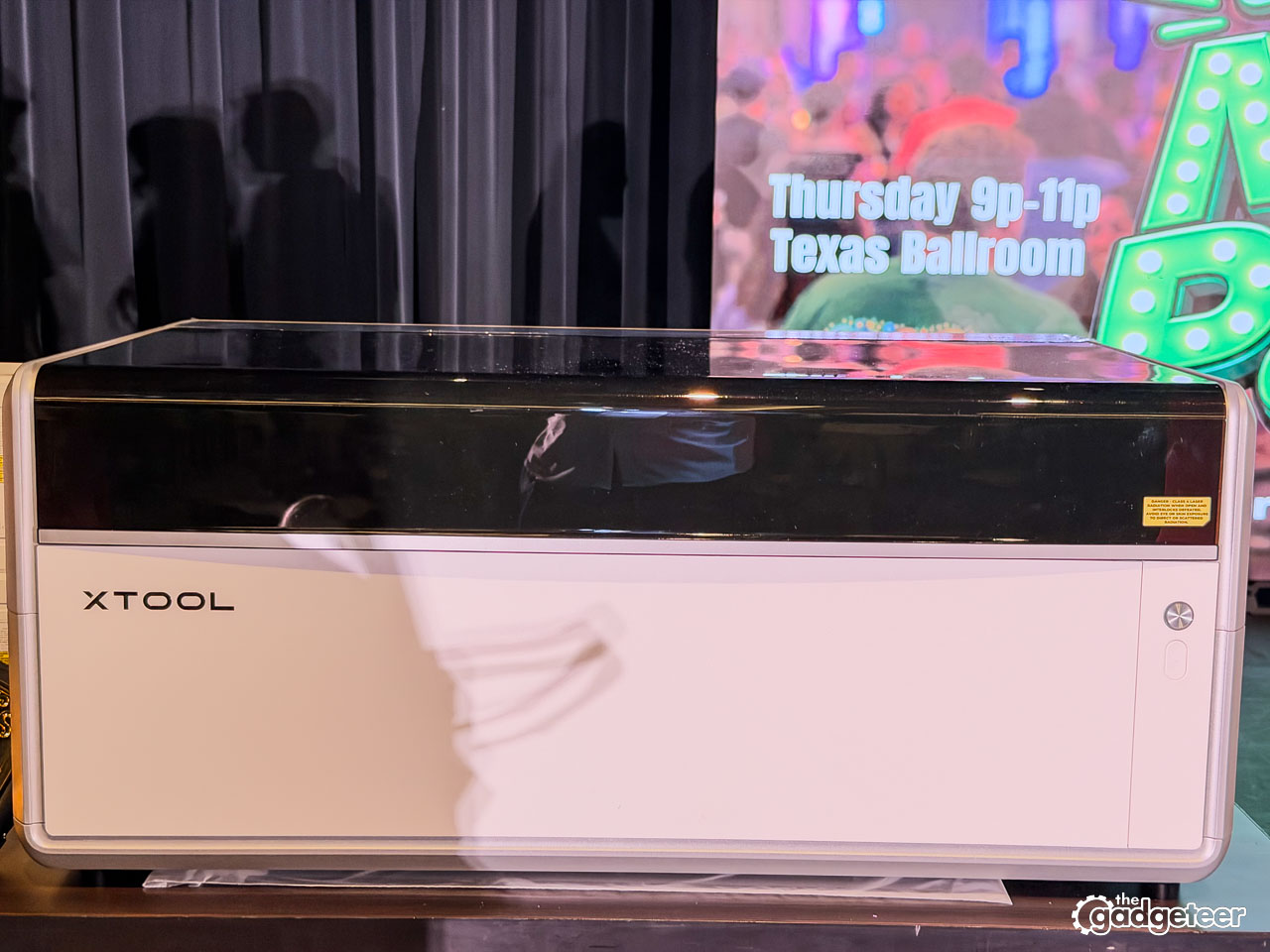
The X1 is being positioned as a laser platform that can grow instead of being replaced. It combines the large working reach of a gantry machine with the speed of a galvo system, then layers in a plan for swappable laser sources. xTool calls the three pieces of that plan Hybrid Motion, Laser Swap, and the UniCast Frame.
If it works the way xTool showed it, this isn’t just another new laser. It’s a different answer to a question makers have been asking for years: how do I expand without starting over?
The old tradeoff: room or speed
A gantry laser is built for reach.
The laser head moves across rails, which gives the machine room to work on larger pieces. That’s the setup you want when you’re cutting signs, panels, furniture parts, or anything that doesn’t fit in a small engraving field.
A galvo laser works another way. It uses mirrors to move the beam, which makes it extremely quick for engraving inside its working field.
Both approaches are useful. Neither is a complete answer on its own.
You buy a gantry when size is the priority. You buy a galvo when speed is the priority. Then you live with the choice.
xTool’s Hybrid Motion system is meant to take that choice off the table. The gantry covers the larger work area, while the galvo head handles faster engraving work. The idea is that the machine can use the right motion system for the job instead of making you commit to one before you even buy it.
That sounds obvious when you say it out loud. It’s also much harder to build than it sounds.
Why Hybrid Motion is the part I’m watching closest
Putting a gantry and a galvo head into the same machine isn’t enough. They move differently. Their timing is different. Their positioning logic is different.
If the two systems don’t agree about where they are, the result isn’t a clever all-in-one machine. It’s an expensive alignment problem.
During the presentation, xTool said it designed the machine structure, electronics, and control software together from the start. The company described a shared coordinate map, automatic path planning, synchronized timing, and live software corrections to keep the gantry and galvo system working as one.
That’s the real promise here. I don’t need two systems sharing a box. I need one system that knows when to use speed, when to use reach, and how to stay accurate while doing it.
xTool says that’s what the X1 is designed to do.
If the machine can move from a large project to fine, fast engraving without turning the workflow into a technical chore, it’ll solve a problem that’s been baked into the desktop laser market for a long time.
More than one laser source, without more than one machine
The launch presentation identified a 55W CO2 laser and a galvo head with a built-in 20W diode laser. xTool also showed a rear expansion area, referred to onstage as a backpack, for additional laser sources.
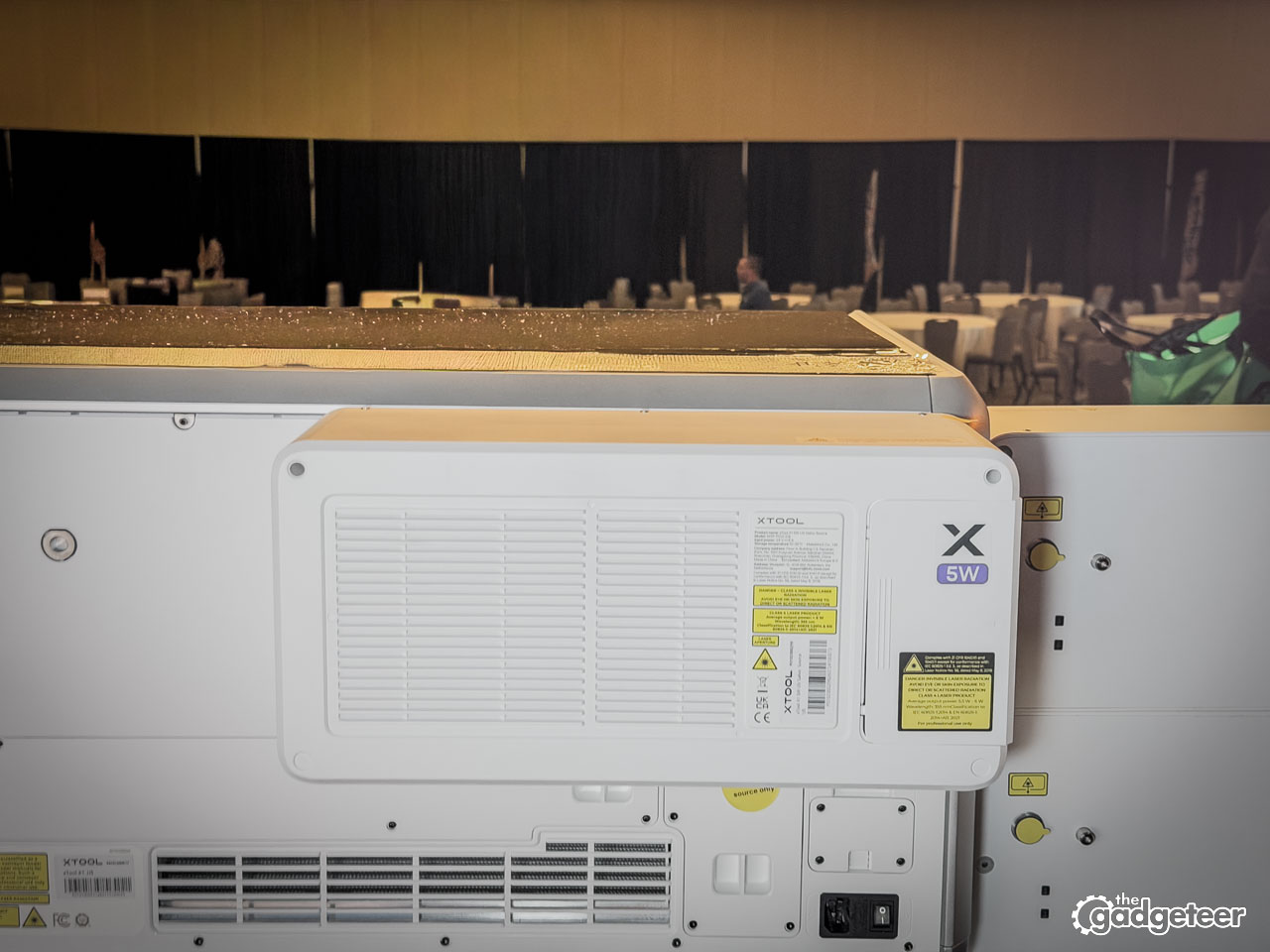
That’s where Laser Swap enters the picture.
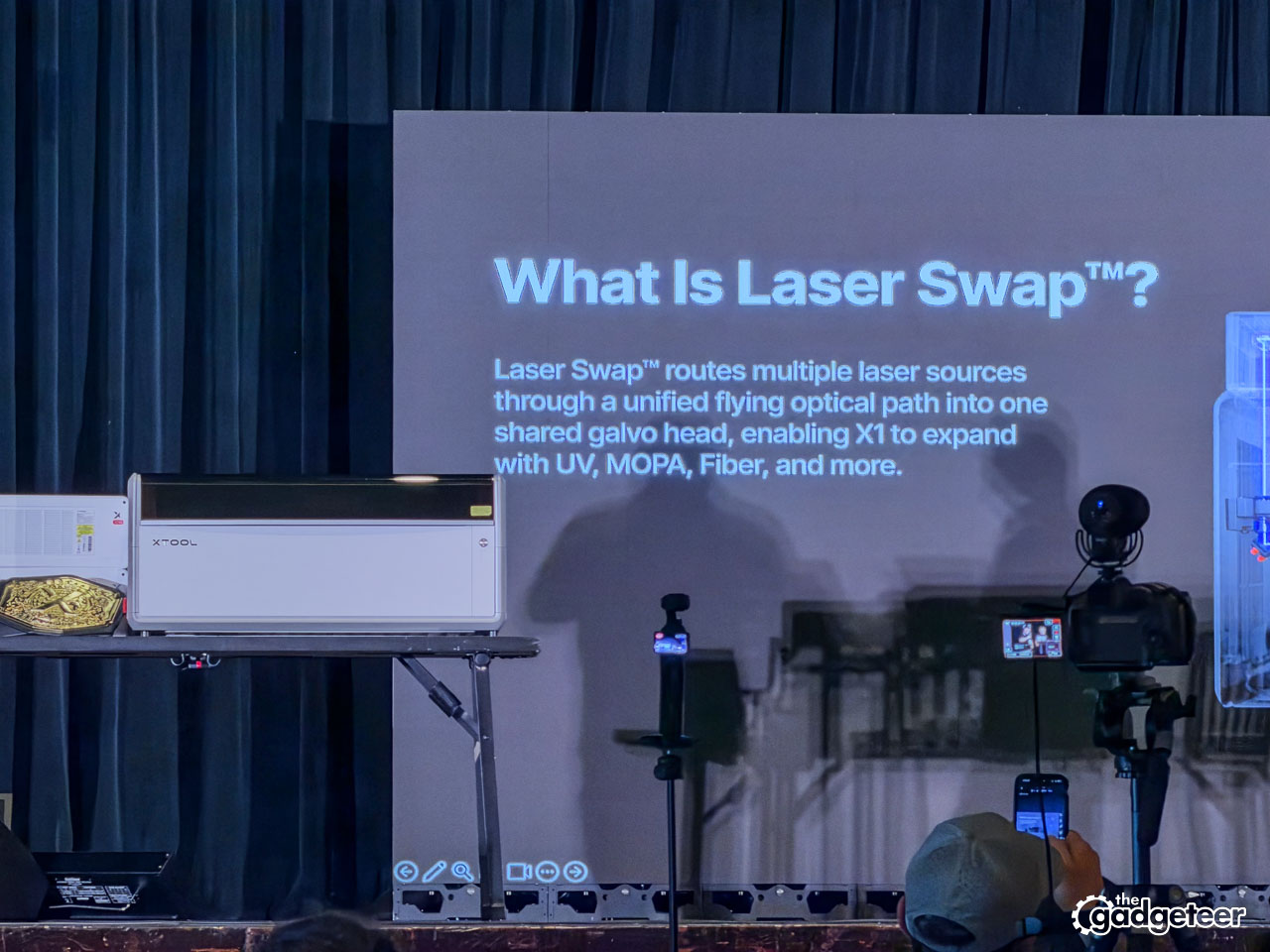
The company’s pitch is that the laser source doesn’t have to be permanent. Rather than buying a whole new machine when your work changes, you could add or change the laser source attached to the main platform.
That’s a much bigger deal than it may sound.
A maker who starts by cutting wood and acrylic doesn’t always know where the business will go next. Maybe the opportunity is personalized metal products. Maybe it’s faster production. Maybe it’s a different material category entirely.
At the moment, those choices often mean adding another dedicated machine. xTool wants the X1 to be the machine that stays, while the laser capability evolves around it.
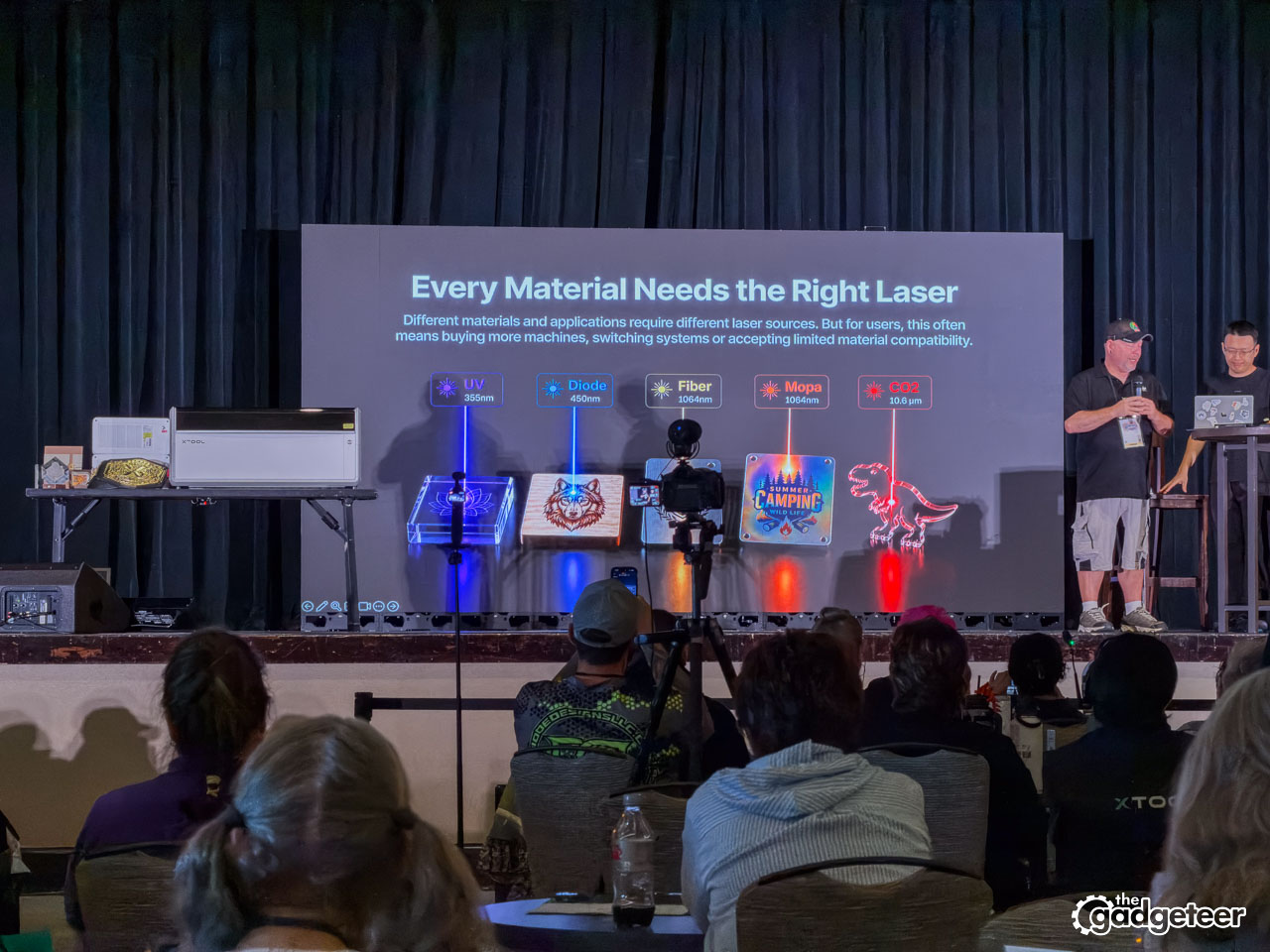
During the presentation, xTool announced that the X1 supports 5W UV, 60W MOPA, and 30W Fiber laser sources. The company said more laser types and power options are on the way. Those missing details are going to be crucial.
Still, the strategy is easy to understand. If you can add a new capability to the machine you already own, you can wait to spend the money until the work is actually there.
That’s a smarter way for a small business to grow.
The engineering behind Laser Swap can’t be hand-waved
It’s tempting to hear “swappable lasers” and think it’s simply a connector on the back of the machine.
It isn’t.


Different laser sources have different wavelengths, beam characteristics, divergence angles, and power profiles. A modular system has to keep each source properly aligned while maintaining accurate positioning across the work area.
xTool said it tested more than 50 optical designs and ran more than 1,000 collaboration or calibration tests. The company also described a separate calibration model for each laser source and software that can correct small errors.
The presentation further described a unified optical path that routes the beams from different sources through the same system.
Those are xTool’s claims, not yet independently tested results. But they address the right problem. Laser Swap only becomes useful if changing a source doesn’t create a long, fussy setup process for the owner.
I’ll want to see that process in real life. How quickly can a source be added? What does it cost? Does the owner have to recalibrate? Does it need service support? What happens to safety and enclosure requirements as sources change?
Those questions are still open.
But xTool is at least aiming at the part of modularity that’s normally ignored: making the setup practical after the marketing slide is over.
A rigid frame isn’t glamorous, but it’s essential
The UniCast Frame may be the least flashy part of the X1 story. It may also be one of the reasons the rest of the design has a chance to work.
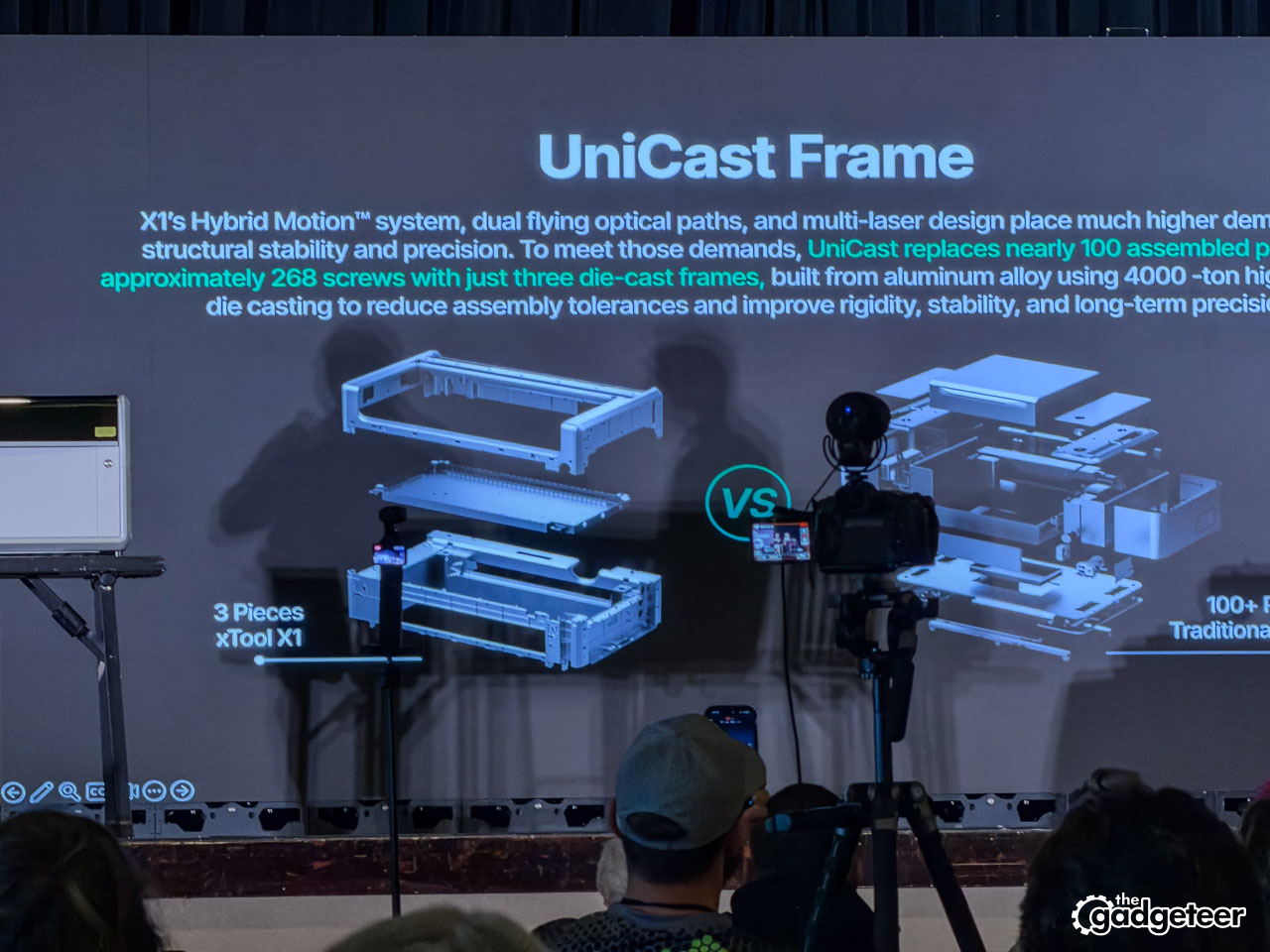
Software can compensate for some errors. It can’t turn a vibrating, flexible frame into a rigid machine.
xTool says its UniCast Frame replaces more than 100 separate parts and more than 260 screws with three cast-aluminum units. The stated goal is fewer assembly errors, better rigidity, more stability, and improved long-term precision.
That tracks with the rest of the machine. Hybrid Motion needs the gantry and galvo system to stay in the right place. Laser Swap needs different laser sources to stay aligned. Neither idea holds up if the frame shifts while the machine is moving.
The briefing also mentioned a 4,000-ton press. I’m leaving that out of the publishable body until xTool confirms it in its own product materials. It’s an easy number to repeat and not an important enough number to risk getting wrong.
The useful takeaway is simpler: xTool knows the X1 needs a more rigid foundation than a normal one-laser, one-motion-system machine.
This isn’t meant to replace every xTool
The X1 doesn’t make the rest of xTool’s family irrelevant.
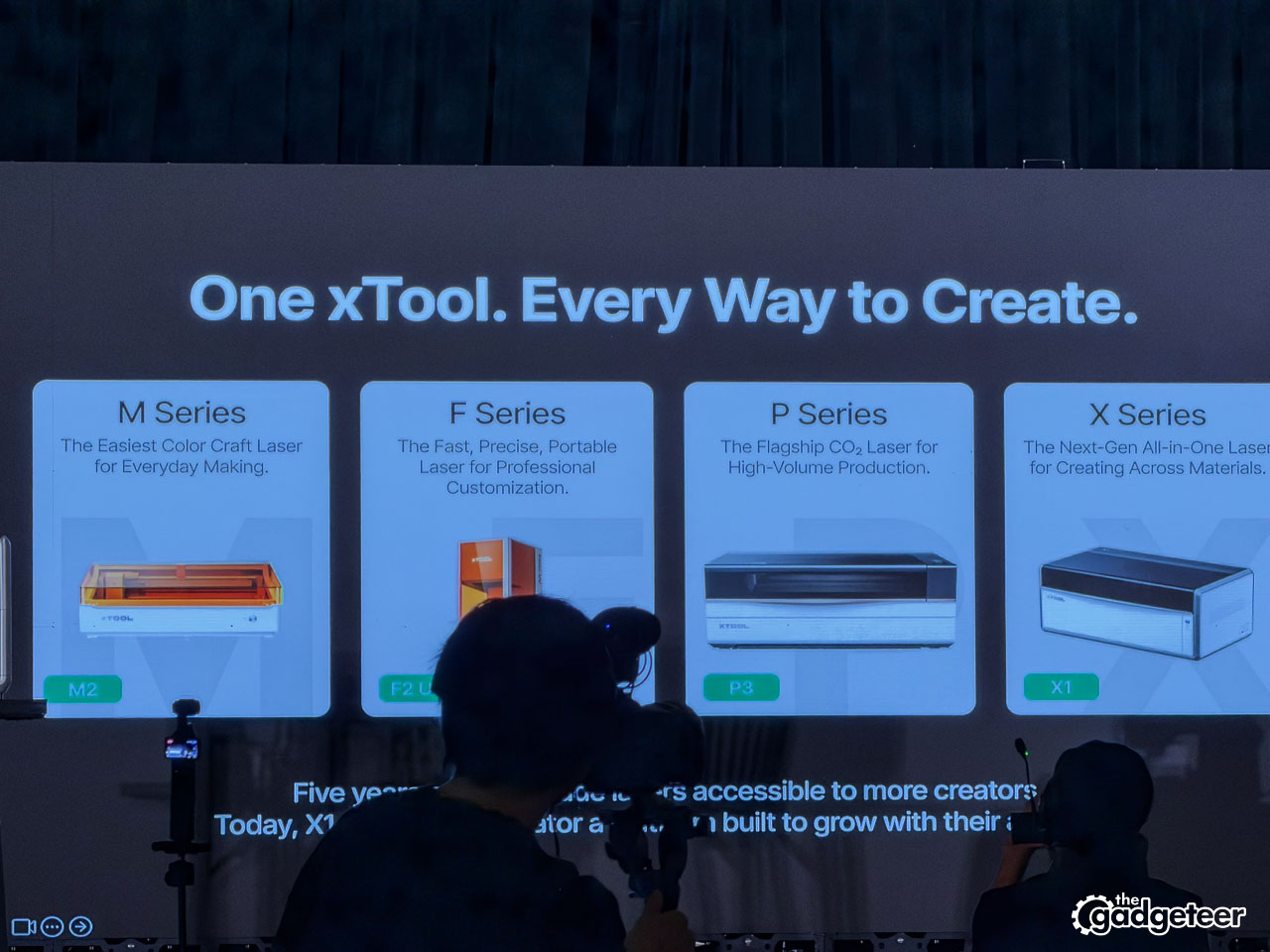
The current lineup is full of machines built around a clear job. The P2S and P3 are CO2 systems aimed at larger-format work. The F-series machines focus on fast engraving and specialized laser work. Other xTool products, including the M-series, have their own role in a broader craft or production workflow.
That focus can be a strength.
If you know exactly what you need to make, a specialized machine may be easier to understand, easier to budget for, and easier to fit into your shop. There’s nothing wrong with buying the right tool for a narrow job.
The X1 is interesting because it’s aimed at a different person.
It’s for someone who’s still finding the edges of the business. Maybe you know you need a laser now, but you don’t know if your next step is bigger projects, faster engraving, new materials, or a product category you haven’t discovered yet.
Instead of making you pick one lane, xTool is trying to give you a platform with room to move.
That doesn’t guarantee it’ll be the best value. The price will decide that. So will the cost of the modules you actually need.
But the thinking behind it is right.
X-Core is the ecosystem with X1 as the machine
The launch also spent time on xTool’s broader X-Core vision.
That part of the presentation was about machines working together through shared software. xTool demonstrated a multi-device workflow that moved between embroidery and laser work, and it talked about connecting laser cutting, printing, and stitching without forcing the creator to manage completely separate processes.
The demo showed why that could be useful. A project can gain color, laser-cut detail, and raised embroidery texture instead of being limited to one type of finish.
xTool also discussed software work intended to bring existing owners, including P2S users, into more of this connected environment.
It’s worth keeping the terms straight.
X1 is the new expandable laser platform.
X-Core is the broader plan for connecting xTool hardware, software, printing, embroidery, and other creative processes.
The two ideas support each other, but they aren’t the same product.
Why I think this really could be a game changer
I don’t use “game changer” just because something is new.
The X1 earns a more serious conversation because it combines three separate limits that creators usually have to manage alone.
Hybrid Motion tackles the size-versus-speed problem.
Laser Swap tackles the “buy another machine when you need another capability” problem.
The UniCast Frame tackles the physical stability needed to make those first two ideas work.
If xTool can deliver on all three, a creator could take on more kinds of work without turning the workshop into a maze of dedicated machines.
That changes how you plan a business.
Instead of buying for the work you hope to get, you can buy for the work you have and expand when the opportunity proves itself. You may be able to say yes to a new customer without first asking where you’re going to put another machine.
That’s why I’m excited about the X1. The machine isn’t exciting just because it combines features. It’s exciting because it gives creators a more forgiving path to growth.
The biggest questions are still unanswered
xTool didn’t announce a price during the briefing.
That’s the missing piece. The base price will matter. The cost of the CO2, diode, fiber, or other modules will matter even more. A modular platform only makes financial sense if the path to expansion is less painful than buying separate machines.
The company said it hopes to launch the X1 in October 2026. That’s a target, not a confirmed shipping date.
We also still need:
- The final work area.
- Cutting-thickness figures.
- Engraving-speed figures.
- A complete material list.
- Safety certifications and operating requirements.
- Which laser sources are included at launch.
- The prices and availability of future modules.
- A clear explanation of who can install or service each module.
And then there’s the part that no launch presentation can answer.
How does it actually feel to use?
Does Hybrid Motion work smoothly? Is Laser Swap simple enough for a normal owner? Does the software make the system feel like one machine, or does it expose all of the complexity xTool is promising to hide?
Those are the questions I’ll be answering once there’s a real machine to test.
The bottom line
The X1 is one of the most ambitious laser-platform ideas xTool has put in front of creators.
It brings gantry reach and galvo speed into the same conversation. It proposes a way to add laser capability without replacing the whole machine. And it backs that idea with a frame built for greater rigidity and accuracy.
That’s not a small update.
It’s a serious attempt to make a laser machine feel less like a fixed purchase and more like the center of a growing business.
We still need the price. We still need the final spec sheet. And we need hands-on testing before anyone can call the X1 a better buy than a focused machine in xTool’s current lineup.
But based on the briefing, I’m excited.
xTool has put forward a machine that lets creators grow into new work instead of buying their way into it from scratch. That changes how creators buy laser equipment.