Razer’s new Seiren V3 Chroma 32-Bit DSP starts at $119.99, which is $10 under the starting price of the Seiren V3 Chroma it upgrades. That reads like a bargain until you check what the older mic actually sells for, which is closer to $88 to $100 at Best Buy, Newegg, and other retailers. The upgrade costs more than the model it builds on, not less.
Price: $119.99
Where to Buy: Razer
Razer announced the mic on July 21, and its store prices Black at $119.99 with White and Quartz $10 higher. It follows Razer’s Hammerhead V3 X HyperSpeed earbuds by a week, another recent Razer audio launch. The newsroom post didn’t give an on sale date, though the store is taking orders with delivery estimated from late July into early August.
The Price Story Isn’t the One Razer Is Telling
Razer’s own pages set up a clean comparison. The DSP model starts at $119.99 and the standard Seiren V3 Chroma starts at $129.99, and both are floor prices rather than flat ones. Compared at the entry configuration of each, the version with onboard processing is the cheaper one on paper.
Retail pricing tells a different story. The standard model has been running roughly $88 to $100 across major retailers, including a July deal at $87.99 marked as $42 off. Against those numbers the DSP version carries a premium of $20 to $32 rather than a discount.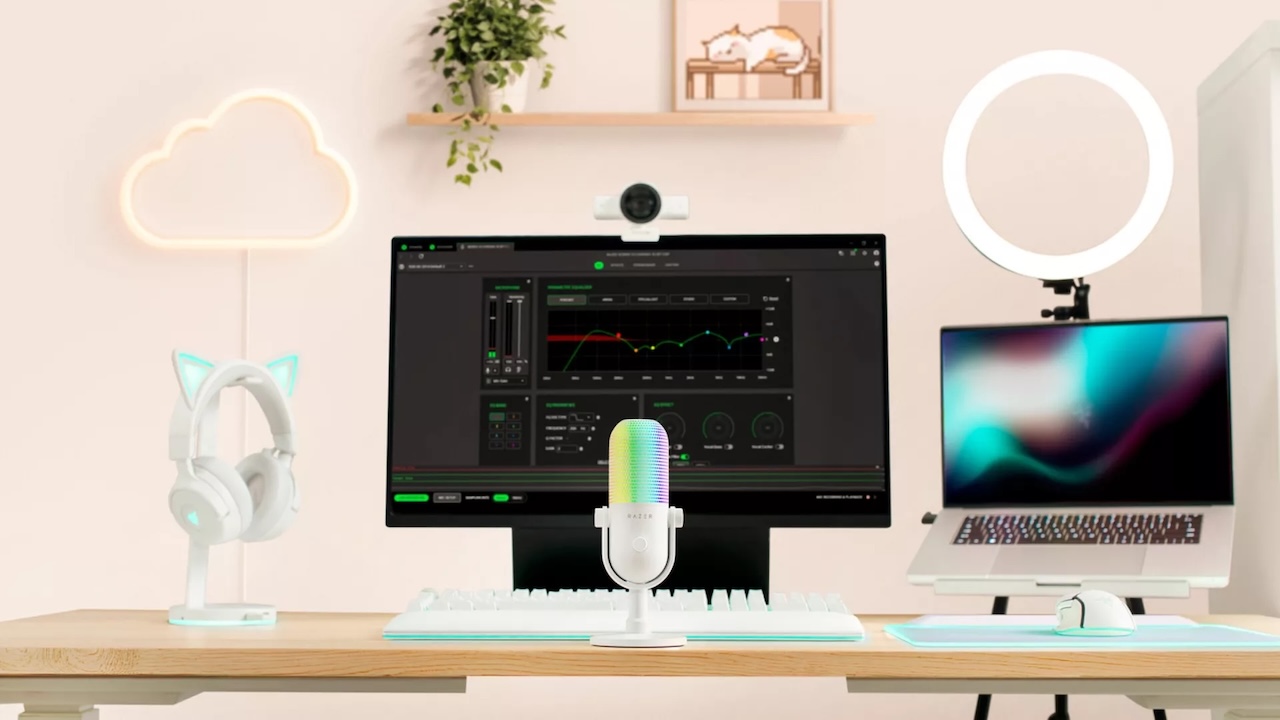
That doesn’t make it a bad buy, but it changes the question. Anyone weighing the two is deciding whether onboard processing is worth roughly 20 to 35 percent more than the mic sitting next to it on the same shelf.
The finishes carry their own math. Black is the $119.99 entry, and Razer’s store adds $10 for White or Quartz, which lands either of those at $129.99. That’s the standard model’s own starting price, so the cheaper headline number only holds if you’re happy with black.
What Razer Hasn’t Answered
The announcement doesn’t include latency figures, and it doesn’t include noise rejection measurements from anyone other than Razer. The company’s spec comparison covers max SPL and signal to noise ratio.

It also doesn’t establish how the processing behaves in the rooms that actually need it, meaning spaces with several voices, a loud mechanical keyboard, or gain pushed harder than it should be. Those gaps mark the line between what’s been announced and what a hands on test will have to settle.
The Pitch Is Fewer Knobs, Not More
The useful idea here is that the cleanup happens on the microphone. Razer says the onboard DSP works at 24 or 32 bit depth and 48 or 96 kHz sample rates, which gives it more room to absorb a sudden jump in volume before a live vocal clips.
A home streamer usually doesn’t need another menu to manage. They need a microphone that holds the signal steady while they pay attention to the game, the guest, or the chat.

Moving that work into hardware also keeps it off the host computer. Razer frames the processing as running independently of PC resources, which matters on a machine already handling a game and an encoder at the same time.
What’s Actually On the Microphone
Razer’s description covers four jobs: an AI driven noise reducer, EQ that sets itself, a compressor, and a limiter. All four are meant to run on the mic rather than in software, aimed at two problems a lot of home setups have, a computer fan running beside the desk and a bare wall bouncing sound back into the capsule.
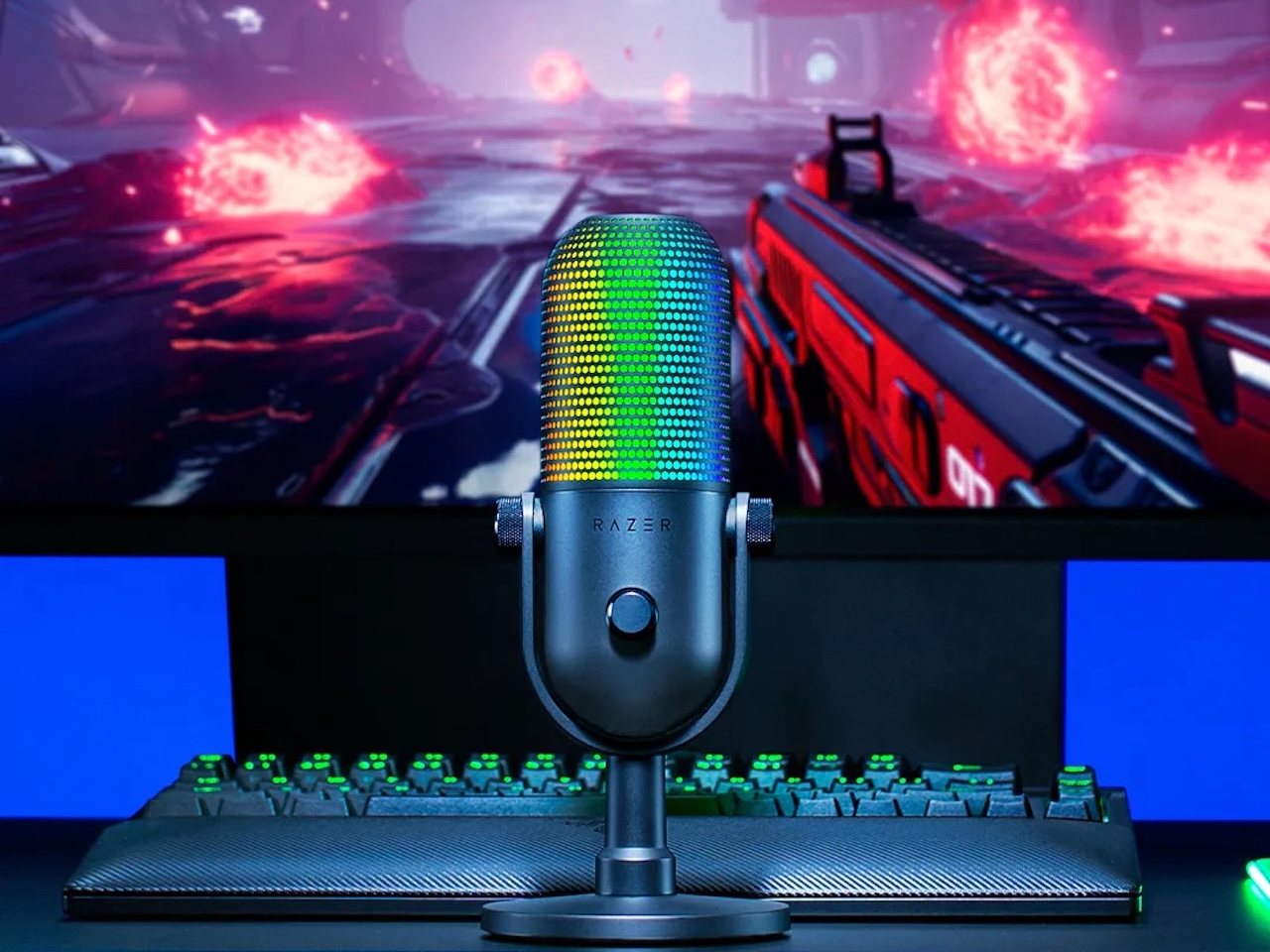
Underneath is a 16 mm supercardioid condenser capsule, which listens in a tighter pattern than a standard cardioid and is why Razer claims keyboard and mouse noise stays lower in the mix. Razer’s FAQ rates the DSP model at 120 dB max SPL and 112 dB signal to noise, against 110 dB and 96 dB on the standard version, and those are the company’s figures rather than measurements we’ve taken. A tap sensor on top handles mute, with double and triple taps assignable in Synapse. Connection is USB-C to USB-A with no drivers to install, and Razer names OBS Studio and Discord among the supported apps.
The Lighting Earns Part of Its Keep
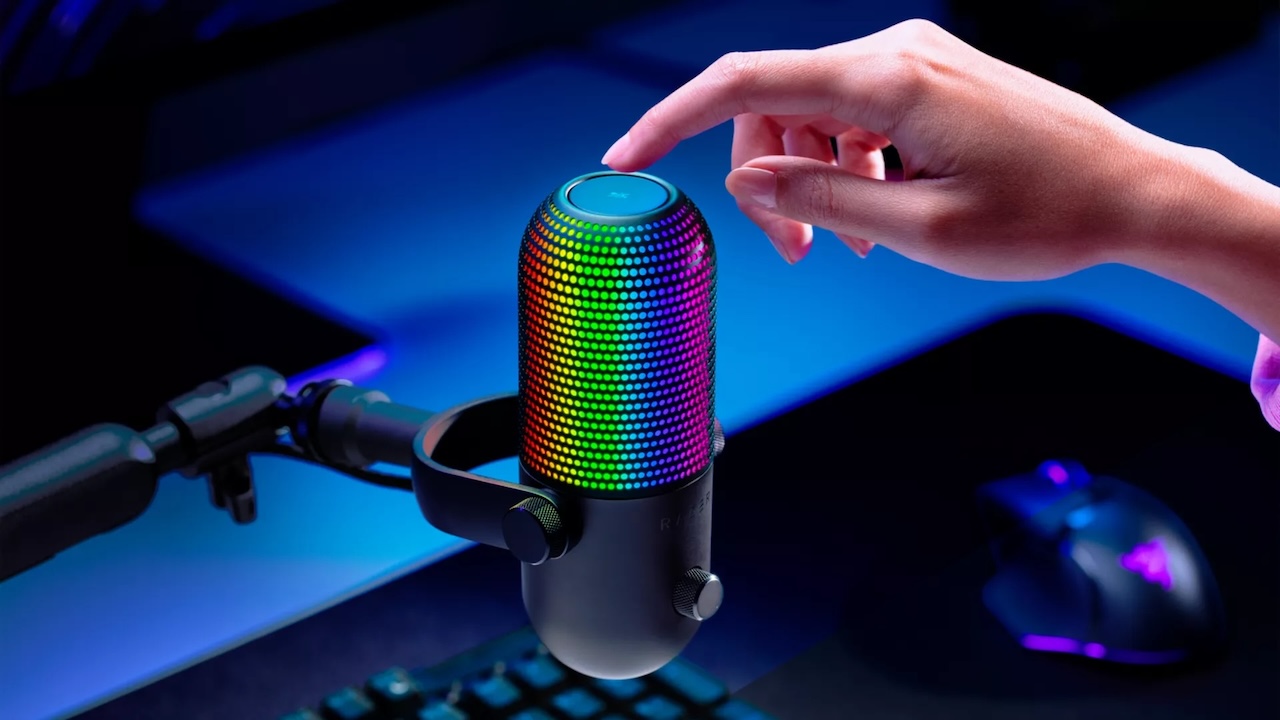
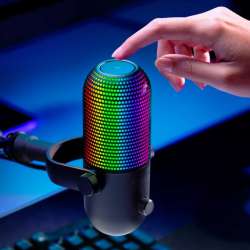
The lighting isn’t purely cosmetic. Razer says it reacts to what’s happening on the stream, so an on stream alert, a burst of chat, or a moment inside a supported game can each change what the mic is doing visually, and the behavior is configurable in Synapse and the Streamer Companion App.
It’s optional theater. On a microphone that sits in frame rather than behind a monitor, though, theater is part of the job, and it’s the clearest reason to pick this line over a plainer mic at similar money.
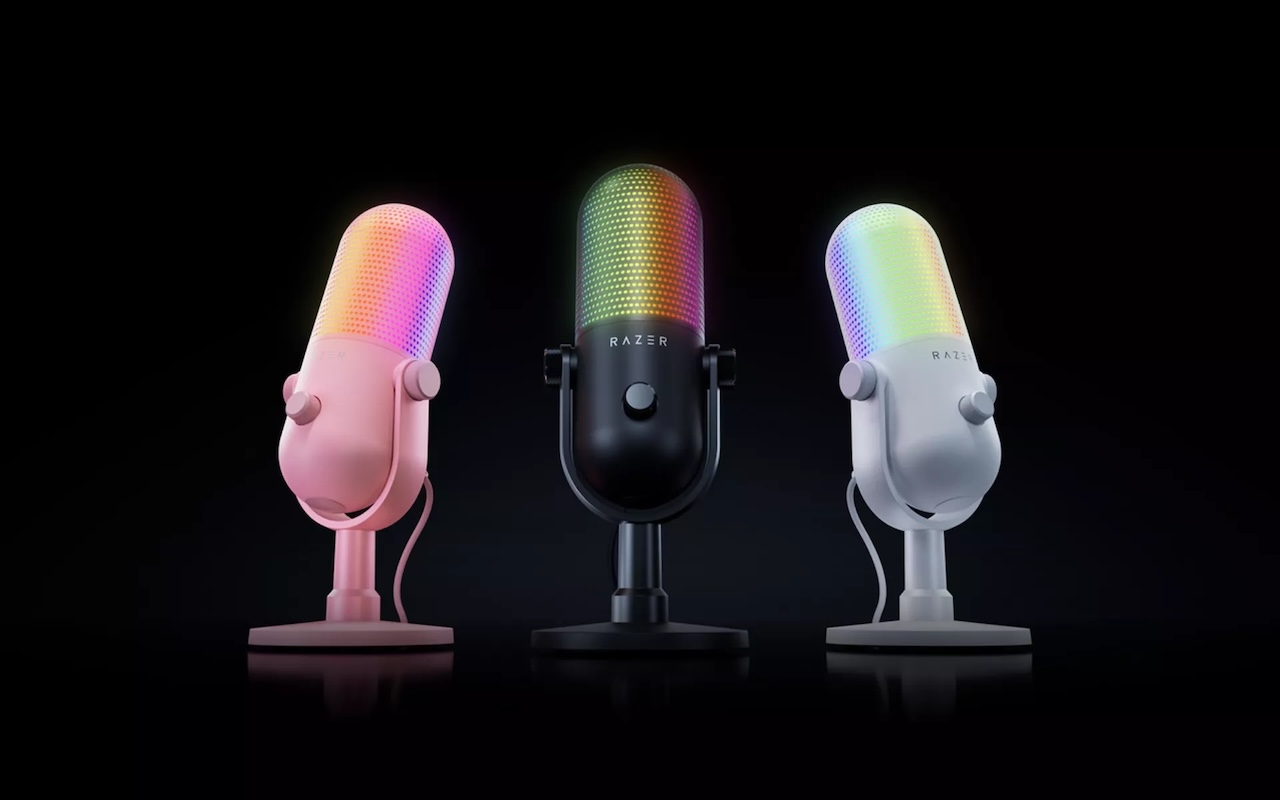
Razer says the lighting syncs across its other Chroma enabled devices and reacts across more than 200 supported games, with effects customizable in Synapse. That ties the mic to the rest of the company’s ecosystem, which is worth something if you already own Razer gear and nothing at all if you don’t.
Finish choice matters more on a mic like this than on gear that hides under the desk. Razer sells it in Black, White, and Quartz, and because the mic stays in frame for the length of a stream, it reads as part of the shot rather than just a tool. Matching it to a keyboard, a lighting setup, or the wall behind you is a fair thing to weigh, as long as you know the two lighter finishes cost $10 more.
TG Take
The Seiren V3 Chroma 32-Bit DSP takes the sensible route through creator audio by putting the protective processing where the signal starts. If Razer’s software behaves as described, this is less about chasing a studio and more about removing the small failures that make a live stream sound amateur.


Price: $119.99
Where to Buy: Razer
The pricing is where the enthusiasm should cool. At list the DSP model undercuts the mic it builds on, but at checkout it costs meaningfully more, so the honest framing is that you’re paying a premium for onboard cleanup instead of getting it thrown in. We’d want a noisy room and a mechanical keyboard in front of it before saying whether that premium is earned.