
People have spent years waiting for robot vacuums to handle everything on the floor. The fantasy is simple: the smarter these machines get, the less you’ll ever need to bend down. Yet after all the AI mapping, obstacle avoidance, and self-emptying bases, you still pick up your own socks before the vacuum runs.
Price: $1,299.99
Where to Buy: Amazon
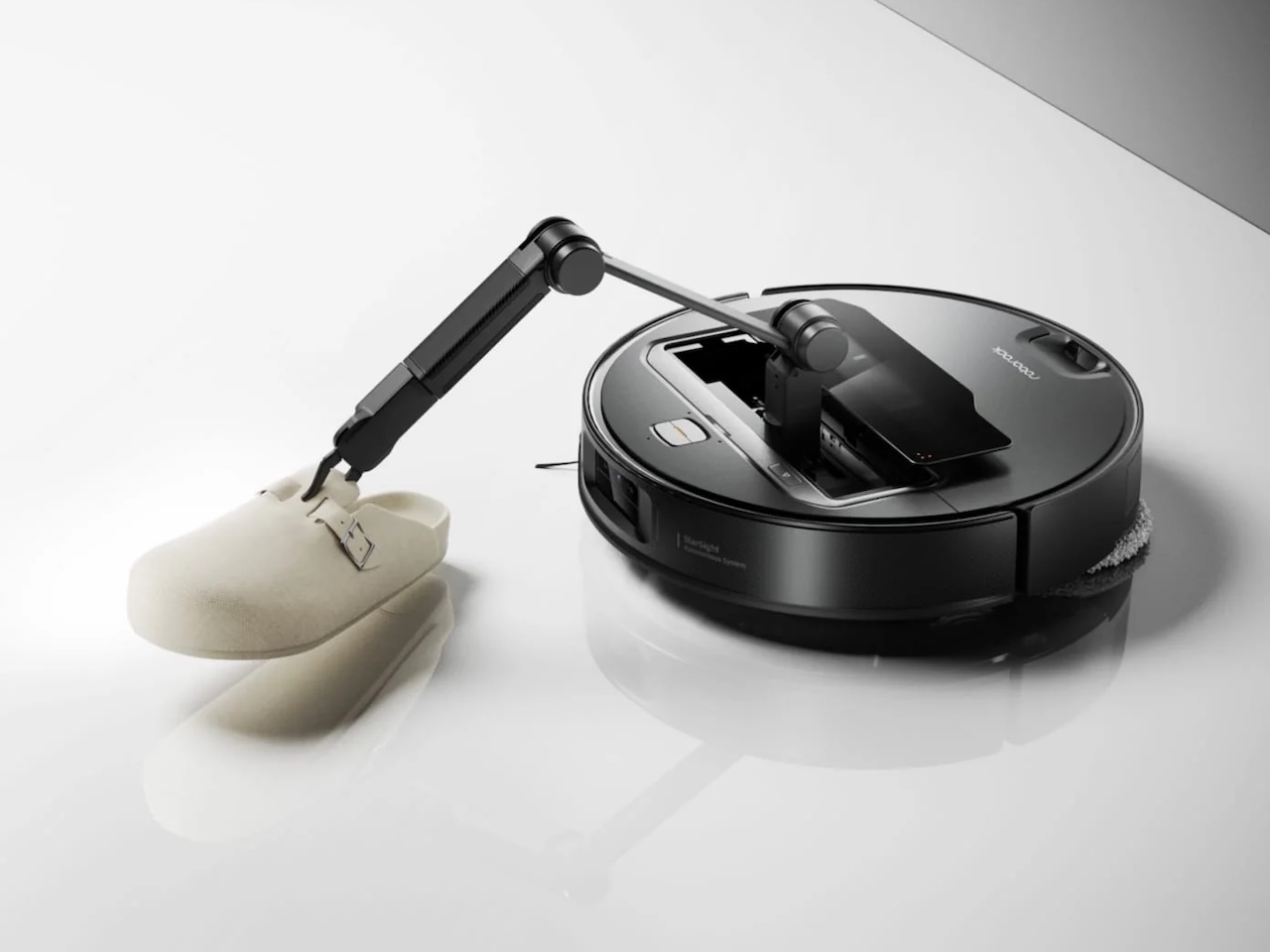
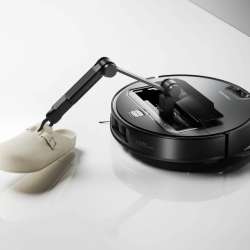
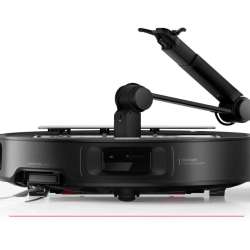
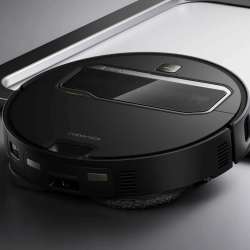
Roborock decided a mechanical arm could close that gap. The Saros Z70 is the first production robot vacuum that picks up socks, sandals, and small objects off hard floors using a retractable mechanical arm, then carries them to a bin you’ve set through the app and resumes cleaning. Listed at $2,599 and currently selling for $1,299.99 at Roborock, Amazon, and Best Buy, it pairs that arm with a 22,000Pa vacuum and mop hybrid, a self-maintaining base station, and a body low enough at 3.14 inches to slide under most furniture. On paper, it’s the most advanced cleaning robot built for consumers. In practice, the distance between spectacle and daily usefulness is wider than the marketing suggests.
So the real question is: does a functional robot arm solve a problem people actually have, or is this $2,599 worth of engineering looking for a reason to exist? The premium vacuum market has compressed hard, with competitors pushing near-identical features at lower prices every quarter. The arm gives Roborock a differentiator no one can match, signaling where the category wants to go: beyond cleaning, toward interacting with physical space.
What it is
The Z70 is a round vacuum and mop hybrid with a retractable arm on its top panel. When the robot spots a recognized object, the arm extends, grips it with a small claw, and drops it in a designated storage bin. It currently recognizes socks, sandals, small towels, and crumpled tissues.
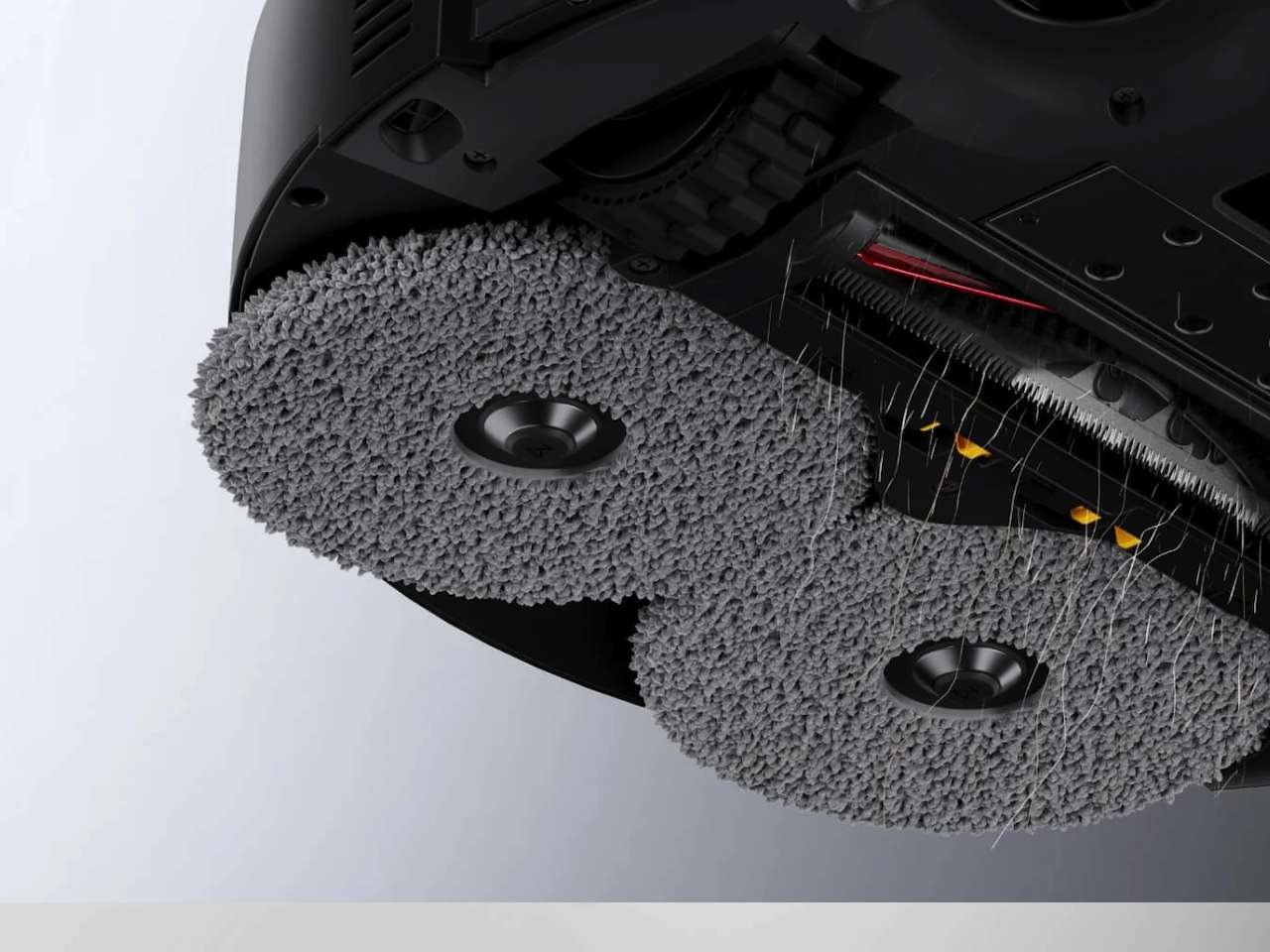
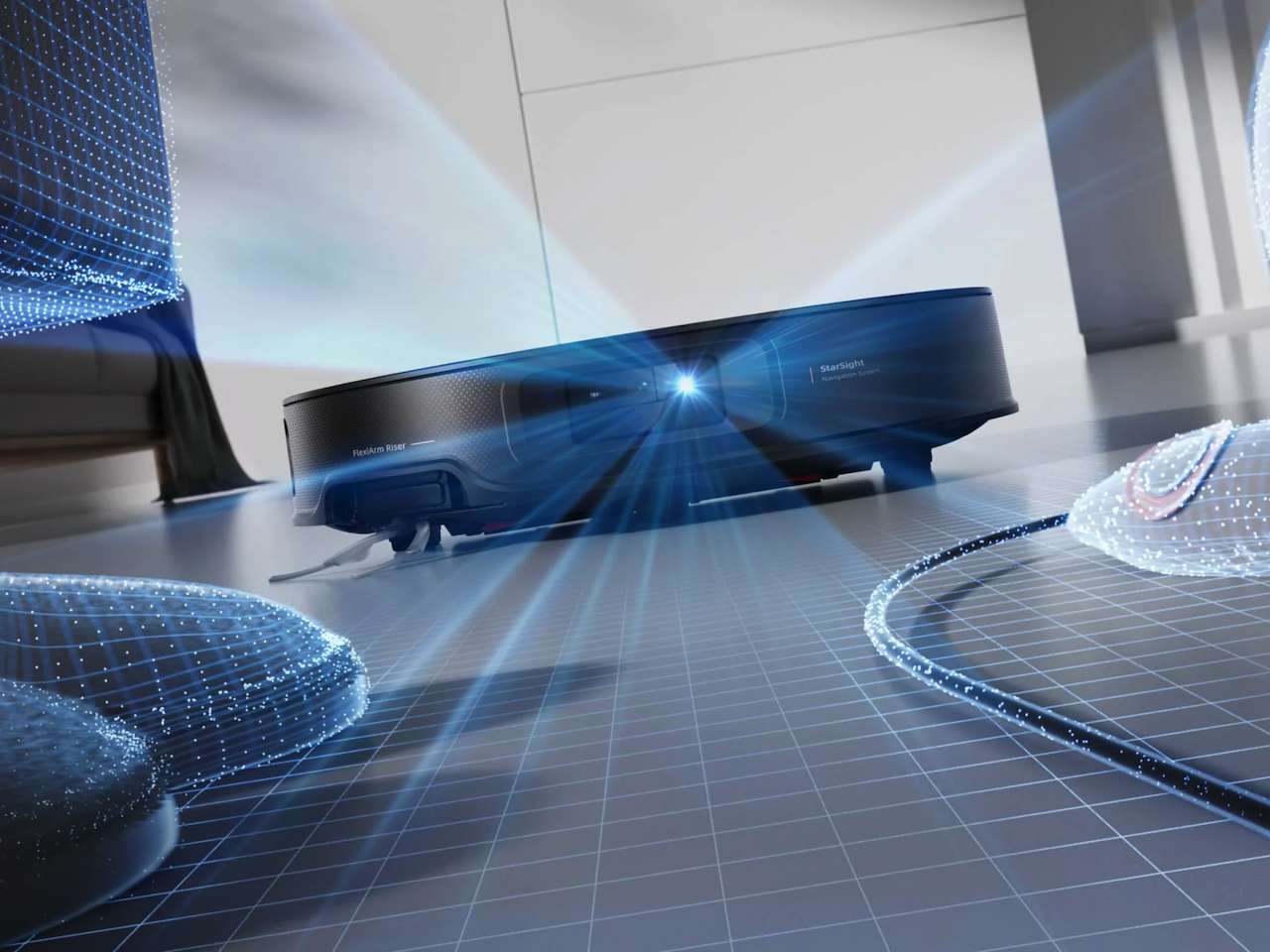
Underneath, 22,000Pa of suction runs through a brush roll with rubber fins, bristles, and anti-tangle slots. Dual mop pads extend to reach walls, the lift 0.87 inches when crossing carpet. Navigation uses StarSight 2.0, replacing the raised LiDAR tower with embedded time-of-flight sensors that drop the profile to 3.14 inches.
The base station washes pads at 176 degrees, dries at 131, empties the dustbin into bags lasting seven weeks, and refills water automatically. You also get a security camera, voice control through “Hello Rocky,” and support for Alexa and Google Assistant. It’s a dense package for something that sits lower than a soda can on its side.
How the arm actually performs
Expectations collide with physics here. The arm lifts objects under 10.58 ounces only, and the conditions narrow its usefulness more than you’d expect.
Socks and paper need to be balled up first. Sandals must face the right direction. Everything has to sit on hard flooring, away from walls and furniture legs. In PCMag’s testing, the arm moved a balled-up sock across rooms on its first try. Consistency dropped after initial runs, including one attempt where the arm dropped a sock onto itself and triggered an error reset.
Here’s the honest math: by the time you’ve positioned a sock so it’s balled up, on hard flooring, and clear of walls, you’ve done more work than picking it up would’ve taken. The engineering impresses up close, with smooth claw movement and solid object recognition on supported items. What the arm demonstrates right now is technical ambition, not daily convenience. One review unit had to be replaced due to base station malfunctions, pointing to quality control variance worth tracking at this price.
The vacuum underneath
Strip away the arm and the Z70 is still a strong cleaning machine. PCMag’s tests put it at or near the top on hard floors, with rice and sand pickup scores that match or beat most competitors in the premium tier. Carpet tells a different story. Fine sand on carpet scored notably lower than both the Ecovacs Deebot X8 Pro Omni and Roborock’s own Saros 10, which suggests the engineering budget went toward the arm rather than deep-carpet extraction.
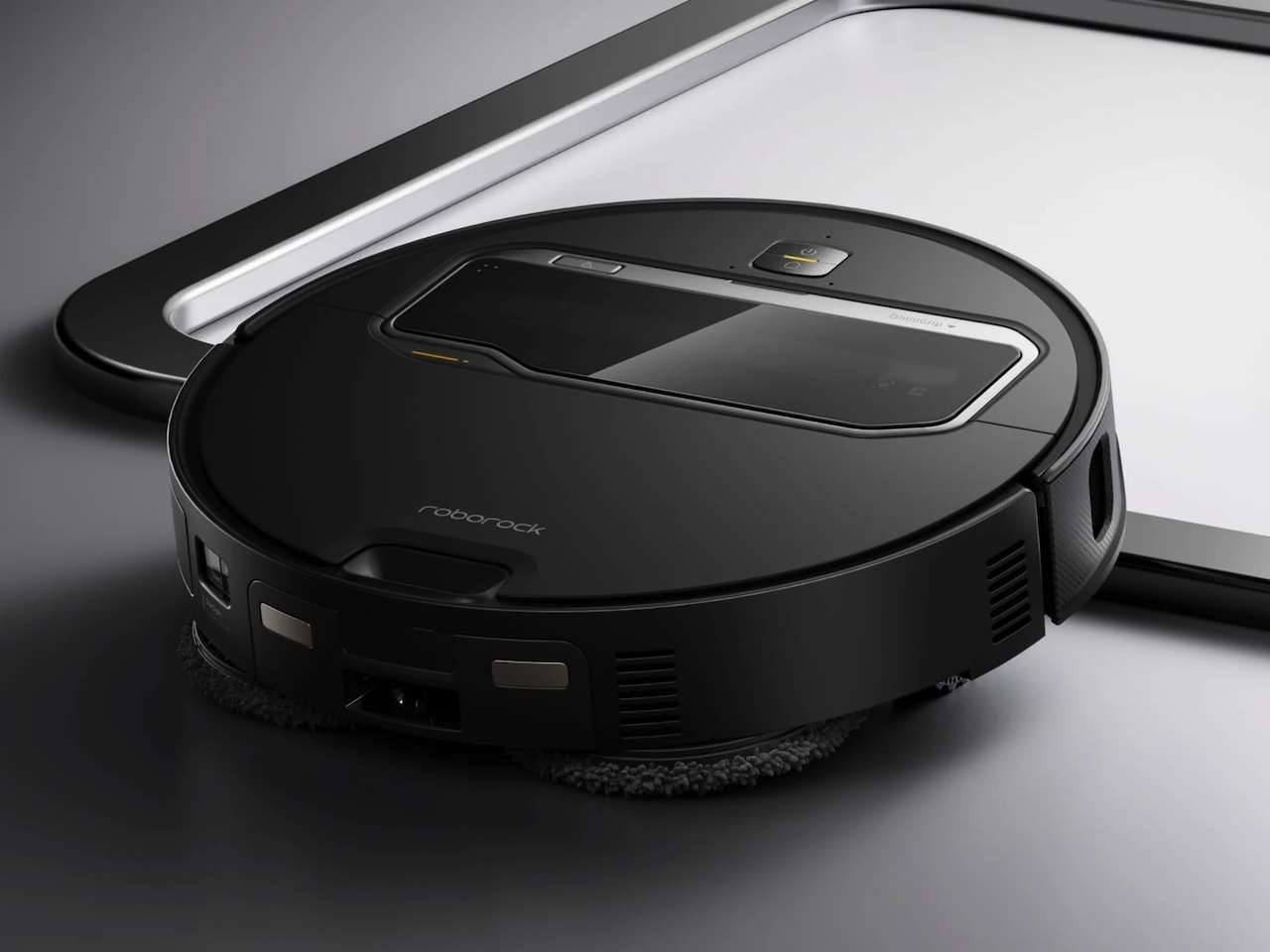
The mop system is where you feel the everyday polish. Extendable pads reach close to walls, hot water washing at 176 degrees keeps them genuinely clean, and a 131-degree drying cycle kills the musty smell that plagues cold-dry systems. Automatic pad detachment during carpet-only runs is a quiet upgrade that previous Roborock models lacked. It makes a bigger daily difference than the arm does, which tells you something about where the real value sits in this machine.
Who should skip this
The Z70’s positioning leaves gaps that competitors already fill. The Ecovacs Deebot X8 Pro Omni costs roughly half, cleans sand better on both surfaces, and doesn’t ask buyers to pay a premium for a feature that only works on hard floors. For carpet-heavy households, the math gets harder to justify since the arm can’t function there at all.
Roborock’s own Saros 10R complicates the picture further. The 10R skips the arm, focuses entirely on cleaning performance, and costs less. It’s the model most buyers will cross-shop against the Z70, and for anyone who doesn’t need a robot vacuum that picks up objects off the floor, the 10R is the more practical choice in Roborock’s current lineup.
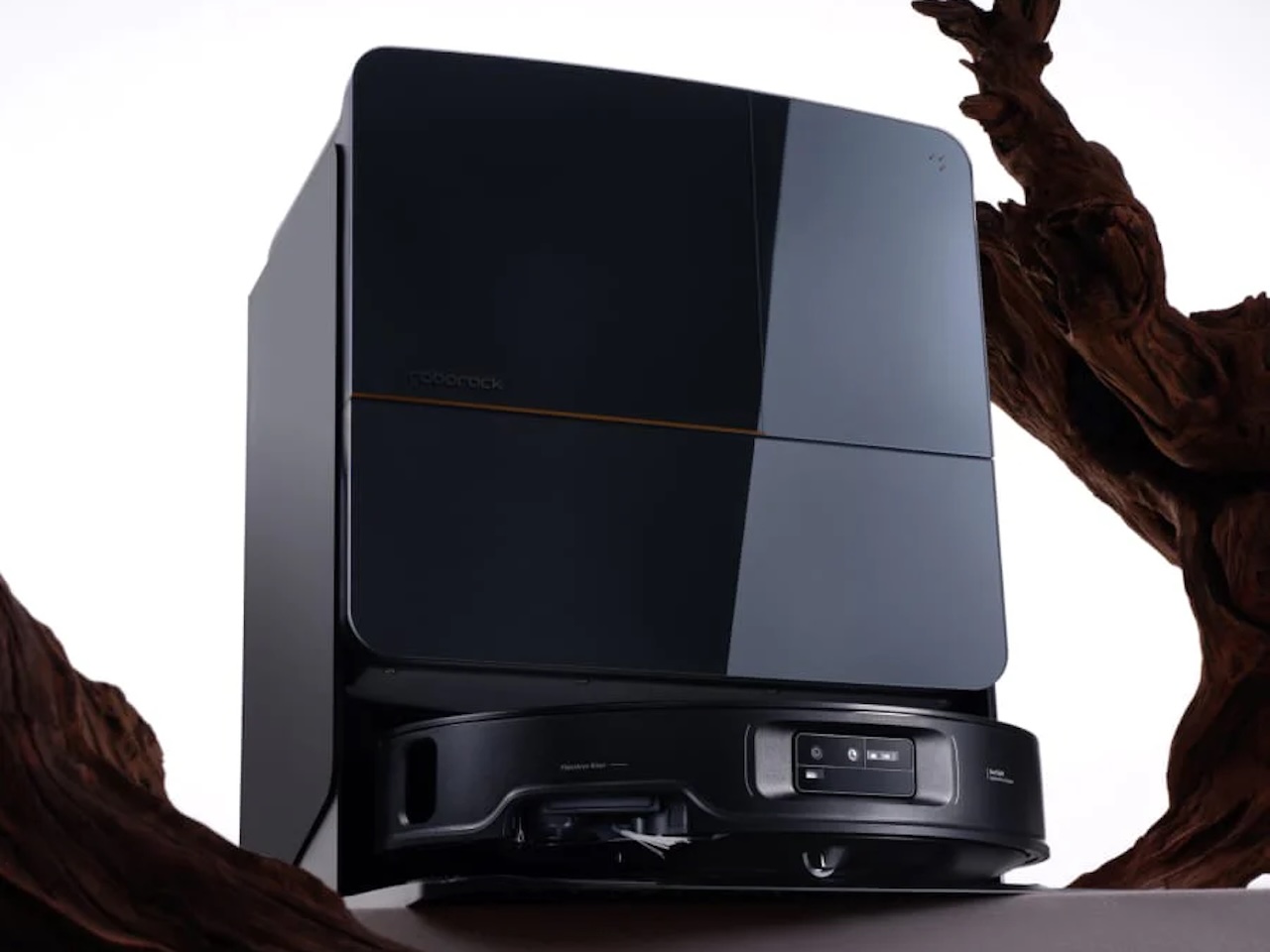
At $1,299.99, down from the original $2,599 MSRP, the Z70 is more competitive than it was at launch but still sits in a strange spot for the broader market. Mid-range robots in the $400 to $600 range cover most of what a typical household needs, which means the Z70 competes less on cleaning utility and more on category positioning. The arm’s recognized object list is short, its weight ceiling is rigid, and the setup requirements feel closer to lab conditions than lived-in spaces. Roborock is selling a direction, not a finished capability. That distinction matters more than any spec on the box.
Who this is for
The Roborock Saros Z70 Robot Vacuum makes the most sense for people already following home robotics closely, the early adopters who want to own the most technically ambitious product the category currently offers. Hard-floor households get the fullest experience since vacuum, mop, and arm all perform at their best on smooth surfaces. At 3.14 inches, it slides under furniture that blocks most competitors, and the camera, voice commands, and smart home integration round out a connectivity layer that should age well.
Price: $1,299.99
Where to Buy: Amazon
Whether the Saros Z70 is worth buying depends on what you’re buying it for. As a vacuum and mop, it already performs near the top of the category on hard floors. As a robotic arm platform, it’s a public proof of concept with a price tag. The arm will improve with firmware updates, and the $1,299.99 sale price makes the entry point far more reasonable than the $2,599 MSRP suggested at launch. The question isn’t whether this robot is good at vacuuming. It’s whether the category’s first functional robot arm is worth paying for while it’s still learning what to pick up.

HP 14 Laptop, Intel Celeron N4020, 4 GB RAM, 64 GB Storage, 14-inch Micro-edge HD Display, Windows 11 Home, Thin & Portable, 4K Graphics, One Year of Microsoft 365 (14-dq0040nr, Snowflake White)
(as of April 9, 2026 11:23 GMT -05:00 - More infoProduct prices and availability are accurate as of the date/time indicated and are subject to change. Any price and availability information displayed on [relevant Amazon Site(s), as applicable] at the time of purchase will apply to the purchase of this product.)
