
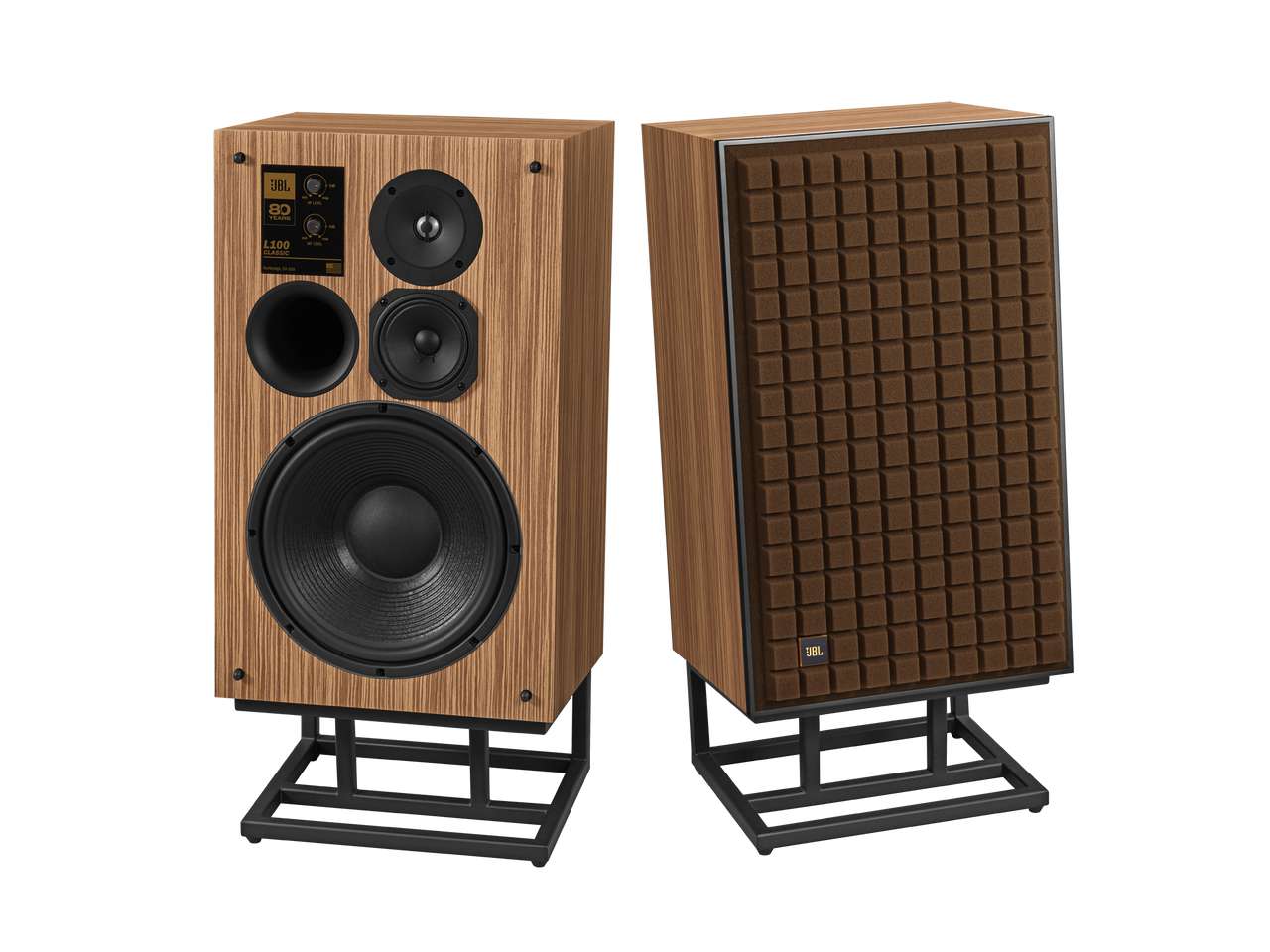
ARTICLE – Eight decades of audio engineering calls for more than a press release, and JBL knows this. When a company has shaped how multiple generations experience music at home, a milestone anniversary demands something tangible, something collectors can actually own. The JBL L100 Classic 80 Anniversary Edition exists for this exact reason. It’s a commemorative release built on proven engineering, not a performance upgrade.
Price: $7,499
Where to Buy: JBL
What JBL Changed and What It Didn’t
The L100 Classic 80 uses the exact same acoustic platform as the L100 Classic MKII. The drivers, crossover design, and cabinet tuning are identical to the current production model. This isn’t a reimagining or a technical upgrade disguised as an anniversary release. What you’re getting is the same proven speaker in different packaging, and JBL isn’t pretending otherwise. That transparency matters when the price tag carries a collectability premium. It’s an honest approach that respects both the engineering and the buyer. The acoustic platform hasn’t changed because it didn’t need to.
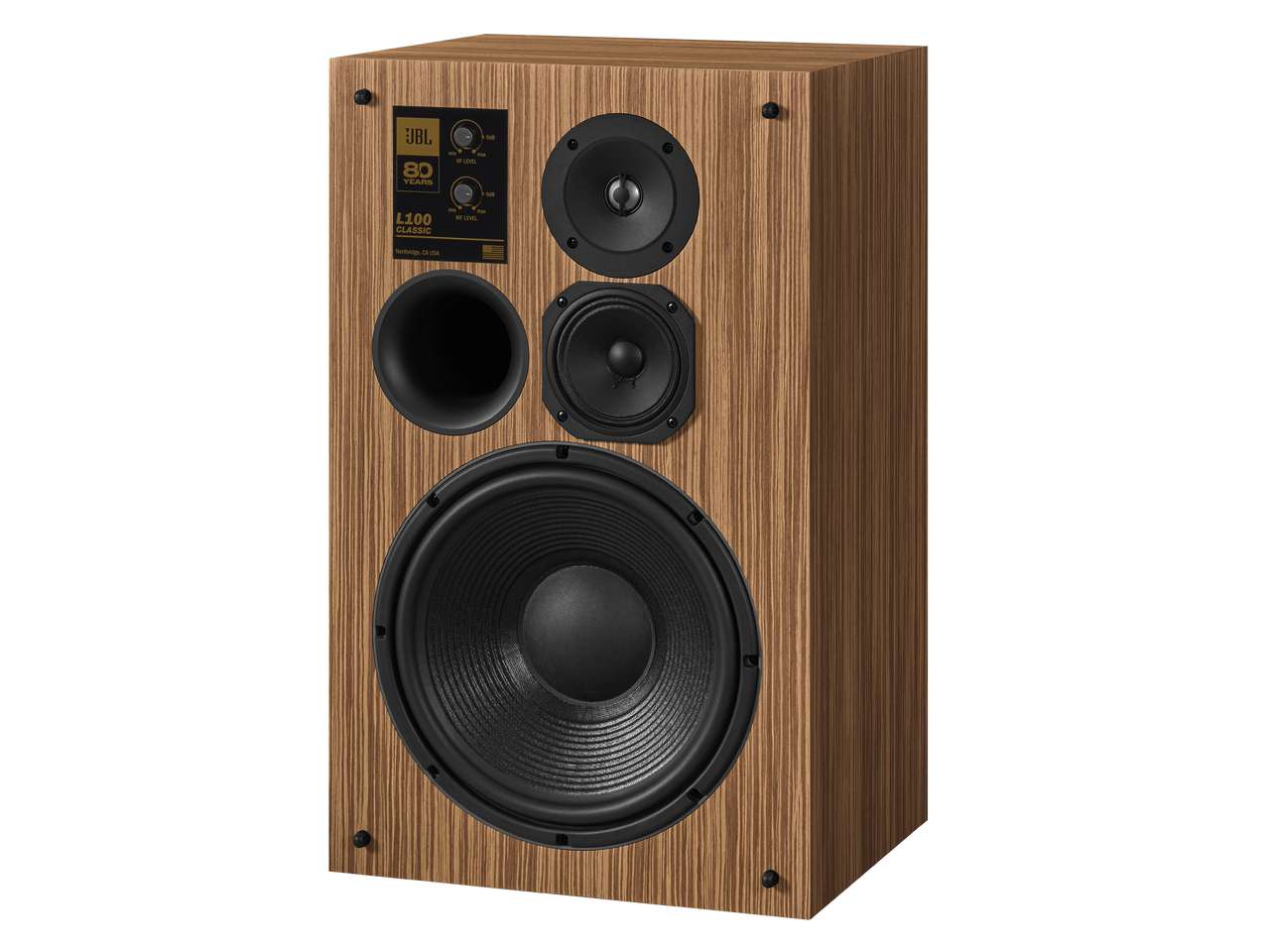
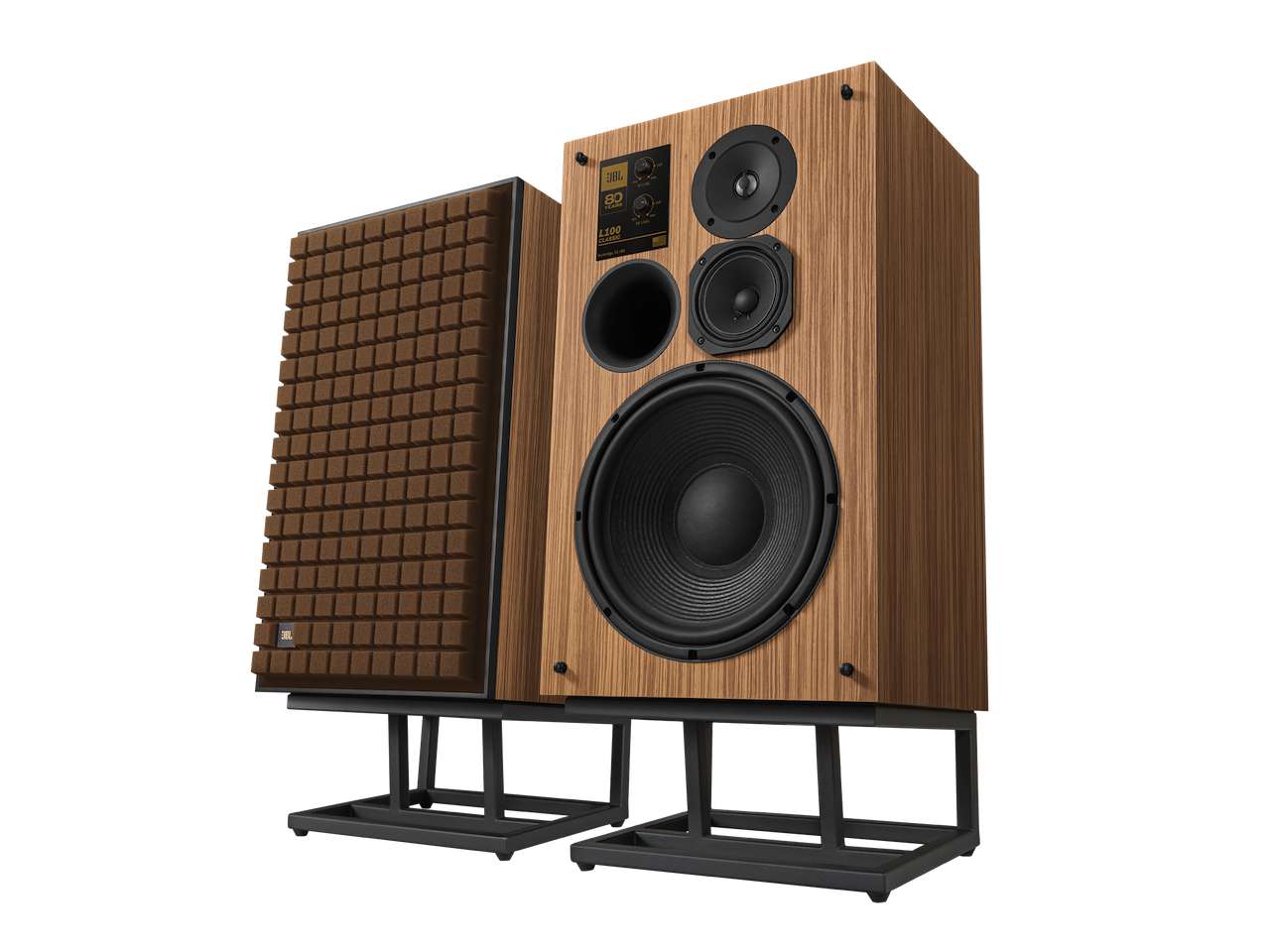
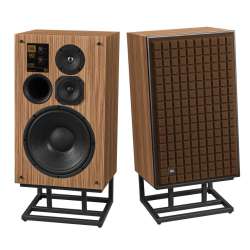
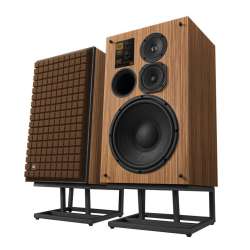
What changes is the finish and the collectability factor. California oak veneer covers the cabinet, paired with a vintage-inspired brown Quadrex foam grille that recalls the original 1970s aesthetic. A gold-and-black JBL logo and anniversary badging on both the front and rear panels mark this as something special. The 12-inch woofer features a black cone rather than the white cone found on the standard MKII, chosen purely for visual cohesion with the overall design. It’s a cosmetic decision, not a performance one.
The same sound comes in different clothes. The three-way design pairs a cast-frame 12-inch pure pulp cone woofer with a 5.25-inch polymer-coated midrange and a 1-inch titanium dome tweeter. JBL’s acoustic lens waveguide sits in front of the tweeter, helping disperse high frequencies evenly throughout the listening space.
Front-panel controls allow adjustment of midrange and treble output, a feature that’s defined the L100 line for decades. These attenuators only reduce output rather than boost it, functioning as practical room-matching tools rather than tone control gimmicks. The frequency response stretches from 40Hz to 40kHz, with sensitivity rated at 90dB and a 4-ohm nominal impedance that rewards quality amplification. If you’re powering these with a weak receiver, you’re leaving performance on the table.
The cabinet construction uses the same heavy bracing, thick panels, and custom internal damping found in the MKII. The crossover network carries over unchanged, with crossover points at 450 Hz and 3.5 kHz. Vocal fundamentals stay squarely in the midrange driver’s wheelhouse, which helps avoid phase issues and preserves clarity in the critical presence region.
Limited Production Context
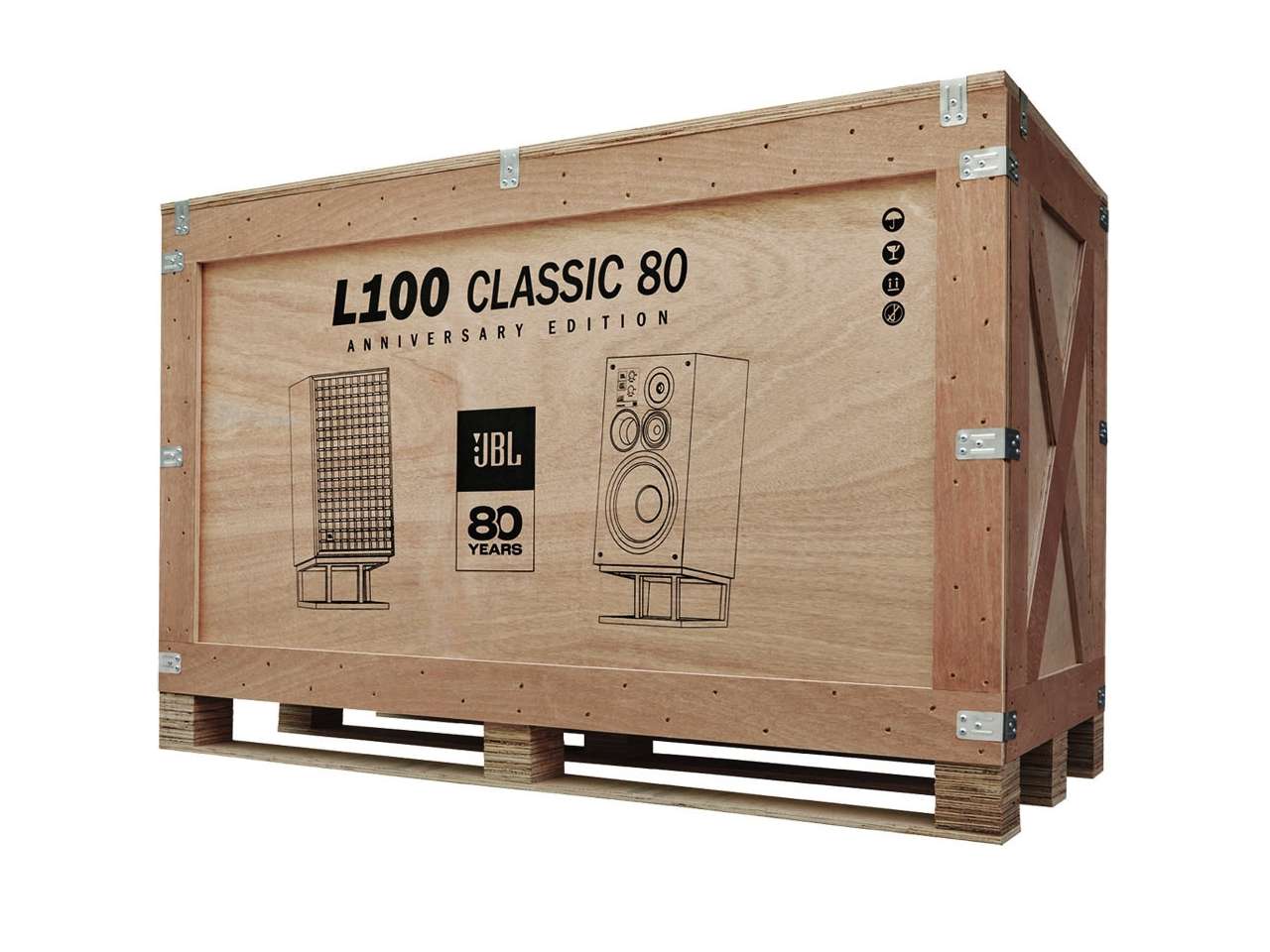
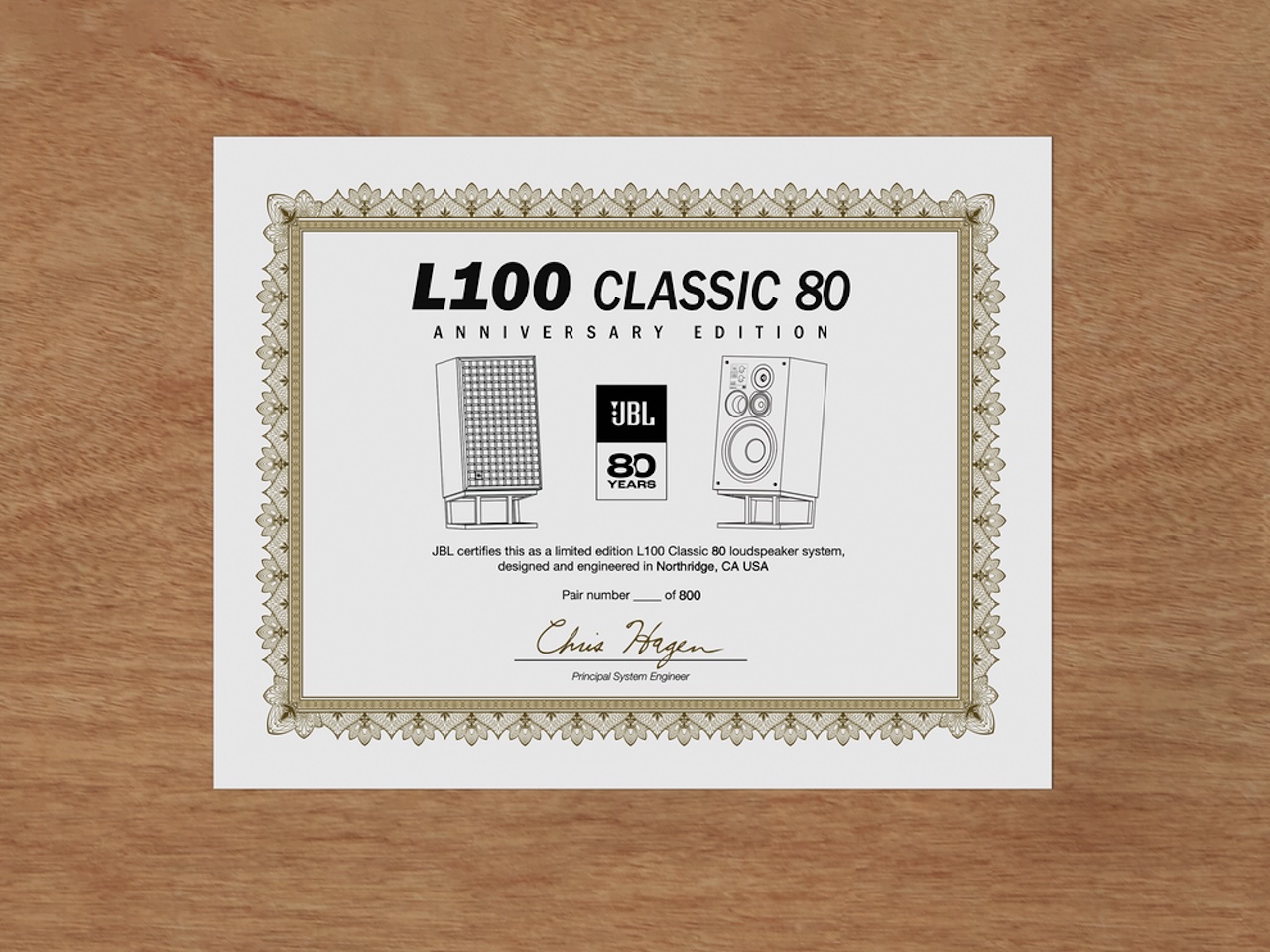
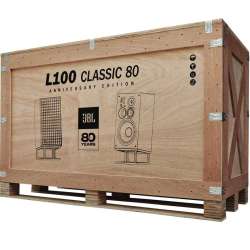
JBL has capped production at 800 matched pairs worldwide. Once these sell, there won’t be follow-up runs or extended availability windows. Each pair ships with JS-150 speaker stands included, arrives in a custom wooden crate, and features an individually numbered commemorative plaque signed by principal system engineer Chris Hagen. The packaging alone signals that this isn’t a standard retail transaction.
This approach follows the pattern JBL established with previous special editions. The 75th Anniversary Edition from 2021 was limited to 750 pairs and sold out quickly. The Black Edition from 2022 ended production in late 2024. The original L100 Classic from 2018 was discontinued when the MKII arrived. Collectors who want a piece of JBL history have learned that waiting often means missing out entirely.
The JS-150 stands are included in the purchase price, not sold separately. They’re low-profile stands designed specifically for the L100 Classic, positioning the tweeters at seated ear height when placed correctly. Stand placement matters more than most buyers realize, and JBL’s decision to bundle them removes one variable from setup. The JS-150 stands are purpose-built for the L100 Classic, so you’re not scrambling to find compatible third-party options that may or may not get the geometry right.
Who Should Consider These
The L100 Classic 80 targets a specific type of listener. These are substantial loudspeakers, weighing 63 pounds each and measuring over 25 inches tall. They demand proper placement, ideally on low stands with adequate breathing room on all sides. Small apartments and minimalist living spaces need not apply. You’ll know within the first hour of ownership whether you have the space for these or not.
Listeners who appreciate dynamic presentation and room-filling scale will find what they’re looking for here. The L100 has always excelled at making music feel physical and present, qualities that remain intact in this anniversary edition. Those seeking compact lifestyle speakers or ultra-modern industrial design should look elsewhere. This is heritage hi-fi with all the spatial requirements that implies.
These speakers weren’t designed for background listening or subtle ambiance. They’re built for people who actually turn the volume knob and want music to command the room. Passive listening or tight space constraints point toward the standard MKII, which delivers the same performance without the collectability markup. The Anniversary Edition makes sense only if the limited production run and exclusive finish carry personal or investment value for you.
The pricing creates a clear choice. The standard L100 Classic MKII remains available at $5,279.90 per pair for those who want the same acoustic performance without the anniversary trim. The L100 Classic 80 Anniversary Edition is priced at $7,499 per pair, which includes the JS-150 speaker stands. You’re paying roughly $2,200 for California oak veneer, brown grilles, black woofer cones, and numbered plaques. That’s the collectability premium in dollar terms.
Price: $7,499
Where to Buy: JBL
Availability Details
Both models are available through authorized JBL dealers and select audio retailers. The standard MKII has no production cap and will remain in the lineup as long as demand supports it. The Anniversary Edition has 800 pairs allocated globally, and JBL’s track record with limited editions suggests these won’t remain available for long once word spreads through the audiophile community. If you’re considering the Anniversary Edition, you’re competing with collectors who’ve been tracking JBL special releases for years.
L39 Ultra Slim UV Protective Filter for Leica Q3 43 Q2 Camera with Moisture-Proof Case & Removal Tool 19 Layers Mulit-Coated UV Ultraviolet Filter 99.3% Light Transmission Water Oil Scratch Resistant
(as of March 22, 2026 01:50 GMT -05:00 - More infoProduct prices and availability are accurate as of the date/time indicated and are subject to change. Any price and availability information displayed on [relevant Amazon Site(s), as applicable] at the time of purchase will apply to the purchase of this product.)
