
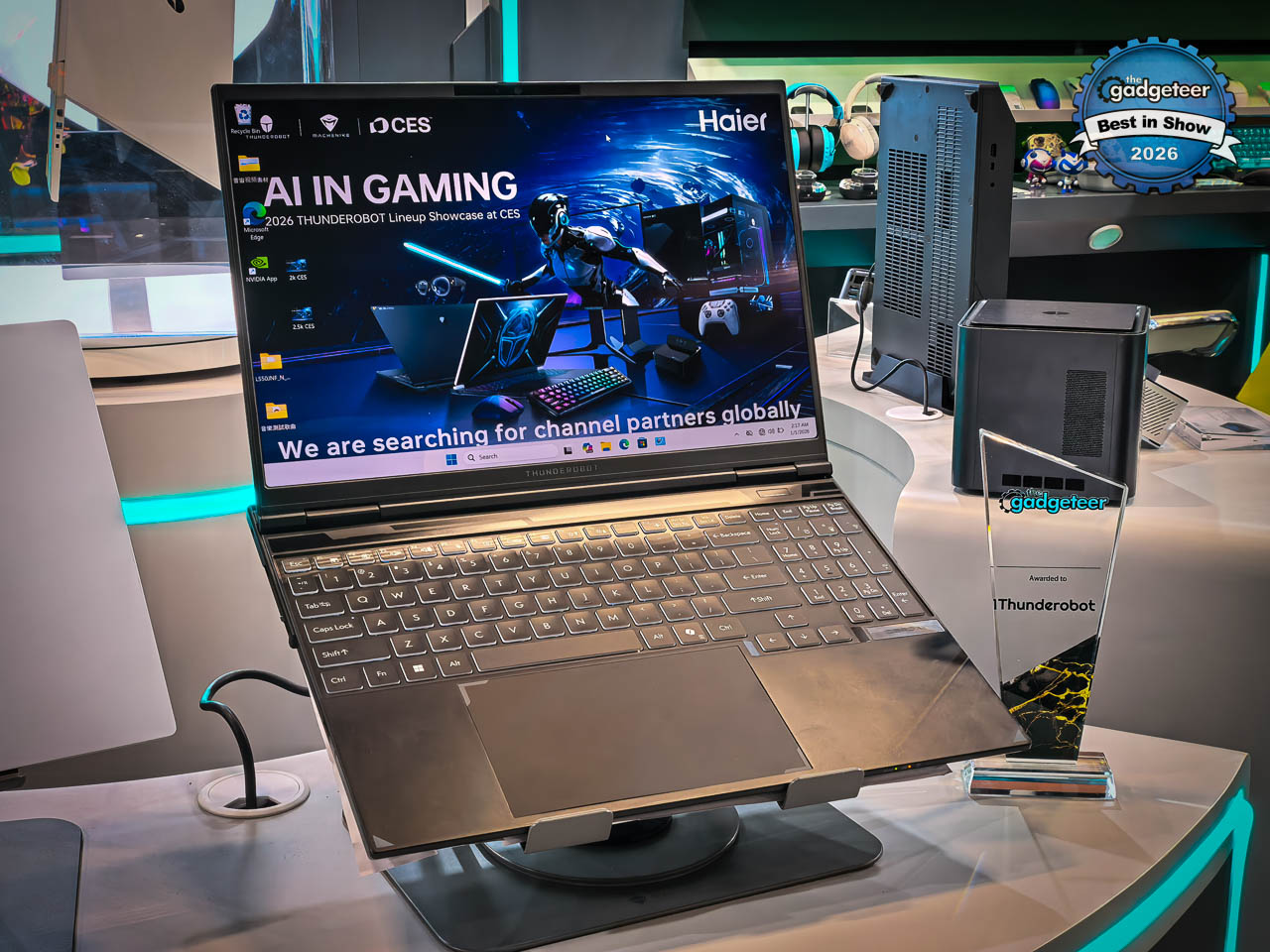
CES 2026 NEWS – Gaming laptops have spent years making the same promise: desktop power you can take anywhere. The fine print always included a two kilogram chassis, a power brick the size of a paperback novel, and the kind of thermal noise that made coffee shop gaming a social liability. THUNDEROBOT’s ZERO Air, unveiled at CES 2026, finally calls that bluff.
At 1.59 kg and 15.9 mm thin, ZERO Air sits in ultrabook territory. The hardware inside does not: an Intel Core Ultra H series processor aligned with Intel’s Panther Lake mobile platform, an NVIDIA GeForce RTX 5070 Laptop GPU, and a 15.3 inch QHD OLED panel running at 165 Hz. That combination, in a chassis this light, represents an engineering constraint problem most manufacturers still refuse to attempt.
Real GPU Power in a Travel Friendly Chassis
Portable gaming has always demanded compromise. You could have real GPU headroom if you accepted a backpack that doubled as a workout. You could have a thin machine if you settled for integrated graphics or a severely throttled discrete chip. The market segmented cleanly: ultrabooks for travel, gaming laptops for the desk, and a vague middle ground occupied by machines that did neither job particularly well.
ZERO Air attacks that segmentation directly. The RTX 5070 Laptop GPU is not a marketing umbrella term or a mobile variant with an asterisk. It is current generation NVIDIA silicon capable of ray tracing, DLSS upscaling, and the kind of frame rates that justify a 165 Hz refresh rate. Paired with Intel’s latest mobile platform, the thermal envelope is designed to support sustained loads without the aggressive throttling that plagues thin machines under pressure. THUNDEROBOT claims a dual fan vapor chamber cooling system handles the heat, though real world sustained performance remains something we will verify once retail units ship.
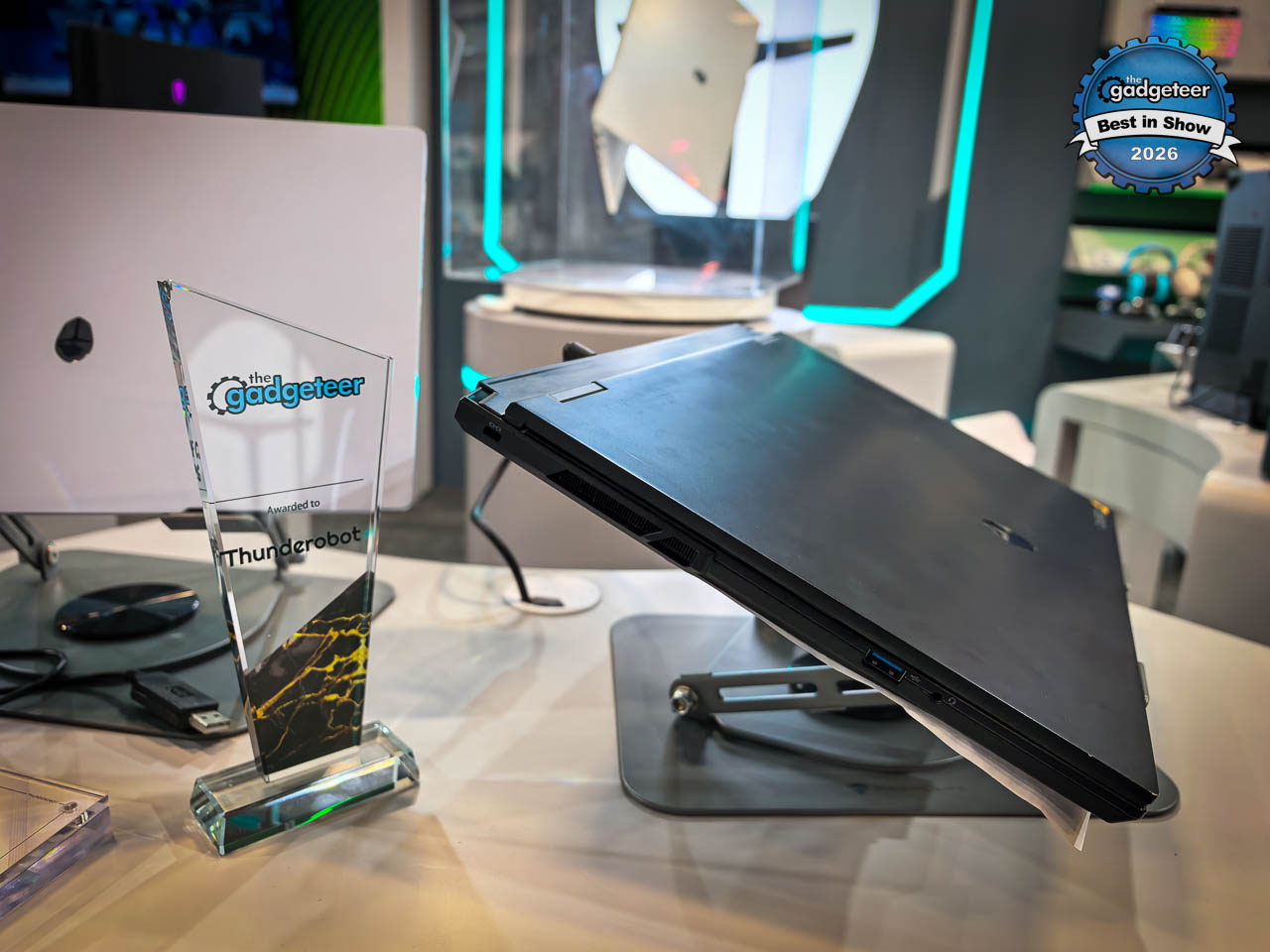
The 100W USB C PD charging specification matters more than it might appear. Most gaming laptops lock you into proprietary power bricks because the GPU alone can pull more than USB C delivers. ZERO Air’s decision to support standard charging suggests either conservative power tuning or genuinely efficient silicon. Either way, it means GaN travel chargers and universal docks become viable daily drivers instead of emergency backups.
Add The Gadgeteer as a preferred source to see more of our coverage on Google.
Display, Memory, and I/O
The display deserves attention beyond its resolution and refresh rate. OLED at 165 Hz in a sub 1.6 kg gaming chassis remains genuinely rare. Most manufacturers reserve OLED panels for premium ultrabooks or heavy desktop replacements, not machines trying to thread the portability needle. The pixel response times and contrast ratios inherent to OLED technology translate directly into competitive gaming scenarios where LCD motion blur becomes a liability.
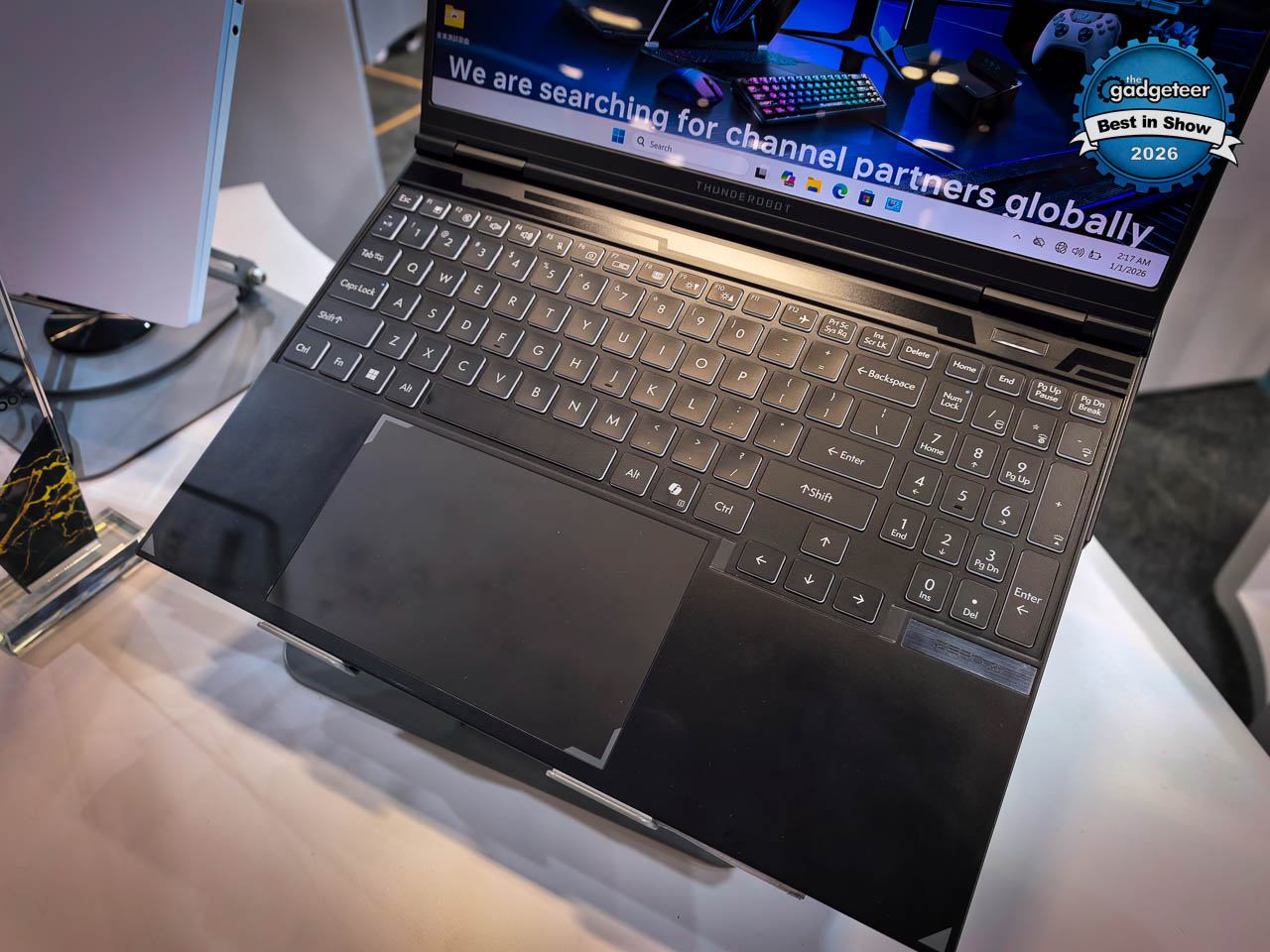
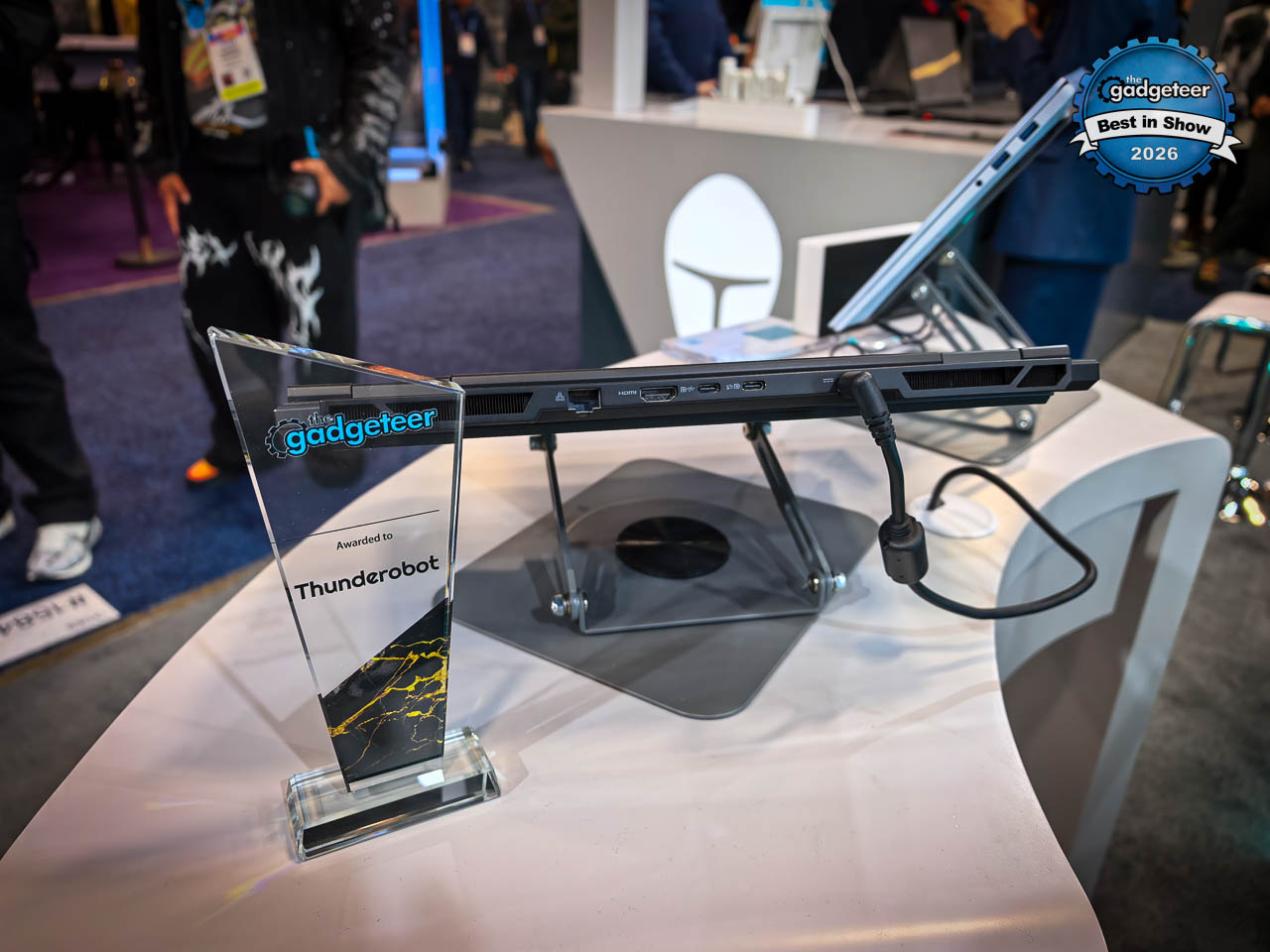
Memory and storage flexibility prevents the configuration from feeling artificially limited. Early product coverage indicates dual DDR5 slots supporting up to 32 GB and dual PCIe SSD slots with up to 1 TB, meaning the base configuration is a floor, not a ceiling. The port selection includes rear mounted Ethernet, HDMI, USB A, and USB C, all placed along the rear edge to keep cable management clean during desktop use. For a machine this thin, retaining a dedicated Ethernet port signals that THUNDEROBOT understands competitive players who refuse to trust WiFi for ranked matches. Wireless connectivity details, including WiFi generation, have not yet been specified.
Build and Thermal Considerations
Build quality at this weight class typically requires trade offs. Thinner chassis flex more. Lighter materials cost rigidity. We cannot assess long term durability from show floor impressions, but the quad heat pipe configuration visible through vent cutouts suggests THUNDEROBOT prioritized thermal architecture over pure weight reduction.
The specifications listed here are based on the company’s on device placard at CES 2026. Final retail configurations may vary by region, and some details remain subject to change before mass production.
Pricing and availability remain unannounced, as do battery capacity, estimated runtime, webcam resolution, and audio specifications. Given the OLED display, RTX 5070 Laptop GPU, and sub 1.6 kg chassis, ZERO Air is expected to sit in the premium tier of the thin gaming laptop market. The gap between show floor prototype and mass production can introduce surprises, but the engineering direction is clear: THUNDEROBOT is betting that travelers, students, esports competitors, and anyone who moves between setups should not have to choose between capable graphics and a bag friendly weight.
Who Should Pay Attention
ZERO Air makes the most sense for users who currently compromise. If you carry a gaming laptop that bruises your shoulder on the commute, this solves that problem without asking you to accept integrated graphics. If you travel with an ultrabook and wish it could handle more than spreadsheets, ZERO Air offers real GPU headroom in a similar form factor.
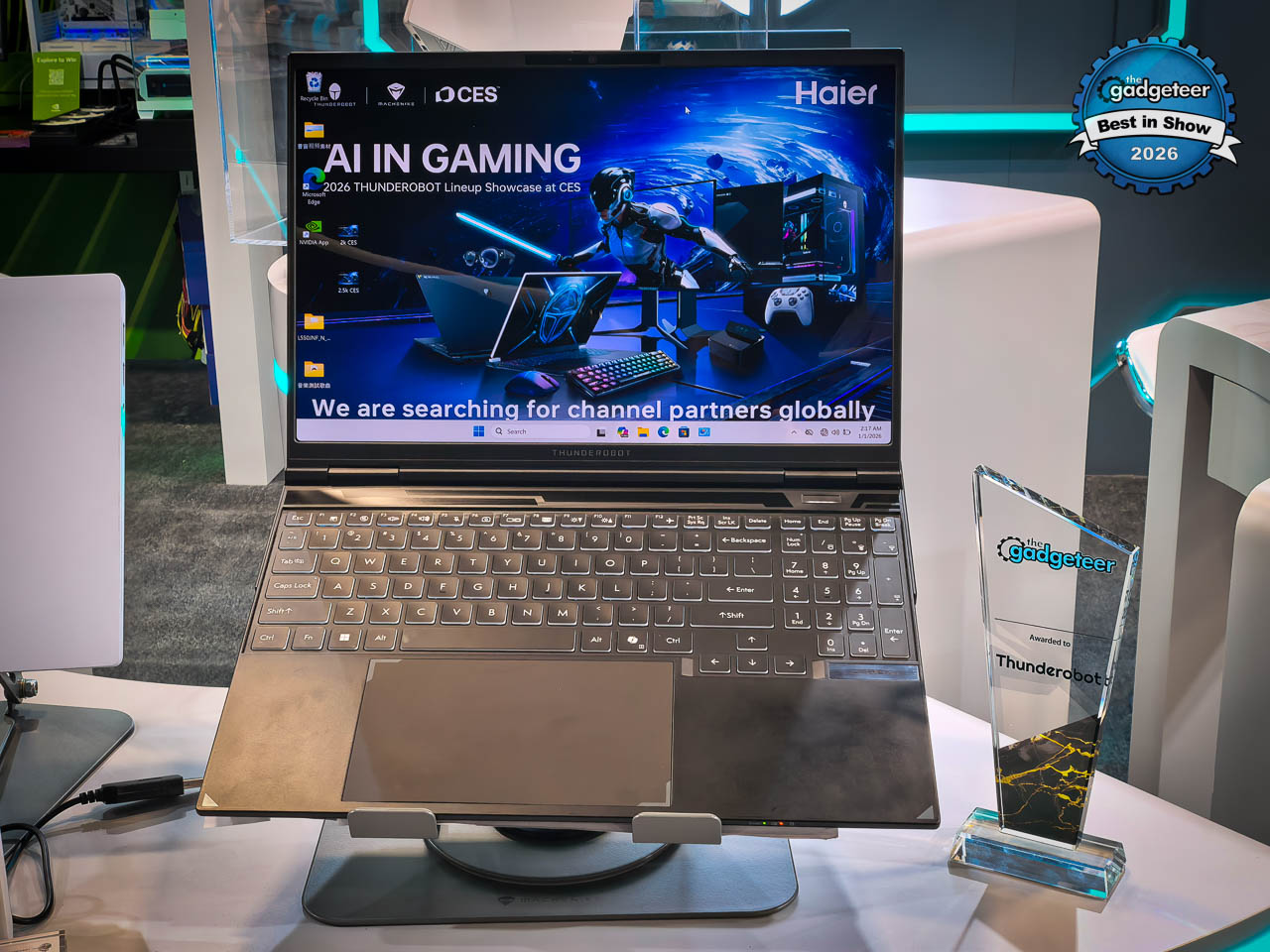
The machine makes less sense if you never leave your desk. Desktop replacements with 18 inch panels and higher thermal limits will always outperform a portability focused design. ZERO Air trades maximum performance for genuine mobility, and that trade only pays off if you actually move.
📡 CES 2026 Coverage
Want more from the show floor?
We’re covering the biggest announcements, wildest concepts, and gear that actually matters from CES 2026.

HP 14 Laptop, Intel Celeron N4020, 4 GB RAM, 64 GB Storage, 14-inch Micro-edge HD Display, Windows 11 Home, Thin & Portable, 4K Graphics, One Year of Microsoft 365 (14-dq0040nr, Snowflake White)
(as of April 11, 2026 11:29 GMT -05:00 - More infoProduct prices and availability are accurate as of the date/time indicated and are subject to change. Any price and availability information displayed on [relevant Amazon Site(s), as applicable] at the time of purchase will apply to the purchase of this product.)
