
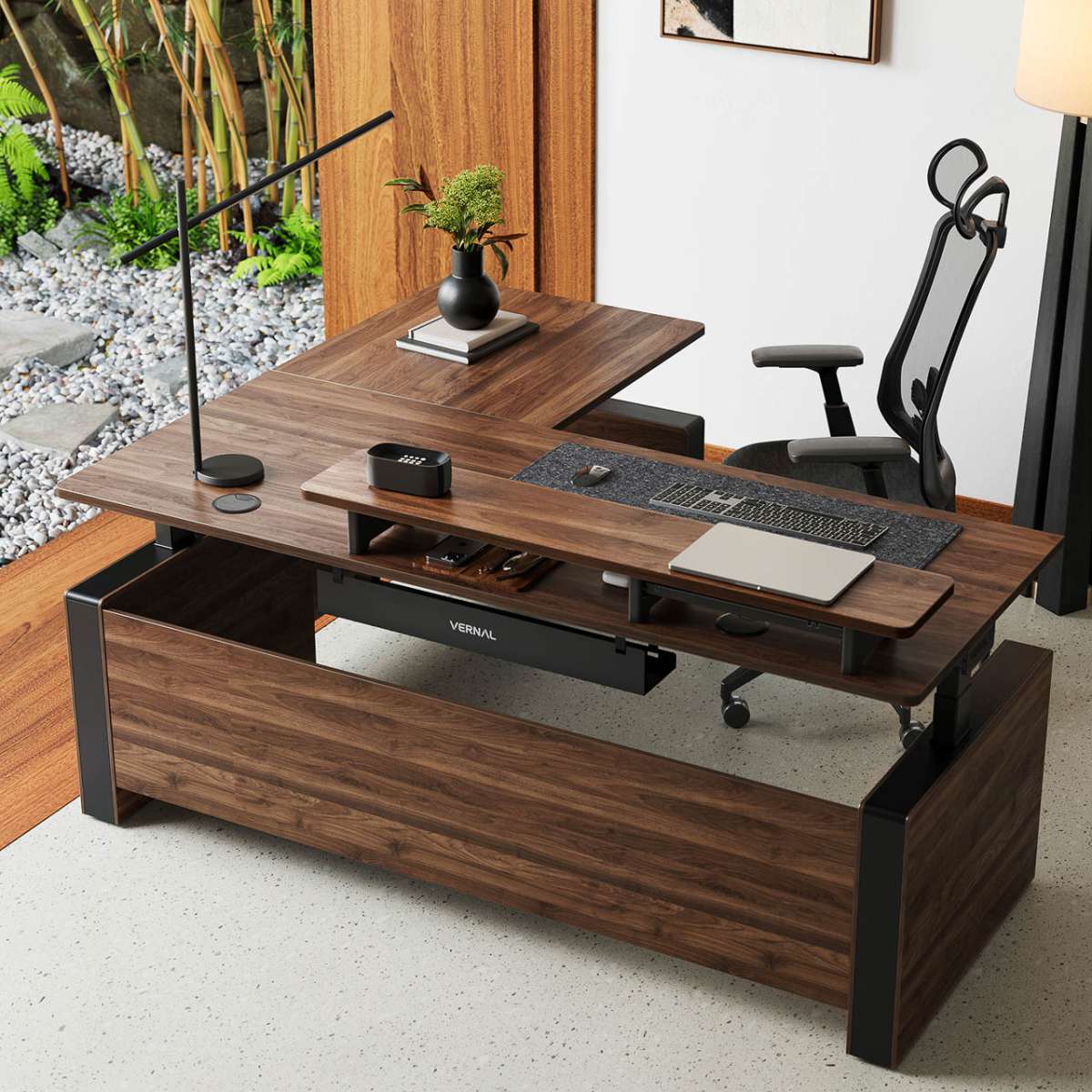
ARTICLE – Most standing desks fail the same way. The single motor strains under load, creating an audible whine that announces every height adjustment to the entire household. The frame wobbles when you lean into a deadline. The particleboard desktop warps after eighteen months of coffee rings and elbow pressure, developing a visible bow that your keyboard slides toward. You end up replacing furniture that was supposed to solve a problem, not become one.
The Vernal Executive Standing Desk takes a different approach: two motors instead of one, three-stage legs instead of two, a 330-pound rated load that handles your entire battlestation without complaint, and a 15-year warranty that suggests Vernal actually expects this desk to survive. At $699.99 during the holiday sale (down from $939.99), the Executive targets remote workers who have moved past the “temporary” home office phase.
Regular Price: $939.99
Holiday Sale: Starting at $699.99
Save: Up to 25% off
Where to buy: Vernal
The Dual-Motor Difference: Why Single Motors Fail
Single-motor standing desks dominate the budget market because they cost less to manufacture. The trade-off shows up the moment you load the desk with real equipment. Monitors pull unevenly during adjustment. The motor strains audibly, producing a grinding sound that worsens over time. Height adjustments feel like the desk is negotiating with gravity rather than commanding it.
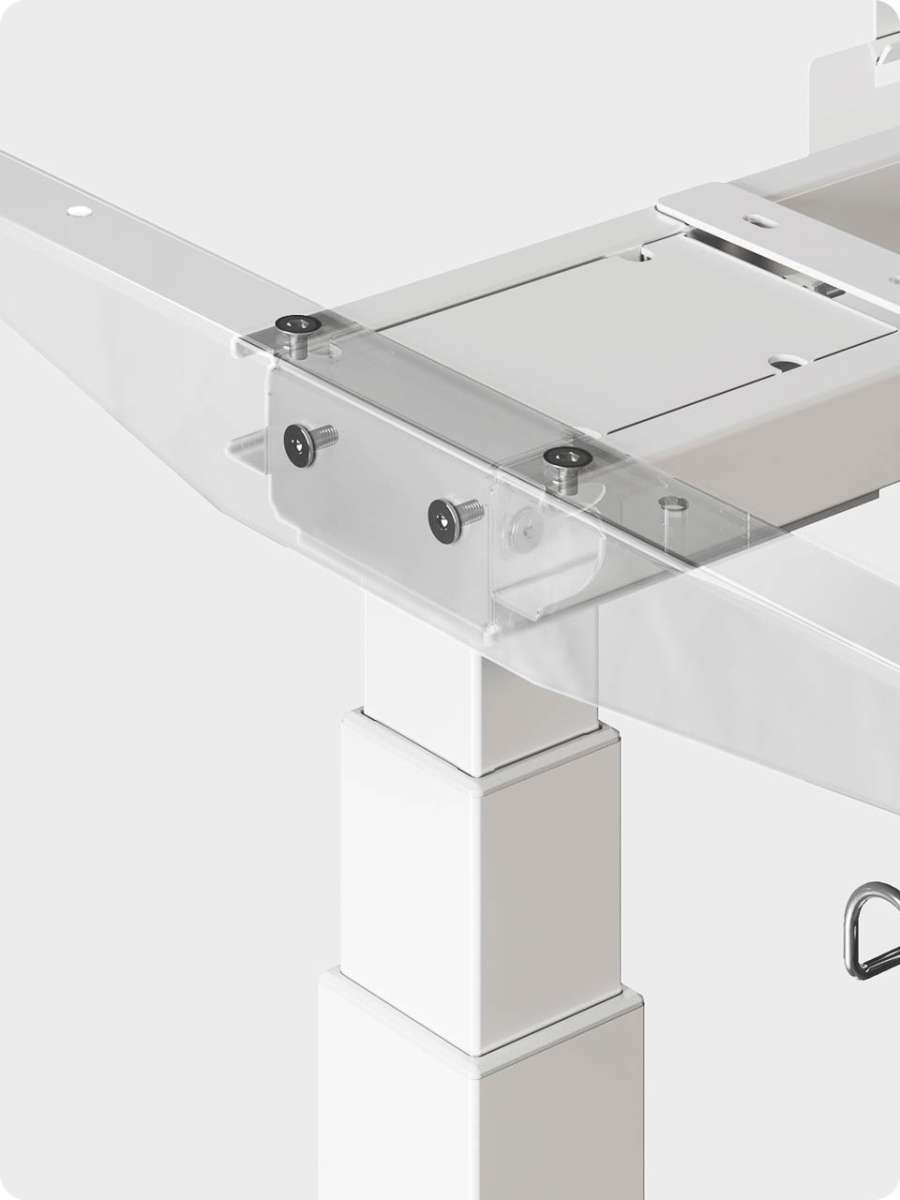
Vernal’s dual-motor system eliminates that negotiation entirely. Both motors fire simultaneously, distributing the lift load evenly across the frame. The result: smooth, synchronized movement at 1.57 inches per second, which translates to roughly fifteen seconds from full sitting position to full standing height. TechRadar confirmed the stability during testing with multi-monitor setups attached: nothing shifts at the apex, no shudder during descent.
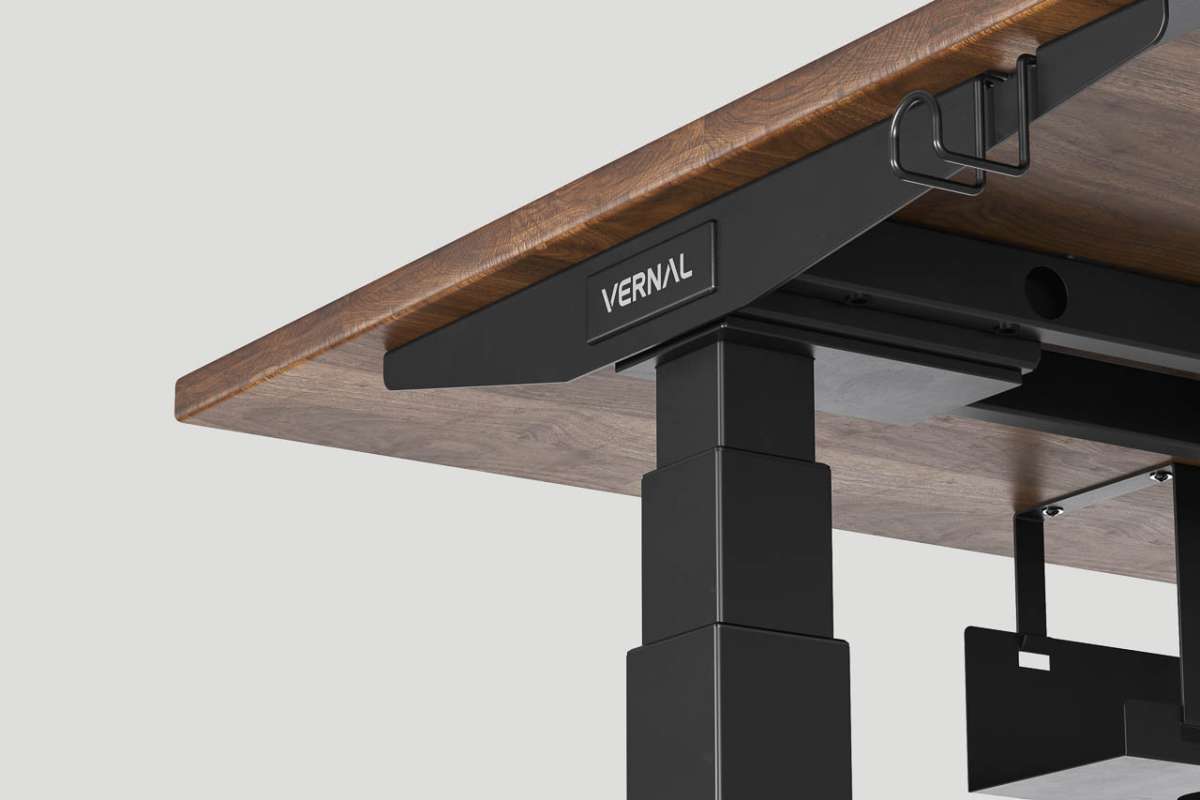
The motors operate below 50 decibels, roughly equivalent to a quiet conversation. That matters in shared workspaces and video calls. A single-motor desk at full strain can hit 70+ decibels, loud enough to be picked up by microphones and distracting enough to interrupt focus.
Vernal pushed their testing past reasonable limits. The official spec sheet cites 30,000+ lift cycles, which represents about sixteen years at five adjustments per day. But Vernal’s internal testing exceeded 200,000 cycles, and the motors continued operating smoothly. That’s the kind of over-engineering that explains a 15-year warranty when competitors cap theirs at three to five years.
Height Range and Controls: Engineering for Human Variation
Standing desk height ranges often sound impressive until you calculate whether they actually work for your body. A desk that adjusts from 28 to 46 inches accommodates average-height users but leaves taller individuals hunching at standing height and shorter users stretching to reach their keyboards while seated.
The Vernal Executive spans 22.8 to 48.4 inches at the frame, before you add the 1-inch desktop thickness. That range accommodates users from 4’9″ to 6’7″ in both sitting and standing positions, according to Vernal’s ergonomic calculations. The formula: your height multiplied by 0.4 for seated position, by 0.62 for standing.
The digital control panel stores four height presets, which matters more than the spec suggests. Different household members can program their preferred heights and switch without manual adjustment. The buttons require deliberate pressure rather than responding to accidental brushes, which prevents the desk from wandering during work sessions when you lean against the edge.
Standby power consumption drops to 0.1 watts after 30 seconds of inactivity with auto-lock engaged. The anti-collision sensor reverses motor direction if the desk encounters resistance during adjustment, whether from a forgotten drawer, a curious pet, or a child who wandered into the path. Soft start and soft stop eliminate the jerk that cheaper desks produce at the beginning and end of each movement, which prevents items from shifting during transitions.
Desktop Construction: Where Budget Desks Cut Corners
Cheap standing desks reveal their cost-cutting in the desktop first. The laminate peels at the edges within a year. The surface chips where wrists rest. Thinner boards flex visibly under monitor weight, creating a subtle bow that sends pens rolling toward the center.
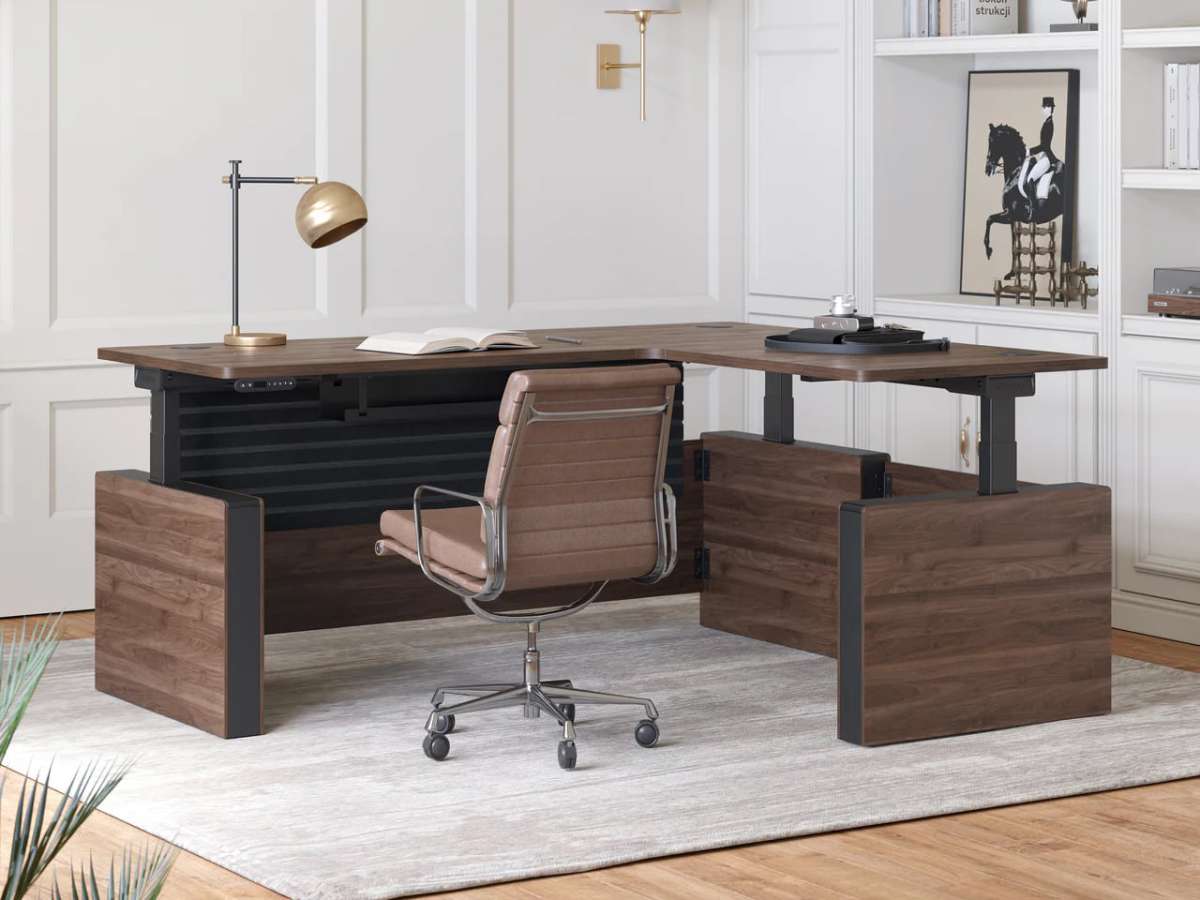
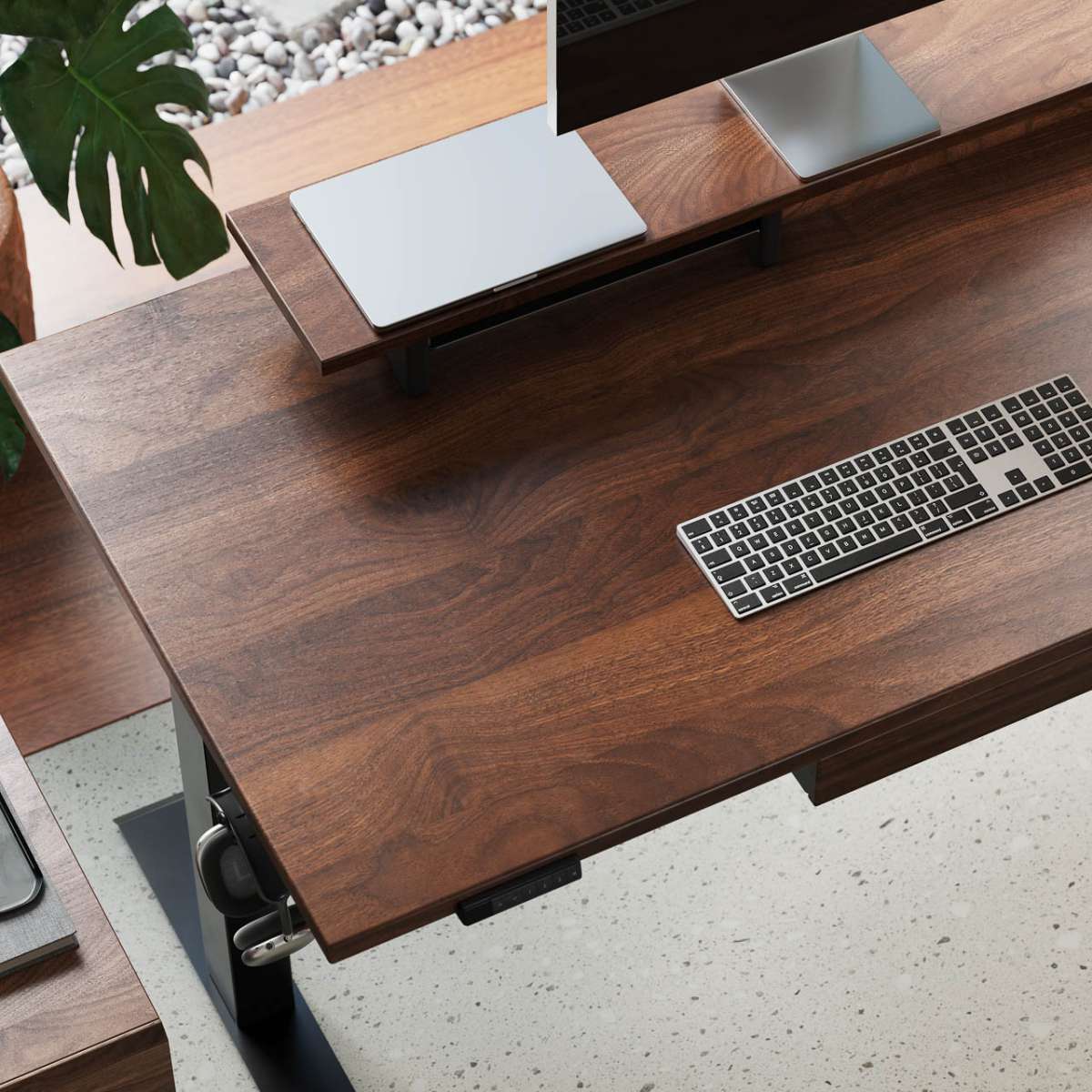
The Vernal Executive desktop measures a full 1 inch thick, providing the rigidity that 3/4-inch tops sacrifice. That extra quarter-inch translates to noticeably less flex under load and better resistance to warping over time. The laminate options include light walnut and dark walnut, both FSC-certified using recycled wood waste processed without toxic chemicals. The certification matters for indoor air quality: cheaper desks off-gas formaldehyde and other volatile compounds from adhesives, particularly in the first few months.
Desktop corners use rounded design with ABS laser edging, eliminating the sharp contact points that cheaper desks retain. The visual effect lands closer to furniture-grade than industrial. You could put this in a corner office or a living room without it announcing itself as “tech furniture.”
Standard desktop dimensions include 48″ x 27.5″ and 60″ x 27.5″. The 27.5-inch depth provides enough space for proper monitor distance, since ergonomic guidelines recommend a minimum of 19.7 inches between your eyes and the screen, plus 5.9 to 7.9 inches of clearance between the monitor and desktop edge.
Frame Design: C-Type vs. T-Type and Why It Matters
The frame determines legroom, stability, and how the desk feels during daily use. Traditional C-leg designs position support toward the front, maximizing desktop space but introducing wobble at standing height. T-leg frames provide better stability but sacrifice legroom when the desk drops to seated position.
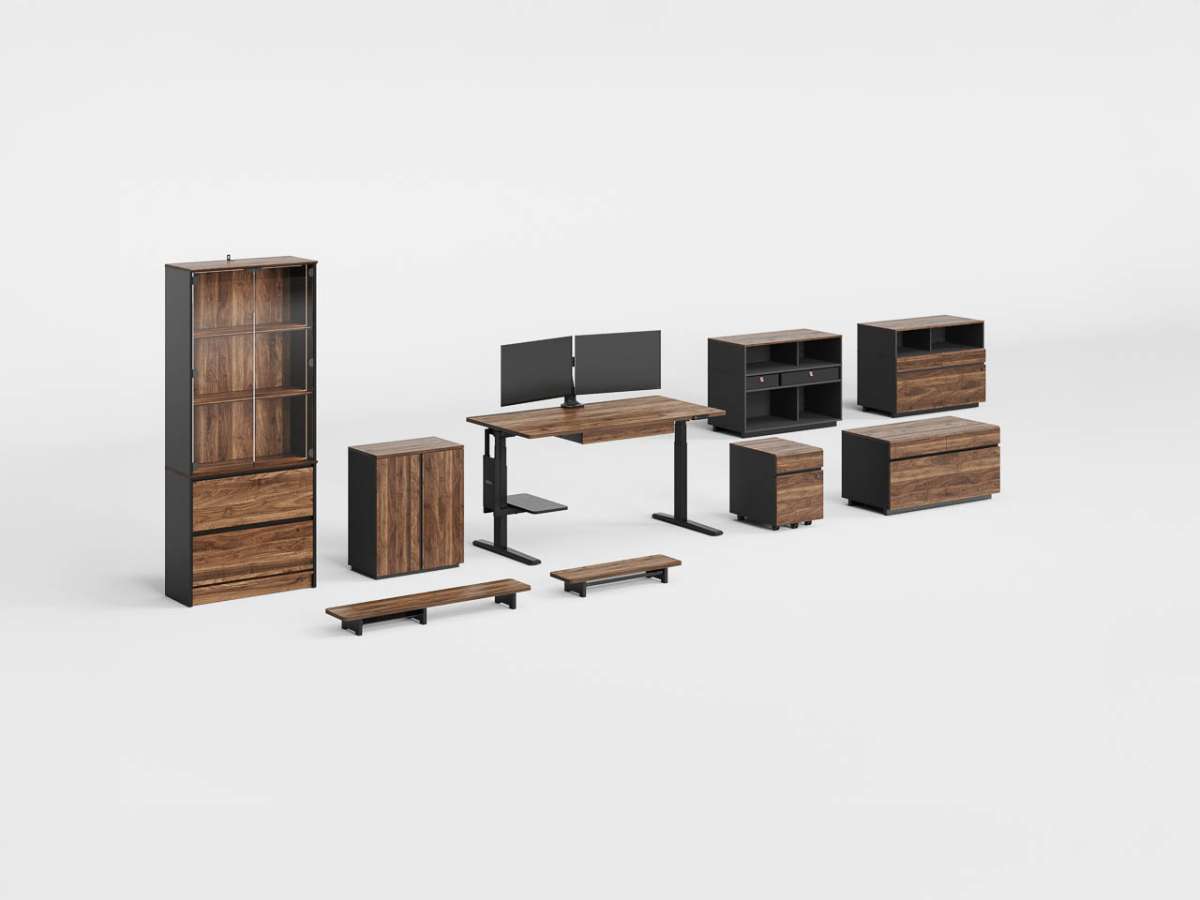
Vernal’s C-type frame on standard models positions the support structure toward the rear rather than splitting the difference, creating generous legroom without the stability penalty. You can stretch, cross your legs, or roll your chair closer without encountering metal crossbars at shin level.
The three-stage leg design contributes to the expanded height range. Two-stage legs reach their limits sooner, which is why budget desks often top out at 46 inches. Three-stage legs add manufacturing complexity and cost, but they deliver the full 22.8 to 48.4-inch range that accommodates more body types.
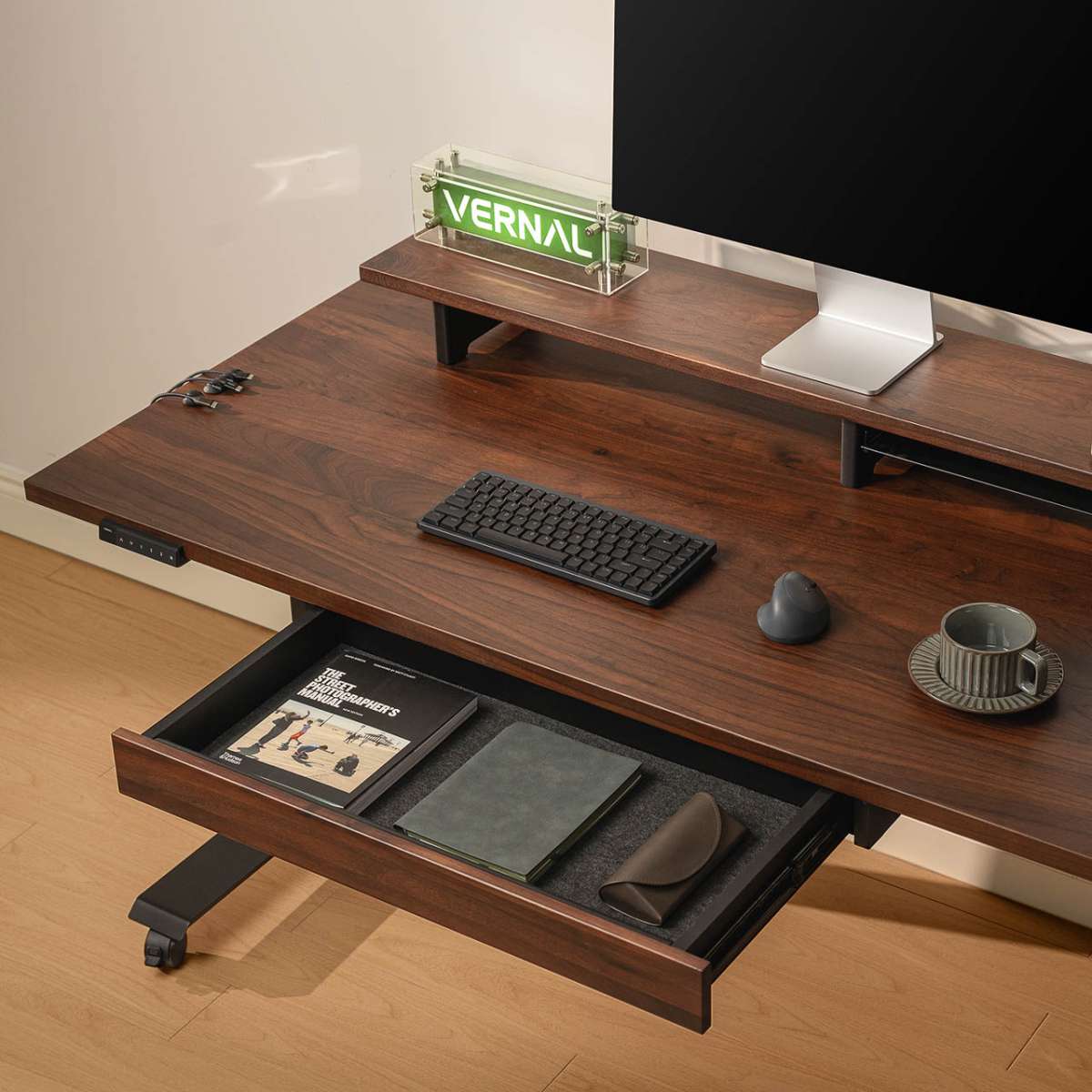
Cable management includes two integrated trays: one on the crossbar and an additional under-desk tray. The dual-tray approach separates power cables from data cables if you want clean routing, or simply provides more space than the single-tray setups most competitors include.
L-Shaped Configurations for Multi-Monitor Workflows
Standard rectangular desks work for standard workflows. Multi-monitor traders, video editors running timeline-heavy projects, developers juggling reference material alongside code, and content creators managing camera equipment alongside computer gear need more surface area than a 60-inch rectangle provides.
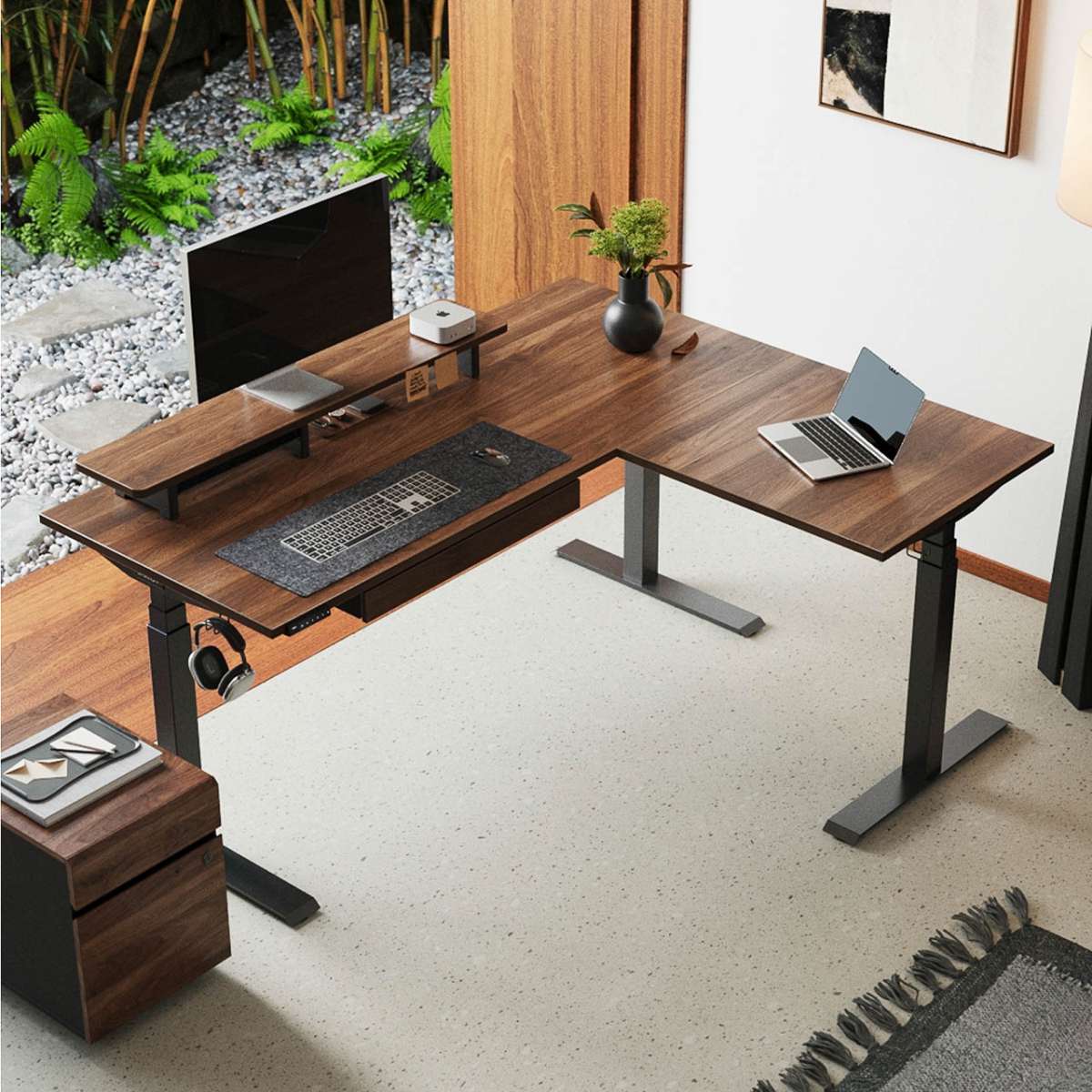
Vernal addresses this with L-shaped configurations: 60″ x 60″ for corner installations, plus 72″ x 60″ options in both left-return and right-return orientations. The T-type frame on L-shaped models trades some of the C-frame’s legroom for the additional stability that corner configurations demand. The desk maintains its 330-pound load capacity and lift performance across the expanded surface area, which is not guaranteed with larger standing desk footprints.
These configurations target users who have committed to a permanent workspace. The assembly involves 5-6 packages with delivery in approximately 5-8 working days. The resulting desk weighs enough that you won’t relocate it casually. If you rearrange your office quarterly, the Executive L-shape will punish that habit.
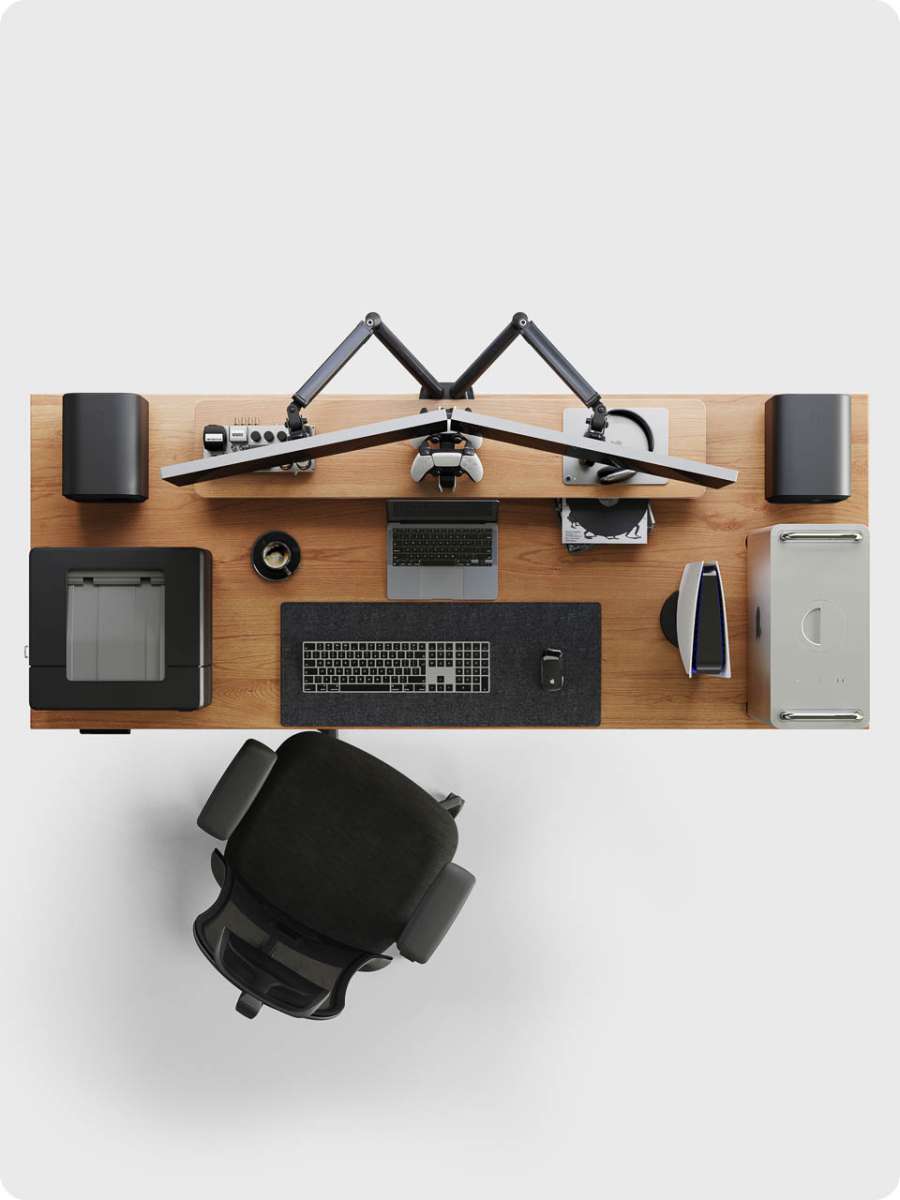
Optional modesty panels in 90cm, 120cm, and 150cm widths provide privacy and create a more enclosed workspace feel. The panels mount with a 3.5cm gap below the desktop and a 40cm vertical drop, designed for seated use. Standing at full height creates a visible gap at the bottom, a trade-off to prevent the panels from dragging on the floor during adjustment.
Accessory Ecosystem: Expansion Without Visual Chaos
Standing desk accessories from third-party manufacturers rarely match the desk’s finish or design language. You end up with a cohesive desk surrounded by mismatched add-ons that look like afterthoughts.
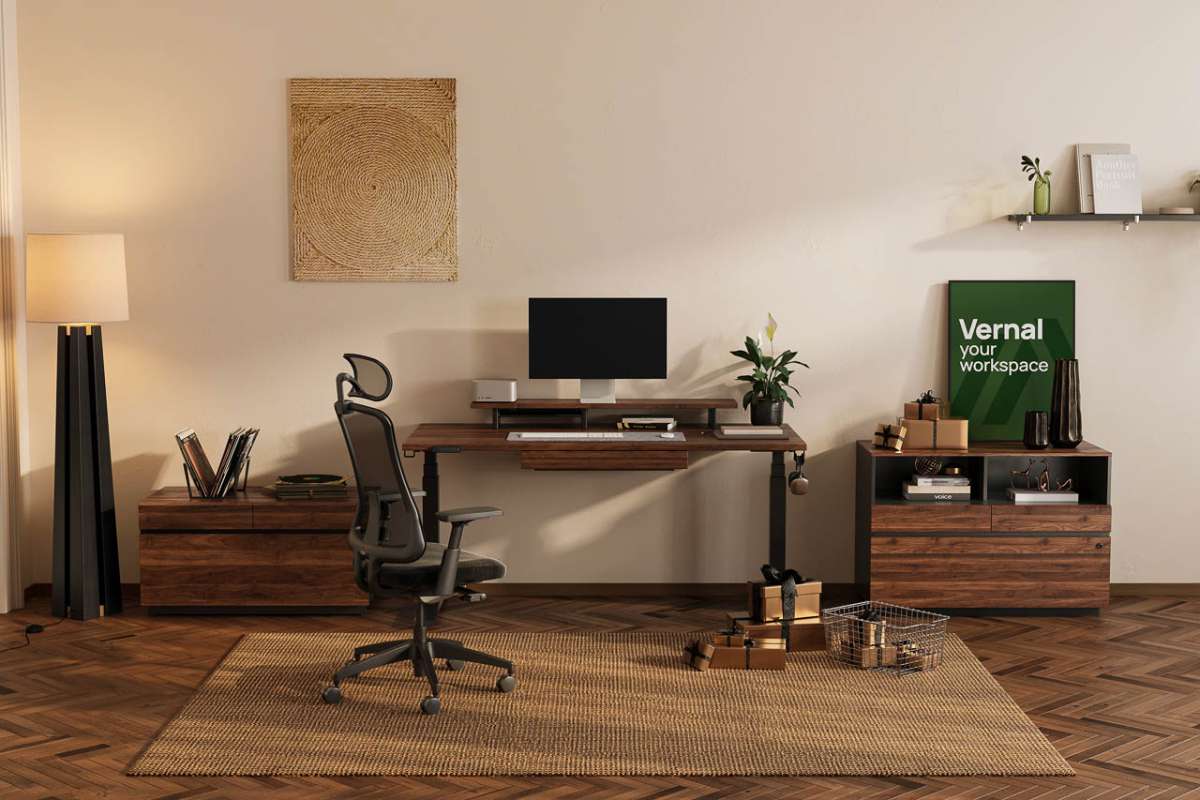
Vernal sells matching accessories designed for the Executive line. The V-Series Desk Shelf ($74.99) elevates monitors to appropriate viewing height while adding a storage shelf below. The Integrated Drawer Keyboard Tray ($69.99) tucks input devices away when the desktop needs to serve other purposes. File Cabinets ($159.99) and Side Cabinets ($209.99) share the walnut finish and design language. The Cable Management Set ($29.99) corrals the inevitable tangle of power and data lines. A Dual Monitor Arm ($99.99) handles screen positioning without consuming desktop real estate. A Pop Up Outlet ($59.99) brings power to the desktop surface and can be hidden when you’re not using it, keeping the workspace neat.
The Honest Assessment: Who This Is For
The Vernal Executive Standing Desk costs $699.99 during the holiday sale. That buys three or four budget standing desks from Amazon. The question is whether those budget options survive long enough to justify the savings.
Regular Price: $939.99
Holiday Sale: Starting at $699.99
Save: Up to 25% off
Where to buy: Vernal
Budget standing desks typically fail within two to four years. Motors wear out. Frames develop wobble. Desktops warp. You end up buying another budget desk, then another, spending more cumulatively than the Executive costs upfront while dealing with the hassle of disposal and replacement.
For remote workers who have accepted that home office life is permanent, the Executive offers the stability, aesthetics, and longevity that cheaper alternatives fail to deliver. The dual-motor system works quietly and smoothly. The 330-pound load capacity handles serious equipment. The 15-year warranty backs legitimate durability testing. The design integrates into professional spaces without announcing itself as disposable furniture.
Skip this if portability matters, if you’re renting short-term, or if your desk requirements might change dramatically within two years. The Executive commits you to a workspace decision the same way a quality mattress commits you to a sleep setup: the investment makes sense only if you plan to use it long enough to extract the value.
For recipients who spend real hours at their desks, the Vernal Executive Standing Desk delivers furniture that takes the workspace seriously. That’s a gift worth giving.
Gerber Gear 22-47162N Fast Draw Folding Assisted Opening Pocket Knife, Fine Edge, Black
(as of March 20, 2026 18:25 GMT -05:00 - More infoProduct prices and availability are accurate as of the date/time indicated and are subject to change. Any price and availability information displayed on [relevant Amazon Site(s), as applicable] at the time of purchase will apply to the purchase of this product.)
