
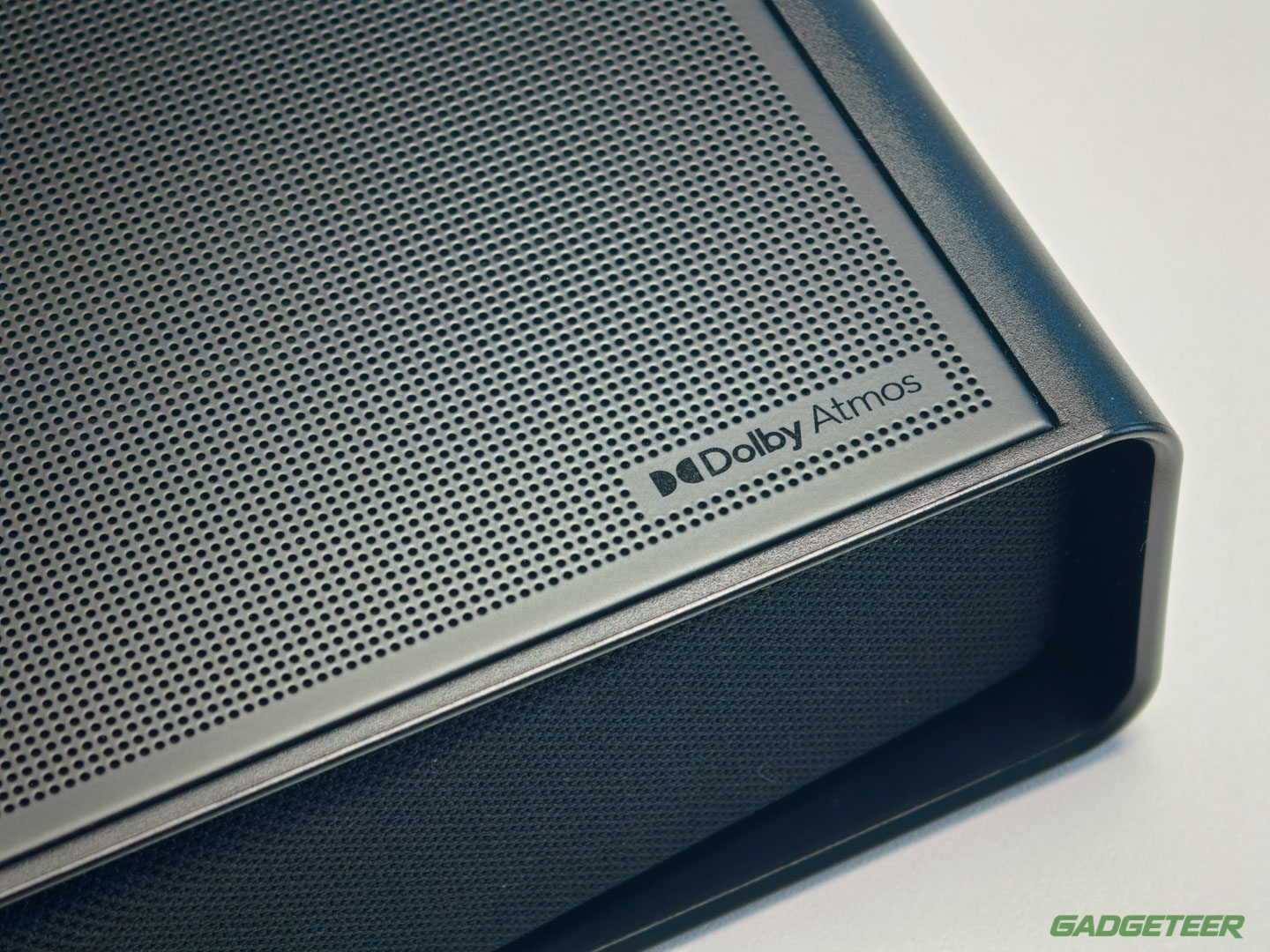
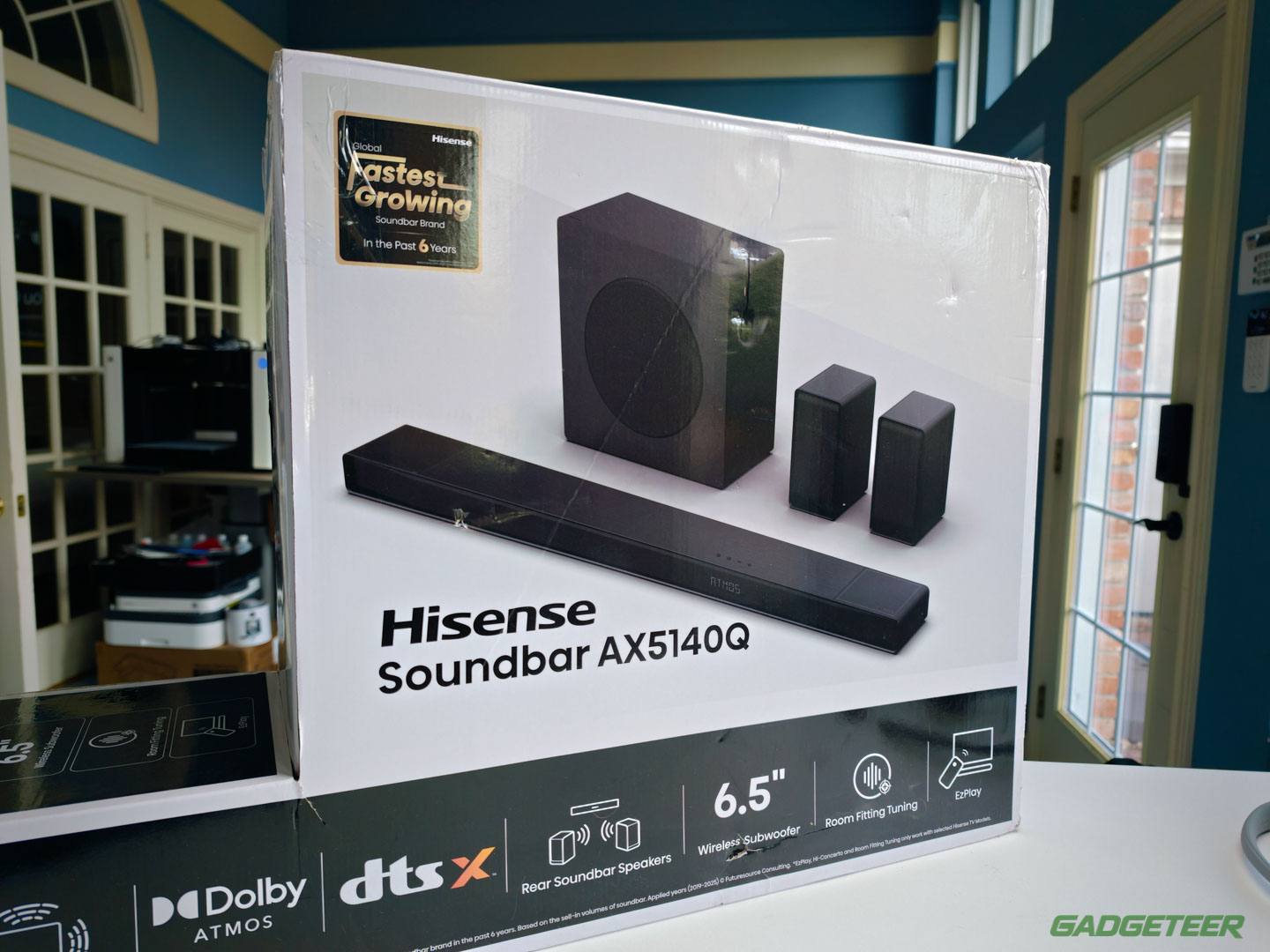
The Hisense AX5140Q is a true 5.1.4 setup with a soundbar, a wireless subwoofer and two wireless rear speakers that carry their own up-firing drivers. Height comes from in front of my chair and from behind it, which is why I put the system in my office, where I actually live with it. It punches way above its price.
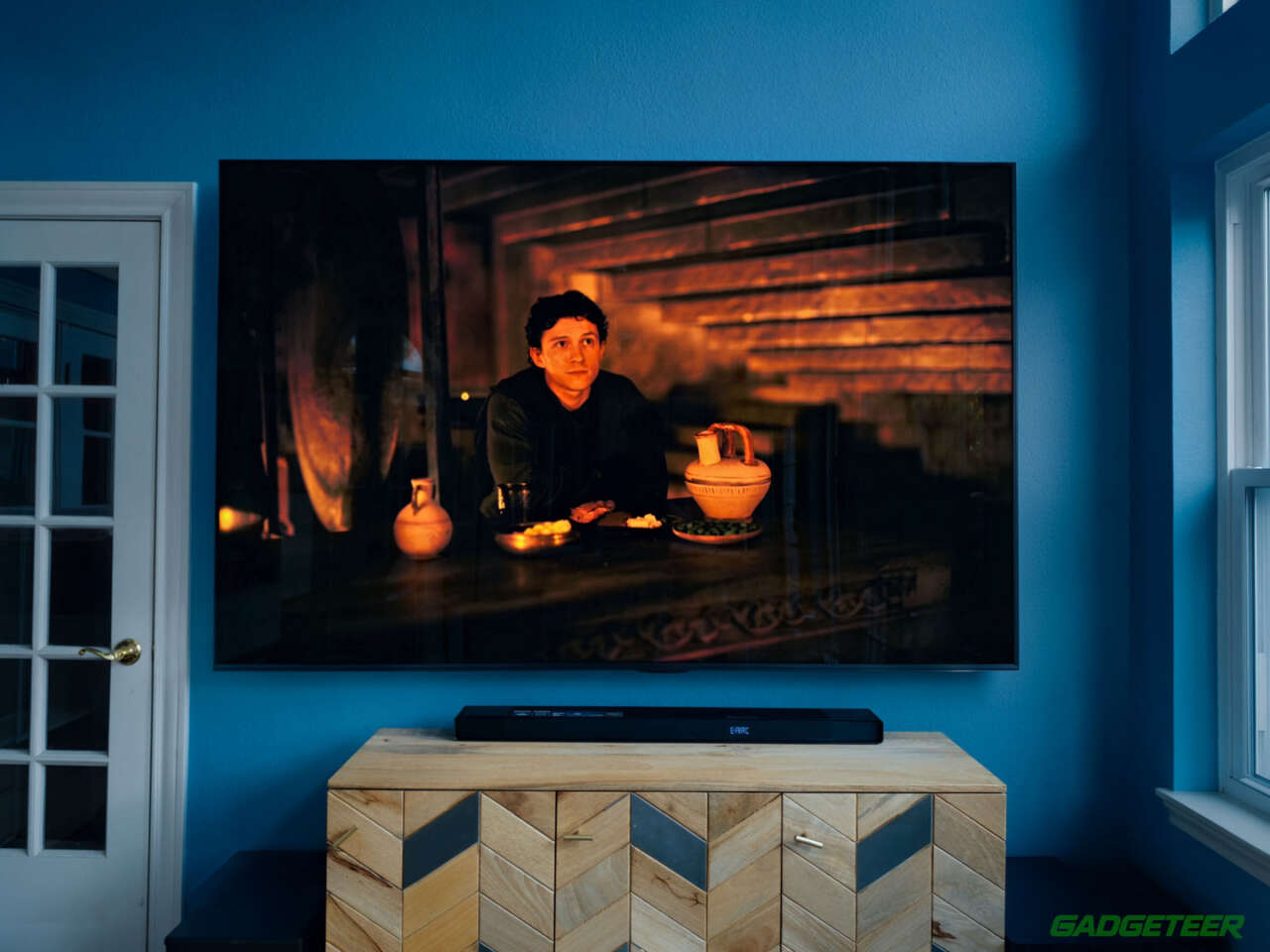
I’m running it with my Hisense 100U8QG in an open office, not a closed living room. That’s a hard room for surround gear, because there’s space for sound to travel and nothing to hide a weak mix. The question was whether a system with real rears and four height drivers could hold a soundfield in that kind of space. It does.
Price: Best Buy has it at $299.99 at the time of publishing, the best price right now, and that’s the one to buy. It’s new and in stock, with Save $100 off the $399.99 comparison value.
Available: Cyber Monday sale ends Monday, Nov 30. Free shipping arrives Tuesday, Dec 1.
Where to buy: Best Buy. Amazon is an option to check, but it shows no current price (no featured offer, only third-party sellers), so that isn’t a confirmed price.
How I tested it
I’ve been using the AX5140Q as the audio for my office, playing through the 100U8QG. The two movie tests I ran are the Odysseus suitors’ hall opening and Mayday’s bar scene. I also used the system for ordinary office days, and I worked through the EQ, MODE, SURR and LVL controls from the remote so I could hear what each one actually changes.
What’s in the box
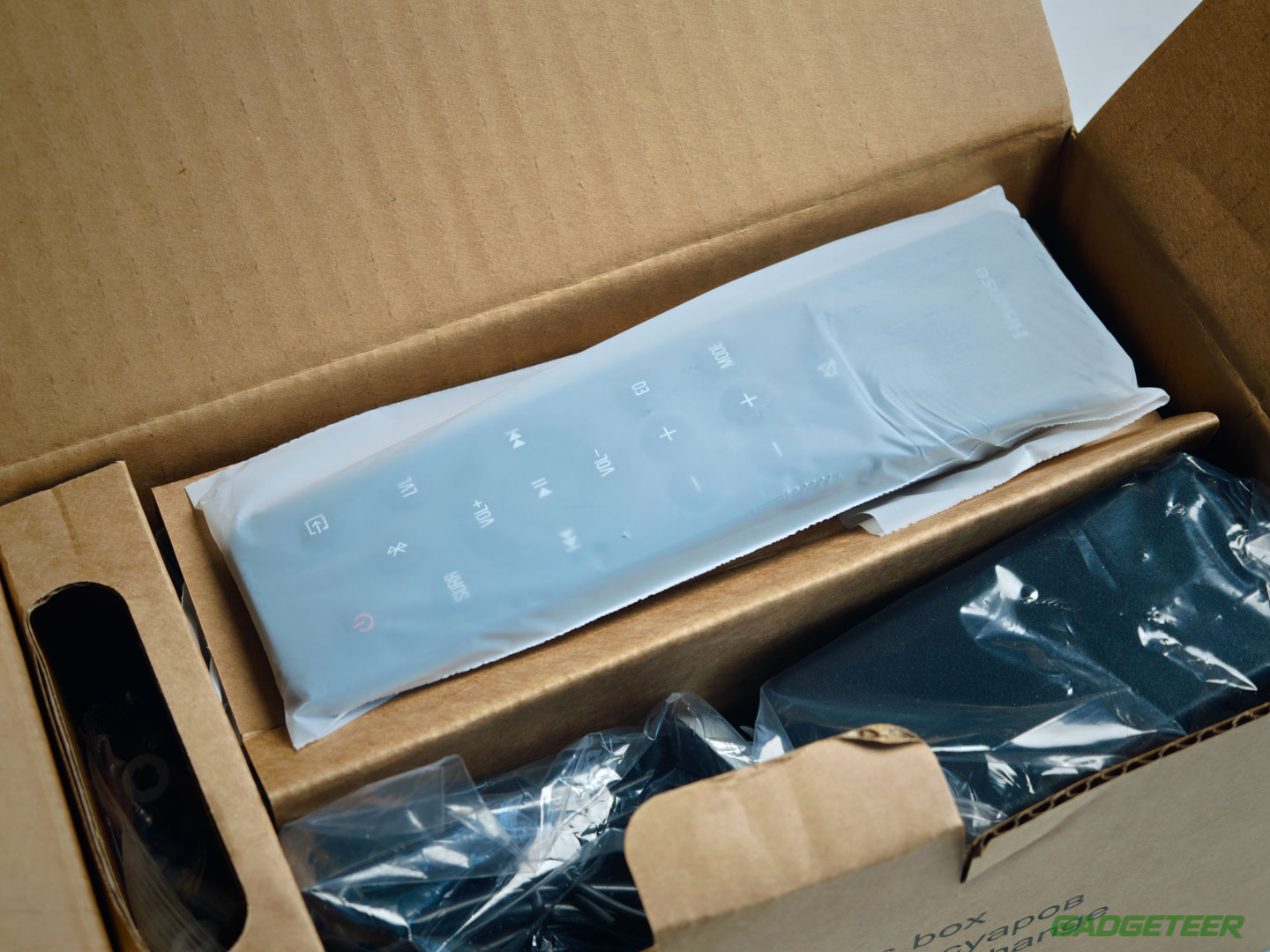
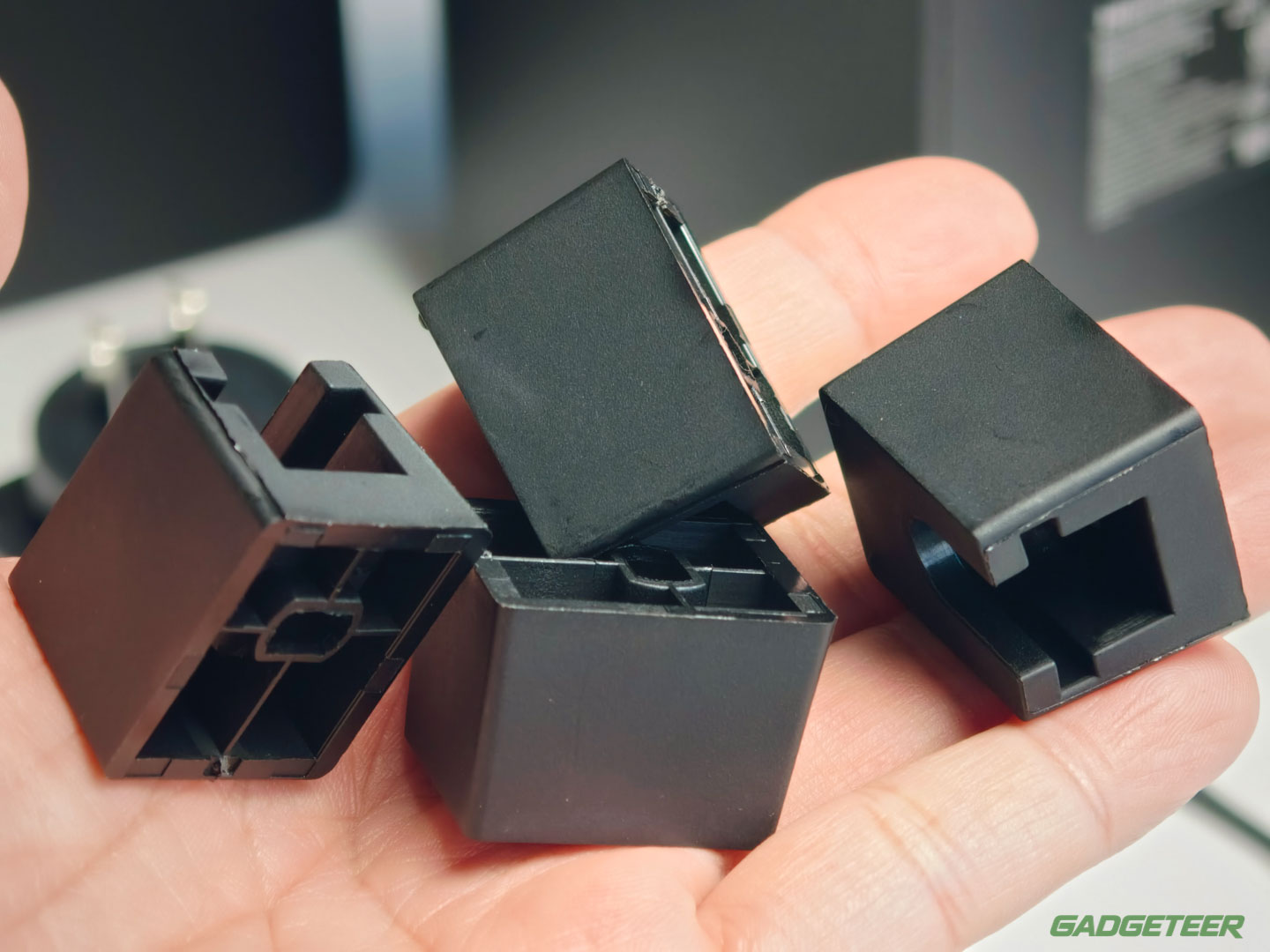
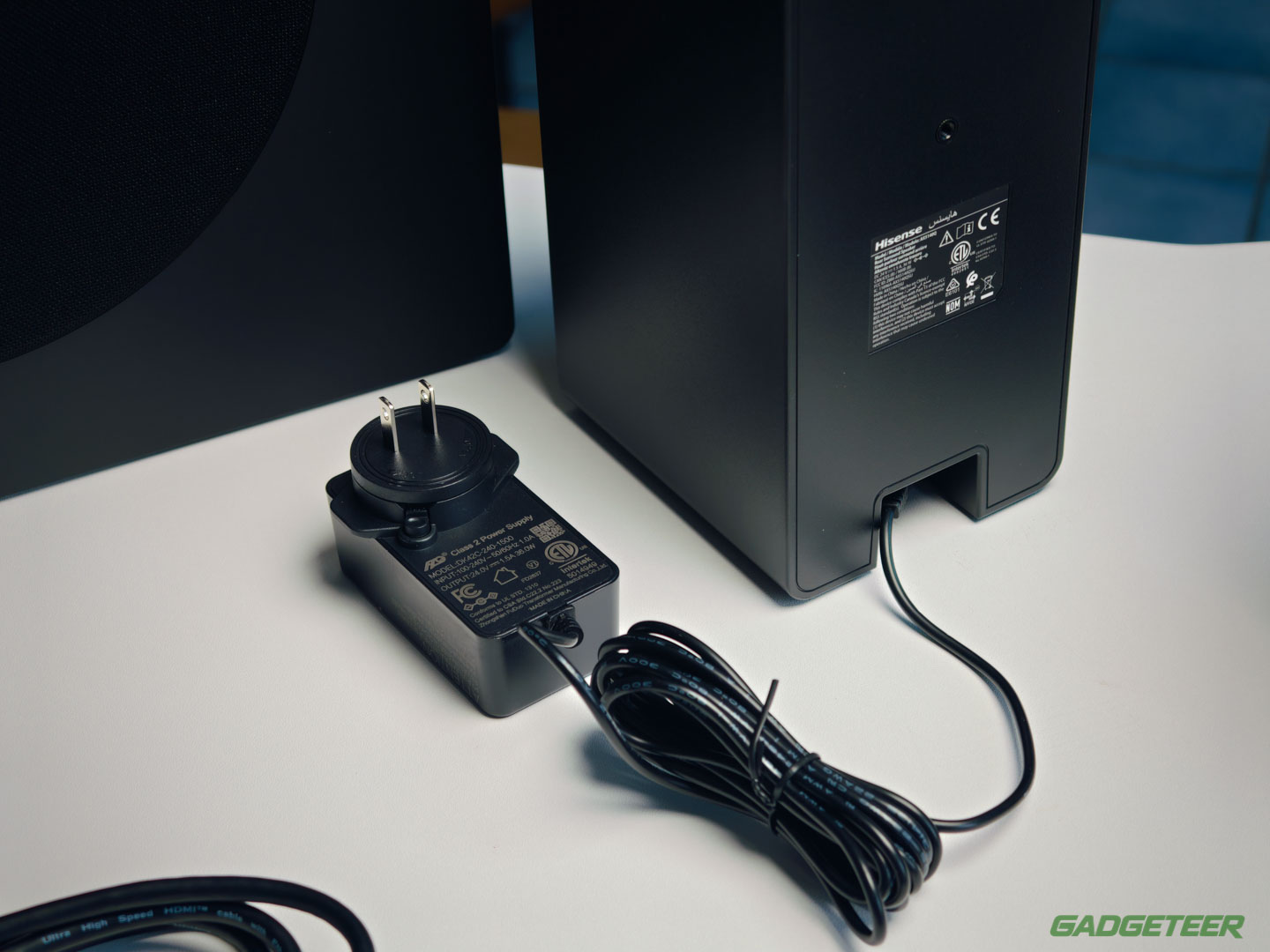
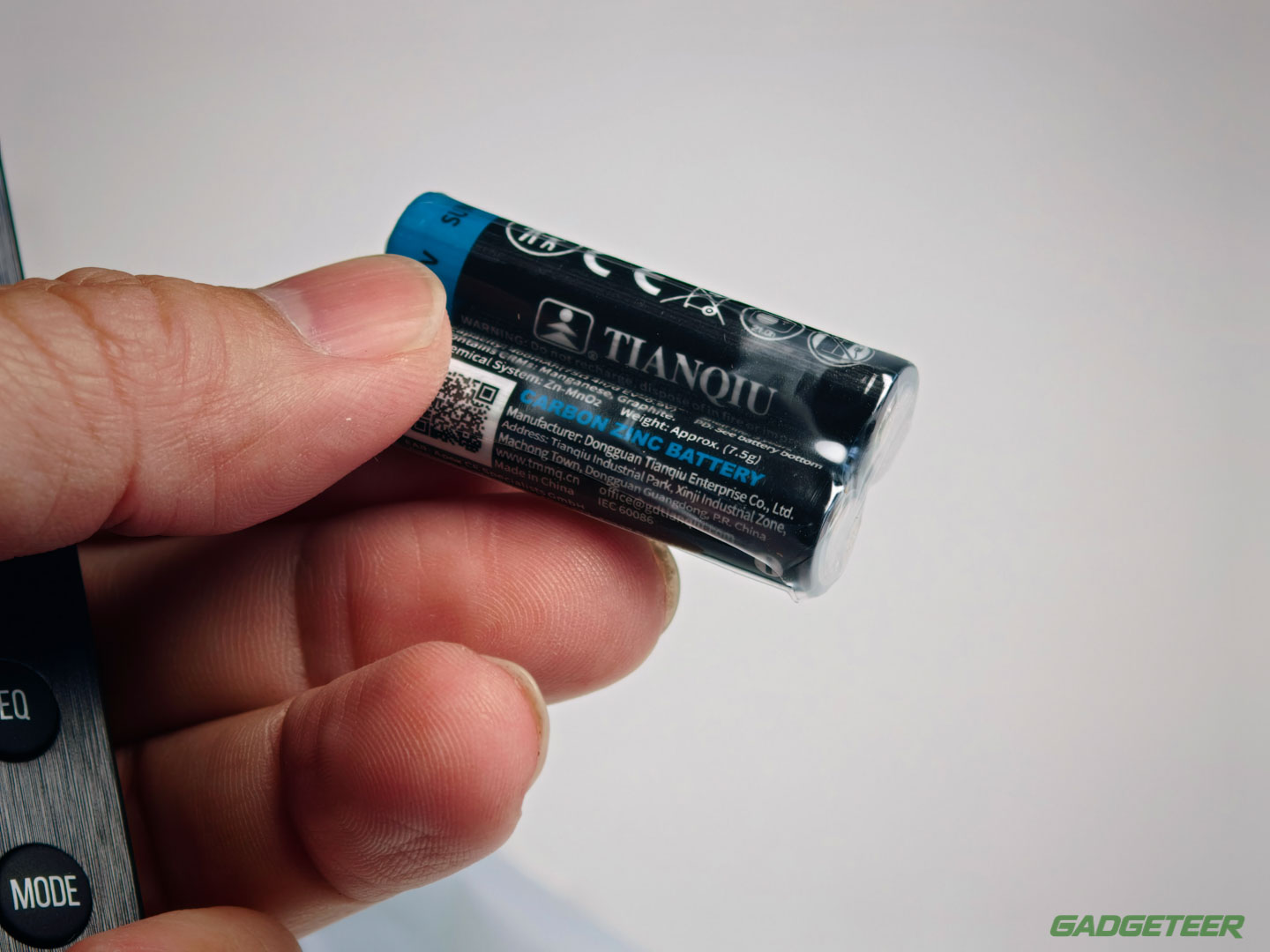
The carton holds the soundbar, the wireless subwoofer, two wireless rear speakers, the remote with two AAA batteries, one HDMI cable, two AC power cords and two AC adapters. You also get a wall mount kit, the manual, a warranty card and a quick start guide. There’s no speaker wire in the box, because the sub and the rears connect to the bar wirelessly and don’t need a run across the floor. Power cord quantity and plug type can vary by region, so match what arrived with your unit.
You won’t run a speaker cable.

Design and build
The bar
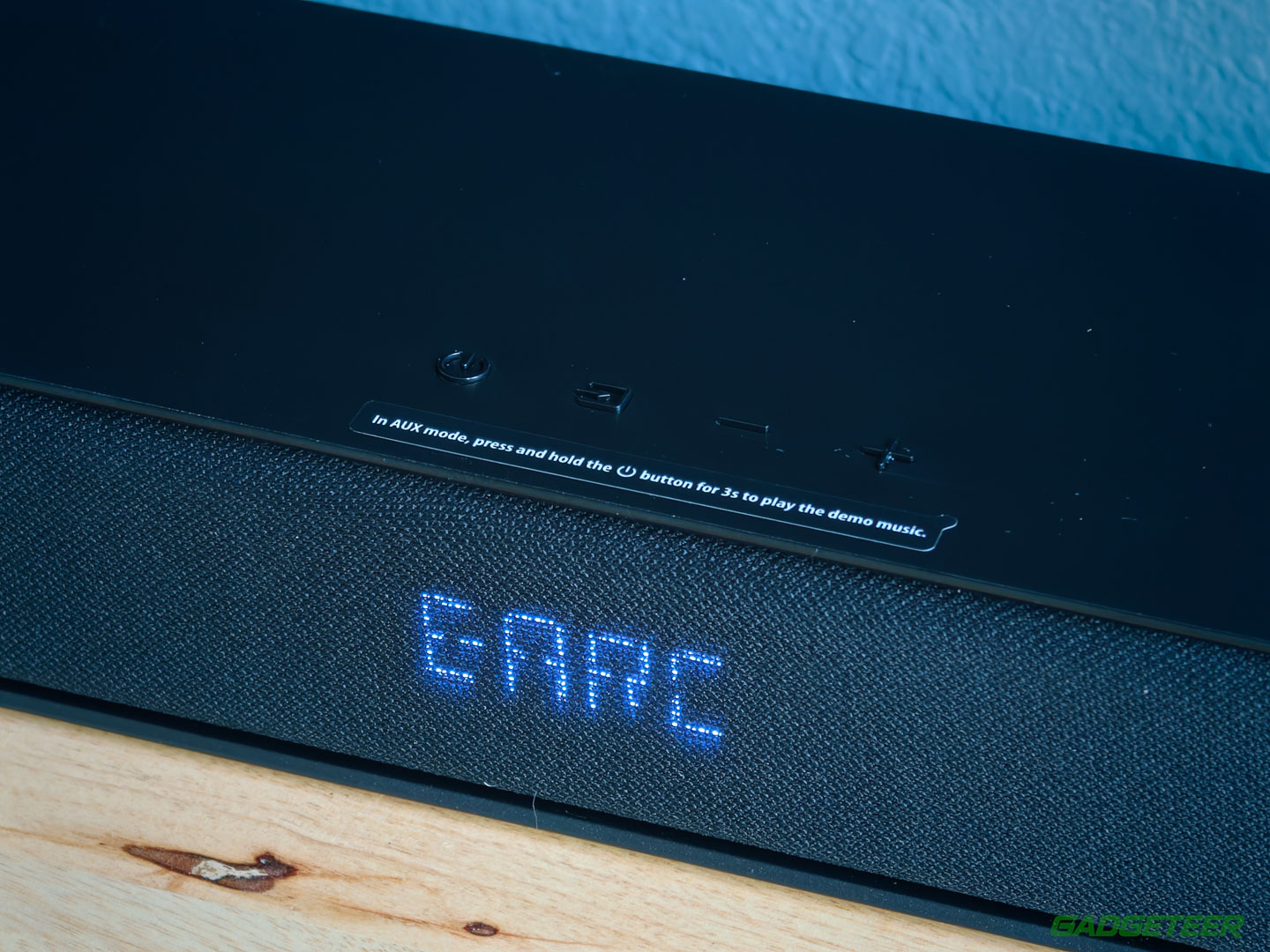
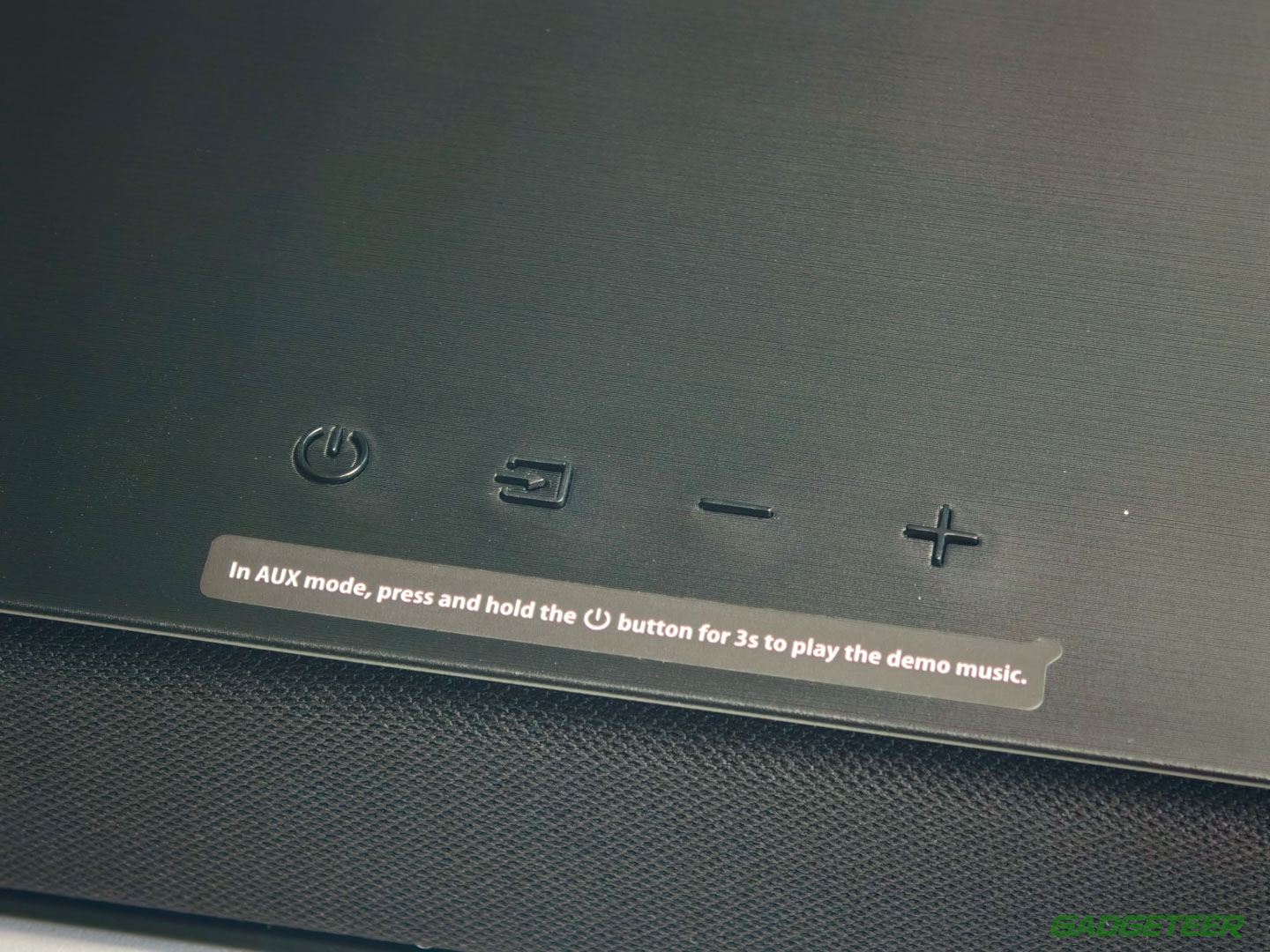
The bar is 40.1 inches wide, 2.3 inches tall and 4.2 inches deep, a narrow design that looks really sharp under a large display without blocking the bottom of the picture. It weighs 5.95 pounds, and upward-firing speakers are built into the bar itself, not just the rears. The front has a dark fabric grille, a display window and a remote sensor, and the top buttons are flush but very tactile when I need power, source or volume.


The end of the bar is compact, which is part of why the narrow cabinet looks sharp under the display. The bottom label names the AX5140Q, with Dolby Atmos and DTS:X on the badge. The top buttons are flush with the cabinet, and they’re still very tactile when I reach for them. The front grille is a dark fabric that looks good under the 100U8QG. The front badge on the bar, with the model and the surround formats it decodes.
The sub and the rears
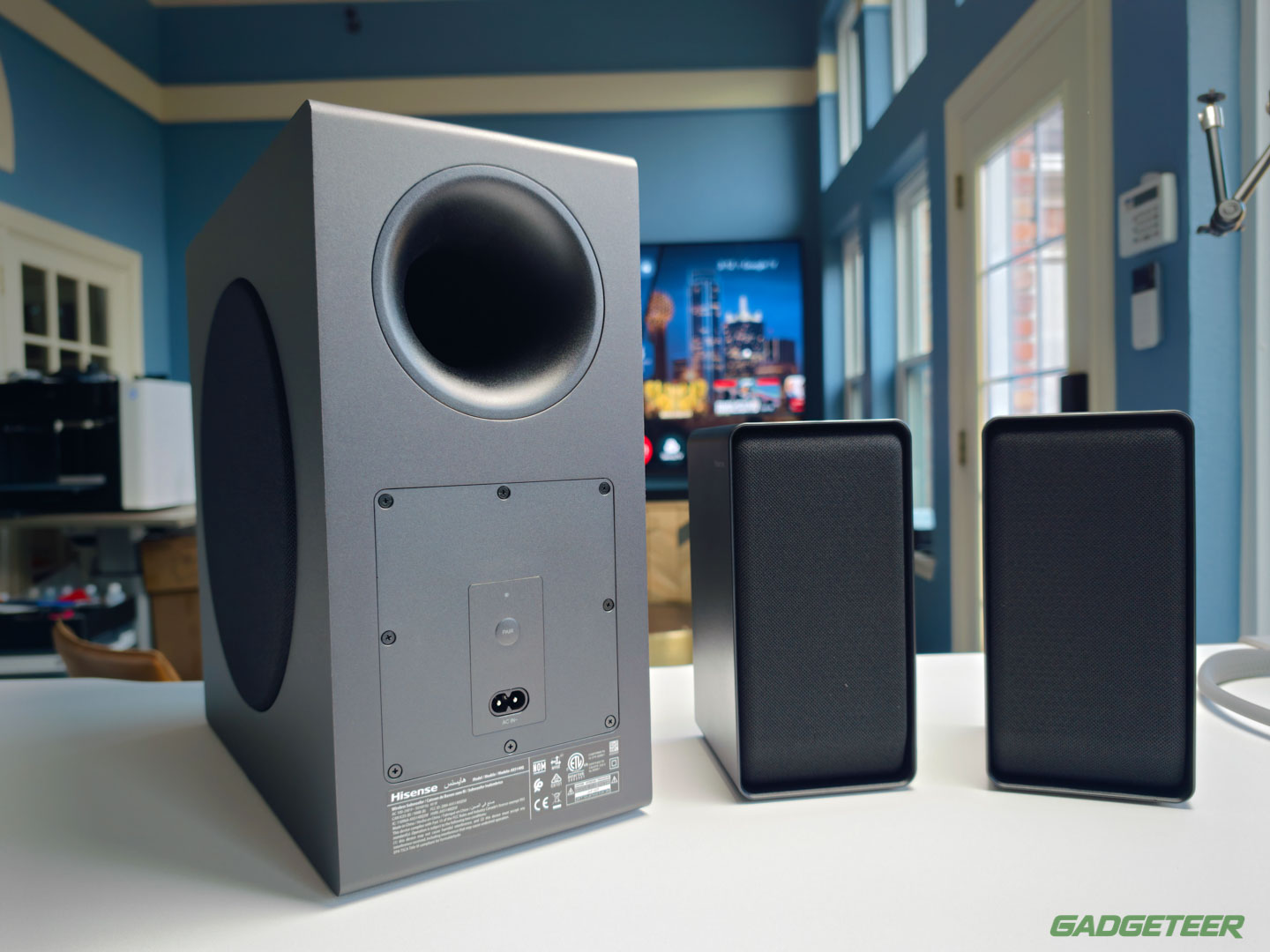
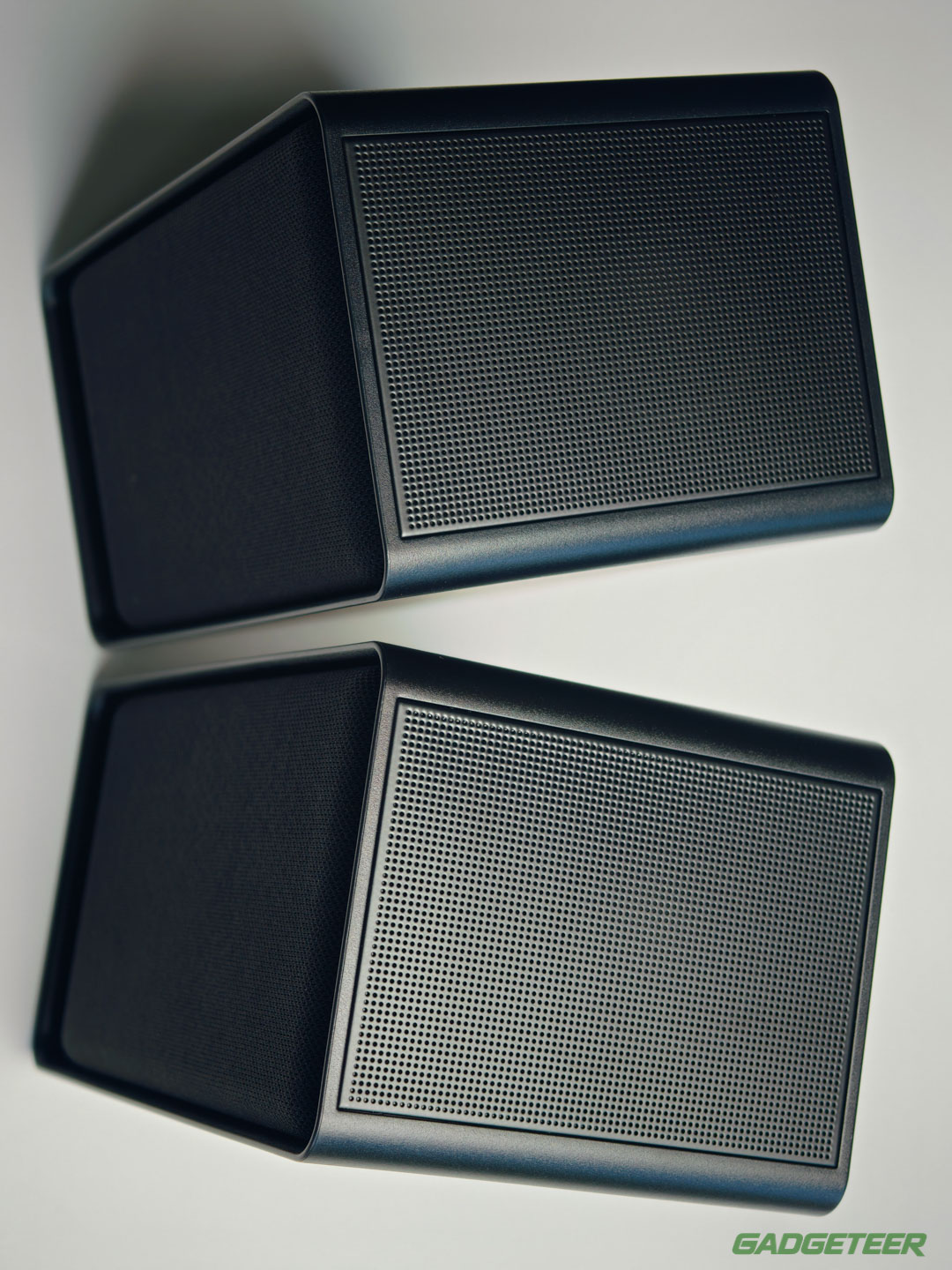
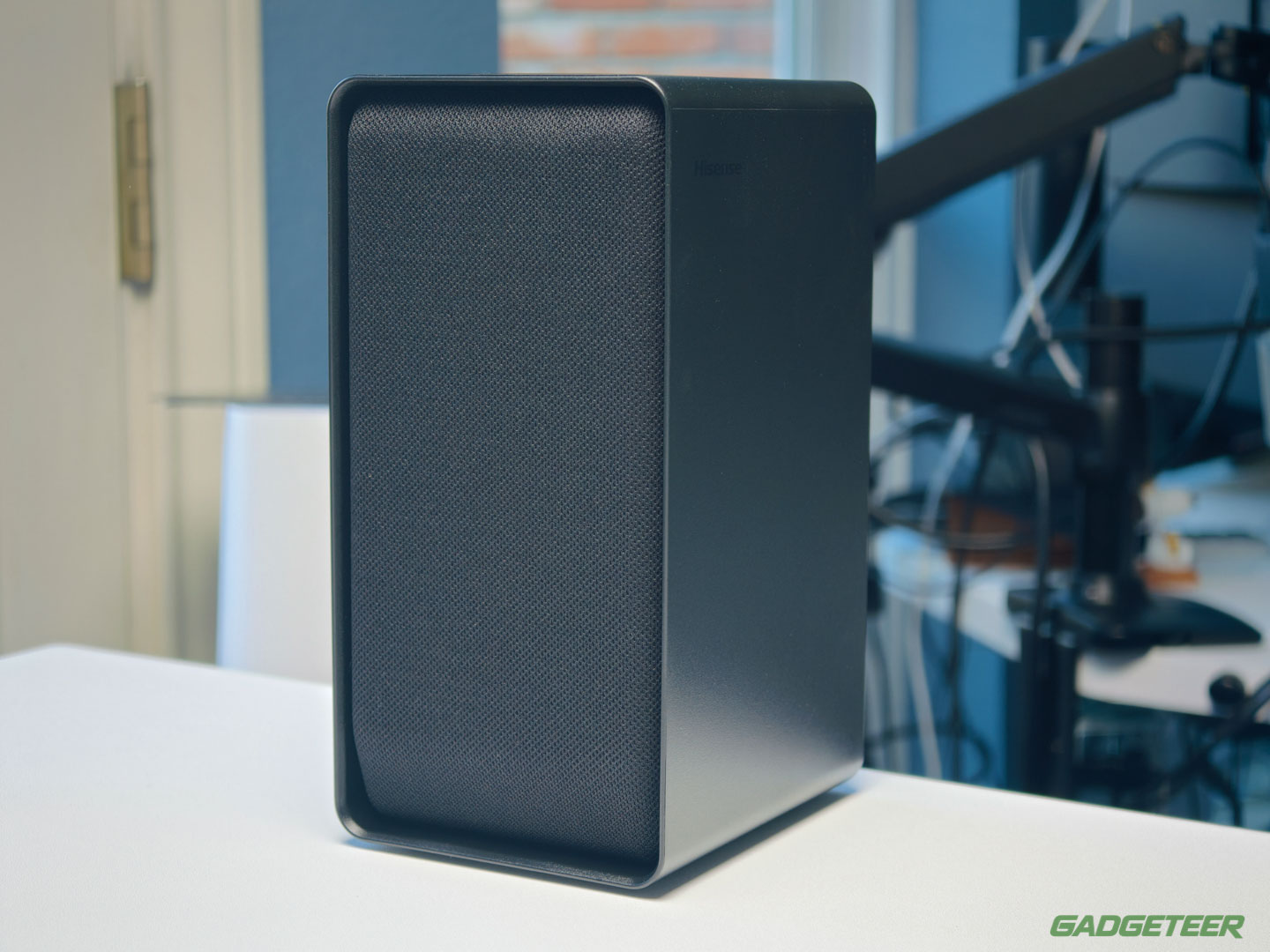
The subwoofer is the shape an office can actually use. It’s 6.4 inches wide, 13.3 inches tall and 13.1 inches deep, a compact box with a 6.5-inch driver that weighs 12.3 pounds and can sit beside a desk. The rears are small at 3.9 by 7.9 by 4.7 inches and 1.55 pounds each, with an up-firing driver on top of each one. Every piece needs its own outlet, and there’s still no speaker wire crossing the floor.
Setup, inputs and connections
Setup
Setup is really easy. One HDMI cable from the display’s eARC port to the bar carries the audio, and Hisense includes that cable in the box. Plug in the sub and the rears and they’re designed to pair to the bar on their own. If a component doesn’t lock in, the pairing button is right there on the sub and on the rears for a manual retry, and the rears also have a switch for left and right.
Inputs
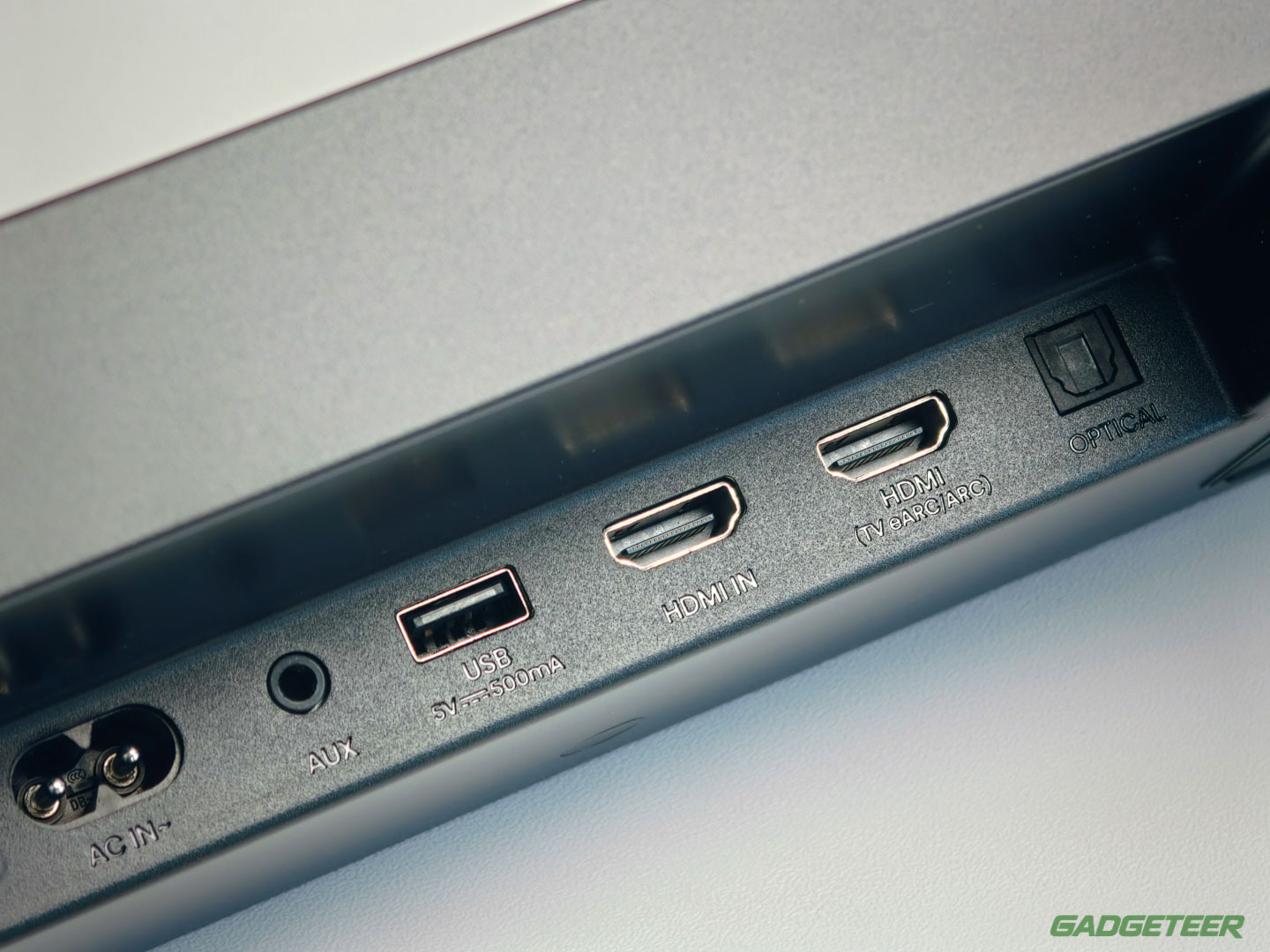
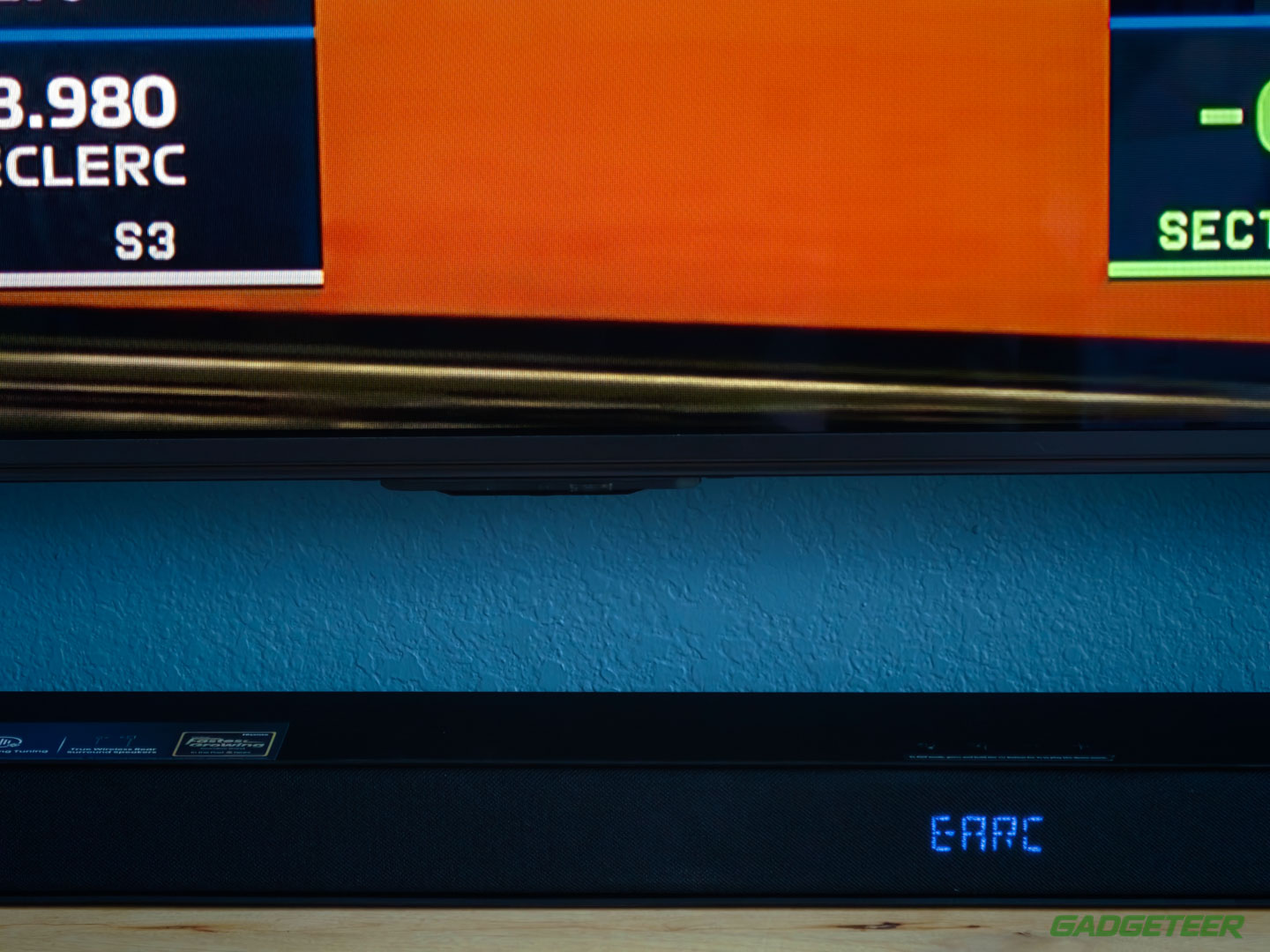
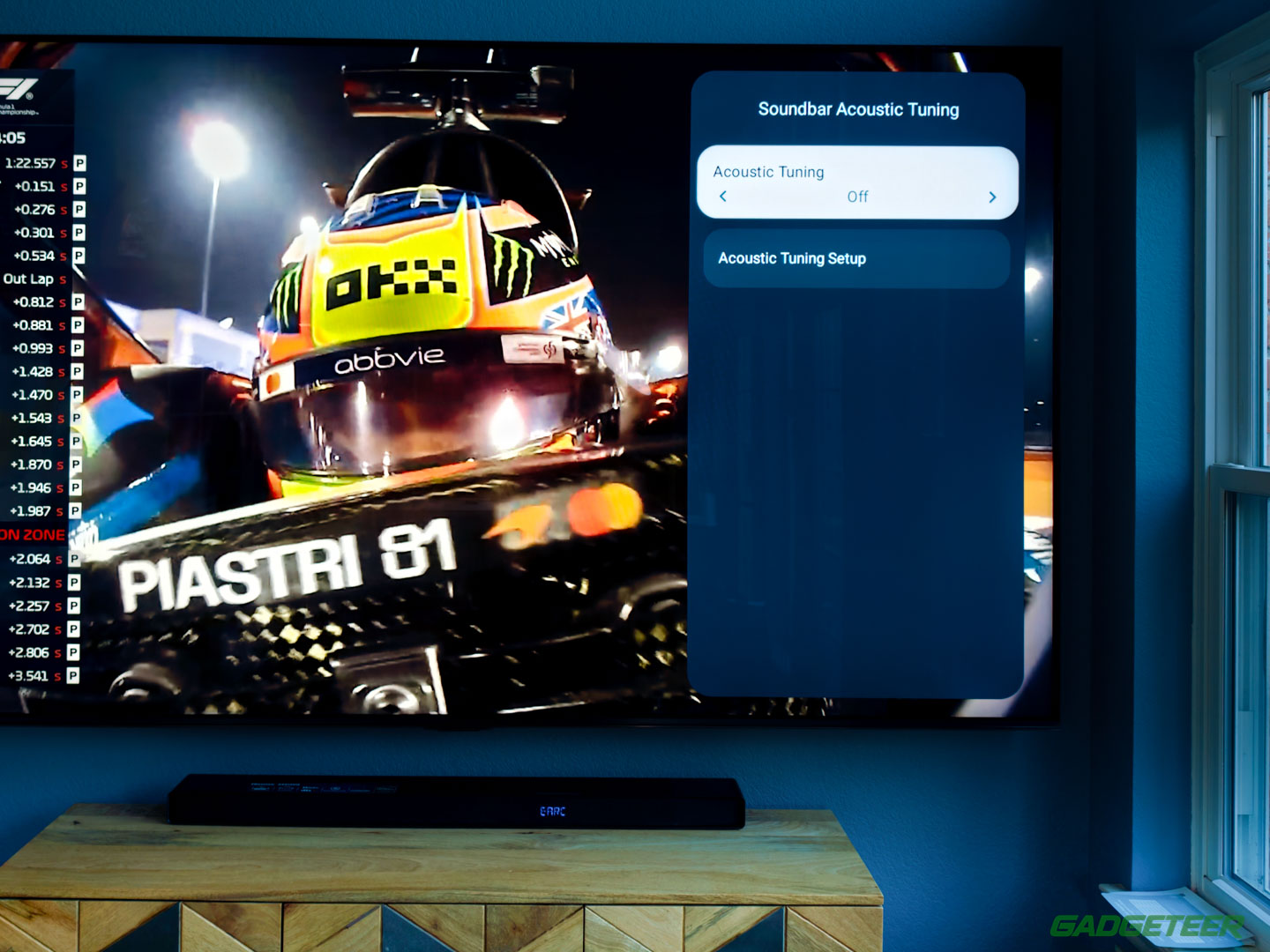
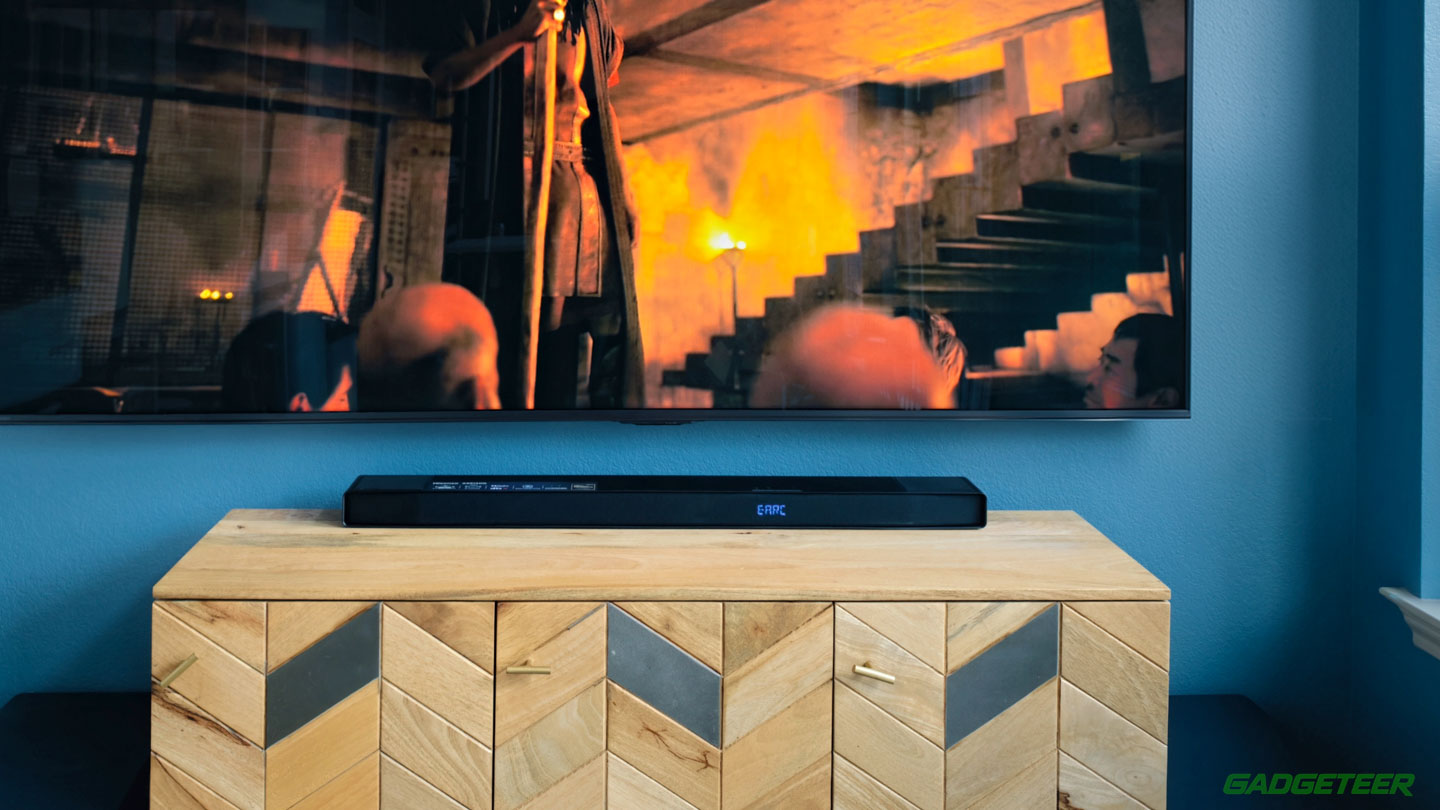
The HDMI connection on the TV side is eARC, and I’d expect that on a system like this. One cable from the display’s eARC port carries the audio, and the front display shows EARC when that’s the source.
There’s a separate HDMI IN as well, with 4K HDR pass-through at 60Hz. A PC or console can plug into the bar, the bar can decode the surround mix, and the picture can continue on to the screen.
Optical and a 3.5mm AUX input sit on the back panel with the HDMI ports, and the SOURCE button cycles through every input, with the front display naming the one you’re on. USB is a real playback input, not just a service jack, and it plays WAV, WMA, MP3 and FLAC from a FAT32 or FAT16 drive up to 32GB. Bluetooth 5.3 pairs a phone without a network.
The bar isn’t locked to Hisense displays, and any TV with ARC or eARC will run it. It won’t stream on its own, because there’s no Wi-Fi, no app and no AirPlay or Chromecast, and it isn’t Roku TV Ready. You give those extras up, and in return you get a wireless sub, real rears and four height drivers. That’s the trade I’m making.
Remote, buttons and every listening mode
The remote
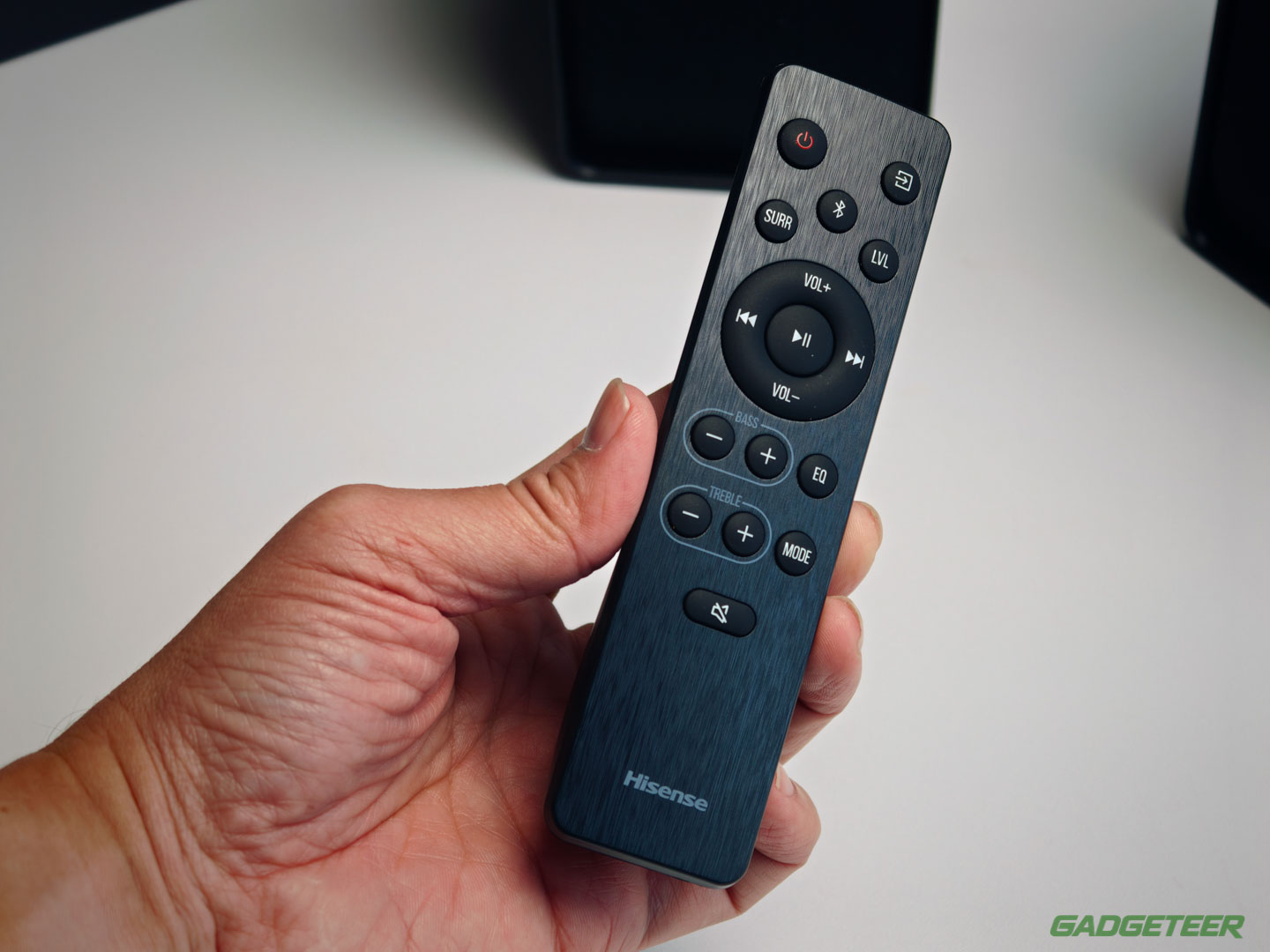
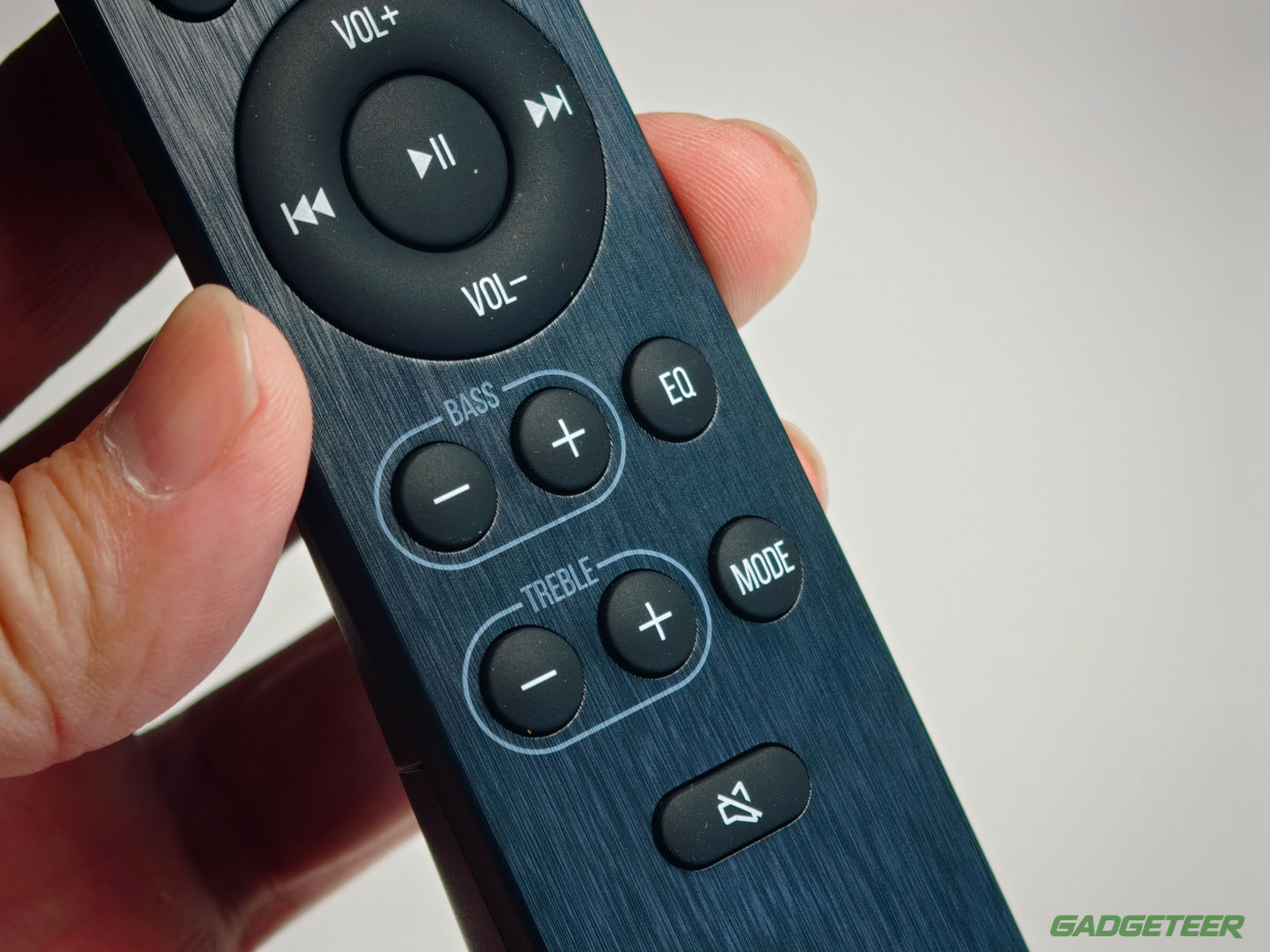
The remote is a slim stick with direct buttons for SOURCE, EQ, MODE, SURR, BASS, TREBLE and LVL, plus volume and mute. I didn’t hunt through menus.
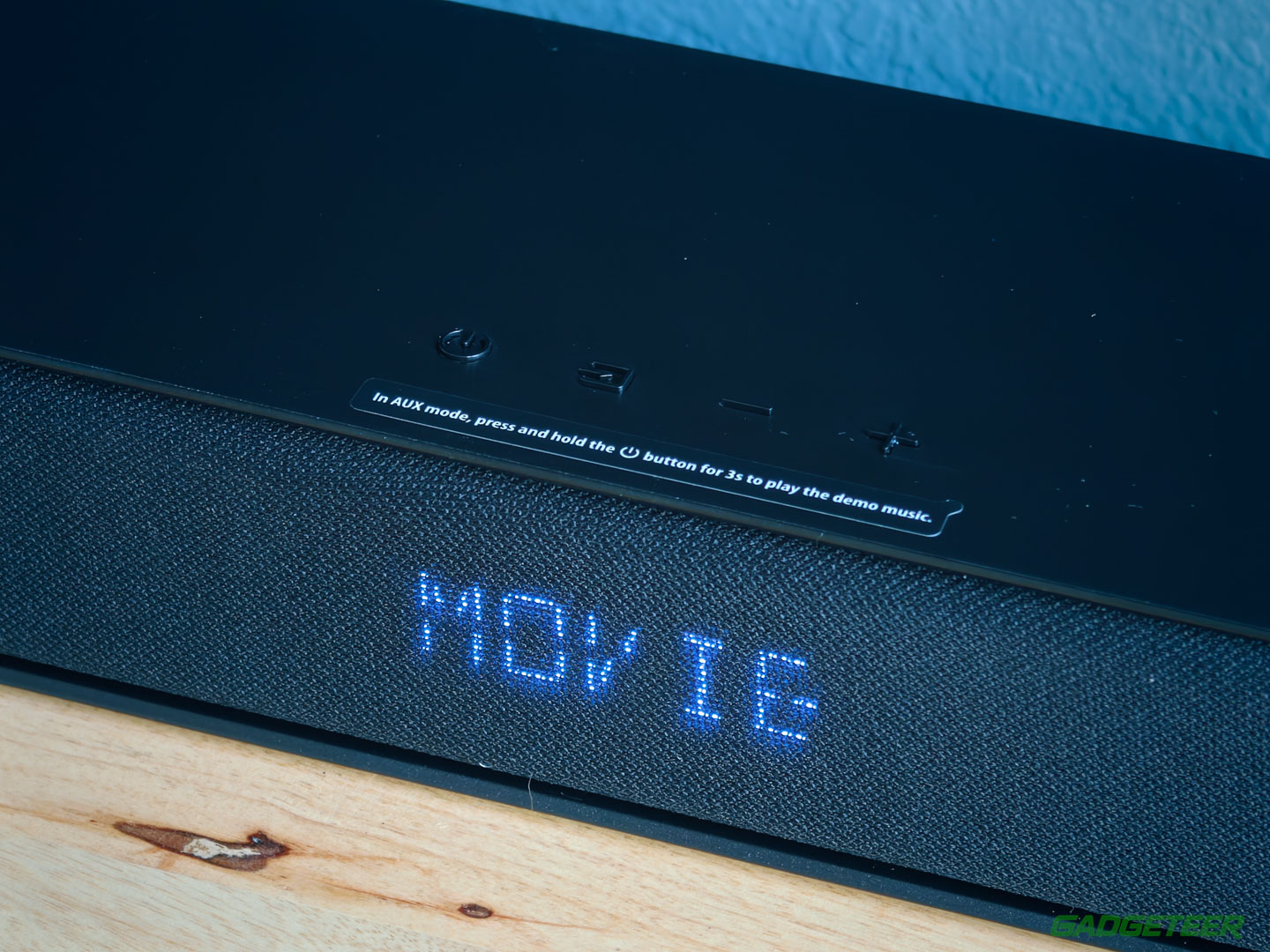
Four buttons on top of the bar cover power, source and volume when you don’t want to hunt for the remote. Hold the play and pause button for three seconds and the setup menu opens, with AV Sync, Auto Wake, Auto Standby and Virtual:X inside. The front display shows each change, and the dimmer goes from DIM 3 down to DIM 0 so the window isn’t glowing in the corner of your eye.
EQ, MODE and SURR
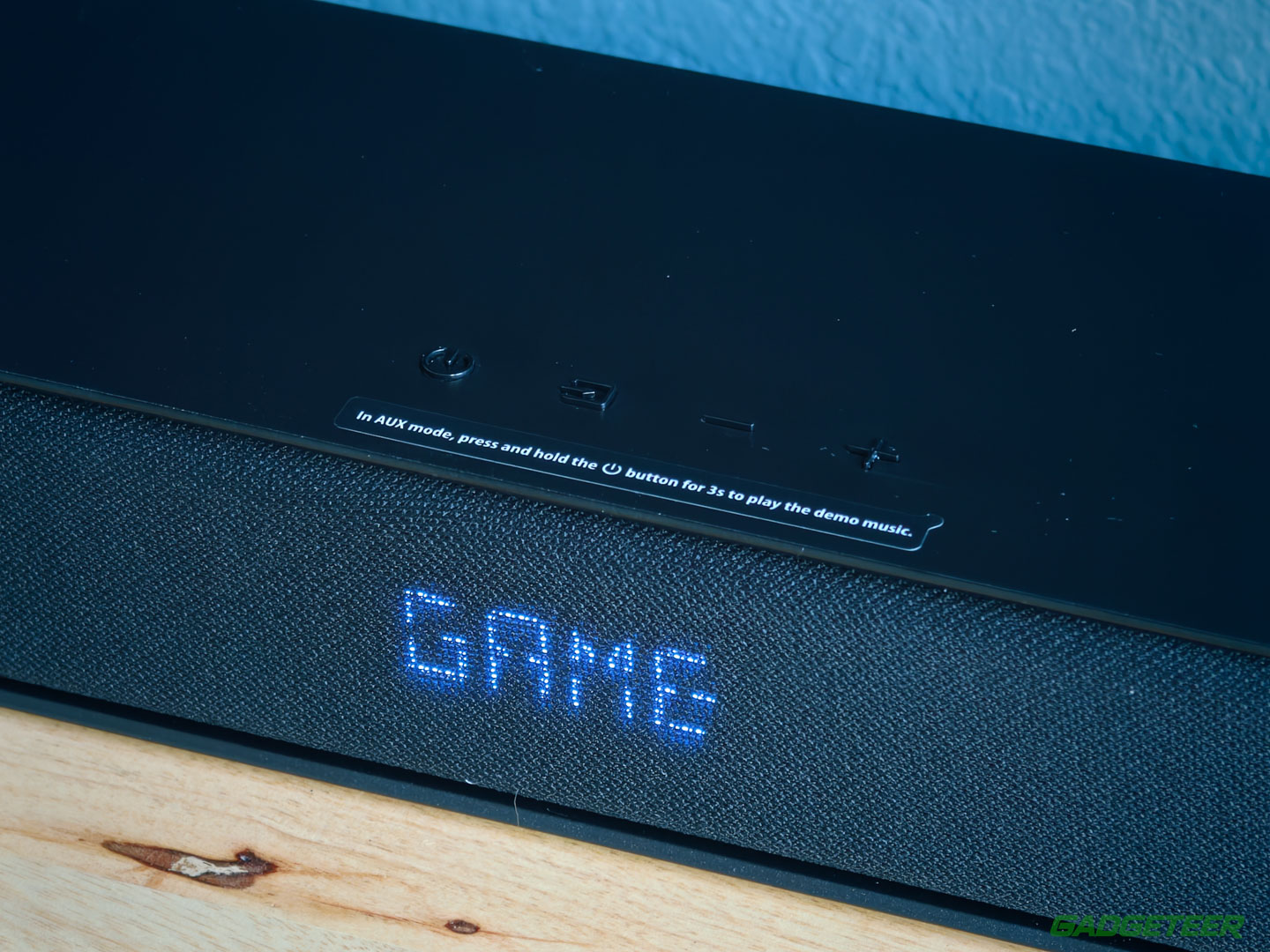
Two buttons do most of the shaping. EQ picks the overall voicing: Movie, News, Music, Game Pro and Sport, with Movie as the cinema starting point. MODE layers processing on top of that: Voice, Night, AI, or off. Voice pushes speech forward, Night is meant to hold sudden peaks down so a late session doesn’t slam the room, and AI is the automatic option.
SURR decides what the rears do. Pure plays the surround channels a soundtrack actually has, Pro upmixes stereo so the rears join in, and Off keeps the mix mostly up front.
The LVL menu
The LVL menu is the one I care about in a smaller, open room. It holds separate levels for the sub, the center, front height, rear, rear height, left and right balance, and the dimmer, each starting at a default of zero, with the dimmer at 3. I used those levels most.
At office distance, those levels do more than any preset, because you can raise height or calm the sub without throwing the whole EQ away. Bass and treble on the remote tilt the system when a track or a scene needs a broader nudge.
Game Pro is the EQ preset for a console or a PC coming through HDMI IN, and I get into how that plays in the Games section below.
Movies: the Odysseus suitors’ hall and Mayday’s bar scene
Odysseus and Mayday
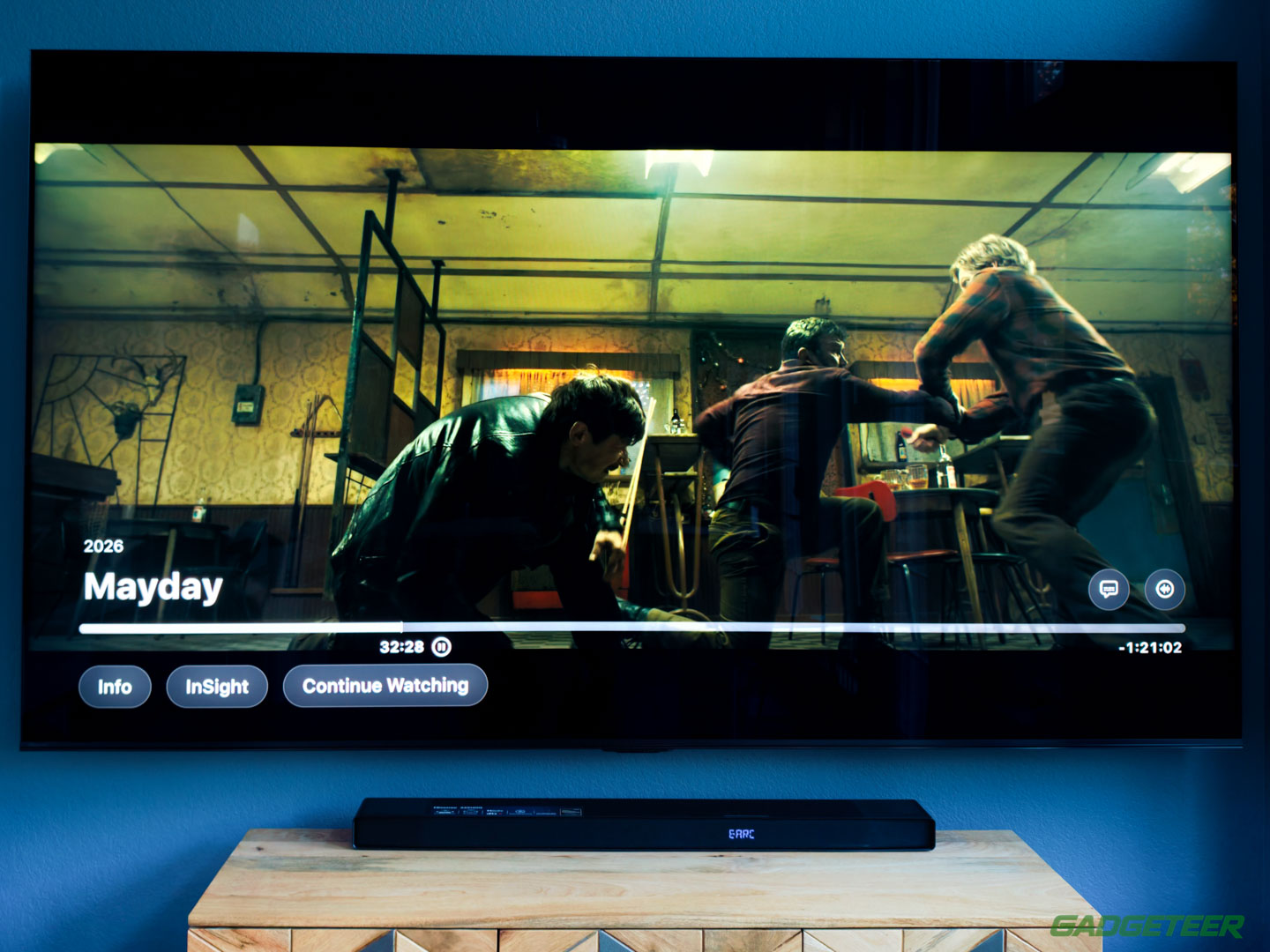
The movie tests I ran are the Odysseus suitors’ hall opening and Mayday’s bar scene. I used the AX5140Q in my open office with the 100U8QG, which is exactly the kind of space where a cheap soundbar usually collapses into a smear in front of the screen. This one doesn’t. The sound actually moves in the open space extremely well.
Effects travel across the room instead of hanging on the bar, and the up-firing drivers in the bar and in the rears are what give that movement a vertical axis, not just a left-to-right pan. A real 5.1.4 layout is doing that work. Movie EQ with Surround on Pure is the honest starting point for a soundtrack that already has those channels, because Pure leaves the mix alone and lets the speakers do the job.
Mayday’s bar scene was the second pass, and the same thing held. The system keeps movement intact in an open room, and that’s harder than it sounds. In this office, sound moves.
The usual film tests
After those two, I ran the same movie tests I always reach for when I want to hear what a surround system is actually doing, this time on the AX5140Q under the 100U8QG. F1 opens on the grid at Silverstone, with engines arriving from more than one direction at once. When the pack roars past the camera, the sound sweeps from the bar through the wireless rears instead of dying at the front of the desk.
Pit radio stays planted on the center channel rather than getting swallowed by the field. The 6.5-inch wireless sub adds punchy mid-bass weight to the cars, and it doesn’t try to turn the floor into a drum. At 40Hz to 150Hz, that’s the honest range of this box.
The Dark Knight Rises is my dialogue check, because Bane’s masked voice sits on top of a loud, busy score. I used Movie EQ with Voice mode on so the dedicated center could do the work. The processed vocal stayed intelligible, with texture instead of a muffled blur, and I could follow the scene without riding the volume. That’s what the center channel is for.
Dune: Part Two is the height test. When the sandworms break the surface and the ornithopters cross overhead, the four up-firing drivers in the bar and the rears put motion above the chair, not just a louder front stage. The sub gives those moments some body without pretending to be a pair of giant living-room cabinets. Height is the story on this scene.
A Quiet Place is the late, quiet test. I ran Movie EQ with Night mode on so whispered talk stayed clear and the sudden peaks didn’t slam the room. Night is the control that makes a late office session livable, and the tension of the film still lands. The bar doesn’t have to shout to keep speech intact.
Sound quality: Music
Music gets its own EQ preset, and it should, because a 5.1.4 system in an office will spend as many hours on playlists as it does on films. The Music preset is one press on the remote. Bluetooth 5.3 pairs a phone without a network, USB will play a drive of WAV, WMA, MP3 or FLAC files, and stereo music will leave the rears mostly idle unless Surround is on Pro.
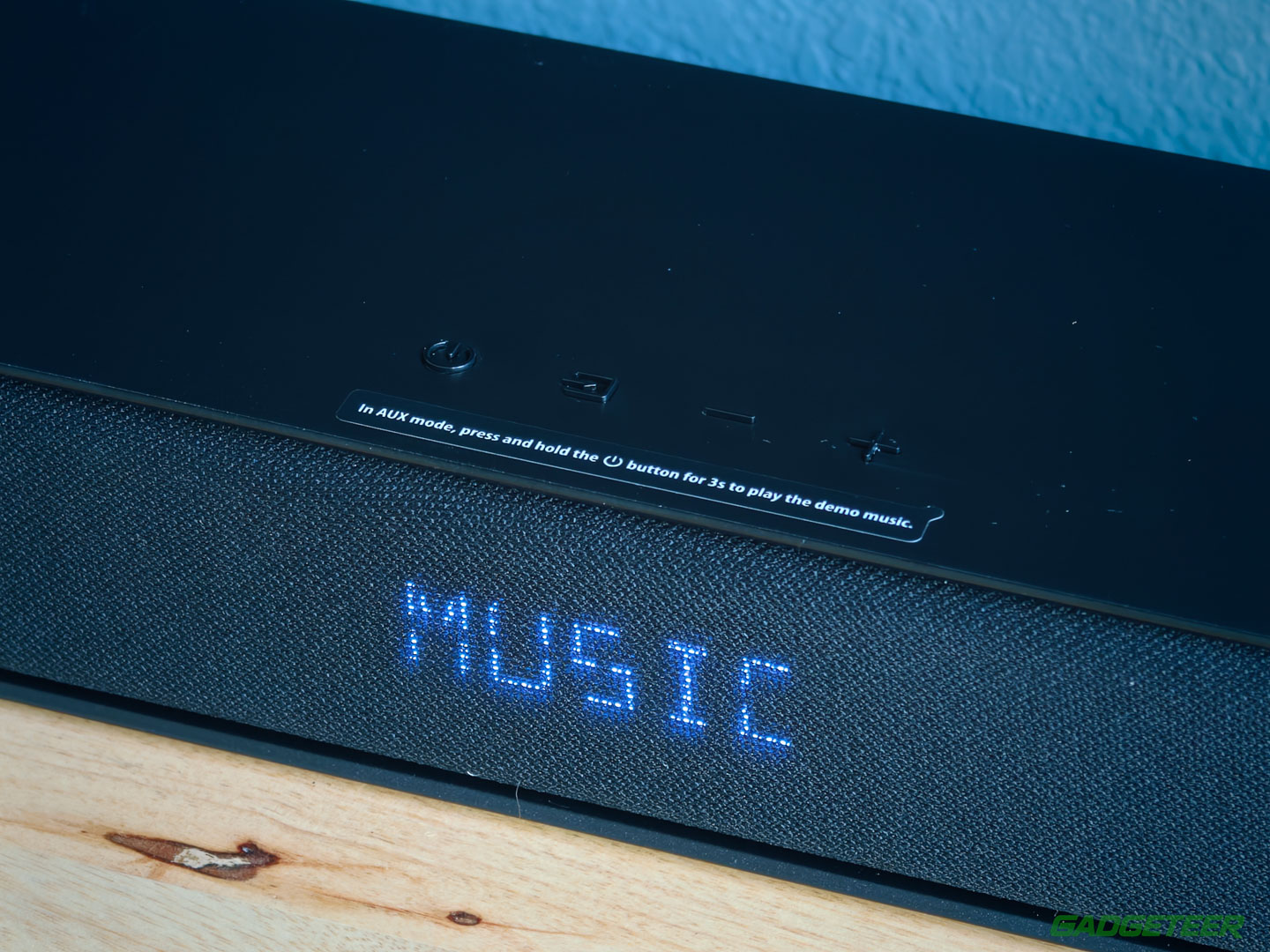
Pure is the honest setting when a track already has surround information. Off keeps the mix up front when you want the rears quiet during a work block. I went back to the same records I use to judge music on a surround system, this time through the AX5140Q in the office. Music EQ was on, and Surround was set to Pro on the stereo tracks so the rears had something to do.
The records I used
Avicii’s “Levels” is the bass and transient check. The synth climb stays clean up front, and when the drop hits, the wireless 6.5-inch sub gives it punchy weight at a scale that fits an office, not a nightclub. Modern Talking’s “You’re My Heart, You’re My Soul” is the midrange and vocal check. The Eurodance synths and the lead vocal stay clear, not thin or sharp, and the Music preset keeps that balance without a lot of extra EQ work.
The Weeknd’s “Blinding Lights” is where the height drivers show up on a music mix, with some air around the synths and a bass line that stays tight instead of smearing the percussion. Dua Lipa’s “Physical” is a layering test, stacked voices that should stay separated, and they did. Travis Scott’s “SICKO MODE” jumps styles in a hurry, and the transitions stayed clean while the sub handled the low end without taking over the room.
Then I flipped to Miles Davis’s “Kind of Blue,” which will expose a system that only knows how to be loud. The upright bass had body, the trumpet sat in the center, and the cymbals had a little height instead of turning into hash. Billie Eilish’s “bad guy” sits at the other extreme, a quiet vocal against a heavy bass figure, and the vocal stayed clear the whole way through. I used the sub level when the low end sat too close to the chair.
The Music preset is the starting point I’d use before chasing bass and treble. The records still sound like themselves.
Games
Game Pro is the EQ I’d reach for when a console or a PC is coming in through HDMI IN, because that’s the preset Hisense built for that job. Racing is a good workout for the rears, because engine notes can swell in a tunnel and the Doppler of other cars can move from behind the chair to the front of the room.
First-person shooters are why the height drivers are there, for footsteps, a helicopter approach, or a grenade arc, the kind of vertical cue a single cabinet has to fake. I used Game Pro so those directional cues stayed easier to place. The layout has someplace to go.
Subwoofer and bass
The 6.5-inch wireless sub is a separate box with a 40Hz to 150Hz range, and that’s the part no single-cabinet bar can fake. It’s a compact box, so it can slide beside a desk or along a wall without eating a lot of floor. In my office the sub sits near my desk, about a third of the way from the TV to the far wall, and because it’s wireless it can go where the bass sounds most even.
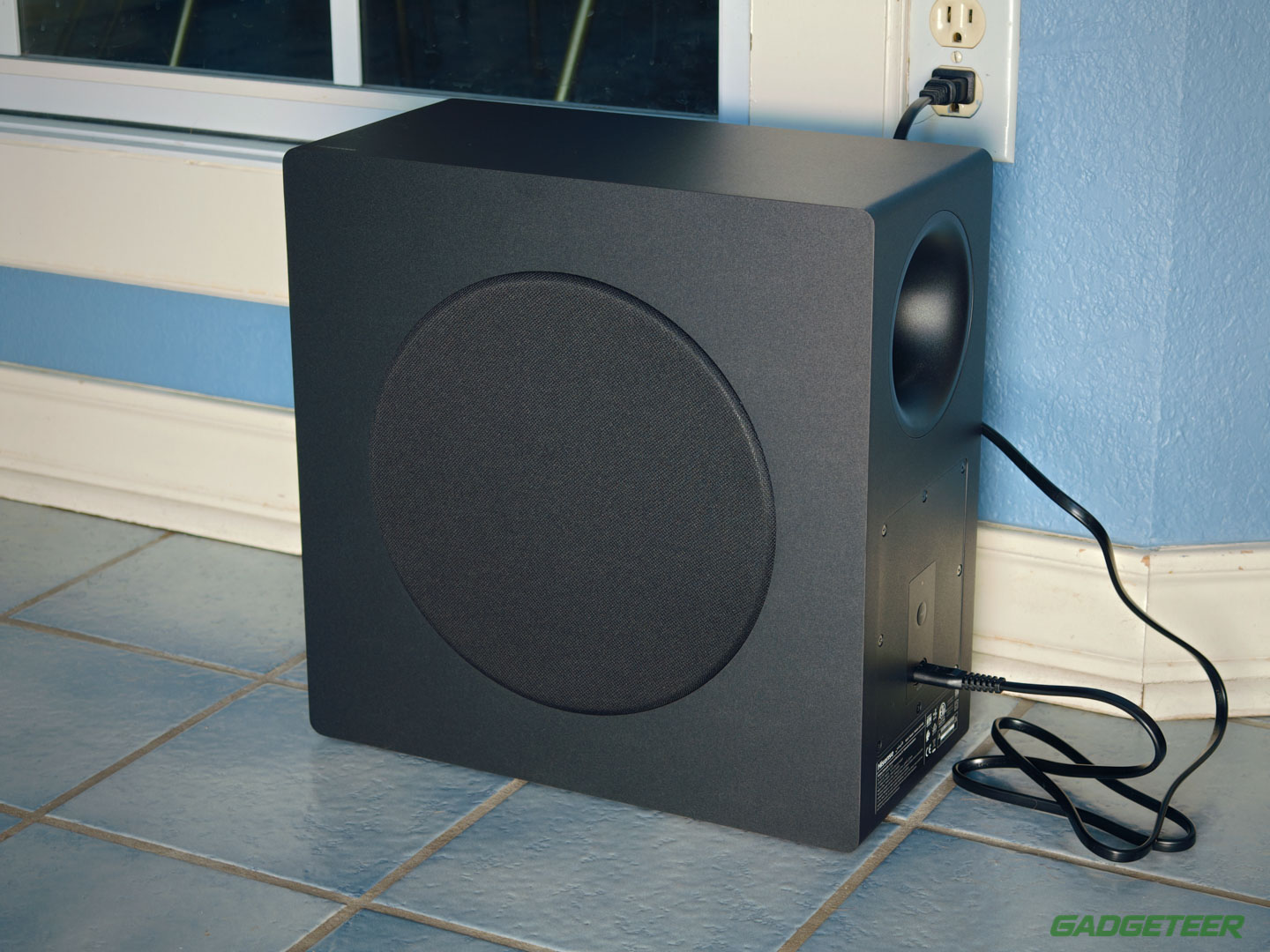


The 6.5-inch driver on the side of the sub, which is the low end I shape from the LVL menu. The back of the sub, with the power inlet and the pairing control, and no speaker wire to run. The port on the end of the sub, which is a compact box in the office.
The LVL menu has a dedicated sub level, and BASS on the remote tilts the whole system if a scene or a track needs a broader change. The bar isn’t designed as a solo speaker, so plan on keeping the sub plugged in and shaping it rather than running without it. Keep the sub in the system.
Rear satellite speakers
The two wireless rears sit behind the chair and carry the height channels at the back of the 5.1.4 layout. Each one has an up-firing driver on top and a switch for left and right, and they pair to the bar without a run of speaker wire across the floor. In this office the two rears sit right-center in the room, which gives a good balance.


Both rears have an up-firing driver on top, which is where the height behind the chair come from. Each rear is a small Hisense cabinet with its own power lead, and no speaker wire between them and the bar. The underside of a rear, with the pairing button and the left and right switch right there. The two rears together. In this office they sit right-center in the room, which gives a good balance.
With a Hisense TV
I’m running the AX5140Q with my Hisense 100U8QG, so the Hisense-only extras are in play. Hi-Concerto lets a compatible Hisense TV keep its own speakers in the mix with the bar, instead of muting them, so the soundstage can sit wider than the cabinet alone. EzPlay 3.0 puts speaker status and sound modes on the TV screen and lets the TV remote take over those modes.
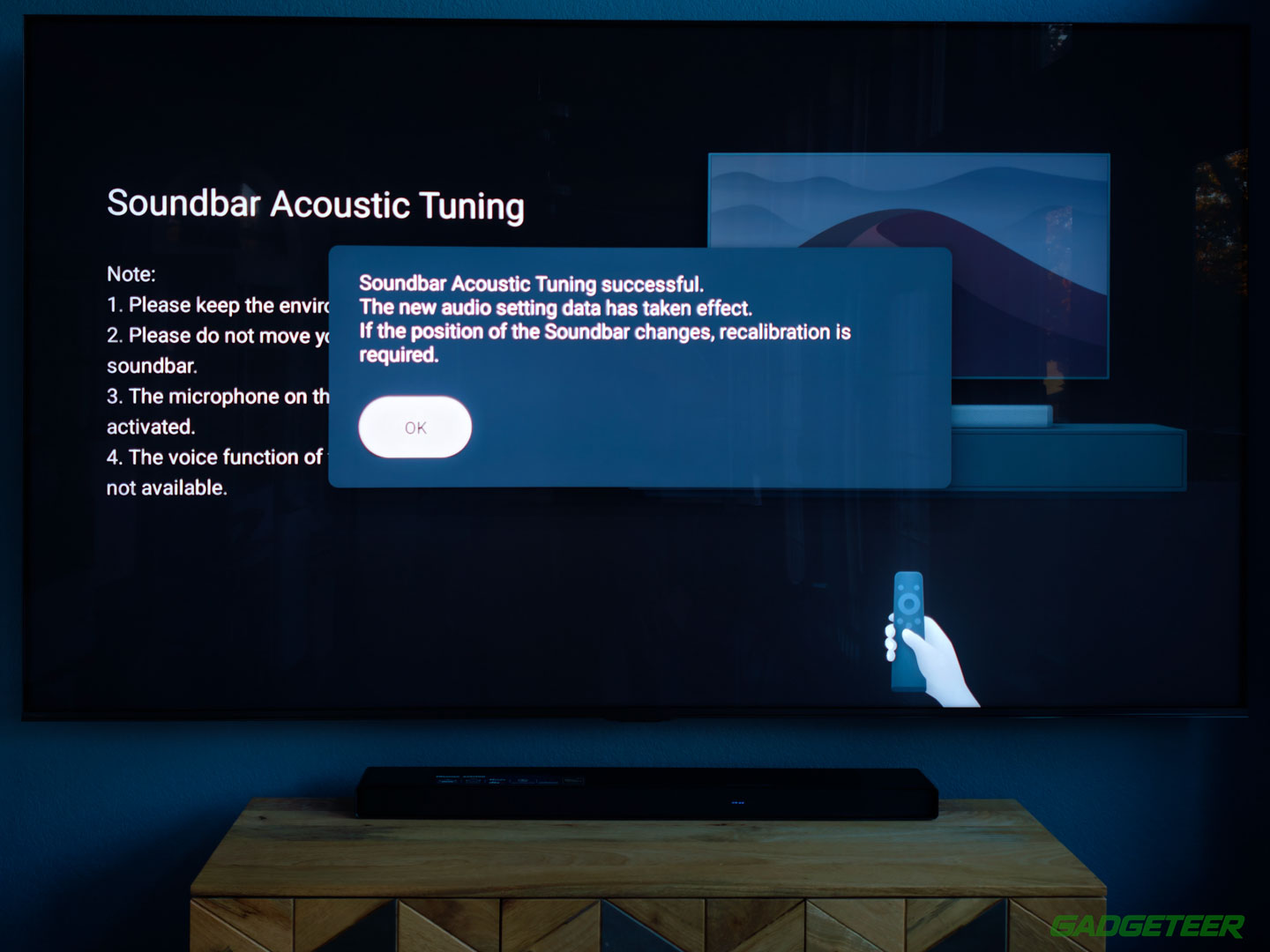
Room-Fitting, which my 100U8QG labels Soundbar Acoustic Tuning, is a TV-side process that uses the microphone in the remote and accounts for the room’s acoustics and size. It’s Hisense-only, it runs through EzPlay, and I ran it in the office, where the set applied a new audio setting.
On a monitor or another brand’s TV, you lose those extras, though the remote and the front display still cover the EQ, MODE, SURR and LVL settings. Hisense owners with a set like the M7SR I reviewed get the same family of features. The bar still works without them.
Value
The AX5140Q costs about what a lot of single soundbars cost by themselves, and it brings a wireless sub, two rears and four height drivers along with the bar. In an open office or a small media room, that layout is what you’re paying for.
Verdict
The Hisense AX5140Q is the 5.1.4 system to buy for a home office or a small media room. It puts real height in front of the chair and behind it, the wireless sub and rears keep speaker wire off the floor, and in my open office the sound actually moves across the space extremely well.
The remote still carries every listening mode you need, from Movie and Night to the per-channel LVL menu, even though there’s no app to lean on. This is the one for a true surround system under a TV.
I’m giving it an Editor’s Choice award. Buy it for the room, not the app.
Price: Best Buy has it at $299.99 at the time of publishing, the best price right now, and that’s the one to buy. It’s new and in stock, with Save $100 off the $399.99 comparison value.
Available: Cyber Monday sale ends Monday, Nov 30. Free shipping arrives Tuesday, Dec 1.
Where to buy: Best Buy. Amazon is an option to check, but it shows no current price (no featured offer, only third-party sellers), so that isn’t a confirmed price.