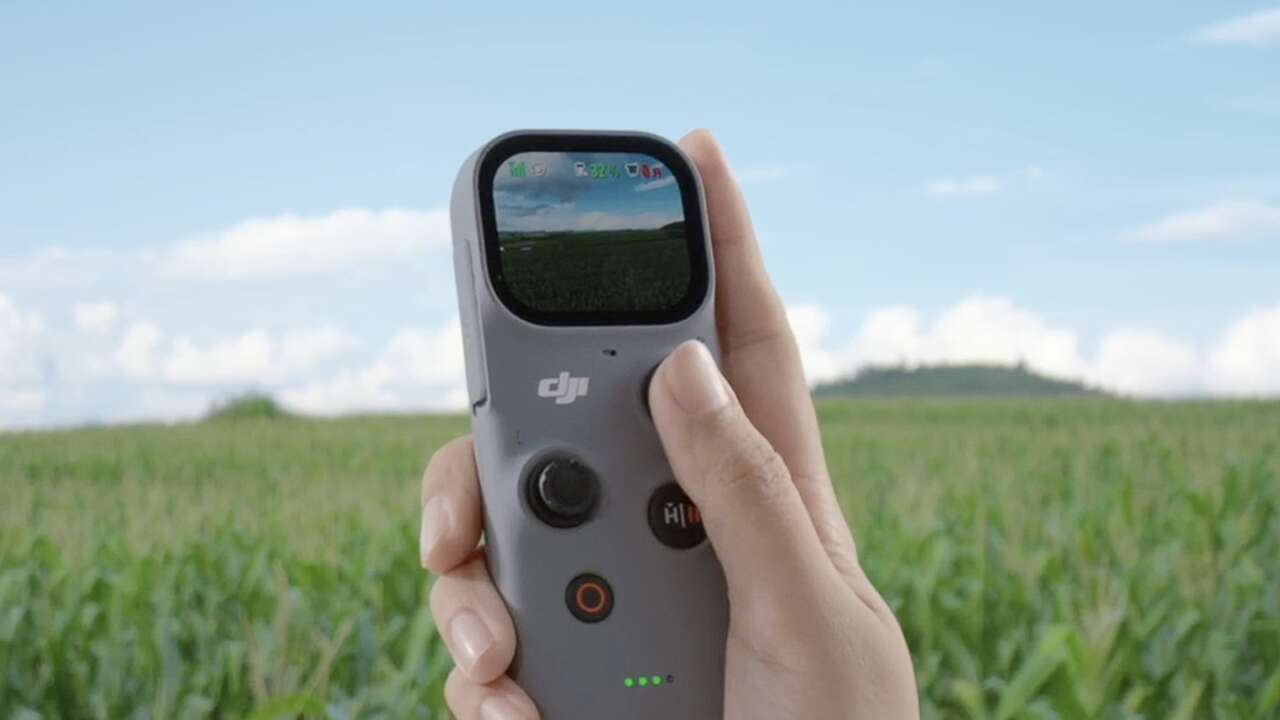
DJI’s RC Mini is a pocket remote with a screen of its own. Its paper trail now runs through the FCC, and the paired drone sits in a harder spot than the remote itself.
A screened remote changes the Neo setup in one plain way. The phone stays in a pocket for the drive home.
Price: Not announced for the RC Mini
Where to buy: No RC Mini listing yet. The buyable screened-remote alternative is the DJI Mini 3 (DJI RC) kit: Buy on Amazon
What the FCC filing actually confirms
A 1,950 mAh battery sits inside the RC Mini, rated at 7.55 Wh in the filing. That cell size fits a small controller built for short beginner flights, not a full day on a film set. It matches the pocket format the leaked box art shows. Small battery, small remote.
Charging specs and runtime stay missing from the filing, and both numbers shape daily use more than the cell size alone. A slow charge through a shared USB-C brick would sting less, since the remote rides in the same bag as the drone batteries anyway, in the same overnight rotation before the next flight window opens.
FCC ID SS3-TKMI2507 belongs to the controller, and its equipment authorization landed on December 19, 2025. Three days later the FCC placed foreign-made drones and critical components on its Covered List, which closed the door on new authorizations. That timing gave the controller a path later DJI hardware no longer has, and it explains the outsized paper trail behind a product DJI hasn’t named in public yet. Radio approval is the one finish line this product has crossed.
A controller grant isn’t an aircraft grant, and that split runs this whole story from the filing to the store shelf. The remote sits cleared on paper while its drone waits outside the process.
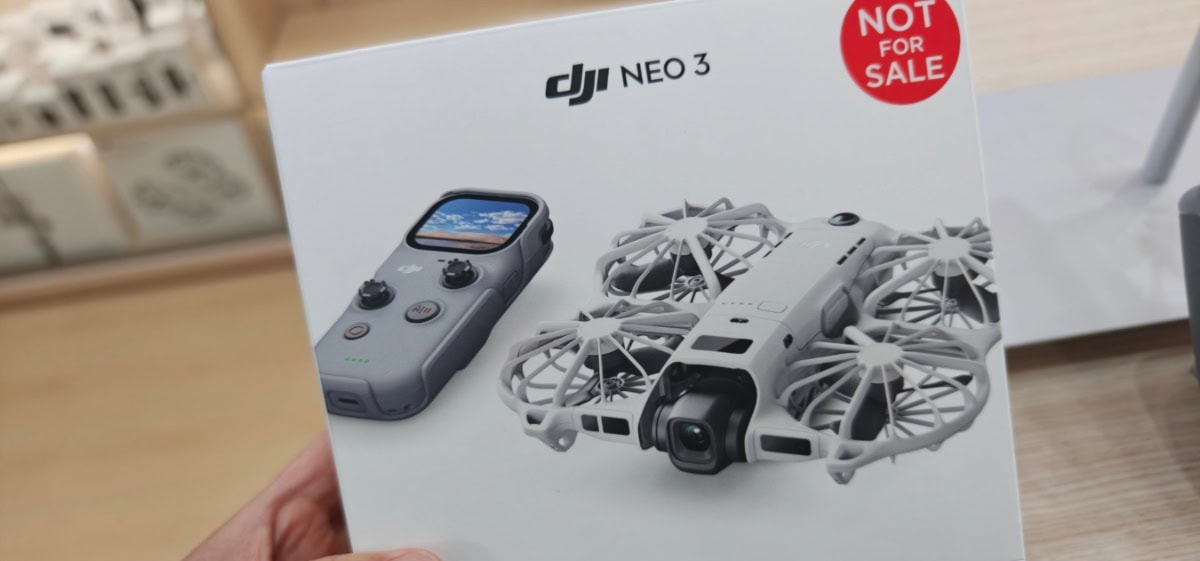
Leaked Fly More Combo packaging names the RC Mini on its front panel and lists the kit around it. Three batteries, a charging hub, spare propellers, a screwdriver and a USB-C cable ride in the same box, with an expansion cover and an anti-loosening pad for the remote.
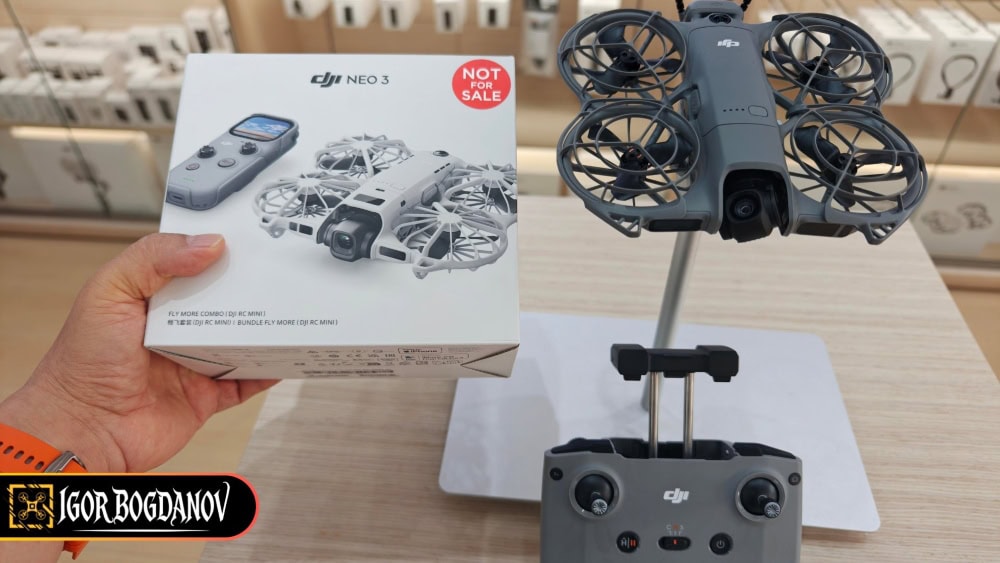
Safety and simplicity sell the Neo line, with caged propellers and palm launches aimed at first-time pilots. A screened remote fits that pitch cleanly, since a beginner gets a live view without learning a phone clamp and an app pairing routine first. Palm takeoff, gesture framing and automatic return flights all assume a pilot who has never owned a drone before, and the hardware keeps lowering the number of steps between the box and the first flight.
The screen and range figures belong to a different remote
The 1.97-inch display figure travels with a warning label, because every published number behind it comes from the RC Mini AG. That agricultural version is a separate controller with a different job. DJI built it for the T55, T70S and T100S spray drones, where crews use it as a compact field controller beside the main ground station, a different job from a beginner’s first backyard flight.
On the AG, the screen outputs at 410 by 494 pixels and peaks at 800 nits, with OcuSync 4 video out to 10 km. DJI rates it at up to three hours between charges. Bright, small, and built for field work. Those figures describe a controller sold for crop work in one market, and they arrived with DJI’s agricultural launch rather than any consumer announcement.
None of those numbers sits on a DJI page for the consumer RC Mini. The FCC filing doesn’t confirm them either, and the shared name and shared shape make the AG a reasonable reference point, the only kind available today.
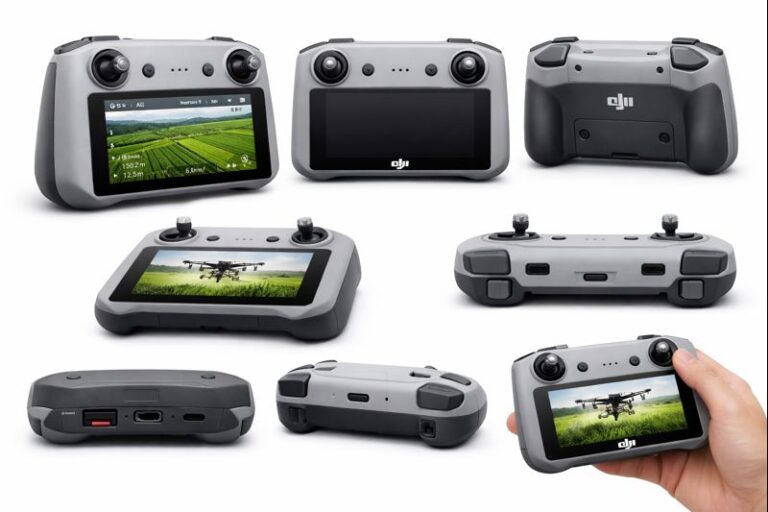
Box art shows two sticks, a record button and four status LEDs arranged under the small color screen. It looks like a beginner remote first. The proportions match that job, since the screen is big enough for a camera view and status readouts, and too small for the map-heavy planning screens that fill the larger remotes in DJI’s current line. Nothing in the layout suggests a phone clamp or a cable hiding in the pilot’s other hand.
Today’s Neo combos lean on remotes that borrow a phone for the live view. The phone brings its own battery drain and glare. A small built-in screen trades size for certainty, and the trade suits short flights close to the pilot, where a beginner can still see the drone itself without squinting at a phone in full sun.
Price, timing and the US split
DJI hasn’t announced the RC Mini, the Neo 3, a price or a sale date for either one. The company store carries no listing for the controller, and Amazon carries no listing for the controller either, so there’s no verified route to buy one today. An FCC filing isn’t a launch. A leaked box isn’t a store listing, and both stay in the rumor column until DJI speaks on its own channels.
Pilots who want a screened remote today buy a different kit. That route shares the idea, not the hardware.
Coverage around the filing points to a global arrival alongside the Neo 3 in 2027, and that year is an expectation rather than a DJI date. DJI’s own channels stay silent on timing. Retail chatter fills the gap with guesses, and guesses aren’t a schedule. Every estimate printed before that page exists is a guess wearing a date, and the guesses have already moved once, from a 2026 arrival to a 2027 one, without a word from DJI.
In the US the controller’s grant arrived before the Covered List cutoff, and the drone’s didn’t. That leaves a remote that can be authorized here and an aircraft that can’t follow it through the same process, which is a strange shelf for any retailer to stock.
Hard facts arrive next when DJI publishes a product page naming the drones this remote flies. Compatibility decides the audience.
Price: Not announced, and no sale date has been set for the RC Mini
Where to buy: No RC Mini listing yet: Buy on Amazon for the DJI Mini 3 (DJI RC) kit instead, the screened kit DJI sells today
Beginner pilots drawn to a screened pocket remote should wait for DJI to announce the pair together, with a price attached. A controller without its drone is a paperweight with a nice screen, and the Neo 3 is the half of this kit that decides everything. Every week without an announcement stretches the gap between the remote’s paper readiness and the drone’s missing authorization, and that gap is where buyer patience goes to thin out.
For now the RC Mini holds its watch spot. Nothing ships on a filing alone, and DJI alone can close the gap between a filing and a launch with a store page and a date.