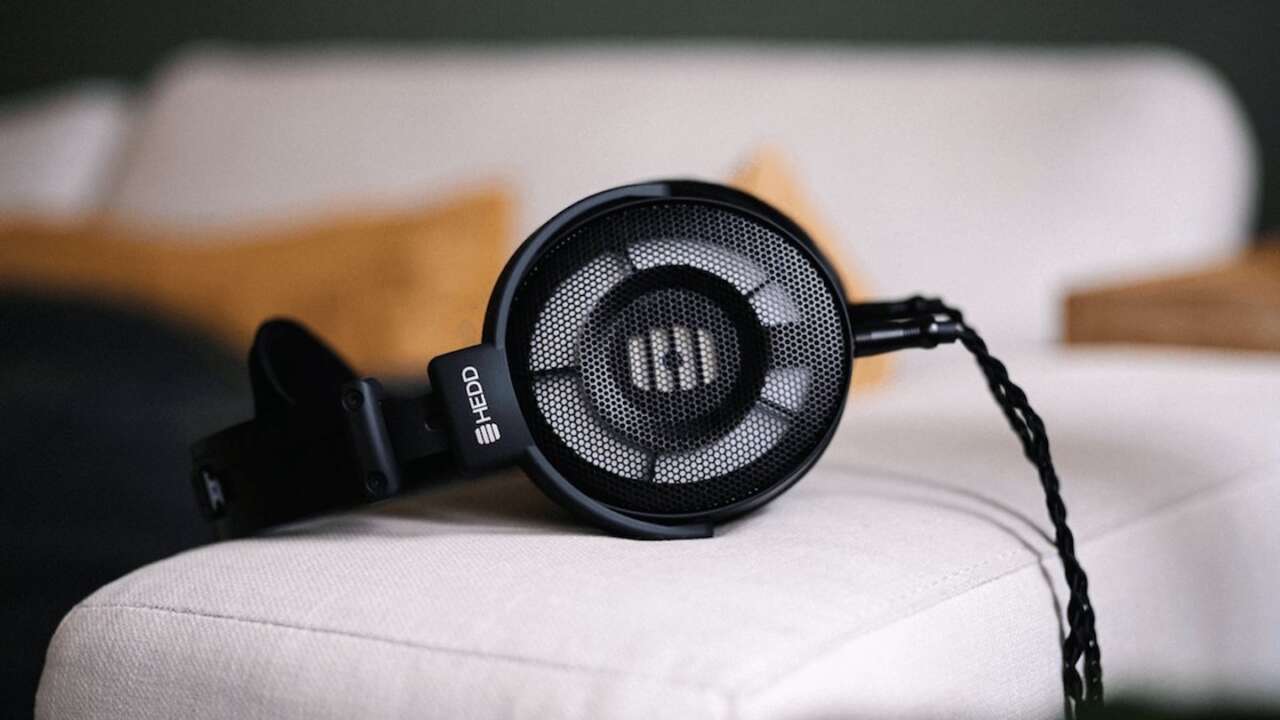
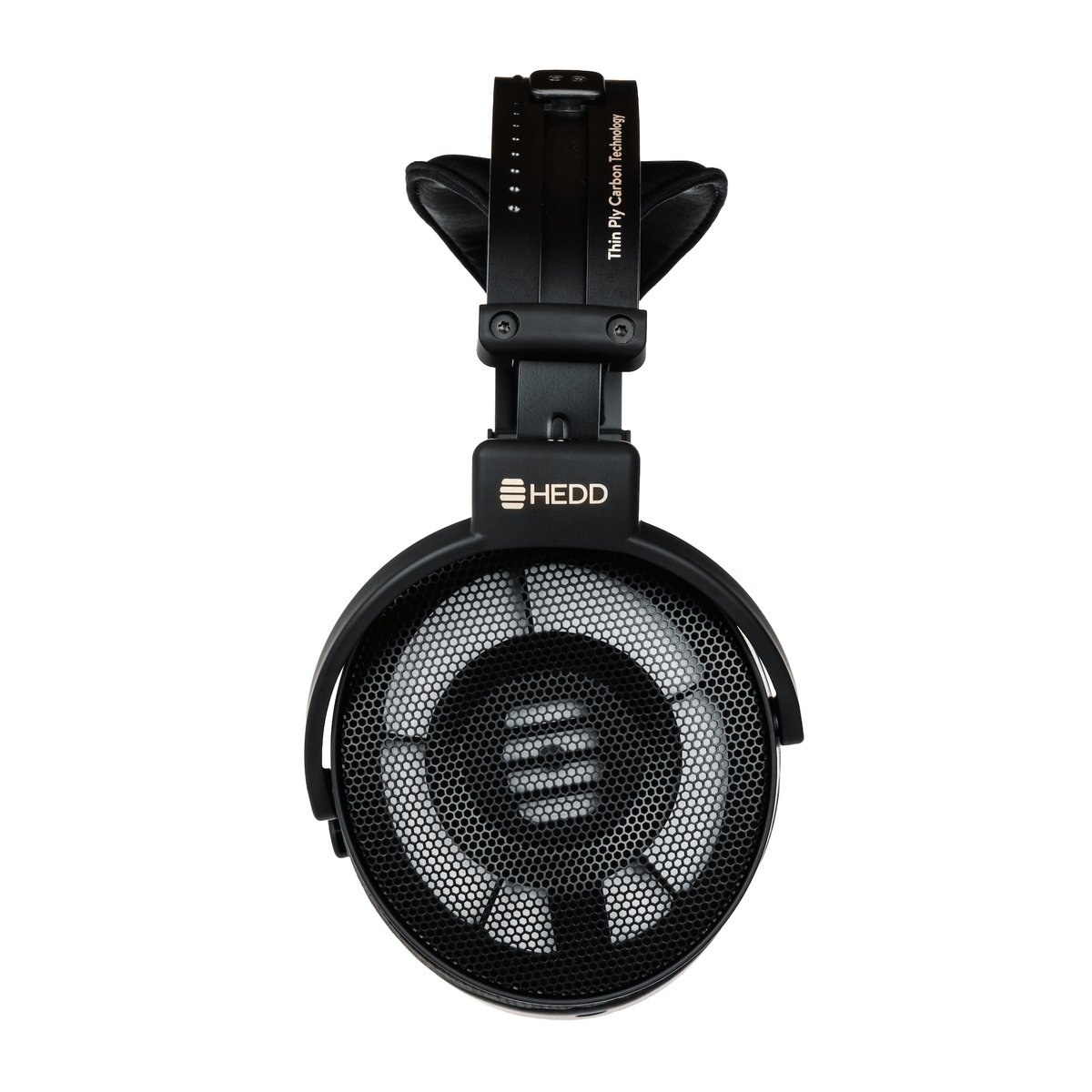
The HEDDphone DX is HEDD Audio’s flagship open-back dynamic headphone, and it’s built around a single refusal: the bass roll-off most open-back designs accept as the price of an open soundstage. HEDD says the DX holds full bass output down to 20 Hz.
Price: $1,199
Where to buy: Buy at HEDD Audio
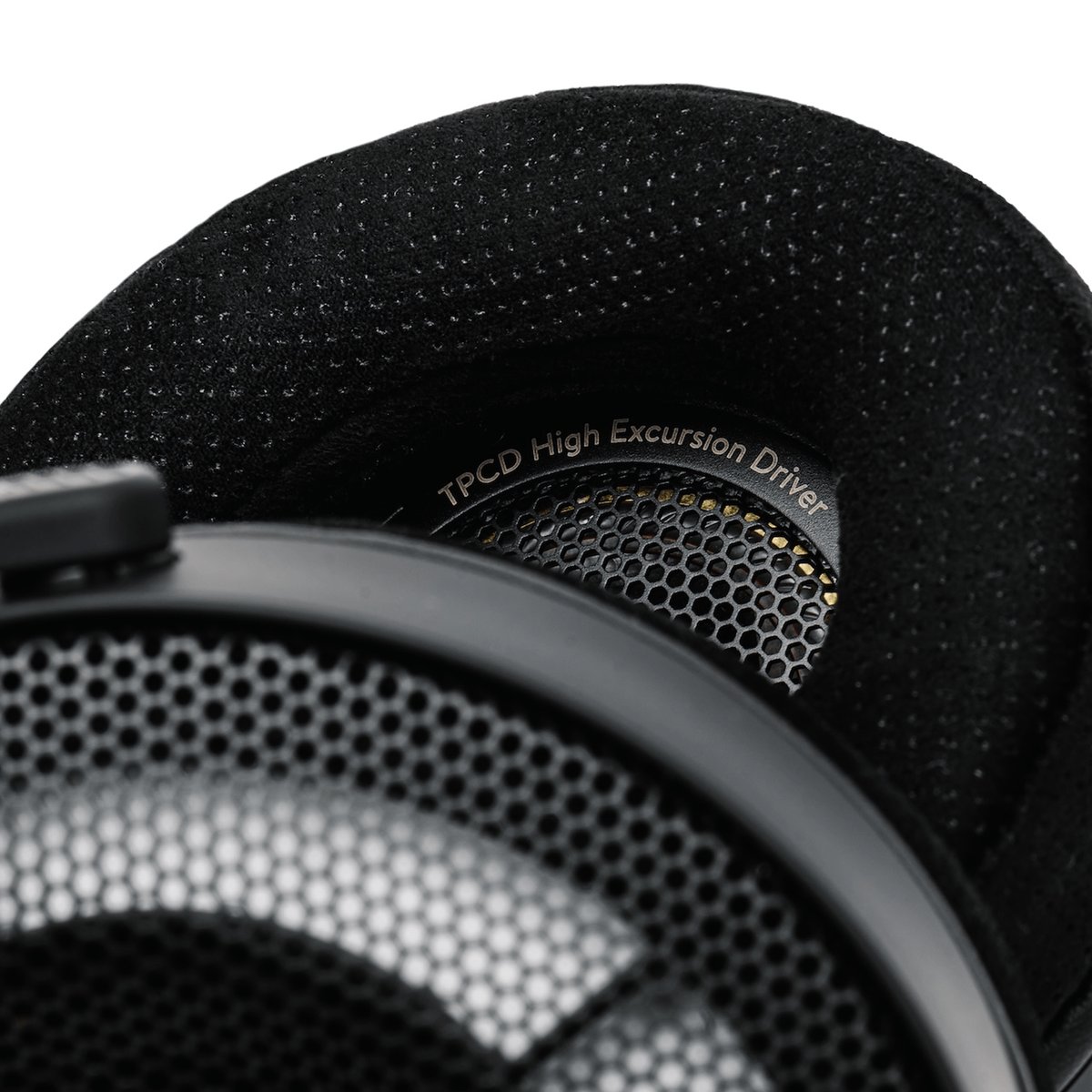
That’s the pitch, and it’s a serious one. The driver doing that work is a new 50 mm unit with a Thin-Ply Carbon Diaphragm and a longer excursion than the driver in the D1. It moves farther than the D1 driver can, and it stays controlled while it moves, which is the hard part at low frequencies.
A carbon driver built to move farther
Thin-Ply Carbon is the material HEDD already uses in the D1, a diaphragm layup borrowed from the same engineering culture that builds the company’s studio monitors in Berlin. The DX version adds excursion, which is the distance the diaphragm can travel before its movement stops being clean. More travel means more air moved at low frequencies, and low frequencies are exactly where a small driver runs out of room. More travel changes the low end.
HEDD rates the frequency range at 5 Hz to 40 kHz, and it says the diaphragm holds together without breakup until 24 kHz. Both numbers are the maker’s own figures, stated plainly here because no independent measurement has settled them yet. The claim that counts sits lower, at the bottom of the range.
Bass that stays under the vocals
The bottom octave carries the pedal note under an organ, the fundamental of a synthesizer bass, and the weight of a kick drum recorded in a real room. Those notes anchor everything above them. Open-back headphones usually hand some of that weight back, trading low-end depth for the spaciousness the open cups deliver. The DX is HEDD’s attempt to stop making that trade.
Depth alone wouldn’t be enough, because bass that swells over the midrange ruins more recordings than bass that rolls off early. HEDD tunes the DX to keep vocal clarity and instrumental texture intact while the low end does its work, building on the D1’s natural midrange rather than starting over. The treble gets a refinement pass too, and the soundstage stays wide even with the extra low-end energy running underneath it.
Built for the whole album, not the first track
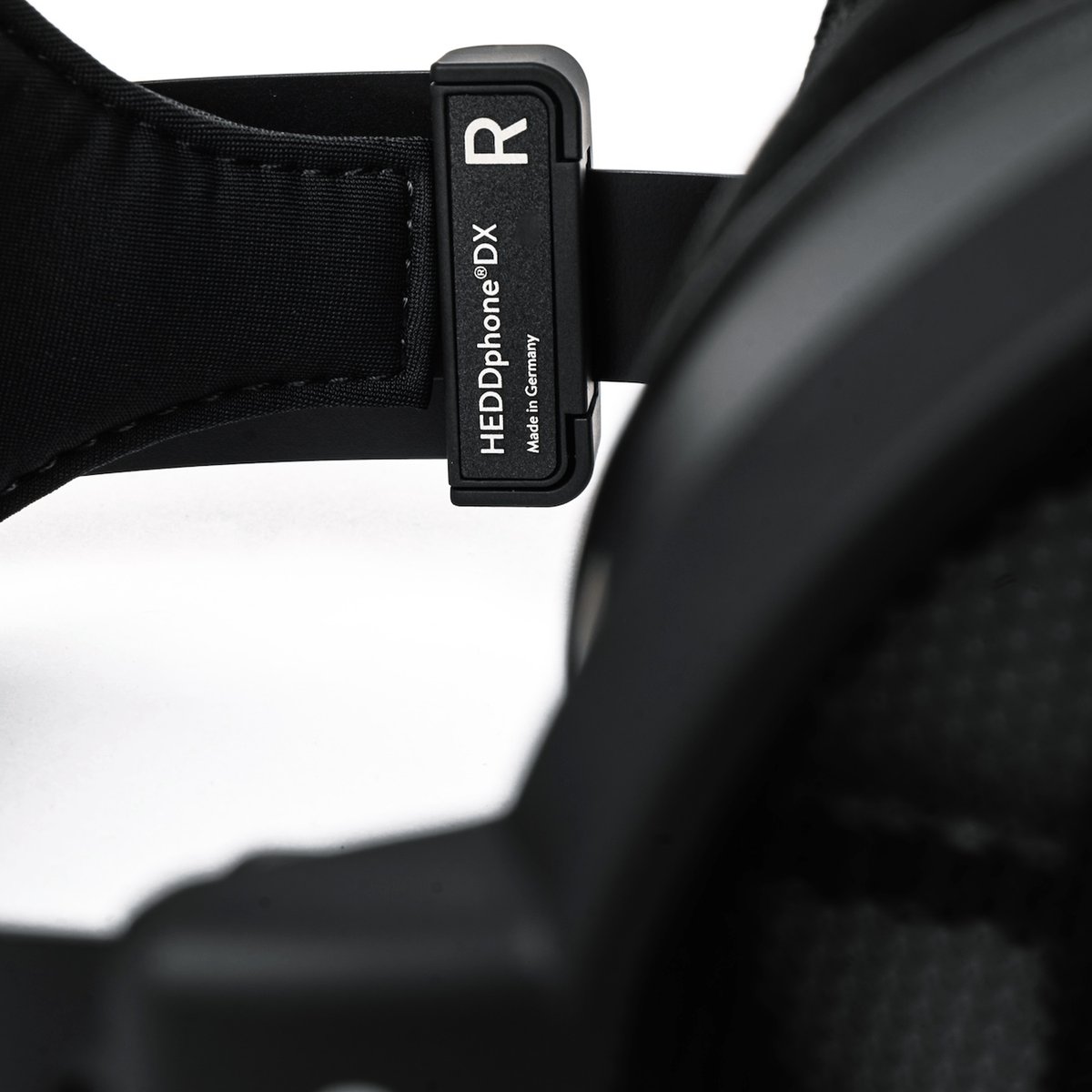
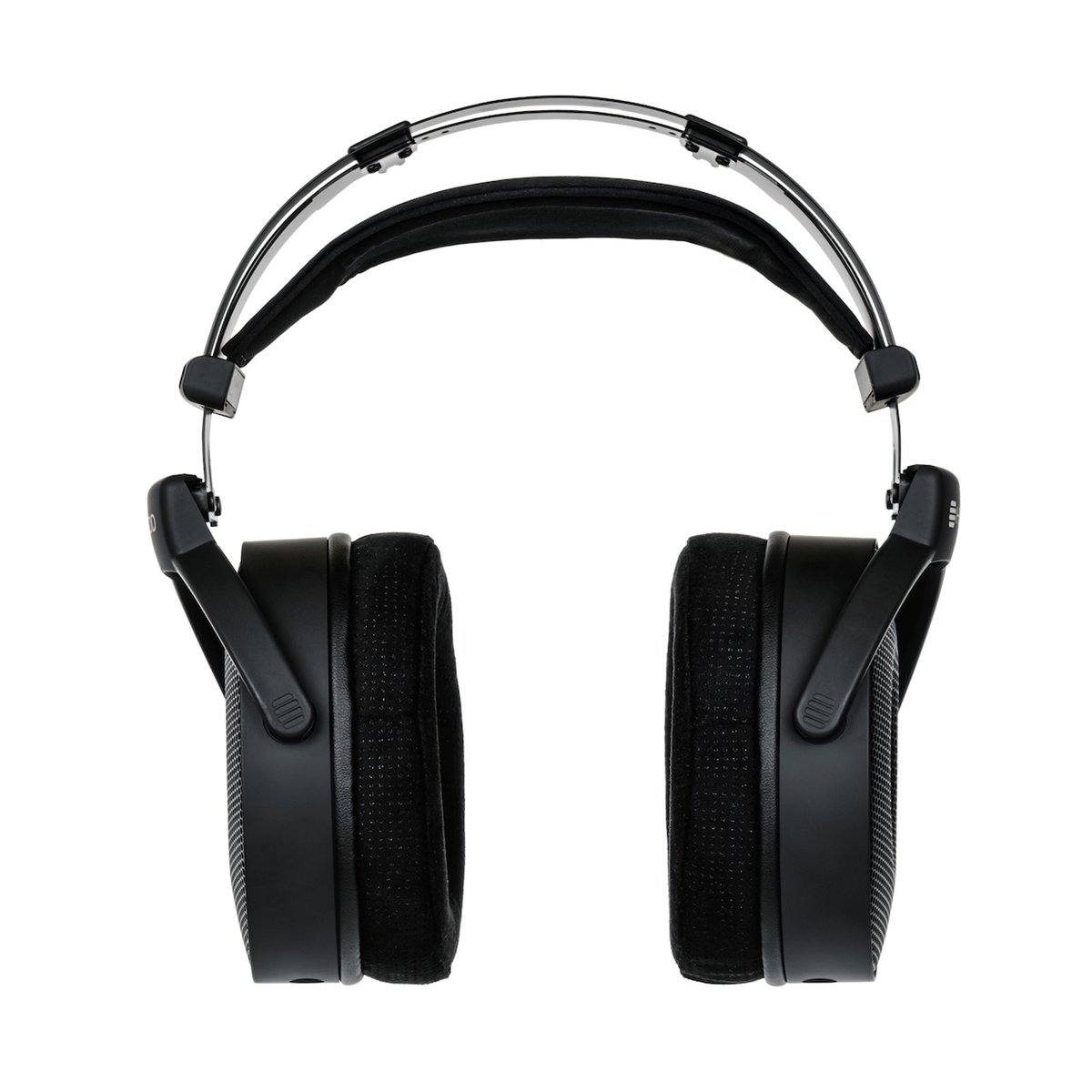
At 310 grams, the DX is 40 grams lighter than the D1, and the new suspension headband carries a share of the credit for how that weight feels over a long session. Co-developed with Capra Audio, the headband uses an elastic neoprene band that spreads the load across the head instead of resting it on one narrow strip. Stability improves along with comfort, so the cups stay where they were placed. You stop noticing it.
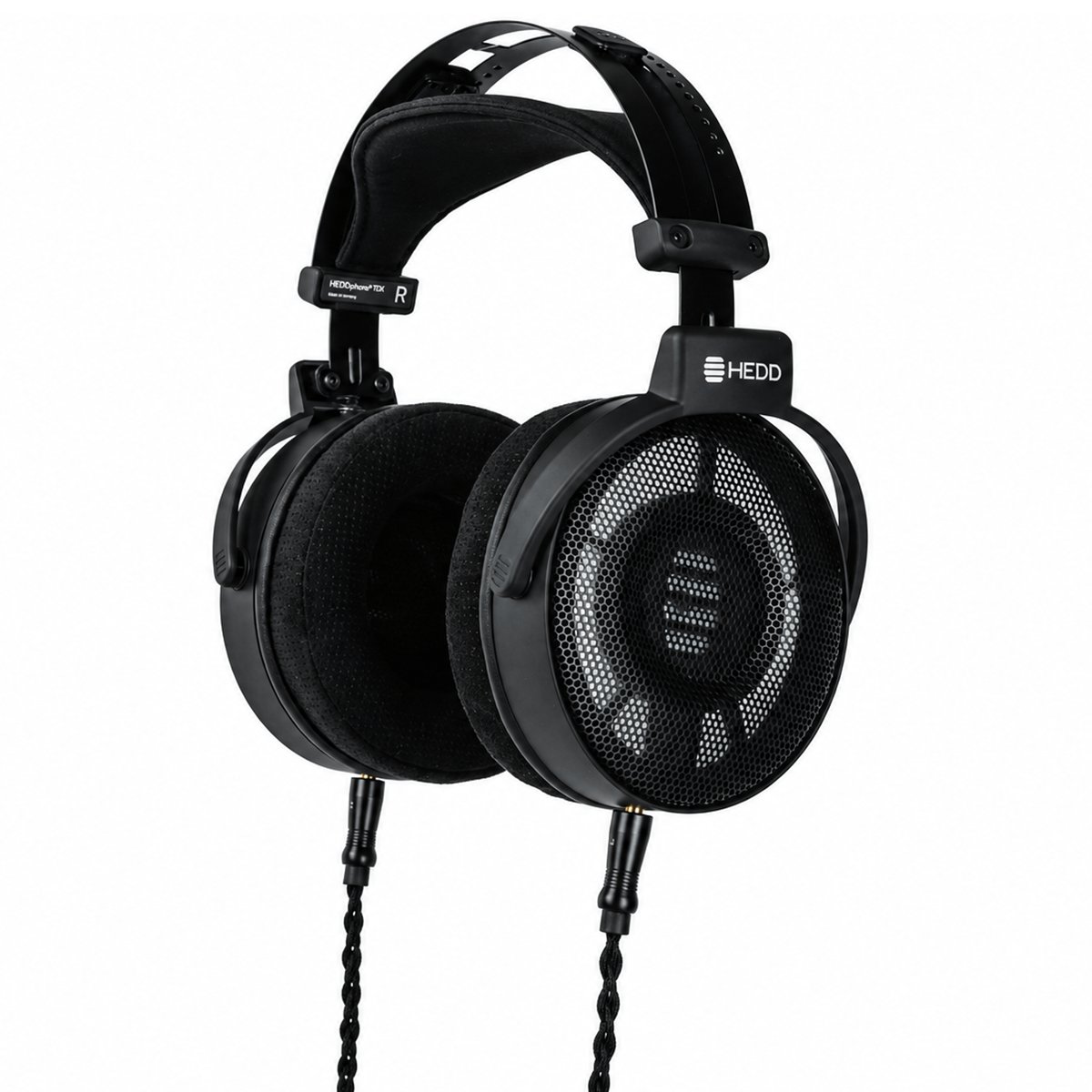
The earpads are perforated velour over memory foam, and they’re removable when they wear. HEDD says every part of the DX can be replaced, which is the right promise at this price, because a flagship headphone should be a repair job away from new rather than a replacement purchase away from it.
Easy to drive, ready to scale
At 32 ohms with 100 dB sensitivity, the DX doesn’t demand a serious amplifier before it sounds like itself, and it’ll run happily from the modest sources most listeners already own. HEDD still expects it to scale with premium amplification, so the headphone doesn’t cap out when the chain around it improves. That’s a practical spec sheet for a flagship, not a demanding one.
The cable connects at both earcups with standard 3.5 mm plugs, so replacements and upgrades don’t need a proprietary hunt. In the box sits a 2.2 meter eight-strand braided OCC balanced cable with a 4.4 mm plug, a 6.3 mm adapter, and a double-layer travel case. Everything a wired listener needs arrives with the headphone.
What the DX takes from the D1, and what it leaves behind
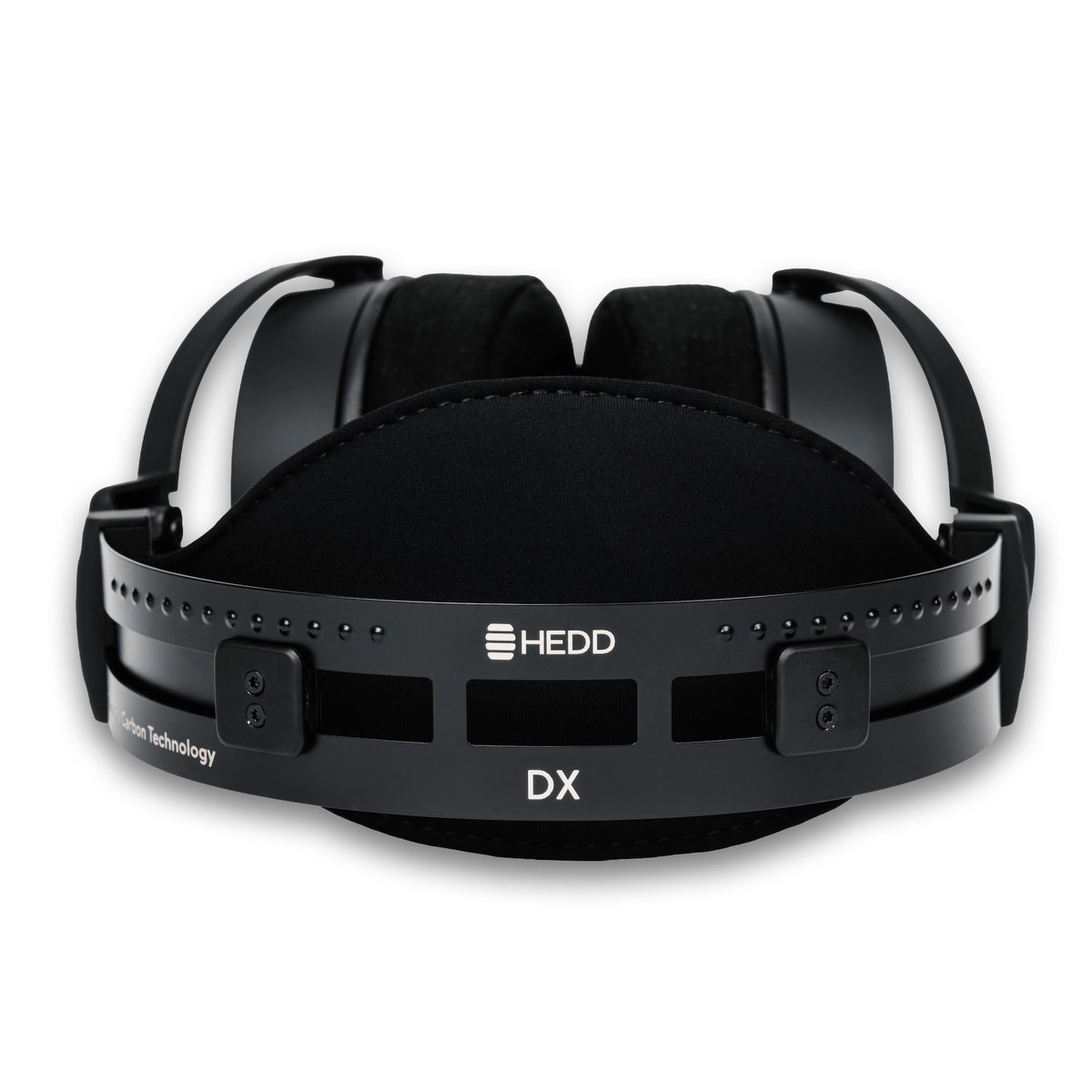
The D1 proved HEDD’s carbon diaphragm works in a headphone, and the DX keeps that platform while pushing it upmarket in three places: driver excursion, weight, and the headband. The outer grilles are redesigned, the headband carries laser-engraved detailing, and the tuning leans harder into the low end than the D1 ever did. The direction is unmistakable. It’s an evolution with a clear direction, not a reset.
D1 owners aren’t left out of the upgrade path, because the new suspension headband also fits the older headphone as a kit priced at $99. That kind of retrofit is rare at this end of the market, and it tells you HEDD expects people to keep these headphones for years.
The warranty backs that reading up: two years standard, and five years once the DX is registered. The replaceable-everything design supports that expectation too, since pads, cables and headband parts can each be swapped when they wear instead of sending the whole headphone back or replacing it outright.
Price, availability and the verdict
Pricing stays flat across the Atlantic: $1,199 in the US, €1,199 in Europe and £999 in the UK. Pre-orders run through specialist audio retailers, shelf sales in the US and Canada start December 1, and HEDD’s own European store showed the DX out of stock when we checked.
There’s no Amazon listing for the DX, so the buy path runs through HEDD and its dealers. That dealer route also means stock will move in small batches at first, so a sold-out listing in one store says more about the size of the first shipment than about demand. Buyers who want the DX in hand before December will be watching those dealer listings, since the maker’s own store can’t fill the order yet.
The DX is the open-back headphone for listeners who love the format and resent the missing bottom octave they’ve been forgiving for years. At $1,199 it asks flagship money, and it answers with a lighter build, a smarter headband, and a driver engineered to keep the lowest notes at full weight without turning it into a bass-first special effect.
Price: $1,199
Where to buy: Buy at HEDD Audio
The bass claim decides it. Listeners who need isolation from a noisy room should shop sealed headphones instead, because an open back lets the room in by design and can’t give them that.