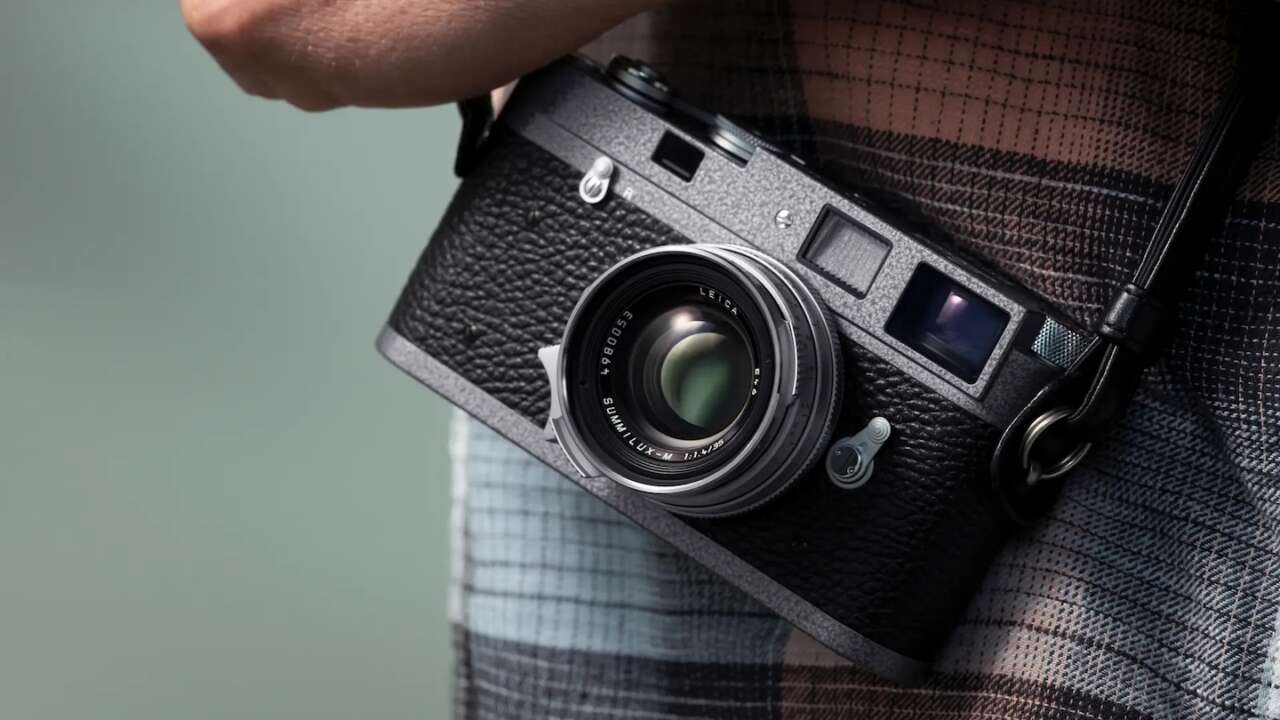
Leica’s Hammertone editions are a finish in search of two cameras, and I mean that as praise. The M-A and the M11-P underneath the paint are already the purest machines Leica sells, one a mechanical film camera and the other a 60-megapixel digital rangefinder.
Price: $8,000 | $10,950
Where to Buy: Leica
You aren’t buying new technology here at all. Both launched on November 12 through Leica Stores, the Leica Online Store, and authorized dealers. The digital M11-P Hammertone runs $10,950, and the fully mechanical M-A Hammertone runs $8,000. Each one costs more than its standard twin.
A finish Leica almost never uses
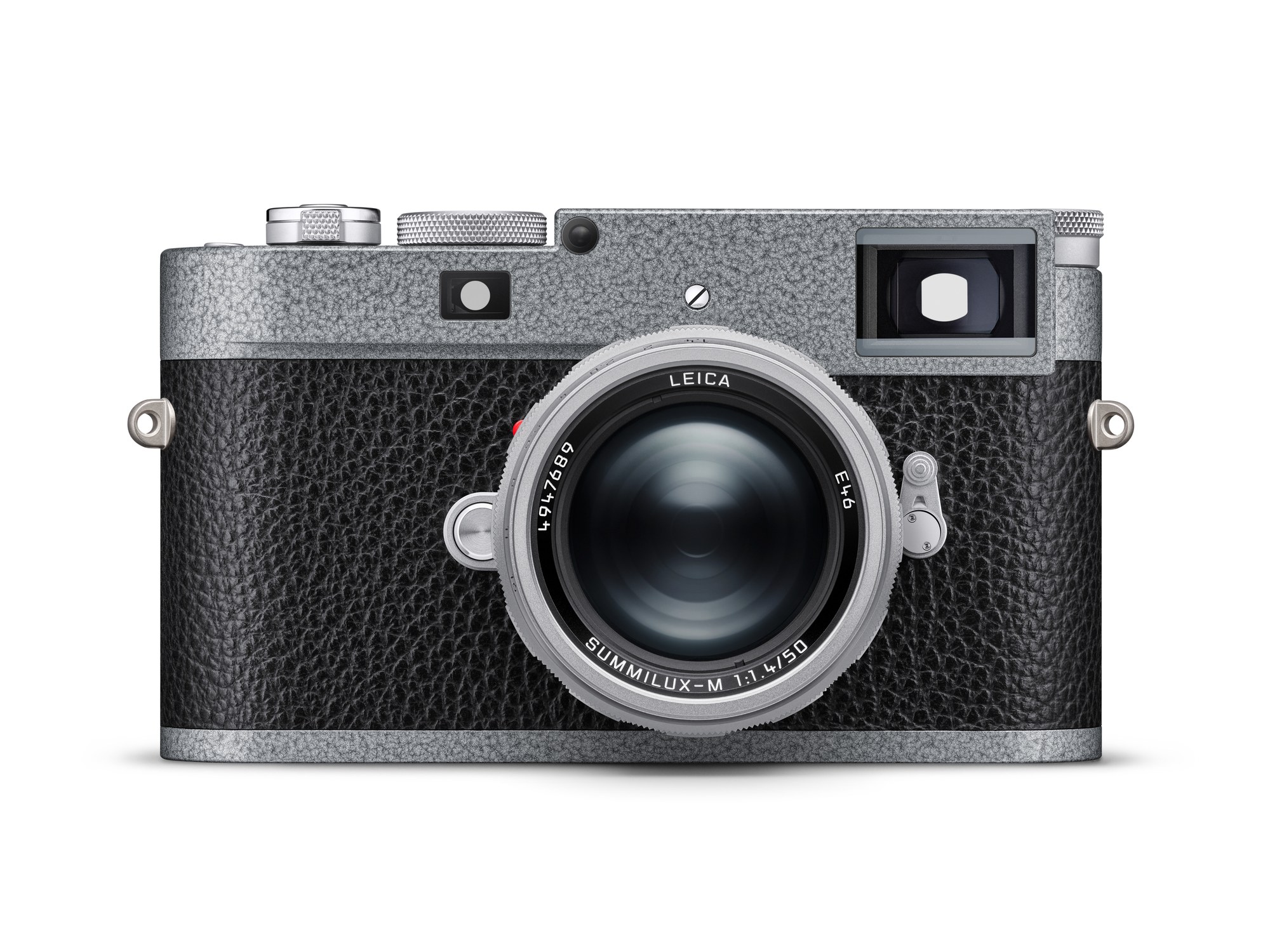
Hammertone paint has covered high-quality technical instruments since the 1930s, and its dimpled texture forms while the paint dries. Metal pigments and special additives shift the surface tension in small, unrepeatable ways, so no two plates ever come out alike. Leica has reached for this finish only a handful of times. Leica kept it rare.
Historical examples include the MD documentation camera for the Leitz Reprovit system and a particularly rare run of ten Hammertone MD cameras produced in 1964. For this pair, specialists on Leica’s Manufacture team in Wetzlar reworked the process, and on the M-A they impart the texture by hand.
The rest of the dress stays period-correct: solid brass plates, black vulcanite-style leatherette, white engravings and cross-knurled controls with a shiny silver shutter-release plate. It’s a toolmaker’s finish, not a jeweler’s, and that restraint suits the M rangefinder perfectly well.
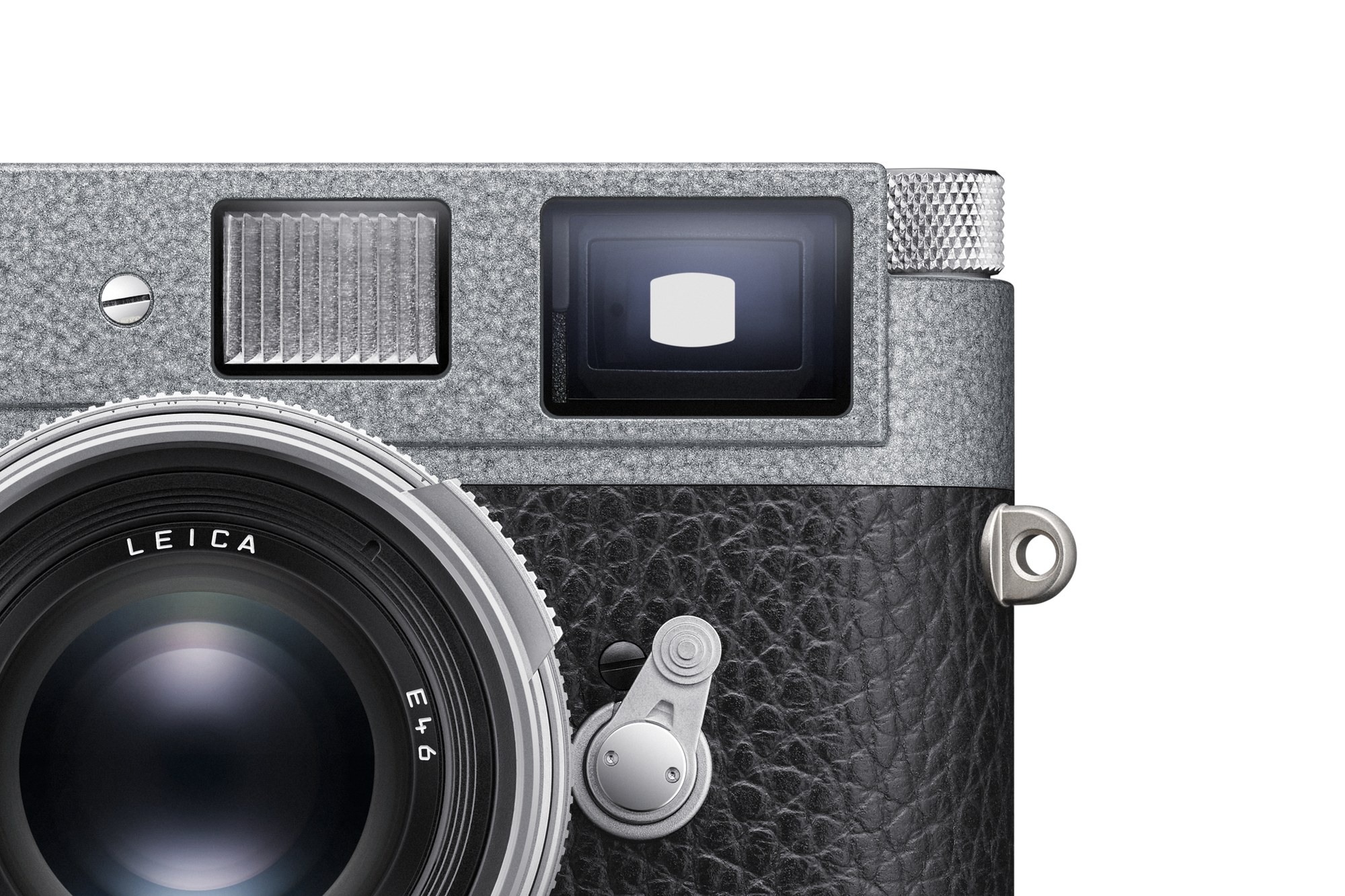
The M11-P Hammertone keeps the flagship intact
The M11-P Hammertone retains the standard M11-P’s sensor, processor and core photographic capabilities. You still get the full-frame BSI CMOS sensor with Triple Resolution Technology at 60, 36 or 18 megapixels, plus 256 GB of internal memory for your files. The rear screen uses scratch-resistant sapphire-crystal glass with an anti-reflective coating.
It connects to the Leica FOTOS App over Bluetooth, Wi-Fi or cable, and it carries the feature that made the M11-P a first. When enabled in the camera menu, Leica Content Credentials digitally signs images at capture, providing verifiable information about their origin. Compatible editing tools can carry that provenance forward and document subsequent changes, with verification available through supported services and the Leica FOTOS app.
The edition adds three touches you’ll feel with your fingers: newly rounded edges on the top and base plates, a front screw in silver chrome, and a BP-SCL7 battery painted in matching hammertone inside the box. An additional hammertone-finished BP-SCL7 battery lists at $240.
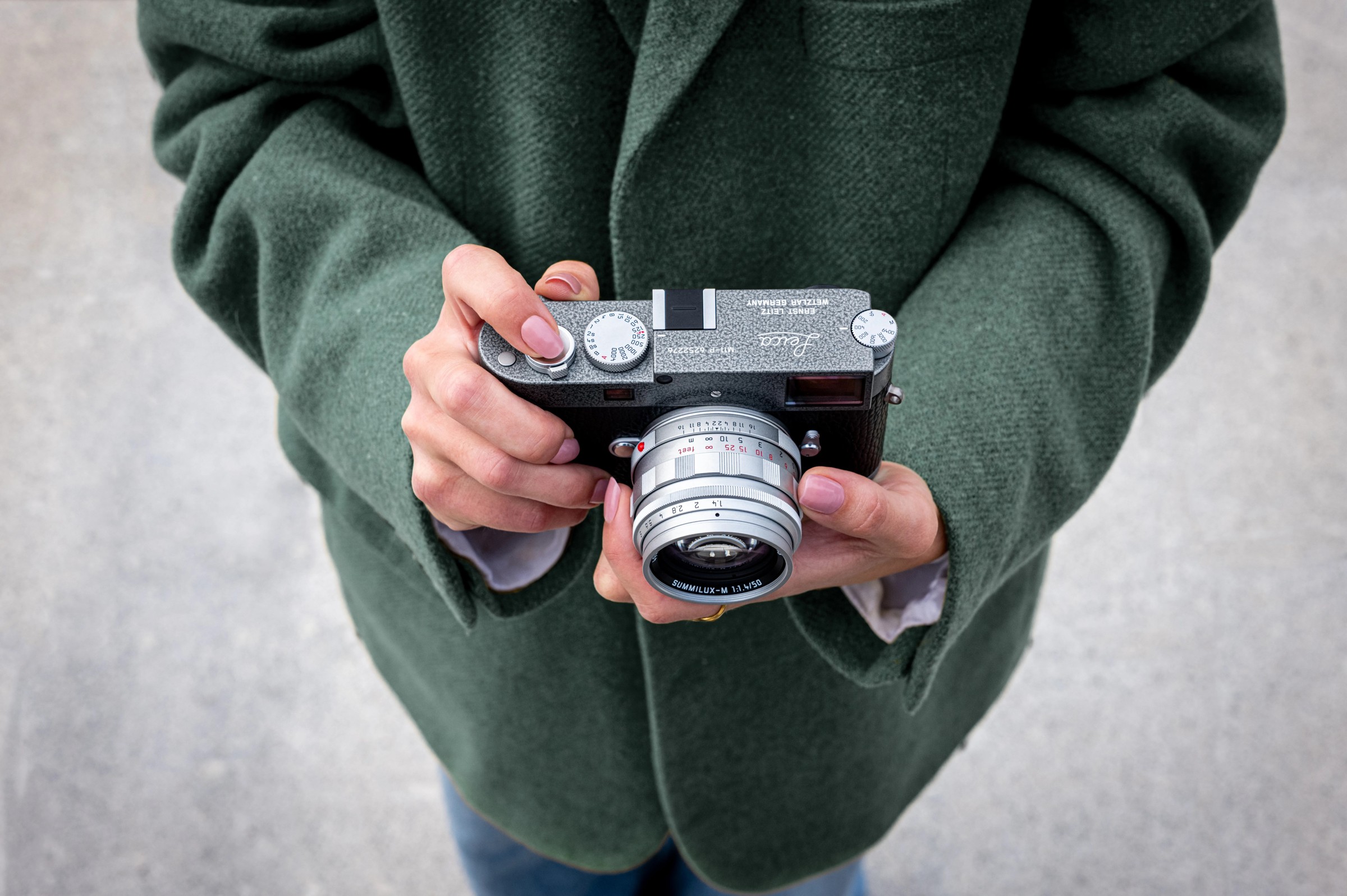
Price: $10,950
Where to buy: Buy at Leica
The M-A Hammertone gives you film and nothing else
The M-A Hammertone is the analog half of the pair, and it’s the most stripped-down camera Leica currently sells. It’s a completely mechanical 35mm rangefinder with a cloth focal-plane shutter, a wind lever and a film counter. There’s no light meter. There’s no battery compartment either, so you choose the film speed and set aperture and shutter speed manually. The cloth focal-plane shutter runs from one second to 1/1000 second, plus Bulb for long exposures.
Its specifications match the standard M-A exactly, and it ships with a roll of Kodak TRI-X 400 in the box. You focus through the 0.72x bright-line viewfinder, advance the lever and commit. No screen will step in and rescue a bad guess, and the negative keeps whatever you decided in that moment.
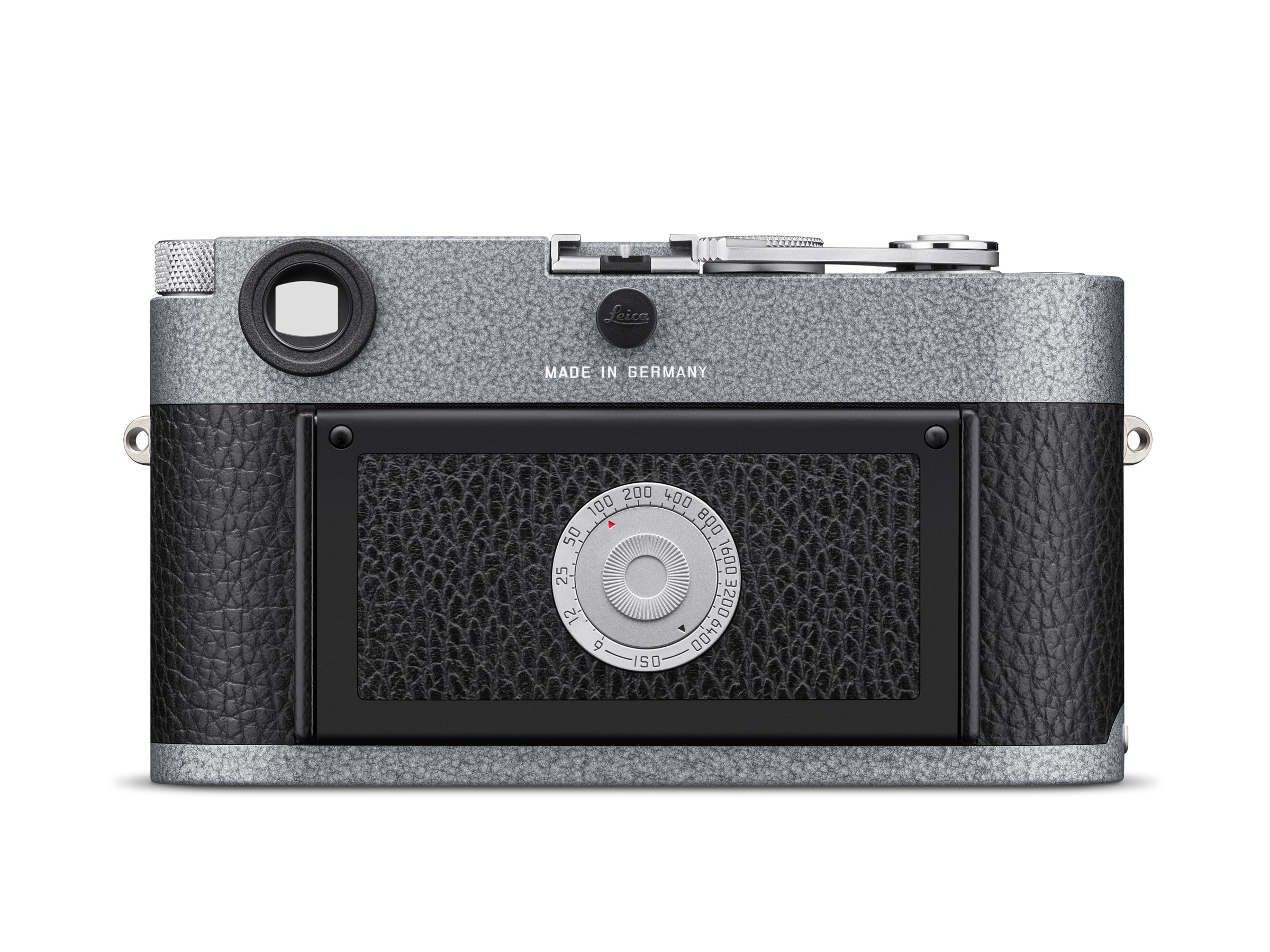
Price: $8,000
Where to buy: Buy at Leica
The premium, counted out loud
Here’s the arithmetic Leica hopes you’ll skip. The standard black M-A lists at $7,000 on Leica’s US store, so the finish adds $1,000, about 14 percent for paint and handwork. The standard black M11-P lists at $10,400, so its premium is $550, closer to 5 percent, and the pair together runs $18,950 before a single lens enters the chat.
The one drawback sits in what Leica won’t say: the release states no edition size and the cameras aren’t individually numbered, so nobody can price your Hammertone’s scarcity five years from now. The one-of-a-kind surface is a certainty you can hold in your own hand today, tomorrow and next year. Future rarity is a guess nobody should charge you extra for today.
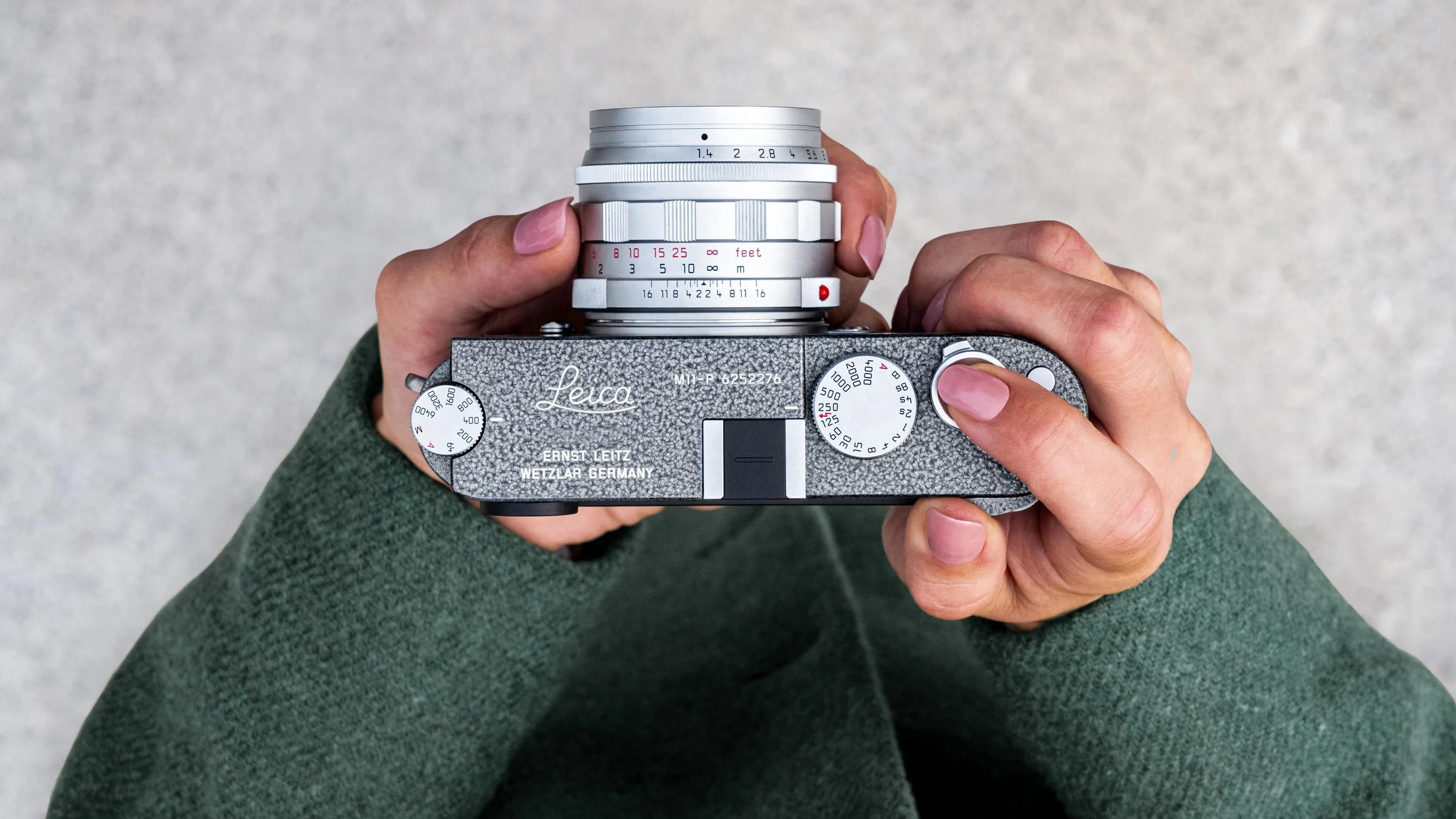
Price: $8,000 | $10,950
Where to Buy: Leica
My money says the M11-P Hammertone is the easier yes of the two. Its $550 premium buys the rounded plates, the silver-chrome screw, the matching battery and a finish that makes the body yours alone.
Skip both editions if the standard bodies already tempt you, because the sensors, the shutters and the pictures come out identical either way. Ask your dealer to show you the exact camera first, since its surface is the one you’ll live with.