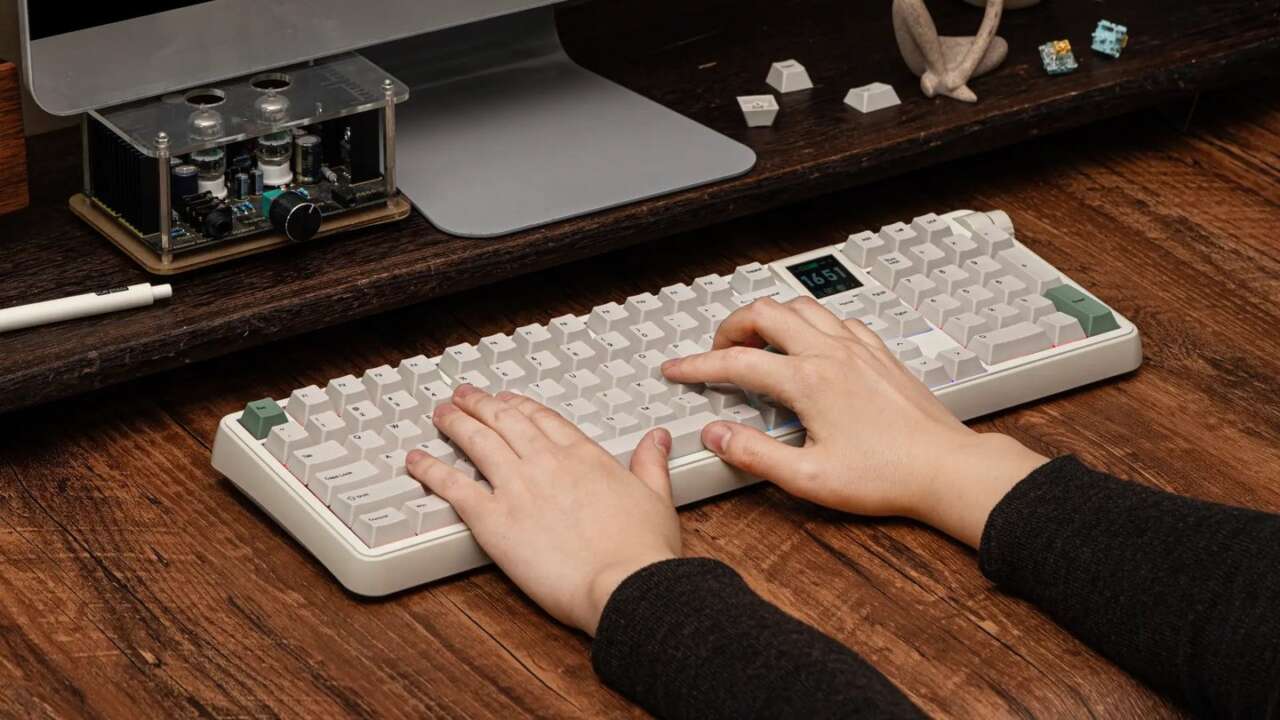
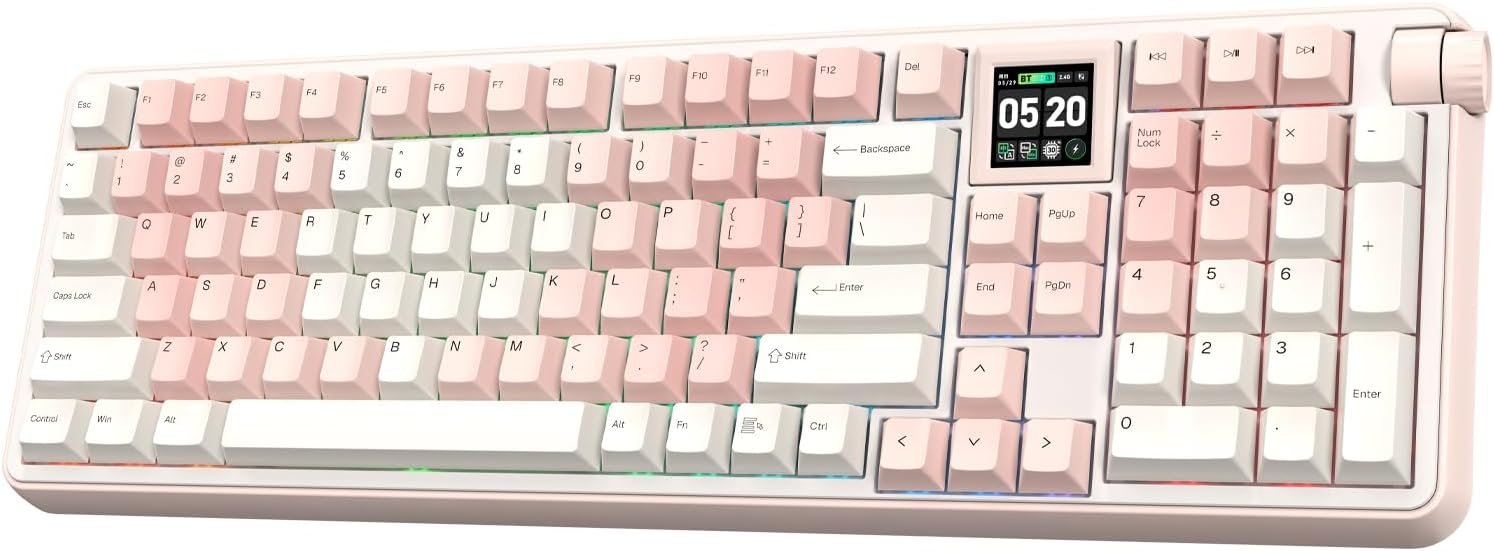
Epomaker’s RT100 Pro lets buyers delete the screen from their keyboard and take four plain keys instead. It’s an odd trade. The 1.54-inch TFT module sits beside the numpad on this 1800-layout board, and the four-key cluster drops into the same slot.
Price: From $91.19
Where to buy: Buy on Amazon
The board sells for $98.59 at Epomaker’s store, marked down from $115.99, and Amazon’s listing starts at $91.19. Under a hundred either way.
Epomaker sells the board in Retro White and Pink, with the screen fitted in the photos and the key cluster as the alternate build. Both colors carry the same hardware. Only the corner module and the keycap colors change between them. Shipping runs worldwide from the maker’s store. The first RT100 got a full review here in 2023.
One slot, two personalities
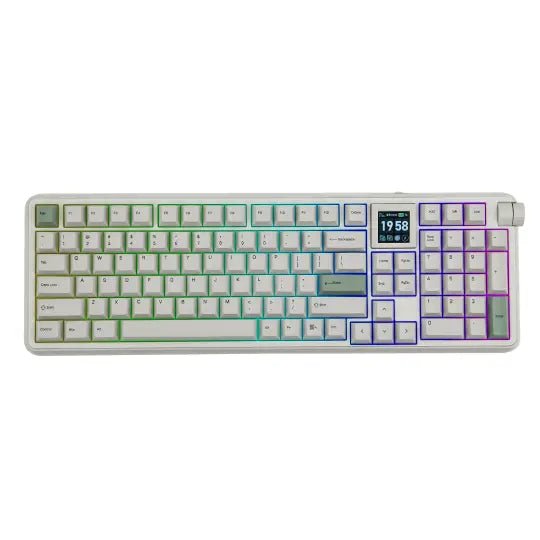
On the screen sits the clock, the battery level, the connection mode, and any GIF loaded onto it. The key cluster trades the display for four dedicated keys that just work. Neither setup costs extra. Epomaker builds the board around the swappable module, so the choice happens by configuration rather than by model. The module also decides the desk’s look from across the room.
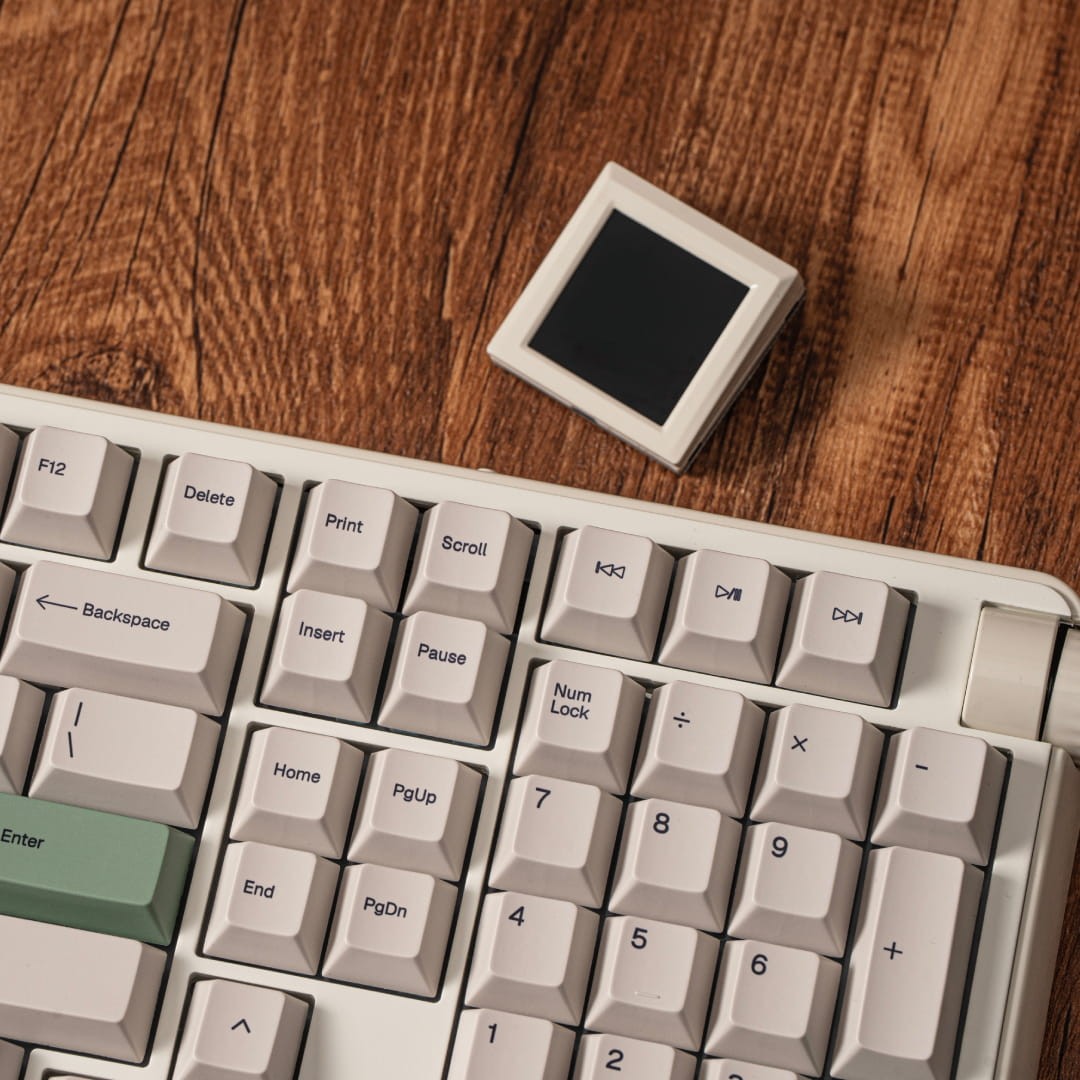
A programmable metal knob survives both layouts, mapped to volume out of the box and reassignable in the software to zoom, scroll, or brush sizes. It’s the one part nobody trades away.
It also mirrors system info during a session, and the GIF support turns it into a tiny loop of whatever gets uploaded. It’s decoration with a job. The keys answer with muscle memory instead, no glance down required.
The 1800 layout keeps the numpad
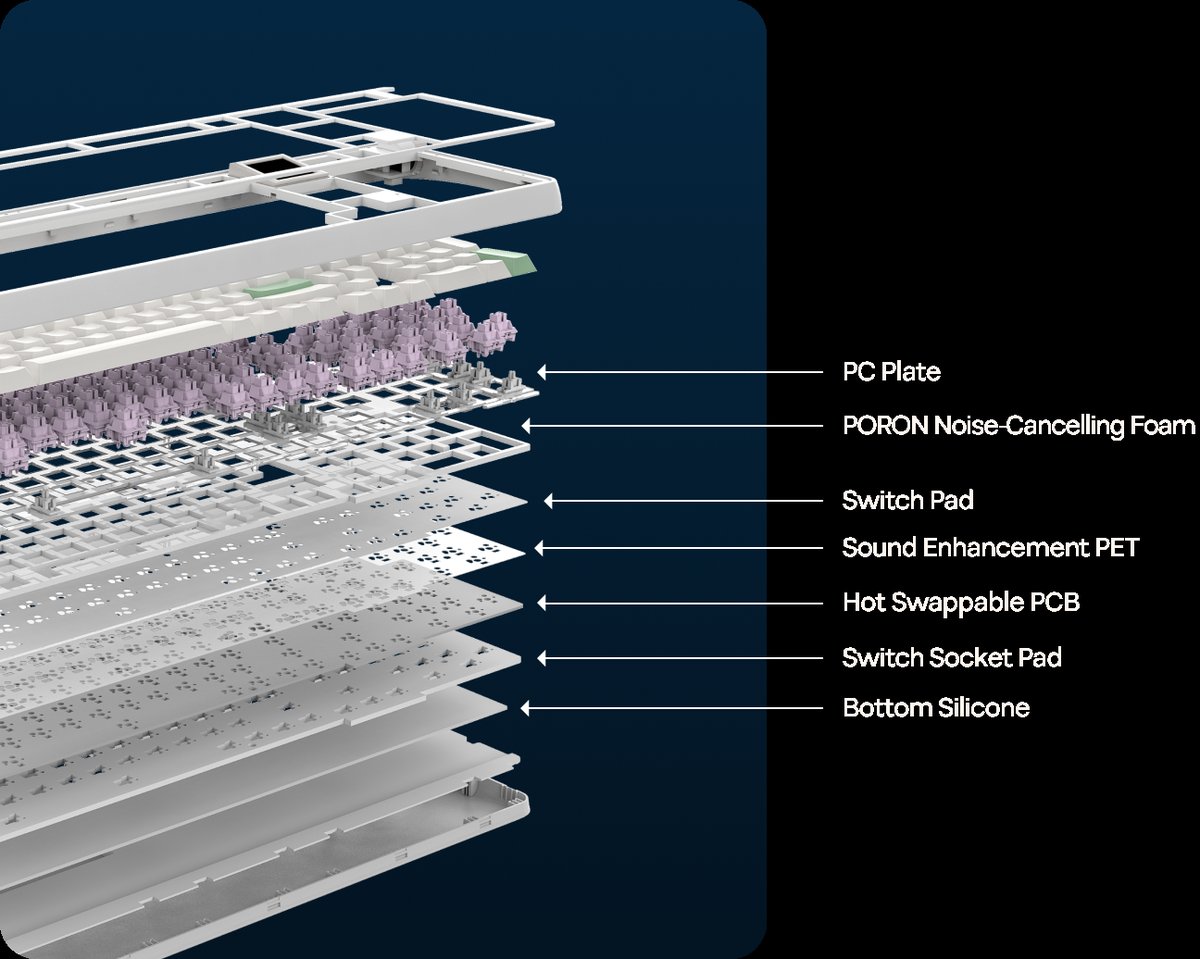
The 1800 layout squeezes a full numpad and a function row into a footprint of 43.3 by 14.2 centimeters. That’s 103 keys plus the module corner. Arrow keys and the navigation cluster tuck under the right side of the board. Desks keep some breathing room. The function row survives the squeeze too, which smaller layouts usually sacrifice first.
Weight lands at about 1.3 kilograms, with a fixed 5.8-degree typing angle in an ABS case with a gasket-mounted plate inside. A PC plate and Cherry-profile dye-sub PBT keycaps finish the build without a metal case’s price tag.
At 4.5 centimeters thick before the keycaps, it sits tall on a desk and looks like a full-size board from across the room. Smaller boards look lost next to it. The weight helps there, since 1.3 kilograms doesn’t slide around during fast typing.
Switches, sound, and connections
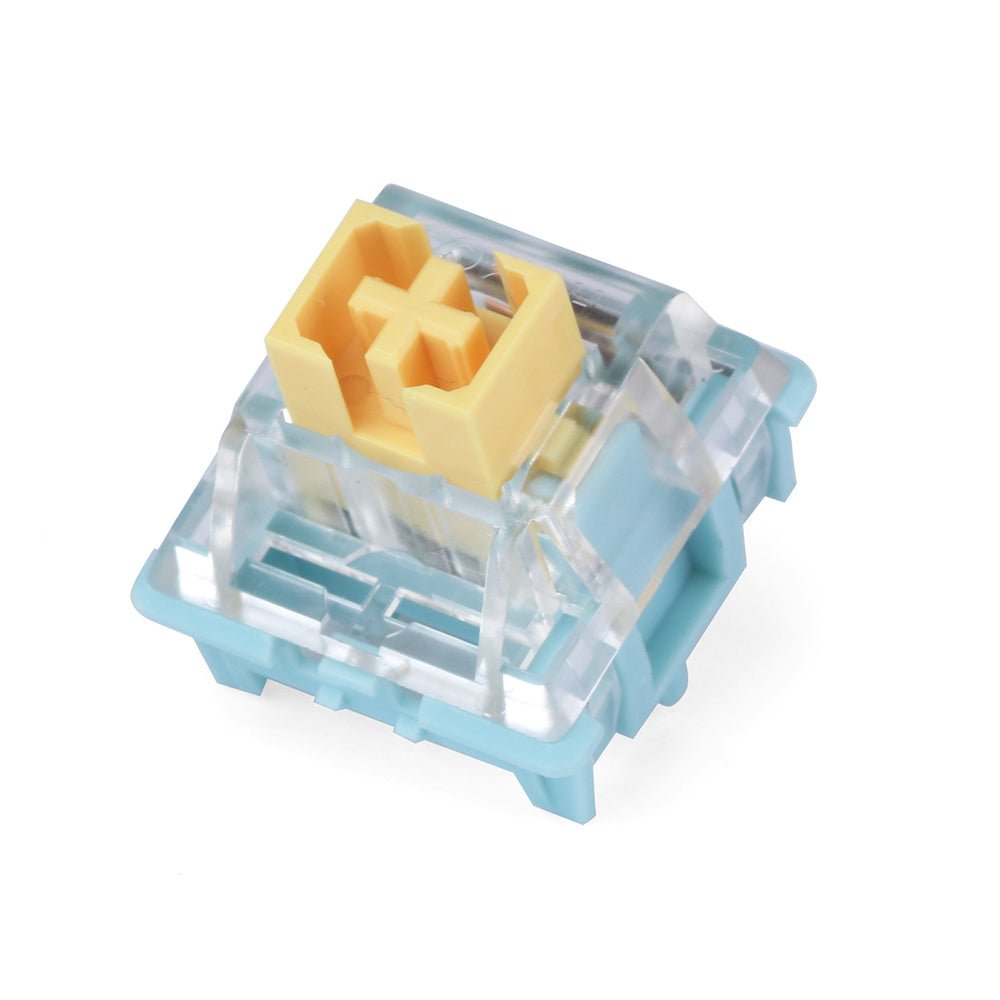
Six layers of dampening sit under the gasket-mounted plate, from PORON foam at the top to a silicone sheet at the bottom. The stack targets the hollow ping that thin plastic boards can’t hide at this price. Switch choice splits two ways. Creamy Jade linears run 45 grams of actuation force, and the Sea Salt Silent V2 linears keep the same weight behind silent stems.
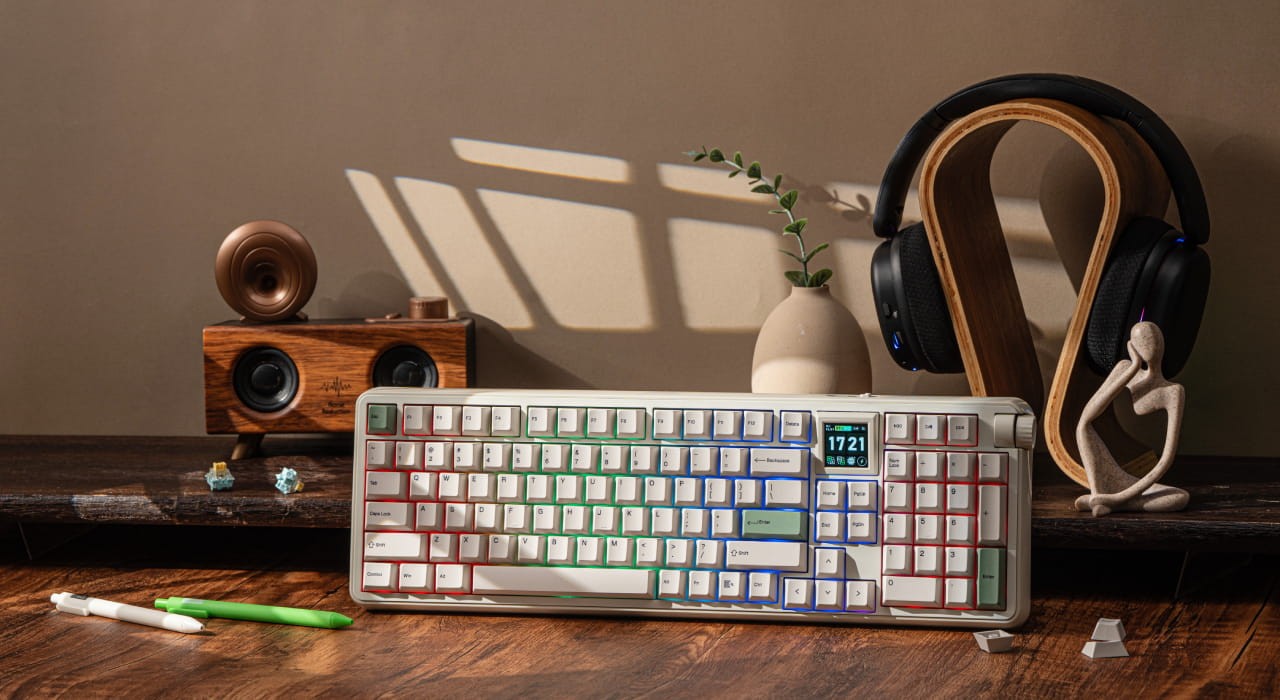
Both switch options come factory-lubed, and the sockets take any 3-pin or 5-pin switch for later swaps. Connectivity covers USB-C, 2.4 GHz wireless, and Bluetooth across five paired devices. Polling hits 1,000 Hz wired and over the dongle, with latency as low as 4 milliseconds on a cable.
Battery capacity is 5,000 mAh. It feeds the tri-mode radios and the south-facing per-key RGB, and the LEDs aim the glow at the typist while the dye-sub legends stay readable under it.
The call
Buy it if the desk runs on spreadsheets and shortcuts, because the numpad and the knob earn their space daily on a working desk. Skip it if a 65% board already covers the workload. Wait for the Sea Salt Silent version if the office shares walls, because the silent stems are the quiet half of this lineup. Both builds cost the same. This one’s for the spreadsheet-heavy typer who still wants a board with some personality left in it.
Budget shoppers should run the Amazon listing first, since its starting price undercuts the maker’s sale price by about seven dollars. The maker’s store counters with both switch options, both module builds and the full color range. That’s real money at this end of the market.
Price: From $91.19
Where to buy: Buy on Amazon
The catch is the fixed angle: the 5.8-degree tilt doesn’t adjust, and there’s no wrist rest in the box. Extra Mac keycaps do come in the box, and the board runs on Windows, Mac, and Android without a driver hunt or a dongle drawer.