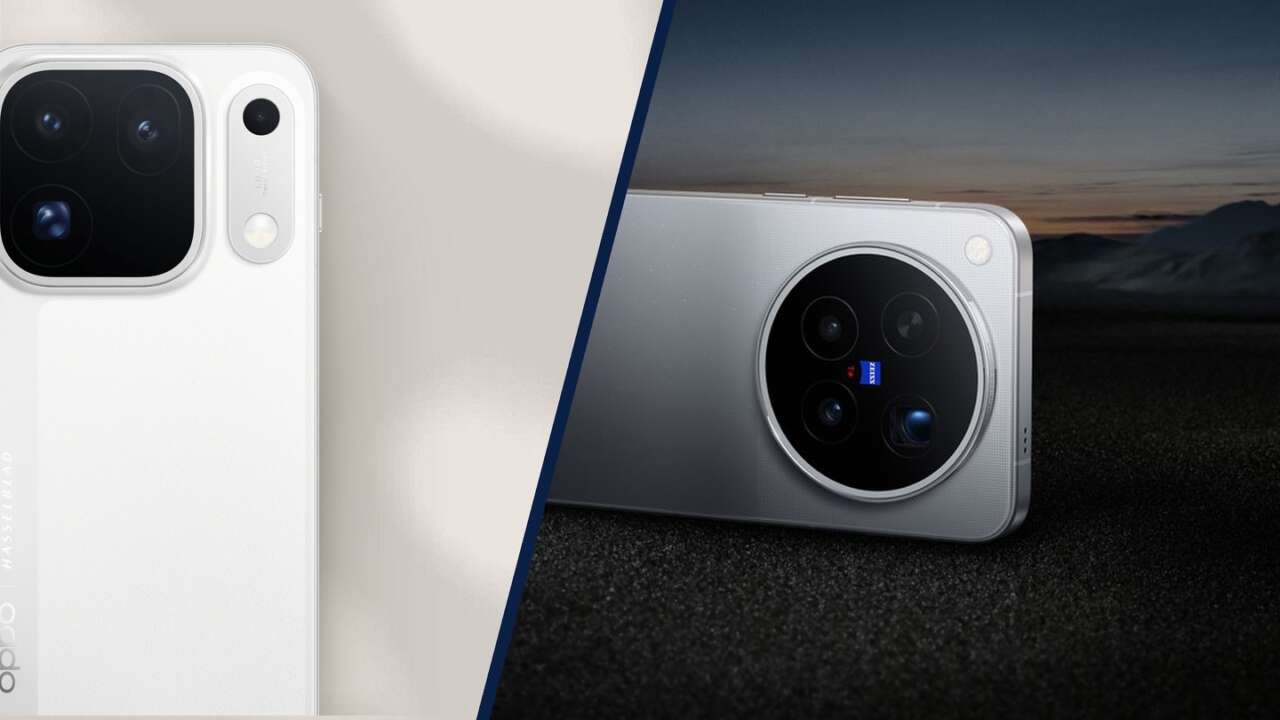
Two flagship phones share one chip and almost nothing else. The vivo X500 Pro Max and the OPPO Find X10 Pro Max both run MediaTek’s Dimensity 9600 Pro, and their camera systems take opposite paths from there.
This comparison works from each maker’s own spec sheet, not from time with either phone, and it uses the global versions of both. Neither brand sells its flagship through US carriers or its own US store, so both phones reach American buyers as imports with warranty and band support set by the importer. That route shapes the whole comparison from the first spec to the last.
Price: TBD
Where to buy: Buy at vivo
One chip, two phones
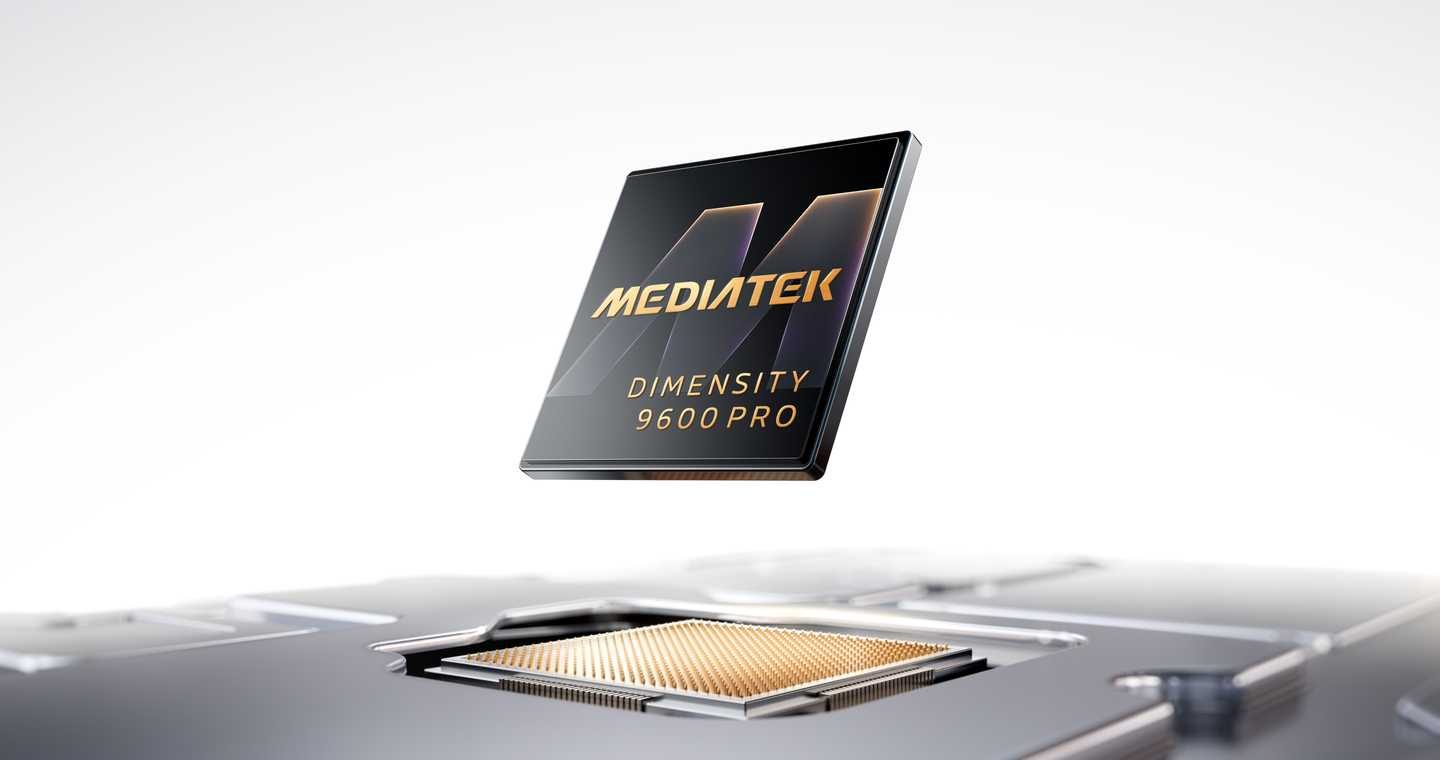
MediaTek builds the chip on a 2nm TSMC process with an all-big-core layout, two cores at 4.55GHz, three at 4.35GHz and three at 3.1GHz. OPPO pairs it with an ARM Mali G2-Ultra graphics unit at 1.8GHz, and both brands route their imaging pipelines through the same silicon. The silicon is identical. The tuning around it isn’t.
vivo adds its own imaging processors and the VCS 4.0 spectrum system, then cools the package with a vapor chamber rated 32% larger in cooling area than the X300 Pro’s. OPPO answers with a 3D Cryo-velocity cooling system and its Laminar Flow Engine, and its LUMO imaging runs on the same chip.
Storage splits the pair more than speed does, and the range runs wide at vivo. The four builds pair 12GB of RAM with 256GB, 512GB or 1TB of storage, plus a 16GB build with 512GB, all on LPDDR5X Ultra memory and UFS 4.1 storage. OPPO sells two builds, 12GB or 16GB of RAM, each with 512GB. Neither phone takes a memory card, and vivo adds up to 24GB of virtual memory expansion on top of the physical RAM.
Cameras: reach against coverage
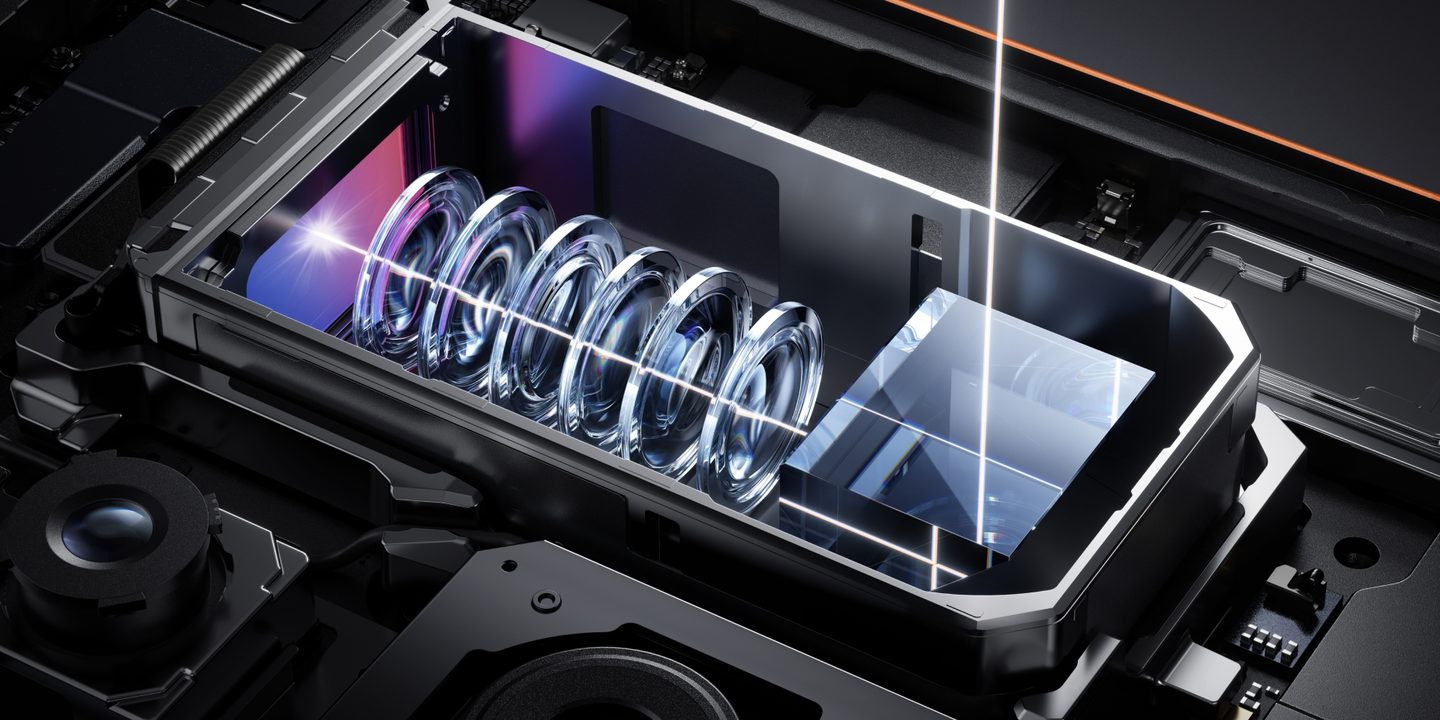
vivo spends its resolution at the long end of the range, where concerts, courts and wildlife reward reach over coverage. Its main camera is a 50MP unit on a 1/1.28-inch sensor, with an f/1.57 aperture, a 24mm focal length and gimbal-grade stabilization that vivo rates at CIPA 7.0. The 200MP ZEISS APO telephoto sits at 85mm on a 1/1.4-inch sensor with an f/2.67 aperture, and it focuses as close as 15cm for telephoto macro work. A multi-zone laser focus sensor adds 1,536 laser points for subject tracking.
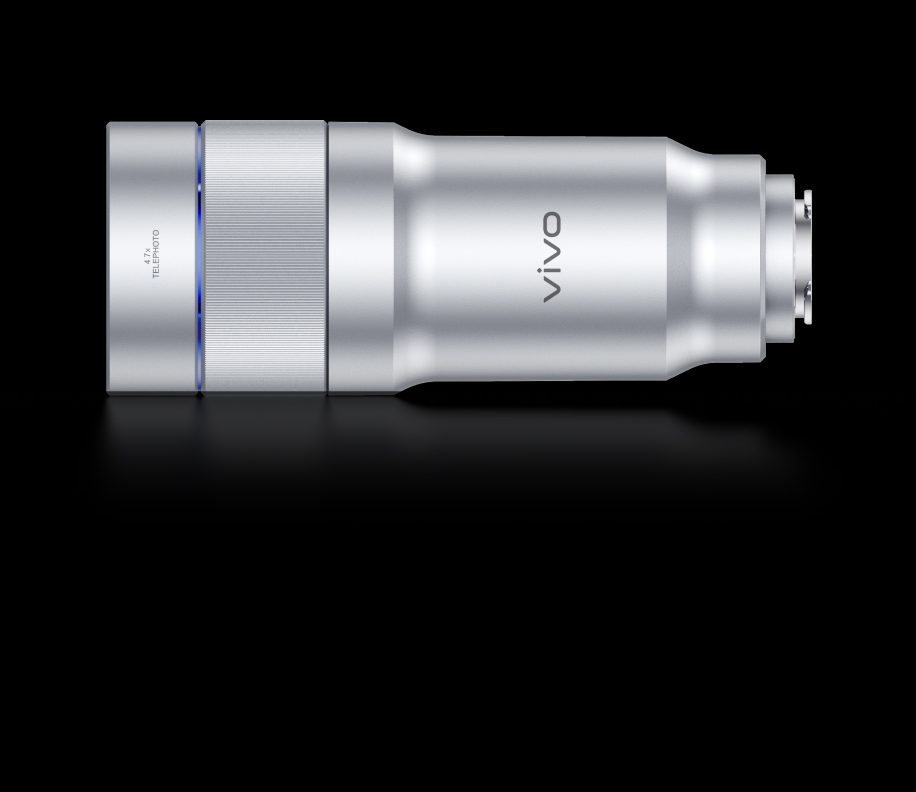
Two screw-on extenders stretch that lens further, the Gen 2 at a 200mm equivalent and the Gen 2 Ultra at 400mm, and both are sold separately. The Gen 2 weighs 153g, and the Ultra weighs 248g, so the full kit changes how the phone carries. A Photographer Kit and an Imaging Grip add a case, a strap, a physical shutter button and a zoom dial, and the grip carries its own extra battery.
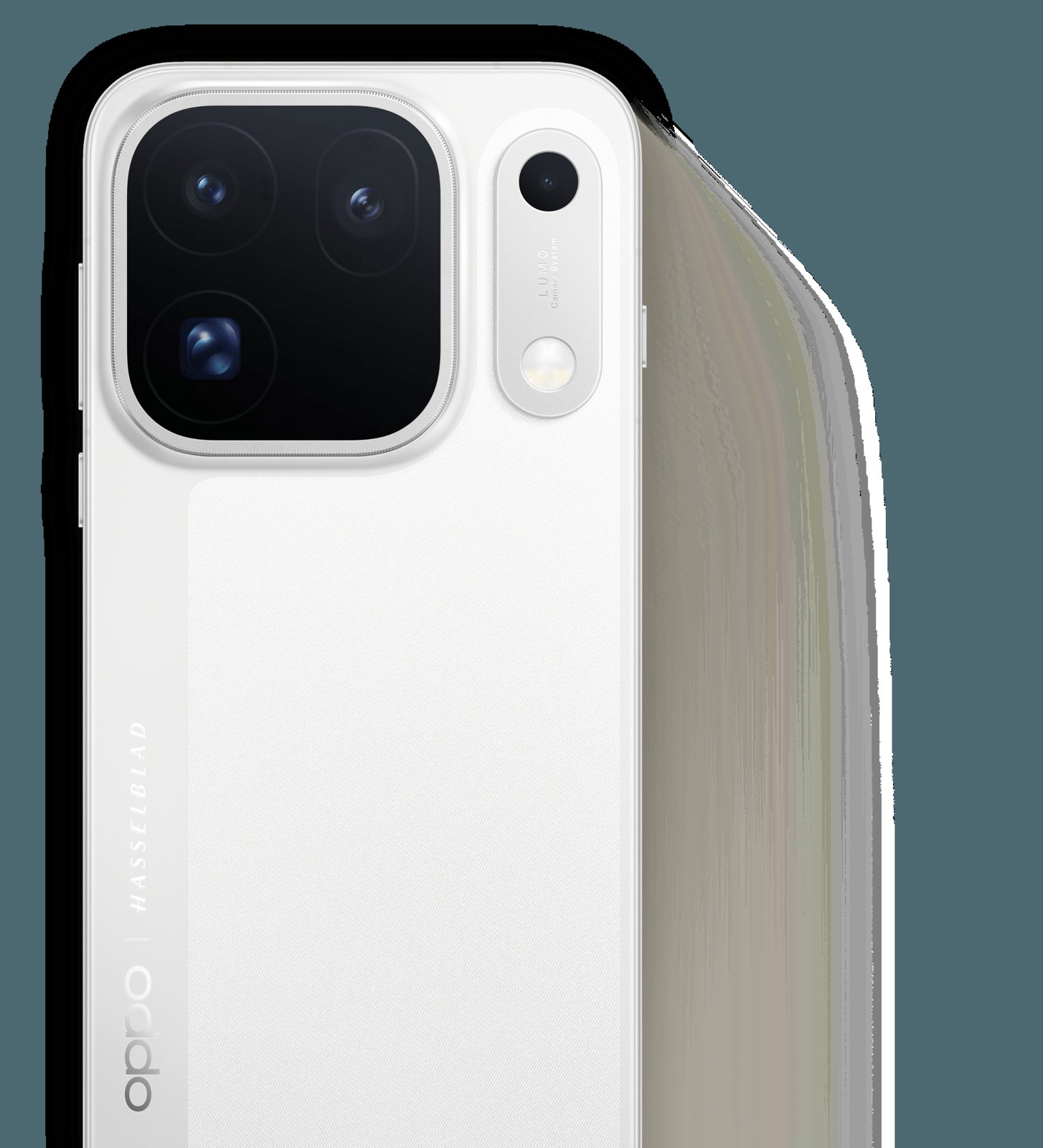
OPPO spreads the same resolution across every focal length instead of concentrating it at one. All three rear cameras carry 200MP sensors, the 24mm main at f/1.5 on a 1/1.3-inch sensor, a 70mm telephoto at f/2.1 on a 1/1.56-inch sensor, and a 13mm ultra-wide at f/2.2 on another 1/1.56-inch sensor. The main and telephoto cameras carry two-axis optical stabilization, and the telephoto focuses as close as 10cm for macro shots. A separate 3.2MP multi-spectral sensor feeds the LUMO system color data across 24 spectral channels. Everyday shots get the same file size too.
Price: TBD
Where to buy: Buy at OPPO
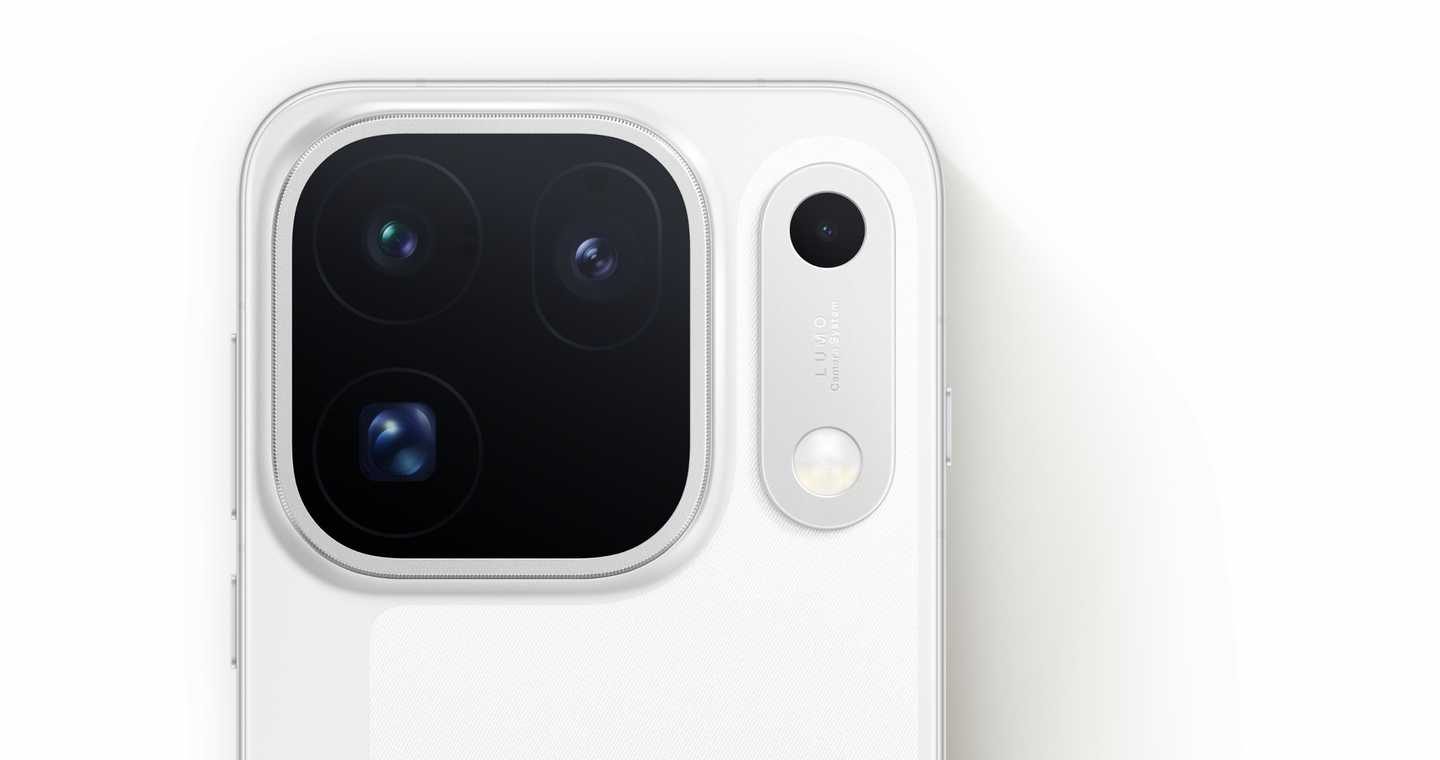
The ultra-wide gap is the widest one on the sheet, since OPPO’s 200MP ultra-wide quadruples the pixel count of vivo’s 50MP, 15mm unit and adds 4cm macro focusing. OPPO’s zoom tops out at 3x optical, and its Hasselblad Teleconverter Kit, sold separately, extends the reach for stage work. vivo’s answer is native reach that OPPO doesn’t match without the kit.
Video splits along the same lines. OPPO records 8K at 30fps and 4K Dolby Vision at up to 120fps, and its Open Gate mode records 4096 by 3072 at up to 60fps for reframing in post. Slow motion flips the lead, with 4K at 240fps, a Cinematic Pro Log mode and Stage Mode tracking at 4K and 60fps on the vivo sheet. That sheet also lists 8K recording without printing a frame rate. Both front cameras shoot at 50MP with an f/2.0 aperture, and OPPO adds autofocus and a 100-degree field of view.
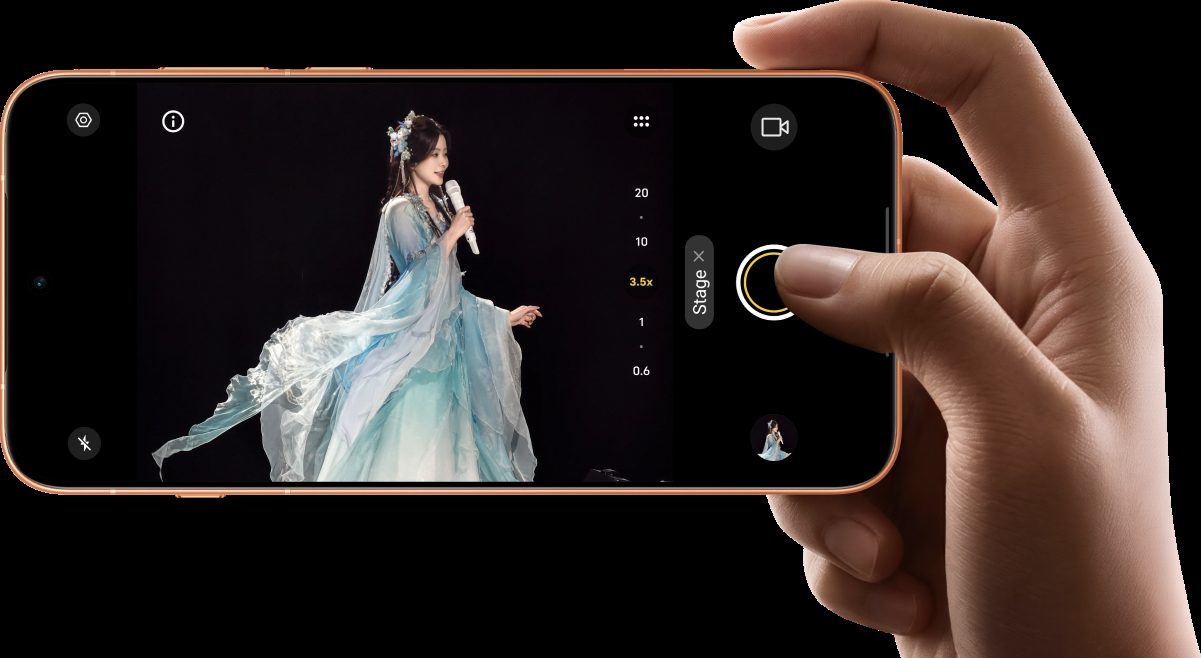
Stage and portrait work pulls the two apart in software as well. Auto framing handles fancam video in Stage Mode 3.0, and the camera app shoots 4K cinematic portrait video and dual-view clips that record front and rear cameras together. OPPO answers with its XPAN wide format, a master mode for manual control, and AI editing tools built into the gallery. The hardware gap stays small here, and the apps decide the feel.






Design, display and weight
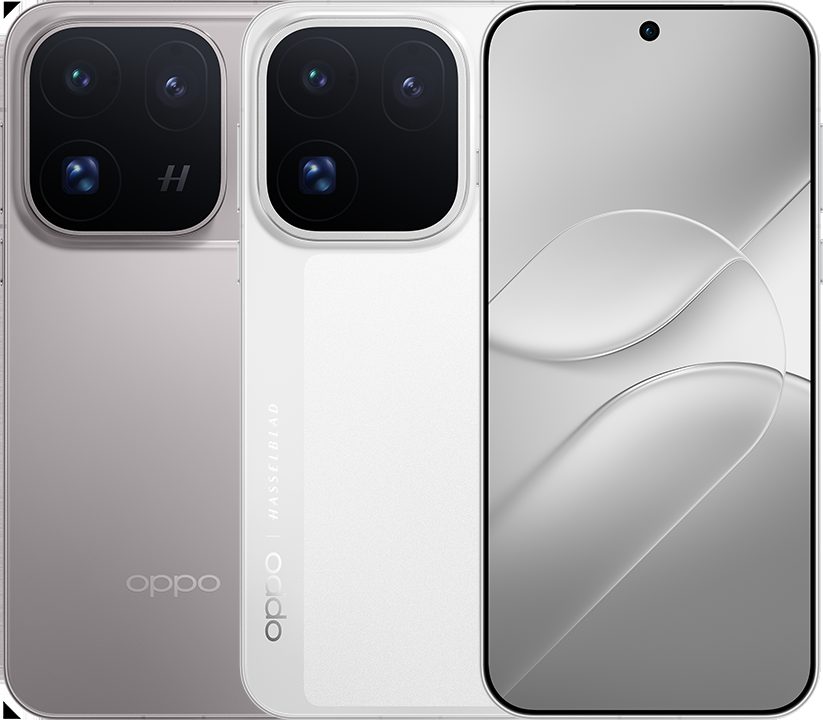
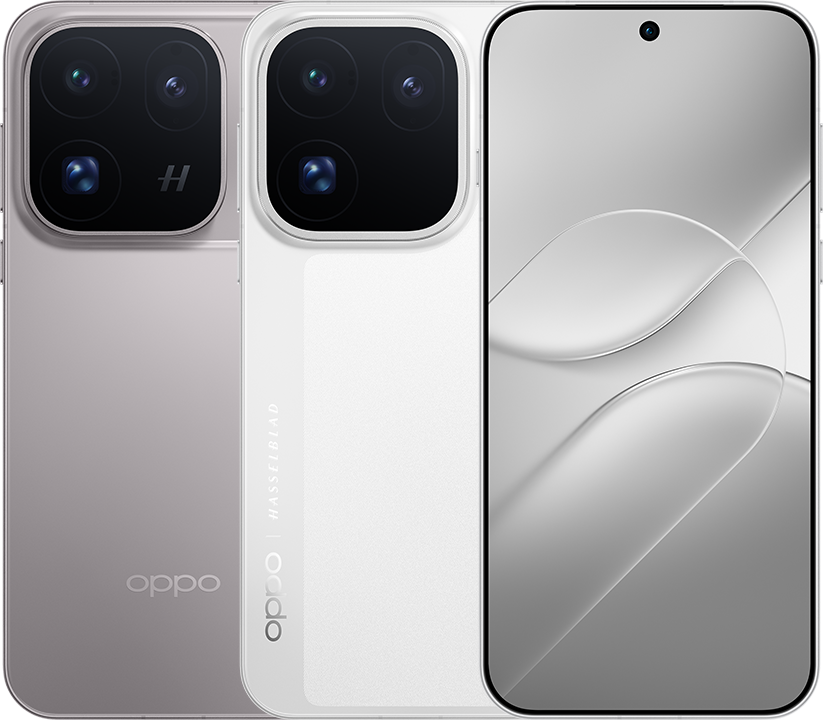
From the back, the priorities show in the shapes, a wide round camera island at vivo and a squared module at OPPO, and in the finishes each brand sells across its markets. The vivo range runs Sunset Orange, Sunny White, Starry Gray and Moonlit Black. The frame is aerospace-grade aluminum, with a glass back, or glass fiber on the black finish. OPPO sells two finishes, Titanium Grey and Luna White. The white phone carries a split design that runs two textures across one piece of glass. The frame is a lustrous metal, and the camera module carries the Hasselblad markings.
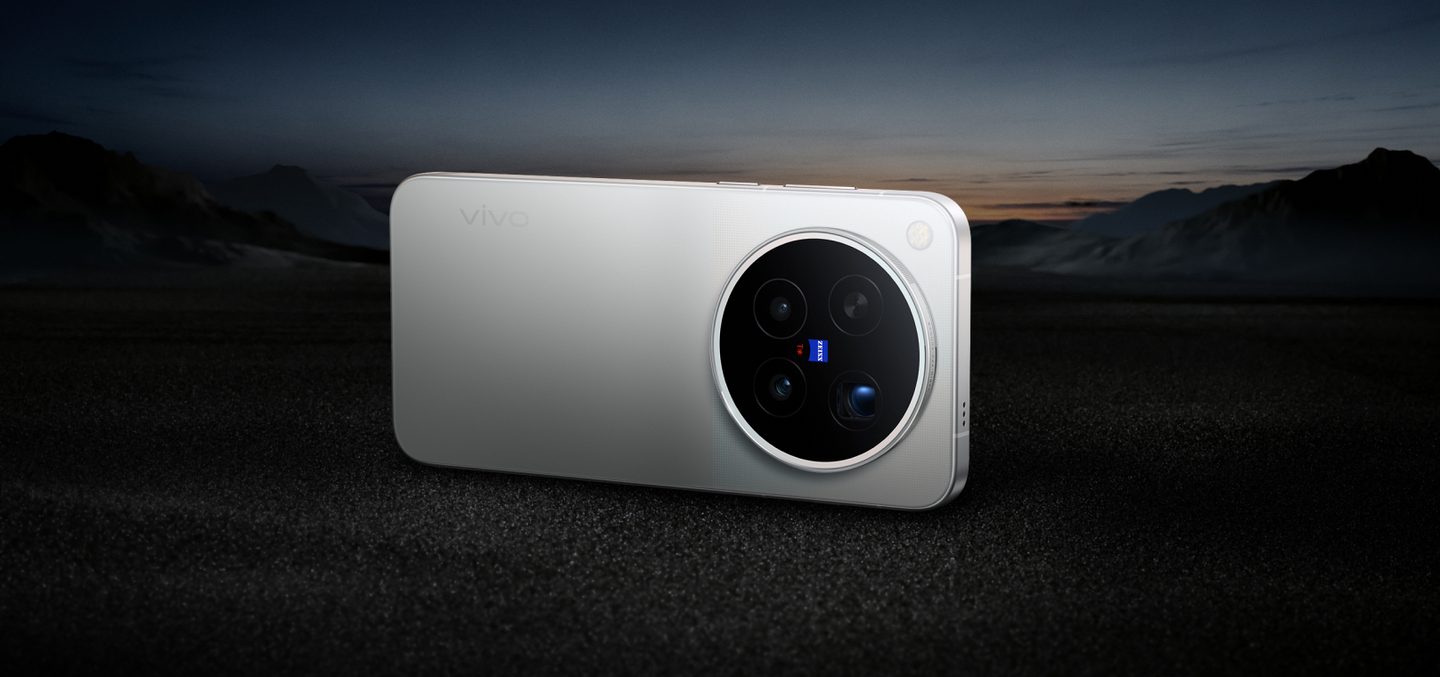
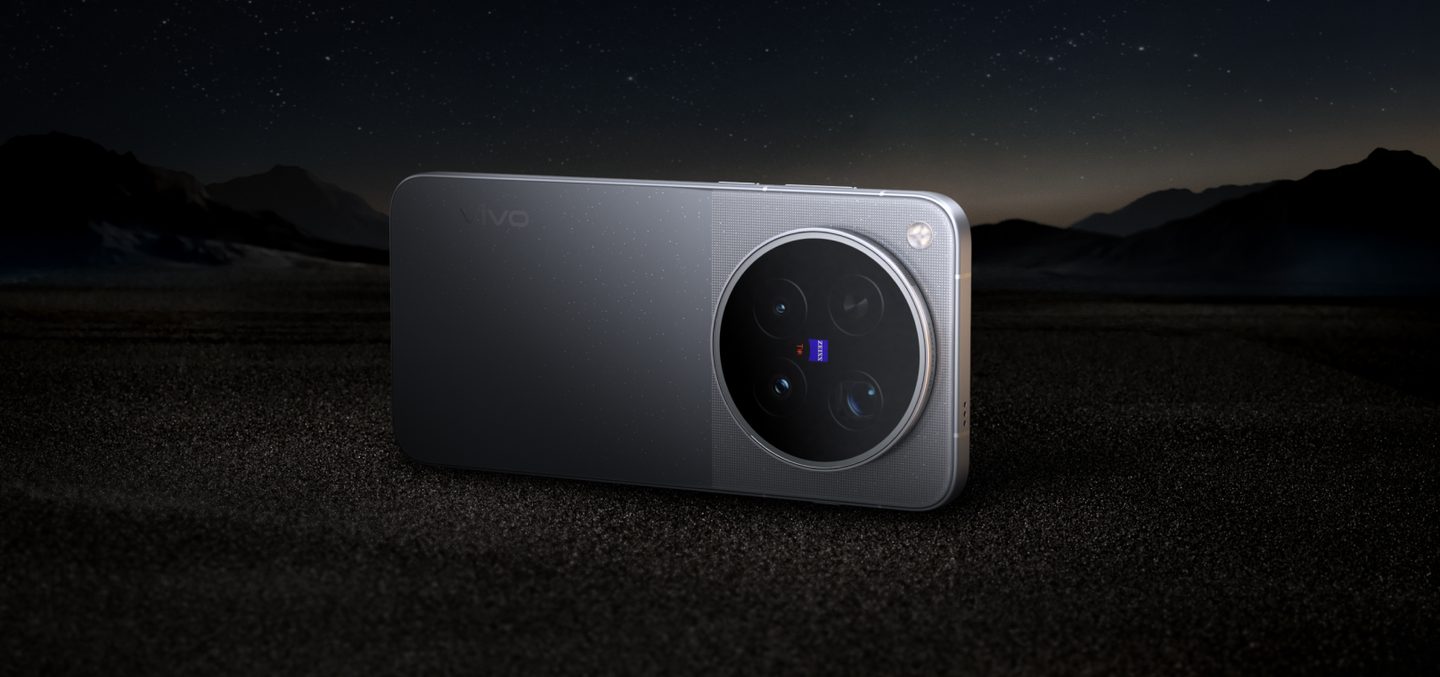
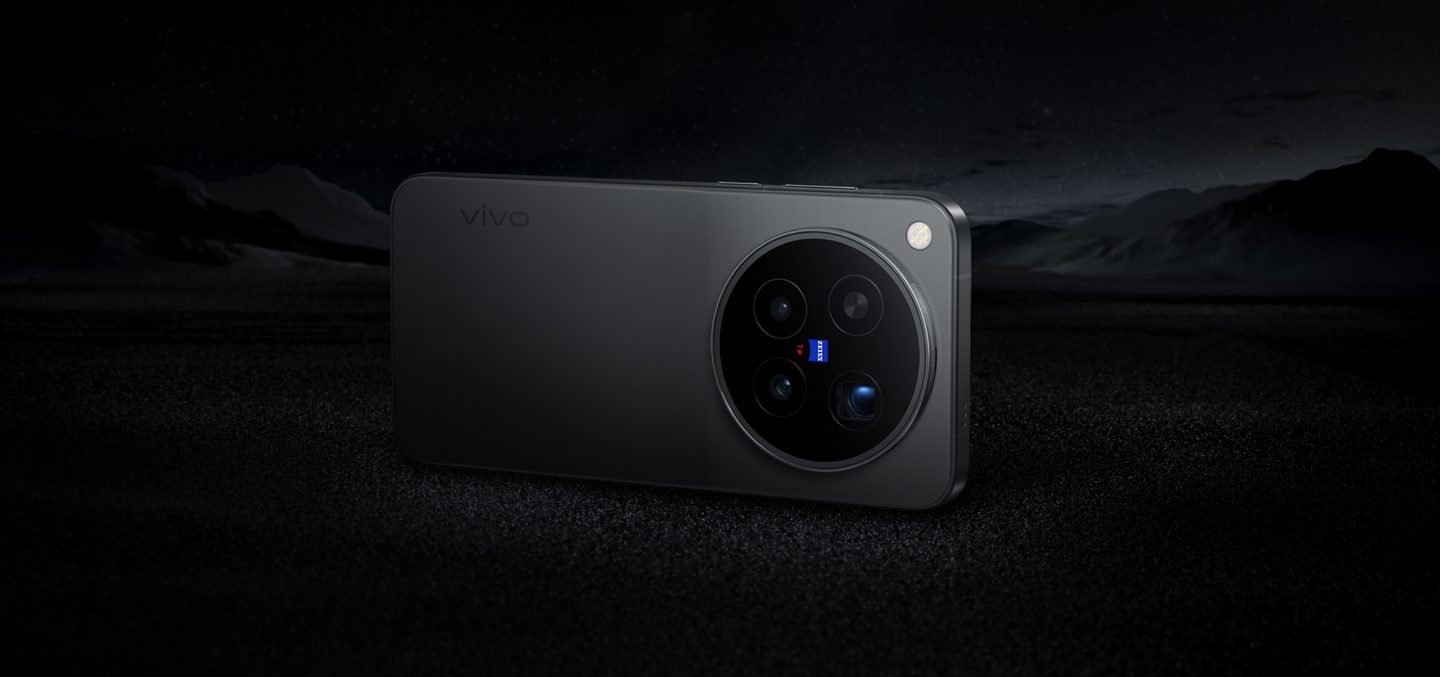
The display sheet favors vivo: a 6.85-inch AMOLED panel at 3168 by 1440, 507 pixels per inch, 100% DCI-P3 color and an LTPO range of 1 to 144Hz. Peak brightness favors vivo too: 4,400 nits local and 2,000 nits global, against 800 nits typical and 2,000 nits in high-brightness mode at OPPO. The vivo sheet doesn’t name its cover glass. OPPO’s 6.78-inch screen runs 2772 by 1272 at 450 pixels per inch, adapts from 1 to 120Hz, and saves 144Hz for some games. The panel is a 10-bit ProXDR unit with 1.07 billion colors, Crystal Guard cover glass and a 1.15mm bezel that keeps the face nearly all screen.
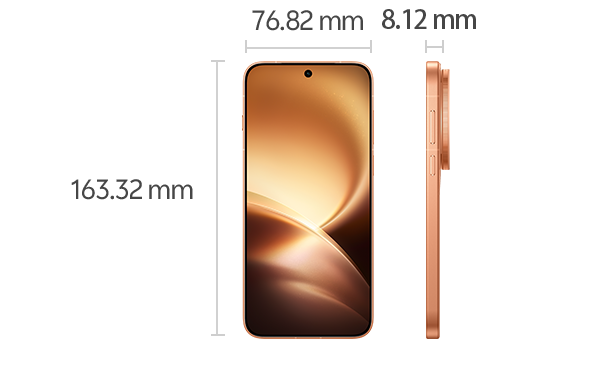
The vivo is the thinner and lighter phone despite the bigger screen, at 7.95mm and 225g in black, with the other finishes running 8.12mm thick and 229g on the scale. OPPO is the shorter phone at 161.32mm tall, and it weighs 233g in Luna White and 235g in Titanium Grey, at 8.40mm thick. Both seal against dust and water. Ratings run IP68 and IP69 at vivo, with IP66 added at OPPO, and both unlock with ultrasonic fingerprint sensors.
In the hand, the numbers translate to a taller vivo and a denser OPPO, with the same grip width within a third of a millimeter. That extra 2mm of height buys the bigger screen, and the black finish shaves 4g off the other colors through its glass fiber back. Case shoppers should note the camera islands differ in shape and placement, round at vivo and squared at OPPO, so neither phone’s cases, grips nor lens kits fit the other.
Battery and charging
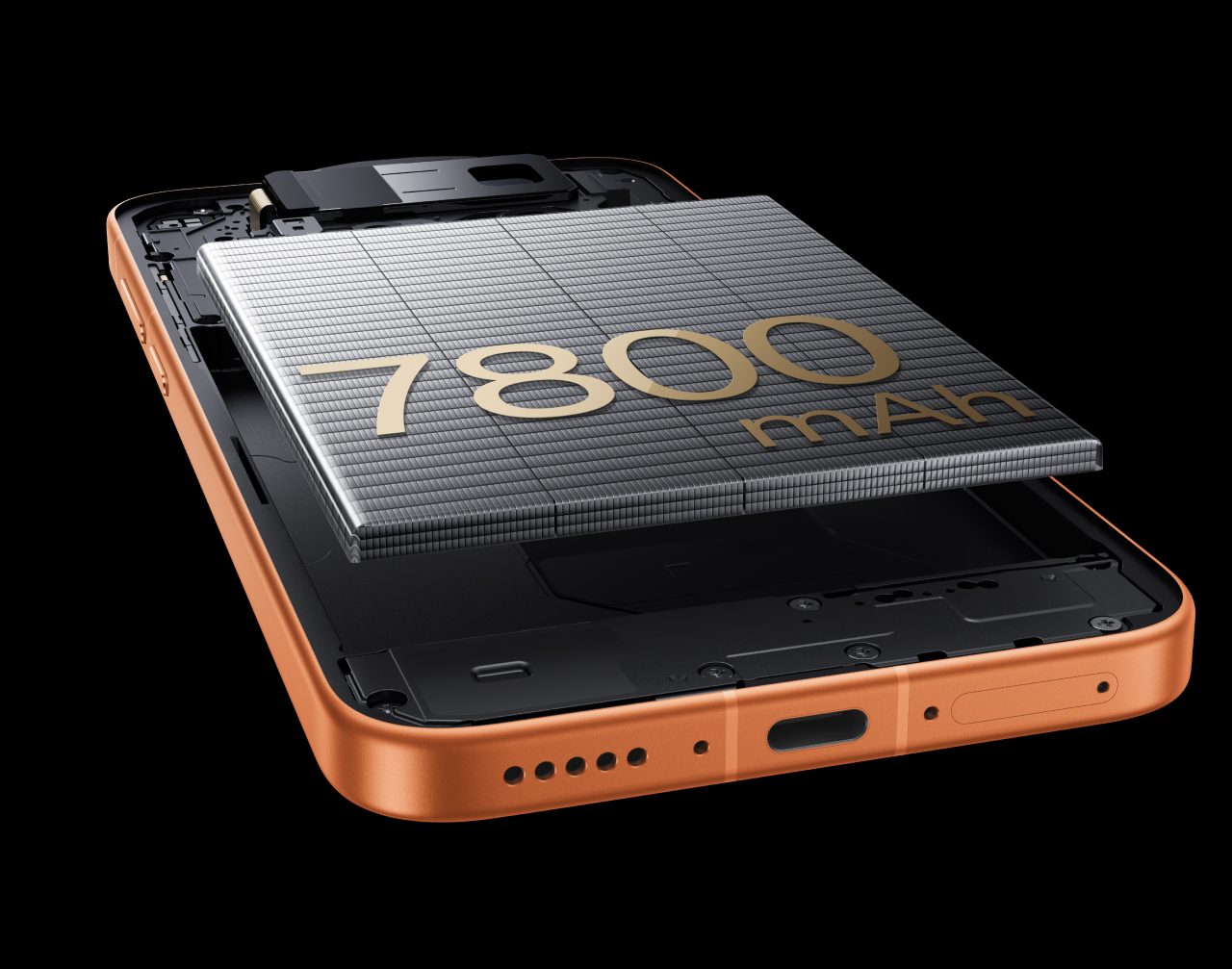
OPPO fits the larger cell, 8,000mAh typical and 7,790mAh rated, against vivo’s 7,800mAh typical and 7,605mAh rated, and both figures describe the global versions. European buyers get smaller batteries on both phones, 7,150mAh typical at OPPO and a dual-cell 6,750mAh typical at vivo, so the market on the box changes the spec buyers feel most. Capacity follows the region, not the brand.
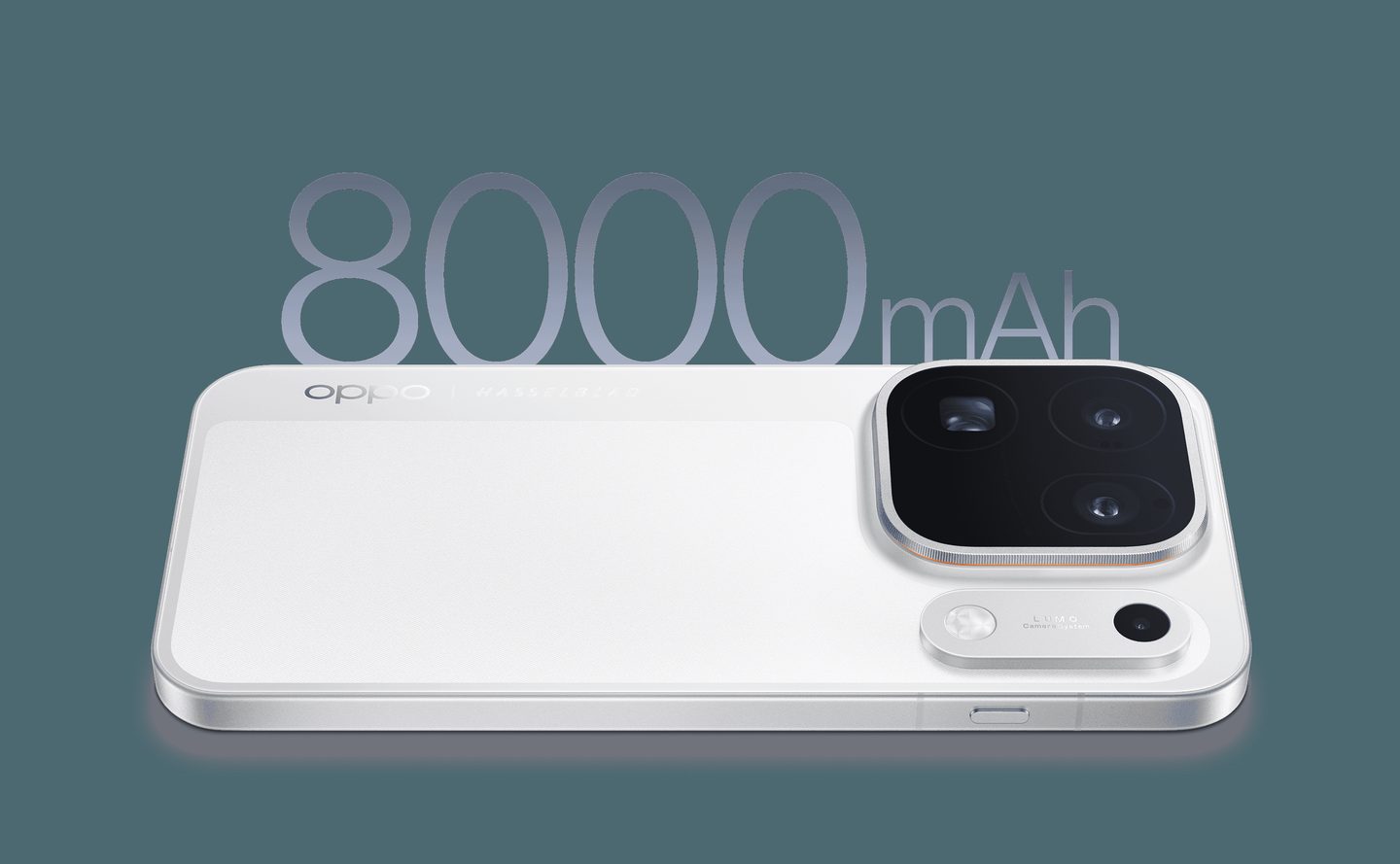
vivo charges faster on a cable, at 90W FlashCharge against OPPO’s 80W SUPERVOOC, and OPPO answers with 50W AIRVOOC wireless charging against vivo’s 40W Wireless FlashCharge. OPPO’s sheet also lists compatibility with 55W PPS and 13.5W USB PD charging, which widens the choice of third-party bricks. Neither spec sheet lists reverse charging for either phone. On paper, the split is simple: cable speed to vivo, pad speed and capacity to OPPO.
Software, connections and the small print

Each phone runs its maker’s newest software, OriginOS 7 on the vivo and ColorOS 17 on the OPPO, and vivo’s spec sheet pins its version to Android 17. OPPO’s specs page doesn’t print an Android base version under ColorOS 17. That line stays blank here. The camera apps show the split again, with ZEISS color styles and film looks at vivo, and Hasselblad modes including the wide XPAN format at OPPO. Both makers court switchers with cross-ecosystem tools, vivo pairing with Apple Watch and AirPods in select regions, and OPPO sharing files with iPhone and Mac through its O+ Connect app. Neither maker states an operating system update commitment on its product pages, and both instead publish six-year smoothness claims from their own labs.

Both phones run Wi-Fi 7, and OPPO’s sheet adds Wi-Fi 6GHz support at 320MHz, LDAC and aptX HD audio codecs, and Bluetooth 6.2 against vivo’s Bluetooth 6.0. USB runs at 3.2 speeds on both, Type-C at OPPO and an unlabeled 3.2 port at vivo, and both carry NFC and an infrared blaster for appliance control. OPPO lists eSIM support beside its two nano-SIM slots, and vivo’s global sheet lists two nano-SIM slots with no eSIM mention. Audio splits along a quiet line, with symmetrical stereo dual speakers at OPPO and a quad-microphone recording setup at vivo.
The boxes differ as well, since vivo includes its charger outside Europe and Chile, plus a cable, a case and a factory-fitted protective film. OPPO includes a charger, a cable, a protective case and a SIM ejector in every box its specs page describes. Check the box contents before paying an importer.
The full spec sheet
The table below pulls both official spec sheets into one place, row by row, so the two phones can be read side by side without flipping between two maker sites. The figures are the global versions, and the European batteries sit in their own row.
| Specification | vivo X500 Pro Max | OPPO Find X10 Pro Max |
|---|---|---|
| Chip | Dimensity 9600 Pro, 2nm | Dimensity 9600 Pro, 2nm |
| CPU | 2 by 4.55GHz + 3 by 4.35GHz + 3 by 3.1GHz | 8-core, clocks not printed |
| GPU | Not printed on vivo’s sheet | ARM Mali G2-Ultra at 1.8GHz |
| RAM and storage | 12GB+256GB, 12GB+512GB, 12GB+1TB, 16GB+512GB | 12GB+512GB, 16GB+512GB |
| Memory and storage type | LPDDR5X Ultra, UFS 4.1, no card slot | LPDDR5X, UFS 4.1, no card slot |
| Display | 6.85-inch AMOLED, 3168 by 1440, 507 PPI | 6.78-inch AMOLED, 2772 by 1272, 450 PPI |
| Refresh rate | 1 to 144Hz, LTPO | 1 to 120Hz adaptive, 144Hz in some games |
| Brightness | 4,400 nits local peak, 2,000 nits global peak | 800 nits typical, 2,000 nits HBM |
| Cover glass | Not stated | Crystal Guard |
| Main camera | 50MP, 1/1.28-inch, f/1.57, 24mm, gimbal OIS | 200MP, 1/1.3-inch, f/1.5, 24mm, OIS |
| Telephoto camera | 200MP, 1/1.4-inch, f/2.67, 85mm, OIS | 200MP, 1/1.56-inch, f/2.1, 70mm, OIS |
| Ultra-wide camera | 50MP, 1/2.75-inch, f/2.0, 15mm | 200MP, 1/1.56-inch, f/2.2, 13mm, 124 degrees |
| Extra camera sensor | Multi-zone laser focus, 1,536 points | 3.2MP multi-spectral True Color |
| Front camera | 50MP, f/2.0 | 50MP, f/2.0, autofocus, 100 degrees |
| Rear video | 8K listed, 4K at 240fps slow motion, Pro Log | 8K at 30fps, 4K at 120fps, Dolby Vision |
| Zoom reach | 85mm optical, extenders to 200mm and 400mm, sold separately | 3x optical to 70mm, teleconverter kit sold separately |
| Battery, global | 7,800mAh typical, 7,605mAh rated | 8,000mAh typical, 7,790mAh rated |
| Battery, Europe | 6,750mAh typical, 6,570mAh rated | 7,150mAh typical |
| Wired charging | 90W FlashCharge | 80W SUPERVOOC |
| Wireless charging | 40W Wireless FlashCharge | 50W AIRVOOC |
| Dimensions | 163.32 by 76.82 by 7.95mm (black), 8.12mm (other finishes) | 161.32 by 76.57 by 8.40mm |
| Weight | 225g (black), 229g (other finishes) | 233g (Luna White), 235g (Titanium Grey) |
| Build | Aluminum frame, glass or glass fiber back | Metal frame, glass back, split design on Luna White |
| Water resistance | IP68, IP69 | IP66, IP68, IP69 |
| Biometrics | 3D ultrasonic fingerprint | Ultrasonic fingerprint, face recognition |
| SIM | Dual nano-SIM | Dual nano-SIM, eSIM |
| Wi-Fi | Wi-Fi 7 | Wi-Fi 7, 6GHz support |
| Bluetooth | 6.0 | 6.2, LDAC and aptX HD |
| USB | USB 3.2 | USB Type-C, USB 3.2 Gen 1 |
| NFC and infrared | Both fitted | Both fitted |
| Speakers | Not stated | Symmetrical stereo dual speakers |
| Software | OriginOS 7, Android 17 | ColorOS 17, Android base not printed |
| Colors | Sunset Orange, Sunny White, Starry Gray, Moonlit Black | Titanium Grey, Luna White |
| In the box | Charger (outside Europe and Chile), cable, case, film fitted | Charger, cable, case, SIM ejector |
A few cells stay marked as not stated, because the makers’ own pages leave them blank. The vivo sheet doesn’t name a cover glass or a speaker layout, and OPPO doesn’t print an Android base version under ColorOS 17. The blanks are part of the buying picture too.
Which one fits
Buying either phone from the US means importing it, since neither brand sells these flagships through American carriers or its own US store. The importer sets the warranty terms and the after-sales route, and a band list that includes n71 and n78 on both sheets still doesn’t promise carrier certification. Check the exact variant before paying, because the European versions of both phones carry smaller batteries than the global figures in the table.

The accessory kits raise the real cost on both sides, since vivo’s extenders, Photographer Kit and Imaging Grip all sell separately, and OPPO’s Teleconverter Kit, Bubble preview screen and KHRONOS creator kit do the same. Budget for the kit with the phone, not after it. Zoom shooters take the vivo. Its 85mm telephoto, 400mm extender path and stage tracking serve distance work better than anything on OPPO’s sheet.
Versatility shooters take the OPPO, where three 200MP lenses give the same resolution at 13mm, 24mm and 70mm, and the ultra-wide outclasses vivo’s by a wide margin. Buyers who need a US warranty, carrier financing or a local repair route should skip both phones and buy a flagship sold in the US instead. On identical silicon, the choice reduces to one habit: reach, or coverage.