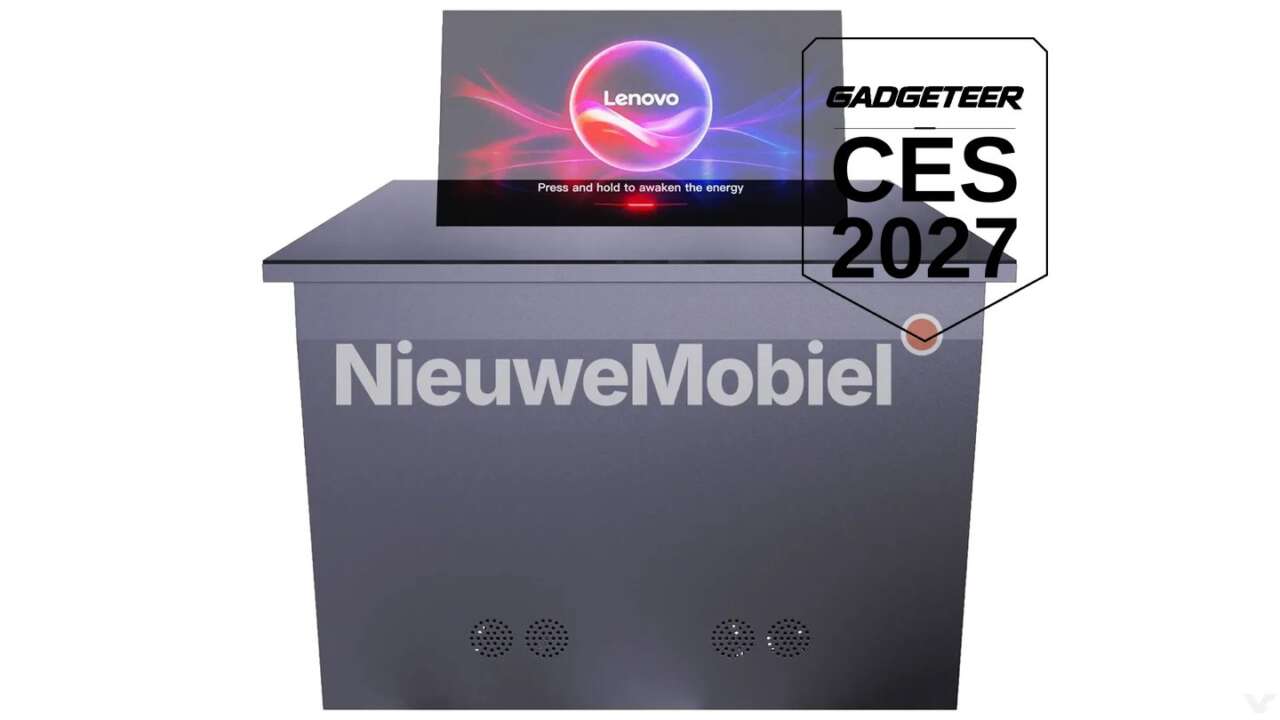
Lenovo’s next CES trick may not be a laptop. Leaked images show a device called Project Hoverview, a gray countertop box that throws a flat screen image into the air above its glass top, where the picture hangs with nothing under it.
Nothing about the device is announced, and every detail below comes from the leak, so treat the numbers as reported rather than confirmed. The plan attached to it points to a public debut at CES 2027 in Las Vegas, where Lenovo holds its Tech World keynote inside the Sphere on January 6. A floating screen is a strange thing to build a business product around, though the strangeness does the selling for it.
What the leaked images show
Three images in the leak show the box from the front and from two angles, switched on and off. Switched on, a rectangular image floats a short distance above the glass, carrying a glowing Lenovo orb and one line of text: “Press and hold to awaken the energy.”
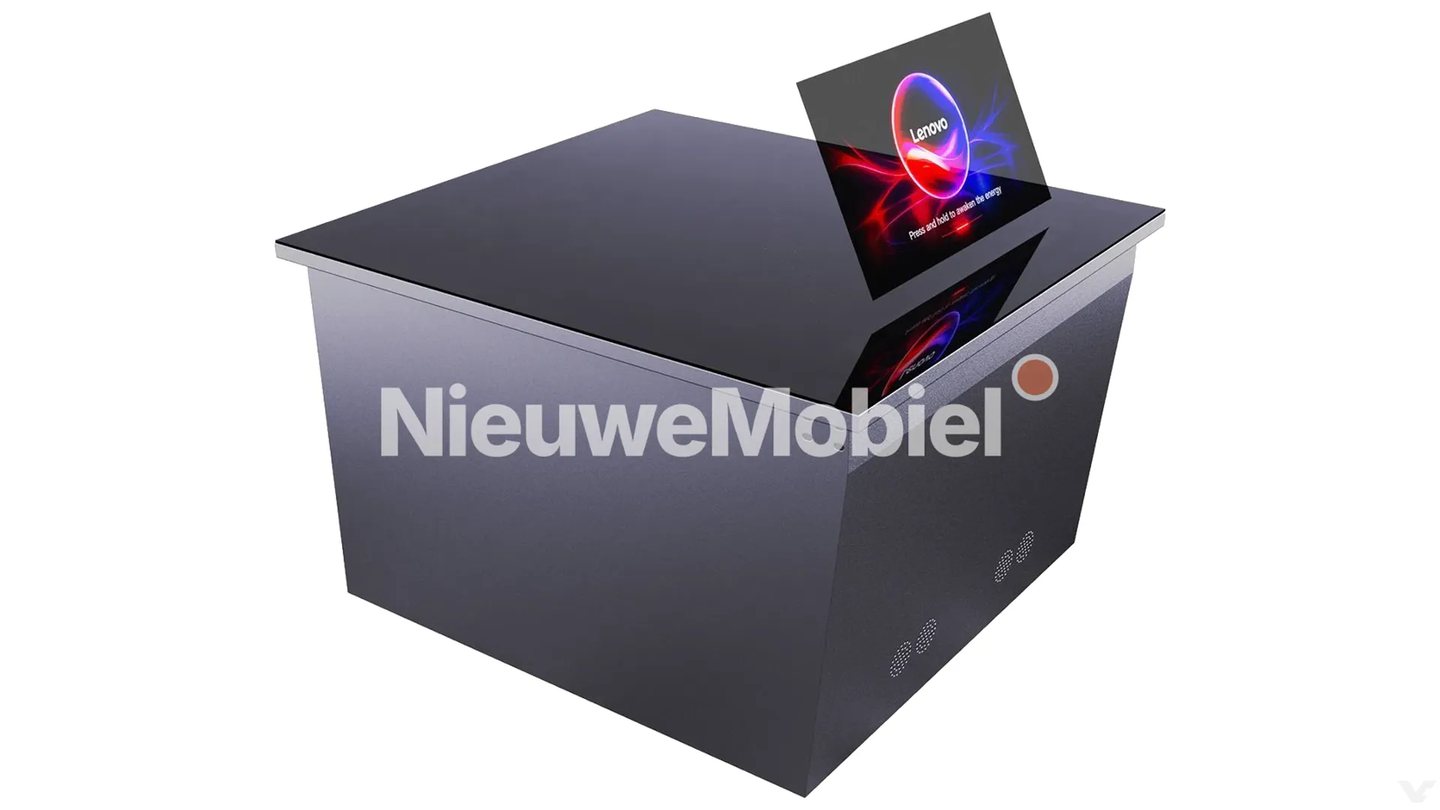
That prompt is the tell. The floating picture itself runs in a wide 9:5 ratio, and it appears to answer a touch, which means sensors watch your finger and register a press against an image that has no surface at all. A checkout screen would ask you to pay. This one asks you to play.
Under the glass, the float is an optics trick with a plain name, the aerial display. A normal screen sits inside the housing, and an optical plate full of microscopic mirrors bends its light so the image snaps into focus again above the box, while sensors track a fingertip moving through empty air. Lenovo hasn’t explained its own method yet, and the leak doesn’t explain it either.
Switched off, the trick disappears. The glass top goes dark and the box becomes a plain counter insert with speaker grilles on its face, which is what a shop wants from a screen that spends most of its day waiting.
From the side angle, the floating image leans back slightly. It throws a reflection across the glass beneath it. Nothing about the picture is physical, and the reflection sells the trick better than the orb itself does.
The size estimate hangs on a power socket
Nobody has published dimensions for it, so the leak measures the device against a part with a known size. A power inlet with a built-in switch sits on the side of the housing, the same socket style a PC power supply uses, and that part usually stands 5 to 6 centimeters tall, a ruler hiding in plain sight.
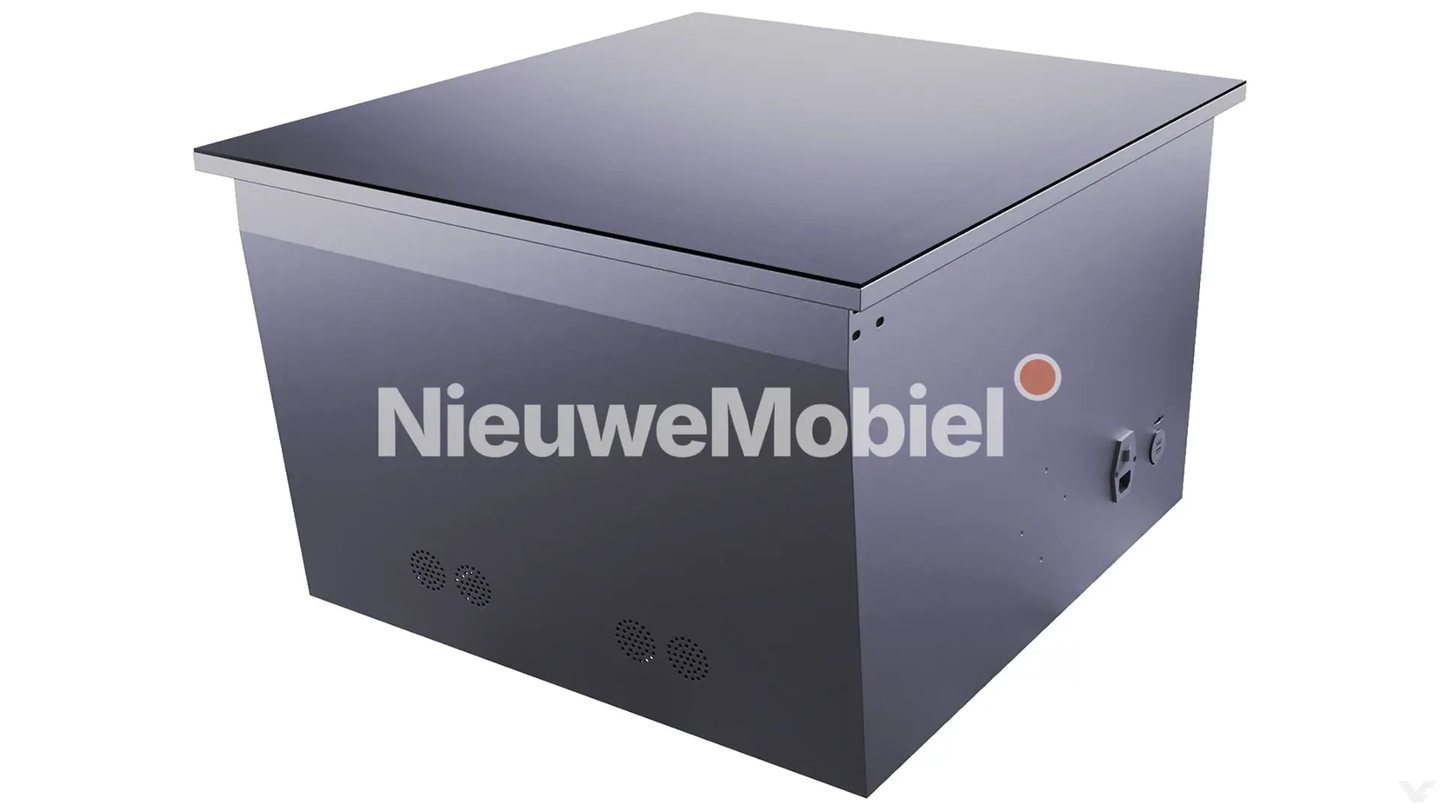
Measured against that socket, the floating image works out near 12 inches across, with a possible range of 10 to 15 inches if the socket runs small or large. The housing below it stands an estimated 26 centimeters tall, roughly 10 inches of hardware that has to fit under the counter. Every centimeter of error in that socket swings the result by more than two inches, which is why the range deserves more trust than the headline number.
The box is built to drop into a table or counter the way a cooktop drops into a kitchen worktop, flush on top with the machinery hidden underneath. That shape points at shops and trade show booths, not living rooms. The pitch writes itself: a screen a crowd can gather around without touching.
For a retailer, the math is attention. A floating product image pulls people up to a counter in a way a flat panel stopped doing years ago, and every interaction happens in midair, without a single fingerprint left on glass.
The tradeoff is built into the physics. A screen nobody touches stays clean, stops a crowd and can’t smear, though the same image washes out in bright light, reads clearly from only a narrow angle and gives your finger nothing to land on.
This hardware class already exists, mostly in Japan, where optical plates from suppliers like Asukanet have run at 7-Eleven checkouts, and ready-made aerial displays from one Chinese maker span 15.6 to 86 inches at roughly $5,000 to $20,000. Hoverview has no price, though at an estimated 12 inches it would sit at the small end of that business market, below every unit in it. Business hardware, priced like it.
The next checkpoint is the keynote itself. If the box appears on that stage, the questions shift from whether it exists to who can order one, what it costs, when it ships and how bright a room it can survive.
Lenovo has confirmed the stage, if not the device itself. Its Tech World keynote fills the Sphere on January 6 at 5 PM Pacific, under a “Human + AI” theme. That’s the first day of a CES that runs January 6 to 9.
Lenovo shows concepts at that keynote every year, and the record cuts both ways, since its rollable-screen laptop reached stores at $3,499 while its transparent laptop from 2024 is still a concept. Some years the concept is the product news, and nothing more ever ships. Whether shops can actually buy Hoverview is the one question the leak can’t answer.