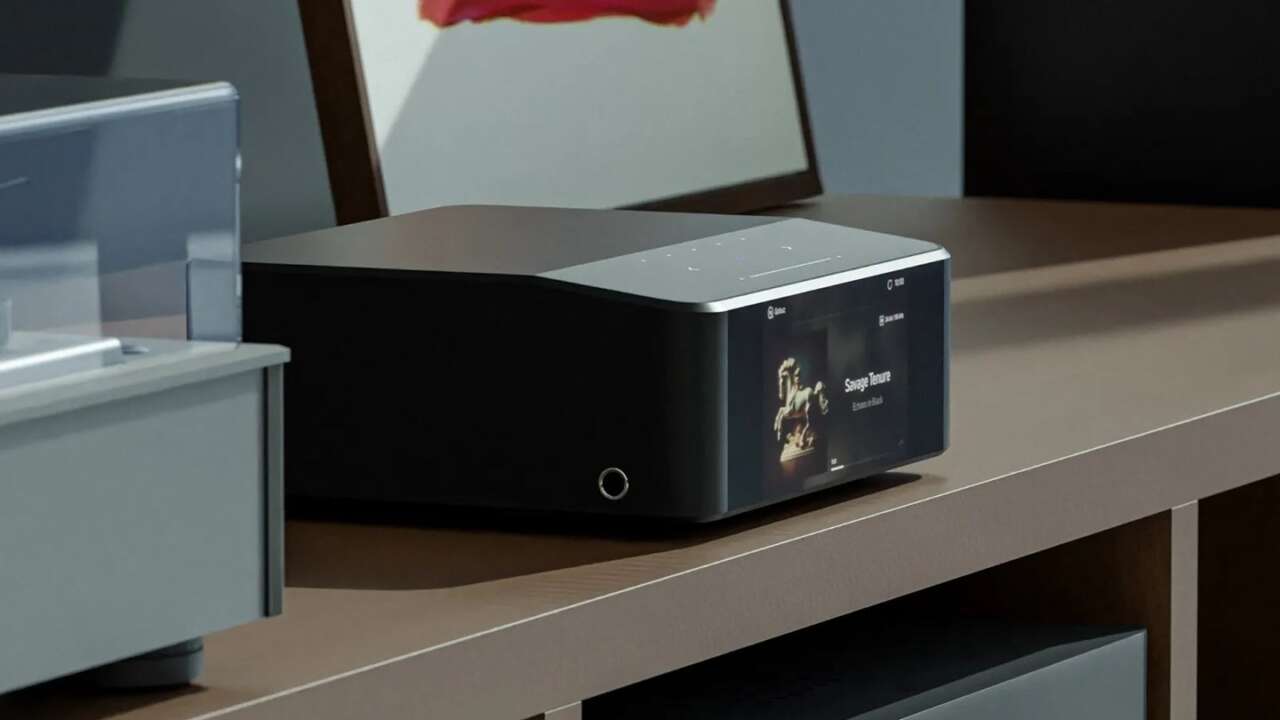
Bluesound’s flagship streamer, the Node Icon, is selling at its holiday price of $1,099 on Amazon, $200 under its $1,299 list. The promotion runs through January 15, 2027, and the hardware at that number is the strongest streamer Bluesound makes.
The Node Icon, model N530, sits at the top of the Node line, above the $749 Node and the Node Nano, and it feeds an amplifier or a set of powered speakers rather than making sound on its own. Bluesound built it for listeners who already own the amp and speakers they like. It’s a front end, not a speaker.
Bluesound Node Icon (N530)
Dual-mono ESS Sabre DACs · 5-inch color display · Balanced XLR outputs
Price: $1,099 (save $200; regular price $1,299, 15% off)
Where to buy: Buy on Amazon
The $1,099 figure is the Bluesound and DALI holiday promotion price, in effect on Amazon since November 1 and running through January 15, 2027, measured against the $1,299 US list price. Fifteen percent isn’t a clearance number, though $200 off a flagship that rarely moves is the realistic shape of a hi-fi discount, and the same price shows at the big audio dealers while the promotion lasts.
Two DAC chips, one per channel
The Icon runs a dual-mono DAC layout with a pair of ESS Sabre ES9039Q2M chips, one handling each channel, and MQA Labs QRONO d2a processing correcting timing errors during conversion. Bluesound rates the conversion stage at a -129dB signal-to-noise ratio on the balanced outputs and 0.0004% total harmonic distortion, numbers past anything a phone or a TV’s analog output can manage. Conversion is the whole job here.
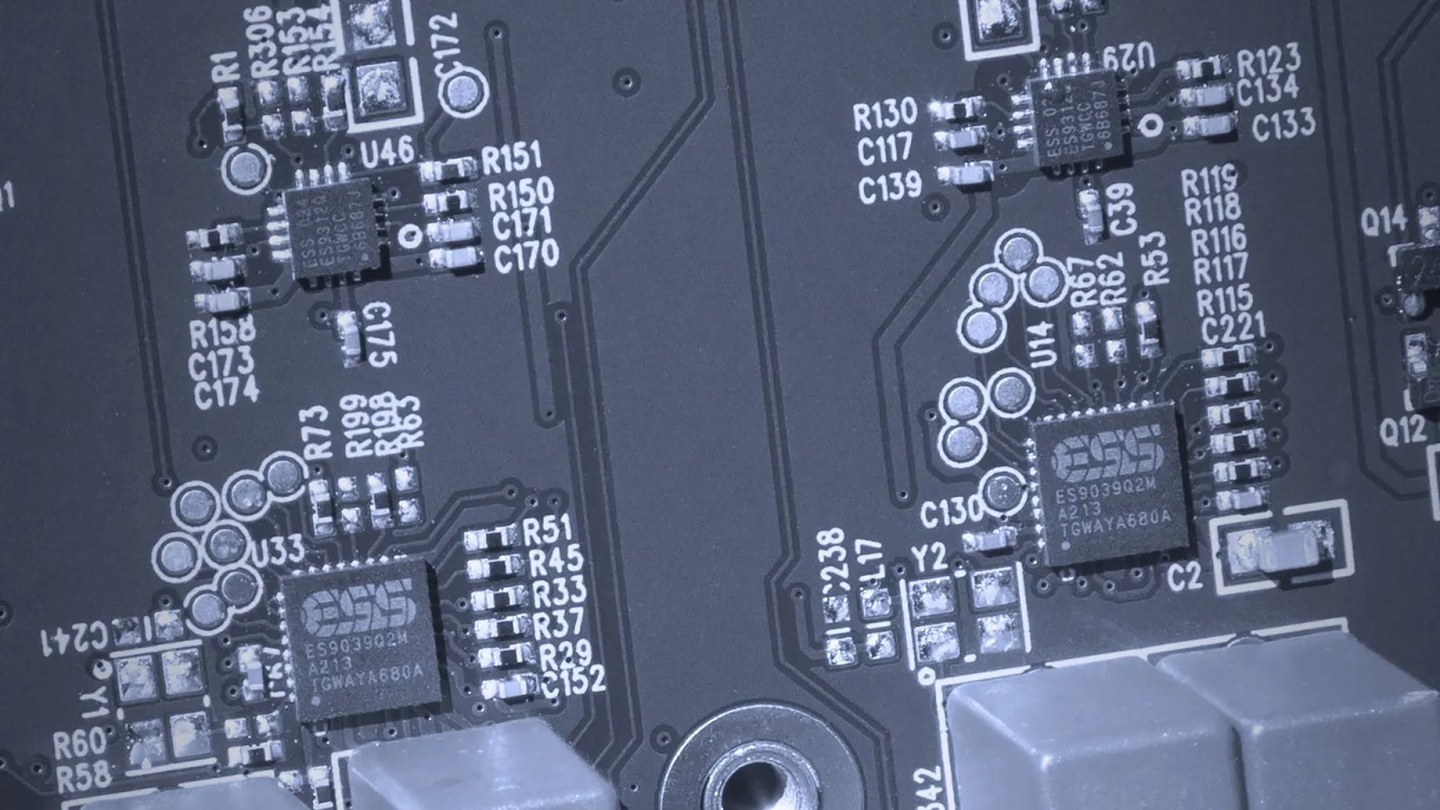
DSD playback runs to DSD256 and hi-res streams play at up to 192 kHz, with FLAC, MQA, WAV, AIFF and ALAC files all on the supported list next to the lossy basics. An ES9826 Sabre ADC handles the analog input side, so a turntable or CD player feeding the Icon gets converted with the same care as the digital paths do.
QRONO d2a is MQA Labs’ timing correction, and it works during conversion to keep the digital-to-analog timing aligned with the original recording. It’s processing you switch on and forget, not a setting you manage from the couch.
The aluminum chassis measures 8.7 by 3.3 by 7.6 inches and weighs 4.92 pounds, finished in black anodized aluminum only, and it sits on a shelf like a component rather than a puck. The box carries 120V and 230V power cords, an Ethernet cable and a stereo RCA cable, so a basic wired setup needs nothing else on day one.
A color screen and a real headphone stage
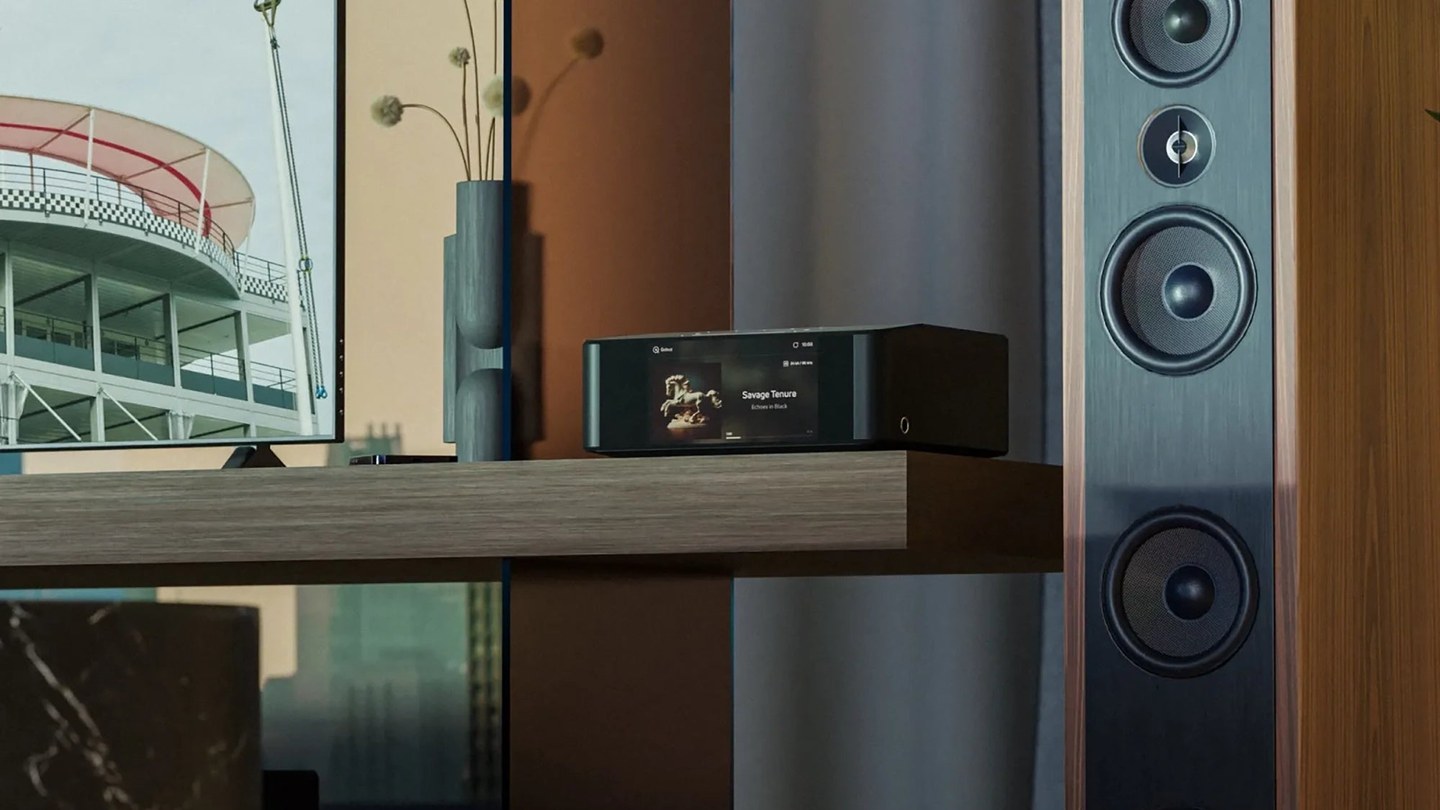
The 5-inch full-color HD display shows album art and track information from across the room, and it’s the only screen in the whole Bluesound streamer line. The panel doesn’t take touch input for browsing, though a backlit touch panel on top of the chassis handles presets, play and pause and a volume slider. Browsing lives in the app.
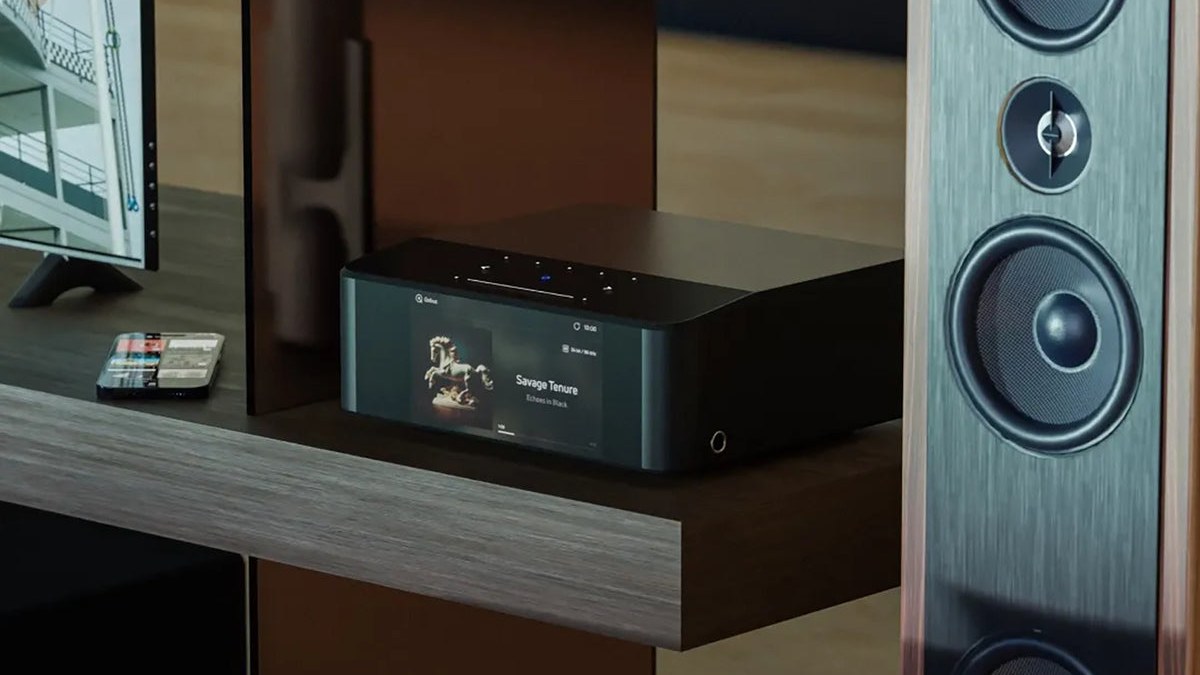
Headphone listening gets a THX AAA amplifier stage, the feed-forward design THX built for ultra-low noise and distortion, with two full-size 1/4-inch jacks on the front panel. Output runs 235mW into 32 ohms, enough drive for demanding full-size headphones, and two jacks mean two listeners can plug in without a splitter.
Connections for an amp, a TV and the rest of the rack
Balanced XLR outputs make the Icon the only Bluesound streamer that feeds a pro-style amplifier or powered monitors the way studio gear connects, with RCA, coaxial, optical and USB audio outputs alongside. Inputs run just as deep, with HDMI eARC for the TV, optical and analog RCA, USB-C for a computer and a USB-A port that reads a drive or runs a local library.
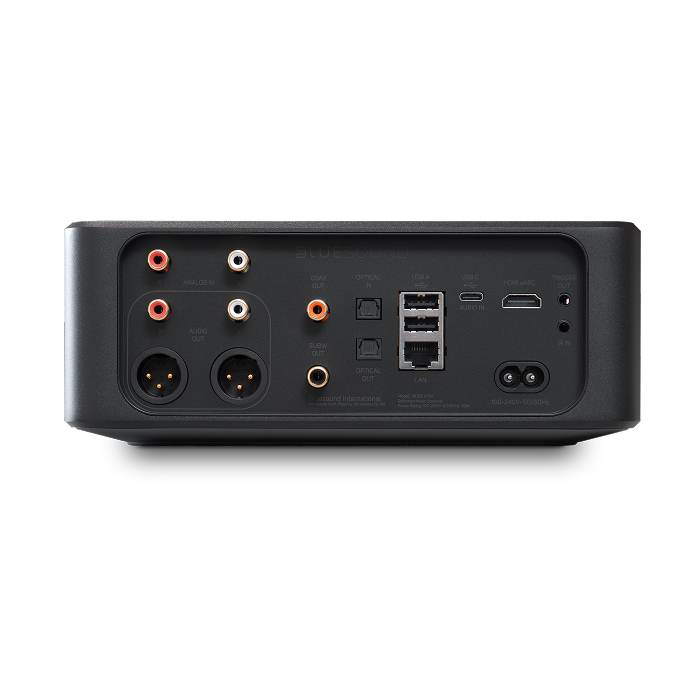
BluOS runs the system, with Spotify Connect, Tidal Connect, Qobuz Connect, AirPlay 2 and Roon Ready built in, plus two-way aptX Adaptive Bluetooth and Alexa voice skills. A Gigabit Ethernet port sits beside dual-band Wi-Fi 5, and the Icon can play in step with other Bluesound speakers around the house or run a different stream in every room. Wired beats wireless here.
A subwoofer output takes a wired RCA feed or a wireless link to a Pulse Sub+, and Dolby Digital support covers the TV side of the rack. The local library mode reads up to 200,000 files from network storage, so a ripped CD collection stays in the same app as the streaming services.
What you give up, and who should buy it
Dirac Live room correction is ready on the Icon, not included, and that’s the tradeoff with this streamer: the license and the calibration microphone kit are separate purchases, and the USB output doesn’t support Dirac at all. Buyers who skip the upgrade still get the full DAC and streaming package, though the room fix is the feature that separates this box from cheaper streamers once it’s switched on. The extras are the product.
Buy the Node Icon at $1,099 on Amazon if you’re adding streaming to an amp and speakers you already love, because nothing else in the line pairs balanced outputs with this DAC stage and a screen. Skip it if the $749 Node covers your system, since the Icon’s extras only pay off on gear that can reveal them. The holiday price holds through January 15, 2027, so there’s time to decide, though the $200 saving disappears when the promotion ends.