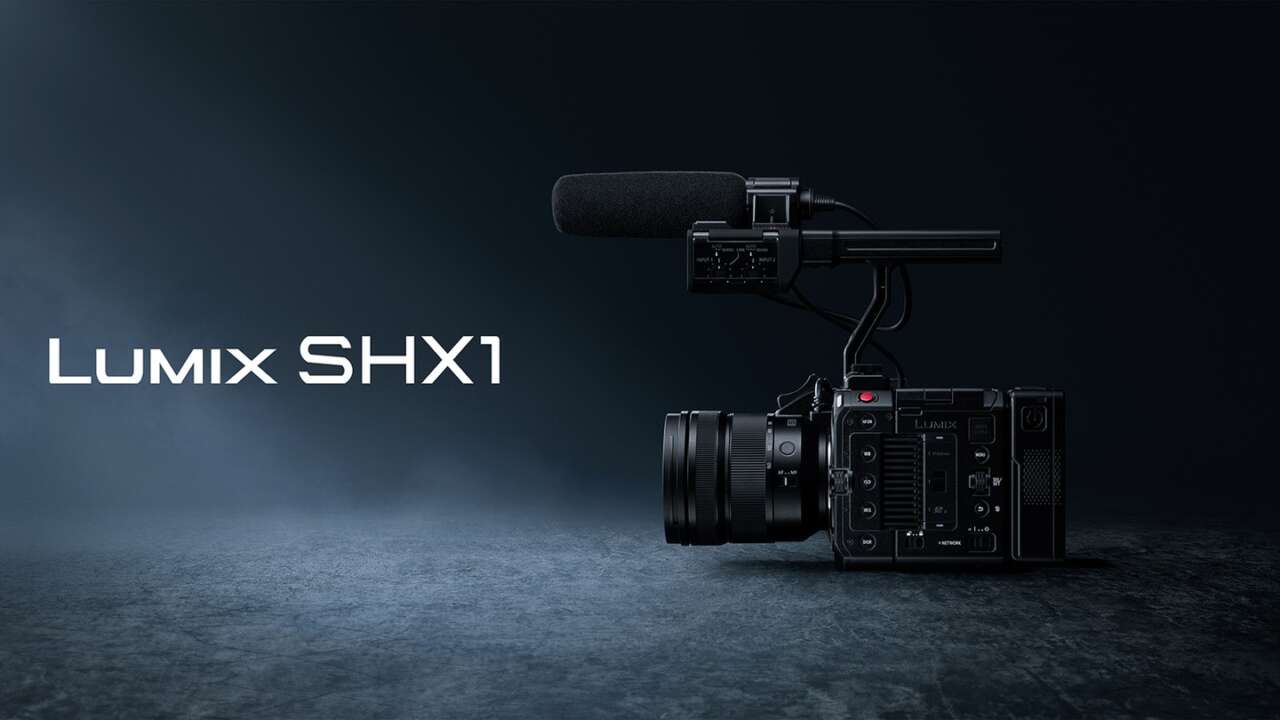
Panasonic built its first LUMIX cinema camera as a box. A 6K full-frame sensor, two RAW formats and 12G-SDI sit inside a body that weighs 2.17 pounds before a lens goes on, and the rigging points cover every face of it.
The SHX1, sold as the AU-SHX1, pulls two Panasonic businesses into one body, VARICAM cinema craft on one side and the S1H hybrid line on the other. The two teams merged in 2024. What’s left records like a cinema body, focuses like a mirrorless one, and takes the L-mount lenses a lot of crews already own.
Panasonic LUMIX S1II (body only)
The full-frame hybrid you can buy today, with a 24.1MP partially stacked CMOS sensor, Open Gate video and ProRes RAW while the SHX1 waits for January
Price: $2,897.99
Where to buy: Buy on Amazon
Panasonic LUMIX SHX1 (AU-SHX1)
6K full-frame box cinema camera with Blackmagic RAW to an external SSD, internal ProRes RAW and ARRI LogC3 built in
Price: $4,699.99
Where to buy: More details at Panasonic
Two RAW formats, and neither one needs a recorder rig
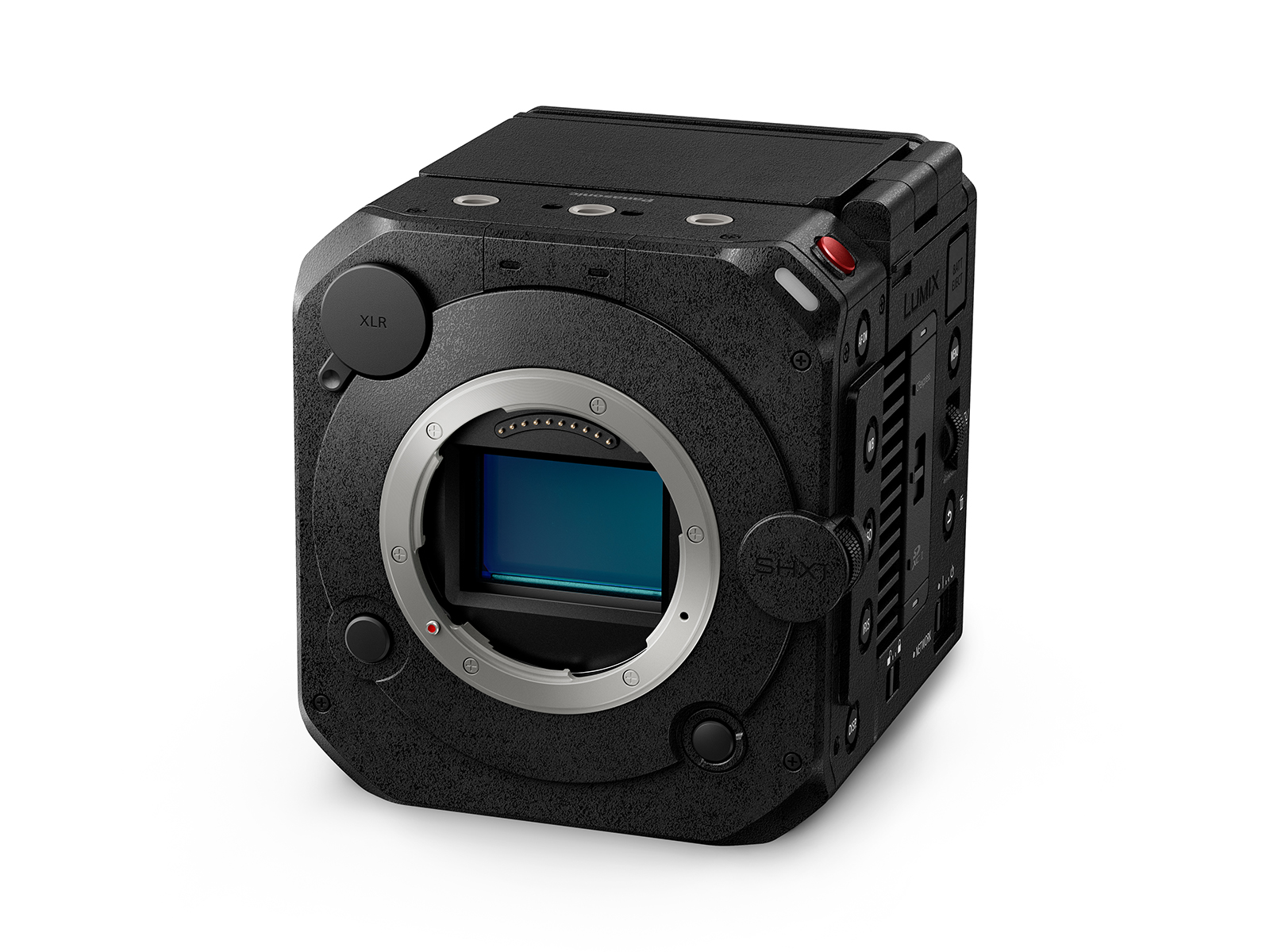
A partially stacked CMOS sensor sits behind the L-mount, rated at 6K and about 24.1 megapixels, with an optical low-pass filter mounted in front of it to calm patterned subjects. Fine detail stays clean. The filter cuts the moiré and false color that clothing and brickwork throw at a video sensor, trading a little bite to get there. Dual Native ISO and Dynamic Range Boost deliver 15 stops of dynamic range in V-Log, so shadows hold together when a scene runs bright at one end and dark at the other.
RAW splits two ways here. Blackmagic RAW records straight to an external USB SSD, a first for a LUMIX camera, and it cuts in DaVinci Resolve with no conversion step in between. Apple ProRes RAW records internally to a CFexpress Type B card instead, keeping RAW on a gimbal rig or a solo documentary shoot.
Open Gate recording makes the best use of the sensor area, at 6K 24p in Blackmagic RAW and at 6K 30p or 5.1K 60p in the standard formats, with a new 3.8K 48p mode in 4:2:2 10-bit joining the list. ARRI LogC3 ships pre-installed next to V-Log.
A box that rigs sideways, vertical and onto a gimbal
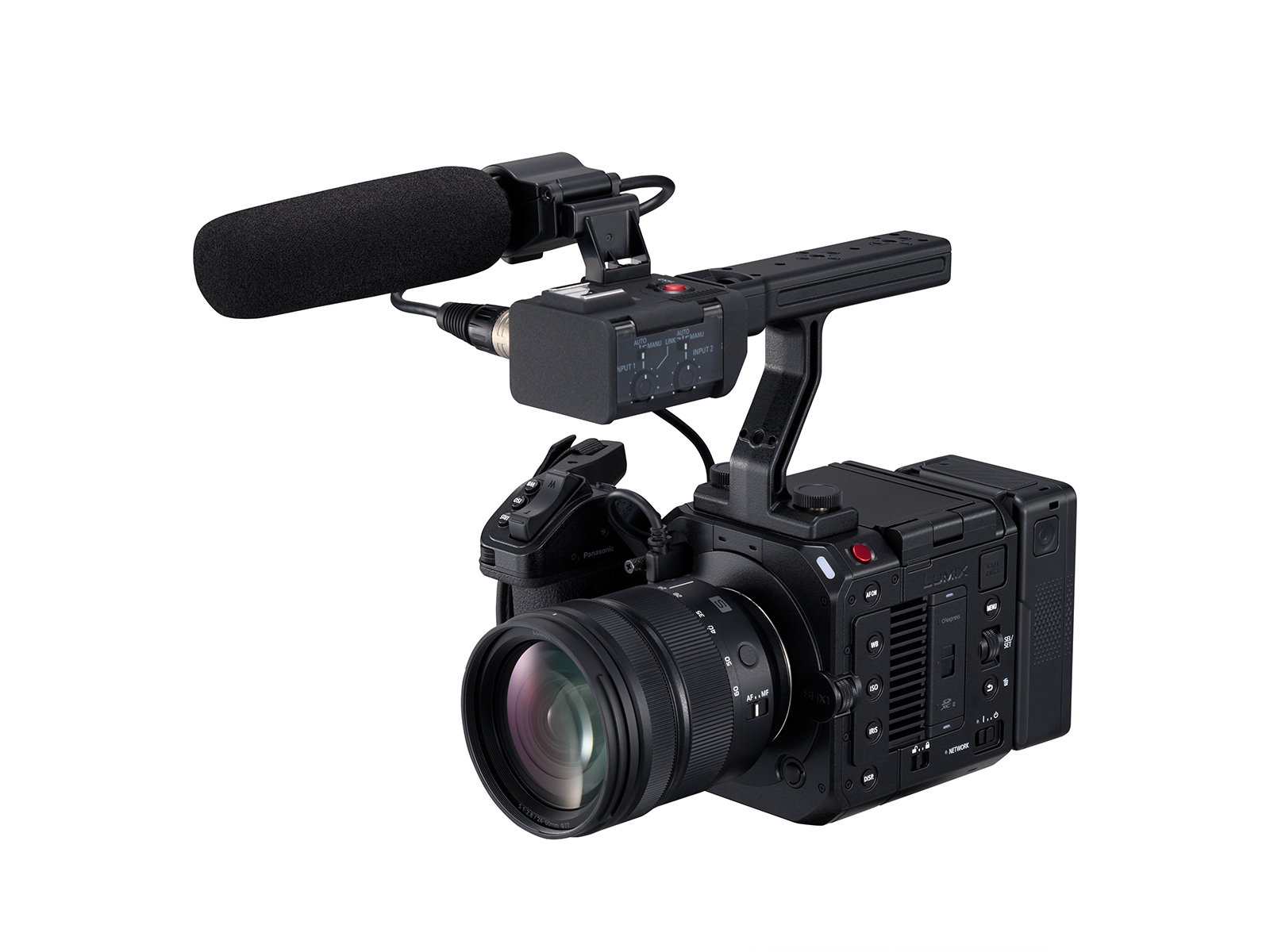
Aluminum and magnesium alloy form the body, which weighs about 984 grams before a lens, a battery or a rig touches it. It starts light on purpose. Add a cage for a full production build, strip it back for a gimbal, or turn it vertical when a delivery needs a tall frame instead of a wide one.
Phase Hybrid autofocus runs 779 points, with AI detection that holds an eye or a face even when a face tilts or slips partly out of view, and tracking stays locked when someone else crosses the frame. Recognition covers people, animals, cars, motorcycles, bicycles, airplanes and trains.
Stabilization is 5-axis in the body itself. Lenses with no stabilizer of their own still shoot steady handheld, and Dual I.S. 2 pairs body and lens correction together at telephoto lengths for the longest glass. A cropless electronic mode handles wide lenses. On top sits a tilt free-angle monitor, a 3.0-inch touch panel with about 1.84 million dots that swings out to the side, the first top-mounted monitor of its kind on a LUMIX body.
Heat gets a real answer here, not a warning label: a large cooling fan and a thermal path through the metal body give unlimited recording up to 4K 120p inside the rated temperature range. Micro V-mount batteries power the body and its accessories together, a first for the line, and they keep the whole rig compact.
The ports and audio belong on a bigger camera
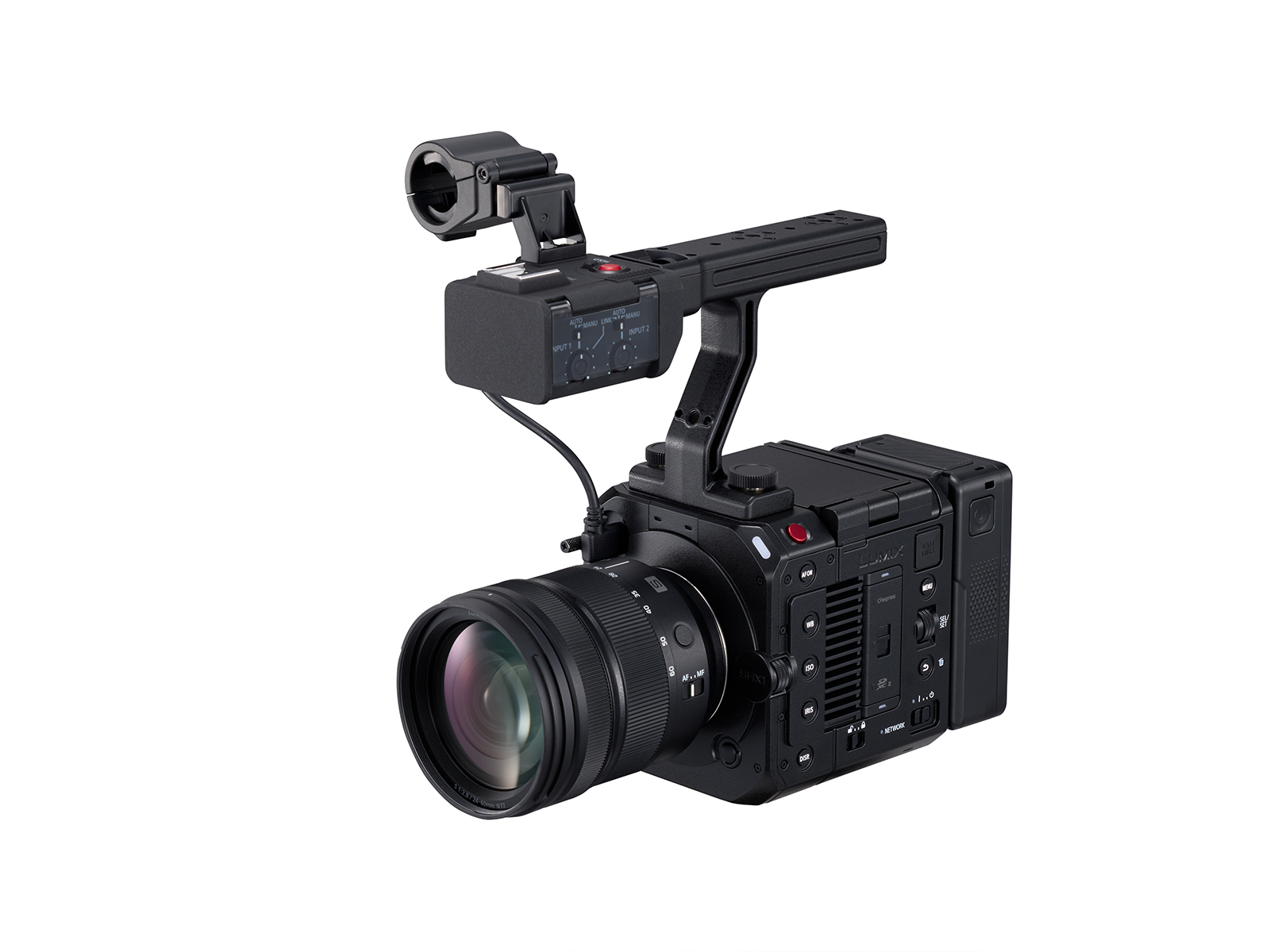
Output runs through 12G-SDI at up to 4K 60p and a full-size HDMI Type A port, both feeding low-latency signals for follow focus work. Timecode goes in and out through a BNC terminal, and Bluetooth sync covers crews that would rather pair than cable. Two slots take CFexpress Type B and SD cards behind a locking door, and an external SSD can carry a recording on its own.
Panasonic LUMIX SHX1 kit (AU-SHX1 with AU-XHU1 and AU-GRP1)
Body bundled with the XLR Handle Unit and the Control Grip for four-channel 32-bit float audio and right-hand rig control
Price: $5,499.99
Where to buy: More details at Panasonic
Audio records in 32-bit float through the 3.5mm microphone input, straight inside the camera. Float recording forgives a hot level that would clip a conventional track, the kind of insurance a one-person crew uses, and two locking USB Type-C terminals split the work between an SSD or phone connection and USB Power Delivery. Levels stop being a worry.
Exposure tools read like a cinema checklist. Waveform, vectorscope, spot luminance, zebra, histogram and false color are all built in. View Assist pushes a monitoring LUT through the HDMI output, so the screen a director watches already shows the grade’s starting point. Live streaming runs over Wi-Fi or through a phone on USB tethering, which turns a phone in a pocket into the uplink when a location has no network worth trusting.
Handles, a grip and a live production unit are already lined up
Four-channel audio in 32-bit float comes from the XLR Handle Unit AU-XHU1, working with the body’s own 3.5mm input, alongside high-resolution recording at 96kHz and 24-bit. The XLR section and the top handle come apart. A gimbal build can carry the audio unit alone and leave the handle behind, while a cold shoe and screw holes on top take monitors and microphones.
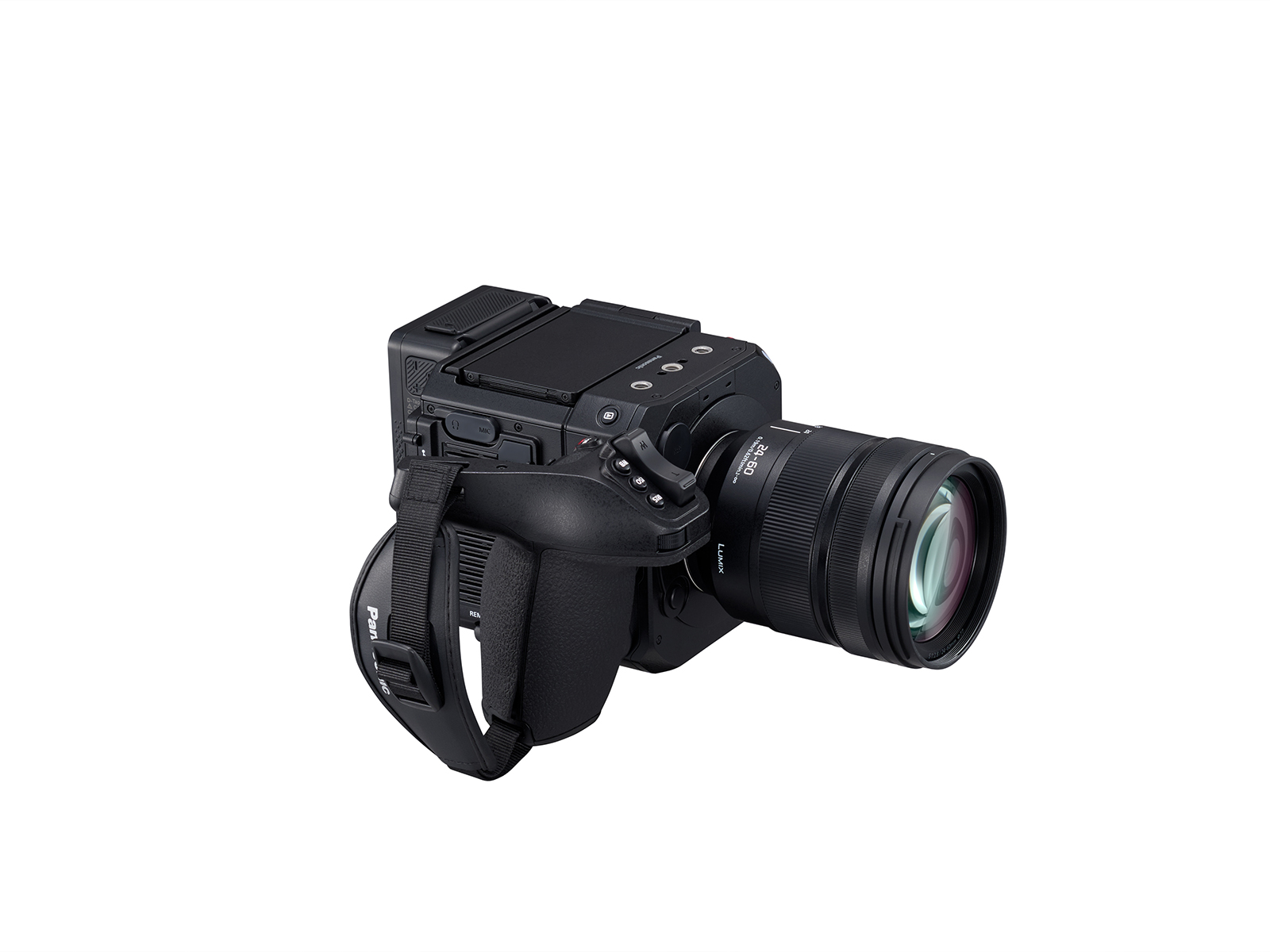
The Control Grip AU-GRP1 brings right-hand control back, with triple buttons for white balance, ISO and iris, a joystick and a function button under the thumb, and a zoom rocker that runs power zoom lenses or Crop Zoom instead. An ARRI-standard rosette mount locks the grip at the angle a shoulder rig needs.
A Live Production Unit, the AU-LPU1, follows in the first half of 2027. Genlock, a LAN terminal on PoE++ power and a shared IP control protocol turn the SHX1 into a cinema-quality PTZ camera inside a multi-camera system that used to need separate boxes. Firmware in the same window adds grip control of a Tilta variable ND filter. Direct focus and iris control on L-mount lenses from a Tilta hand wheel joins it, with no external lens motors in the chain.
January 2027 brings the body at $4,699.99, with the kit of both accessories at $5,499.99. Buy the body if your work already lives on L-mount glass and your rigs have waited for a sensor this size in a box this small. Skip the kit if audio already runs through a separate recorder, since the $800 step buys the handle and grip while the body records 32-bit float alone.