Vibration plates ask one thing of you: stand there. Kiwii Move asks you to play. It’s a whole-body vibration board with four pressure sensors in the deck, and those sensors read how your weight shifts in real time, so leaning, stepping and squatting become the inputs for games running on the TV in front of you.
The company behind it, Kiwii AI, was founded by MIT engineers, and its pitch is ten minutes a day. Twelve games come with the board, nine movement tests score how you move, and reservations for the first production run are open now ahead of a December ship date. Patents are pending.
Kiwii Move
First 500 boards at the early-access price · Ships December · 30-day returns
Price: $269 $369 (save $100, 27% off)
Where to buy: More details at Kiwii
What’s being sold here isn’t vibration. It’s the sensing layer on top of it, and the software wrapped around that.
Your body is the controller
There’s no controller to hold and nothing to strap on. You stand on the board, shift your weight, and the game reads the shift. Lean left to steer. Step to hit a target the moment it appears. Squat when the game tells you to squat.
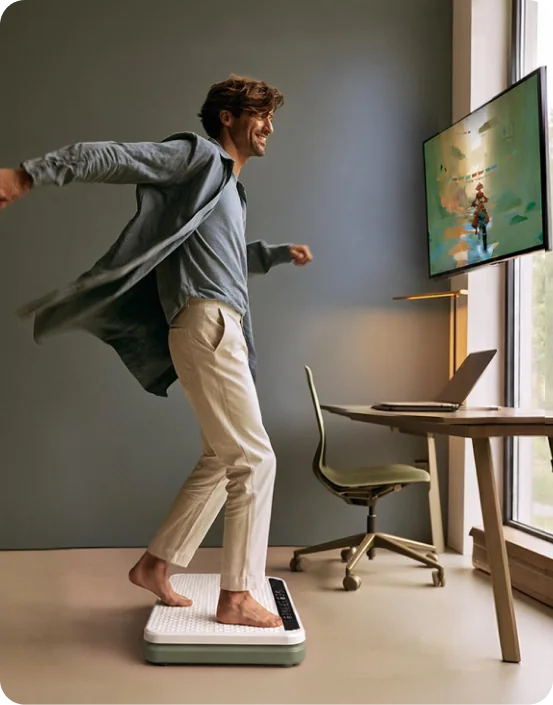
The twelve games sort into four buckets: cardio, balance, strength and recovery. Firestep Party, Hoop Whirl, Moss Tilt, Dune Carve, Wind Sail, Snowball Rush. Neon Luge, Hearth Pop, Crag Motor, Quake Hold, Slow Chi, Lantern Swing.
Chase, dodge, hold, steer. The input never changes, your weight on the deck, so the variety lives in what each game asks that weight to do. Slow Chi sits at the recovery end of the set, built to wind down rather than work up a sweat.
It’s motion control, but the input is your center of gravity rather than a wand in your hand, and that changes what a game can ask for. A step is a step. A wobble is data.
Nine tests, four numbers
Games get people onto the board. The tests are Kiwii’s plan for keeping them there. Nine movement tests, each one scored: Shift & Hold asks you to find your center and hold the zone for three seconds, Stand on One gives you thirty seconds on a single foot, and Quick Step times how fast your feet follow your eyes.
Stand Still scores thirty seconds of doing nothing while the screen tries to distract you, and Left & Right exposes the split between your two sides. Most people favor one leg without knowing it, front to back as well as side to side. The test puts a number on the lean.
Remember the Steps folds a memory check into a squat. Hands & Feet asks your legs to stay centered while your hands match a tilt, Catch the Drop has you leaning away from blocks, some of them hidden in fog, and Pick the Side turns a number check into a lean-or-freeze call. None of it needs a trainer watching. The board watches, and the app remembers.
Every test feeds four movement insights: Balance, Control, Agility and Mobility. The app tracks each one over time, day one against day thirty, so the score you’re chasing next week is your own.
The four scores also give the games somewhere to go: a rematch against your own balance from last week. A plain vibration plate can’t copy that.
The board itself
Under the textured top sits the vibration hardware, tuned low and gentle rather than aggressive, with more than ninety intensity settings across three preset modes. The four pressure sensors sit in the deck itself, tracking your balance continuously while the board shakes, and a display strip runs across the front edge. The deck’s readouts stay legible mid-game.
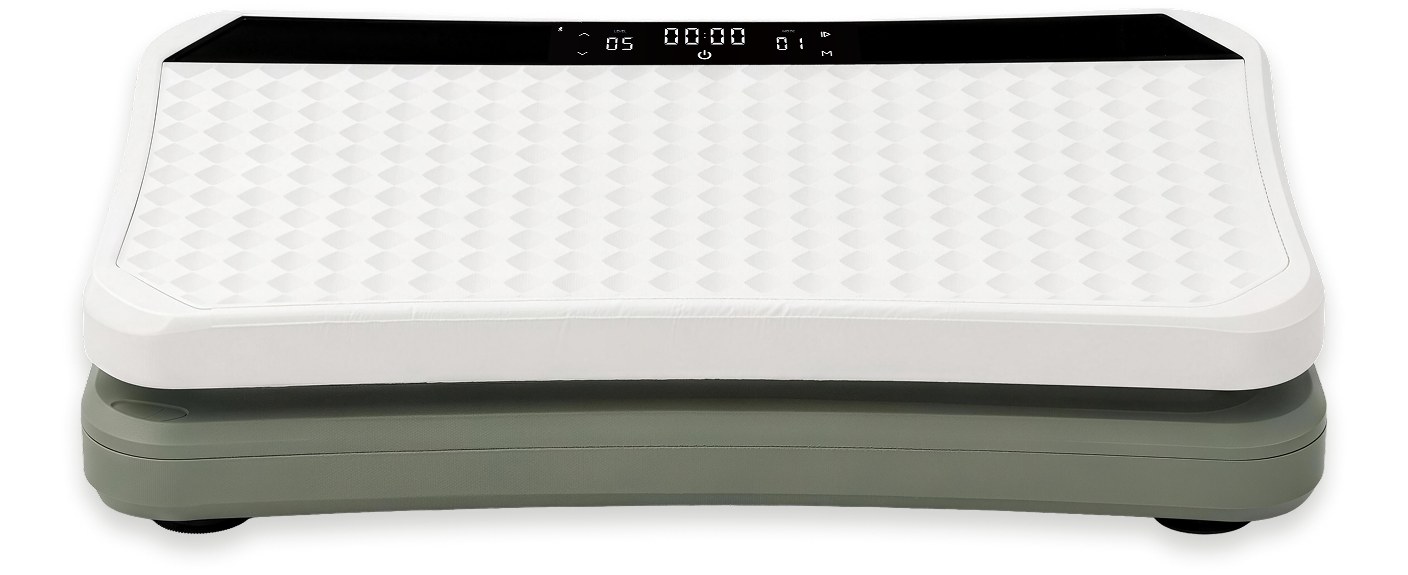
It plugs into the wall at 120 volts, with no battery to charge, and the Wi-Fi and Bluetooth radios talk to the Kiwii app on iOS and Android. The standing surface is non-slip TPR, the step up onto the deck is 5.5 inches, and the footprint runs 24.4 by 15.4 inches, close to the plate this would replace in the corner of the room. The deck is rated for users up to 330 pounds.
Kiwii labels its own spec sheet preliminary, final production details still subject to engineering verification. Read the numbers in that light.
| Dimensions | 24.4 × 15.4 × 5.5 in |
|---|---|
| Step-up height | 5.5 in |
| Max user weight | 330 lb |
| Sensors | 4 pressure sensors, real-time balance tracking |
| Vibration | Low-frequency; 90+ intensity settings, 3 preset modes |
| Connectivity | Wi-Fi, Bluetooth |
| App | Kiwii app for iOS and Android |
| Power | 120V / 60Hz plug-in, no battery |
| Surface | Non-slip TPR top |
| Games | 12 included |
| Movement tests | 9, each scored |
Who Kiwii is aiming at
The audience list runs wider than the gym crowd. Kiwii pitches the board at women holding onto strength through menopause, and at people losing weight who don’t want to lose muscle along the way, a group its own intake quiz extends to people on GLP-1 medication.
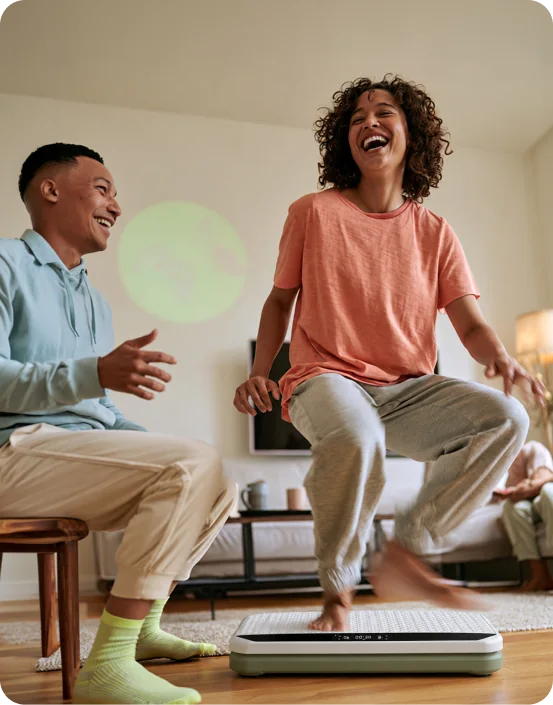
Desk workers get a ten-minute reset. Balance and longevity get their own lane, recovery work stays off the joints, and a play-together streak runs through the whole pitch. Underneath it all sits the same target: someone who keeps meaning to train and keeps not starting.
The reservation takes an email address and nothing else. No payment now, boards ship in December, thirty days to send one back.
Kiwii Move
Early-access run, first 500 boards · Ships December · 30-day returns · Reservation is free, no payment taken now and no card is required
Price: $269 $369 (save $100, 27% off)
Where to buy: More details at Kiwii
That bet is easy to state. A vibration plate only works if you stand on it, and people stand on things that entertain them, so if Move’s sensing measures up to its test list, home balance training gets a scoreboard it has never had. If it plays like a novelty, it’s a $269 novelty. Nobody outside Kiwii has tested one yet, which makes the free reservation the right size of commitment for now, this side of December.