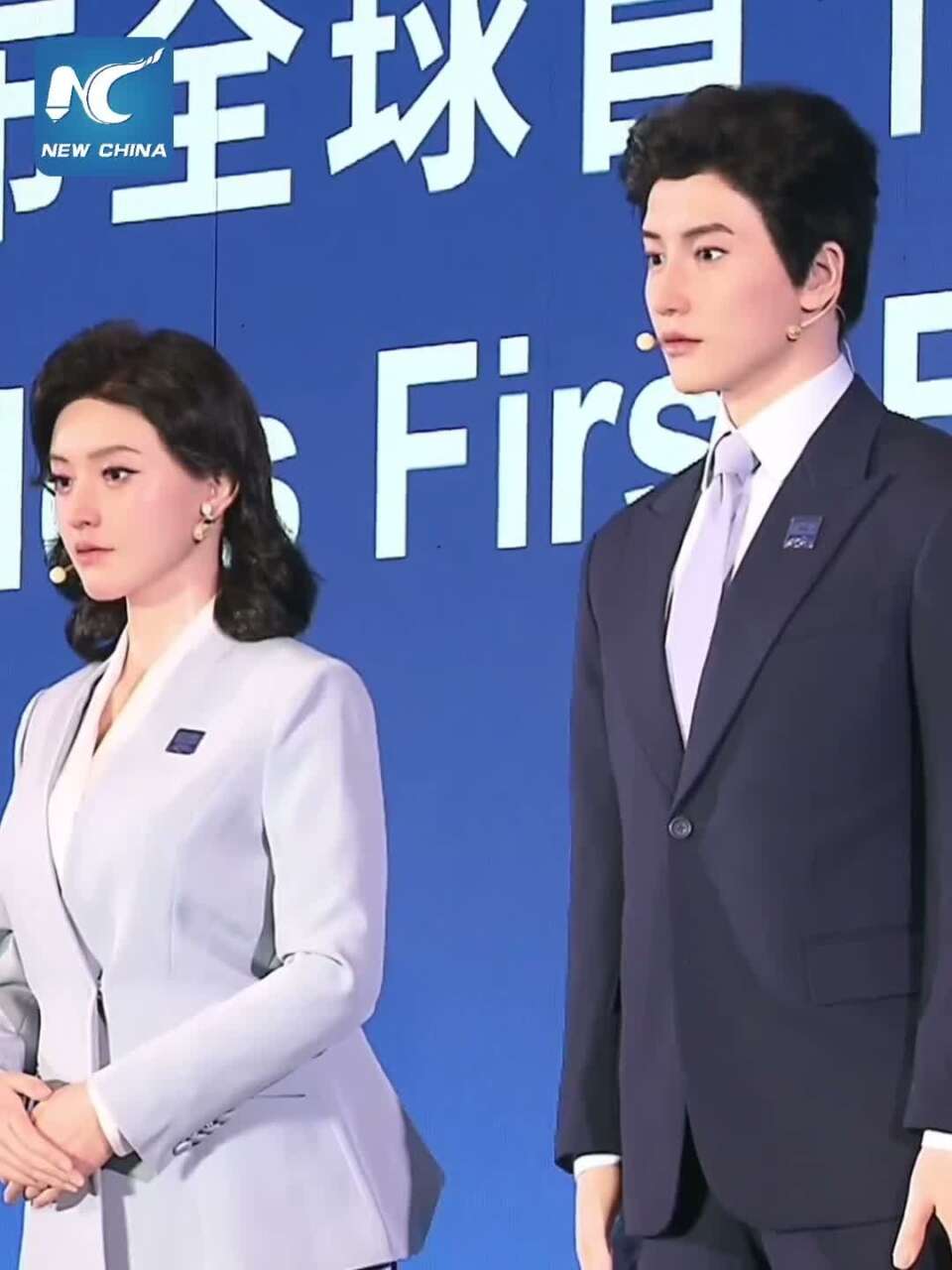
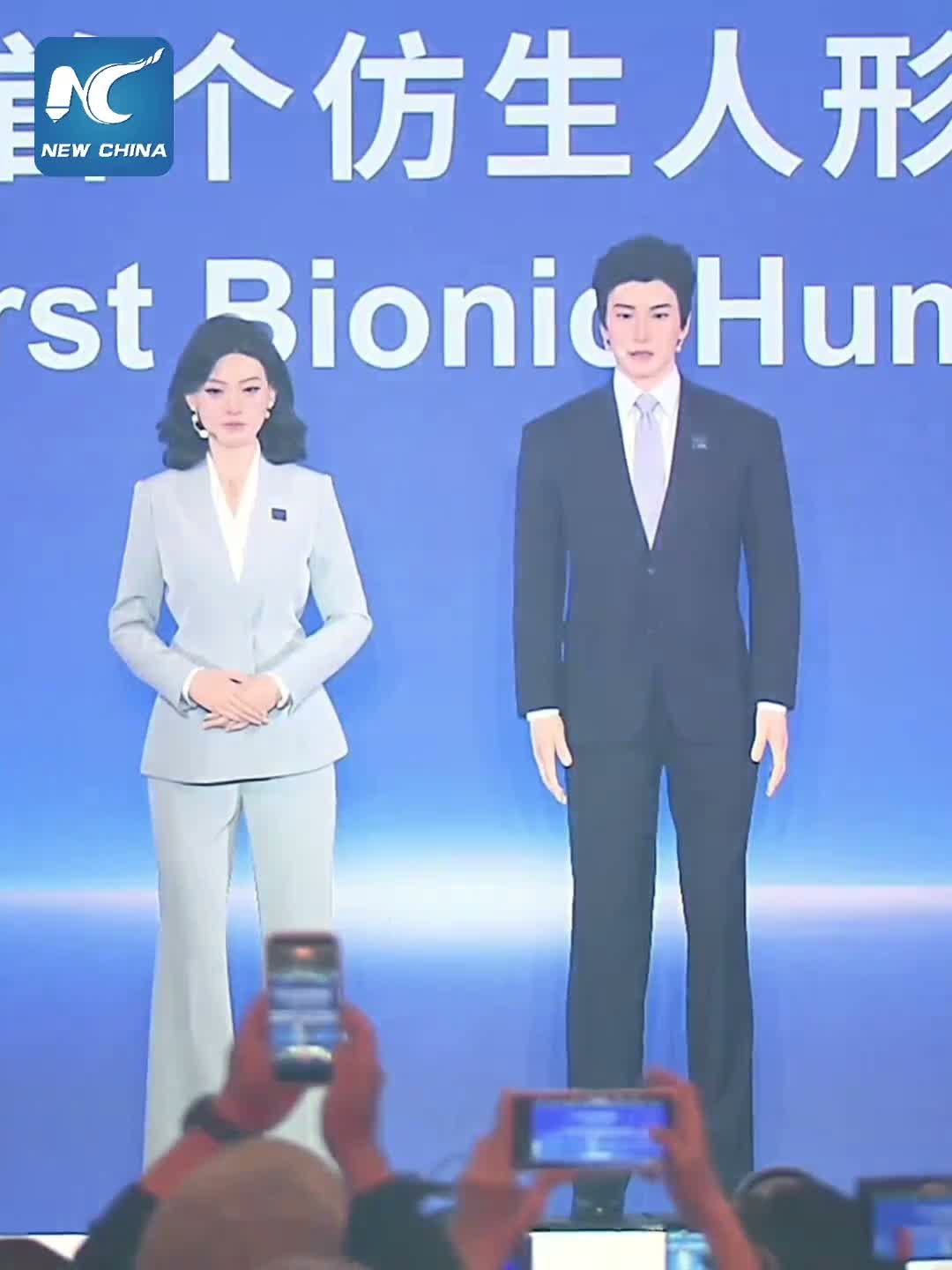
Two new anchors took the stage at the 7th World Media Summit in Beijing on November 5, and neither one is human. Xinyan and Xinyu stand at full human scale in tailored suits, and they greet the room the way hosts do. They’re bionic humanoid robots, built by UBTECH Robotics for the Xinhua News Agency.
Xinhua calls them the world’s first bionic humanoid robot news anchors.
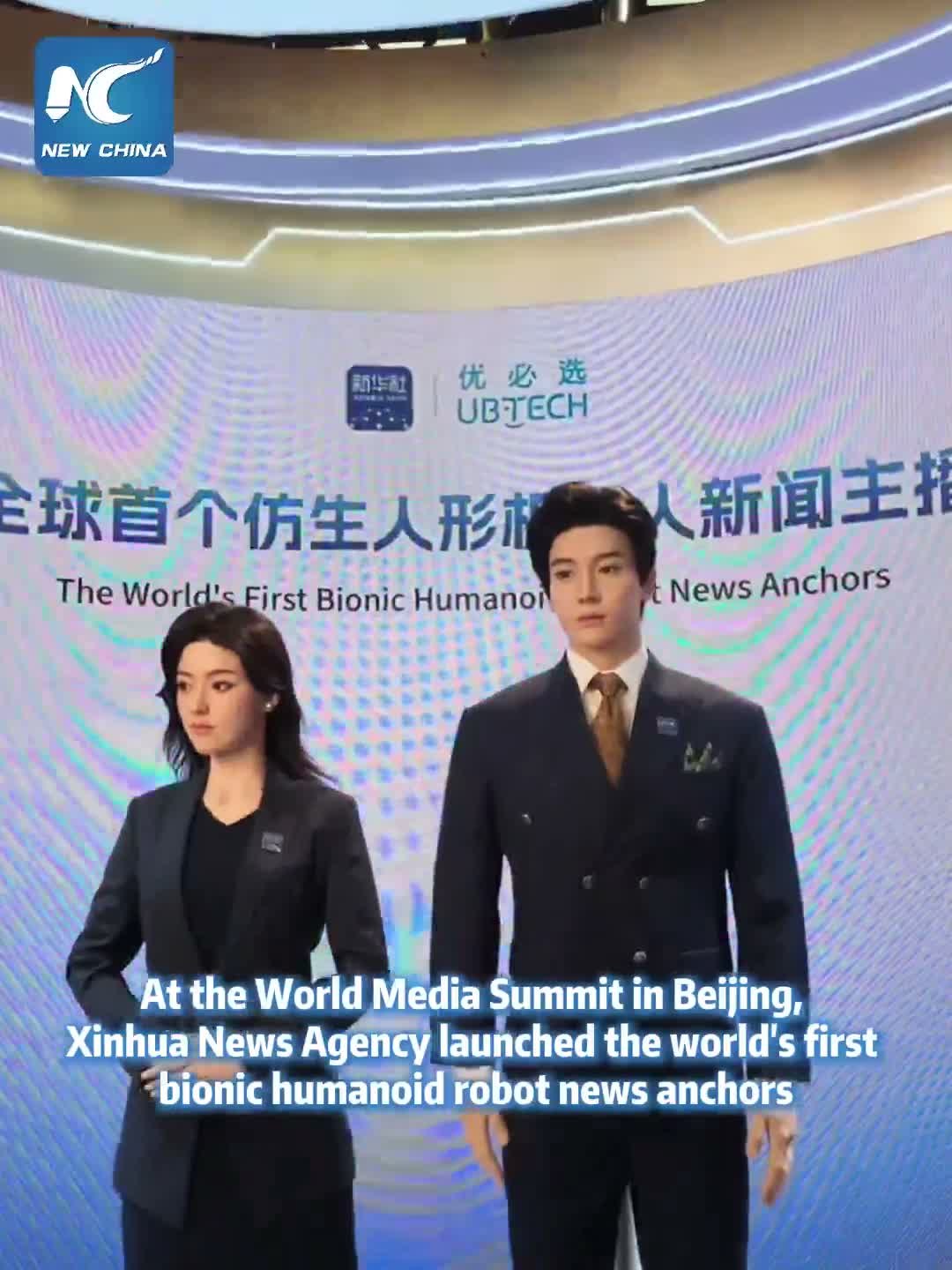
Xinyan got the first word. She greeted the summit audience live from the stage, in front of a backdrop carrying the Xinhua and UBTECH names side by side, with the claim printed behind her in Chinese and English. Her partner stood next to her in a double-breasted suit, headset mic on, waiting his turn. Nobody in the room reached for a program to check who they were. The suits, the hair, and the stillness did that work first.
Xinhua and UBTECH bionic humanoid robot anchors
Life-sized 1:1 robot presenters · Bionic skin, expressive faces, real-time conversation
Price: Not for sale
Where to buy: More details at UBTECH
Built at full human scale
UBTECH built the hardware, and the company didn’t shrink a thing. Both anchors stand at 1:1 human scale, full height, with bionic skin over the frame.
That’s a harder assignment than the humanoid work we usually cover. A warehouse robot gets judged on grip strength, on how fast it swaps a battery, on whether it drops the box. These two get judged on whether a hall full of media executives forgets, for a second at a time, that the presenters are machines. The bar is a close-up, held for minutes, with nowhere for a bad seam or a dead eye to hide.
The tailoring carries part of the load.
In Xinhua’s footage, the pair appear in two sets of it: dark suits for the unveiling shot, then a pale suit for her and a navy one for him when they greet the room. Each anchor wears a small Xinhua badge on the lapel, the same furniture a human presenter wears. It looks like wardrobe, not costume.
A film director handled their look
Zhang Yimou led the anchors’ image design as chief image designer. He’s the director behind Hero and House of Flying Daggers, a filmmaker who builds whole scenes out of color and posture, and his fingerprints are on how these robots present. The hair. The cut of the jackets. The way a face has to read from the back of a hall and still hold up when the camera pushes in.
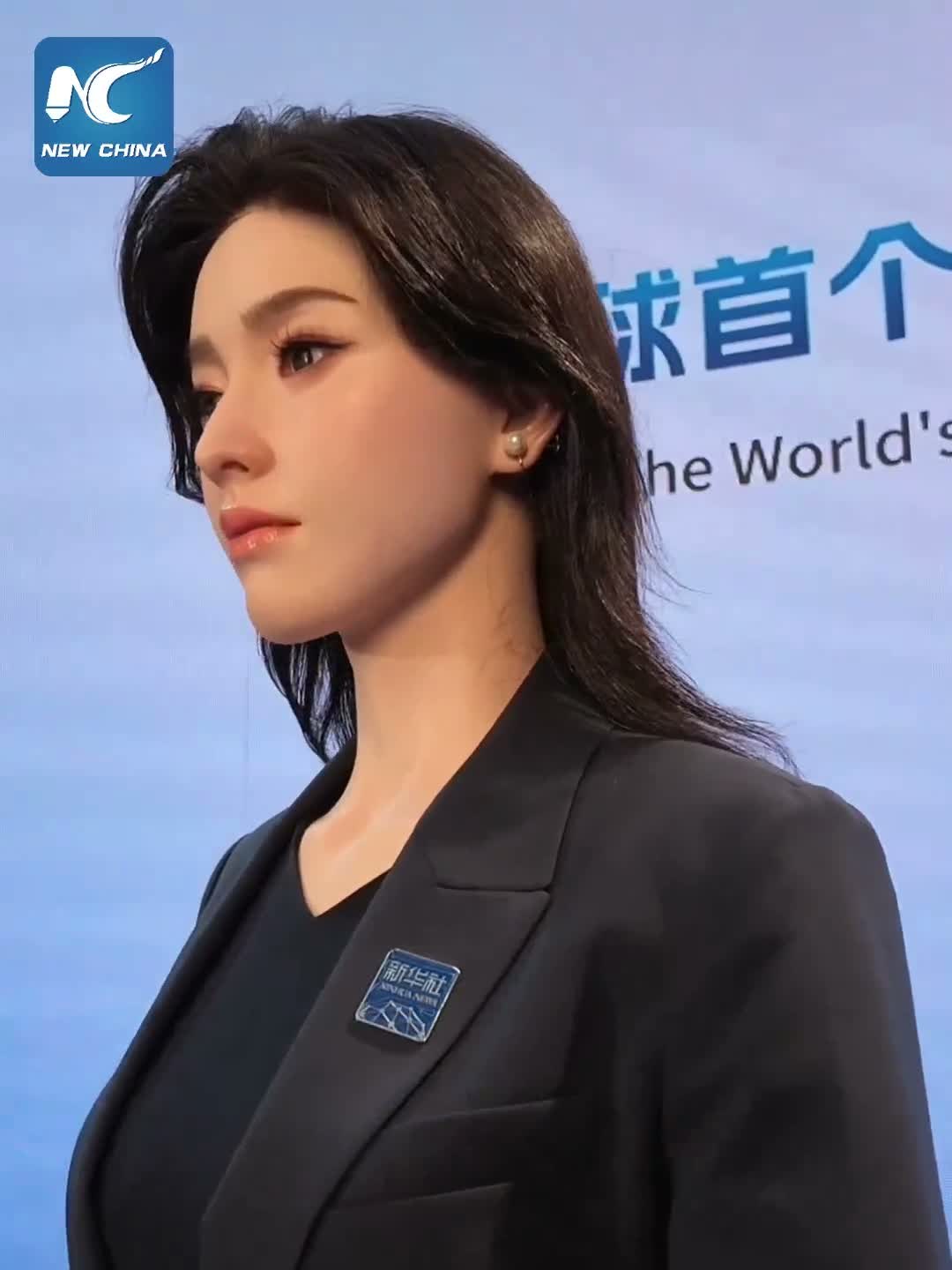
Under the styling sits UBTECH’s emotional model. It drives the eye movement and the facial expressions, and it sets the timing between them, so a blink or a glance lands when a human’s would. The gestures run on the same system. So does the body language, the small shifts of weight and attention that tell a room the person speaking is listening too.
Close up, the skin does most of the convincing. Lip texture, the soft shadow under the jaw, a pearl earring catching the stage light. It holds together at camera distance, and camera distance is where these two will spend their working lives.
Their scripts come through a system called Xinhua Yudian
The anchors aren’t freelancing. They’re connected to Xinhua Yudian, an AI system that feeds them news drawn from Xinhua’s own corpus. Every item it serves has been reviewed before it reaches them, and every item can be traced back to its source inside the agency.
Human editors keep editorial control of all of it.
The robots present and converse, but the newsroom’s chain of checking stays intact, and the anchors work from copy that already passed through it. That structure is the pitch as much as the robots are. A state news agency putting a robot on camera is one story. The same agency wiring the robot into a reviewed, traceable feed, with editors holding the final call, is a more careful one.
They present the news, they greet people, and they hold conversations with an audience in real time. They also work in several languages. Xinhua publishes and broadcasts across languages every day, and a presenter who can switch without a studio changeover fits the way the agency already runs.
No regular broadcast has been announced
Xinhua says the anchors will be used widely across its news production. It hasn’t named a date, a channel, or a program. There’s no first broadcast to circle yet, just a working pair of presenters and a system behind them.
The agency frames the pair as help for its journalists, not replacements for them. The anchors take the presenting load, the greetings, the multilingual reads, the hours of standing in front of a backdrop. The reporting, the checking, and the decisions about what runs and what doesn’t stay with people.
Xinhua and UBTECH bionic humanoid robot anchors
Life-sized 1:1 robot presenters · Bionic skin, expressive faces, real-time conversation
Price: Not for sale
Where to buy: More details at UBTECH
Chinese humanoids keep collecting new job titles this fall. Last week we covered Chinese humanoid robots hunting for work in South Korea, mostly in factories and warehouses, where the work is lifting and sorting and nobody watches their faces. Two of them now have a newsroom on the résumé. It’s the hardest posting yet, because the whole performance has to survive a close-up, a live audience, and a question nobody scripted.