Ring built its name on cameras that never move. A doorbell watches the porch, a stick-up cam watches the yard, and both wait for something to walk into frame. Ring Robotics ends the waiting. One of the new machines flies to the problem. The other drives to it.
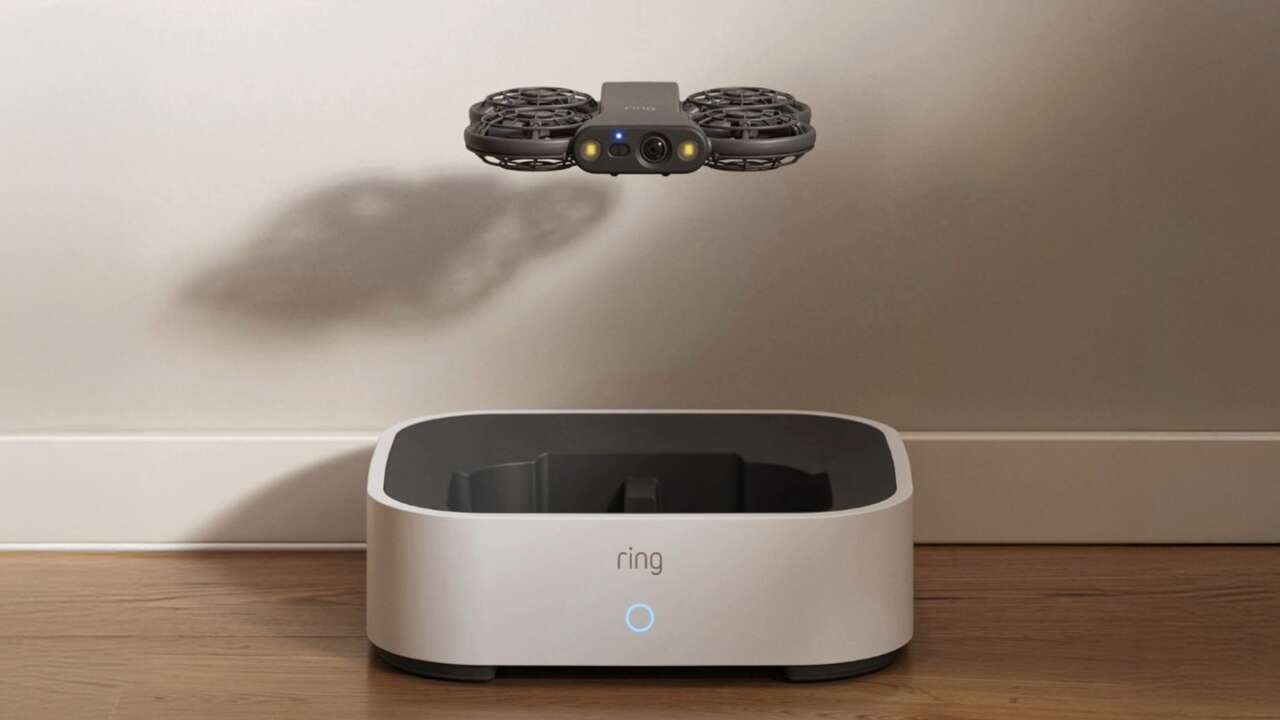
The two launch products split the work by building. Ring Drone Cam is a flying indoor security camera for homes, small enough to live in a dock on the floor. Ring Rover Cam is a ground robot for businesses, built to patrol a sales floor or a warehouse aisle after everyone has gone home. Both run on the same navigation system, and both answer to the Ring app you already use for doorbells.
A camera that flies to the alarm
Drone Cam spends its life in its charging dock, powered down with its camera off. It wakes when you send it out or when something else in the house asks it to. A tripped sensor, a Ring camera that caught motion, a contact on a back door: any of them can send the drone lifting off to a preset patrol point to look at what happened.
You set the routes. Carry the drone through your rooms during setup and it builds a floor plan, suggests the spots worth checking, and saves them as patrol points.
There’s no stick to fly it with, and Ring doesn’t want one.
Flights run on a schedule, on demand from the app, or automatically when a trigger fires. The camera hardware is built for rooms: 2K video through a 148-degree field of view, a full 360 degrees of rotation, a second 1080p camera underneath, and two LED lights for dark hallways. At 165 grams it weighs less than most phones.
Amazon puts flight time at eight to ten minutes in the air, and the dock trades eight minutes of charging for every minute of flight.
So this is a machine for short, pointed trips. Check the stove. Check the window. Come home. If the shape of the idea sounds familiar, it should: Ring showed the Always Home Cam in 2020, sold it briefly by invitation, and never managed to ship it to everyone who wanted one. Founder Jamie Siminoff has said the earlier versions simply weren’t good enough to launch.
The Drone Cam is that concept rebuilt around a proper navigation system, and it’s the version Ring is finally willing to sell at scale. Selling it is still a few months away, though. Drone Cam costs $249.99 and starts shipping in the US on January 27, 2027.
A patrol robot for the night shift
It hasn’t cleared FCC authorization yet, and until it does, Ring can’t offer the drone for sale at all. For now the only move is an email sign-up for updates. Rover Cam is the opposite story. It can be ordered today for $999.99, preorders are open on Amazon now, and it starts shipping in the US on December 16, 2026.
Ring Rover Cam
Up to 4K video on patrol · Adjustable periscope camera · Siren, light tower and two-way talk
Price: $999.99 (preorder, ships December 16, 2026)
Where to buy: Buy on Amazon
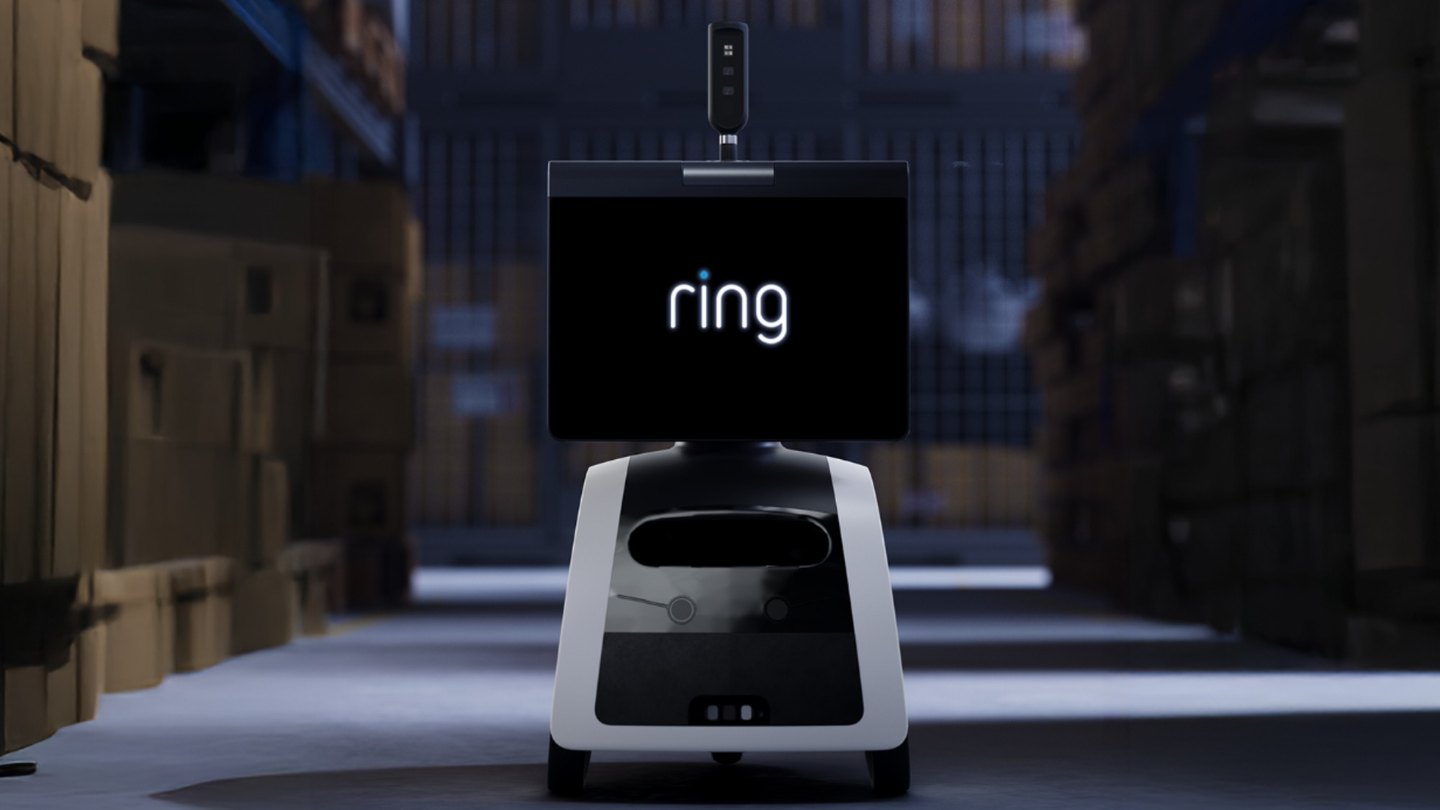
Where the drone is a camera that visits, the Rover is a camera that works a shift. Send it to any room or saved patrol point with one tap, on a schedule, or automatically when a connected Ring device trips. It streams and records in up to 4K the whole time it’s moving, not just when it stops, and on arrival it runs a 360-degree scan of the space.
A periscope camera rides on an adjustable mast, so it can see over counters and shelving; you set the height at each stop and it remembers.
Deterrence is half the job spec. There’s a built-in siren, a light tower bright enough to throw a blue ring on the ceiling so anyone nearby can track it, and two-way audio for talking to whoever it finds. The point is to be noticed first.
Person detection runs even while it’s docked, and Sleep Mode retracts the periscope and kills the microphone when you want it properly off.
The lineage is Amazon’s Astro, the home robot that found its second life as a business security guard before Amazon discontinued the $2,350 business version in 2024. Ring says Astro owners told them roving security was the feature they loved most, so the Rover keeps that one job and drops the rest. No personality, no Alexa-on-wheels act. One purpose, at less than half the Astro business unit’s price.
One brain flies and drives both
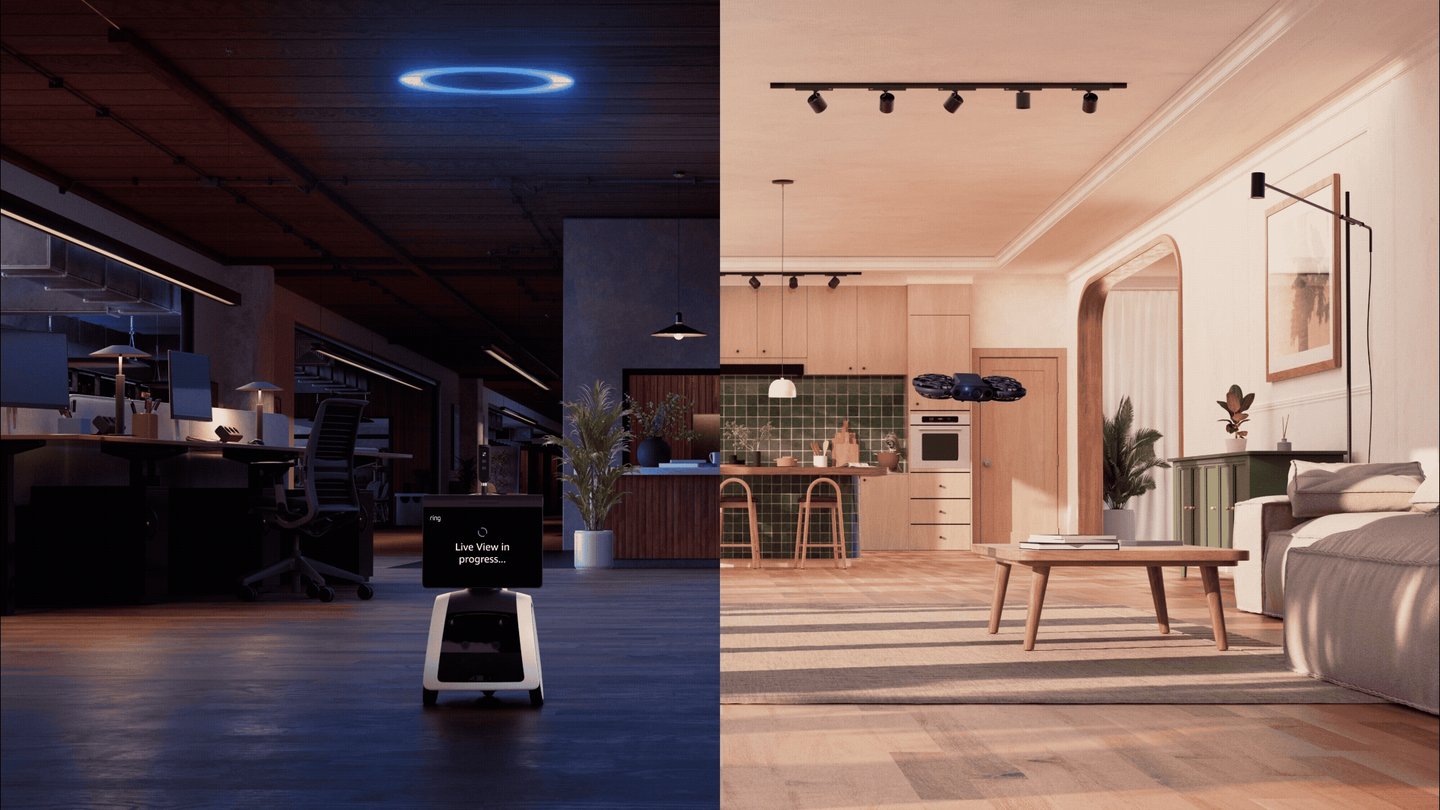
AI Pilot is the system under both machines. It uses the cameras, vision models, onboard sensors, and cloud processing to map a space, suggest patrol points, and then navigate in real time around furniture, shelving, and whatever else is in the way.
Setup is the carry-through for the drone and a supervised explore for the Rover. After that, both plan their own routes to whichever point you pick, and both plug into the new Alexa Home Map for control. Both record under what Ring calls Throw Away the Key encryption, its strongest default yet. A compatible Ring Protect plan is required, which is the running cost to keep in mind on top of the hardware.
Ring has leaned hard on the visibility argument for privacy. The drone’s propellers are loud on purpose. The Rover’s light tower is impossible to miss. The drone sits in its dock with the camera off until a flight starts. These machines announce themselves, and for a camera that moves through private space, that isn’t a compromise. It’s the design.
Ring Rover Cam
Up to 4K video on patrol · Adjustable periscope camera · Siren, light tower and two-way talk
Price: $999.99 (preorder, ships December 16, 2026)
Where to buy: Buy on Amazon
The split verdict is simple. Rover Cam is the product: orderable now, shipping before Christmas, aimed at a real job that businesses currently pay people to do badly at 3 a.m. Drone Cam is the headline, and it’s the more interesting machine, but its launch runs through a federal authorization process before it runs through your hallway. Ring spent six years getting the flying camera right. The robot that walks may be the one that pays for it.