Qualcomm’s Snapdragon X2 Elite started life as a laptop chip, and ASUS is the company that carried it to the desktop. The Ascent QN10 put that chip in a 0.7-liter mini PC when it went on sale in the US in September, and the box has now crossed the Atlantic, on sale in Germany, Austria, and Switzerland.
We covered the QN10 at its US launch, when the pitch was a simple one: an 80 TOPS NPU in a box smaller than a paperback, built to run AI models locally instead of renting them from a cloud. The hardware has not changed since. The map has.
Price: $1,349 (16GB) / $1,699 (32GB)
Where to buy: Amazon (32GB) and ASUS
One configuration for Europe, two at home
Europe gets one configuration, and it is the loaded one: 32GB of LPDDR5x memory, a 512GB PCIe 4.0 SSD, and Windows 11 Pro preinstalled, sold through specialty retailers and online shops under a single SKU. Its MSRP converts to about $2,457 at today’s rate, local taxes folded in, which lands it well above the US price for the same memory and storage.
The US lineup starts lower and splits in two. The 16GB model runs $1,349 with a 512GB drive, and the 32GB model runs $1,699, through the ASUS eShop, Best Buy, Newegg, and B&H. The pair share the same 512GB drive class and the same silver box.
Built around the chip
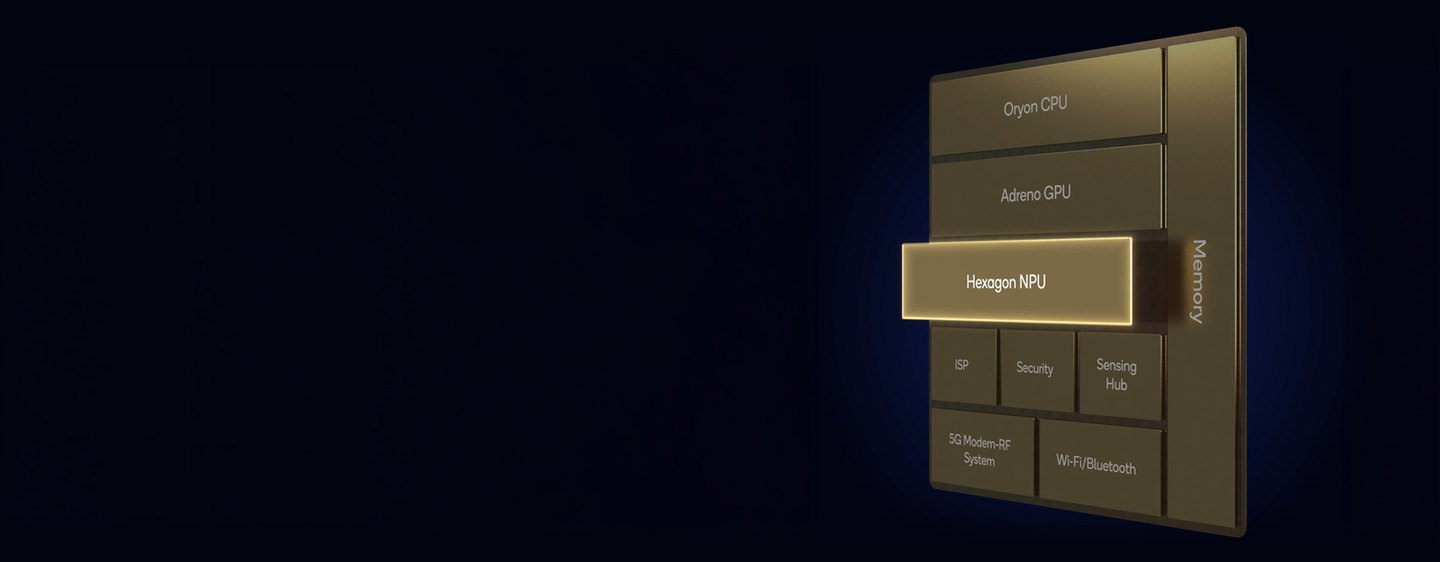
At its center sits the Snapdragon X2 Elite X2E-88-100: 18 third-generation Oryon cores, an Adreno X2-90 GPU, and a Hexagon NPU rated at up to 80 TOPS. ASUS bills the QN10 as the first AI mini PC carrying an 80 TOPS NPU, sells it as an agentic AI machine, and ships it as a Copilot+ PC.
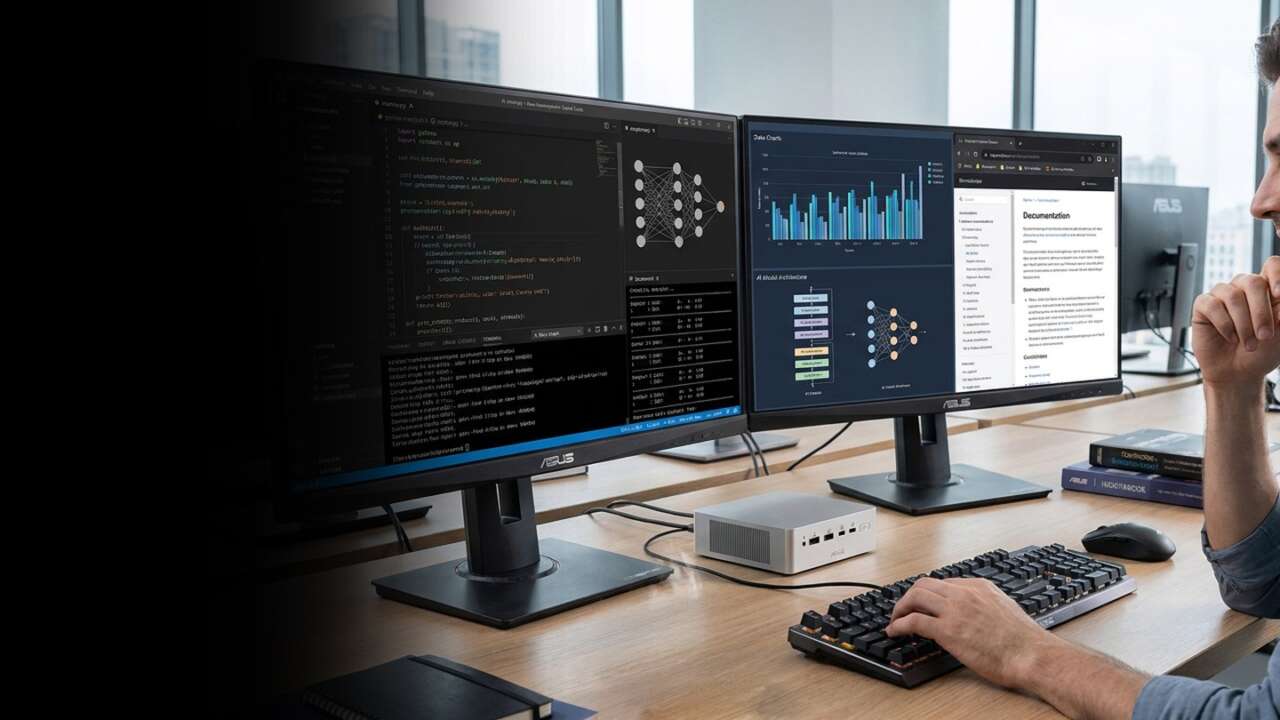
ASUS and Qualcomm have been showing the same demo since the summer: Visual Studio Code and GitHub Copilot running on the box, and private LLM setups built on LLMWare and AnythingLLM, all processed locally with nothing leaving the desk. That is the whole argument for the machine. The chip’s other home is laptops, where it arrived this fall, and the desktop version keeps the same silicon in a box that never has to close.
Memory is LPDDR5x, soldered down: 16GB at 8,533 MT/s, or 32GB running at up to 9,600 MT/s. Storage starts with a 512GB M.2 NVMe PCIe 4.0 drive, and the board accepts drives up to 1TB. What you buy is what you keep.
Ports, displays, and a 65W appetite
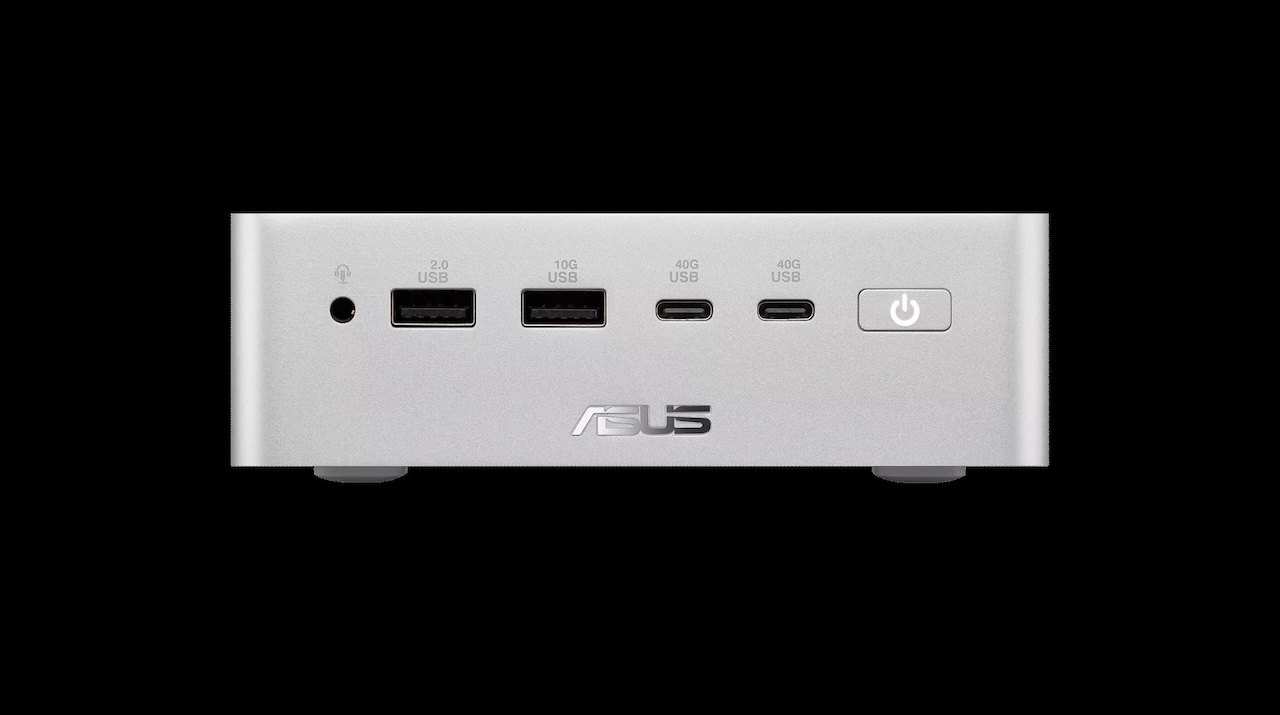
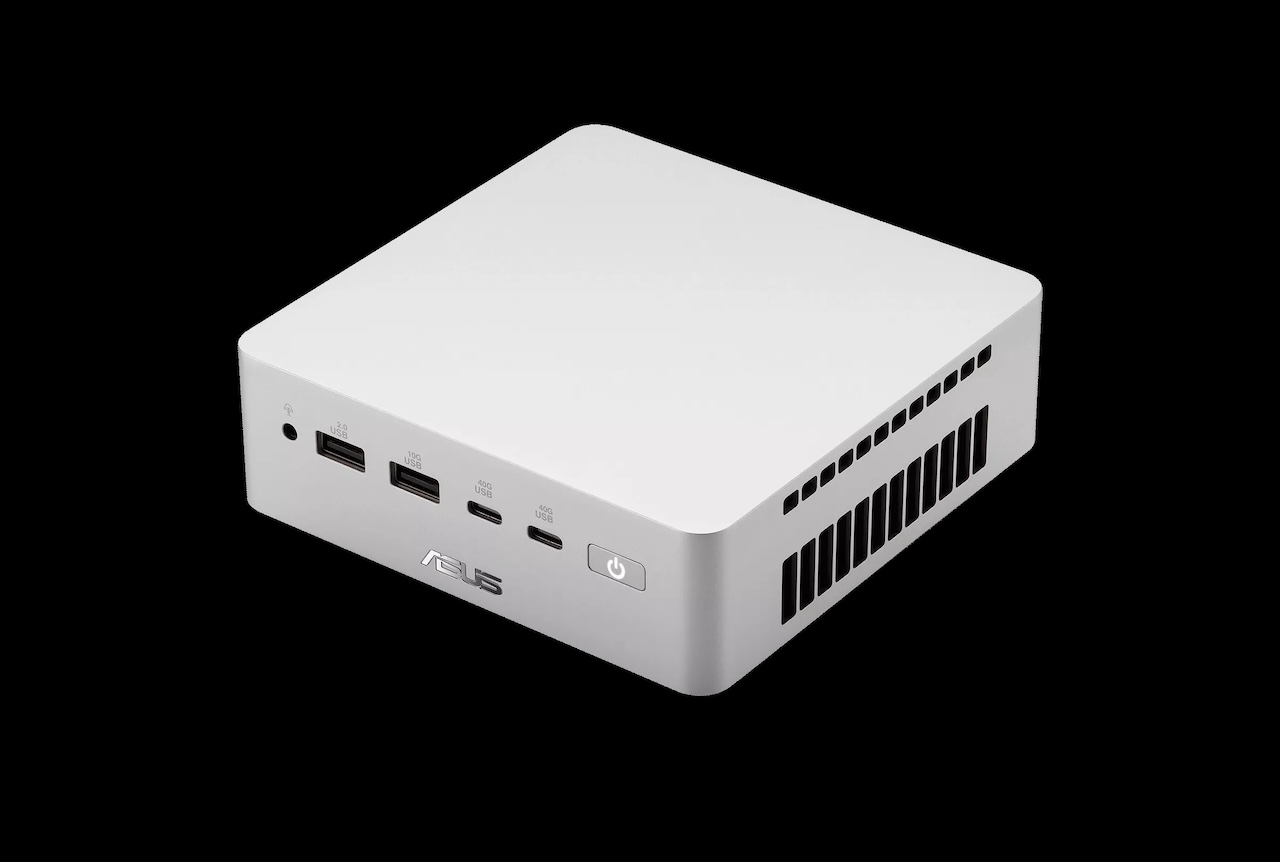
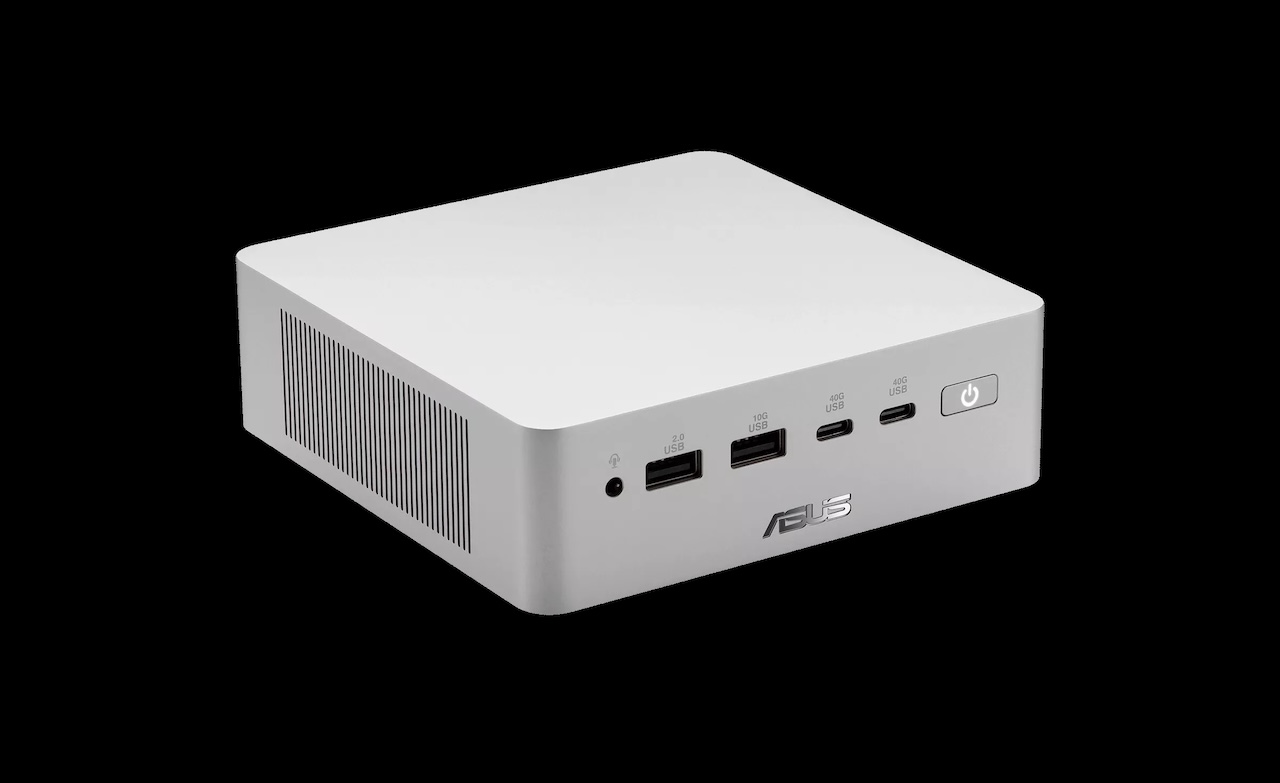
Two USB4 ports at 40Gbps, a 10Gbps USB-A port, a USB 2.0 port, and the audio jack face front. Around back sit two more USB-A ports, a third USB4 port, HDMI, a 2.5G Ethernet jack, and the power input. Seven USB ports in total, and when the cables lose, Wi-Fi 7 and Bluetooth 6.0 are built in.
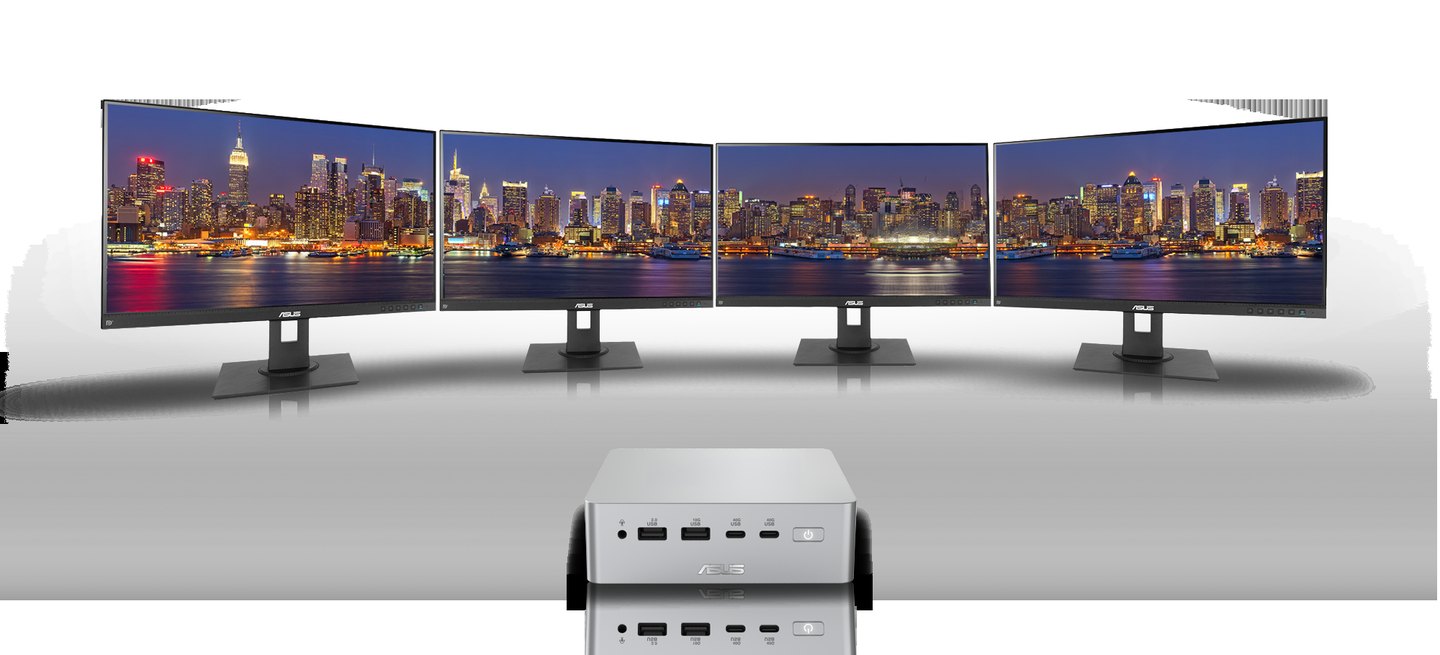
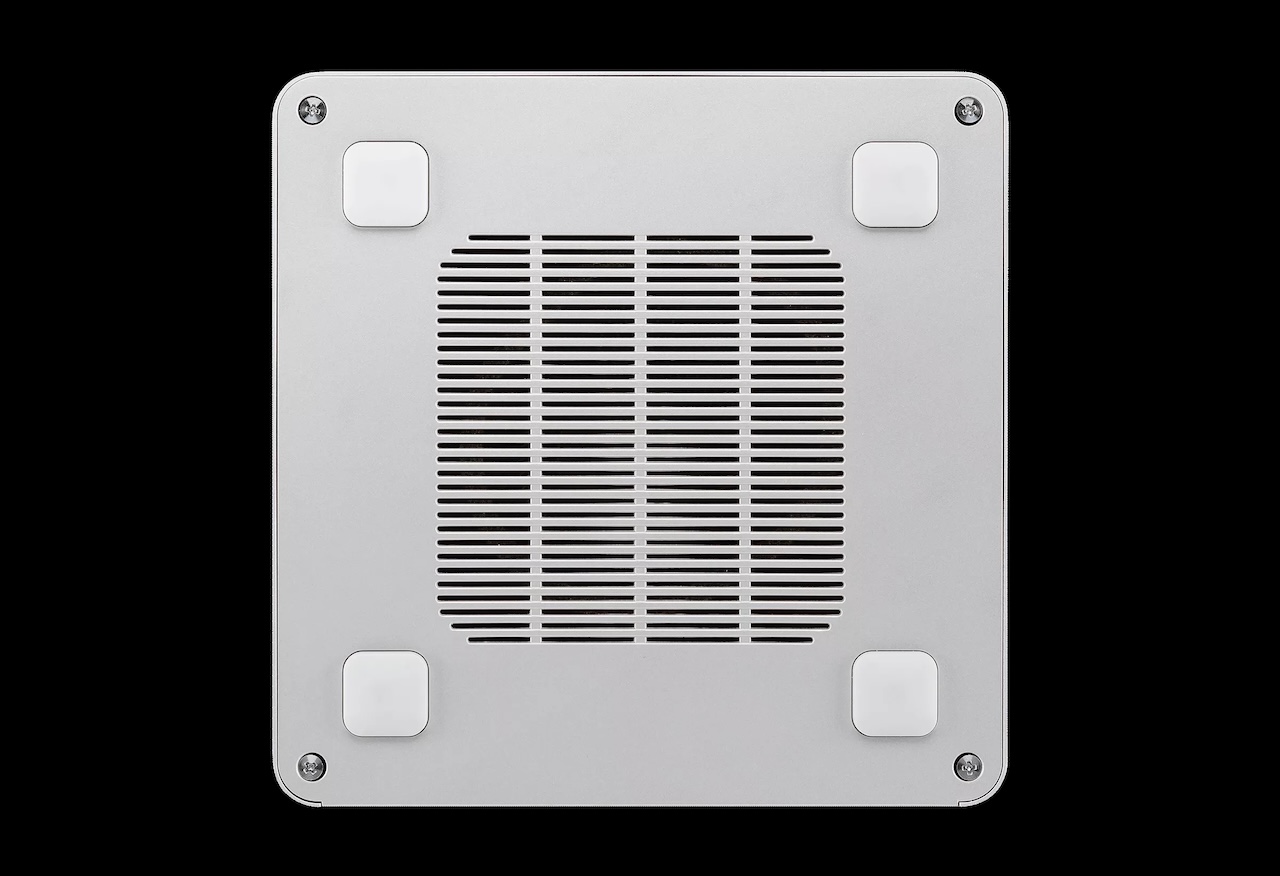
ASUS rates the box for up to four 4K displays at once, a lot of screen for a PC measuring 5.1 by 5.1 by 1.6 inches and weighing 1.65 pounds. The thermal design runs at 65W, fed by a 180W power brick, and security runs through an fTPM 2.0 chip and Microsoft Pluton. It will sit behind a monitor or under a desk and disappear, which is the correct ambition for a machine like this.
In Europe the single build carries the SKU QN10-VQ0008NN, in silver, the only color ASUS makes. It is on sale now in all three countries.
The tradeoff
The tradeoff is the platform, and it cuts both ways. Snapdragon on Windows has come far, and the developer and AI tools this box is aimed at are largely there, but x86 still owns the long tail of Windows software, and some of it will run translated, slowly, or not at all. The soldered memory is the second edge: when 32GB stops being enough, there is no slot waiting.
So the buyer is a specific one: a developer, an AI hobbyist, or a small shop that wants inference, agents, and assistants running on its own hardware, on its own network, behind its own walls. Anyone whose work lives in one stubborn x86 application should stay on x86.
A second launch wave two months later is its own piece of evidence. ASUS does not spend a European retail rollout on a science project, and Qualcomm has been plain about wanting its silicon out of laptops and onto desks. Europe’s pricing will test how much of that ambition buyers fund at a premium over the US tag, but the direction is set: this platform is a desktop line now, not a one-off.
For US readers nothing on the shelf changes today. The QN10 is still the only mini PC on this chip, it still starts at $1,349, and its maker just spent real money putting it in three more countries.
Price: $1,349 (16GB) / $1,699 (32GB)
Where to buy: Amazon (32GB) and ASUS
Laptop chips in desktops stopped being a demo when the first one shipped. The Europe launch makes it a product line, and at $1,349 the QN10 stays the cheapest way to find out whether an 80 TOPS box belongs on your desk instead of a rack in a data center.