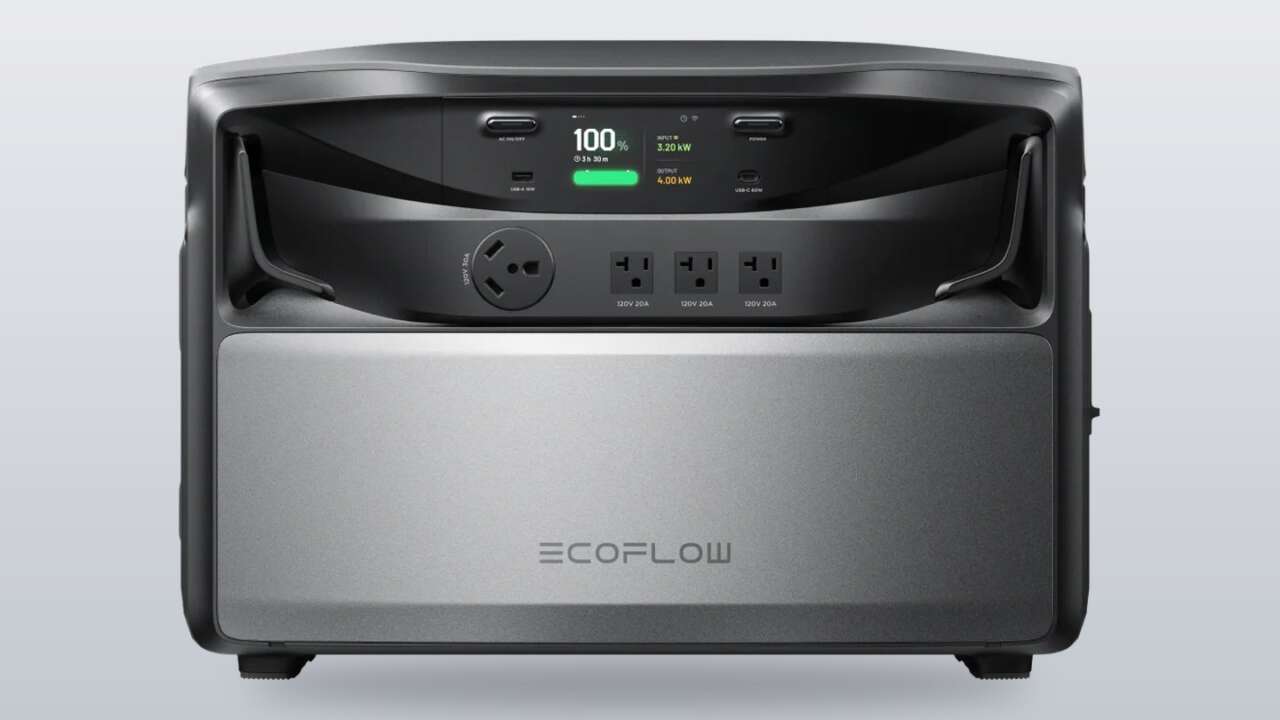
Most home batteries are sized for the worst hour of the worst day, and the buyer pays for capacity that sits idle the rest of the year. EcoFlow sized the TITAN series from the other direction: it analyzed usage data from more than 100,000 households and found that 80 percent stay below roughly 6,700W for 99 percent of the time.
So every TITAN starts with the same 5kWh LFP battery and a full-size output rating, then expands toward 30kWh as the house needs it. Three models share the platform: the TITAN 5000 Classic at $2,499, the TITAN 5000 at $3,199, and the TITAN 5000 Plus at $3,699, all on sale now at EcoFlow’s US store.
Price: $3,199 (TITAN 5000)
Where to buy: EcoFlow
Output comes first, capacity second
The TITAN 5000 and 5000 Plus each deliver 7.2kW of 120V/240V split-phase power, enough to run a 3-ton central air conditioner alongside the refrigerator, the lights, and the rest of the circuits a house leans on during an outage. The Classic holds its 4kW to 120V loads only, which covers the essentials and skips the big 240V appliances entirely.
Charging keeps pace with the output. The 5000 takes up to 4kW of solar input through a single MPPT and up to 7.2kW from the grid, the Plus doubles the solar input to 8kW across two MPPTs, and EcoFlow rates generator compatibility at 99 percent across the line. The company’s Iceland test, a TITAN system running one of the most isolated homes on earth with no grid connection at all, is the extreme version of the same point.
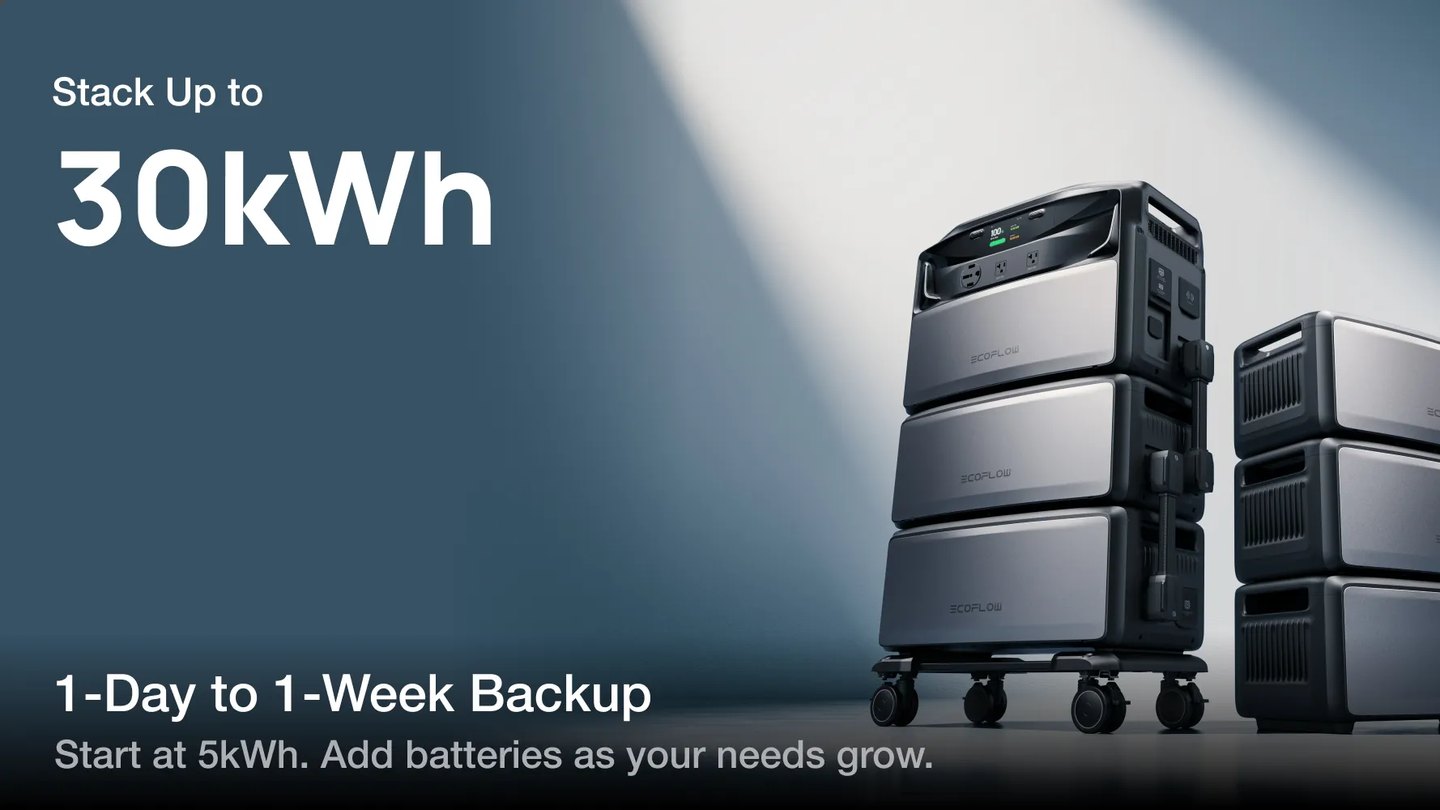
Three models, one expansion path
Every model starts at 5,017.6Wh of LFP capacity and accepts up to five TITAN Battery packs at 5kWh each, for a 30kWh ceiling. Adding batteries adds runtime, not output, so the sizing decision lives in the main unit: Classic for 120V essentials, 5000 for split-phase whole-home duty, Plus for houses with heavy solar or loads that lean on one leg of the panel.
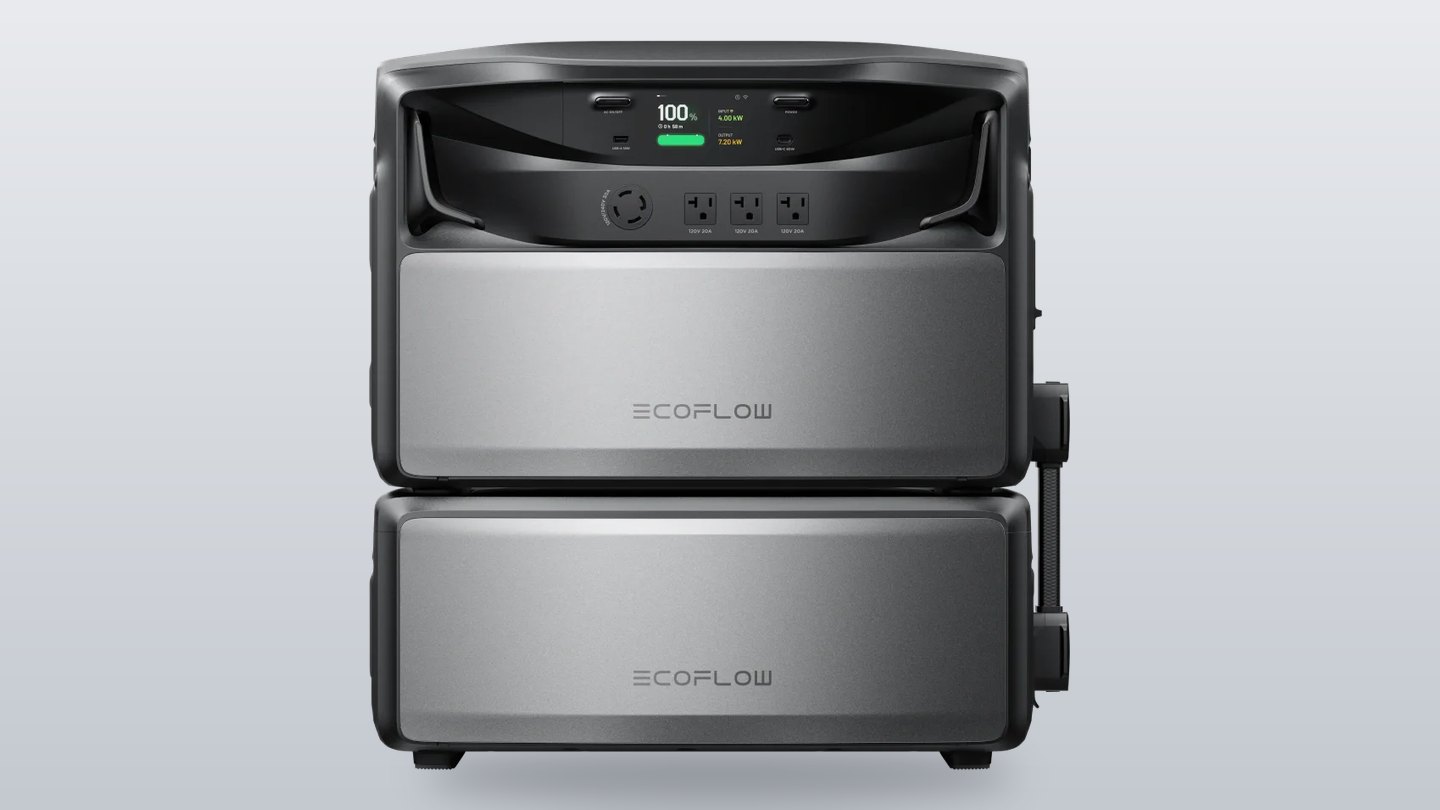
The Plus earns its $500 step over the 5000 in two places. Its solar input doubles to 8kW, and with solar producing it pushes total output to 10kW. X-Boost 2.0 also lets it deliver up to 5kW on a single 120V leg, where the standard 5000 splits its 7.2kW across both legs.
Bundles pair the units with the Smart Home Panel 10: the 5000 with the 240V panel runs $4,199, and the Plus with the panel runs $4,799. The hardware is floor-standing and modular rather than wall-bolted, with main units at 102.5 to 121.3 lb depending on the model and each expansion battery at 82.7 lb.
The Smart Home Panel 10 does the switching
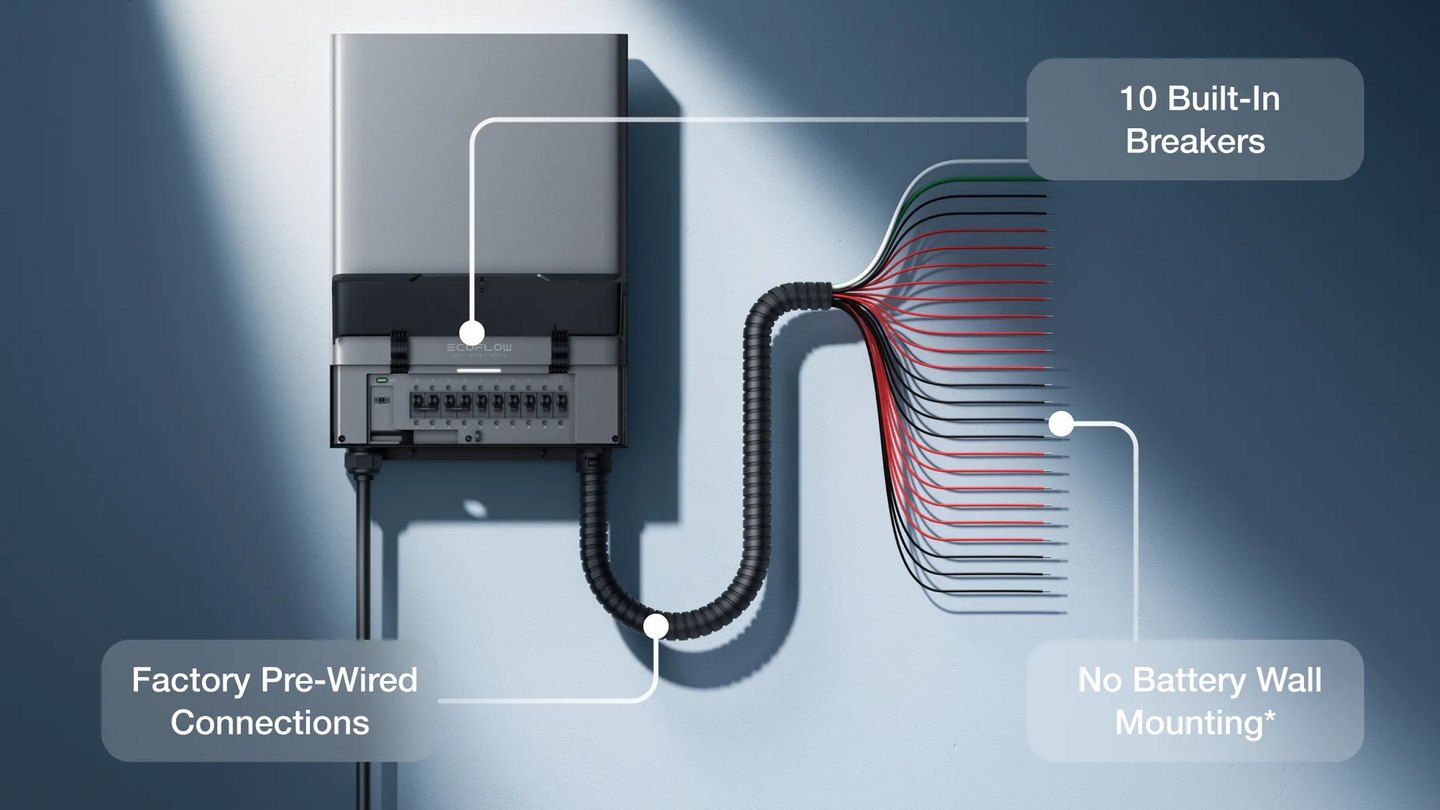
On its own, a TITAN 5000 is a large battery with outlets: three NEMA 5-20R sockets, an L14-30R, USB-C at 60W, and USB-A. The Smart Home Panel 10 turns it into a home system. The panel manages 10 circuits at up to 50A, switches from grid to battery in under 20 milliseconds when the power drops, and gives the EcoFlow app circuit-level control over what stays live.
The panel also handles AC coupling, so a TITAN can store output from an existing rooftop solar system instead of replacing it. OASIS 3.0 runs the scheduling on top: it learns the household’s routines, forecasts solar production up to three days ahead, charges when rates are low, and discharges through the peak hours. Storm Mode watches the forecast and tops the battery off before severe weather arrives.
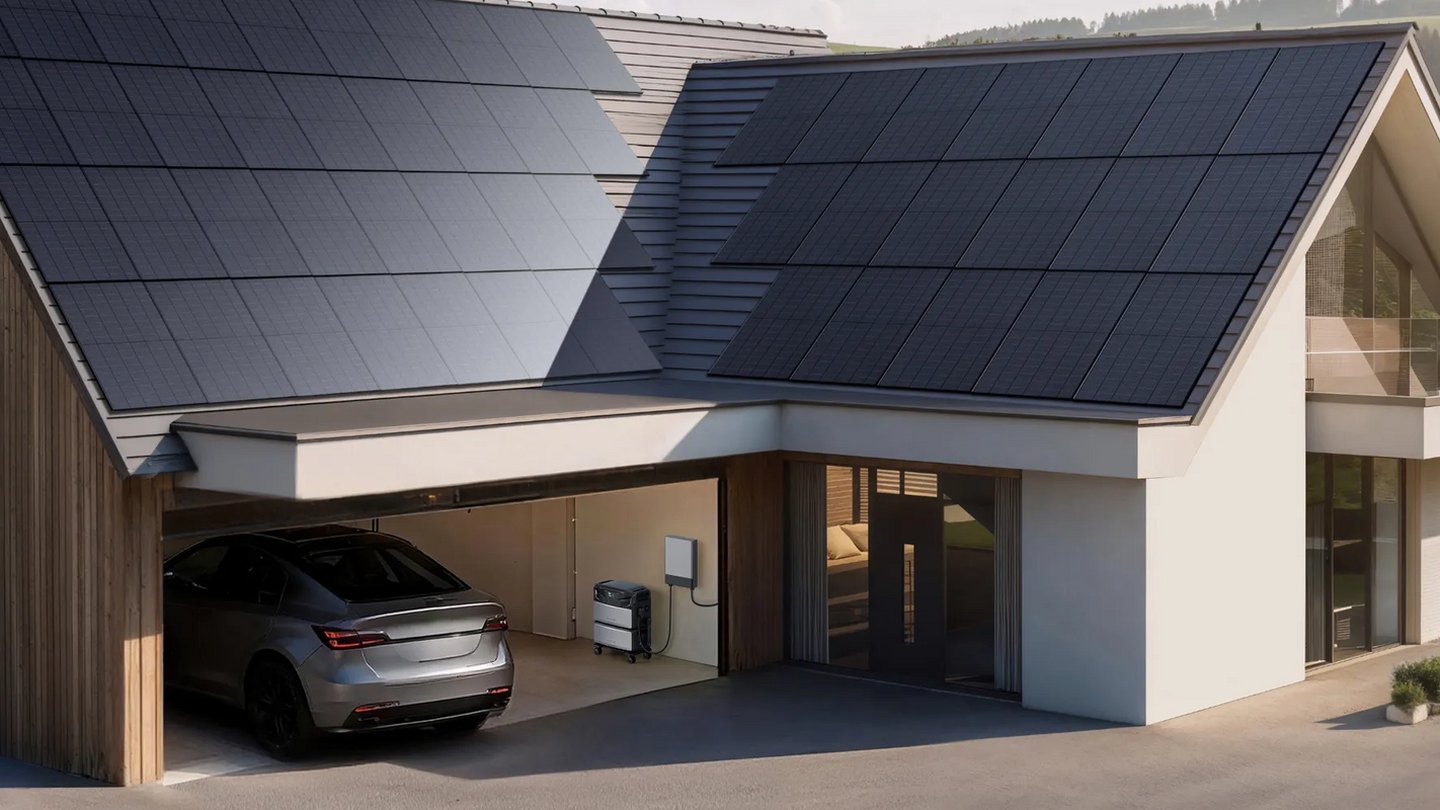
EcoFlow claims the system can save up to $2,900 a year in electricity costs. The size of that saving rides on the rate plan: a house on time-of-use pricing, with cheap overnight hours to charge in, has something real to shift, while a house on a flat rate mostly gets the backup.
A pre-wired panel and a 7-day install
Installed home batteries usually carry five-figure quotes and timelines that stretch for weeks. TITAN’s panel ships factory pre-wired, EcoFlow guarantees installation within seven days, and the company says the pre-wired design cuts installation cost and time by about 80 percent against a traditional system. Its launch material puts typical labor around $1,200, with as little as two hours of on-site work. The system is UL 9540 certified, the cells are LFP, and the warranty runs five years.
Which TITAN fits your home?
Buy the Classic at $2,499 if the goal is keeping the refrigerator, the lights, the Wi-Fi, and a few outlets alive through an outage, and nothing in the house needs 240V. Buy the 5000 at $3,199 if the air conditioner is part of the plan; it’s the balanced pick of the three. Buy the Plus at $3,699 if a large solar array feeds the system or one leg of the panel carries an outsized load.
Houses that need more than 30kWh, or parallel units, are shopping a different product, and EcoFlow sells that one too: the DELTA Pro Ultra starts at 6kWh per unit and scales to 90kWh. And if the real need is a few devices through a short outage, our 10 Best UPS Battery Backups in 2026 guide covers the cheaper end of that job.
Price: $3,199 (TITAN 5000)
Where to buy: EcoFlow
TITAN’s bet is that most homes need real output and a panel that thinks, not a wall of batteries bought up front. The 5kWh start keeps the entry price at $2,499, the expansion path lets the system grow without being replaced, and the output never has to. That is the right shape for the way houses actually use power.