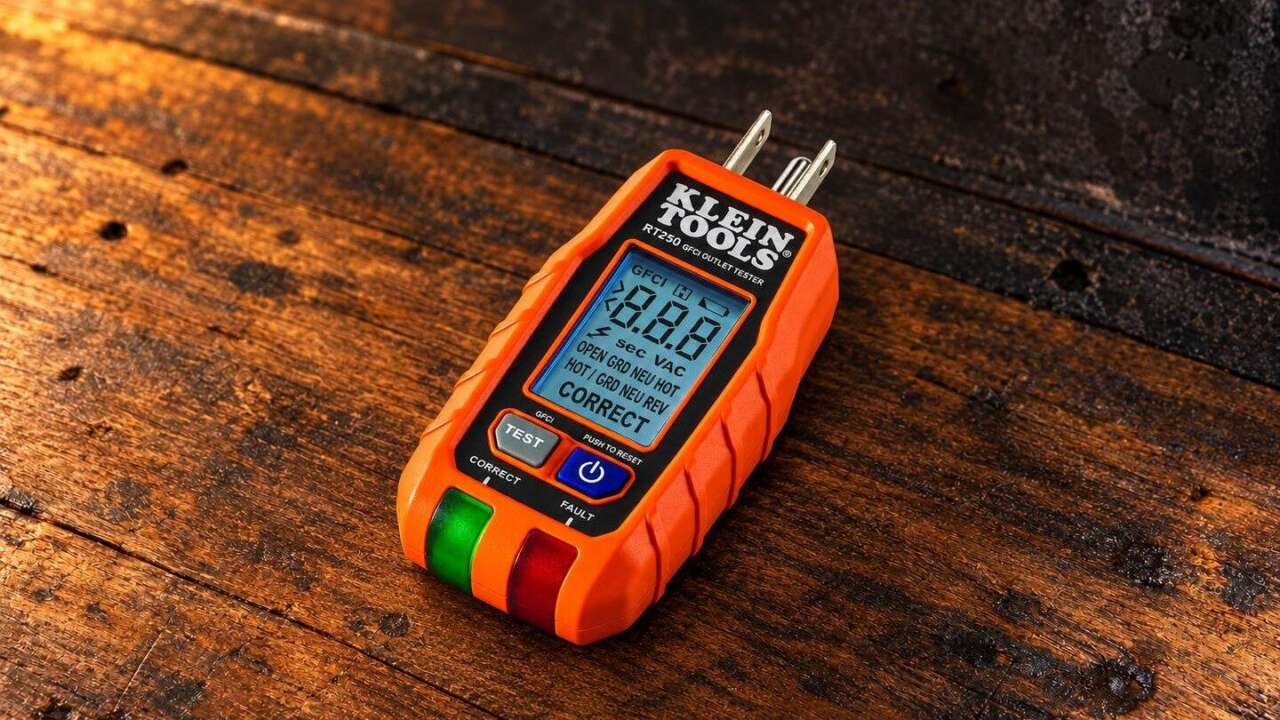
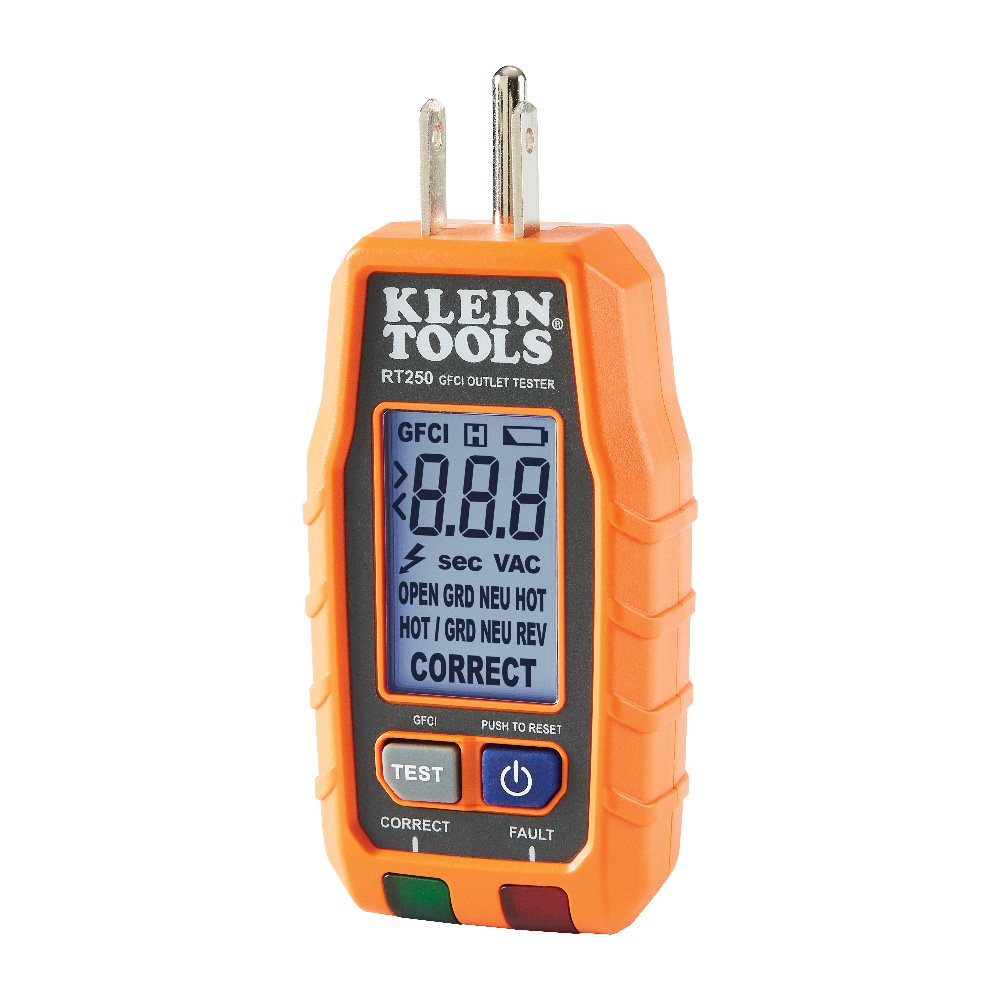
A lamp lighting up tells you an outlet has power. Klein’s RT250 adds information the lamp can’t: a voltage reading, an indication of common wiring faults, and a timed check of a GFCI’s response. Its backlit screen spells out the result instead of leaving you to decode a row of lights.
Auto-hold keeps the reading on the screen after you unplug the tester, so you can bring it into view rather than try to read it behind furniture.
Price: $17.84 (new)
Where to buy: Amazon
What else $18 buys
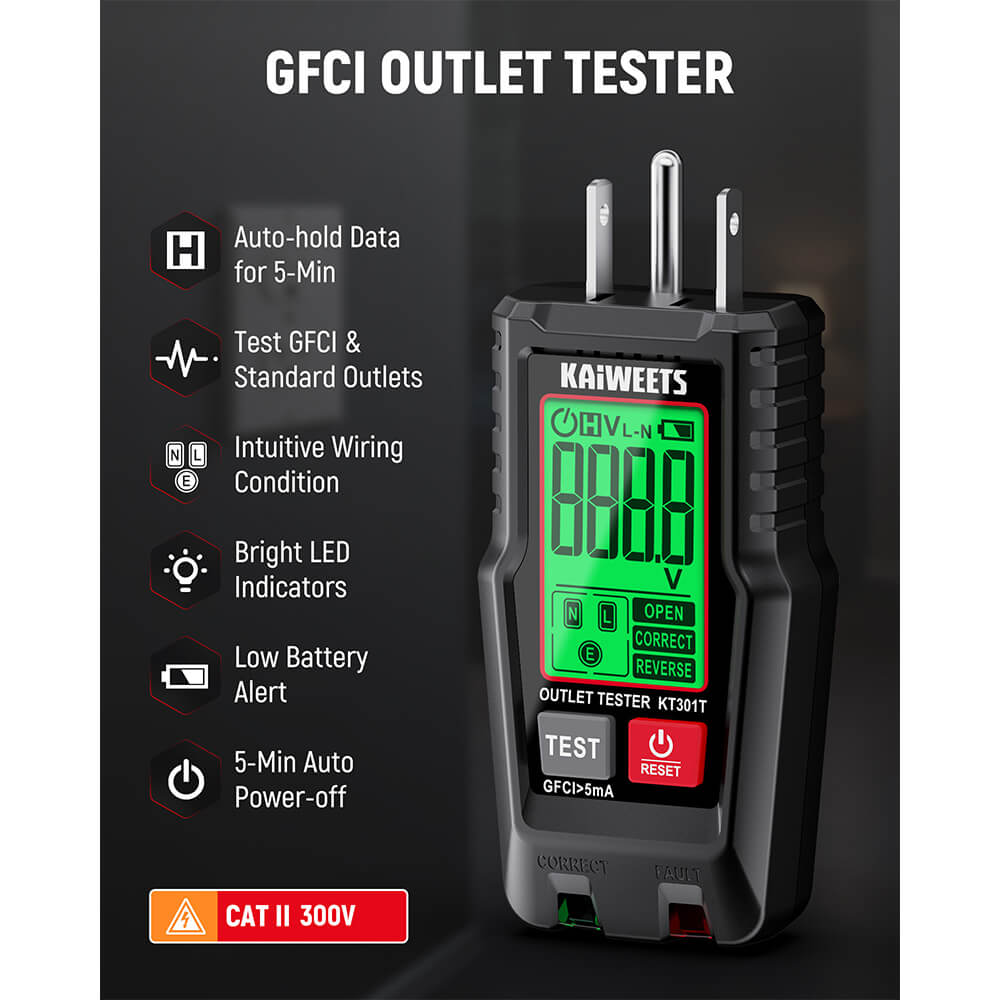
The KAIWEETS KT301T does the same job for the same money, and the trade between the two is one feature. Its color LCD reads the actual outlet voltage and names the wiring fault on screen, seven conditions in all, with indicator lights along the bottom and an auto-hold that keeps the reading up for five minutes after you unplug it. The GFCI test trips the outlet past 5 mA. Two honest cuts: the test is pass or fail, with no trip time on the screen, and the CAT II 125V rating in Kaiweets’ own manual sits a notch under the Klein’s CAT II 135V. The Klein exists for that one number. If the timing check is the point, buy the Klein. If a voltage read and a wiring verdict cover the work, the KAIWEETS covers both for the same money.
| Klein RT250 | KAIWEETS KT301T | |
|---|---|---|
| Display | Backlit LCD: voltage, wiring fault, GFCI trip time | Color LCD: voltage, wiring fault |
| Voltage readout | North American 120V outlets | 110 to 125V outlets |
| GFCI trip-time display | Yes | No |
| Safety rating | CAT II 135V | CAT II 125V |
| Price | $17.84 | $17.99 |
| Buy | Amazon | Amazon |
Price: $17.99
Where to buy: Amazon
A readable result, not just a pattern of lights
The RT250 combines its LCD with red and green indicators. It can identify conditions including an open ground, open neutral, reversed hot and neutral, and a combined open neutral and ground. Seeing the fault named gives you something specific to report to an electrician.
Voltage is a separate part of that picture. A voltage warning and a green wiring indicator can appear together. In other words, the wiring indication and the voltage reading answer different questions; a green light alone doesn’t tell the whole story.
This is a battery-powered tester with two AAA batteries included. It shuts itself off after three minutes of inactivity.
The GFCI button adds a timing check
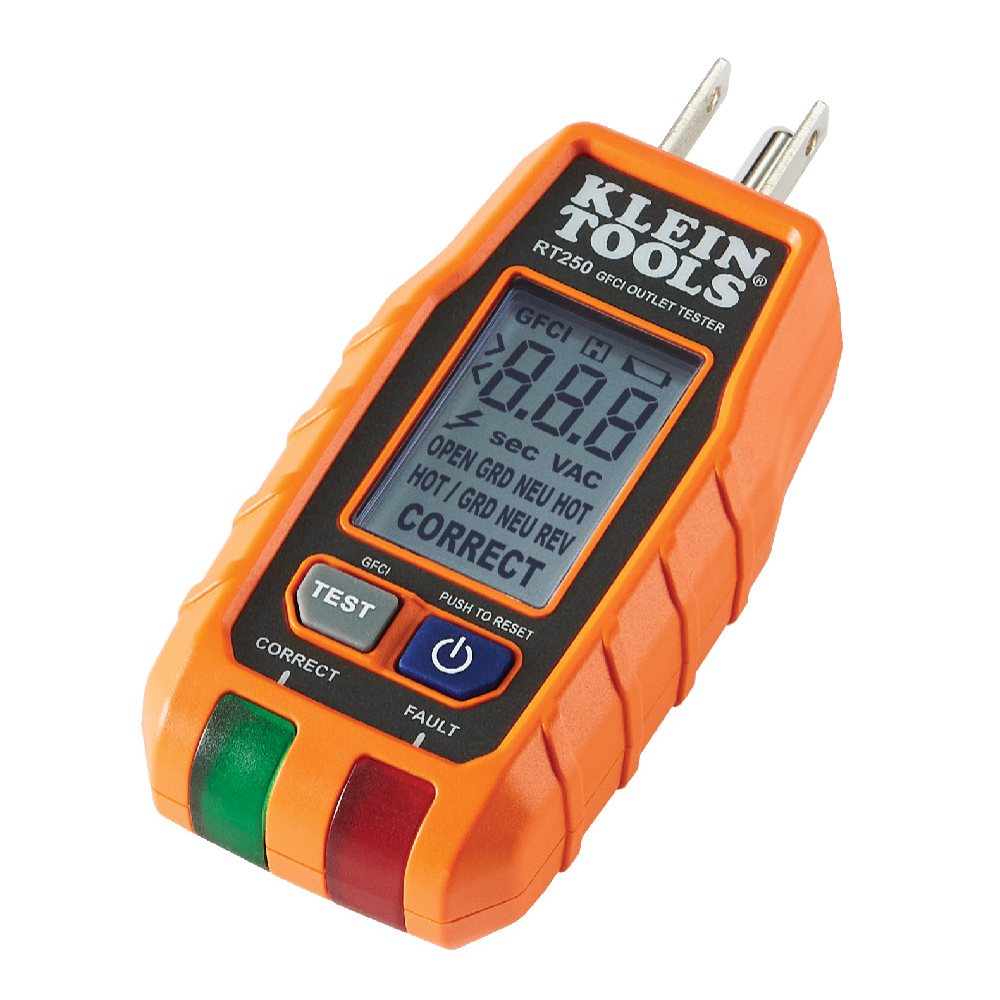
A GFCI is designed to interrupt power when it detects a ground fault. The RT250’s test button creates a small ground fault and displays how long the GFCI takes to trip. After a successful test, the screen alternates between the pre-test voltage and trip time for eight seconds.
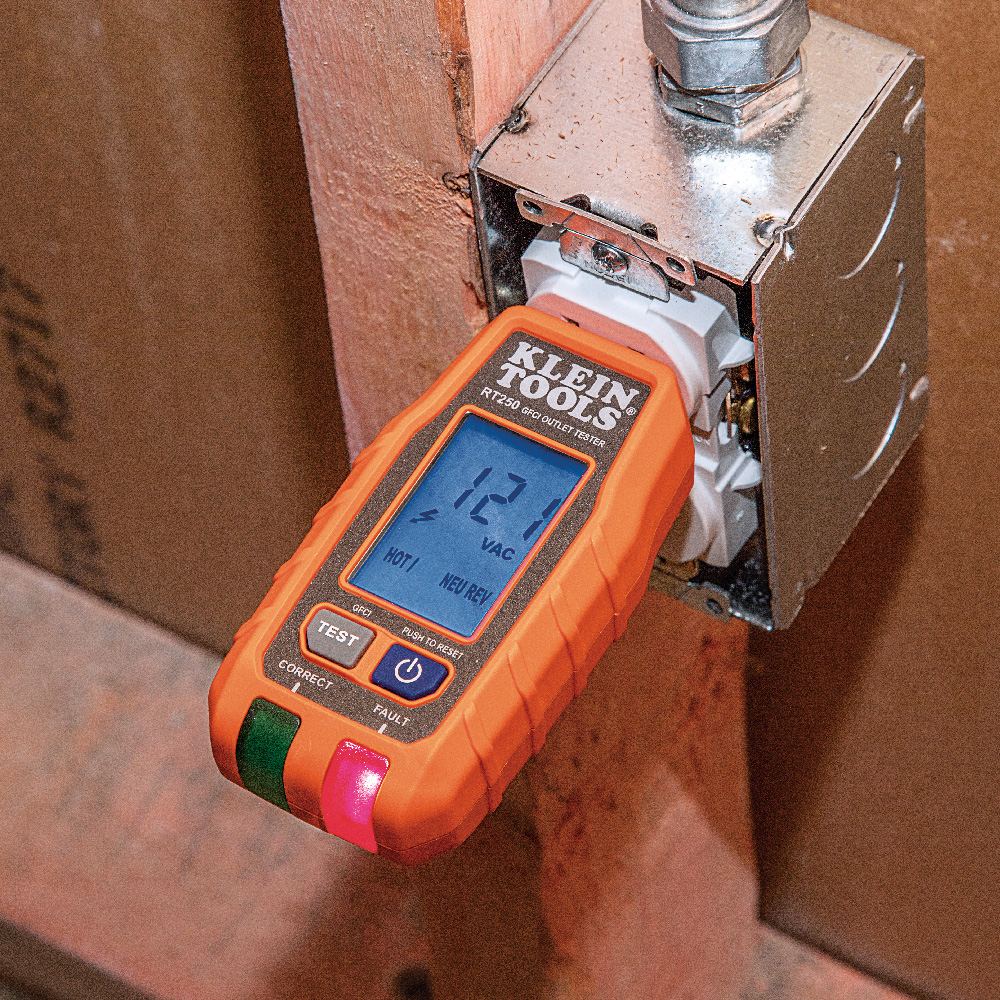
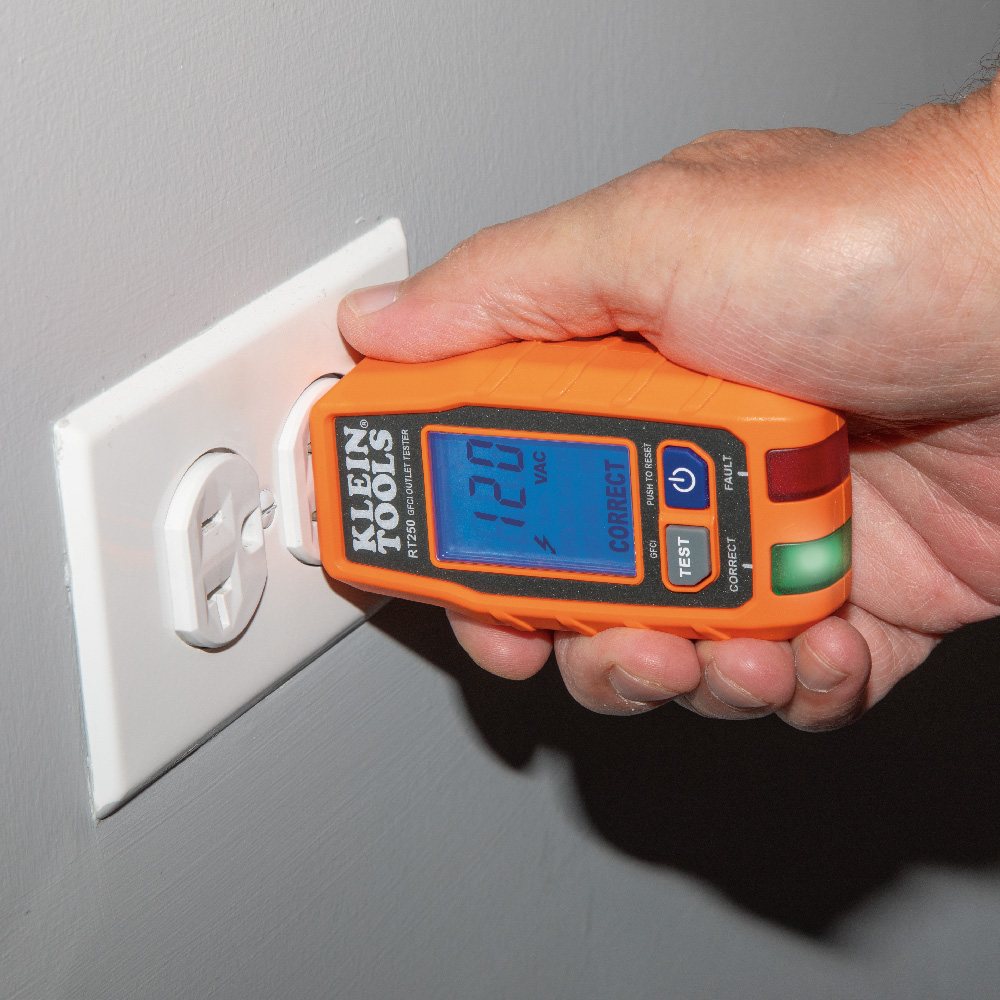
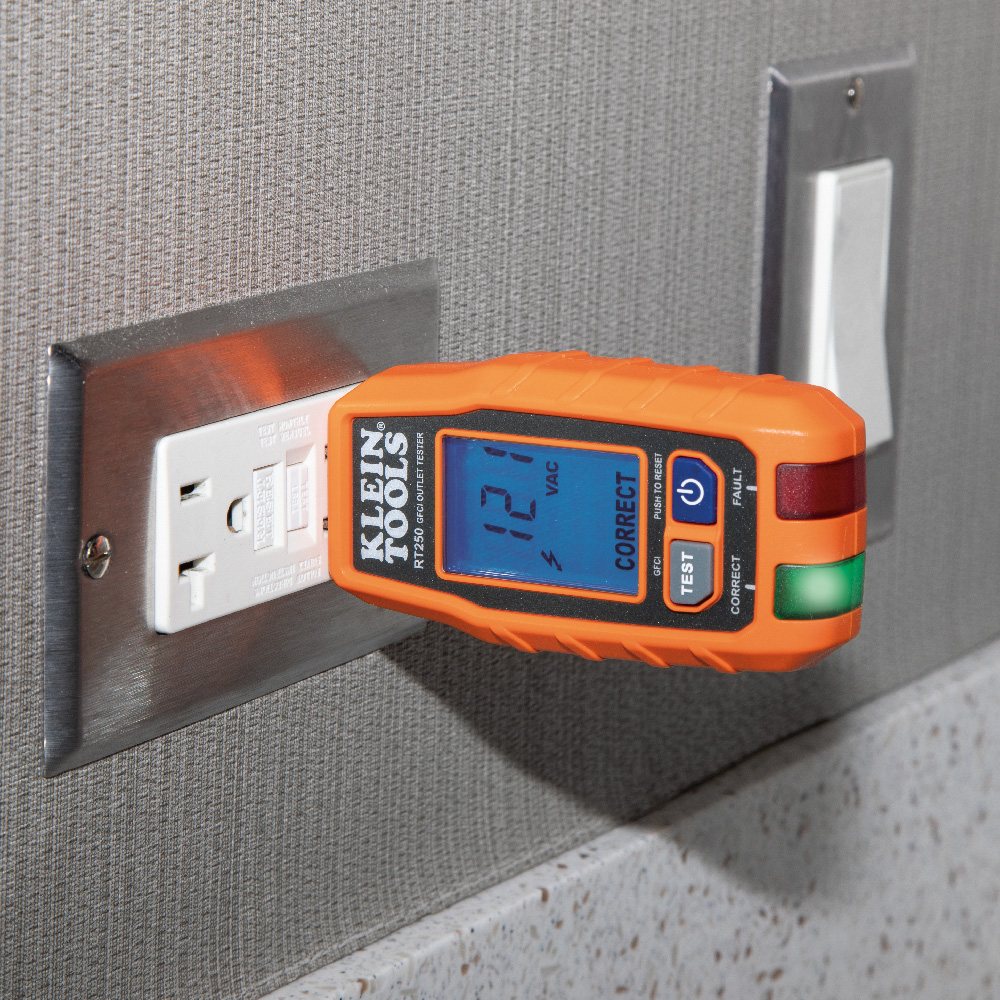
Check the GFCI’s own instructions first. Don’t run the ground-fault test on a circuit the tester identifies as incorrectly wired. Wiring problems belong with a qualified electrician.
Know what a “correct” reading leaves out
The RT250 is for indoor, North American three-wire 120V outlets. It isn’t a tester for higher-voltage supplies, and it doesn’t test AFCIs.
Its diagnostic reach is also narrower than a complete electrical inspection. It doesn’t indicate ground quality, a neutral-and-ground reversal, multiple hot wires, or every combination of faults. Those limits are important when interpreting the word “correct” on the screen: it describes the conditions this tester checks, not a guarantee that the entire circuit is safe.
Price: $17.84 (new)
Where to buy: Amazon
Before use, check the tester on a known-live, correctly wired outlet. Other equipment on the circuit can interfere with readings, so unplug connected appliances and equipment. Read the RT250 instructions before using it.